




Design the perfect vending solution for your location and customers.

Join the VMFS newsletter and step into a thriving network dedicated to collective success.
One signup. Endless possibilities.
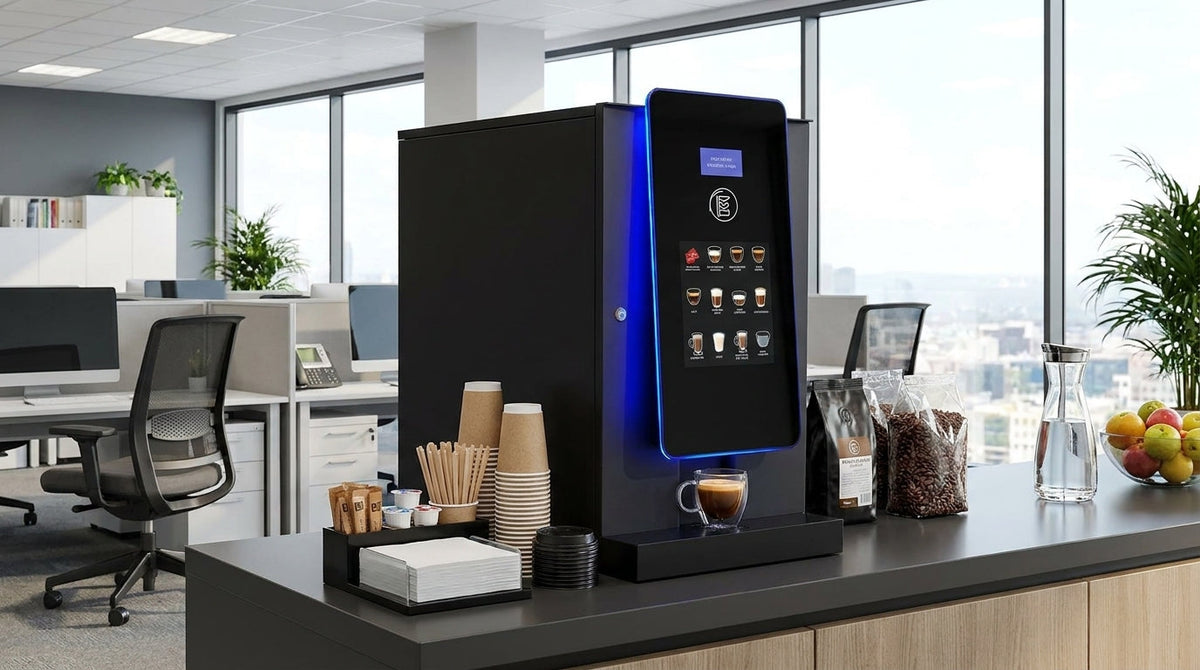
The most efficient way to brew coffee in the office is through automated bean-to-cup commercial coffee systems and plumbed-in coffee vending machines. These automated systems grind whole beans, tamp, extract espresso under 9 to 15 bars of pressure, and dispense fresh beverages in 15 to 45 seconds without manual human intervention.
Manual brewing methods create labor bottlenecks, dishware build-up, and inconsistent beverage quality across corporate teams. Deploying automated commercial coffee hardware eliminates preparation downtime, reduces cost-per-cup expenses to $0.15–$0.35, and removes the continuous cleanup required by traditional drip carafes or manual pour-overs.
Workplace productivity drops significantly when employees leave the premises to buy commercial espresso drinks. Implementing a centralized, high-throughput automated beverage hub keeps workforce talent on-site while maintaining high standards of coffee quality.

The most efficient office coffee brewing method is defined by its ability to yield high hourly cup output with minimal labor hours spent prepping, brewing, and cleaning. Evaluating different equipment categories reveals stark performance differences between automated dispensers and manual pour-over or batch-drip systems.
Bean-to-cup automated vending machines deliver the highest operational efficiency for mid-to-large corporate offices by combining speed, fresh flavor, and hands-free maintenance. These machines utilize integrated burr grinders to process whole coffee beans instantly per order, routing hot water at 195°F to 205°F through a sealed brew chamber.
By automating the entire extraction sequence, bean-to-cup hardware eliminates spent coffee grounds exposure on breakroom counters. Incorporating dedicated coffee vending machines allows organizations to offer specialty drinks—such as lattes, cappuccinos, and Americanos—at the push of a single button.
Single-serve pod machines offer rapid single-cup brewing times of 45 to 60 seconds, but they create significant plastic waste streams and high per-cup consumable costs ranging from $0.60 to $1.10 per pod. Drip carafe systems yield lower initial equipment costs, but they suffer from rapid thermal degradation and scorching as brewed coffee sits on heated hotplates past 20 minutes.
Batch drip brewers also require manual filter positioning, ground measuring, and carafe washing between cycles. For high-volume workplaces, the constant labor overhead of drip carafes creates unexpected staff downtime and inconsistent brew ratios.
Manual brewing techniques like pour-overs, French presses, and stove-top moka pots represent the least efficient methods for corporate environments. A single French press or pour-over preparation consumes 6 to 10 minutes of employee labor when factoring in water boiling, manual grinding, timed pouring, and thorough grounds disposal.
When multiple employees prepare manual brews concurrently, breakroom sinks experience heavy grounds clogging and sink congestion. These manual setups fail to scale efficiently in workplaces exceeding 10 total staff members.
Evaluating equipment efficiency requires quantifying total cost of ownership, operational prep time, and ongoing sanitation demands across each primary brewing platform.
| Coffee System Type | Prep & Brew Time per Cup | Cost per Cup (Consumables) | Staff Labor Required | Waste Stream Level |
| Automated Bean-to-Cup Vending | 15 – 30 Seconds | $0.15 – $0.30 | Zero (Touch-button) | Organic Grounds Only (Low) |
| Commercial Single-Serve Pod | 45 – 60 Seconds | $0.60 – $1.10 | Low (Insert pod) | Plastic / Aluminum Pods (High) |
| Commercial Batch Drip Carafe | 5 – 8 Minutes (Per batch) | $0.10 – $0.20 | Medium (Filter/Grounds setup) | Filter & Wet Grounds (Medium) |
| Manual Pour-Over / French Press | 6 – 10 Minutes | $0.25 – $0.50 | High (Manual preparation) | Heavy Sink Cleanup (High) |
| Automated AI Grab-and-Go Hubs | 10 – 15 Seconds | Variable | Zero (Pre-packaged selection) | Minimal Packaging (Low) |
Employee time spent waiting for coffee preparation directly reduces operational output across corporate teams. A 50-person office utilizing manual or batch brewing methods loses approximately 12 to 15 labor hours per week in brewing wait times and sink cleanups.

Switching to an automated commercial system reduces total preparation downtime by over 95%. Automated systems deliver instant espresso shots and hot coffee without requiring employees to monitor brewing cycles or clear dirty filter baskets.
Sourcing whole bean coffee in 5-pound bulk bags lowers per-cup ingredient costs down to $0.15, compared to single-serve capsules costing up to $1.10 per unit. Over a standard annual operating cycle of 25,000 cups, an automated bean-to-cup machine saves over $15,000 in consumable costs compared to pod-based equipment.
Managing inventory becomes streamlined when utilizing centralized automated equipment. Operators looking into where to buy snacks for vending machine setups can aggregate bulk coffee beans, soluble milk powders, and paper cups under single wholesale supply agreements.
Installing commercial automated dispensers transforms office breakrooms into self-sustaining coffee lounges with minimal ongoing management overhead.
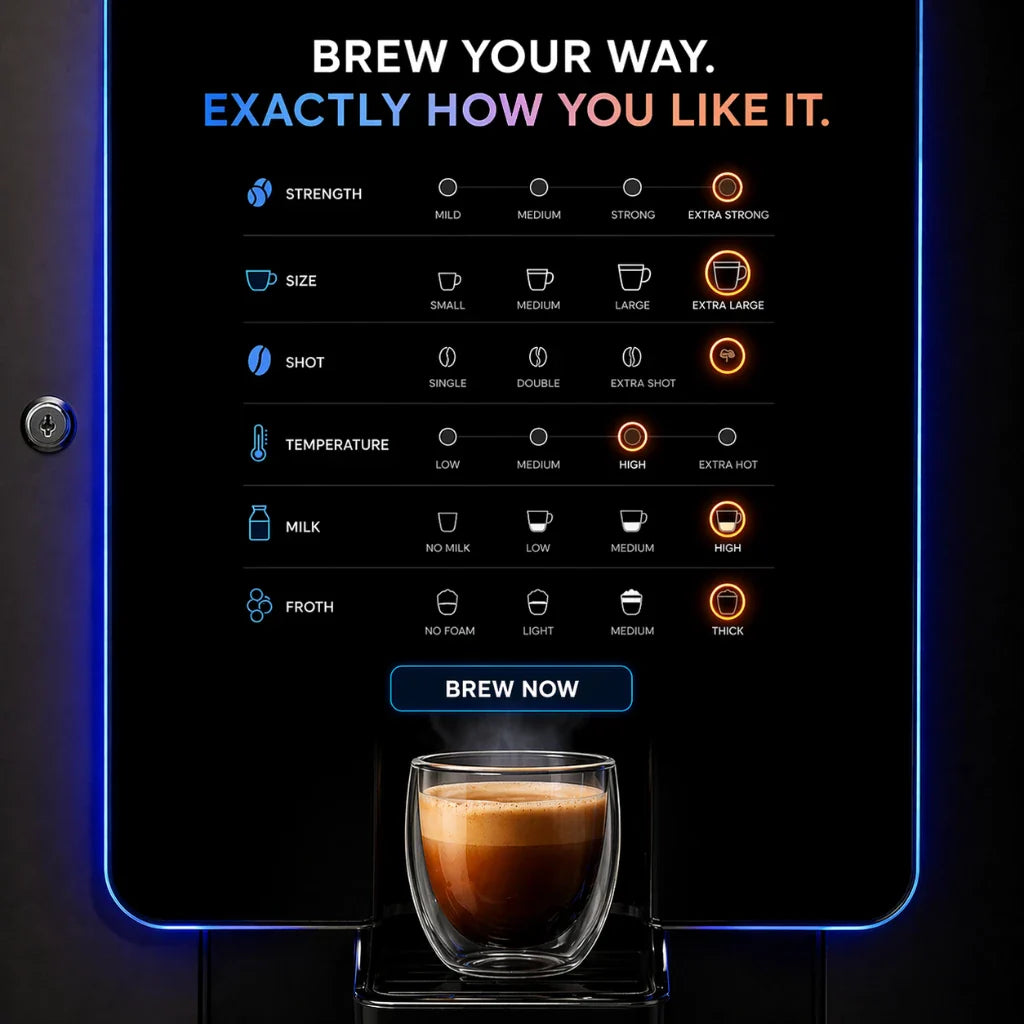
Modern commercial espresso units utilize high-precision conical steel burrs, dual thermoblock boilers, and digital touchscreens that allow users to customize strength, milk ratio, and cup size. Advanced units incorporate internal telemetry modems that track bean levels, cup counts, and error codes in real time.
Integrating these systems alongside multi-category combo vending machines or modern AI grab and go vending machines establishes a full-service, unmanned breakroom cafeteria. Reviewing various types of vending machines helps facilities managers select the correct hardware dimensions and drink output capacities for their floor plans.
Commercial beverage equipment requires structured daily and weekly maintenance to prevent milk line clogs and scale build-up inside internal boilers. Automated systems perform self-rinsing cycles with hot water every 60 minutes to flush internal dispensing nozzles automatically.
Daily Routine: Empty Internal Grounds Bin ──> Rinse Drip Tray ──> Sanitize Touchscreen
Weekly Routine: Perform Milk Circuit Clean ──> Run Automated Descaling Tablet Cycle
Executing a standardized coffee vending machine cleaning and maintenance guide protocol ensures compliance with health safety standards. Facility managers must schedule regular vending machine maintenance to protect heating elements and internal fluid valves from mineral degradation.
Installing commercial coffee equipment requires verifying electrical capacity, plumbing accessibility, and spatial traffic flow prior to hardware delivery.
Commercial bean-to-cup machines require a dedicated 3/8-inch cold water line delivering line pressure between 20 and 90 PSI. Connecting machines directly to municipal water lines requires inline water filtration systems—such as dual-stage active carbon blocks or reverse osmosis units—to eliminate chlorine taste and scale-forming calcium minerals.

Electrical requirements typically demand a dedicated 120V, 15A or 20A circuit to handle the rapid heating coils inside thermoblock boilers. For high-volume floors, facilities managers should consult a comprehensive guide to vending machine initial setup to verify electrical ground fault circuit interrupters (GFCI) and plumbing shut-off valves.
Positioning coffee stations near breakroom entrances causes severe foot traffic jams during morning arrival peaks and post-lunch hours. Position automated beverage hardware along expansive perimeter walls with at least 3 feet of clear counter clearance on both sides for condiment organizers, cup caddies, and stir-stick dispensers.
Facilities teams optimizing office spaces can review guidebooks on best vending locations and explore smart places to put a vending machine to establish efficient breakroom ergonomics. Users looking for existing installations nearby can utilize tools on vendingfinder.com to locate nearby commercial automated options.
Companies can choose to purchase coffee hardware directly, lease equipment, or partner with full-service vending operators who manage inventory and maintenance under formal contracts.
Businesses hosting automated beverage equipment can negotiate revenue-sharing contracts or placement agreements with third-party operators. Understanding the vending machine revenue split operator vs location vs supplier structure clarifies how profit margins are divided between host sites, machine owners, and coffee bean distributors.
When evaluating equipment acquisition models, office managers should calculate how much does it cost to rent a vending machine versus outright purchase costs. Examining expected vending machine profit margin figures ensures clear visibility into total operating overhead. Property owners looking to host automated equipment can list your location with VPlaced to connect directly with regional operators.
Third-party operators managing office coffee routes must establish clear business entities to handle sales tax collections, commercial liability, and service contracts. Operators can form an LLC for a vending machine business to isolate personal assets from business liabilities.
Operators must also maintain active asset protection policies by following a vending machine insurance guide to cover electrical damage, water leaks, or accidental property claims. Partnering with commercial hardware suppliers like VMFS USA ensures access to NSF-certified equipment that complies with municipal health codes.
If you are interested in started your own Coffee Vending Business then our detailed resources on How To Start Coffee Vending Business will definitely help you!
Plumbed-in bean-to-cup automated coffee vending machines are the fastest office brewing method, dispensing freshly ground espresso drinks in 15 to 30 seconds per cup.
Sourcing whole coffee beans in bulk brings consumable costs down to $0.15 to $0.30 per cup, significantly lower than single-serve pods which cost $0.60 to $1.10 per cup.
Yes, high-volume commercial machines require a plumbed 3/8-inch cold water line with inline carbon filtration to operate continuously without manual water tank refills.
Grounds bins and drip trays should be emptied and rinsed daily, while milk lines and brew chambers require automated sanitizing and descaling cycles on a weekly basis.
Most commercial coffee dispensers require incoming water pressure maintained between 20 and 90 PSI to feed internal heating boilers and high-pressure pumps correctly.
Yes, modern automated machines utilize dual-hopper configurations containing specialized soluble powders or dedicated refrigerated liquid modules to dispense milk and non-dairy options.
Most commercial units require a standard dedicated 120V, 15-amp or 20-amp grounded GFCI circuit to power internal thermoblocks and burr grinding motors.
Automated systems eliminate the 6 to 10 minutes required for manual coffee brewing, keeping employees on-site and saving dozens of lost labor hours every week.
Pod machines use single-use plastic or aluminum capsules with higher per-cup costs, whereas bean-to-cup machines grind fresh whole beans per order at lower operational costs and zero plastic waste.
Businesses can purchase certified commercial equipment directly from commercial automated retail suppliers like VMFS USA or lease equipment through local food service operators.
Share:
Where Do Vending Machines Get Their Food? Complete Sourcing and Supply Chain Guide
What Is Food Vending? Definition, Machine Types and US Rules