




Design the perfect vending solution for your location and customers.

Join the VMFS newsletter and step into a thriving network dedicated to collective success.
One signup. Endless possibilities.
An AI vending machine is a self-service retail unit that uses computer vision, weight sensors, and machine learning to automate the entire shopping experience — from product recognition to contactless checkout — without a single staff member on site. Customers tap a card or phone to unlock the machine, grab whatever they want, and walk away. The AI identifies every item taken and charges the customer automatically, with accuracy rates reaching 99 percent on leading models.
For operators, this technology replaces guesswork with data. Real-time inventory dashboards, predictive restocking alerts, dynamic pricing tools, and remote management capabilities mean a vending business can scale efficiently across multiple locations without proportional increases in labor or overhead.
This guide explains exactly how AI vending machines work — the underlying technology, the step-by-step customer journey, the business advantages, what it costs to get started, and what separates a profitable deployment from an underperforming one.
The term "AI vending machine" gets used broadly, but the technology underneath it is specific. A genuinely AI-powered vending machine is not simply a machine with a touchscreen or a card reader. Those are features. What makes a machine AI-powered is its ability to perceive, learn, and act — in real time, without human input.
There are three core capabilities that define a true AI vending machine:
Computer Vision: Cameras inside the machine continuously observe the product shelf. When a customer removes an item, the vision system identifies exactly what was taken — by shape, color, label, and position. This is how grab-and-go checkout works without barcodes or manual scanning.
Sensor Fusion: Weight sensors sit beneath each shelf or product slot and work alongside the camera system to cross-verify every selection. If the camera sees a hand reach for a protein bar and the weight sensor confirms a 60-gram reduction in that slot, the system registers the transaction with high confidence. The combination of vision and weight data is what pushes accuracy to the 99 percent range.
Machine Learning: Over time, the system builds a model of purchasing behavior specific to that location. It learns which products sell fastest on Monday mornings versus Friday afternoons, when demand spikes, and which items are frequently bought together. This data feeds directly into restocking recommendations, dynamic pricing, and product placement suggestions — all of which improve profitability over time.
Strip away any one of these three elements and you have a smart machine, not an AI machine. The distinction matters when evaluating what to buy and what return to expect.
Understanding the components inside an AI-powered vending machine helps operators make better purchasing decisions and troubleshoot issues faster. Here is what the full system looks like from hardware to cloud.
The physical machine houses the cameras, weight sensors, refrigeration or ambient storage, an embedded computer, a payment terminal, and a touchscreen interface. High-end models include multiple camera angles to eliminate blind spots, commercial-grade compressors for temperature control, and electromagnetic door locks that only release after a valid payment is confirmed.
Rather than sending every frame of camera footage to a remote server for analysis, most AI vending machines process vision data locally on an onboard chip. This is called edge computing. It reduces latency, keeps the checkout experience fast even with poor internet connectivity, and lowers data transmission costs. The edge computer handles real-time product recognition while the cloud handles reporting, pricing updates, and remote management.
Modern AI vending machines accept credit and debit cards, Apple Pay, Google Pay, QR code payments, and in some models, biometric face-scan checkout. All transactions are encrypted end-to-end and processed through PCI-compliant payment gateways. The card tap or face-scan serves a dual purpose — it authorizes the payment and unlocks the machine door simultaneously.
Every transaction, inventory change, and system event is logged to a cloud-based vending management dashboard. Operators access this dashboard from any device to view sales in real time, check stock levels by product and location, receive low-inventory alerts, update pricing across an entire fleet, and run performance reports. This layer is what transforms a standalone machine into a managed, scalable business asset.
On top of the cloud data sits the intelligence layer — the machine learning models that generate demand forecasts, flag underperforming products, suggest optimal price points, and identify the best times to run promotions. The longer a machine operates in a location, the more accurate these models become.
The customer-facing experience of an AI vending machine is designed around one principle: remove every point of friction. Here is what actually happens from approach to checkout.
A motion sensor detects the customer approaching and wakes the touchscreen display. On models with personalization features, a camera system can recognize returning users and surface relevant product recommendations or loyalty rewards before they even tap to pay.
The customer taps a credit card, debit card, or mobile wallet against the payment terminal. On face-scan models, a brief biometric scan replaces the tap entirely. This step does two things at once: it pre-authorizes the payment and unlocks the machine door. No PIN, no selection, no button press — the door simply opens.
The customer opens the door and selects items directly from the shelf — exactly as they would at a convenience store. There is no coil mechanism, no push-button selection, no waiting for a product to drop. AI grab and go vending machines are specifically engineered for this open-shelf experience, and it is a significant upgrade for customers used to traditional machines.
As the customer browses, the computer vision system and weight sensors track every item that is picked up, put back, or removed from the machine. The AI distinguishes between products even when they are similar in size or packaging. When the door closes, the system has a confirmed list of every item taken.
The customer closes the door and walks away. The pre-authorized payment method is charged for exactly the items taken — nothing more. A receipt is sent digitally. The entire in-machine interaction from door-open to door-close typically takes under 30 seconds.
Every transaction immediately updates the machine's inventory count in the cloud. If a product drops below a set threshold, a restocking alert fires to the operator's dashboard and mobile app. The sale data feeds into the analytics model, incrementally improving demand forecasts for that location.
The gap between an AI vending machine and a traditional coil-based machine is not just a matter of features — it is a fundamentally different business model. Traditional machines are passive; they wait for a customer to make a selection and dispense on command. AI machines are active; they learn, adapt, and generate data that operators can act on.
| Feature | Traditional Vending Machine | AI Vending Machine |
|---|---|---|
| Payment Options | Coins and bills | Contactless cards, mobile wallets, face-scan pay |
| Customer Experience | Push button, drop-and-collect | Open-shelf grab and go, personalized recommendations |
| Product Range | Limited to coil-compatible items | Snacks, beverages, fresh food, personal care, electronics |
| Inventory Tracking | Manual — operator visits to check stock | Real-time cloud dashboard with automated alerts |
| Pricing | Fixed — requires physical change | Dynamic — updated remotely in seconds |
| Maintenance | Reactive — discovered after failure | Predictive — alerts before failure occurs |
| Data and Insights | None | Sales analytics, demand forecasting, behavioral patterns |
| Shrinkage Control | Vulnerable to mechanical errors and theft | AI-verified checkout reduces losses to near zero |
| ROI Potential | Slow — limited by product range and cash-only friction | Faster — higher average spend, less downtime, lower labor |
Operators running traditional vending machines are not always in the wrong setup — high-volume, low-SKU locations with established routes can still perform well on conventional equipment. But for any location where customer experience, product variety, and operational efficiency matter, the AI model has a clear structural advantage.
Not every AI vending machine is the same. The right model depends on the products you plan to sell, the location type, and the customer behavior you expect. Here are the primary formats on the market.
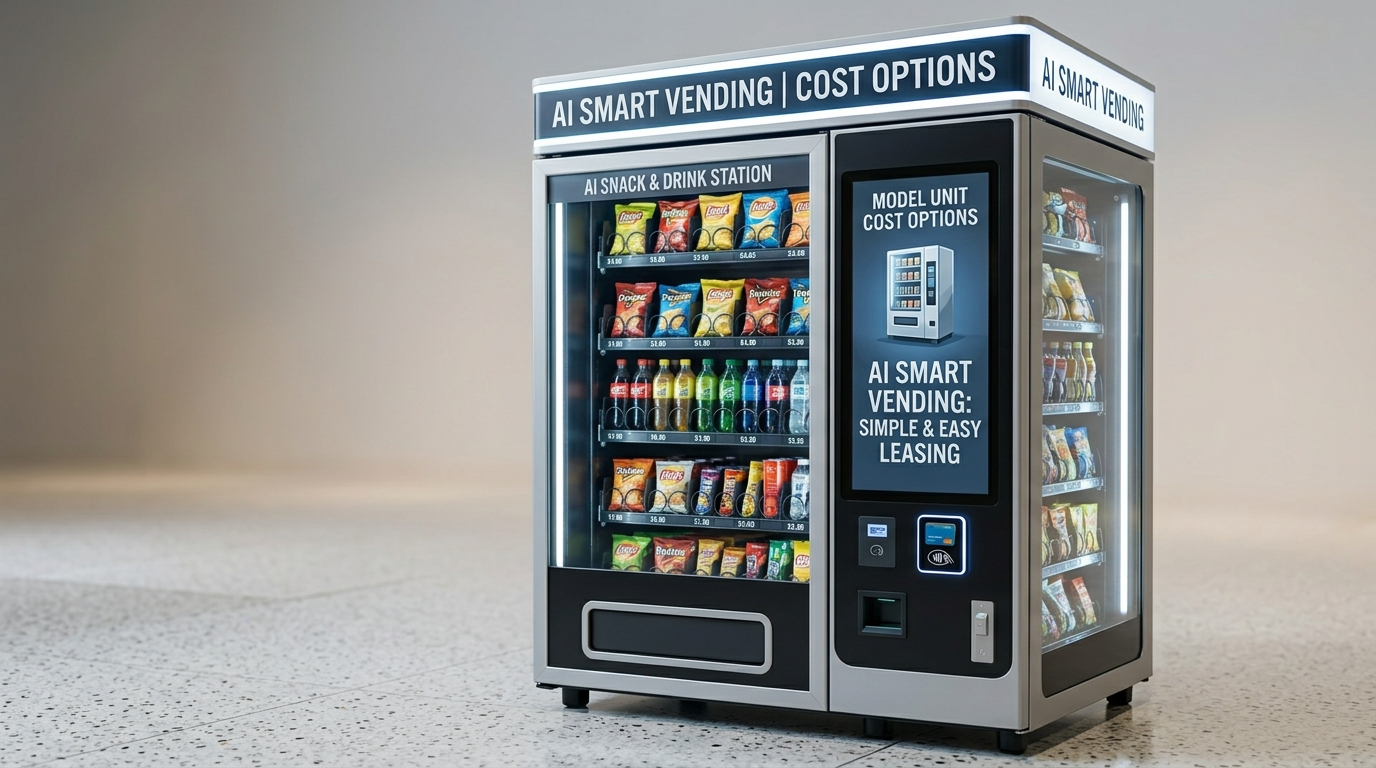
The most versatile format. An AI smart combo vending machine combines ambient and refrigerated sections in one unit, allowing operators to sell snacks, drinks, fresh food, and packaged goods side by side. Best for offices, gyms, transit hubs, and any location with diverse demand. The combo format maximizes revenue per square foot by serving multiple product categories from a single footprint.
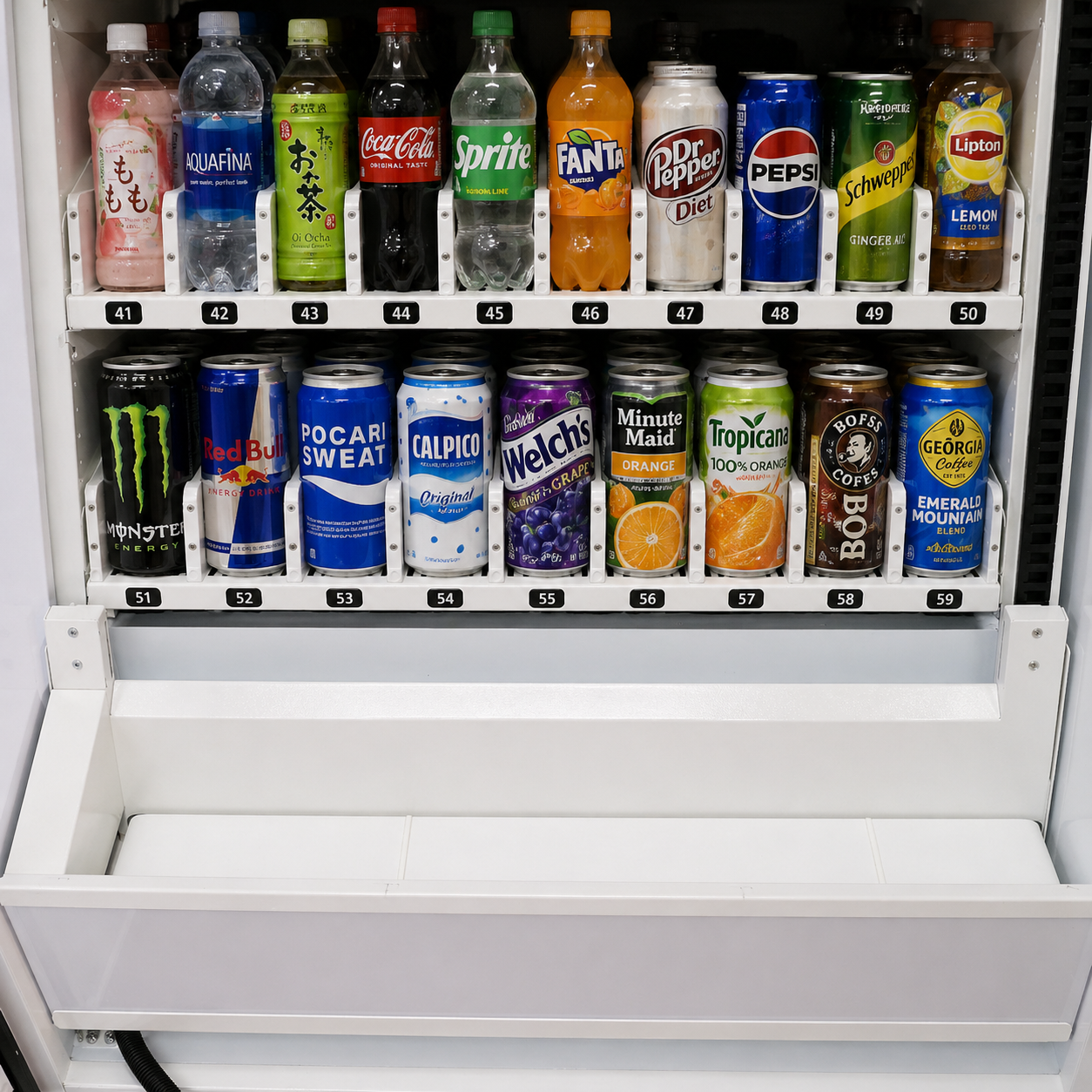
Purpose-built for high-traffic environments where speed is the priority. AI grab and go vending machines use an open-shelf cooler format — the customer taps to unlock, grabs what they want, and leaves. These machines perform exceptionally well in hospitals, university campuses, corporate buildings, and anywhere a customer has 60 seconds or less to make a purchase.
Focused entirely on refrigerated products. An AI smart cooler vending machine is the ideal format for fresh beverages, protein shakes, meal preps, and dairy products. The refrigeration is commercial-grade, and the AI layer monitors temperature continuously alongside inventory. Well suited for gyms, healthcare facilities, and hotel lobbies where fresh product quality is non-negotiable.
A step up in capacity and product flexibility. The smart fridge vending machine format supports a wider range of refrigerated SKUs at higher volumes, making it the right choice for large office buildings, airport concourses, or locations where restocking frequency needs to be minimized.
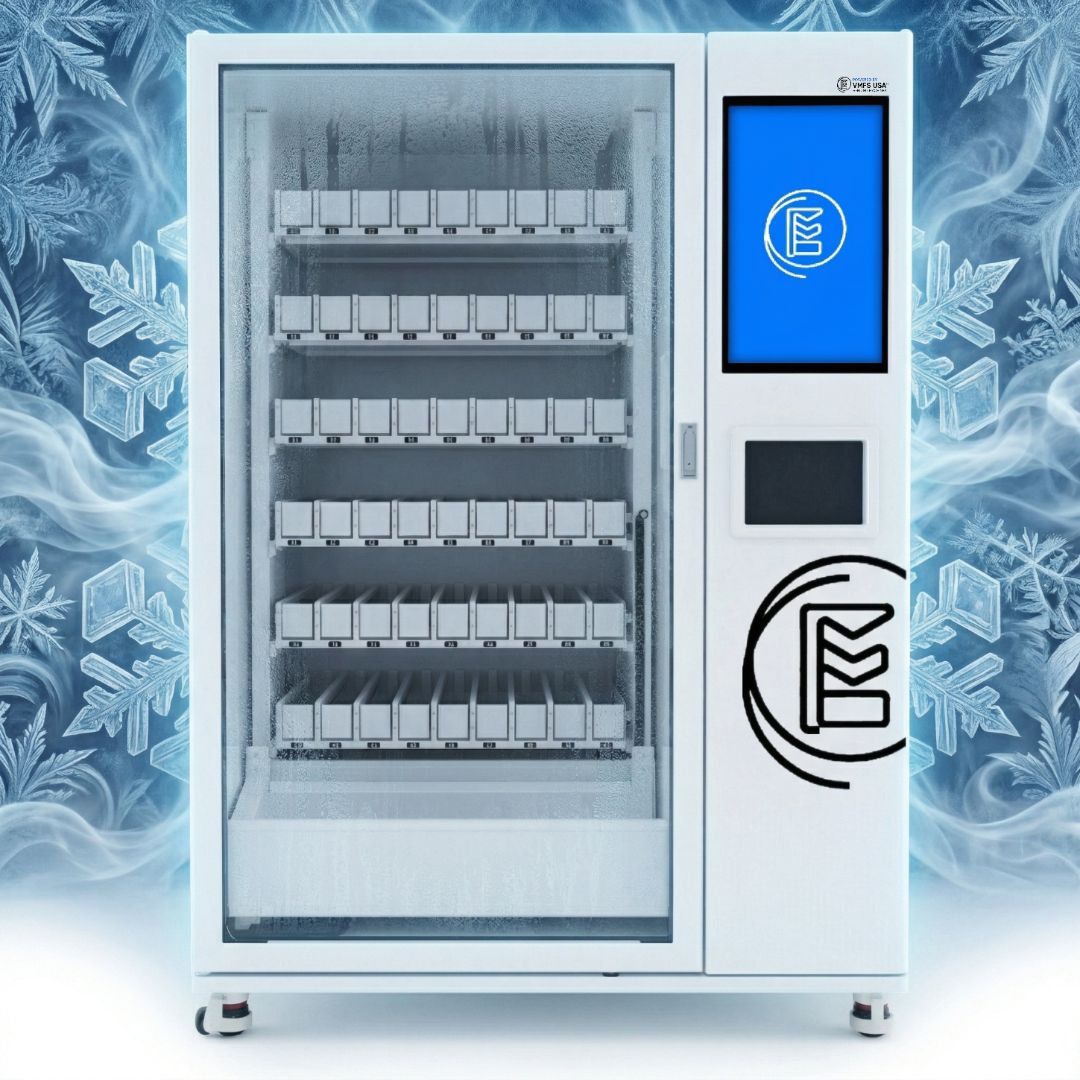
Designed specifically for frozen products — ice cream, frozen meals, cold packs, and specialty frozen goods. An AI frozen vending machine maintains consistent sub-zero temperatures while the AI layer handles inventory tracking, demand prediction, and payment. A growing format in entertainment venues, convenience corridors, and health-focused locations offering frozen meal prep.
The business case for an AI vending machine is built on four pillars: higher revenue per location, lower operating costs, better inventory control, and data-driven decision making. Here is how each one plays out in practice.
AI vending machines generate higher average transaction values than traditional machines for two reasons. First, the open-shelf or interactive display format encourages browsing — customers see the full product range rather than scrolling a limited selection screen. Second, the AI recommendation engine suggests complementary products at the right moment, increasing the likelihood of a multi-item purchase. Operators consistently report higher per-visit spend compared to equivalent traditional machine placements.
Route optimization alone drives significant savings. Traditional operators drive to locations on a fixed schedule, often restocking machines that are half-full or discovering machines that have been empty for days. With real-time inventory data from a cloud vending management platform, operators only drive when a machine genuinely needs attention. Fuel, labor, and wasted trips decrease substantially as a fleet scales.
Smart alerts notify operators before equipment fails rather than after. Temperature anomalies, motor irregularities, payment terminal errors, and connectivity drops all generate automatic alerts to the operator's dashboard and mobile app. Catching a cooling issue before it spoils a full inventory load can save hundreds of dollars in a single incident.
Prices can be updated across an entire fleet remotely in seconds. This enables time-based promotions — discounting slow movers in the final hour before restocking, for example — and demand-based pricing that maximizes margins during peak periods. No stickers, no physical visits, no delay.
AI-verified checkout eliminates the two main sources of loss in traditional vending: mechanical errors (coil jams that dispense wrong or double items) and manual miscounts. The computer vision plus weight sensor combination verifies every transaction, and the pre-authorized payment model means customers cannot leave without a confirmed charge.
The investment in an AI vending machine is higher upfront than a traditional machine. Understanding the full cost picture — and the realistic return — helps operators make the right decision for their situation.
| Machine Type | Typical Price Range | Best For |
|---|---|---|
| AI Smart Cooler | $3,500 – $5,500 | Beverages, fresh food, single-category locations |
| AI Smart Combo | $4,500 – $7,500 | Mixed product locations, offices, gyms |
| AI Grab and Go | $5,000 – $10,000 | High-traffic, speed-priority locations |
| AI Frozen | $4,000 – $7,000 | Frozen meals, ice cream, specialty frozen goods |
Most AI vending machines require a standard 110–120V dedicated outlet, a stable Wi-Fi or cellular connection for cloud connectivity, and adequate clearance for door swing and restocking access. Installation is typically straightforward — most units are operational within an hour of delivery. Custom vending machine configurations — branded wraps, specific product layouts, or tailored software settings — may add lead time but significantly improve performance in brand-sensitive locations.
The numbers below reflect a well-placed machine in a busy location (office building, gym, hospital corridor). Lower-traffic locations will have longer payback periods.
For operators who need help with the upfront investment, flexible vending machine financing options are available that spread the cost across manageable monthly payments while the machine generates revenue from day one.
Technology alone does not determine the success of an AI vending machine deployment. Location is the most important variable. A high-performing machine in the wrong spot will underdeliver. The same machine in the right environment can pay for itself in months.
The highest-performing location types share four characteristics: consistent foot traffic of at least 150–200 people per day, limited nearby food or retail options (captive audience), a customer base with purchasing power and a willingness to use cashless payment, and a secure, visible placement point that does not require staff supervision.
Locations that consistently deliver strong AI vending results include corporate office buildings and business parks, hospital and healthcare facility corridors, university campuses and student unions, gyms and fitness centers, hotels and extended-stay accommodations, transit hubs and airport terminals, and residential apartment complexes. Each of these environments has a captive, repeat customer base — which is exactly the type of traffic that benefits most from the AI personalization and loyalty features built into smart vending systems.
Operating an AI vending machine is a legitimate retail business and carries corresponding legal obligations. Getting these right from the start prevents costly disruptions later.
Business and Seller's Permits: Most jurisdictions require a valid business license and a seller's permit for sales tax collection. Requirements and fees vary by state — verify local rules before placing a machine.
Health Permits: If the machine sells food or beverages, a health department permit and periodic inspection are typically required. Temperature logs — which AI machines generate automatically — are often requested as part of compliance documentation.
PCI Compliance: All payment terminals must meet Payment Card Industry Data Security Standards. Reputable AI vending suppliers ship PCI-compliant hardware and maintain encryption standards across software updates.
Biometric Data Laws: Machines that use face-scan payment must comply with applicable biometric privacy laws — including BIPA in Illinois, CCPA in California, and GDPR for any European customer data. Display clear notice of data collection at the point of interaction and confirm your supplier's data handling policies before deployment.
Zoning and Placement Agreements: Confirm that vending is permitted at your target location under local zoning rules. Secure written placement agreements with property owners that clearly define commission structures, access rights, and removal terms.
AI vending machines are engineered for reliability, but consistent uptime requires a basic maintenance routine. Most issues that cause downtime are preventable with simple habits.
Daily: Wipe the touchscreen and door handles. Check that the machine is connected and the dashboard shows no alerts. Confirm the cooling temperature is within range for perishable products.
Weekly: Review the sales dashboard for any anomalies — unusual drops in transaction volume can indicate a connectivity issue or mechanical problem. Restock based on real-time inventory data rather than fixed schedules.
Monthly: Clean interior shelves and camera lenses. Inspect cooling coils and fan vents for dust buildup, which reduces efficiency. Apply any pending software or firmware updates during low-traffic hours.
Immediately: Respond to any dashboard alerts for temperature deviation, payment terminal errors, or connectivity loss. The faster an alert is acted on, the lower the revenue impact.
The remote monitoring capability built into AI vending systems means most operators can manage a multi-machine fleet without being physically present at any location daily. Real-time telemetry and cloud monitoring surfaces issues before they become customer-facing problems.
Leading AI vending machines achieve product recognition accuracy of up to 99 percent through the combination of computer vision and weight sensor technology. Accuracy is highest when products are consistently stocked in their designated positions and the camera lenses are kept clean. Some degradation can occur with visually similar products in adjacent slots, which is why high-quality systems use both visual and weight data together.
A stable Wi-Fi connection with at least 10 Mbps download speed is sufficient for most AI vending machines. Many models also support 4G/LTE cellular connectivity as a primary or backup connection, which makes them viable in locations without strong Wi-Fi infrastructure. Payment processing and real-time reporting both depend on connectivity, so a reliable connection is important for optimal performance.
Yes. Smart cooler and grab-and-go AI vending machines are specifically designed for perishable products. They maintain refrigerated temperatures continuously and include temperature monitoring alerts to notify operators of any deviation. AI smart combo machines can hold both ambient and refrigerated products in the same unit. For frozen goods, dedicated AI frozen vending machines maintain sub-zero temperatures with continuous monitoring.
Most AI vending machines are operational within one to two hours of delivery. Setup involves positioning the machine, connecting to power and Wi-Fi, configuring the cloud dashboard, loading products, and running a test transaction. Custom vending configurations with branded wraps or specific software setups may require additional lead time before delivery.
A smart vending machine typically refers to any machine with digital payment options and basic connectivity — touchscreen interface, card reader, and perhaps remote sales reporting. An AI vending machine specifically incorporates machine learning and computer vision to enable features like open-shelf grab-and-go checkout, predictive demand forecasting, behavioral personalization, and adaptive pricing. All AI vending machines are smart machines, but not all smart machines are AI machines.
Yes. Many suppliers and third-party lenders offer financing options for AI vending machine purchases. Flexible vending machine financing typically covers the full machine cost with monthly payment terms, allowing operators to begin generating revenue before the machine is fully paid off. Approval requirements vary by lender but generally include basic business documentation and credit history.
AI vending machines represent a genuine structural improvement over traditional automated retail — not just in the customer experience, but in the underlying business model. The combination of computer vision, sensor-verified checkout, cloud-connected inventory management, and machine learning analytics gives operators tools that were previously only available to large-format retailers with dedicated technology teams.
The technology is mature, the cost structure is accessible with financing, and the location opportunity is wide open. Whether the goal is a single machine generating supplemental income or a multi-location fleet operating as a primary business, understanding how AI vending machines work is the foundation for deploying them profitably.
For operators ready to move from research to action, exploring the range of AI grab and go vending machines available today is a practical next step — as is reviewing financing options if upfront capital is a constraint.



Share:
Laundry Vending Machine Profit: What Operators Actually Earn
AI Vending Machines: The Complete Buyer's Guide (2026)