




Design the perfect vending solution for your location and customers.

Join the VMFS newsletter and step into a thriving network dedicated to collective success.
One signup. Endless possibilities.
A gym vending machine earns when it sells what a workout creates demand for: cold water, electrolyte drinks, ready-to-drink protein shakes and protein bars, placed on the exit path and priced for a customer who already pays to train there. Demand is real: the Health & Fitness Association counted 81 million U.S. fitness facility members in 2025 and roughly 7 billion visits.
This guide covers what to stock before, during and after a workout, the caffeine, supplement and age rules that apply, where to put the machine inside a gym, how commission deals with gym owners work, how to price, which machines fit which gym, and how to model revenue with your own numbers.
Gyms are strong vending locations because the workout itself creates the need: members arrive needing caffeine or fuel, sweat through their water and leave needing protein and fluids. That purchase intent repeats on every visit, which is very different from an office break room where most buying is boredom or habit.
The audience is large and growing. The Health & Fitness Association reports 81 million U.S. members in 2025, up 5.2% from 2024, more than 100 million total facility users once day-pass and guest visitors are included, and an estimated 7 billion visits, above the 2019 pre-pandemic peak. The same report says the share of members who never used their membership fell to 4.6%, an all-time low. For an operator that last figure matters more than the headline: members who actually show up are the only ones who buy.
Membership size is not your traffic number, though. A gym with a large roster and a quiet floor sells less than a smaller club that is busy from 5 a.m. to close. Before you commit a machine, ask the owner for average daily check-ins from their access-control or membership software, the busiest hours, and whether the club is staffed or 24-hour. Those three answers drive every decision below, from machine size to restock day.
Daily check-ins
The best single traffic signal. Ask for a recent monthly average from the gym's access system, not the member count.
Peak windows
Most clubs have an early-morning rush, a lunch bump and an evening peak. Your fastest SKUs must be full before the evening.
Competing options
A juice bar, front-desk cooler or nearby convenience store all cut into vending. Note them before you pitch.
Member profile
Strength gyms, CrossFit boxes, family clubs and boutique studios buy differently. Match the planogram to who trains there.
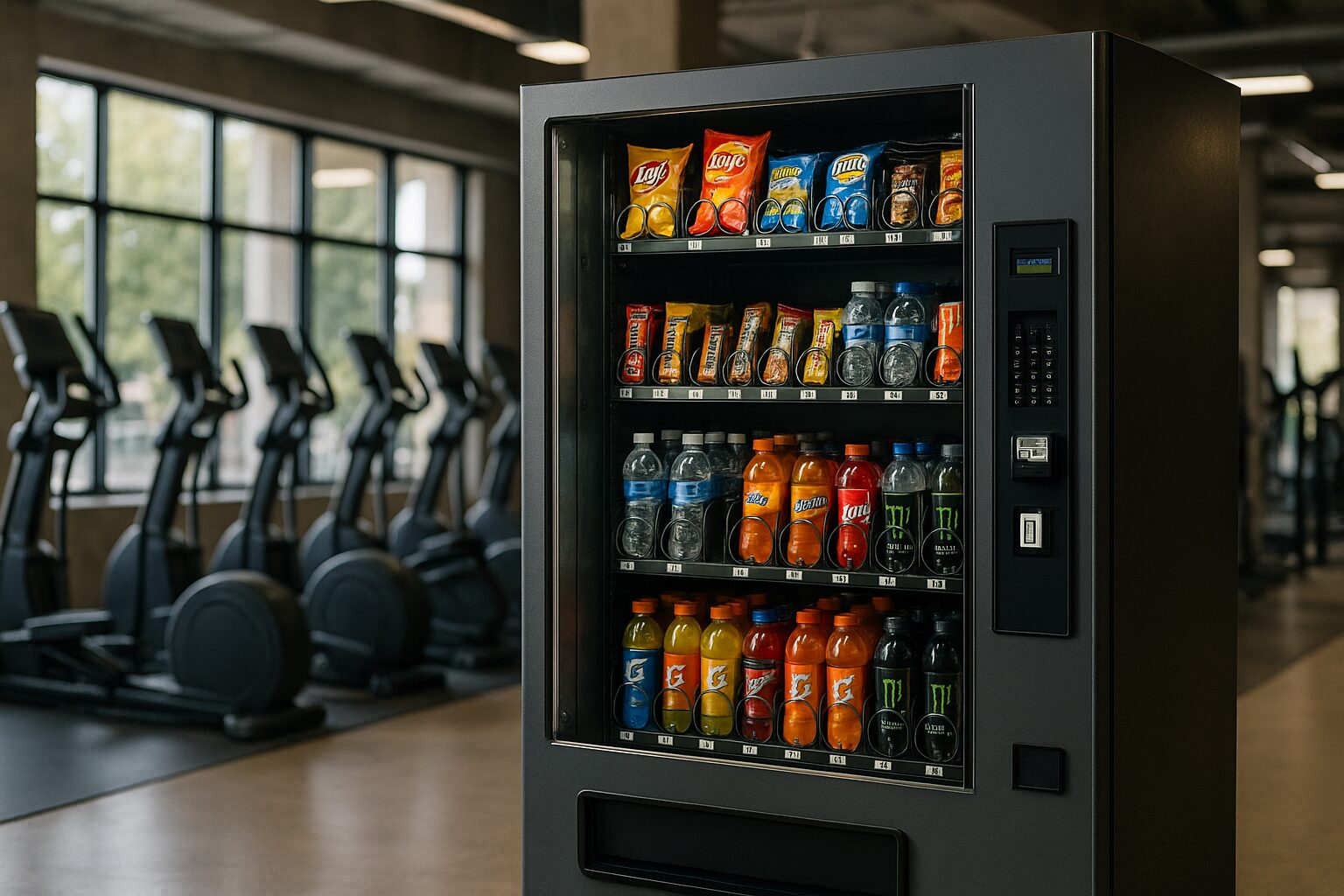
Stock a gym vending machine around the workout: caffeine and quick energy before, water and electrolytes during, and protein after. Ready-to-drink protein shakes, bottled water, electrolyte drinks and protein bars are the core; everything else should earn its slot by selling.
The before, during and after framing from our original guide still holds because it maps products to the moment a member feels the need. A member walking in at 6 a.m. wants caffeine or a light carbohydrate snack. Someone mid-session wants cold water or an electrolyte drink. Someone leaving wants protein, more fluid and something to eat on the drive. Each moment points to a different slot and a different placement, which is why chilled capacity matters so much in a gym: most of the high-intent products are cold drinks.
Brand recognition matters more here than in almost any other location. Gym members read nutrition and ingredient panels, and a cheap, unfamiliar protein bar can damage trust in the whole machine. Stock brands members already buy at supplement stores, carry at least two protein shake flavors so a sell-out does not end the sale, and add one or two lower-sugar options for members who track macros. Small accessories such as sweat towels, earbuds or shaker bottles can work in spiral slots at busy clubs, but test them in one or two slots before committing more. For the wider better-for-you menu, our guide to healthy vending machine snacks covers categories and nutrition standards in detail.
| Workout moment | What sells | Slot type | Notes |
|---|---|---|---|
| Before | Energy drinks, cold brew or caffeinated sparkling water, pre-workout shots, quick-carb snacks such as fruit bars | Chilled | Highest caffeine exposure; see the age and labeling section below |
| During | Bottled water, premium water, electrolyte and sports drinks, coconut water | Chilled | Water is the most frequent purchase; never let it run out |
| After | Ready-to-drink protein shakes, protein bars, jerky, nuts and trail mix, recovery drinks | Chilled and ambient | Carry at least two shake flavors; members compare grams of protein |
| Anytime | Sweat towels, earbuds, shaker bottles, single-serve supplement packs | Spiral or locker | Test in one or two slots before expanding |
What not to lead with is just as important. Candy bars, regular chips and full-sugar soda as headline items read as zero effort to a gym owner and can cost you the placement. They can still fill a small share of slots if members buy them, but the front row should look like a supplement store, not a gas station. Anything that needs a spoon or a bowl also underperforms, because members eat standing up or walking to the car. If you want to compare gym demand with other sites, what sells best in vending machines breaks down top sellers by location type.
Gym vending is mostly lightly regulated food and beverage retail, but caffeine products, pre-workout supplements and anything marketed for muscle building or weight loss carry extra labeling and, in some states, age rules. Operators who stock these categories should know the basics before the first fill.
Caffeine is the first issue. The FDA says 400 milligrams a day is an amount not generally associated with negative effects for healthy adults, notes that energy drinks it reviewed range from 54 to 328 milligrams per 16 fluid ounces, and states that medical experts advise against energy drinks for children and teens. The same page warns that pure and highly concentrated caffeine products can be dangerous; a gym machine should never sell loose caffeine powder. A member who drinks a 300 mg energy drink after a scoop of pre-workout is near that 400 mg figure before lunch, so stock a caffeine-free electrolyte option next to every energy drink and keep caffeine content visible on the product face.
Pre-workout powders, shots and many creatine products are sold as dietary supplements, not ordinary beverages. The FDA's dietary supplement Q&A explains that the agency does not approve supplements or their labels before they are sold, that manufacturers and distributors are responsible for safety and truthful claims, and that labels carry a Supplement Facts panel. As the seller, your practical job is to buy from reputable distributors, keep products in their original labeled packaging, rotate by date, and avoid posting your own health claims on the machine wrap.
Age is where gyms differ from offices. HFA's survey covers U.S. residents from age six up and finds the highest membership penetration of any age group, 35.5%, among 18- to 24-year-olds, and many family clubs and high-school athletes train alongside adults. New York already restricts sales of dietary supplements marketed for weight loss or muscle building to buyers 18 and older; Polsinelli's summary of the law notes it took effect April 22, 2024, requires age verification at purchase, lists ingredients such as creatine, and exempts protein powders, drinks and foods unless they also contain a covered ingredient. Courthouse News reported that the Second Circuit upheld the law in November 2025.
Compliance checklist: In New York, keep muscle-building and weight-loss supplements out of an open-access machine unless it has age verification, and check whether your own state has proposed similar rules. Operators running 20 or more machines must also disclose calories for food sold from vending machines under FDA vending labeling rules. Local permits are covered in our guide to vending machine permits in the United States.
None of this makes gyms hard to serve. It means the planogram should be built in layers: a core of water, electrolytes, ready-to-drink protein and bars that anyone can buy, with caffeine and supplement products added deliberately, labeled clearly and, where state law requires it, behind an age check.
Place the machine on the exit path, where members pass at the moment the post-workout need peaks, and make sure it is visible from the front desk and the main floor. Where the machine sits inside the building can matter as much as which gym you choose.
The exit or front desk area is the default because every member passes it twice, once arriving and once leaving. Outside the locker rooms is the next best spot: members stop there, have their phone or wallet in hand and often finish a drink before showering. Near group-class studios works at clubs with a heavy class schedule because a crowd waits outside the door before each class and leaves together after it. A spot beside the free-weights area can work for a second, beverage-only unit in a large club, because lifters rest between sets and drink constantly.
Avoid back corridors, anywhere next to an existing juice bar or front-desk cooler, and any spot that is not visible from the main traffic route. Out of sight really is out of mind in a gym, because members arrive with a plan and leave in a hurry.
Ask which circuit the outlet is on before installation. Gyms are full of high-draw equipment, and a refrigerated machine sharing a circuit with treadmills or a sound system is how operators find warm protein shakes on a Monday morning. Follow the electrical requirements in the machine's manual, measure doorways and the final footprint before you choose a cabinet, and leave room for the door to swing open fully during service. In narrow lobbies or hotel fitness rooms, a wall-mounted or mini unit avoids taking floor space the owner would rather give to equipment.
| Spot inside the gym | Why it works | Best machine |
|---|---|---|
| Exit or front desk | Every member passes twice; staff can see faults | Combo or AI cooler |
| Outside locker rooms | Dwell time; post-workout fluids and protein | Cold drinks or AI cooler |
| Group-class studio door | Crowds before and after every class | Cold drinks |
| Free-weights area (large clubs) | Constant drinking between sets | Second, beverage-only unit |
| Narrow lobby or hotel fitness room | No spare floor footprint | Wall-mount or mini unit |
Most gym vending deals use one of three structures: the gym owns and runs the machine itself, an operator places the machine and pays the gym a commission on sales, or an operator pays a flat monthly fee. Commission is the most common arrangement for independent operators.
Published commission ranges cluster in the same band. NerdWallet puts typical location payments at 5% to 25% of machine revenue, Nav cites 5% to 20%, and the gym-business consultancy Two-Brain Business cites 10% to 25% of gross sales for securing a location. In practice, many independent gyms and studios sit toward the lower end or ask for nothing, because they see the machine as a member amenity, while larger commercial clubs push toward the top of the range and some chains already have an exclusive vending contract.
When the gym owns the machine, it keeps all the revenue but carries the purchase, the stocking and the service calls. Two-Brain describes both models from the gym's side: owners who buy their own machine keep control of products and pricing, while owners who partner with an outside company give up some control in exchange for no work. As an operator, your pitch is the second model done well: you supply the machine, stock and service it, handle refunds and complaints, and send the owner a commission statement every month. The economics of each party's share are laid out in our vending machine revenue split breakdown.
Put every gym placement in writing. A club that renovates, rebrands or changes management can remove a machine overnight if nothing is signed. The agreement should state the commission rate and whether it is calculated on gross or net sales, the term length and renewal terms, your access hours, who pays for electricity, who is liable for damage, whether you have exclusivity for snacks and drinks, and the notice period either side must give before removal. Most gyms will also ask for a certificate of insurance; our vending machine insurance guide covers the policies operators typically carry. For contract drafting and state-specific questions, VAdviced covers vending legal and compliance work, and our article on vending contract renewal explains how to protect the placement when the first term ends.
Price gym vending products against the nearest supplement store or convenience store, not against an office break room. Members who just finished training rarely drive elsewhere to save a dollar, and premium products carry premium cost.
Start from your landed cost per unit and the margin you need. Nav cites product cost at roughly half of the vend price as a common benchmark; protein shakes and branded bars often cost you more per unit than chips or soda, so dollar margin per vend matters more than margin percentage. For example, a shake that costs you $2.50 delivered and sells for $5.00 earns $2.50 per vend; a soda that costs $0.60 and sells for $2.00 earns $1.40. That is why protein and electrolyte products deserve the best slots even though their percentage margin can look lower on paper.
Use simple price points, ending in .00 or .50, so card and mobile-wallet buyers are not surprised, and review prices when a supplier changes cost rather than once a year. Bring prices up gradually at an existing placement and watch unit sales per slot for two to three weeks after each change. Our operator pricing guide explains cost-plus and market-based pricing, including how to compare SKUs by dollar profit per slot.
Cashless acceptance is not optional at a gym. Many members bring only a phone to a workout. NAMA's industry census found that about 75% of the 2.89 million U.S. vending machines accept cashless payment, and operators interviewed for the NAMA census said the shift to cashless has led to higher transaction averages. A gym machine without tap-to-pay and mobile wallets is invisible to most of the room; our cashless payment system guide compares readers and fees.
Cold drinks carry gym vending
Browse refrigerated beverage machines sized for protein shakes, water and electrolyte drinks.
Shop Drink MachinesA gym vending machine's revenue is daily traffic multiplied by the share of visitors who buy and the average ticket, so the honest answer depends on the site. Build the estimate from the gym's real check-in count instead of trusting a single headline number.
Earlier versions of this article quoted operator anecdotes and revenue tiers by member count that we could not verify, so we have replaced them with a model you can run with your own inputs. Monthly gross equals daily check-ins, times the percentage who buy, times the average ticket, times about 30 days. The table below shows how sensitive the result is to the buy rate. The inputs are assumptions for illustration, not a forecast; a $4.00 average ticket assumes a mix of water, electrolytes, bars and shakes.
| Daily check-ins (assumed) | 3% buy, $4.00 ticket | 6% buy, $4.00 ticket |
|---|---|---|
| 150 | $540 per month | $1,080 per month |
| 300 | $1,080 per month | $2,160 per month |
| 600 | $2,160 per month | $4,320 per month |
Gross is not what you keep. Take a machine grossing $2,000 a month. If product cost runs about half of sales, that is $1,000. A 15% commission, inside the published 5% to 25% range, is $300. Card processing at an assumed 3% is $60; use your processor's actual quote. Telemetry on VMFS Cloud Basic is $7.99 per machine per month. That leaves about $632 before electricity if you pay it, insurance, fuel, spoilage and your own time. On those assumptions, a $4,650 machine would take a little over seven months to pay back. Change any input and the answer moves, which is the point: run the model on every site before you sign, and use the ROI calculator to test different machines.
Track the result per machine, not as a route average. One weak gym hidden inside a strong route average can lose money for months.
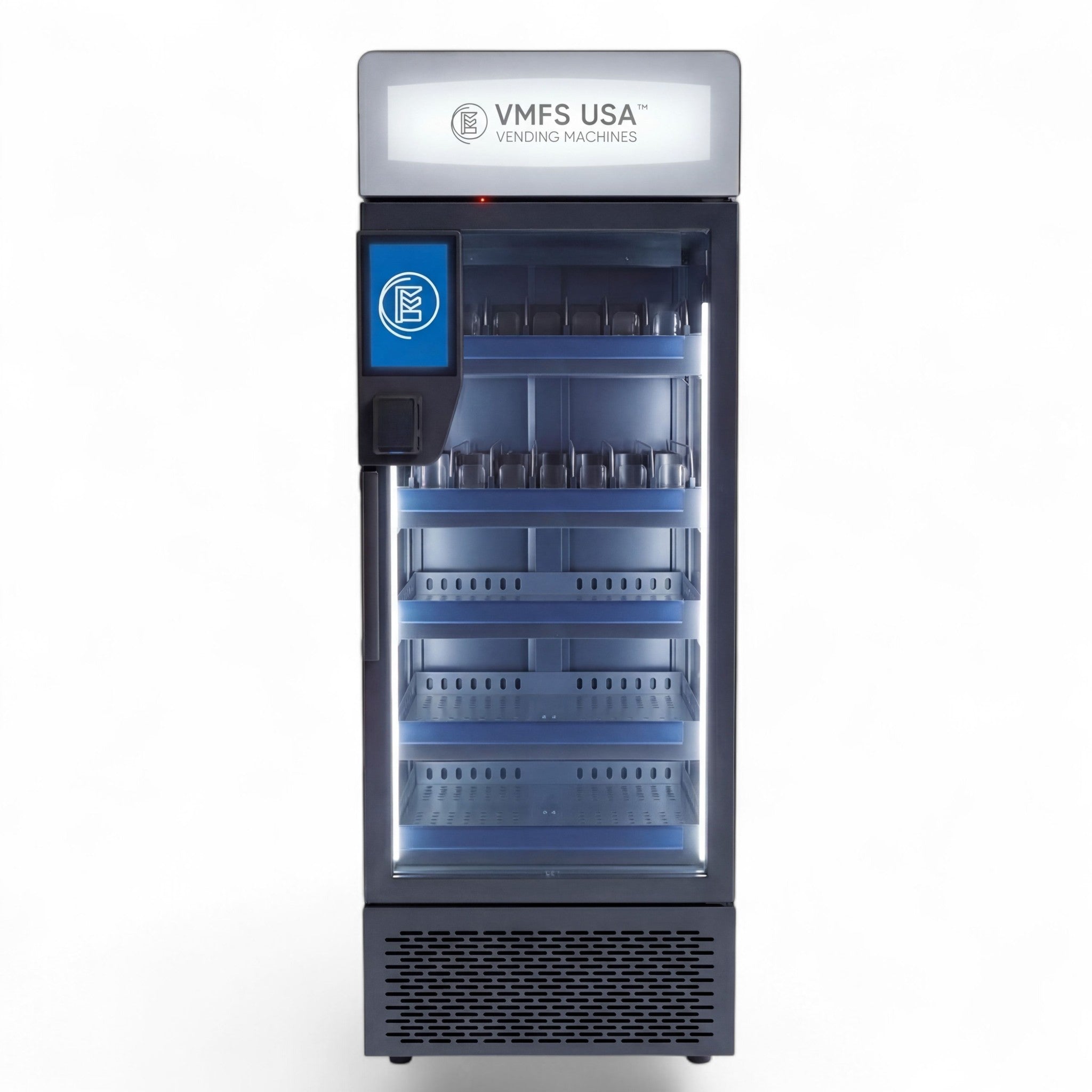
The best vending machine for a gym is the one that gives most of its capacity to cold drinks and accepts cashless payment: a refrigerated drinks machine or AI cooler for beverage-heavy clubs, and a combo machine when one unit has to cover drinks and snacks.
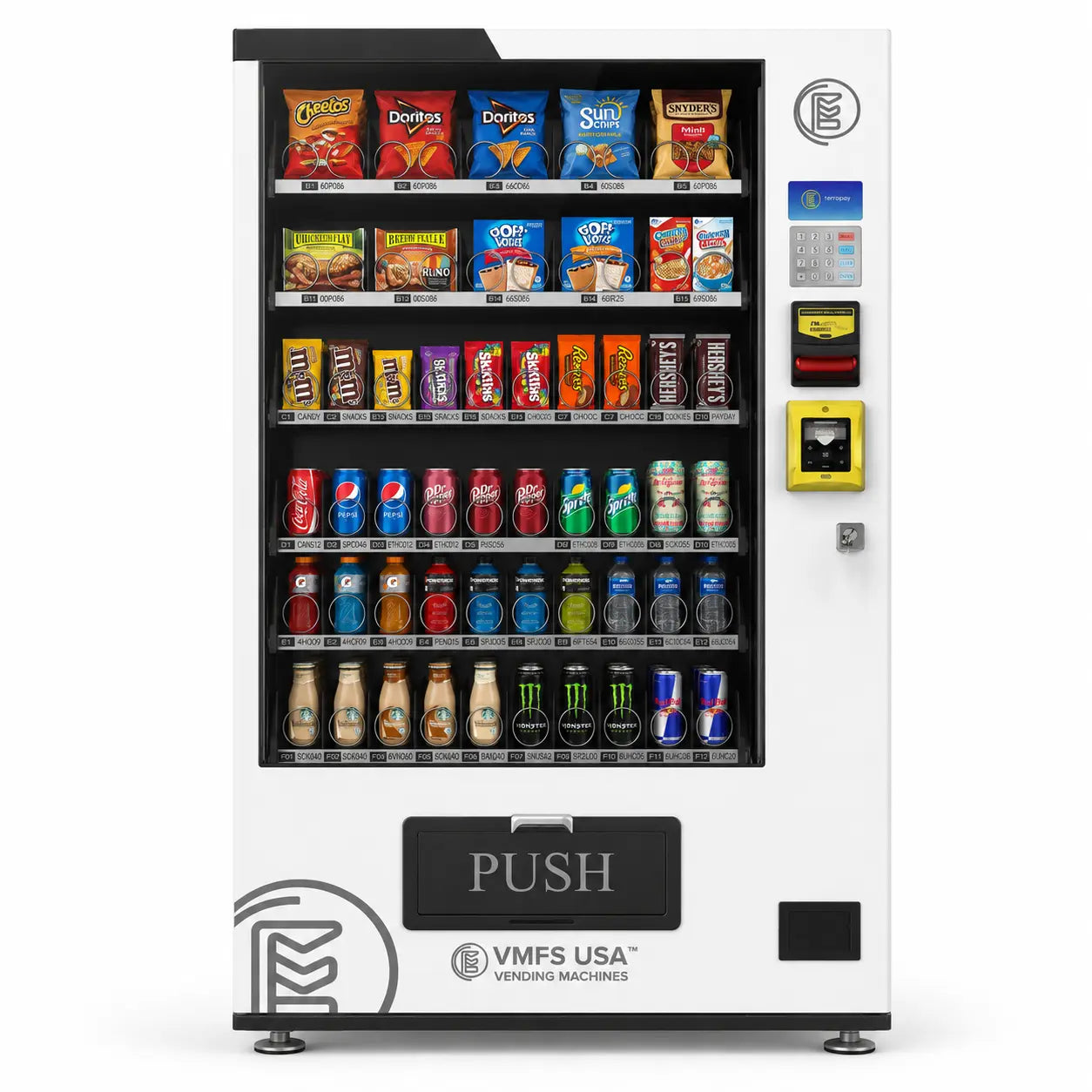
A drinks vending machine suits high-cardio gyms, CrossFit boxes and large clubs where shakes, water and electrolytes are most of the sales. A combo vending machine suits mid-size clubs that want a single agreement, a single outlet and a single service stop for drinks and bars. AI grab-and-go vending machines let a member tap a card, open the door and take several items in one transaction, which suits post-workout baskets of a shake plus a bar and fits upscale clubs that want a fridge-style look. In narrow lobbies, studios and hotel fitness rooms, a wall-mount unit or one of our mini vending machines avoids taking equipment floor space.
Prices below are current list prices for active VMFS models as of October 13, 2026; check the product page for configuration options, freight and current availability.
| Machine | Type | List price | Best gym fit |
|---|---|---|---|
| AI Grab & Go Cooler Vending Machine | AI cooler | $2,950 | Studios and small clubs selling cold drinks |
| AI Smart Combo Vending Machine | AI cooler, drinks and snacks | $3,950 | Mid-size clubs wanting multi-item baskets |
| AI Smart Cooler Vending Machine | AI cooler | $4,950 | Upscale clubs, locker-room corridors |
| Build Your Drink Vending Machine | Cold drinks | $4,200 | Beverage-heavy gyms on a budget |
| Seaga Prosper Beverage Vending Machine | Cold drinks | $5,450 | Large clubs, second beverage unit |
| Seaga ENV5B Refrigerated Beverage Merchandiser | Glass-front cold drinks | $6,450 | High-volume commercial gyms |
| Seaga SM2300 SnakMart Combo | Combo | $3,450 | Smaller gyms needing drinks and bars |
| Slim Combo Vending Machine | Combo | $3,650 to $3,950 | Tight lobbies |
| Smart Combo Vending Machine | Touch-screen combo | $4,650 to $4,950 | Mid-size and 24-hour clubs |
| WallMount Vending Machine | Wall-mount | $3,450 to $3,850 | Hotel fitness rooms, narrow corridors |
Ready-to-drink protein shakes sell from any refrigerated machine, so most gyms do not need specialized hardware to sell protein. Dedicated protein shake machines that mix powder with water on demand are a different product: they let members choose flavor and dose, but they add a water supply, cleaning cycles, cups and lids, and more service time per visit. VMFS lists a dedicated Protein Shake Vending Machine at $14,000, so it needs a busy club to pay back. Read how a protein shake vending machine works for the mechanics, what a protein shake vending machine costs to buy and run, and how to start a protein shake vending machine business before choosing that route over a cold-drink cabinet.
A used machine lowers the entry price, but at a gym the trade-offs weigh more than at a quiet office. Members judge the club by what sits in its lobby, almost nobody carries cash to a workout, and a failed refrigeration unit spoils the most expensive stock you carry. NerdWallet puts used and refurbished machines at $1,200 to $3,000 and new machines at $3,000 to $10,000.
New machine advantages
Used machine trade-offs
If the purchase price is the obstacle, vending machine financing spreads the cost so working capital stays available for inventory.
Set the restock schedule by the fastest-selling product, not by total machine capacity. At most gyms that product is a protein shake or water, and it empties days before the rest of the machine does.
Here is the arithmetic. If a machine holds 300 items and sells 25 a day, total capacity suggests a 12-day cycle. But if shakes are a quarter of sales, about six a day, and you only have three slots of 12 shakes, you are out of shakes in six days. Either give shakes deeper facings at the cost of variety, or shorten the cycle. Which wins depends on your drive time to the site; our guide to restock scheduling and routes works through both, and loading and stocking a vending machine covers facing, rotation and date control.
Timing matters too. PerfectGym describes the typical club pattern as an early-morning rush, a smaller lunchtime bump and an evening peak from about 4 p.m. to 7 p.m., with the quietest hours between midnight and 5 a.m. A machine that is out of shakes at 5:30 p.m. has lost its best window of the day, so schedule service for the morning or early afternoon, never just before the evening peak. Telemetry makes this practical: live stock levels on VMFS USA Cloud flag the SKU that is about to run out, so you restock before the shelf is bare instead of after members complain.
Seasonality is the third variable. Placer.ai foot-traffic data showed fitness visits in January 2025 were 21.2% higher than in December 2024, after a 23.4% January jump the year before. Tighten the restock cycle in January, and do not use January sales as the baseline when you promise an owner a monthly commission or pitch a second machine. Plan for slower summer weeks at many clubs by stocking shorter-dated products more shallowly.
Refrigeration is the failure that matters most at a gym, because a warm protein shake is unsellable, not just disappointing. Check door seals and compressor cycling on every visit, and respond quickly to faults a member reports to the front desk.
Win a gym placement by answering the owner's three unspoken questions before they ask: will it look right in my club, who handles problems, and what does the gym get? Most vending pitches sound identical, so specifics win.
Bring a photo of a machine stocked with brands the members already know. Say in your first sentence that every restock, refund and complaint comes to you, not the front desk. Then give the owner a dollar figure, not just a percentage: use their own check-in numbers in the revenue model above, apply your proposed commission, and show the result as a range. Owners respond to a number they can picture, and building it from their data shows you did the homework. Our playbook on how to scout and pitch a vending location includes scripts and follow-up timing, and VPlaced matches operators with qualified locations if you would rather not cold-call. If you are researching South Florida, see the Miami-Dade gyms and fitness centers that already embrace vending.
Give a new gym placement about 90 days before judging it. The first month includes novelty buying, the second shows the real baseline, and the third confirms it. If sales are still weak, test the cheap fixes first: move the machine onto the exit path, rebuild the planogram around what actually sold, and adjust prices. If none of that works, the traffic estimate was probably optimistic, and our guide on whether to relocate or pull a vending machine helps you decide what to do next.
Gyms also replicate well. Once one mid-size club works, the same planogram, pricing and pitch usually transfer to the next club of similar size and member profile, which makes a gym route easier to scale than a mix of unrelated site types.
One machine for drinks and protein bars
Combo machines cover cold drinks and snacks from a single footprint, outlet and service stop.
Shop Combo Machines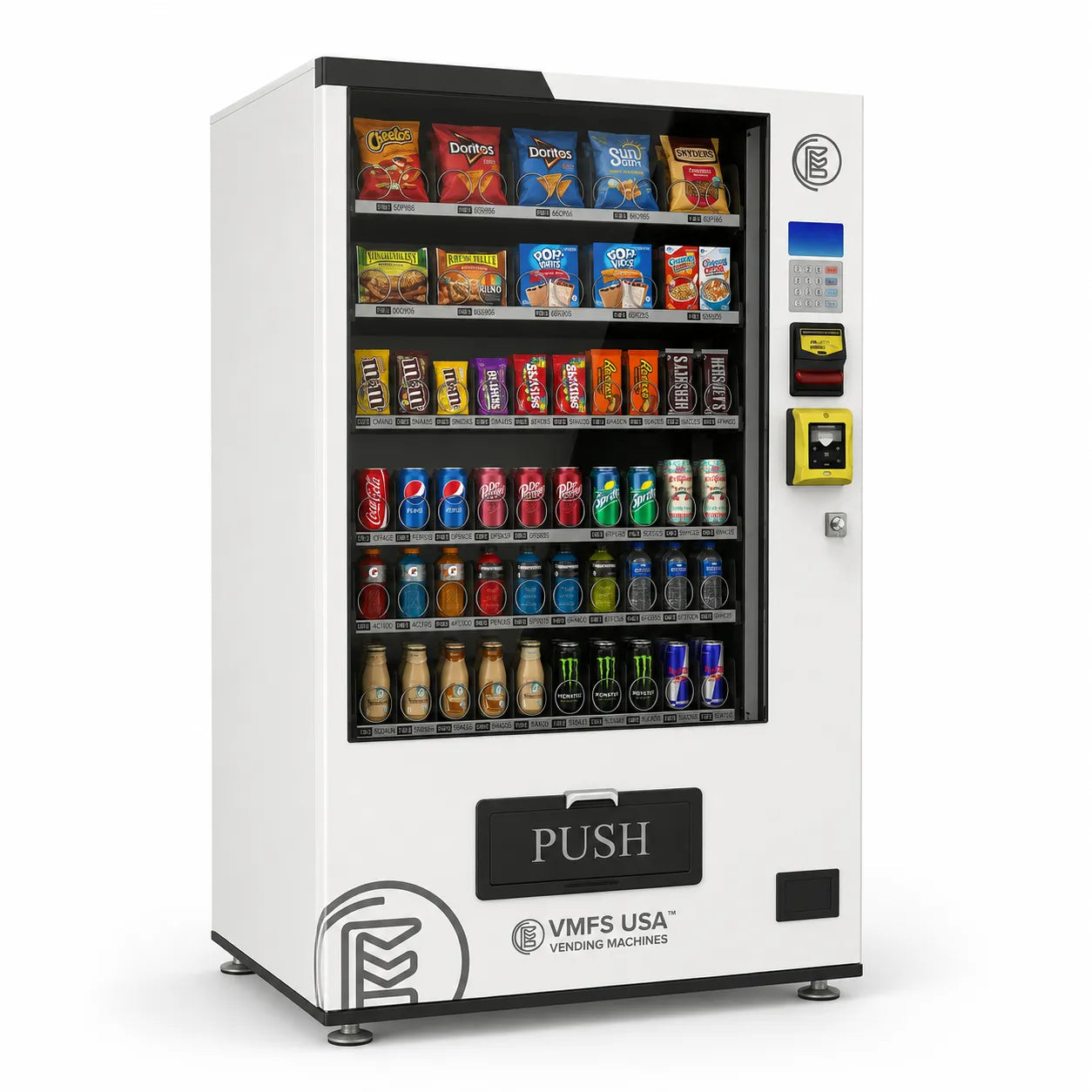
Share:
Top 10 Profitable Vending Machines for Small Business Owners
Las Mejores Ciudades de República Dominicana para Instalar Máquinas Expendedoras