


An espresso coffee vending machine extracts concentrated coffee under high pressure through finely-ground beans, delivering the rich crema and bold flavor that instant-powder machines can't replicate. This guide compares bean-to-cup espresso models by extraction quality, drink menu, and throughput, helping buyers choose fresh coffee vending equipment suited to their location's volume and customer expectations.
Table of Contents
- What Is an Espresso Coffee Vending Machine
- Bean-to-Cup Technology Explained
- Key Features to Look For
- Espresso Machines vs Instant Coffee Machines
- Model Comparison Table
- Premium Bean-to-Cup Comparison
- Drink Menu Capability
- Who Should Buy an Espresso Vending Machine
- Maintenance for Bean-to-Cup Machines
- Pricing and Value Considerations
- Frequently Asked Questions
What Is an Espresso Coffee Vending Machine
An espresso coffee vending machine is a fresh coffee vending unit that grinds whole beans and forces hot water through the grounds under 9 bars of pressure or more, producing the concentrated shot and crema that define true espresso. This mechanical process is fundamentally different from instant machines, which simply dissolve pre-processed powder in hot water without pressure extraction.
This distinction places espresso machines firmly in the bean-to-cup coffee vending machine category covered more broadly in how coffee vending machines work, but with the added mechanical complexity of pressurized extraction that instant-powder systems don't require.
Pressurized Extraction
Hot water forced through grounds at 9+ bars produces authentic espresso crema and body.
Fresh Bean Grinding
Beans grind seconds before brewing, preserving aromatic oils that stale pre-ground coffee loses.
Broader Drink Menu
Espresso-based platforms typically support lattes, cappuccinos, and macchiatos from one base shot.
Higher Perceived Value
Customers associate espresso-quality drinks with premium pricing and better retention.
Bean-to-Cup Technology Explained
Bean-to-cup technology grinds whole coffee beans immediately before each brew cycle, which is the core mechanism separating a fresh bean coffee vending machine from any powder-based alternative. Grinding on demand preserves volatile aromatic compounds that begin degrading within minutes of grinding, directly translating to a noticeably better cup than pre-ground or instant formats.
The Grinding and Dosing Process
An internal burr grinder processes whole beans to a consistent particle size calibrated for espresso extraction, then a dosing mechanism measures the exact grounds weight for each shot. Consistency here directly affects extraction quality — too fine a grind over-extracts and produces bitterness, while too coarse under-extracts into a weak, sour shot.
Pressurized Brewing
Once dosed, the machine compacts the grounds and forces heated water through them at high pressure within seconds, extracting oils and solubles that define espresso's characteristic body and crema layer. This pressurized step is the defining mechanical difference from filter-style or instant brewing methods.
Key Features to Look For
Key features on an espresso coffee vending machine determine both drink quality and daily reliability, and buyers should evaluate these specifications before comparing price alone. The right feature set depends on expected transaction volume and drink menu ambitions.
- Grinder quality: Ceramic or steel burr grinders maintain consistent particle size longer than lower-grade alternatives, directly affecting shot consistency over time.
- Milk system integration: Automatic milk frothing enables lattes and cappuccinos without manual steps, expanding drink menu capability significantly.
- Bean hopper capacity: Larger hoppers reduce refill frequency at high-volume locations, a factor covered further in the supplies guide.
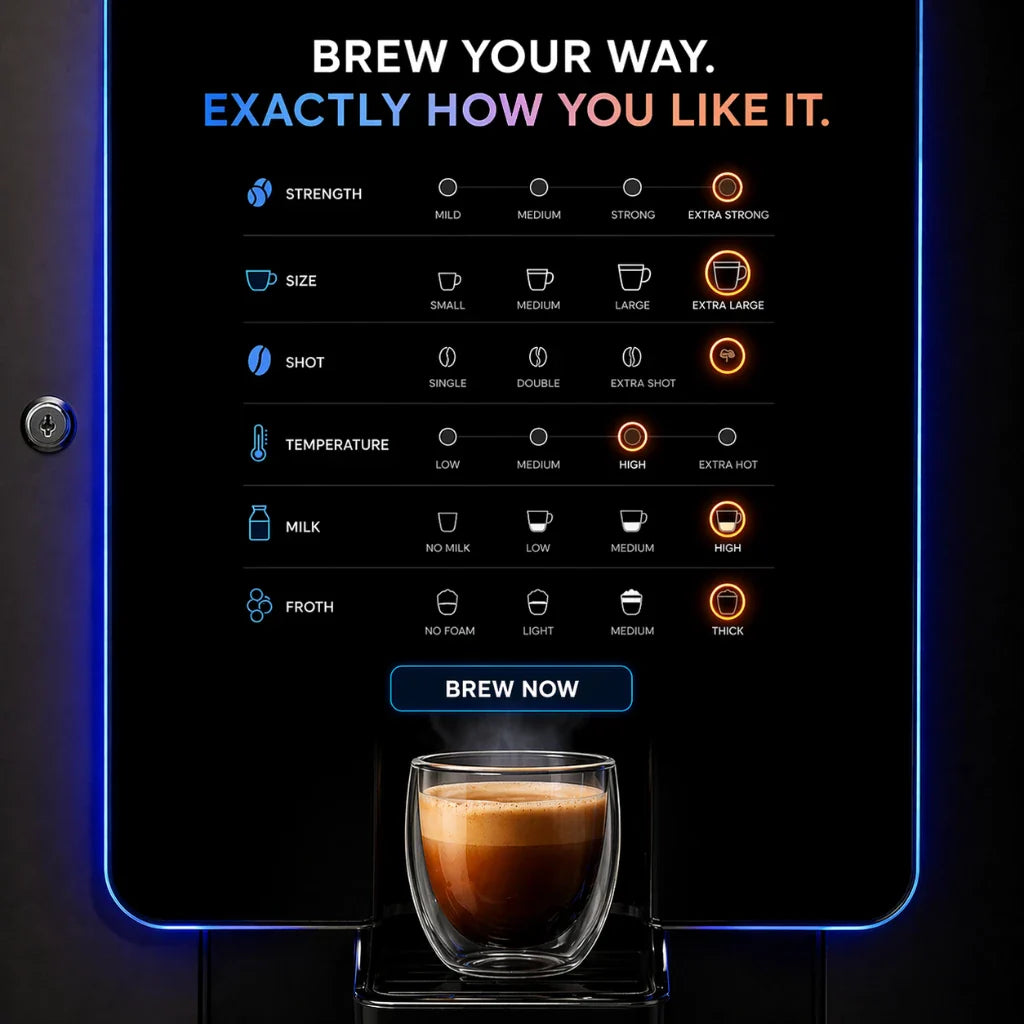
- Touchscreen customization: Digital interfaces let customers adjust shot strength, milk ratio, and drink size, improving satisfaction at self-serve locations.
Buyer note: The premium countertop touch screen coffee machine combines fresh bean grinding with full touchscreen customization in a footprint suited to offices and small commercial spaces.
Espresso Machines vs Instant Coffee Machines
Choosing between an espresso bean-to-cup machine and an instant powder-based unit affects drink quality, throughput speed, and maintenance complexity differently depending on business priorities. Espresso machines cost more and require more upkeep but deliver measurably better drink quality.
Espresso Bean-to-Cup — Advantages
- Fresh-ground flavor closer to café-quality coffee
- Broader drink menu from a single base extraction
- Higher perceived value supports premium pricing
Espresso Bean-to-Cup — Limitations
- Higher equipment cost than instant-powder machines
- More frequent cleaning required for grinder and brew group
Instant Coffee Machines — Advantages
- Lower equipment cost
- Faster cup time, simpler mechanical operation
Instant Coffee Machines — Limitations
- Noticeably lower flavor quality than fresh-ground espresso
- Less differentiated drink menu overall
Buyers weighing this decision alongside overall equipment budget should reference the coffee vending machine price guide and the vending coffee dispenser price guide for current cost comparisons across both categories.
Model Comparison Table
This comparison summarizes espresso and bean-to-cup capable models available for commercial and office placement.
| Model | Brewing Type | Best Suited For |
|---|---|---|
| Premium countertop touch screen machine | Bean-to-cup espresso, touchscreen customization | Offices, small commercial spaces |
| CorePro coffee vending machine | Bean-to-cup with standard menu | Standard commercial placements |
| Coffee and hot beverage machine | Multi-drink, high-volume capable | High-traffic commercial locations |
| Pro coffee vending machine | Full-service, high-capacity | High-volume, full-service routes |
| Coffee vending machine system | Bundled equipment and supply system | Operators standardizing multiple locations |
Premium Bean-to-Cup Comparison for Gourmet Coffee Service
Buyers shopping for gourmet coffee vending machines are really comparing four things: how the beans are ground, how tightly extraction is controlled, how many drinks the machine serves between refills, and where it can safely be placed. The table below puts VMFS USA's premium bean-to-cup models side by side on exactly those points.
| Model | Format | Grinder & Extraction | Capacity | Gourmet Drink Menu | Best Suited For |
|---|---|---|---|---|---|
| Premium Countertop Touch Screen | Countertop, 10.1-inch touchscreen | Integrated on-demand grinder, pressure-valve espresso group | Up to 150 servings per fill; 4.1 lb bean hopper | Espresso, double espresso, cortado, cappuccino, latte, café with milk, hot chocolate, with strength, milk and volume set by the customer | Offices, hotels, small commercial spaces |
| CorePro | Compact cabinet | Integrated grinder, pressure-controlled brewing, aluminum boiler with real-time temperature monitoring | Cups up to 8 oz | Espresso-style, milk-based and flavored drinks from one machine | Compact high-traffic sites needing coin, bill and card payments |
| Pro | Reinforced steel cabinet | Integrated grinder, pressure-valve brewing, automatic grinder cleaning | Approx. 300–400 cups; 1 bean hopper + 5 soluble canisters | 18+ direct selections including espresso, cappuccino, latte and chocolate | Unattended public placements, hotels, lounges |
| Coffee & Hot Beverage | Large touchscreen cabinet | Swiss flat burr grinder rated for 750,000+ cycles; 9-bar extraction at 92°C with pre-soak; 7–16 g dose per cup | Up to 160 cups per refill | Fresh espresso, milk-based and specialty drinks | Offices, campuses, high-demand shared spaces |
| Iced Coffee | Large touchscreen cabinet with built-in ice maker | Swiss 64 mm flat burr grinder, Italian-style extraction with pre-soak | Up to 180 cups; 1.5 kg bean hopper + 6 canisters | Iced coffee, cold lattes, espresso and milk coffee in about 60 seconds per drink | Airports, offices, campuses with steady cold-coffee demand |
How to Choose a Premium Bean-to-Cup Model
Counter Space Only
The Premium Countertop delivers café-style customization at the screen and is ready to serve within minutes of setup.
Unattended Public Sites
The Pro adds a vandal-proof lock, anti-lever door and protected dispensing gate, plus the largest cup capacity in this group.
Espresso Precision at Peak Hours
The Coffee & Hot Beverage machine holds 9-bar extraction at 92°C, with 3,000W of heating power to keep up with back-to-back orders.
Cold Coffee Demand
The Iced Coffee machine grinds, brews and ices each drink on demand, with no pre-brewed coffee sitting in storage.
Gourmet starts with the bean: Every VMFS bean-to-cup model runs a single grinder, so one whole-bean blend feeds every espresso-based drink on the menu. Choosing that blend matters as much as choosing the machine, and the supplies guide covers how to source it.
Drink Menu Capability
Drink menu capability on an espresso vending machine extends well beyond a single black shot, since the same pressurized extraction that produces straight espresso also serves as the base for lattes, cappuccinos, macchiatos, and Americanos when paired with a milk system and hot water line. This versatility is what separates bean-to-cup platforms from single-drink instant machines.
Locations targeting a broader customer base often pair this drink variety with cold options — machines like the iced coffee vending machine extend the same fresh-brewed quality into iced and cold-brew formats, capturing demand that a hot-only espresso platform would miss entirely.
Who Should Buy an Espresso Vending Machine
Espresso vending machines suit locations where drink quality directly drives repeat usage — offices, upscale retail, hospitality settings, and any placement competing against nearby coffee shops on taste rather than just convenience. The premium positioning covered in best office coffee machines reflects exactly this buyer profile.
Operators building out a coffee vending route across mixed location types often reserve espresso bean-to-cup units for higher-visibility stops, while using instant machines at lower-traffic sites where cost efficiency matters more than drink sophistication.
Maintenance for Bean-to-Cup Machines
Maintenance for bean-to-cup espresso machines runs more frequently than instant units because the grinder, brew group, and milk system all accumulate residue that affects both taste and mechanical reliability if neglected. Daily brew group rinsing and weekly deep cleaning are standard, following the schedule detailed in the cleaning and maintenance guide.
Buyers should also familiarize themselves with the grinder, brew piston, and milk frother components covered in the parts guide, since these wear faster on espresso machines than the equivalent components on instant-powder units.
Pricing and Value Considerations
Pricing for espresso coffee vending machines sits higher than instant alternatives because of the added grinder, brew piston, and milk system hardware, but the value case rests on higher perceived drink quality supporting stronger customer retention and, where applicable, higher per-cup pricing. This tradeoff is worth weighing against the profitability framework in are coffee vending machines profitable before committing to the higher upfront investment.
Ready to Shop Espresso and Bean-to-Cup Coffee Vending Machines?
Browse VMFS USA's full lineup of fresh coffee vending machines built for espresso-quality extraction.
Shop Coffee Vending Machines
Share:
Coffee Vending Machine for Small Business: The Complete Guide
Coffee Machine Rental vs Lease: Coffee Vending Machine Costs