


Snacks Vending Machines in New York, NY
Turn idle counter space into consistent passive income. Our premium snack vending machines generate reliable revenue with minimal effort required from you.
Deja de adivinar. Configure Your Snack Vending Machine.
Answer a few quick questions about your location, your product mix, your temperature needs, and your budget. Our Snack Vending System will match you with the right base model, add the right modules (refrigeration, ad screen, outdoor protection, payment suite), and show you real time pricing and lead time as you build.
Omita las idas y venidas. Omita la abrumadora hoja de especificaciones. Vea su configuración exacta, su costo exacto y su ventana de entrega exacta antes de comprometerse.
- Precios en tiempo real a medida que añade o elimina funciones
- Estimación del tiempo de entrega en tiempo real basada en su configuración
- Combinación de productos recomendada para su tipo de ubicación
- Capacidad, número de ranuras y límites de peso mostrados por configuración
- Opciones preestablecidas para alimentos, bebidas, electrónica, comercio minorista y congelados
Why Snack Vending Machines?
A snack vending machine offers New York businesses a convenient way to satisfy employee and customer cravings throughout the day. These countertop snack vending machines dispense a diverse selection including chips, candy, granola bars, protein bars, nuts, baked snacks, jerky, and cookies from a single cabinet. Our
snack vending machines
feature capacities ranging from 168 to 800 snacks across up to 60 adjustable slots, accommodating both standard and healthy on-the-go options. Premium models include advanced delivery systems like drop-down or elevator mechanisms, energy-saving technology, and double-layer toughened glass with optional defogging for optimal product visibility. The VMFS Cloud dashboard provides real-time sales and inventory tracking, ensuring your healthy snack vending machine stays fully stocked and profitable in any New York location.
Built For Packaged Snacks
Designed specifically for packaged snacks including chips, candy, granola bars, protein bars, nuts, baked snacks, and healthy on-the-go options across multiple slot sizes
High-Capacity Snack Format
From 168 to 800 snack items across up to 60 adjustable slots, with coil delivery sized for both candy-sized and snack-sized products in a single cabinet
Reliable Coil Dispensing
Photoelectric sensors and guaranteed delivery system ensure each snack is dispensed accurately, with anti-theft outlet design and secure dispensing to prevent shrinkage
Universal Venue Fit
Designed for offices, gyms, schools, hospitals, hotels, retail spaces, transit hubs, apartment lobbies, and any high-traffic venue where impulse snack demand exists
24/7 Cloud Monitoring
Real-time sales, live inventory, low-stock alerts, and fault notifications stream to the VMFS Cloud dashboard from any device, with U.S.-based support and software updates
Why Snacks Machines Perform in New York, New York
New York's dense concentration of corporate office towers, from Midtown Manhattan to the Financial District, creates year-round demand for convenient snack solutions in employee breakrooms and lobbies. Office workers, transit commuters, and tourists constantly seek quick, impulse-driven snacks between meetings and travel, making
snack vending machines
ideal for high-traffic venues where staffing additional food service is impractical. A single machine can stock 300 to 800 items and operate 24/7 without employees, perfectly serving New York's fast-paced, always-on culture across office parks, hospitals, hotels, and transit hubs. With foot traffic patterns supporting consistent daily transactions and
professional placement services
matching machines to proven high-volume locations, operators typically realize $200 to $500 in net monthly profit per unit after restocking costs, making New York's venue density and competitive snacking market highly profitable for vending entrepreneurs.
Best Locations in New York
High-value deployment sites where snack vending delivers the strongest revenue per square foot.
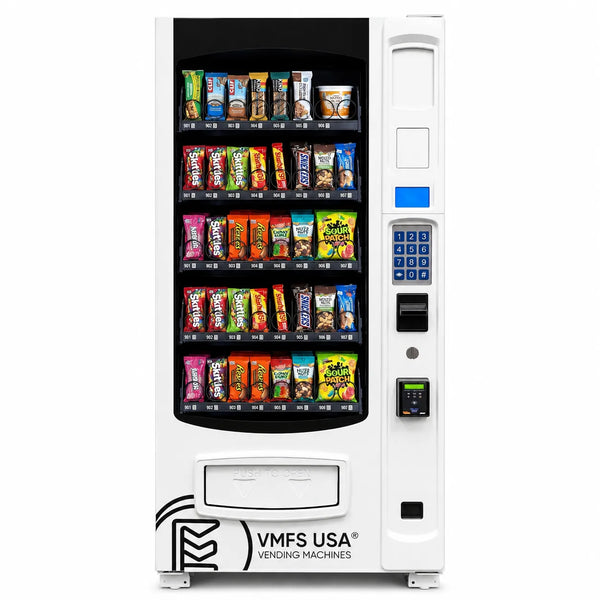
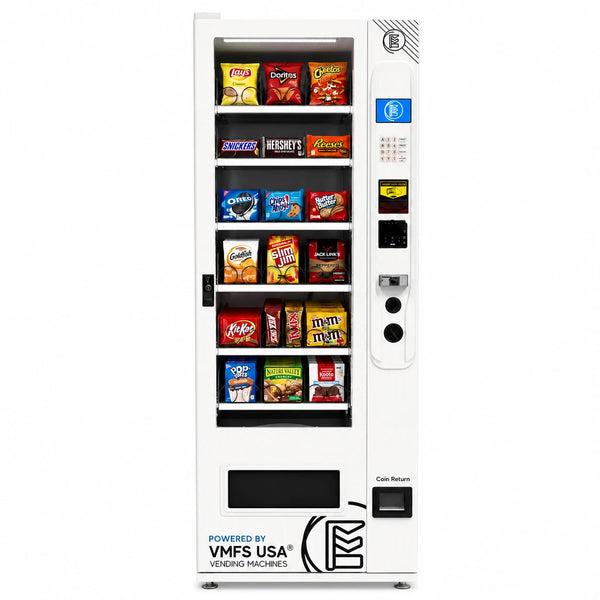
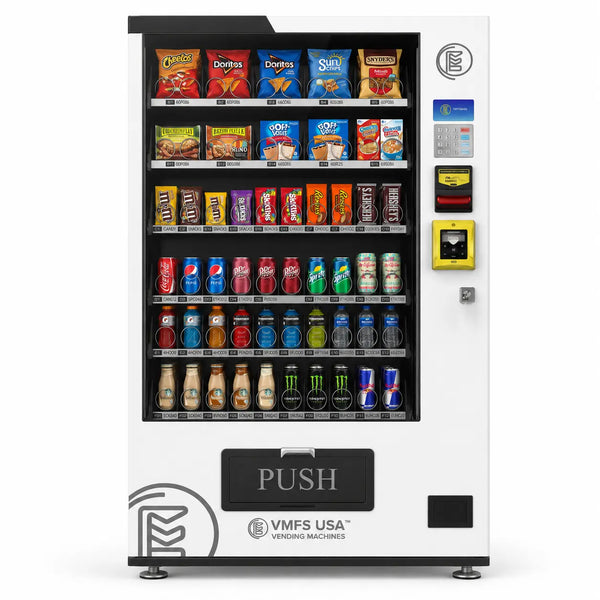
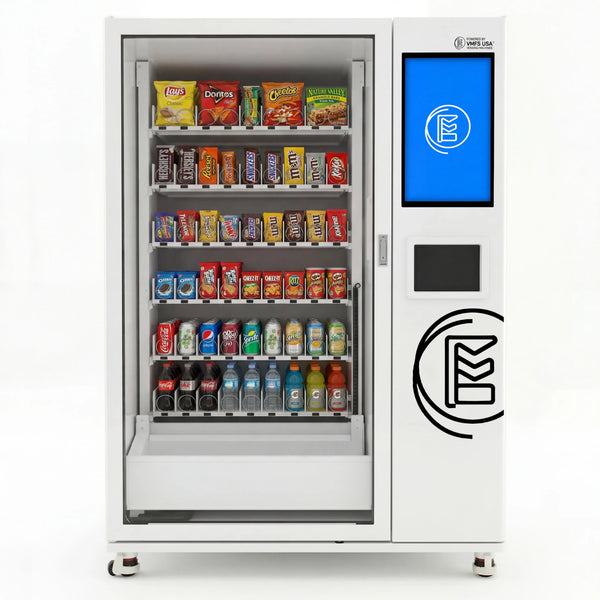
Snack Vending Machines Available for New York
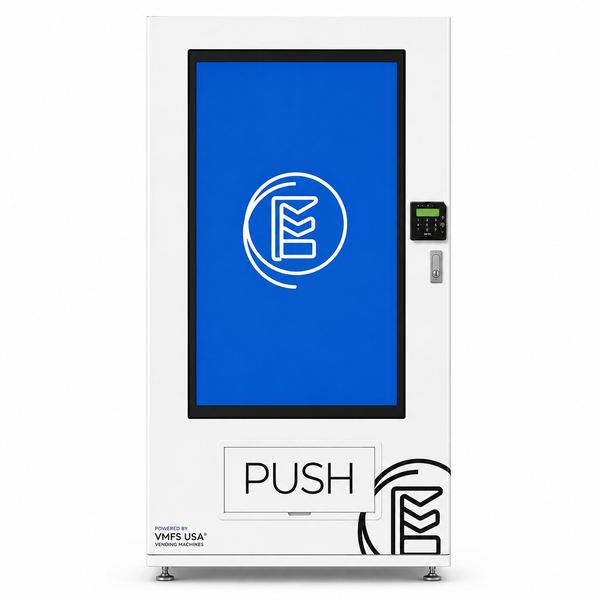
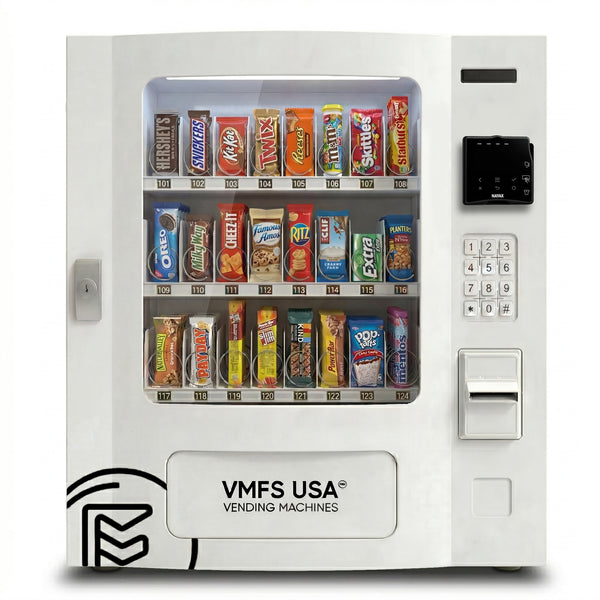
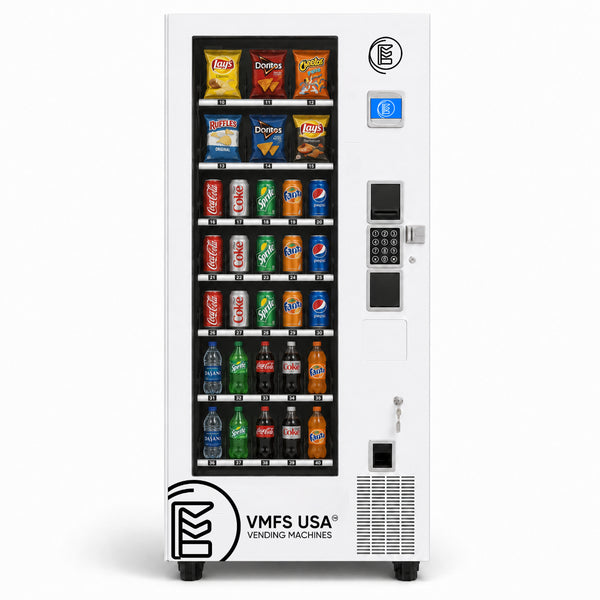
Every unit below ships configured, compliance-ready, and backed by VMFS Cloud monitoring.
How Operators Use Snack Vending in New York
Office Tower Breakroom
Manhattan office towers including 111 West 57th Street, 270 Park Avenue, and the Financial District anchors employ hundreds of thousands of workers who need quick midday and afternoon snacks. The snack vending machine stocks chips, candy, granola bars, and protein bars to serve desk-bound professionals during work hours. Coil delivery and elevator delivery on premium models ensure reliable dispensing of bags and boxes without jamming, and 300 to 500 snack capacity means restocking happens once or twice weekly rather than daily. Office managers value this amenity for tenant retention and employee satisfaction, generating 200 to 400 dollars net profit per machine per month after restocking costs of 150 to 400 dollars.
Hospital Nurse Station and Staff Break Area
New York Presbyterian, Mount Sinai, NYU Langone, and Memorial Sloan Kettering employ thousands of clinical and administrative staff working overnight shifts and extended hours who need accessible snacks outside cafeteria hours. The snack vending machine stocks protein bars, granola bars, nuts, jerky, and healthy on-the-go snacks like dried fruit and rice cakes to support sustained energy through night shifts. Real time VMFS Cloud monitoring tracks stock and sales remotely, and the 300 to 800 snack capacity with coil and elevator delivery means staff always find options regardless of shift time. Hospital procurement values reliable 24/7 access to nutritious snacks for staff retention and productivity, producing 200 to 400 dollars net profit per machine per month after restocking investment.
Airport Terminal and Gate Area
LaGuardia, Newark, and JFK airports move millions of passengers annually through terminals and gate areas where travelers need fast portable snacks before flights and during layovers. The snack vending machine stocks premium chips, nuts, candy, protein bars, granola bars, and baked snacks positioned for impulse purchase by time-pressed travelers. Ambient temperature cabinets with reliable coil and elevator delivery dispense items consistently without failure, and 500 to 800 snack configurations handle continuous high-volume demand across morning, afternoon, and evening peak travel windows. Airport concessionaires and terminal operators generate 250 to 400 dollars net profit per machine per month because passenger throughput sustains constant sales velocity and repeat transactions.
Gym and Fitness Studio Lobby
Equinox, Crunch Fitness, New York Sports Club, and boutique studios across Manhattan neighborhoods have members entering and leaving daily who purchase snacks before or after workouts. The snack vending machine stocks protein bars, granola bars, nuts, jerky, and healthy snacks to align with post-workout recovery and fitness-conscious member preferences. Premium elevator delivery models prevent product damage on high-value bars and boxes, and 200 to 400 snack capacity supports three to five restocking cycles weekly during peak member traffic. Fitness facilities increase member retention and perceived service quality through convenient snack access, consistently producing 150 to 350 dollars net profit per machine per month from impulse and planned purchases.
What Ships With Every Snack Unit
Regulations for Operating in New York, NY
Licensing, permits, sales tax, and health department standards for snack vending operators in New York.
{"type":"root","children":[{"type":"paragraph","children":[{"type":"text","value":"State License Requirements
In New York, the Department of Health and Mental Hygiene (DOHMH) at the state level oversees food service operations, and the New York Department of Agriculture and Markets regulates packaged food labeling and commodities. Operators selling packaged snacks from vending machines must obtain a Food Service Establishment Permit from the local health department where the machine is placed. New York does not require a separate statewide vending license for packaged snacks alone, but operators must register with the New York Department of State Division of Corporations, Limited Liability Companies and Partnerships if operating as a business entity, and obtain a Federal Employer Identification Number (EIN) from the IRS even for sole proprietorships with employees. Operators must register for a New York State Sales Tax Account with the Department of Taxation and Finance; registration is typically done online through the New York State Tax Department portal. Packaged snacks sold through vending machines are subject to New York's sales tax. All packaged food products, including chips, candy, granola bars, protein bars, nuts, and baked snacks, must comply with federal FDA labeling requirements and include legible expiration dates, ingredient lists, allergen disclosures (including the eight major allergens: milk, eggs, fish, shellfish, tree nuts, peanuts, wheat, and sesame), and net weight declarations; New York also requires that allergen information be clearly visible and prominent on packaging. Food Service Establishment Permits must be renewed annually, typically in the calendar year following issuance, and operators should verify renewal deadlines with their local health department to avoid lapses in compliance.
City and County Permits
In New York City, operators must obtain a Department of Health and Mental Hygiene (DOHMH) Food Service Establishment Permit specific to each vending machine location before operation begins. Additionally, operators must secure a New York City Department of Consumer and Worker Protection General Business License, which applies to all for-profit businesses operating in the city. Zoning compliance is mandatory: operators must verify that the intended placement location is zoned to permit vending machine operation; the Department of City Planning's zoning information portal provides zoning details by address. A Fire Safety Certificate may be required depending on the placement location (retail establishments, food courts, or other high-traffic areas); operators should consult the New York City Fire Department or their local fire office for specific requirements. New York County (Manhattan) does not impose additional county-level permits beyond city requirements, but operators should confirm regulations with the County Clerk's Office if placing machines in unincorporated county areas. Operators must file a Declaration of Coin-Operated Machine Operation with the New York City Department of Consumer and Worker Protection if operating coin-or-card-operated devices; this filing is part of the General Business License application process. Surrounding municipalities (such as those in the Bronx, Brooklyn, Queens, and Staten Island, which are also boroughs of New York City) fall under DOHMH oversight, though each borough has a local health office and may have slightly varying procedural requirements; operators should contact the borough-specific health office prior to deployment. The General Business License and Food Service Permit must be renewed annually or on a schedule specified by the issuing agency; late renewal penalties typically accrue if renewals are not submitted by the deadline specified in renewal notices. For New York City Department of Health and Mental Hygiene: call 311 (from within NYC) or consult the DOHMH website for specific permit and renewal requirements. For the Department of Consumer and Worker Protection General Business License: contact the Business Licenses and Bureau at their office or visit their website for current procedures and fees.
Sales Tax Rate
The combined sales tax rate in New York City is 8.875 percent, comprising the New York State rate of 4 percent, the New York City rate of 4.5 percent, and the MTA (Metropolitan Transportation Authority) surcharge of 0.375 percent. Most packaged snacks, including chips, candy, granola bars, protein bars, nuts, and baked snacks sold through vending machines, are taxable at the full rate. New York classifies certain food items as "candy" or "confectionery" (including chocolate bars, hard candies, and gum), which are fully taxable; however, some foods may be exempt if they meet the definition of a staple food or prepared food not subject to tax, though packaged snacks from vending machines typically do not qualify for such exemptions. Operators must register for a New York State Sales Tax Account with the New York Department of Taxation and Finance; registration can be completed online through the New York State Tax Department portal and is required before the first taxable sale. Sales tax must be collected at the point of sale from the consumer, and operators must remit collected tax to the state on a regular schedule, typically monthly or quarterly depending on sales volume. The economic nexus threshold for out-of-state sellers is triggered if an out-of-state operator has more than 100 transactions in the state during a calendar year or exceeds 4000 dollars in sales in New York during a 12-month period, at which point the operator must register and remit New York sales tax.
Health Department Standards
The New York State Department of Health and the New York City Department of Health and Mental Hygiene establish standards for food vending machines, including countertop snack vending machines. Machines must be designed and constructed of food-grade materials that are cleanable and non-absorbent (stainless steel or equivalent); all interior surfaces in contact with food or that may accumulate moisture must be sealed and corrosion-resistant. Refrigerated snack machines must maintain proper temperature control; if the machine includes any refrigerated compartments, those sections must be maintained at 41 degrees Fahrenheit or below to prevent spoilage of temperature-sensitive items. Equipment must be equipped with appropriate ventilation and drainage, and any condensation or water accumulation must be managed to prevent contamination or mold growth. Machines must have automatic shut-off features if they include heated or refrigerated components, and temperature monitoring or indicator lights are recommended to verify proper operation. Placement rules require that vending machines be positioned in areas that do not interfere with fire exits, emergency equipment access, or pedestrian flow; machines in schools, healthcare facilities, or government buildings may face additional placement restrictions or secondary health department oversight through the respective facility's health and safety coordinator. Operational requirements mandate that all packaged snacks must display legible expiration dates or best-by dates visible to consumers before purchase; nutrition labels and allergen information must be prominently displayed on packaging and visible through the vending window or on the exterior of the machine. Operators are subject to unannounced health inspections by DOHMH staff; inspectors will verify proper storage, sanitation, expiration date compliance, and temperature maintenance (for refrigerated units). New York's cold winters and variable humidity can affect machine performance, particularly in unheated or outdoor locations, so operators should ensure machines are specified for operation in ambient temperatures ranging from 32 to 104 degrees Fahrenheit and maintain humidity levels that prevent condensation and frost accumulation on interior surfaces. VMFS soda and snack vending machines deployed in New York ship with the appropriate specification standard, including energy-saving design features that reduce power consumption, temperature-stable components rated for New York's climate conditions, and a 1-year standard warranty with extended coverage options available for placement locations subject to heavy use or variable environmental conditions.
Disclaimer
Regulatory information is for reference only and current as of 2026. Operators should verify current requirements with the relevant agency before deployment. VMFS USA is not a legal or tax advisor. For operator-side legal guidance covering placement contracts, host venue agreements, documentation, business incorporation, tax registration, licenses, and permits, operators can consult
VAdviced
. For professional placement and location matching support, operators can work with
VPlaced
."}]}]}
New York at a Glance
Geographic Identity
- County
- New York County
- Metro Area
- New York-Newark-Jersey City, NY-NJ-PA
- Time Zone
- America/New_York (Eastern Time)
- Area Codes
- 212, 646, 718, 347, 917, 929
- ZIP Codes
- 10001 to 10299
- Primary Airport
- JFK John F. Kennedy International Airport
- Secondary Airport
- LGA LaGuardia Airport
- Major Port
- Port of New York and New Jersey, one of the busiest ports on the U.S. East Coast
- Nickname
- The Big Apple
Market Stats
- City Population
- 8,335,897
- Metro Population
- 20.1 million
- Annual Visitors
- 61.8 million (2023)
- Visitor Economy
- 74.6 billion annual economic impact
- Airport Passengers
- 141.6 million annual travelers through JFK, LaGuardia, and Newark
- Hospitality Jobs
- 380,000+ tourism and hospitality jobs across New York City
- Top Industries
- Finance and Banking, Media and Entertainment, Tourism and Hospitality, Real Estate, Healthcare, Technology, International Trade
- Demand Driver
- Unmatched concentration of global financial institutions, world class museums and cultural attractions, Broadway theater district, diverse culinary scene, and highest international visitor traffic of any US metropolitan area drive year round consumer demand.
Climate Profile
- Climate Zone
- Humid Continental
- Average Humidity
- 60 to 75 percent year round with higher humidity in summer months
- Summer High
- 85 to 90 degrees Fahrenheit typically from June through August
- Winter Low
- regularly below 32 degrees Fahrenheit, indoor placements recommended during winter months
- Seasonal Hazard
- None
- Environmental Exposure
- Urban air quality and salt exposure near coastal areas require corrosion resistant housing for waterfront placements within 5 miles of the Atlantic coast
- Deployment Note
- New York's humid continental climate with cold winters and moderate summers requires weatherproofed units with sealed electronics and enhanced drainage systems. Winter freezing temperatures necessitate heated cabinet options for refrigeration units. VMFS ships all New York outdoor units with weatherproofed enclosures, sealed electronics, and heating capability as standard specifications.
Location & Service Area
- Key Neighborhoods
- Manhattan, Brooklyn, Queens, The Bronx, Staten Island, Midtown, Downtown, Upper East Side, Upper West Side, Chelsea, SoHo, Greenwich Village
- Nearby Cities
- Jersey City, Newark, Yonkers, New Rochelle, Mount Vernon, White Plains, Hoboken, Fort Lee
- Service Radius
- VMFS delivers, installs, and services machines throughout New York County, Kings County, Queens County, Bronx County, and Richmond County, with extended coverage to Hudson County and Westchester County on request.
Your Location. Working 24/7.
Answers to common questions from New York operators. Didn't see yours? Send us a message — our US-based team responds within one business day.
What kind of monthly revenue can a property owner expect from hosting a snack vending machine in Midtown Manhattan or Brooklyn office space?
How often does the machine need restocking, and what product mix works best for New York office workers and hospital staff?
What electrical requirements and physical space does installation require in a typical New York office or university dormitory?
If the machine breaks down or a component fails, what happens to the hosting venue and how long is the machine out of service?
Does the machine accept only cash, and how do hospital patients, university students, and office workers in New York pay for snacks?
How should a property owner or facility manager identify the right placement strategy and ensure a solid hosting agreement in New York?
Deploy Snack Vending Machinesin New York, NY Today
Request a custom quote today for
snack vending machines
at your New York, NY location, and we handle machine selection, delivery, configuration, and ongoing support from start to finish. Every deployment begins with a site assessment covering foot traffic patterns, snack mix balance across chips candy granola bars and healthy snacks, power and network requirements for our cloud platform, and placement strategy can be coordinated through our
placement experts
if you want professional location matching for your route. Whether you need a single unit in a corporate breakroom in Midtown or a rollout of 30 or more machines across hospital lobbies and transit terminals throughout the five boroughs, your quote includes hardware, installation, staff training, and 12 months of cloud monitoring at no extra cost.
Deploy Snack Vending Across New York
1,200+ machines deployed. 1-year warranty standard. Free lifetime support. One team from site survey to uptime.