


Ice Cream Vending Machines in Boston, MA
Start your profitable frozen treat business today with our premium ice cream vending machines. Perfect for Boston locations, easy setup, maximum returns guaranteed.
Deja de adivinar. Configure Your Ice Cream Vending Machine.
Answer a few quick questions about your location, your product mix, your temperature needs, and your budget. Our Ice Cream Vending System will match you with the right base model, add the right modules (refrigeration, ad screen, outdoor protection, payment suite), and show you real time pricing and lead time as you build.
Omita las idas y venidas. Omita la abrumadora hoja de especificaciones. Vea su configuración exacta, su costo exacto y su ventana de entrega exacta antes de comprometerse.
- Precios en tiempo real a medida que añade o elimina funciones
- Estimación del tiempo de entrega en tiempo real basada en su configuración
- Combinación de productos recomendada para su tipo de ubicación
- Capacidad, número de ranuras y límites de peso mostrados por configuración
- Opciones preestablecidas para alimentos, bebidas, electrónica, comercio minorista y congelados
Why Ice Cream Vending Machines?
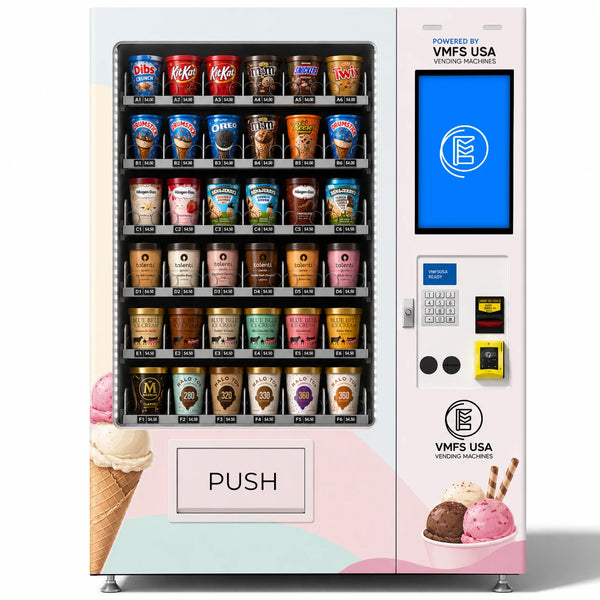
An ice cream vending machine in Boston offers premium frozen treats from a single deep-freeze cabinet designed for maximum convenience and profitability. These freezer vending machines dispense popular ice cream bars like Snickers, Magnum, and Dove alongside sealed cups from Haagen-Dazs, Ben & Jerry's, and Baskin-Robbins, plus popsicles, novelties, multi-pack cartons, frozen pizza, frozen meals, and frozen yogurt. With capacities ranging from 270 to 600 items across 54 to 63 adjustable slots, an ice cream vending machine for sale provides exceptional product variety. Equipped with a commercial-grade dual modular compressor maintaining temperatures to -12°F, triple-pane glass insulation, standard elevator delivery system, and VMFS Cloud dashboard for real-time sales tracking, these deep-freeze machines ensure optimal product preservation and business insights. Explore
frozen vending machines
designed to maximize your Boston location's frozen treat revenue.
Deep-Freeze Refrigeration
Commercial-grade compressor maintains internal temperatures down to -12 degrees Fahrenheit, with adjustable range from -0.4 to 75 degrees Fahrenheit and 360-degree frost-free circulation that protects ice cream and frozen foods even in busy high-temperature environments
Elevator Delivery System
Elevator delivery gently lowers each item to the pickup tray instead of letting it fall, preventing crushed boxes, cracked packaging, broken ice cream bars, and impact-related thawing that traditional drop machines cause
High-Capacity Frozen Format
From 270 items in standard models up to 600 items in the Elevator Pro flagship, across 54 to 63 adjustable slots that fit single bars, pints, multi-pack cartons, frozen pizza, and frozen meals
Premium Brand Compatibility
Stocks Snickers, Magnum, Dove, Twix ice cream bars, sealed Haagen-Dazs and Ben and Jerry's cups, Drumstick and Blue Bunny multi-packs, popsicles, frozen yogurt, frozen pizza, and ready-to-heat frozen meals
Touchscreen And Cloud Monitoring
21.5-inch, 22-inch, or 49-inch HD touchscreen with digital advertising capability on premium models, plus VMFS Cloud dashboard for real-time sales, temperature graphs, and inventory alerts from any device
Why Ice Cream Vending Machines Perform in Boston, Massachusetts
Boston's dense corporate headquarters and biotech campus ecosystem creates year-round demand for convenient frozen treats in office breakrooms, hospitals, and research facilities across the city. High-traffic venues like Massachusetts General Hospital, Boston Medical Center, and Longwood Medical Area offices drive consistent foot traffic, while summer tourism and the region's active university population (Harvard, MIT, BU) spike ice cream consumption.
Ice cream vending machines
excel in these environments with 24/7 self-service access, -12°F deep-freeze capacity protecting premium bars and pints, and 270–600 item capacity for high-volume venues. Operators typically earn $300–$800 monthly net profit per machine after restocking, with dramatic summer peaks.
Professional placement services
help identify Boston's most profitable corporate, healthcare, and hospitality locations for maximum ROI.
Best Locations in Boston
High-value deployment sites where ice cream vending delivers the strongest revenue per square foot.
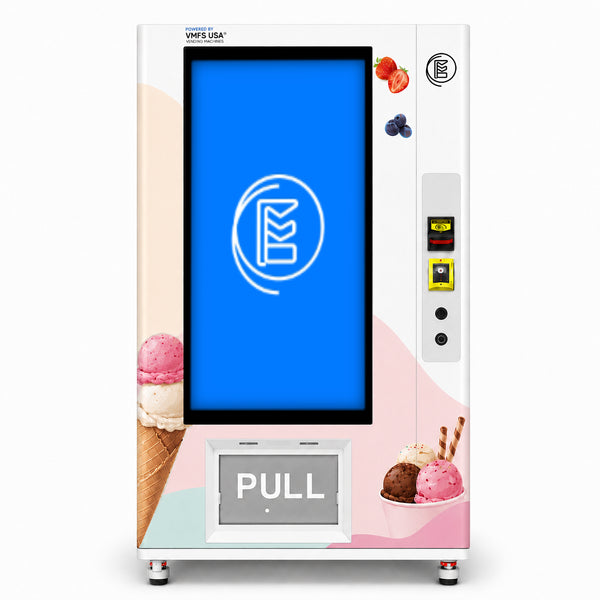
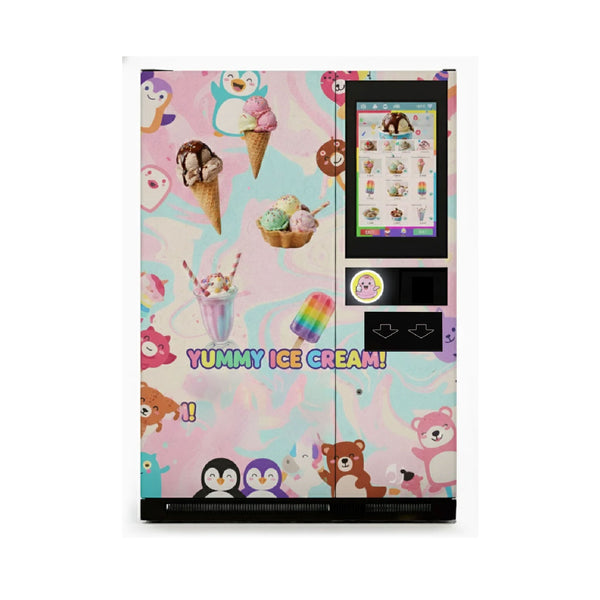
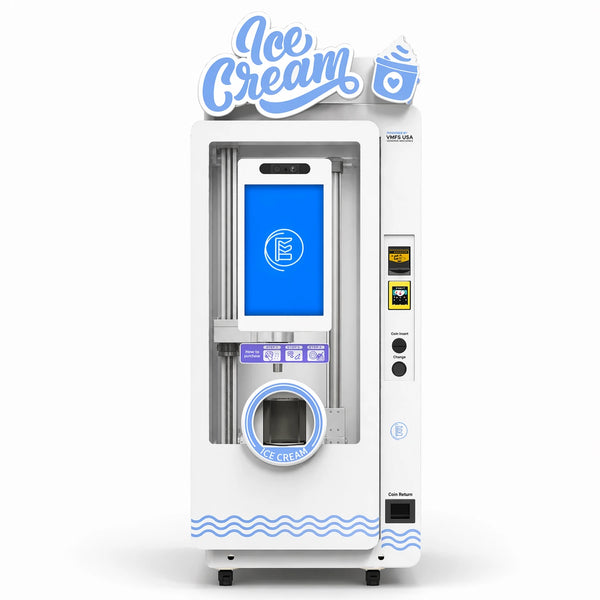
Ice Cream Vending Machines Available for Boston
Every unit below ships configured, compliance-ready, and backed by VMFS Cloud monitoring.

How Operators Use Ice Cream Vending in Boston
Medical Center Break Room
Boston Medical Center, Massachusetts General Hospital, and Brigham and Women's Hospital staff and visitors need convenient late-night and weekend access to premium frozen treats. Stock Haagen-Dazs pints, Ben and Jerry's cups, Magnum bars, and ready-to-heat frozen meals alongside traditional ice cream bars. The ice cream vending machine maintains -12 degree Fahrenheit deep-freeze precision, protecting delicate pints and bars through reliable elevator delivery, while 270 to 600 item capacity eliminates frequent restocking during high-volume overnight and shift-change periods. Hospital break rooms generate consistent $400 to $800 monthly profit with predictable summer peaks and strong winter demand from staff working extended hours.
College Campus Student Housing
Harvard University, Boston University, and Northeastern University dormitories house thousands of students with limited dining access during evening and weekend hours. Stock Ben and Jerry's pints, Haagen-Dazs cups, Snickers and Magnum bars, popsicles, and Drumstick multi-pack cartons to match student preferences and budget constraints. The frozen vending machine's -12 degree cabinet and gentle elevator system protect inventory integrity across high-velocity transactions, while 300 to 600 adjustable slots ensure stock availability without daily refills during semester peaks. Residence halls and student housing generate $500 to $900 monthly revenue per machine, combining member loyalty, impulse purchasing, and summer conference season demand.
Downtown Office Tower Lobby
Financial District buildings, Prudential Center office complexes, and Back Bay corporate headquarters employ thousands of workers seeking midday and after-hours snack access. Stock premium Magnum bars, Haagen-Dazs pints, Dove bars, and Ben and Jerry's cups alongside frozen yogurt and Twix novelty options for white-collar professionals. The ice cream vending machine delivers professional aesthetics and reliable -12 degree deep-freeze performance, with elevator delivery protecting fragile pints and multi-pack cartons during thousands of monthly transactions, and 400 to 600 item capacity sustaining demand across two shifts. Corporate lobbies and office amenities yield $600 to $850 monthly net profit through employee convenience, tenant satisfaction, and premium brand mix appeal.
Health and Fitness Club Facility
Equinox, Life Time, and independent fitness centers throughout the metro area serve members before and after workouts seeking cold recovery treats and post-exercise nutrition options. Stock frozen yogurt cups, Haagen-Dazs protein-enriched options, Magnum bars, and ready-to-heat frozen meals designed for active recovery routines. The frozen vending machine maintains consistent -12 degree Fahrenheit temperatures ideal for preserving nutritional integrity, with elevator delivery safeguarding premium bars and pint containers through high-volume member transactions, and 270 to 400 item capacity meeting demand without disrupting peak traffic windows. Gym facilities generate $500 to $850 monthly revenue per machine through member retention incentives, facility differentiation, and elevated average transaction values during peak membership seasons.
What Ships With Every Ice Cream Unit
Regulations for Operating in Boston, MA
Licensing, permits, sales tax, and health department standards for ice cream vending operators in Massachusetts.
State License Requirements
The Massachusetts Department of Agricultural Resources (MDAR) and the Massachusetts Department of Public Health (DPH) jointly oversee food vending operations in the state. Operators selling frozen products including ice cream bars, sealed frozen cups, popsicles, multi-pack cartons, frozen pizza, frozen meals, and frozen yogurt must obtain a Food Service Establishment License from the local Board of Health with state oversight. To register for sales tax, operators must apply for a Massachusetts Tax Account Number through the Department of Revenue online portal or by mailing Form ST-1. An EIN (Employer Identification Number) from the IRS is required if the business has employees; sole proprietors may use their SSN for tax purposes but an EIN is recommended. The business entity must be registered with the Massachusetts Secretary of State (sole proprietorship, LLC, corporation, or partnership). Massachusetts requires specific labeling and storage standards for dairy products including ice cream and frozen yogurt, which must display fat content, ingredient lists, and allergen information prominently; these products must be maintained at 0 degrees Fahrenheit or below. Frozen meals must be date-marked with both manufacture and use-by dates clearly visible on packaging or labeling applied to the product. Allergen disclosure is mandatory for any nut-based novelties, with clear labeling on the product and on the machine's product information card. Permits must be renewed annually, typically on the calendar year or anniversary date of issuance; operators should verify the exact renewal date with their local Board of Health.
City and County Permits
In Boston, operators must obtain a Business License (Class A or Class B depending on business structure) from the Boston Licensing Board, 1010 Massachusetts Avenue, Boston, MA 02118, phone (617) 635-4165. A Certificate of Occupancy or Certificate of Use confirming the vending machine location complies with local zoning ordinances is required; this is issued by the Boston Zoning Board of Appeal or the Inspectional Services Department. Zoning approval must confirm that vending machine placement does not violate local land use restrictions, which vary by neighborhood district. Fire Safety Approval from the Boston Fire Department (non-emergency: 617-343-3710) is required for machines in certain venues such as educational institutions, hospitals, or government buildings. No county-level permits are required as Boston is in Suffolk County and operates under city-level licensing. Operators must file a Declaration of Coin-Operated Machine or similar equipment registration form with the City of Boston if required by local ordinance; contact the Boston Licensing Board for current requirements. Machines placed in neighboring municipalities such as Cambridge, Brookline, or Newton require separate permits from those cities' respective licensing boards and health departments. Renewal timelines for Boston business licenses vary by license class; most vending licenses renew annually. Late renewal penalties begin 30 days after the expiration date and increase monthly; operators should renew at least 60 days before expiration.
Sales Tax Rate
The combined sales tax rate in Boston, Massachusetts is 6.25 percent (5 percent state rate plus 1.25 percent local surtax). Massachusetts exempts most grocery items including packaged ice cream, frozen meals sold as unprepared food, and frozen yogurt in multi-packs from sales tax when sold through conventional retail channels; however, single-serve frozen novelties (ice cream bars, individual cups, popsicles) sold through vending machines are generally taxable as prepared food or confectionery items depending on ingredient classification and packaging. Operators must consult with the Massachusetts Department of Revenue to confirm the tax classification of specific products, as treatment varies: some single-serve frozen desserts may be tax-exempt if classified as food, while others are taxable. Operators must register for a Massachusetts Tax Account and collect applicable sales tax at the point of sale; remote sellers and vending operators with economic nexus in Massachusetts (including any sales into the state) must register and remit. The economic nexus threshold for out-of-state sellers is sales of more than $100,000 into Massachusetts in the previous calendar year or more than 200 separate transactions. Remittance is due monthly or quarterly depending on sales volume; the Department of Revenue determines the schedule based on the operator's estimated liability.
Health Department Standards
The Massachusetts Department of Public Health and the local Board of Health (in Boston, the Boston Public Health Commission) set mandatory standards for refrigerated frozen vending machines. Equipment must maintain internal temperatures at 0 degrees Fahrenheit or below; machines must have commercial-grade deep-freeze compressors with electronic temperature controls and manual override shutdown capability. Food contact surfaces must be smooth, non-absorbent, and cleanable; stainless steel is preferred. Machines must include a certified thermometer (dial or digital) visible to operators for daily temperature verification. Automatic shut-off mechanisms and frost-free cooling cycles are required to prevent ice buildup and contamination. Placement rules prohibit machines in areas with uncontrolled temperature fluctuations (such as direct sunlight, unheated warehouses, or outdoor locations without weather protection) unless the machine's cooling system is rated for ambient conditions up to 95 degrees Fahrenheit. Operational requirements include strict cold chain documentation: operators must log product delivery temperatures, vending machine internal temperatures at each service visit, and removal of expired items. Date-marked products (frozen meals, ice cream, and dairy-based items) must show manufacture or pack date and consumption deadline; items must be removed upon expiration. Label visibility requirements mandate that nutritional information, allergen warnings, and expiration dates remain readable and unobstructed on all products. The Boston Public Health Commission conducts unannounced inspections of vending machines at any time; operators must provide access within 24 hours and maintain all temperature logs and product documentation for inspection. Secondary oversight applies to machines placed in schools (Boston Public Schools Health Services), hospitals (Massachusetts Department of Public Health Facility Licensing), and government buildings (facility manager and municipal health officer). Environmental considerations specific to Boston include seasonal temperature variations (freezing winters, humid summers) and salt-air corrosion in coastal areas; machines must be rated for these conditions. VMFS USA ice cream vending machines deployed in Boston ship with the appropriate spec standard, including commercial-grade dual modular compressor system with 360-degree frost-free cooling and triple-pane glass insulation and a 1-year comprehensive warranty with extended coverage options.
Disclaimer
Regulatory information is for reference only and current as of 2026. Operators should verify current requirements with the relevant agency before deployment. VMFS USA is not a legal or tax advisor. For operator-side legal guidance covering placement contracts, host venue agreements, documentation, business incorporation, tax registration, licenses, and permits, operators can consult <a href="https://vadviced.com">VAdviced</a>. For professional placement and location matching support, operators can work with <a href="https://vplaced.com">VPlaced</a>.
Boston at a Glance
Geographic Identity
- County
- Suffolk County
- Metro Area
- Boston-Cambridge-Newton, MA-NH
- Time Zone
- America/New_York (Eastern Time)
- Area Codes
- 617, 857, 781, 339
- ZIP Codes
- 02101 to 02298
- Primary Airport
- BOS Boston Logan International Airport
- Secondary Airport
- None
- Major Port
- Port of Boston, a major container and general cargo port
- Nickname
- The Hub
Market Stats
- Medical Center Break Room
- Boston Medical Center, Massachusetts General Hospital, and Brigham and Women's Hospital staff and visitors need convenient late-night and weekend access to premium frozen treats. Stock Haagen-Dazs pints, Ben and Jerry's cups, Magnum bars, and ready-to-heat frozen meals alongside traditional ice cream bars. The ice cream vending machine maintains -12 degree Fahrenheit deep-freeze precision, protecting delicate pints and bars through reliable elevator delivery, while 270 to 600 item capacity eliminates frequent restocking during high-volume overnight and shift-change periods. Hospital break rooms generate consistent $400 to $800 monthly profit with predictable summer peaks and strong winter demand from staff working extended hours.
- College Campus Student Housing
- Harvard University, Boston University, and Northeastern University dormitories house thousands of students with limited dining access during evening and weekend hours. Stock Ben and Jerry's pints, Haagen-Dazs cups, Snickers and Magnum bars, popsicles, and Drumstick multi-pack cartons to match student preferences and budget constraints. The frozen vending machine's -12 degree cabinet and gentle elevator system protect inventory integrity across high-velocity transactions, while 300 to 600 adjustable slots ensure stock availability without daily refills during semester peaks. Residence halls and student housing generate $500 to $900 monthly revenue per machine, combining member loyalty, impulse purchasing, and summer conference season demand.
- Downtown Office Tower Lobby
- Financial District buildings, Prudential Center office complexes, and Back Bay corporate headquarters employ thousands of workers seeking midday and after-hours snack access. Stock premium Magnum bars, Haagen-Dazs pints, Dove bars, and Ben and Jerry's cups alongside frozen yogurt and Twix novelty options for white-collar professionals. The ice cream vending machine delivers professional aesthetics and reliable -12 degree deep-freeze performance, with elevator delivery protecting fragile pints and multi-pack cartons during thousands of monthly transactions, and 400 to 600 item capacity sustaining demand across two shifts. Corporate lobbies and office amenities yield $600 to $850 monthly net profit through employee convenience, tenant satisfaction, and premium brand mix appeal.
- Health and Fitness Club Facility
- Equinox, Life Time, and independent fitness centers throughout the metro area serve members before and after workouts seeking cold recovery treats and post-exercise nutrition options. Stock frozen yogurt cups, Haagen-Dazs protein-enriched options, Magnum bars, and ready-to-heat frozen meals designed for active recovery routines. The frozen vending machine maintains consistent -12 degree Fahrenheit temperatures ideal for preserving nutritional integrity, with elevator delivery safeguarding premium bars and pint containers through high-volume member transactions, and 270 to 400 item capacity meeting demand without disrupting peak traffic windows. Gym facilities generate $500 to $850 monthly revenue per machine through member retention incentives, facility differentiation, and elevated average transaction values during peak membership seasons.
Climate Profile
- Climate Zone
- Humid Continental
- Average Humidity
- 55 to 70 percent year round
- Summer High
- 82 degrees Fahrenheit average with peaks near 90 degrees Fahrenheit in July and August
- Winter Low
- 29 degrees Fahrenheit average, regularly below freezing from December through February
- Seasonal Hazard
- Nor'easter Storms, September to April
- Environmental Exposure
- Heavy winter snow load and freeze thaw cycles require reinforced structural integrity and drainage systems to prevent ice dam formation and water infiltration.
- Deployment Note
- Boston's humid continental climate demands weatherproofed units with sealed electronics and enhanced drainage for winter precipitation and freeze thaw cycles. Reinforced refrigeration cycles and insulated compartments are required for reliable summer and winter operation. VMFS ships all Boston outdoor units with these specifications standard.
Location & Service Area
- Key Neighborhoods
- Back Bay, Beacon Hill, Downtown, Financial District, North End, South End, Seaport, Cambridge, Somerville, Brookline, Jamaica Plain, Allston
- Nearby Cities
- Newton, Waltham, Quincy, Medford, Arlington, Revere, Chelsea, Watertown
- Service Radius
- VMFS delivers, installs, and services machines throughout Suffolk County and neighboring areas of Middlesex and Norfolk counties, with extended coverage to surrounding Massachusetts municipalities on request.
Your Location. Working 24/7.
Answers to common questions from Boston operators. Didn't see yours? Send us a message — our US-based team responds within one business day.
How much net profit can a property owner expect from hosting an ice cream vending machine year-round in Boston?
What installation and electrical requirements does an ice cream vending machine require in a Boston property?
How often does the vending machine need restocking, and what is the typical fill cost for inventory?
What payment methods does the machine accept, and can it handle contactless payments common in Boston's tech-forward market?
What warranty and maintenance coverage protects the property owner if the machine breaks down during peak summer season?
Why is Boston's climate and summer tourism cycle ideal for ice cream vending machine placement?
How should property owners structure placement agreements and revenue terms with vending operators?
Deploy Ice Cream Vending Machines in Boston, MA Today
Request a custom quote today for
ice cream vending machines
at your Boston location, and we handle machine selection, delivery, configuration, and ongoing support from start to finish. Every deployment begins with a site assessment covering foot traffic patterns, frozen mix balance across ice cream bars, sealed cups, novelties and frozen meals, deep-freeze refrigeration capacity and power requirements, network setup for the cloud platform, and our
placement experts
can coordinate location matching strategy for operators targeting high-foot-traffic venues like the Boston Common, Prudential Center, university dining halls, hospital lobbies, corporate breakrooms, and gym floors to maximize summer ice cream demand. Your quote covers everything from a single unit in a small office building to a rollout of 30 or more machines across a large hospital system or hotel chain, and the price includes hardware, installation, staff training, and 12 months of cloud monitoring at no extra cost.
Deploy Ice Cream Vending Across Boston
1,200+ machines deployed. 1-year warranty standard. Free lifetime support. One team from site survey to uptime.