


Elevator Vending Machines in New York, NY
Transform underutilized elevator space into recurring revenue streams with our innovative vending solutions designed specifically for New York properties.
Deja de adivinar. Configure Your Elevator Vending Machine.
Answer a few quick questions about your location, your product mix, your temperature needs, and your budget. Our Elevator Vending System will match you with the right base model, add the right modules (refrigeration, ad screen, outdoor protection, payment suite), and show you real time pricing and lead time as you build.
Omita las idas y venidas. Omita la abrumadora hoja de especificaciones. Vea su configuración exacta, su costo exacto y su ventana de entrega exacta antes de comprometerse.
- Precios en tiempo real a medida que añade o elimina funciones
- Estimación del tiempo de entrega en tiempo real basada en su configuración
- Combinación de productos recomendada para su tipo de ubicación
- Capacidad, número de ranuras y límites de peso mostrados por configuración
- Opciones preestablecidas para alimentos, bebidas, electrónica, comercio minorista y congelados
Why Elevator Vending Machines?
Premium Elevator Vending Machines in New York Discover cutting-edge
elevator vending machines
throughout New York that revolutionize product delivery with advanced robotic lift technology. These innovative machines gently transport items to the pickup tray with zero drops or damage, making them perfect for snacks, drinks, electronics, and fresh food. With capacities up to 800 slots and remote cloud monitoring capabilities, premium elevator vending machines are ideal for high-volume, high-margin locations across New York City. Experience reliable, damage-free vending that maximizes profit potential while ensuring customer satisfaction with every transaction.
Zero Product Damage
Robotic elevator lift delivers every item intact, protecting glass bottles, fresh food, electronics, and premium SKUs that coil machines physically destroy
High-Capacity Footprint
Up to 800 items across chilled, ambient, and frozen zones in a single cabinet — the highest SKU density in the industry
Premium Product Compatibility
Handles fragile, high-ticket, and temperature-sensitive inventory including glass-bottled beverages, sushi, salads, and small electronics
24/7 Cloud Monitoring
Real-time sales reporting, per-slot inventory tracking, temperature alerts, and cashless payment data stream to your VMFS Cloud dashboard
Why Elevator Machines Perform in New York, New York
New York's relentless tourism economy and 24/7 hospitality culture create massive demand for convenient, contactless retail solutions in hotels, airports, and office lobbies. Elevator vending machines thrive in these high-traffic venues because they occupy previously wasted vertical space while protecting premium snacks, beverages, and personal care items from Manhattan's notorious humidity and temperature fluctuations. The city's crowded subway alternatives and time-pressed professionals make quick, in-building purchases essential, while the machines' secure, climate-controlled compartments prevent product damage during peak convention seasons when foot traffic peaks.
Best Locations in New York
High-value deployment sites where elevator vending delivers the strongest revenue per square foot.
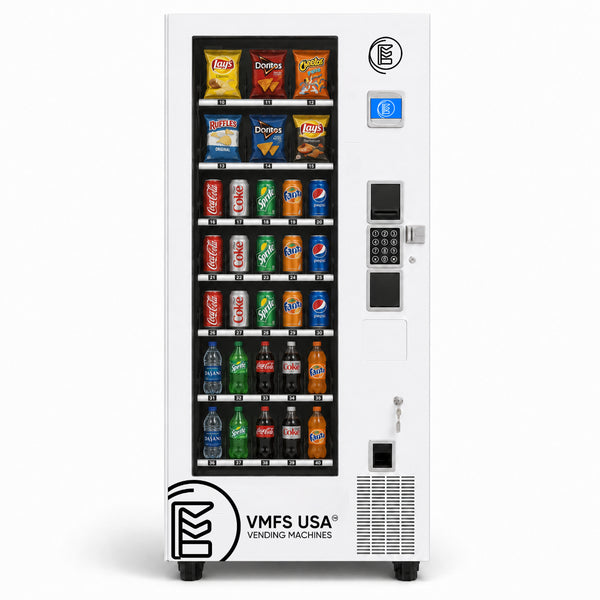
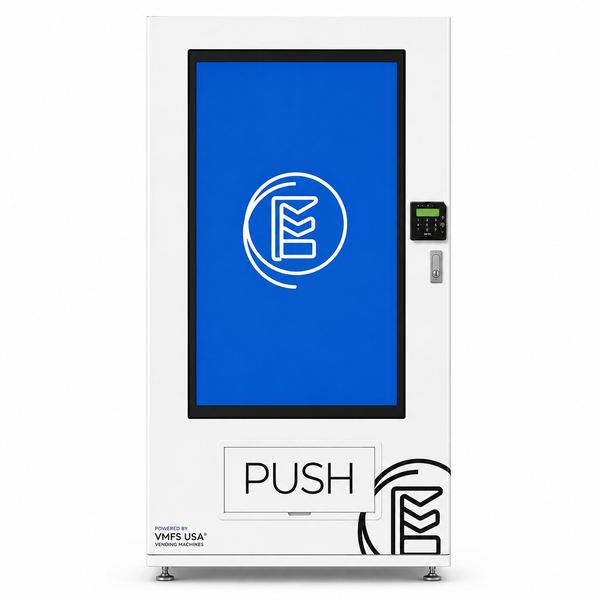
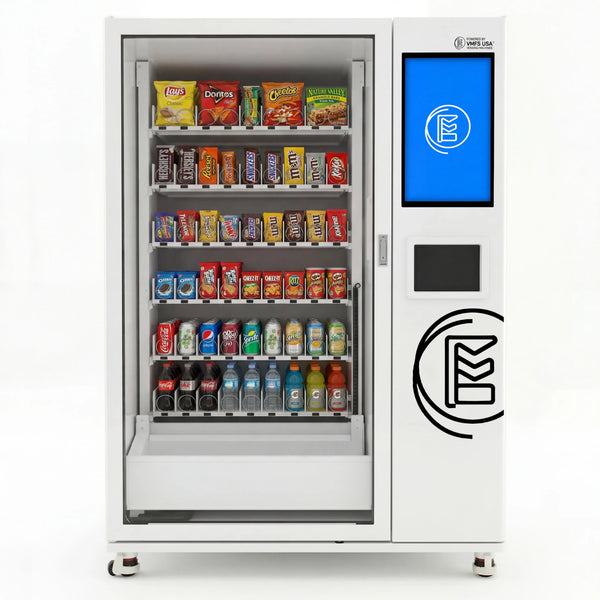
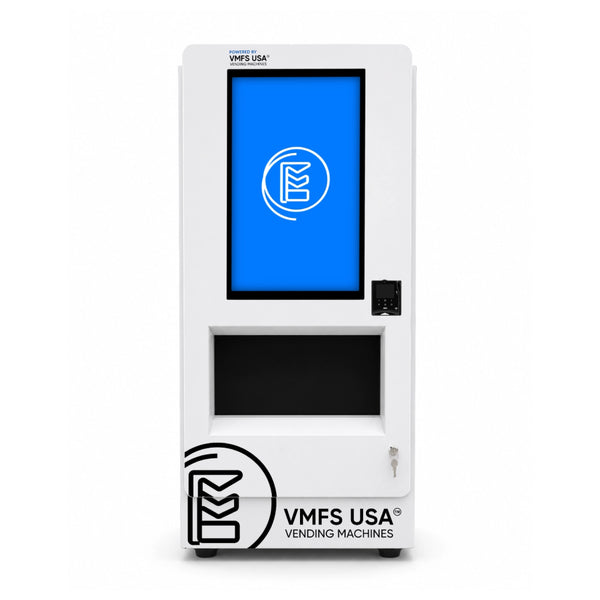
Elevator Vending Machines Available for New York
Every unit below ships configured, compliance-ready, and backed by VMFS Cloud monitoring.
How Operators Use Elevator Vending in New York
Theater District Lobby
The TKTS booth area, Broadway theaters including the Schoenfeld and Majestic, and Times Square entertainment venues draw 40 million annual visitors seeking quick refreshment before and after performances. An elevator vending unit stocks premium candy, imported chocolates, specialty popcorn, craft sodas, and single serve wine or spirits in glass bottles that traditional coil machines would damage during descent and impact. Theatergoers pay 40 to 60 percent above retail for convenience items during intermission windows and pre-show rush periods, making this a high-velocity, premium-priced category with predictable traffic patterns.
Financial District Office Tower
Locations including the Financial District core, 200 Vesey Street, and Brookfield Place serve thousands of office workers and traders requiring healthy, quick meals during compressed trading hours and back-to-back meetings. The elevator delivery unit stocks fresh prepared salads, cold-pressed juices, protein boxes, kombucha, and energy bars in delicate food containers that fragile elevator positioning protects from crushing and leakage that standard coil machines cause. Premium office tenants view vending as a workforce retention amenity, and operators capture recurring weekday volume with 35 to 45 percent margin above wholesale cost during morning, lunch, and afternoon windows.
Hospital and Medical Center
Mount Sinai, NewYork-Presbyterian, and NYU Langone facilities operate 24 hours with staff working overnight shifts when food service shuts down, creating reliable off-hours demand. The elevator vending unit stocks electrolyte drinks, prepared sandwiches, fresh fruit, medications, and supplements in sealed containers and glass bottles that gentle elevator delivery protects far better than traditional coil mechanisms that shatter and contaminate products. Medical centers guarantee consistent traffic regardless of external conditions, with staff and family members relying on reliable after-hours access to food and supplies, ensuring stable unit economics and predictable weekly revenue.
Penn Station and Transit Hub
Penn Station, Grand Central Terminal, and subway corridor kiosks process 750,000 daily commuters and regional travelers with high-speed transaction needs and willingness to pay premium prices. An elevator vending unit stocks energy bars, trail mix, bottled water, specialty coffee, phone chargers, and headphones in sealed packages that fragile elevator delivery protects from the impact damage that coil machines inflict on delicate electronics and glass bottles. The commuter and traveler demographic purchases impulsively, pays 50 to 75 percent above retail for convenience, uses cashless payment exclusively, and creates compressed peak-period surges that keep machines at consistent high velocity throughout operating hours.
What Ships With Every Elevator Unit
Regulations for Operating in New York, NY
Licensing, permits, sales tax, and health department standards for elevator vending operators in New York.
State License Requirements
New York's Department of Agriculture and Markets regulates food vending machines statewide. Machines dispensing potentially hazardous foods (those requiring time-temperature control for safety, such as sandwiches, dairy products, or prepared foods) require a Food Service Establishment Permit from the local health department and may require licensing under Article 81 of the Agriculture and Markets Law. Machines vending only shelf-stable snacks, beverages in sealed containers, or non-food items typically have less stringent requirements but may still need local registration. All food-related vending operators must register for a New York State sales tax ID (Certificate of Authority) through the Department of Taxation and Finance; an EIN from the IRS is required for business entities. New York does not issue a statewide vending operator license but rather requires local permits and health department authorization. Tobacco products vended through machines are heavily restricted under New York law and require special licensing, age-verification equipment, and compliance with the Prevent All Cigarette Trafficking (PACT) Act. Alcohol vending is prohibited in most contexts. Bottled water and ice vending typically require only local health approval if dispensed from sealed containers. Permits and licenses must be renewed annually or per local health department directive, with late renewal penalties varying by jurisdiction.
City and County Permits
New York City requires a General Vending Machine License (issued by the Department of Consumer and Worker Protection) for any coin-operated or card-operated machine placed on public or private property. A Certificate of Occupancy or Permitting for Vending Location may be required depending on placement (e.g., retail establishments, office buildings, transit stations). Zoning approval is necessary; vending machines in certain districts or near schools may face restrictions. Fire safety certification is required for machines in buildings subject to NYC Fire Code, particularly those containing electrical heating or refrigeration. The Department of Health and Mental Hygiene oversees food service vending and conducts unannounced inspections. NYC vending licenses must be renewed annually; late renewal incurs penalties. In surrounding areas of Westchester County or Nassau County, separate permits from those county health departments and municipal authorities are required. Contact the NYC Department of Consumer and Worker Protection at (212) 436-0957 for vending license applications; contact the NYC Department of Health and Mental Hygiene at (212) 788-4290 for food service authorization. County and municipal permits vary; operators must contact the specific county or town code enforcement office.
Sales Tax Rate
The combined sales tax rate in New York City is 8.875% (New York State rate of 4% plus NYC local rate of 4.875%). Most vended food items, beverages, and merchandise are subject to sales tax unless specifically exempt. Ready-to-eat foods and prepared beverages are fully taxable. Certain candy items, snacks, and non-food merchandise are taxable. Prescription medications and certain medical devices may be exempt. Operators must register for a Sales Tax Certificate of Authority with the New York State Department of Taxation and Finance and remit sales tax monthly or quarterly depending on volume. The economic nexus threshold for out-of-state remote sellers is $100,000 in sales into New York in the current or prior year, triggering a requirement to collect and remit New York sales tax. Out-of-state vending operators serving New York locations must register and comply with these thresholds.
Health Department Standards
The New York State Department of Health and the New York City Department of Health and Mental Hygiene establish equipment and operational standards for vending machines dispensing food and beverages. Machines must have food-contact surfaces that are smooth, non-absorbent, and cleanable; stainless steel or commercial-grade materials are required. Refrigerated machines must maintain proper temperatures (41 degrees Fahrenheit or below for potentially hazardous foods) with visible, accurate thermometers. Machines must feature automatic shut-off or lockout systems to prevent vending of items whose temperature has been compromised. Screening and protective barriers must prevent contamination from external sources. Placement rules prohibit machines directly under overhead water pipes, HVAC systems, or areas prone to leakage; floors must be clean, dry, and in good repair. Operators must ensure date-marking and label visibility for all food items; expiration dates and allergen information must be clearly displayed. Unannounced health department inspections are standard and may occur at any time; machines not meeting standards will be condemned. Secondary oversight applies in schools, hospitals, correctional facilities, and government buildings, where additional approvals from institutional authorities are required. New York City's humid climate and frequent temperature fluctuations necessitate machines with enhanced condensation control and robust refrigeration to maintain food safety in both summer heat and winter conditions. VMFS vending machines deployed in New York City are configured to meet New York State Department of Health and NYC Department of Health and Mental Hygiene equipment and operational standards.
Disclaimer
Regulatory information is for reference only and current as of 2026. Operators should verify current requirements with the relevant agency before deployment. VMFS USA is not a legal or tax advisor.
New York at a Glance
Geographic Identity
- County
- New York County
- Metro Area
- New York-Newark-Jersey City, NY-NJ-PA
- Time Zone
- America/New_York (Eastern Time)
- Area Codes
- 212, 646, 718, 347, 917
- ZIP Codes
- 10001 to 10282
- Primary Airport
- JFK John F. Kennedy International Airport
- Secondary Airport
- LGA LaGuardia Airport
- Major Port
- Port of New York and New Jersey, one of the busiest ports on the U.S. East Coast
- Nickname
- The Big Apple
Market Stats
- City Population
- 8.3 million
- Metro Population
- 20.1 million
- Annual Visitors
- 61.8 million (2023)
- Visitor Economy
- 74.6 billion annual economic impact
- Airport Passengers
- 141 million annual travelers through JFK, LaGuardia, and Newark
- Hospitality Jobs
- 380,000+ tourism and hospitality jobs across New York City
- Top Industries
- Finance and Banking, Tourism and Hospitality, Real Estate, Media and Entertainment, Technology, Healthcare, International Trade
- Demand Driver
- Year-round tourism from international and domestic visitors, major corporate headquarters density, world-class cultural institutions, and continuous convention and business travel activity drive sustained consumer demand and foot traffic.
Climate Profile
- Climate Zone
- Humid Continental
- Average Humidity
- 55 to 70 percent year round with slightly higher humidity in summer
- Summer High
- 85 to 90 degrees Fahrenheit with peaks in July and August
- Winter Low
- regularly below 32 degrees Fahrenheit, indoor placements recommended during winter months
- Seasonal Hazard
- Nor'easter Storms, September to April
- Environmental Exposure
- Winter snow load and ice accumulation require reinforced structural design and enhanced drainage for ground level placements.
- Deployment Note
- New York's humid continental climate with cold winters and moderate summer heat requires weatherproofed units with sealed electronics, enhanced drainage systems, and heated cabinets for year round operation. VMFS ships all New York outdoor units with these specifications as standard.
Location & Service Area
- Key Neighborhoods
- Midtown, Downtown, Upper East Side, Upper West Side, Chelsea, Greenwich Village, SoHo, Tribeca, Brooklyn Heights, Williamsburg, Astoria, Long Island City
- Nearby Cities
- Jersey City, Newark, Yonkers, New Rochelle, White Plains, Hoboken
- Service Radius
- VMFS delivers, installs, and services machines throughout New York and Kings counties, with extended coverage to surrounding areas in Queens, Bronx, and Westchester County on request.
Your Location. Working 24/7.
Answers to common questions from New York operators. Didn't see yours? Send us a message — our US-based team responds within one business day.
how much revenue does the property owner receive from vending machine placement in new york, ny?
how often does restocking occur and what products go in machines serving midtown manhattan office workers?
what physical space and installation process does a property owner need to accommodate?
what happens if a machine malfunctions during winter months in new york, ny when foot traffic varies?
what payment methods does the vending machine accept and how does the technology work?
how does summer tourism and seasonal fluctuation in foot traffic affect revenue in neighborhoods like times square or near grand central terminal?
Deploy Elevator Vending Machines in New York, NY Today
Request a custom quote for your location in New York, NY and we handle machine selection, delivery, configuration, and ongoing support from start to finish. Every deployment begins with a site assessment covering foot traffic patterns, product mix requirements, power and network infrastructure, and compliance with local health and fire codes. Whether you need a single unit in a boutique hotel lobby or a rollout of 40 or more machines across a hospital network or corporate campus, your quote includes hardware, installation, staff training, and 12 months of cloud monitoring at no extra cost.
Deploy Elevator Vending Across New York
1,200+ machines deployed. 1-year warranty standard. Free lifetime support. One team from site survey to uptime.