


Combo Vending Machines in Washington, DC
Premium Combo vending machines for Washington, DC buildings. Increase revenue, enhance tenant satisfaction, and maximize convenience in your property today.
Deja de adivinar. Configure Your Combo Vending Machine.
Answer a few quick questions about your location, your product mix, your temperature needs, and your budget. Our Combo Vending System will match you with the right base model, add the right modules (refrigeration, ad screen, outdoor protection, payment suite), and show you real time pricing and lead time as you build.
Omita las idas y venidas. Omita la abrumadora hoja de especificaciones. Vea su configuración exacta, su costo exacto y su ventana de entrega exacta antes de comprometerse.
- Precios en tiempo real a medida que añade o elimina funciones
- Estimación del tiempo de entrega en tiempo real basada en su configuración
- Combinación de productos recomendada para su tipo de ubicación
- Capacidad, número de ranuras y límites de peso mostrados por configuración
- Opciones preestablecidas para alimentos, bebidas, electrónica, comercio minorista y congelados
Why Combo Vending Machines?
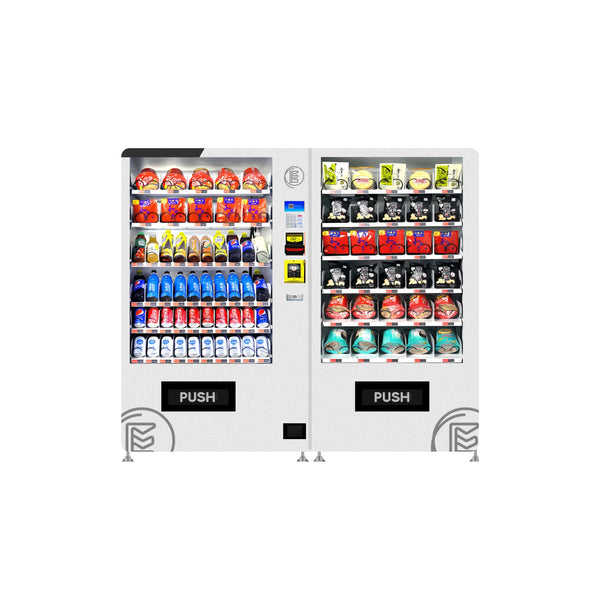
Premium Combo Vending Machines in Washington, District of Columbia maximize venue space by combining snacks and drinks in a single cabinet. Rather than operating two separate machines, venues benefit from both product categories within one compact footprint. These combo vending machines feature up to 1,050 product capacity across 72 adjustable slots, with a refrigerated drink side paired alongside an ambient snack section. Multiple delivery options including drop-down, Combo delivery on premium models, and conveyor systems on select units enhance user experience. VMFS Cloud monitoring provides real-time sales and inventory tracking, enabling efficient restocking and revenue optimization. Explore our full selection of
combo vending machines
designed for Washington, DC locations seeking versatile vending solutions.
{"type":"root","children":[{"type":"paragraph","children":[{"type":"text","value":"Two Categories One Cabinet
Vends both snacks and drinks (sometimes coffee) from a single footprint, so a venue captures impulse and thirst purchases without funding two separate machines
High Capacity Range
Up to 1,050 products across up to 72 adjustable slots, with refrigerated drink side and ambient snack side handling the full convenience product mix
Multiple Delivery Options
Drop-down delivery on standard models, Combo delivery on premium Combo models for fragile or high-ticket items, and conveyor delivery on select models
Universal Venue Fit
Designed for offices, breakrooms, hospitals, universities, hotels, factories, apartment buildings, transit hubs, and any high-traffic venue where both snack and drink demand exists
24/7 Cloud Monitoring
Real-time sales, live inventory, temperature alerts, and fault notifications stream to the VMFS Cloud dashboard from any device]}]}
Why Combo Machines Perform in Washington, District of Columbia
Washington's dense concentration of federal office buildings and corporate headquarters creates ideal conditions for combo vending machines throughout the city's downtown core and business districts. Government and corporate breakrooms demand both beverage and snack options, yet limited space prevents dual-machine installations.
Combo vending machines
solve this by delivering refrigerated drinks and snacks in a single footprint, reducing placement costs while maximizing profit per location. Combined with heavy foot traffic from metro commuters and the city's year-round workforce, these hybrid units outperform separate machines, offering venue managers convenient maintenance and operators broader inventory flexibility across Washington's professional landscape.
Best Locations in Washington
High-value deployment sites where combo vending delivers the strongest revenue per square foot.
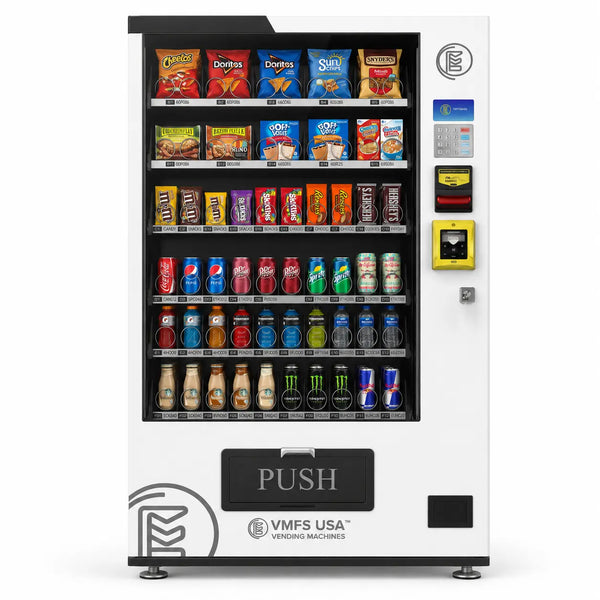
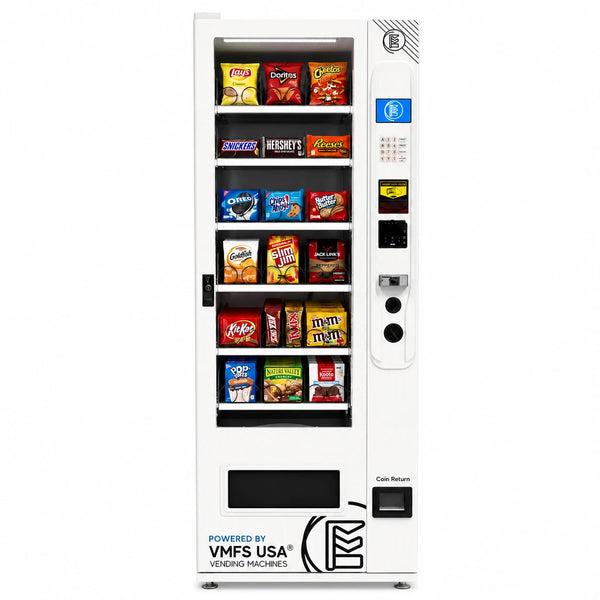
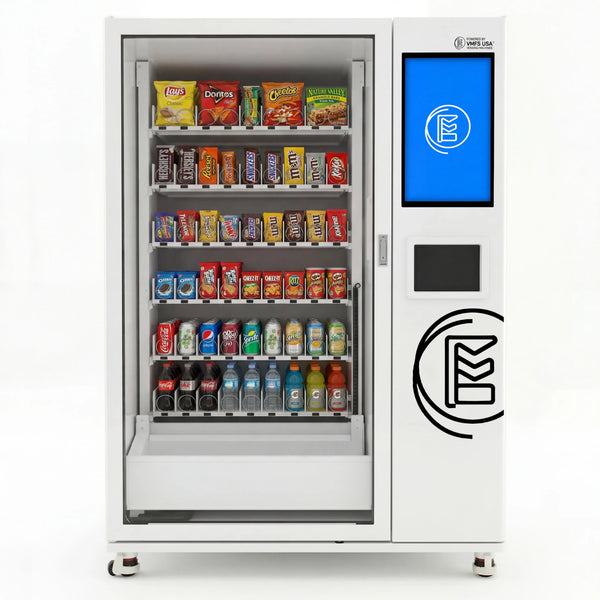
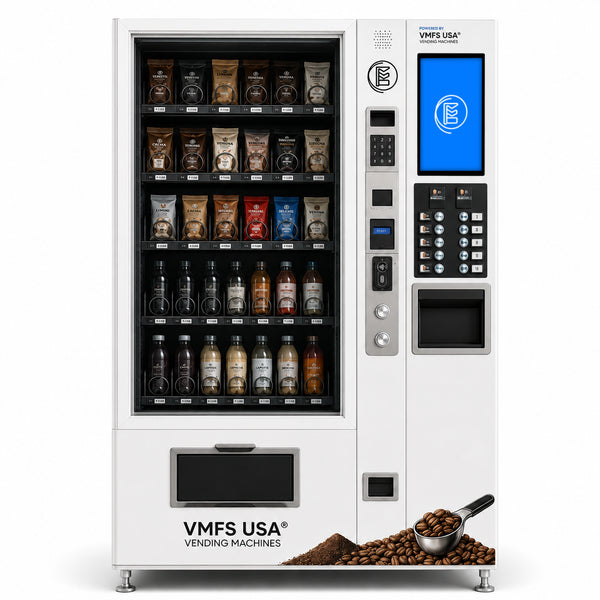
Combo Vending Machines Available for Washington
Every unit below ships configured, compliance-ready, and backed by VMFS Cloud monitoring.


How Operators Use Combo Vending in Washington
Government Office Building
Downtown corridors in the Federal Triangle, the Russell Senate Office Building, and the Eisenhower Executive Office Building serve thousands of federal employees who lack convenient cafeterias during long legislative sessions and policy work. A Combo vending machine stocks espresso drinks, bottled water, fresh coffee, granola bars, nuts, yogurt, and energy drinks to fuel staff through morning briefings and evening bill reviews. The single cabinet captures both the breakfast coffee impulse and the afternoon snack purchase without requiring two separate machines, while the refrigerated section keeps dairy products and beverages at safe temperatures throughout the day. Government workers purchasing convenience items during irregular hours generate strong per-machine revenue, and the reliable uptime of a snack and drink vending machine ensures this critical employee amenity functions 24/7 when the building operates.
Hotel Lobby and Guest Corridor
Properties along the National Mall, Georgetown waterfront, and Convention Center district serve business travelers and tourists who arrive at odd hours and need immediate access to snacks and cold beverages between meetings or sightseeing. The machine stocks premium bottled water, soft drinks, energy drinks, protein bars, nuts, fresh fruit, and sandwiches to appeal to health-conscious and convenience-seeking guests. A Combo vending machine eliminates the need for separate snack and beverage cabinets in tight lobby spaces, with refrigerated compartments maintaining cold drinks while ambient sections hold non-perishable items, and reliable drop-down delivery prevents product jams during peak arrival times. Hotels capture guest spending 30 to 50 percent above retail on convenience purchases, and 24/7 vending uptime removes the friction of closed retail shops and improves the guest experience during late night and early morning hours.
Medical and Research Institution
The Medical Center at Washington Hospital Center, Georgetown University Medical Center, and the Inova research campuses employ nursing staff, researchers, and support teams who work overnight shifts and need immediate access to caffeine and sustenance. The machine stocks strong coffee, bottled water, healthy snacks, protein bars, sandwiches, and energy drinks to keep night shift workers alert during critical care and research operations. A snack and drink vending machine in a single cabinet serves both the caffeine demand and hunger impulse without requiring capital for two machines, with the refrigerated drink side maintaining cold beverages and the ambient side holding stable shelf items, and conveyor or drop-down delivery handles the high-volume coffee and beverage traffic during shift changes. Medical facilities generate reliable per-machine revenue from staff who depend on vending access during hours when cafeterias close, and the 24/7 availability directly supports continuous patient care and research timelines.
Museum and Cultural Institution
The Smithsonian museums along the National Mall, the Kennedy Center, and the Library of Congress serve staff, researchers, and occasional visitors who move through secure buildings where external food options are restricted or inconvenient. The machine stocks bottled water, soft drinks, coffee, energy bars, nuts, and light snacks to support curators, archivists, and security personnel during long cataloging sessions and visitor service shifts. A Combo vending machine fits institutional building codes and security requirements by consolidating snack and drink service into a single monitored cabinet, with real time VMFS Cloud tracking providing transparency for building managers, refrigerated compartments protecting beverages, and reliable delivery mechanics preventing jams during lunch breaks and shift overlap periods. Cultural and research institutions purchase vending services to improve employee retention and operational continuity, and a single machine generates steady revenue from captive indoor audiences who have few alternatives for convenient meal breaks.
What Ships With Every Combo Unit
Regulations for Operating in Washington, DC
Licensing, permits, sales tax, and health department standards for combo vending operators in District of Columbia.
{"type":"root","children":[{"type":"paragraph","children":[{"type":"text","value":"State License Requirements
The District of Columbia Department of Health (DOH) oversees food service operations including vending machines. Combo vending machines that dispense both potentially hazardous refrigerated beverages and shelf-stable snacks fall under DC food service licensing requirements. A Food Service License is required for any operation vending potentially hazardous foods, including refrigerated drinks. Operators must register with the DC Department of Revenue for sales tax purposes using Form FR-500 (Application for a Sales Tax Registration Certificate). No separate statewide vending operator license exists; licensing is managed through the food service permitting system. Operators must establish a business entity (sole proprietorship, LLC, corporation) and obtain an EIN from the IRS. Specific commodity rules in DC include that sugary beverages are subject to the local sugary drink tax (an excise tax on distributors), and bottled water is generally exempt from this tax. All beverages and most snack foods are subject to standard sales tax. Food Service Licenses must be renewed annually, with renewal applications submitted to DOH typically 30 days before expiration.
City and County Permits
Washington, District of Columbia requires a basic Business License for all commercial vending operations, obtainable through the DC Department of Consumer and Regulatory Affairs (DCRA). Since DC is a single jurisdiction (not a county with separate city), all permits are administered at the municipal level. A Certificate of Use or Certificate of Occupancy may be required depending on the specific placement location (retail store, office building, etc.). Zoning compliance must be verified with DCRA to ensure the intended placement location permits vending machines. Fire Safety approval is required for machine placement, particularly regarding electrical connections and placement clearances, reviewed during inspections by the DC Fire Marshal's office. Coin-operated machine declarations or similar filings are not separately required for vending machines beyond standard licensing. No secondary county-level permits apply. Business License renewal occurs annually, and late renewal incurs penalties administered by DCRA. Operators should contact the DC Department of Consumer and Regulatory Affairs at their main office (202-442-4400) for permit requirements, or the DC Department of Health Food Protection Division for food service licensing specifics.
Sales Tax Rate
The combined sales tax rate in Washington, District of Columbia is 6.0 percent (DC has no county or local surtax; the state rate is the only applicable rate). Most food items sold through vending machines are subject to this 6.0 percent tax, including prepared snacks, candy, and sweetened beverages. Bottled water is generally exempt from DC sales tax when sold as a beverage. Operators must register with the DC Department of Revenue and remit sales tax monthly or quarterly depending on sales volume; small operators may qualify for less frequent filing. The District does not have a specific economic nexus threshold for remote sellers, but federal nexus standards apply. Out-of-state operators with any physical presence or sales in DC must register and remit DC sales tax. Operators register using Form FR-500 with the DC Department of Revenue.
Health Department Standards
The DC Department of Health's Food Protection Division establishes and enforces health standards for all vending machines dispensing food or beverages, including Combo machines. Equipment requirements for the refrigerated drink side include maintaining proper cold-holding temperatures of 41 degrees Fahrenheit or below, equipped thermometers for temperature monitoring, automatic shut-off features to prevent product spoilage, and NSF-certified or equivalent food-contact surfaces. All vended products must have legible labeling with ingredient and allergen information visible to consumers. Placement rules require machines to be positioned away from sources of overhead leakage, on clean and level flooring, with adequate clearance for servicing. Operational requirements include date-marking on any perishable products, regular cleaning and maintenance logs, and compliance with label visibility standards. The DC Department of Health conducts unannounced inspections of food service operations including vending machines. Secondary oversight occurs in regulated settings such as schools, healthcare facilities, and government buildings, where additional facility-specific approvals may be required. Washington, DC experiences variable humidity and temperature conditions, particularly in summer months, requiring that Combo machines have robust refrigeration capacity to maintain safe temperatures even during high ambient heat. VMFS Combo vending machines deployed in Washington, District of Columbia ship with refrigeration specifications compliant with DC health standards, including fail-safe cooling systems and temperature monitoring for the drink side.
Disclaimer
Regulatory information is for reference only and current as of 2026. Operators should verify current requirements with the relevant agency before deployment. VMFS USA is not a legal or tax advisor. For operator-side legal guidance covering placement contracts, documentation, business incorporation, tax registration, licenses, and permits, operators can consult VAdviced at https://vadviced.com.]}]}
Washington at a Glance
Geographic Identity
- County
- Independent City
- Metro Area
- Washington-Arlington-Alexandria, DC-VA-MD-WV
- Time Zone
- America/New_York (Eastern Time)
- Area Codes
- 202, 771
- ZIP Codes
- 20001 to 20599
- Primary Airport
- DCA Ronald Reagan Washington National Airport
- Secondary Airport
- IAD Washington Dulles International Airport
- Major Port
- None
- Nickname
- The Nation's Capital
Market Stats
- City Population
- 705,749
- Metro Population
- 6.39 million
- Annual Visitors
- 24.4 million (2023)
- Visitor Economy
- 17.8 billion annual economic impact
- Airport Passengers
- 105 million annual travelers through DCA, IAD, and BWI
- Hospitality Jobs
- 110,000+ tourism and hospitality jobs across Washington metropolitan area
- Top Industries
- Government and Federal Services, Tourism and Hospitality, Professional Services, Education and Research, Healthcare, Real Estate and Construction, Technology and Information Services
- Demand Driver
- Federal government employment, iconic monuments and museums, major national conventions, and consistent international visitor traffic drive year-round tourism and hospitality demand.
Climate Profile
- Climate Zone
- Humid Subtropical
- Average Humidity
- 55 to 75 percent year round with higher summer humidity
- Summer High
- 88 to 92 degrees Fahrenheit with elevated humidity from June through September
- Winter Low
- regularly drops to 25 to 35 degrees Fahrenheit, indoor placements recommended during winter months
- Seasonal Hazard
- None
- Environmental Exposure
- Urban heat island effect and occasional flooding in low lying areas near the Potomac and Anacostia Rivers, requiring elevated mounting for ground level placements
- Deployment Note
- Washington's humid subtropical climate with moderate temperature swings requires weatherproofed units with sealed electronics and enhanced drainage for semi outdoor deployments. Winter freezing necessitates heated cabinet specifications for year round outdoor operation. VMFS ships all Washington outdoor units with weatherproofed enclosures, sealed electronics, and heated cabinet systems as standard specifications.
Location & Service Area
- Key Neighborhoods
- Downtown, Capitol Hill, Georgetown, Logan Circle, U Street Corridor, Dupont Circle, Foggy Bottom, Columbia Heights, Anacostia, Clarendon
- Nearby Cities
- Arlington, Alexandria, Bethesda, Silver Spring, Hyattsville, Takoma Park, Falls Church
- Service Radius
- VMFS delivers, installs, and services machines throughout the District of Columbia and adjacent Arlington County, with extended coverage to Montgomery and Prince George's counties on request.
Your Location. Working 24/7.
Answers to common questions from Washington operators. Didn't see yours? Send us a message — our US-based team responds within one business day.
How do revenue splits work, and what happens if a location generates lower sales than expected?
What product mix does the operator recommend for a medical office building versus a nonprofit headquarters in the Shaw district?
How often does restocking occur, and what is the typical downtime per visit in a busy office tower?
How much electrical power does a Combo machine draw, and can it run on a standard 15-amp outlet in older building stock around Judiciary Square?
What happens if the machine malfunctions during peak lunch hours in a hospital network, and how quickly can parts be replaced?
Does the Combo machine accept mobile payments, and can a federal agency or law firm track transactions through accounting systems?
Deploy Combo Vending Machines in Washington, DC Today
Request a custom quote for your Washington, DC location and we handle machine selection, delivery, configuration, and ongoing support for snack and drink vending machines. Every deployment starts with a site assessment covering foot traffic patterns, product mix balance between snacks and beverages, refrigeration and power requirements, network requirements for the cloud platform, and compliance logistics specific to your building. We place single units in small government office breakrooms and law firm lobbies as easily as we roll out 30 or more machines across large hospital networks and federal agency campuses throughout the city. Your quote includes hardware, installation, staff training, and 12 months of cloud monitoring at no extra cost. Contact us today to discuss https://vmfsusa.com/collections/combo-vending-machines placement for your property.
Deploy Combo Vending Across Washington
1,200+ machines deployed. 1-year warranty standard. Free lifetime support. One team from site survey to uptime.