


Combo Vending Machines in Charleston, SC
Maximize your profits with premium Combo vending machines designed for high-traffic locations throughout Charleston, South Carolina today.
Deja de adivinar. Configure Your Combo Vending Machine.
Answer a few quick questions about your location, your product mix, your temperature needs, and your budget. Our Combo Vending System will match you with the right base model, add the right modules (refrigeration, ad screen, outdoor protection, payment suite), and show you real time pricing and lead time as you build.
Omita las idas y venidas. Omita la abrumadora hoja de especificaciones. Vea su configuración exacta, su costo exacto y su ventana de entrega exacta antes de comprometerse.
- Precios en tiempo real a medida que añade o elimina funciones
- Estimación del tiempo de entrega en tiempo real basada en su configuración
- Combinación de productos recomendada para su tipo de ubicación
- Capacidad, número de ranuras y límites de peso mostrados por configuración
- Opciones preestablecidas para alimentos, bebidas, electrónica, comercio minorista y congelados
Why Combo Vending Machines?
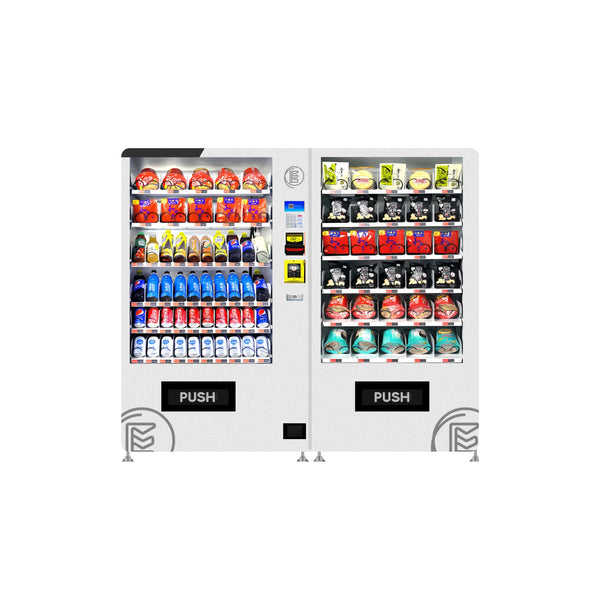
Combo Vending Machines in Charleston, South Carolina offer the ultimate space-saving solution for venues seeking both snacks and beverages from a single cabinet. These snack and drink vending machines combine dual product categories in one compact footprint, eliminating the need for separate machines. With up to 1,050 product capacity across 72 adjustable slots, they feature a refrigerated drink side alongside an ambient snack section. Multiple delivery mechanisms including drop-down, Combo delivery on premium models, and conveyor options on select units provide flexibility for different products. VMFS Cloud monitoring enables real-time sales and inventory tracking for optimal machine performance. Explore our full selection of
combo vending machines
designed to maximize your venue's profitability and customer satisfaction.
{"type":"root","children":[{"type":"paragraph","children":[{"type":"text","value":"Two Categories One Cabinet
Vends both snacks and drinks (sometimes coffee) from a single footprint, so a venue captures impulse and thirst purchases without funding two separate machines
High Capacity Range
Up to 1,050 products across up to 72 adjustable slots, with refrigerated drink side and ambient snack side handling the full convenience product mix
Multiple Delivery Options
Drop-down delivery on standard models, Combo delivery on premium Combo models for fragile or high-ticket items, and conveyor delivery on select models
Universal Venue Fit
Designed for offices, breakrooms, hospitals, universities, hotels, factories, apartment buildings, transit hubs, and any high-traffic venue where both snack and drink demand exists
24/7 Cloud Monitoring
Real-time sales, live inventory, temperature alerts, and fault notifications stream to the VMFS Cloud dashboard from any device]}]}
Why Combo Machines Perform in Charleston, South Carolina
Charleston's thriving hospitality and tourism industry drives foot traffic through hotels, restaurants, and attractions where combo vending machines excel. Visitors and workers need convenient snack-and-drink solutions in high-traffic areas like lobbies, break rooms, and transit corridors. A single
combo vending machine
maximizes limited floor space in Charleston's historic downtown venues while reducing operational complexity compared to separate units. The coastal climate's heat increases drink demand, making refrigerated beverage compartments essential alongside snacks, particularly in corporate offices and hospitality breakrooms concentrated throughout the city's business districts.
Best Locations in Charleston
High-value deployment sites where combo vending delivers the strongest revenue per square foot.
Combo Vending Machines Available for Charleston
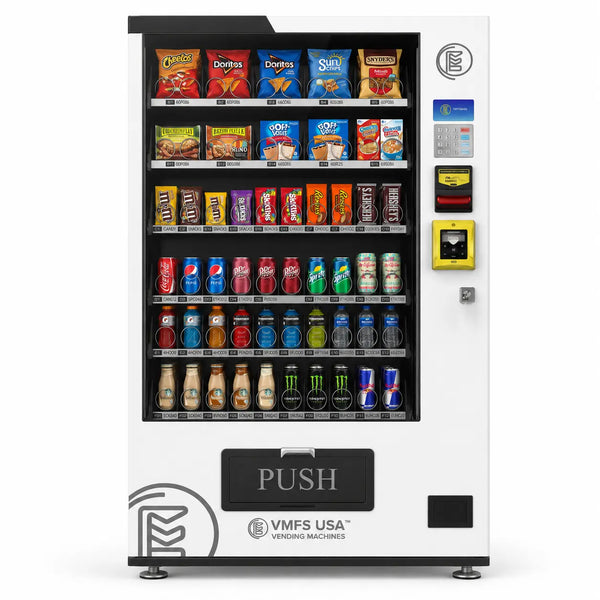
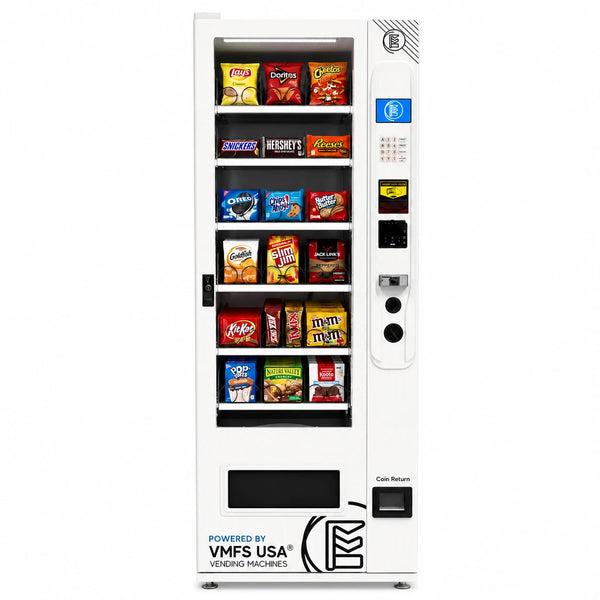
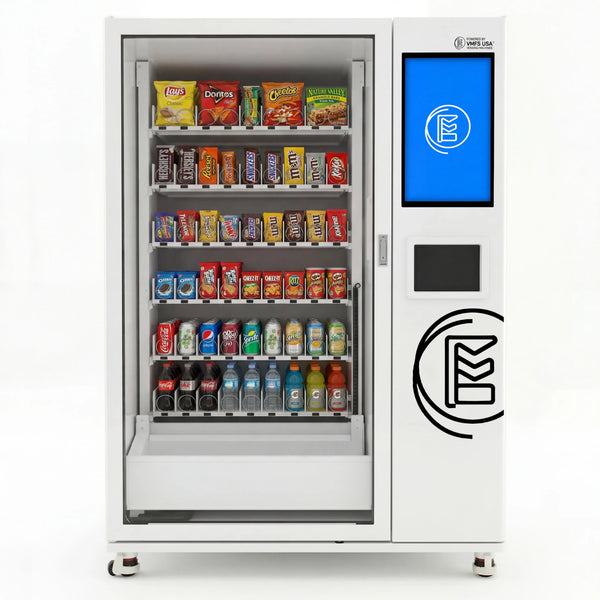
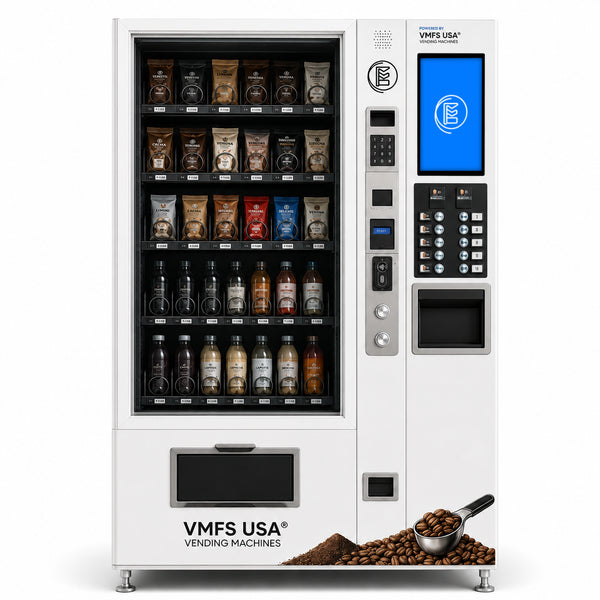
Every unit below ships configured, compliance-ready, and backed by VMFS Cloud monitoring.


How Operators Use Combo Vending in Charleston
Hotel Lobby and Corridor
Charleston's premier hotels including The Vendue, Zero George, and Spectator Hotel serve thousands of leisure travelers annually who arrive without snacks and drinks for their rooms. Guests stock their minibars and seek convenient refreshment during late arrivals and early departures when front desk service is limited. The snack and drink vending machine positioned in the lobby or corridor corridor captures both the thirst purchase and the impulse snack buy in a single transaction, eliminating the need to fund two separate cabinets while the refrigerated drink side keeps beverages cold and the ambient snack side holds chips, candy, granola bars, and sandwiches. The drop-down delivery ensures high-velocity items move reliably around the clock, and 24/7 uptime means guests find what they need regardless of arrival time, making this a strong amenity that drives loyalty and repeat bookings.
Historic District Office and Professional Services
The Historic District and surrounding commercial corridors house law firms, architecture practices, financial advisory offices, and professional services concentrated around King Street and Meeting Street where foot traffic and tenant density run high. Office workers and visiting clients need breakroom refreshment throughout the day and into evening work sessions when external food options have closed. A combo vending machine stocked with coffee, bottled water, sodas, energy drinks, sandwiches, and protein bars serves the dual need for caffeine and sustenance without requiring the property owner to maintain two separate machines and their associated service costs. The reliable drop-down or Combo delivery mechanism handles the high turnover on popular items like coffee and bottled water, and real time VMFS Cloud monitoring ensures the machine stays stocked and operational during extended business hours when foot traffic peaks.
Medical Center and Hospital Campus
Charleston's major medical institutions including MUSC and Roper St. Francis operate 24/7 with night shift staff, physician call rooms, and visitors who need immediate access to food and beverage outside normal cafeteria hours. Hospital personnel working graveyard shifts and families stationed in waiting rooms require convenient access to coffee, bottled water, healthy snacks, sandwiches, and energy drinks at any time of day or night. The combo vending machine eliminates the capital and service burden of installing separate snack and drink cabinets while keeping beverages properly refrigerated and shelf-stable snacks accessible in one reliable unit. The Combo vending machine with drop-down or conveyor delivery handles the high-volume turnover that a medical campus generates, and 24/7 uptime is non-negotiable in a healthcare setting where staff and visitors depend on these machines during critical overnight and weekend hours.
College Campus Dormitory and Student Center
Clemson graduate students and visiting scholars housed in Charleston-area dormitories need late-night snacking and hydration after library study sessions and classes that run into evening hours. Student populations consume ramen, microwaveable snacks, sodas, energy drinks, and protein bars at rates far above residential or office norms, particularly during exam periods and project deadlines when campus food service closes. A single snack and drink vending machine captures both the hunger purchase and the thirst purchase without doubling the footprint or service load, with the refrigerated side keeping cold beverages ready and the ambient side holding shelf-stable items that survive high-density student use. The machine's capacity ranging up to 1,050 products across up to 72 adjustable slots means fewer restock cycles and more uptime, and the drop-down or Combo delivery mechanism withstands the demand patterns of a student population that shops vending machines as primary late-night food sources.
What Ships With Every Combo Unit
Regulations for Operating in Charleston, SC
Licensing, permits, sales tax, and health department standards for combo vending operators in South Carolina.
{"type":"root","children":[{"type":"paragraph","children":[{"type":"text","value":"State License Requirements
South Carolina's Department of Health and Environmental Control (DHEC) oversees vending machines under state food service regulations. Combo vending machines that dispense both refrigerated beverages and shelf-stable snacks require a food service license because the refrigerated beverage component involves potentially hazardous foods requiring temperature control. Operators must register for a South Carolina sales tax license through the Department of Revenue before commencing operations; an EIN from the IRS is required for business registration. South Carolina does not issue a separate statewide vending operator license; the food service license serves as the primary state authorization. Sugary beverage regulations in South Carolina do not impose restrictions on vending, though some schools and government facilities may have local policies limiting such sales. Bottled water is typically considered a non-potentially hazardous food and follows the same general vending framework. Dairy products if vended must comply with temperature control requirements identical to refrigerated beverages. The food service license must be renewed annually, and operators must maintain current DHEC food handler certification. Business entity formation (LLC, Corporation, Sole Proprietorship) is handled through the South Carolina Secretary of State; an EIN is required regardless of entity type if the operator has employees or operates as a partnership or corporation.
City and County Permits
Charleston, South Carolina requires vending machine operators to obtain a City Business License from the Department of Business Licensing and Regulatory Affairs (BLRA) prior to deployment of any machine within city limits. A Certificate of Use permit is required confirming the machine location complies with zoning regulations; Charleston has specific zoning designations and operators must verify their intended location is zoned for commercial vending activity. Fire safety inspections are conducted by the Charleston Fire Department for machines placed in commercial establishments, requiring compliance with fire code spacing and electrical standards. No separate coin-operated machine declaration is mandated by the City of Charleston, though the business license application process documents the nature of the vending operation. County-level permits from Charleston County are generally not required if the machine is located within city limits; however, machines placed outside the city but within the county require a Charleston County Business License. Renewal of the City Business License occurs annually, typically on the anniversary date of issuance, with late penalties assessed if renewal fees are not received by the deadline (fees and penalty structure vary; contact BLRA directly at the City of Charleston). The Department of Business Licensing and Regulatory Affairs can be reached through the City of Charleston main administrative office. Surrounding municipalities such as North Charleston, Goose Creek, and Moncks Corner have independent permitting processes; operators should contact each municipality's business licensing department before placing machines in those areas.
Sales Tax Rate
The combined state and local sales tax rate in Charleston, South Carolina is 8.5 percent (South Carolina state rate of 6 percent plus Charleston County surtax of 2.5 percent). Taxable items vended in Combo machines include candy, snack foods, carbonated and non-carbonated beverages, and energy drinks. Bottled water is generally exempt from sales tax in South Carolina. Food products that are not candy or prepared foods may qualify for exemptions depending on packaging and ingredient composition; operators should consult the Department of Revenue for borderline items. Operators must register for a South Carolina sales tax permit through the Department of Revenue online portal or by mail before operating any machine. Quarterly sales tax returns are typically required, though some operators may qualify for annual filing based on sales volume; the Department of Revenue will specify the frequency upon registration. Out-of-state sellers with economic nexus in South Carolina (generally defined as more than 200 transactions or $100,000 in sales annually in recent tax years) must register and remit South Carolina sales tax. Remittance is made directly to the South Carolina Department of Revenue; operators should retain all sales records by machine location to facilitate accurate tax reporting.
Health Department Standards
South Carolina DHEC Food Protection Division establishes health standards for Combo vending machines, and the City of Charleston's Department of Health and Environmental Control conducts local oversight and inspections. Machines must maintain refrigerated compartments at or below 41 degrees Fahrenheit for beverages and perishable items; thermometers accurate to plus or minus 2 degrees Fahrenheit must be visibly displayed inside refrigerated units and checked daily by operators. Equipment surfaces in contact with food must be smooth, non-absorbent, and cleanable; stainless steel is preferred for the refrigerated section. Machines must have automatic shut-off mechanisms if refrigeration fails and must feature screening to prevent pest entry. Placement rules require that machines be positioned to prevent overhead leakage from roofs, pipes, or sprinkler systems, and floor surfaces must be clean, non-slip, and in good repair to prevent water accumulation and pest harborage. Operational requirements include date-marking of all potentially hazardous products using clear labeling visible to consumers; products past expiration must be removed immediately. All labels on vended items must remain legible and undamaged. DHEC and City inspectors conduct both scheduled and unannounced inspections; operators must maintain licenses and records available for inspection at all times. Secondary oversight may apply if machines are located in schools (Charleston County Schools Food Service standards), healthcare facilities (additional DHEC requirements), or government buildings (City of Charleston facilities management approval). Charleston's coastal climate with salt air and high humidity may accelerate equipment corrosion; stainless steel and corrosion-resistant hardware are strongly recommended for extended machine lifespan. VMFS Combo vending machines deployed in Charleston ship with refrigeration systems compliant with 41-degree Fahrenheit temperature standards, corrosion-resistant components suitable for coastal environments, and all required safety and food-contact surface specifications.
Disclaimer
Regulatory information is for reference only and current as of 2026. Operators should verify current requirements with the relevant agency before deployment. VMFS USA is not a legal or tax advisor. For operator-side legal guidance covering placement contracts, documentation, business incorporation, tax registration, licenses, and permits, operators can consult VAdviced at https://vadviced.com.]}]}
Charleston at a Glance
Geographic Identity
- County
- Charleston County
- Metro Area
- Charleston-North Charleston, SC
- Time Zone
- America/New_York (Eastern Time)
- Area Codes
- 843
- ZIP Codes
- 29401 to 29403
- Primary Airport
- CHS Charleston International Airport
- Secondary Airport
- None
- Major Port
- Port of Charleston, one of the busiest container ports on the U.S. East Coast
- Nickname
- The Holy City
Market Stats
- City Population
- 150,227
- Metro Population
- 1.4 million
- Annual Visitors
- 7.5 million (2023)
- Visitor Economy
- $9.2 billion annual economic impact
- Airport Passengers
- 12.8 million annual travelers through CHS
- Hospitality Jobs
- None
- Top Industries
- Tourism and Hospitality, Healthcare, Finance and Professional Services, Education, Manufacturing, Real Estate and Construction
- Demand Driver
- Strong year-round tourism driven by historic district attractions, cultural heritage sites, coastal location, and growing convention business generates consistent visitor and consumer demand.
Climate Profile
- Climate Zone
- Humid Subtropical
- Average Humidity
- 70 to 80 percent year round
- Summer High
- 90 degrees Fahrenheit or higher with frequent afternoon thunderstorms from June through September
- Winter Low
- rarely below 40 degrees Fahrenheit, outdoor operating conditions typical year round
- Seasonal Hazard
- Hurricane Season, June 1 to November 30
- Environmental Exposure
- Coastal salt air exposure within 5 miles of the harbor requires corrosion resistant housing and sealed electronics to prevent salt spray degradation.
- Deployment Note
- Charleston's humid subtropical climate with Atlantic hurricane exposure and persistent salt air requires weatherproofed units with corrosion resistant housing, sealed electronics, and enhanced drainage for outdoor and semi-outdoor placements. VMFS ships all Charleston outdoor units with these specifications standard.
Location & Service Area
- Key Neighborhoods
- Downtown Charleston, Historic District, East Bay, Ansonborough, Harleston Village, The Neck, James Island, Folly Beach, Isle of Palms, Mount Pleasant, West Ashley, Summerville
- Nearby Cities
- Mount Pleasant, Summerville, Goose Creek, Moncks Corner, Ladson, Walterboro, Beaufort
- Service Radius
- VMFS delivers, installs, and services machines throughout Charleston County and Berkeley County, with extended coverage to Dorchester County and Beaufort County on request.
Your Location. Working 24/7.
Answers to common questions from Charleston operators. Didn't see yours? Send us a message — our US-based team responds within one business day.
How does revenue split work and what can a property owner expect to earn monthly from hosting a Combo machine?
With Charleston's heat and humidity, how does the refrigerated drink side perform during summer months, and how often does the machine need service?
What is the physical footprint and electrical requirement for installation in a typical Charleston office, hospital, or retail location?
What snack and drink mix works best for a mixed-use venue in Charleston, and can the assortment change seasonally?
Does the Combo machine accept mobile payments like Apple Pay and Google Pay, and what happens if the payment system goes down?
How does the Combo machine handle maintenance downtime, and what is the typical response time for repairs in the Charleston area?
Deploy Combo Vending Machines in Charleston, SC Today
Request a custom quote for your Charleston location today, and our team handles machine selection, delivery, configuration, and ongoing support from start to finish. Every deployment begins with a site assessment covering foot traffic patterns, product mix balance between snacks and drinks, refrigeration and power requirements, network readiness for the cloud platform, and all compliance logistics specific to your property. Whether you need a single snack and drink vending machines unit in a medical office breakroom or a rollout of 30 or more machines across a hotel corridor network, cruise ship terminal, or port facility warehouse, the quote includes hardware, installation, staff training, and 12 months of cloud monitoring at no extra cost.
Deploy Combo Vending Across Charleston
1,200+ machines deployed. 1-year warranty standard. Free lifetime support. One team from site survey to uptime.