


Advertising Vending Machines in Cincinnati, OH
Transform your Cincinnati retail space into a profitable advertising powerhouse with our state-of-the-art digital vending machines today.
Deja de adivinar. Configure Your Advertising Vending Machine.
Answer a few quick questions about your location, your product mix, your temperature needs, and your budget. Our Advertising Vending System will match you with the right base model, add the right modules (refrigeration, ad screen, outdoor protection, payment suite), and show you real time pricing and lead time as you build.
Omita las idas y venidas. Omita la abrumadora hoja de especificaciones. Vea su configuración exacta, su costo exacto y su ventana de entrega exacta antes de comprometerse.
- Precios en tiempo real a medida que añade o elimina funciones
- Estimación del tiempo de entrega en tiempo real basada en su configuración
- Combinación de productos recomendada para su tipo de ubicación
- Capacidad, número de ranuras y límites de peso mostrados por configuración
- Opciones preestablecidas para alimentos, bebidas, electrónica, comercio minorista y congelados
Why Advertising Vending Machines?
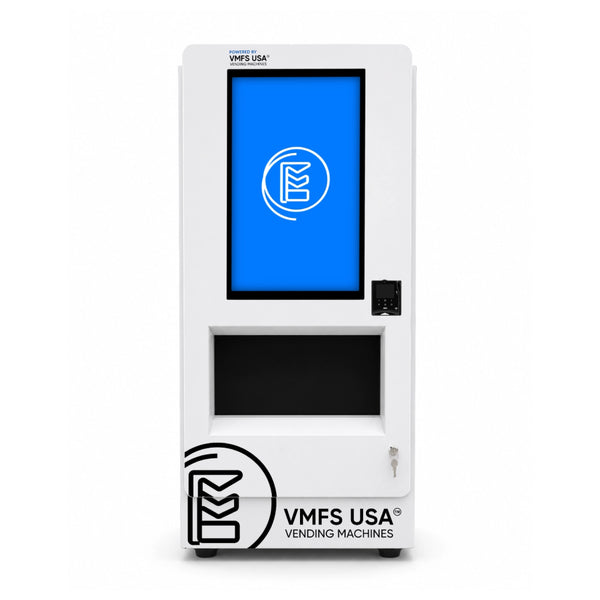
An advertising vending machine offers Cincinnati businesses a versatile solution for monetizing spaces while delivering premium customer experiences. These digital vending machines combine product dispensing with dynamic digital advertising, allowing operators to vend snacks, drinks, vapes, CBD products, electronics, apparel, branded merchandise, and specialty items from a single configurable cabinet. The large interactive touchscreen functions as both an intuitive customer interface and a powerful advertising display, maximizing revenue opportunities.
Touchscreen vending machines
feature impressive capacities ranging from 150 to 800 items across up to 60 adjustable slots, with premium models offering convenient drop-down or elevator delivery systems. Configurable temperature zones accommodate both ambient and refrigerated products, while double-layer toughened glass with optional defogging ensures durability and visibility. The integrated VMFS Cloud dashboard provides real-time sales tracking and inventory management, empowering operators to optimize their advertising vending machine performance efficiently.
Large Interactive Touchscreen
Display sizes from 22-inch up to 50-inch HD touchscreens turn every machine into a digital billboard with high-resolution product visuals, video advertising, and remote content management
Dual Revenue Stream
Earn from product sales while also monetizing idle screen time through third-party advertising, brand promotions, and internal campaigns displayed between transactions
Versatile Product Compatibility
Configure for snacks, drinks, vapes, CBD, apparel, electronics, and specialty items with adjustable coil spacing, multiple tray depths, and elevator delivery options for fragile or high-value goods
High-Capacity Format
From 150 items in compact wall-mounted models up to 800 items in full-size cabinets, with 15 to 60 adjustable slots supporting wide product mix and reduced restocking frequency
VMFS Cloud Remote Management
Real-time sales data, inventory tracking, fault alerts, and remote ad content updates stream from any device, with U.S.-based support and software updates included
Why Advertising Machines Perform in Cincinnati, Ohio
Cincinnati's thriving corporate headquarters ecosystem, anchored by major employers like Procter & Gamble, Fifth Third Bancorp, and The Kroger Co., creates ideal conditions for
advertising vending machines
in high-traffic office breakrooms and lobbies. The city's dense network of Fortune 500 and mid-market office parks generates consistent foot traffic and employee populations seeking convenient snacking and beverages throughout the workday. Digital vending machines excel in these environments by delivering 24/7 retail access without staffing overhead while generating dual revenue streams from product sales ($200–$600 monthly per unit) and integrated touchscreen advertising that captures brand engagement opportunities in premium corporate settings. Combined with Cincinnati's growing hospital network, university student populations, and downtown revitalization driving retail foot traffic,
professional placement services
help identify optimal venue locations where machines' 300–800 product capacity and real-time inventory monitoring maximize profitability and advertiser ROI.
Best Locations in Cincinnati
High-value deployment sites where advertising vending delivers the strongest revenue per square foot.
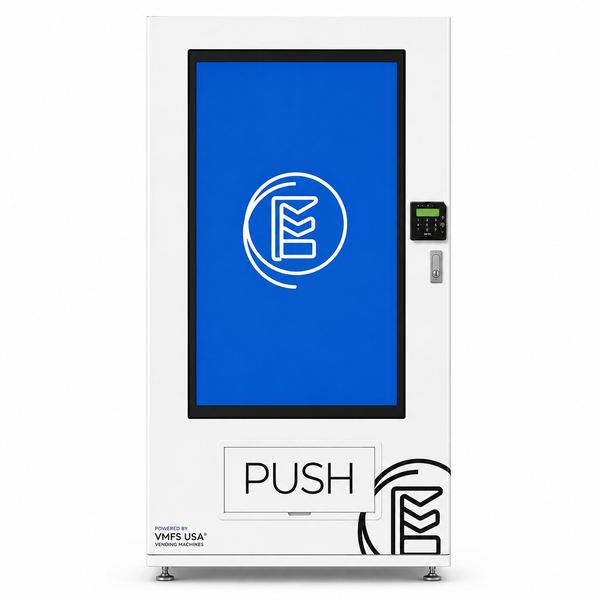
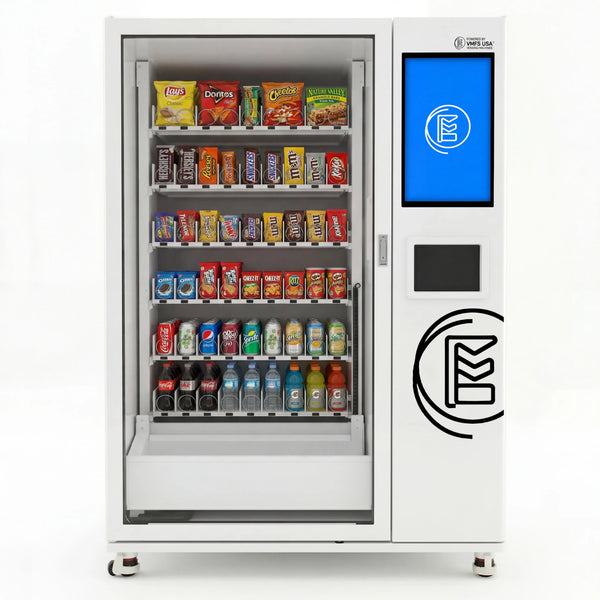
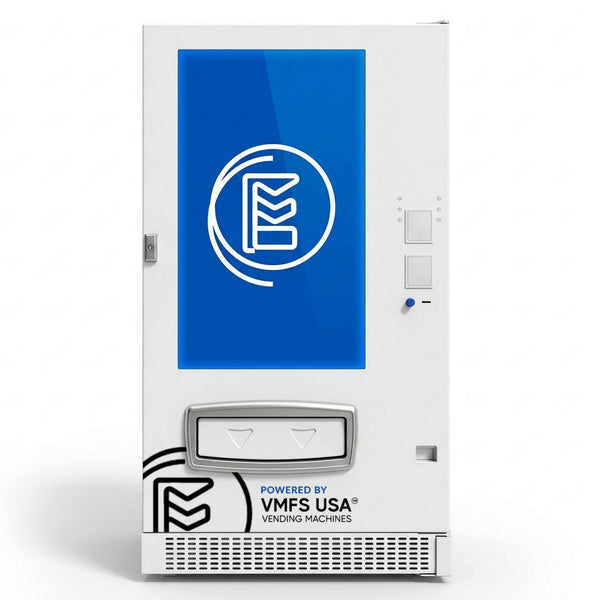
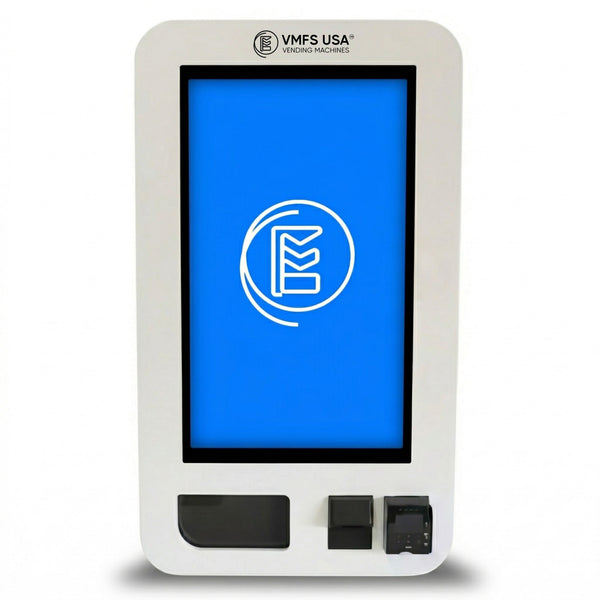
Advertising Vending Machines Available for Cincinnati
Every unit below ships configured, compliance-ready, and backed by VMFS Cloud monitoring.


How Operators Use Advertising Vending in Cincinnati
Corporate Office Breakroom
The Central Business District, Great American Tower, Procter and Gamble offices, and Kroger headquarters all maintain employee breakrooms where sustained foot traffic demands reliable vending. Machines stock premium snacks, packaged drinks, branded merchandise, and specialty items that appeal to salaried workers on break schedules. Refrigerated advertising vending machines maintain consistent cold storage for beverages throughout eight-hour shifts, while 300 to 500 product capacity eliminates mid-day stockouts during lunch periods. Net profit runs $200 to $400 monthly after restocking, making the machines a straightforward tenant amenity that drives employee retention and reduces break room management overhead.
Airport Terminal Concourse
Cincinnati Northern Kentucky International Airport processes 40 million annual passengers through gates where convenience items drive immediate sales. Machines positioned in terminal corridors stock premium packaged snacks, drinks, electronics chargers, headphones, and branded airport merchandise for travelers between flights. Elevator delivery protects fragile items like phone accessories during high-volume restocking cycles, while real time VMFS Cloud monitoring tracks inventory across multiple machines across concourse sections. The 24/7 operational model captures sales from early departures and late arrivals, generating $250 to $500 net profit monthly per machine when product mix balances impulse purchases with premium pricing.
Sports and Entertainment Venue
Paul Brown Stadium, Great American Ball Park, and Bogart's concert venue draw 3 million annual visitors through concourses and common areas seeking immediate refreshment. Machines stock cold drinks, energy beverages, snacks, branded team apparel, and event-specific merchandise that capitalize on event atmosphere and fan spending patterns. Coil delivery ensures fast transaction times during crowded intermissions and pre-show periods, while high-capacity 400 to 800 product configurations support sustained demand without restocking between events. Revenue reaches $300 to $500 net monthly per machine through combination of beverage sales, premium snack margins, and advertising display space sold to branded sponsors.
University Campus Location
University of Cincinnati and Xavier University maintain residence halls, student centers, and library study areas where overnight access creates reliable demand. Machines stock snacks, energy drinks, portable electronics like phone chargers and earbuds, and branded campus merchandise for students studying late shifts and weekend hours. Refrigerated advertising vending machines provide consistent cold beverage availability during library hours and overnight residence access when traditional food services close, eliminating reliance on daily restocking windows. Net profit reaches $150 to $350 monthly per machine while solving student convenience during off-peak hours and generating secondary revenue through academic institution advertising and campus partner promotions.
What Ships With Every Advertising Unit
Regulations for Operating in Cincinnati, OH
Licensing, permits, sales tax, and health department standards for advertising vending operators in Ohio.
{ "type": "root", "children": [ { "type": "paragraph", "children": [ { "type": "text", "value": "State License Requirements
Ohio vending machine operators are regulated primarily by the Ohio Department of Commerce, Division of Food Safety. Operators stocking packaged snacks and drinks must obtain a Food Service License (also called a Vending Machine License) from the Ohio Department of Commerce unless the products are non-potentially hazardous and shelf-stable; packaged beverages including sodas, juices, and water typically fall under licensing requirements. Operators stocking refrigerated beverages or perishable food items must comply with refrigeration and sanitation standards enforced by the health department. For vape and CBD products, operators must understand that Ohio law restricts vape sales to persons 18 and older and requires age-verification compliance; CBD products are regulated under Ohio's hemp program (ORC 3745.50 et seq.) and must contain no more than 0.3% THC on a dry-weight basis. Apparel and non-food electronics are generally not subject to food service licensing but may be subject to general sales tax registration. All operators must register with the Ohio Department of Taxation for a sales tax license (Certificate of Vendor Registration) and obtain a Federal Employer Identification Number (EIN) from the IRS, even for single-owner sole proprietorships; business entity formation (sole proprietorship, LLC, S-corp, or C-corp) is recommended and affects liability and tax treatment. Ohio does not require a separate state advertising display license for third-party digital advertising on vending machine touchscreens, but operators must ensure any ads comply with applicable consumer protection laws and do not violate FTC endorsement and testimonial guides. The Food Service License issued by the Ohio Department of Commerce must be renewed annually, and operators should verify current renewal fees directly with the state. For packaged food stocking, all products must comply with FDA labeling requirements and state-specific labeling rules, with ingredient statements and allergen declarations clearly visible and displayed on the product packaging itself; the touchscreen interface may display promotional content but cannot replace required label information on the physical package. For vape and CBD product stocking, operators must implement age-verification technology or procedures that prevent sales to minors and maintain records of age verification compliance as required by state and local law.
City and County Permits
Cincinnati businesses operating vending machines must obtain a City of Cincinnati Business License from the Department of Commerce; applications are submitted to the City of Cincinnati's Office of Cincinnati City Council or the Department of Commerce and require proof of a valid EIN and documentation of business structure. Operators must also obtain a Certificate of Use (also called a zoning certificate) from Cincinnati's Department of City Planning to confirm the proposed location complies with zoning ordinances; residential, commercial, retail, and industrial zones have different restrictions on machine placement. A Fire Safety Inspection and Sign-Off may be required, particularly for machines placed in schools, hospitals, or government buildings; contact the Cincinnati Fire Department's Business Inspection Division at (513) 352-3000. Hamilton County does not typically issue a separate county vending machine permit but operators should verify any county-specific requirements for locations near county boundaries or in unincorporated areas. Cincinnati's Finance and Management Department may require a declaration or short-form filing for coin-operated or card-operated machines, though this is often combined with the Business License. Surrounding municipalities (such as Blue Ash, Madeira, Montgomery, or Norwood if locations extend beyond Cincinnati proper) may have additional local licensing; operators should contact each municipality's planning or business department before deployment. City of Cincinnati Business Licenses typically require renewal annually; renewal is managed through the Department of Commerce's online system. Late renewal penalties vary and operators should consult directly with Cincinnati's Department of Commerce at (513) 352-3250. For locations in schools or government buildings, additional approval from the respective institution's administration is required, and some school districts or county facilities have separate vending procurement or placement agreements.
Sales Tax Rate
The combined sales tax rate in Cincinnati, Ohio is 7.25% (Ohio state rate of 5.75% plus Hamilton County surtax of 1.5%). All tangible personal property sold via vending machine, including packaged snacks, beverages, vapes, and CBD products, is subject to the 7.25% sales tax rate in Cincinnati unless a specific exemption applies. Beverages including sodas, juices, sports drinks, flavored water, coffee, and tea sold from vending machines are fully taxable in Ohio; water (non-flavored) is also taxable when sold in vended form. Digital advertising revenue generated from third-party advertisements displayed on the vending machine's integrated touchscreen is not subject to the 7.25% sales tax on goods; however, it may be subject to Ohio's Commercial Activity Tax (CAT) or income tax reporting depending on operator business structure and annual revenue. Operators must register for a sales tax license (Certificate of Vendor Registration) with the Ohio Department of Taxation; registration is performed online at the ODON (Ohio Department of Taxation Online Services) portal or by mail. Operators must remit sales tax collected on vended goods monthly or quarterly depending on sales volume; filings are made to the Ohio Department of Taxation. Out-of-state operators with no physical presence in Ohio but generating vended product sales or third-party advertising revenue in Cincinnati may have sales tax collection and remittance obligations based on economic nexus; the current Ohio economic nexus threshold is generally triggered by sales of taxable goods into the state, and out-of-state vendors are encouraged to consult with the Ohio Department of Taxation directly. Digital out-of-home advertising (including ads displayed on vending machine touchscreens) is not subject to a separate local Cincinnati advertising tax, but operators displaying third-party ads must verify that ad content complies with local consumer protection ordinances and does not promote illegal activities or false claims.
Health Department Standards
Vending machines placed in Cincinnati are subject to oversight by the Hamilton County General Health District (HCHD) and must comply with Ohio Revised Code Chapter 3717 (Food Service Regulations). For refrigerated vending machines stocking beverages, dairy products, or other potentially hazardous foods, refrigeration temperatures must be maintained at 41 degrees Fahrenheit or below (or as specified by product type in Ohio Administrative Code 3717-1-03.1). Equipment surfaces in contact with food must be food-grade and easily cleanable; stainless steel or approved plastic materials are required. Machines must have automatic shut-off or alarm functions to alert operators if refrigeration fails or temperatures rise above safe levels. For non-refrigerated touchscreen vending machines stocking shelf-stable snacks, the equipment must be kept clean and free of contamination; humidity and temperature fluctuations should be minimized to prevent product degradation. Placement rules require machines to be positioned in locations with adequate ventilation, away from direct sunlight, and in areas where they do not obstruct emergency exits or fire suppression equipment. Machines placed in schools, healthcare facilities, or government buildings are subject to facility-specific oversight and may require signed placement agreements with the host institution. Operational requirements include date-marking on any perishable or potentially hazardous products stocked (expiration dates, "sell-by" dates, or "use-by" dates must be clearly visible on product packaging); product rotation (FIFO) is required. All required product label information (ingredient statements, allergen warnings, net weight, manufacturer name and address, nutrition facts panel) must be clearly visible on the physical package itself; the touchscreen may display supplemental marketing or promotional information but cannot obscure or replace mandated label information. The Hamilton County General Health District conducts unannounced inspections of vending machines, particularly those in sensitive locations such as schools or healthcare settings, at least annually or more frequently if complaints are received. Inspectors verify equipment cleanliness, temperature compliance, product freshness, and label visibility. Secondary oversight is provided by individual school districts, hospital infection control committees, and government building facility managers if machines are placed on their premises. Cincinnati's humid subtropical climate and seasonal temperature variations (hot summers, cold winters) may affect ambient machines; equipment should be designed or configured to handle temperature swings and high humidity without mechanical failure. VMFS soda and advertising vending machines deployed in Cincinnati ship with the appropriate specification standard, including configurable temperature zones for ambient or refrigerated product stocking, automatic temperature monitoring and alarm systems, food-grade interior materials, and full compliance with Ohio food service equipment standards; machines include a 1-year standard warranty with extended coverage and service options available.
Disclaimer
Regulatory information is for reference only and current as of 2026. Operators should verify current requirements with the relevant agency before deployment. VMFS USA is not a legal or tax advisor. For operator-side legal guidance covering placement contracts, host venue agreements, documentation, business incorporation, tax registration, licenses, and permits, operators can consult
VAdviced
. For professional placement and location matching support, operators can work with
VPlaced
." } ] } ]}
Cincinnati at a Glance
Geographic Identity
- County
- Hamilton County
- Metro Area
- Cincinnati-Middletown
- Time Zone
- America/New_York (Eastern Time)
- Area Codes
- 513, 639
- ZIP Codes
- 45202 to 45298
- Primary Airport
- CVG Cincinnati/Northern Kentucky International Airport
- Secondary Airport
- LU Bowman Field
- Major Port
- Cincinnati riverport, inland river port on the Ohio River
- Nickname
- The Queen City
Market Stats
- City Population
- 309,317
- Metro Population
- 2.2 million
- Annual Visitors
- None
- Visitor Economy
- None
- Airport Passengers
- 43 million annual travelers through CVG
- Hospitality Jobs
- None
- Top Industries
- Healthcare, Finance and Banking, Manufacturing, Logistics and Distribution, Consumer Goods, Professional Services
- Demand Driver
- Strong corporate headquarters presence, major medical and research institutions, and a central Midwestern location supporting regional distribution and trade.
Climate Profile
- Climate Zone
- Humid Continental
- Average Humidity
- 60 to 75 percent year round
- Summer High
- 85 to 90 degrees Fahrenheit with moderate humidity from June through August
- Winter Low
- regularly below 32 degrees Fahrenheit, indoor placements recommended during winter months
- Seasonal Hazard
- Severe Thunderstorms and Hail, April to August
- Environmental Exposure
- Heavy seasonal precipitation and freeze thaw cycles require adequate drainage and corrosion resistant hardware for outdoor placements.
- Deployment Note
- Cincinnati's humid continental climate with cold winters and warm summers requires weatherproofed units with sealed electronics and enhanced drainage for spring and summer thunderstorm resilience. VMFS ships all Cincinnati outdoor units with these specifications standard.
Location & Service Area
- Key Neighborhoods
- Downtown, Over the Rhine, Northside, Westwood, Oakley, Hyde Park, Clifton, Corryville, Mount Washington, Avondale, Roselawn, Kennedy Heights
- Nearby Cities
- Fort Thomas, Newport, Covington, Erlanger, Florence, Mason, Springdale, Norwood, Blue Ash
- Service Radius
- VMFS delivers, installs, and services machines throughout Hamilton, Butler, and Warren counties, with extended coverage to Clermont and Warren counties on request.
Your Location. Working 24/7.
Answers to common questions from Cincinnati operators. Didn't see yours? Send us a message — our US-based team responds within one business day.
What kind of net profit can a property owner expect from hosting an advertising vending machine in Cincinnati?
How often does an advertising vending machine need restocking in a Cincinnati facility?
What electrical requirements and space considerations should a Cincinnati property prepare for installation?
What happens if an advertising vending machine breaks down, and how is maintenance handled?
Do advertising vending machines accept cashless payments, and what payment options are available?
How does the digital advertising component work, and what makes Cincinnati placements valuable for brand engagement?
What legal documentation and contract support should a property owner understand before signing a placement agreement?
Deploy Advertising Advertising Vending Machines in Cincinnati, OH Today
Request a custom quote today for
advertising vending machines
at your Cincinnati location, and we handle machine selection, delivery, configuration, and ongoing support from start to finish. Every deployment begins with a site assessment covering foot traffic patterns, product mix balance across snacks, drinks, branded merchandise, and specialty items, screen specifications and power requirements, network requirements for the cloud platform, and placement strategy that our
placement experts
can coordinate to match high-visibility venues throughout Cincinnati and maximize advertising exposure on the touchscreen. Whether you need a single unit in a corporate breakroom downtown or a rollout of 30 or more machines across a hospital system, university dormitory network, or hotel corridor expansion in the Cincinnati area, your quote includes hardware, installation, training, and 12 months of cloud monitoring at no extra cost.
Deploy Advertising Vending Across Cincinnati
1,200+ machines deployed. 1-year warranty standard. Free lifetime support. One team from site survey to uptime.