




Design the perfect vending solution for your location and customers.

Join the VMFS newsletter and step into a thriving network dedicated to collective success.
One signup. Endless possibilities.
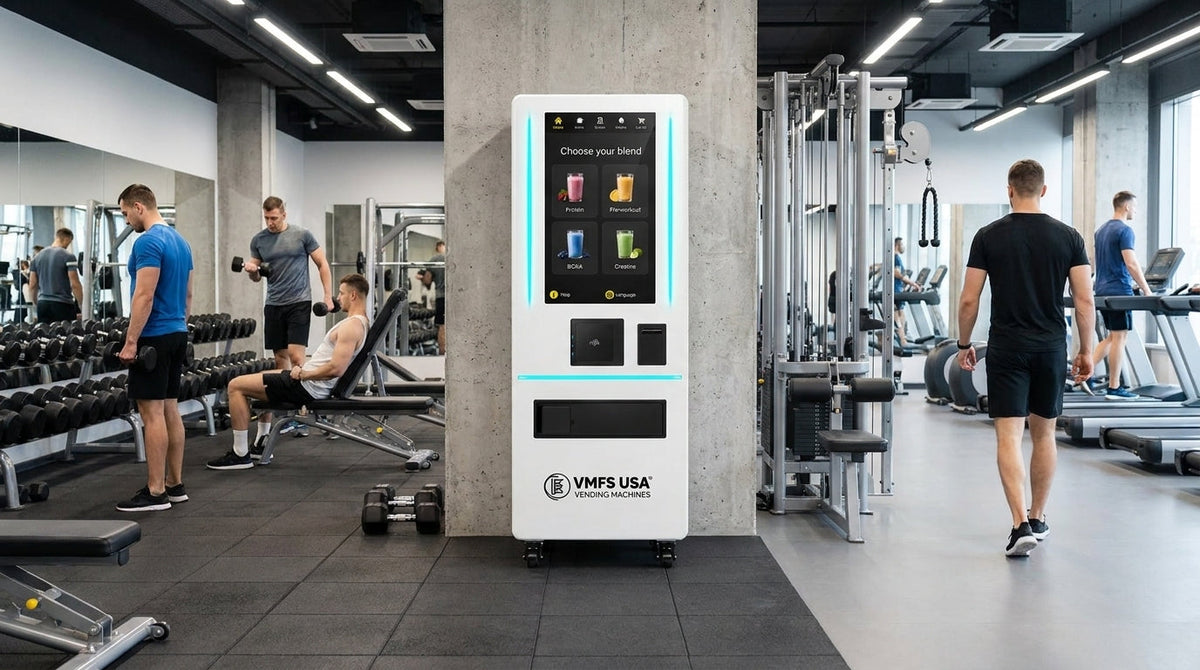
The global protein shake vending machine market size is valued at $1.85 billion in 2026 and is projected to expand at a Compound Annual Growth Rate (CAGR) of 12.1% to reach $4.62 billion by 2034. Rapid expansion in automated fitness concessions occurs because health-conscious consumers demand immediate, high-protein post-workout nutrition without waiting in line at traditional smoothie bars. Commercial automated shake dispensers bridge the gap between fresh, custom-blended protein drinks and self-service convenience.

Growth in this sector accelerates as fitness club operators prioritize passive revenue streams and labor-free amenity upgrades. Deploying a dedicated protein shake vending machine allows gym owners to capture high-margin nutritional sales at all operating hours without incurring additional payroll expenses.
North America currently represents 36.4% of global market revenue, driven by dense fitness facility networks and widespread adoption of cashless payment infrastructures. Meanwhile, the Asia-Pacific region is expanding at the fastest regional CAGR due to rising urbanization, growing disposable income, and accelerating gym enrollment across major metropolitan centers.
Market capitalization shifts rapidly toward automated nutritional hardware as operators recognize the superior unit economics of powder-to-liquid mixing mechanisms over pre-bottled beverages. Modern machines integrate precision proportioning, thermostatic temperature controls, and automatic self-cleaning loops.
Understanding market segmentation enables operators to target locations with high transaction volumes and minimal competitive overhead.
| Market Metric | 2026 Baseline Valuation | 2034 Projected Valuation | Primary Growth Catalyst |
| Global Market Size | $1.85 Billion | $4.62 Billion | Automated gym concessions & RTD growth |
| North American Share | $673.4 Million | $1.68 Billion | Dense gym infrastructure & cashless adoption |
| Average Unit Gross Margin | 68.5% | 74.2% | Powder bulk sourcing vs. bottled distribution |
| Dominant Distribution Channel | Commercial Gyms (58%) | Health Clubs & Transit (62%) | Post-workout metabolic window demand |
Automated nutritional dispensers represent a specialized subclass compared to standard types of vending machines, operating with higher average sale prices ($4.50 to $7.00 per unit) and substantial profit retention per transaction.
Global fitness club memberships exceeding 185 million members directly trigger increased demand for immediate post-workout protein recovery options. Exercise physiology research emphasizes taking 20 to 40 grams of protein within 45 minutes of resistance training to optimize muscle protein synthesis.
Members frequently skip post-workout nutrition when forced to prepare shakes at home or stand in line at staffed juice bars. Automated protein dispensers solve this friction point by delivering chilled, perfectly blended protein shakes in under 45 seconds.
This immediate accessibility turns casual gymgoers into daily concession buyers, driving recurring monthly revenue for facility operators.
Commercial operators are shifting from stocking pre-bottled Ready-To-Drink (RTD) beverages to installing automated powder-mixing vending machines due to a 35% improvement in profit margins. Pre-bottled RTD shakes incur substantial shipping, refrigeration, and shelf-space costs that compress operator margins to 35%–45%.
Powder-based machines store concentrated ingredients in airtight, food-grade hoppers, mixing them with chilled water or milk alternatives at the precise moment of purchase. This operational approach reduces shipping freight costs by 70% per serving and eliminates pre-packaged beverage waste.
Selecting specialized hardware from curated healthy vending machines collections ensures operators maintain regulatory compliance while offering customizable flavor and supplement add-ins.
Integration of IoT telemetry devices and AI-driven telemetry platforms increases machine uptime to 99.2% while reducing restocking labor costs. Telemetry units transmit real-time ingredient levels, internal water temperatures, and component diagnostic alerts directly to mobile dashboards.
Automatic stock alerts prevent stockouts of popular flavors like whey isolate chocolate or plant-based vanilla during peak workout hours. Operators utilize automated inventory platforms to streamline restocking routes, eliminating unnecessary site visits and reducing total operational overhead.
Implementing streamlined inventory control prevents product degradation and optimizes component replenishment schedules across multi-machine routes.
A single commercial protein shake vending machine generates between $1,800 and $5,200 in monthly gross revenue when placed in a high-foot-traffic fitness center. The average retail price per shake ranges from $4.50 to $7.00, depending on the protein source, serving size, and added supplements like creatine or BCAAs.
Cost of Goods Sold (COGS)—including whey isolate powder, purified water/milk, recyclable cups, lids, and mixing wear—averages $1.10 to $1.45 per serving.

Net revenue varies based on location commission agreements and utility electricity consumption. Reviewing real-world vending machine profit margins illustrates how automated protein machines recover initial equipment capital investments in 7 to 14 months.
Location owners receive either a percentage commission on gross sales (typically 10% to 20%) or a fixed monthly floor rent ($150 to $350) for supplying square footage and power. Commission models align incentives between the operator and venue, encouraging gym staff to actively promote the machine to members.
Fixed-rent structures work best in ultra-high-traffic locations (over 3,000 active members) where transaction volume generates high daily revenue for the operator.
Structuring an equitable vending machine revenue split maintains long-term location retainment while protecting operator profit margins. Gym owners looking to monetize unused floor space can list space requirements on dedicated platforms for location owners to connect with local route operators.
Operating an automated protein shake route requires establishing a dedicated legal structure to protect personal assets and maintain health department compliance. Most operators form a Limited Liability Company (LLC) to separate route liability from personal financial holdings.
Food service vending regulations require operators to obtain state food handler licenses, local health permits, and regular water filter replacement certifications.
Operators should consult guides on how to form an LLC for a vending machine business to ensure correct state filings, tax structures, and liability coverage. For general inquiries regarding commercial equipment supply, operators consult VMFS USA for nationwide distribution support.
Targeting venues with high daily foot traffic and strong fitness affinity generates maximum daily vends per machine. Commercial gyms, 24-hour fitness chains, body building clubs, and collegiate athletic centers convert at the highest rates.

Secondary high-performing environments include indoor sports complexes, military base training facilities, wellness centers, and corporate campuses with dedicated employee gyms.
Detailed location criteria and traffic analysis guidelines are available in our breakdown on how to choose a profitable vending location.
Securing placement contracts requires presenting gym owners with a compelling value proposition that highlights zero capital expenditure and improved member retention. Operators handle equipment installation, maintenance, sanitation, and restocking, leaving the venue owner with pure passive income or amenity enhancements.
Contracts must clearly specify utility usage responsibilities, insurance indemnification, exclusivity rights for protein products, and 30-day exit clauses for underperforming locations.
Operators looking to acquire placement rights can review steps on how to find vending machine location contracts to standardize venue onboarding. Location searches and proximity mapping are streamlined using digital platforms like vendingfinder.com to assess local competitive density.
Automated protein shake vending machines operate on higher price points, margins, and maintenance protocols than standard cold drink dispensers. While canned cold drinks offer simple operation, protein dispensers generate substantially higher net income per square foot.
Comparing hardware features highlights operational differences across equipment categories:
| Operational Feature | Standard Cold Drink Vending Machine | Automated Protein Shake Machine |
| Average Retail Price | $1.75 – $2.50 per can/bottle | $4.50 – $7.00 per fresh shake |
| Gross Margin Percentage | 40% – 50% | 65% – 82% |
| Dispensing Mechanism | Drop/Spiral Vending | Precision Powder Dispenser & Mixer |
| Sanitation Requirement | Monthly physical wipe-down | Daily auto-flush, bi-weekly canister clean |
| Telemetry & Temperature | Basic temperature monitoring | Advanced telemetry & thermostatic chillers |
| Target Locations | Offices, transit, schools | Gyms, fitness centers, athletic clubs |
Operators expanding into broader beverage sectors can compare cold drink machinery within our drinks vending machine portfolio, or upgrade to touchless solutions found in AI grab and go vending machines for unstaffed micro-markets.
Operating protein shake machinery offers high financial upside alongside specialized sanitation responsibilities. Assessing operational trade-offs ensures route owners build sustainable, scalable businesses.
| Pros (Operational Advantages) | Cons (Operational Challenges) |
| Exceptional Profit Margins: High price points yield $3.50+ profit per vend. | Routine Sanitation: Requires strict cleaning schedules for mixing bowls. |
| Captive High-Intent Audience: Gym members actively buy post-workout nutrition. | Higher Capital Investment: Advanced mixing units cost more than standard drop units. |
| Zero Labor Concession: Gives gyms a full juice bar without payroll expenses. | Water Line Requirements: Most units need a direct water connection or internal tanks. |
Automated protein shake vending machines require strict sanitation practices to prevent bacterial growth and powder clogs in humid gym environments. Modern machines feature automated high-temperature line-flushing routines that execute every 2 to 4 hours or immediately following a vend.
Manual route maintenance requires technicians to remove mixing bowls, impellers, and dispensing spouts for NSF-approved sanitization every 3 to 4 days.
Following structured vending machine maintenance tips prevents mechanical downtime and maintains product taste quality.
Managing a route of 10 to 20 protein shake machines requires approximately 15 to 20 hours of servicing labor per week. Servicing duties include loading powder hoppers, inspecting water filtration systems, executing sanitation swaps, and collecting cash or verifying cashless telemetry settlement.
As operators scale past 25 machines, hiring dedicated route drivers becomes necessary to maintain consistent restocking schedules.
Businesses seeking experienced technicians can utilize specialized job boards like vending machine restock jobs to hire qualified route operators.
Starting a commercial protein shake vending business requires an initial investment between $7,000 and $13,000 per machine, including shipping, installation, and initial inventory. Equipment features like HD touchscreens, custom vinyl branding wraps, dual powder hoppers, and internal ice makers adjust machine acquisition costs.
Single Machine Capital Allocation:
├── Base Commercial Machine: $7,500 - $10,500
├── Initial Bulk Ingredients: $600 - $900
├── Telemetry & Payment Reader: $300 - $500
└── Permitting & Initial Setup: $400 - $800
Total Turnkey Cost: $8,800 - $12,700
Selecting top-performing inventory items detailed in our study on the most profitable vending machine products maximizes early payback velocity.
Operators evaluating market entry steps can review our guide on how to start investing in vending machines to project cash flows, negotiate site terms, and mitigate early financial risk.
The global protein shake vending machine market size is valued at $1.85 billion in 2026 and is projected to reach $4.62 billion by 2034, growing at a CAGR of 12.1%. Expansion is driven by rising health club memberships and consumer demand for instant post-workout nutrition.
A single protein shake vending machine averages $1,800 to $5,200 in gross monthly revenue, yielding $1,200 to $3,500 in net profit. Profitability depends on machine location foot traffic, pricing strategy ($4.50–$7.00/vend), and wholesale powder costs.
Protein shake machines perform automated line-flushing after each vend or every few hours to maintain hygiene. Technicians must manually sanitize mixing chambers, impellers, and spouts every 3 to 4 days to comply with health codes and prevent clogs.
Most commercial units require a standard 110V/120V electrical outlet and either a direct 3/8-inch cold water line or an internal high-capacity water reservoir with a pump system. Direct water lines with multi-stage filtration units are recommended for high-volume gym locations.
Operators typically achieve full capital payback on a new protein shake machine within 7 to 14 months. ROI velocity increases when machines average over 25 vends per day in gyms with 1,500+ active members.
Yes, local health departments require operators dispensing open-cup liquids to hold a food handler license and a commercial vending permit. Facilities must also follow routine sanitation schedules and use NSF-certified equipment components.
Agglomerated whey protein isolate, hydrolyzed whey, and specially formulated plant-based powders perform best because they dissolve rapidly without clumping. Standard baking or thick protein powders should be avoided as they clog mechanical dispensing funnels.
Gym owners receive a commission on gross sales (10% to 20%) or fixed monthly rent without incurring equipment or labor costs. Automated protein machines provide members with an upgraded post-workout amenity that increases member satisfaction and retention.
Cashless telemetry tracks ingredient levels and sales data in real time, alerting operators when hoppers need restocking. Remote diagnostic tools reduce physical site checks by over 40%, optimizing servicing routes and preventing stockouts.
Fresh-mix powder machines deliver higher profit margins (65%–82%) than pre-bottled RTD machines (35%–45%) by eliminating bottled beverage shipping weight and storage volume. Fresh-mix units also allow users to customize flavors, portion sizes, and nutritional add-ins.
Share:
Frozen vs Fresh-Baked Pizza Vending Machines: Which Model Wins?
Frozen vs Fresh-Baked Pizza Vending Machines: Which Model Wins?