




Design the perfect vending solution for your location and customers.

Join the VMFS newsletter and step into a thriving network dedicated to collective success.
One signup. Endless possibilities.
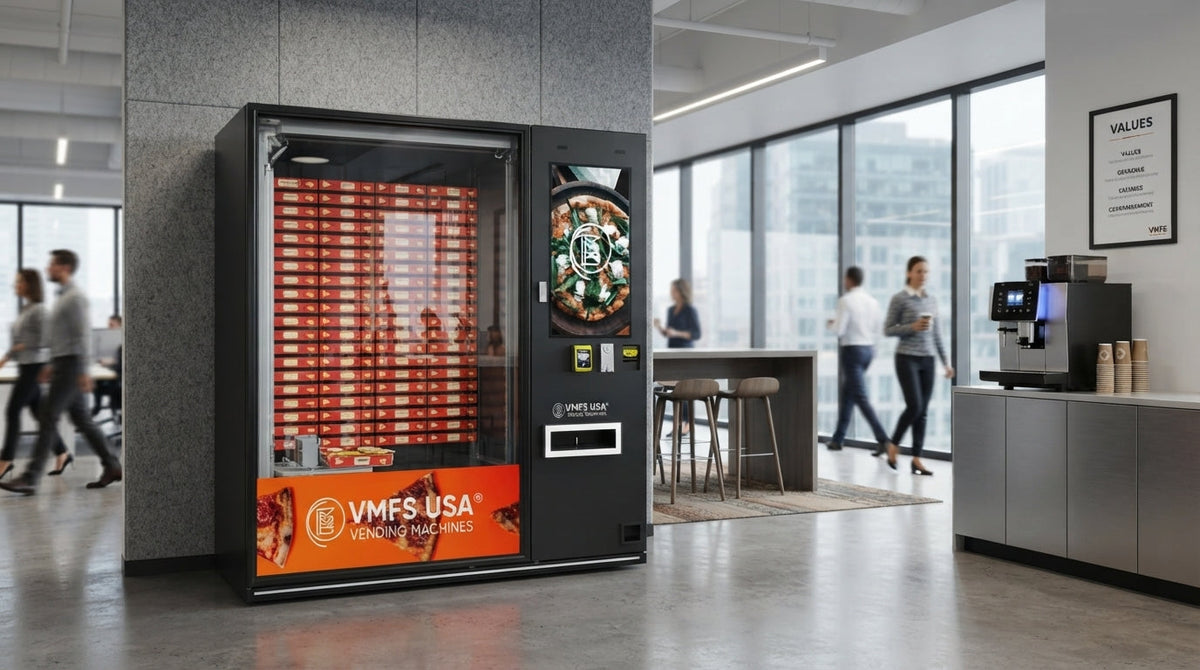
Choosing between frozen and fresh-baked pizza vending machines dictates your equipment investment, operational complexity, and profit margins. A pizza vending machine bridges consumer demand for hot meals with automated convenience, but internal thermal processing separates these two business models. Operators sourcing robust hardware through VMFS USA must evaluate whether storing pre-made frozen pies or assembling raw dough elements aligns with their target market. Understanding the nuances of each system prevents costly inventory mistakes and optimizes route profitability.
Automated pizza dispensing operates on distinct thermal and mechanical frameworks designed to deliver a cooked meal in under five minutes. The primary operational divergence stems from how food is stored prior to baking. Frozen units store pre-assembled, blast-chilled pies at sub-zero temperatures before moving them to an internal high-speed convection oven. Conversely, fresh-baked or refrigerated systems store raw or partially proofed components that require precise robotic assembly and high-temperature baking. Evaluating foundational insights on buying a vending machine helps prospective operators establish realistic expectations for equipment maintenance.
New operators must also understand the broader spectrum of automated retail by examining types of vending machines to determine how hot food kiosks compare to standard ambient or cold units. Selecting the appropriate hardware category requires careful research on your own target demographics, whether university students or late-night shift workers. Because automated food kiosks demand strict adherence to health codes, studying ensuring safety and hygiene: best practices for vending machine maintenance is critical for long-term viability.
Frozen pizza vending machines store pre-packaged pies in an integrated freezer compartment and cook them via impingement or infrared ovens upon user selection. This model minimizes product waste because frozen inventory features a shelf life spanning several weeks or months.
Frozen systems excel in operational simplicity because the product arrives at the machine fully assembled and sealed. When a customer orders, a robotic arm transfers the frozen pie from the sub-zero chamber into the internal oven, where it bakes in approximately three minutes. Maintaining strict streamlined inventory control: the power of tracking vending machine stock ensures operators track remaining stock accurately via remote cloud telemetry. Because frozen ingredients are less perishable, operators face minimal risk from unexpected power outages lasting a few hours, provided the cabinet door remains sealed.
The primary advantage of frozen units is extended product shelf life and lower daily labor requirements. Operators do not need to restock daily, as a single unit can hold dozens of pre-made pies. However, consumer perception can occasionally lean toward frozen quality compared to artisanal alternatives. Operators must carefully select high-grade suppliers to ensure the cooked product rivals local pizzeria standards. Reviewing insights on cracking the code: unveiling the most profitable vending machine products assists in selecting crust and topping combinations that maximize consumer satisfaction.
Fresh-baked pizza vending machines handle raw or refrigerated dough, sauce, and cheese, assembling or heating fresh ingredients to deliver an artisanal culinary experience. These machines target discerning consumers willing to pay premium prices for freshly prepared meals.

Fresh-baked units utilize sophisticated refrigeration compartments to keep perishable toppings safe before dispensing them into specialized ovens. This complexity requires rigorous cleaning schedules to prevent dairy and sauce buildup within the internal mechanisms. Operators must follow strict protocols outlined in the coffee vending machine cleaning and maintenance guide or dedicated food kiosk sanitation manuals. Utilizing proper maintenance made easy: must-have tools for vending machine operators minimizes unexpected mechanical downtime and protects revenue streams.
The primary challenge of fresh-baked systems is short ingredient shelf life, often requiring restocking every 48 to 72 hours. Unsold fresh components must be discarded, increasing inventory shrinkage costs. To mitigate this, operators must master fresh and relevant: the importance of product rotation in vending machines. Despite higher maintenance overhead, fresh-baked units command higher retail prices, which can offset operational expenses in ultra-high-traffic locations like transit hubs and entertainment districts.
Evaluating frozen versus fresh-baked systems requires a direct comparison of startup costs, profit margins, and operational friction points.

Setting the correct retail price is vital for achieving profitability across both models. Operators should consult the operator pricing guide: how to set product prices to establish margins that absorb location commission splits and ingredient costs. Understanding broader benchmarks on vending machine profit margin helps model expected return on investment. You can also explore alternative high-margin options like combo vending machines or ready to ship equipment bundles to diversify your automated retail portfolio.
Operating an automated food kiosk requires strict adherence to state and local health regulations, business registrations, and liability protection.
Establishing a formal business structure shields personal assets from liabilities associated with food service operations. Many operators choose to form an LLC for a vending machine business to secure limited liability protection and flexible pass-through taxation. For enterprises planning rapid route expansion, evaluating a C-Corporation or an S-Corporation may offer tax advantages. Multi-owner operations benefit from drafting a structured partnership for a vending machine business to clarify ownership stakes.
Compliance extends to obtaining an EIN, registering for state sales tax permits, and establishing a clear vending tax filing structure. Every business must appoint a reliable registered agent for a vending machine business to receive official legal and tax correspondence. Operators must also secure comprehensive vending machine insurance guide coverage to protect against equipment damage, product spoilage, and public liability claims.
The success of any pizza vending machine depends entirely on placement quality. High foot traffic during late-night or meal rush hours drives transaction volume.

Prime placements for pizza vending machines include college dormitories, 24-hour manufacturing facilities, transport terminals, military bases, and large apartment complexes. Reviewing guidelines on how to choose a profitable vending location helps filter out low-yield sites. Operators should also study smart places to put a vending machine to maximize continuous consumer flow. When scouting new territories, independent operators often utilize mapping tools like vendingfinder.com to locate nearby commercial hubs and assess regional competition.
Securing premium square footage requires professional location agreements that outline revenue-sharing terms and utility responsibilities. Property owners looking to monetize empty floor space can easily list your location (share space details and requirements). Platforms like VPlaced finds and matches qualified operators, allowing property owners to compare and connect with interested operators to choose the best fit and get vending setup hassle-free. For broader fleet growth, review strategies on how to find vending machine location contracts.
Frozen pizza vending machines store pre-assembled, blast-chilled pizzas in a sub-zero freezer before baking them on demand. Fresh-baked machines store raw or refrigerated dough and toppings, utilizing internal robotics to assemble and bake custom pies.
Fresh-baked pizza vending machines typically offer higher profit margins because raw ingredients cost less per unit than pre-packaged frozen gourmet pies. However, fresh-baked units require more frequent restocking to minimize food waste from spoilage.
Both frozen and fresh-baked pizza vending machines cook a complete, hot pizza in approximately three minutes using high-speed convection or infrared heating technology.
Yes, because pizza vending machines prepare and dispense hot food for public consumption, operators must obtain local health department permits and pass regular sanitation inspections.
Frozen pizza vending machines generally require restocking every 5 to 7 days, depending on storage capacity and daily sales volume at the specific location.
High-performing locations include 24-hour college dormitories, military barracks, hospitals, transit hubs, and large residential apartment complexes with heavy late-night foot traffic.
Modern pizza vending machines feature cloud-connected telemetry systems that track real-time inventory levels, sales metrics, and equipment diagnostic errors remotely.
Forming an LLC protects your personal assets from potential liabilities related to food safety or equipment malfunction while simplifying tax reporting.
While automated retail reduces daily labor compared to traditional storefronts, operating a machine still requires regular restocking, cash collection, and routine cleaning maintenance.
Startup costs range from $25,000 to $70,000 per machine, factoring in equipment purchase price, initial food inventory, electrical installation, and business formation fees.

Share:
Global Protein Shake Vending Machine Market Size & Industry Analysis (2026–2034)
Global Protein Shake Vending Machine Market Size & Industry Analysis (2026–2034)