




Design the perfect vending solution for your location and customers.

Join the VMFS newsletter and step into a thriving network dedicated to collective success.
One signup. Endless possibilities.
To buy a vending machine, secure a location first, choose the machine type that fits that site, decide between new and used, check the specs and payment hardware, read the warranty, budget for freight and setup, then buy from a supplier that puts every term in writing. New VMFS USA machines start at $1,900 for the Countertop Snack Vending Machine, and a full-size combo, the most flexible first machine, runs $3,650 to $4,950. You can compare every format and its live price before you buy a vending machine from the VMFS USA catalog.
This guide walks through the full buying process in order, with live VMFS prices, the specs and payment details that matter, what a fair warranty and freight quote look like, your financing options and the red flags that should stop a purchase.
Buying a vending machine follows the same ten steps every time, and the order matters more than any single step. Most expensive mistakes happen before the machine arrives: buying first and hunting for a site later, choosing a model that cannot take cards, or signing for a damaged cabinet on delivery day. Work through the list in sequence and each decision narrows the next one.
The steps also answer a question first-time buyers often skip: why do you want a machine at all? One machine as a side income, a planned route of ten, and an amenity for your own building lead to different machine types, suppliers and budgets. Decide that goal before you compare models, because it determines how much you should spend on telemetry, branding and service.
Secure the location first, because the location decides how much any machine can sell. A modest machine in a busy break room can earn steadily for years, while an excellent machine in a quiet hallway barely covers its card reader fee. The rule is simple: do not order until a property owner or manager has agreed in writing.
Good first sites share three traits: steady daily traffic, few food or drink options nearby, and people who stay for a while. Offices, warehouses running several shifts, apartment buildings, hospitals, gyms, hotels and auto service lounges are the classic placements. Our ranking of the best vending machine locations compares site types and what to say to a facilities manager when you pitch. If you would rather skip cold visits, VPlaced explains how to find vending machine locations and connects operators with sites that want a vending partner.
Our vending machine contract template gives you a clean starting point. Avoid verbal agreements and bidding contests where the site goes to whoever offers the highest commission. Published buyer guides quote location commissions anywhere from roughly 5% to 30% of sales, so treat commission as a negotiated line item, not a fixed rate, and run the numbers before you agree to it.
Estimate sales before you choose a machine, because the estimate tells you which size of machine the site can justify and whether the deal is worth signing. Use a simple formula: daily users × the share who buy each day × average sale × days open per month. The purchase rate is your assumption, so test a low case and a high case. For the average sale, Cantaloupe's 2026 Micropayment Trends Report puts the average cashless vending transaction at $2.45 in 2025, against $1.57 for cash.
A 100-person office open 21 days a month shows how the formula works. If 5% of people buy once a day at $2.45, the machine sells about $257 a month; at 10% it sells about $515. Subtract product cost, commission and card fees from that figure, and you can see quickly whether a $1,950 countertop unit or a $4,950 combo makes sense. Test your own site in the vending ROI calculator before you sign.
Choose the machine type by asking what people at the site will buy, how often, and how often you can restock. The wrong format in a good location still underperforms: a snack-only machine in a hot warehouse misses the drink sales, and a large elevator machine in a ten-person office never earns back its price. The table matches common locations to formats and to live vending machines from the VMFS USA catalog.
| Location | Best Machine Type | VMFS Example (Price) | Why It Fits |
|---|---|---|---|
| Small office, salon, front desk | Countertop or mini | CounterCompact ($1,950) | Low entry cost and a small footprint for modest traffic |
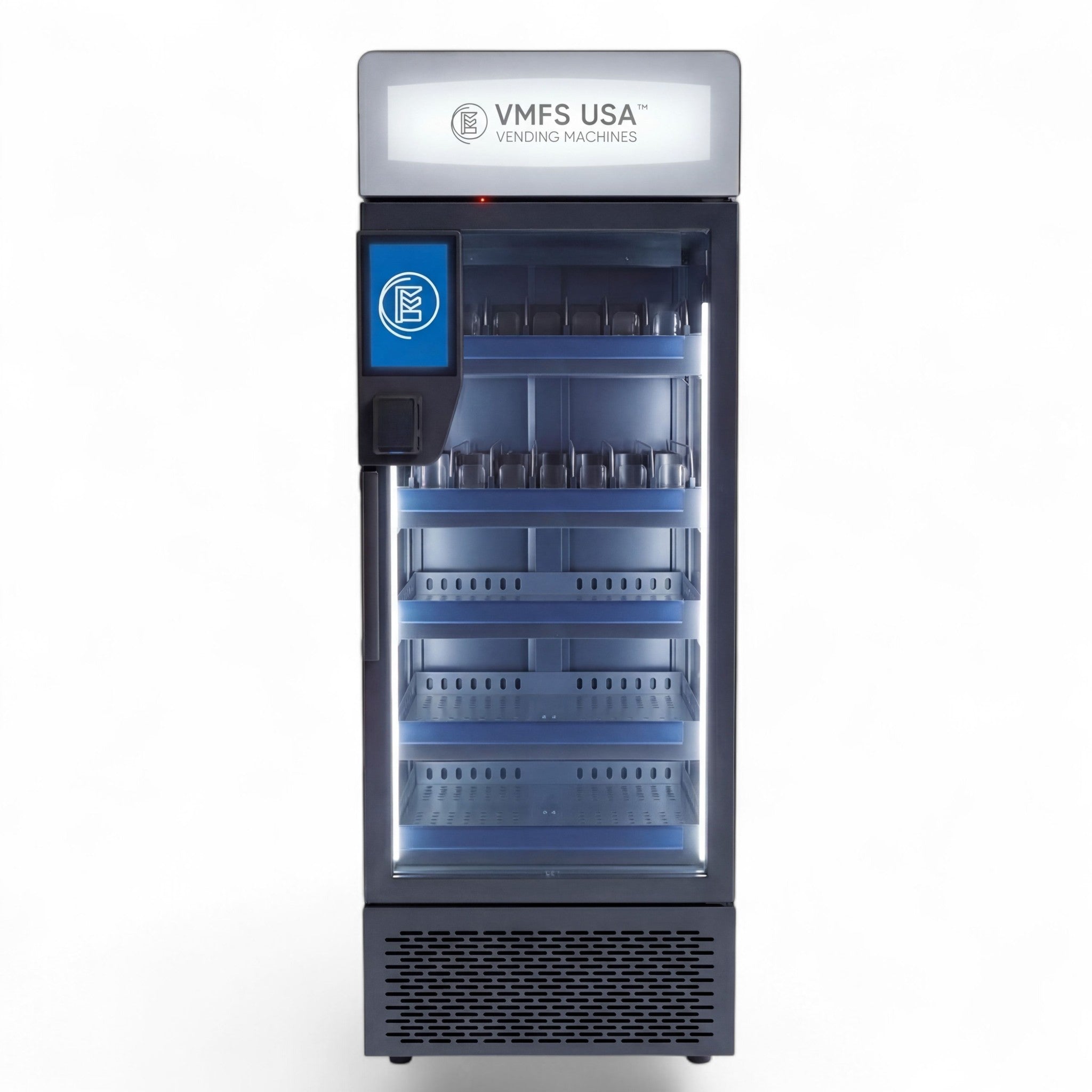
| Office break room, apartment lounge, dorm | Combo (snacks and cold drinks) | Slim Combo Vending Machine ($3,650 to $3,950), Smart Combo Vending Machine ($4,650 to $4,950) | One footprint sells both categories while you learn what moves |
| Warehouse, auto shop, gym, industrial site | Drink | Seaga Prosper Beverage ($5,450) | Cold drinks are the main sale in hot or physical workplaces |
| Cafeteria or coworking space with drinks nearby | Snack | Seaga ENV4S 32 Snack ($3,950) | No refrigeration, lower power use, wide shelf-stable range |
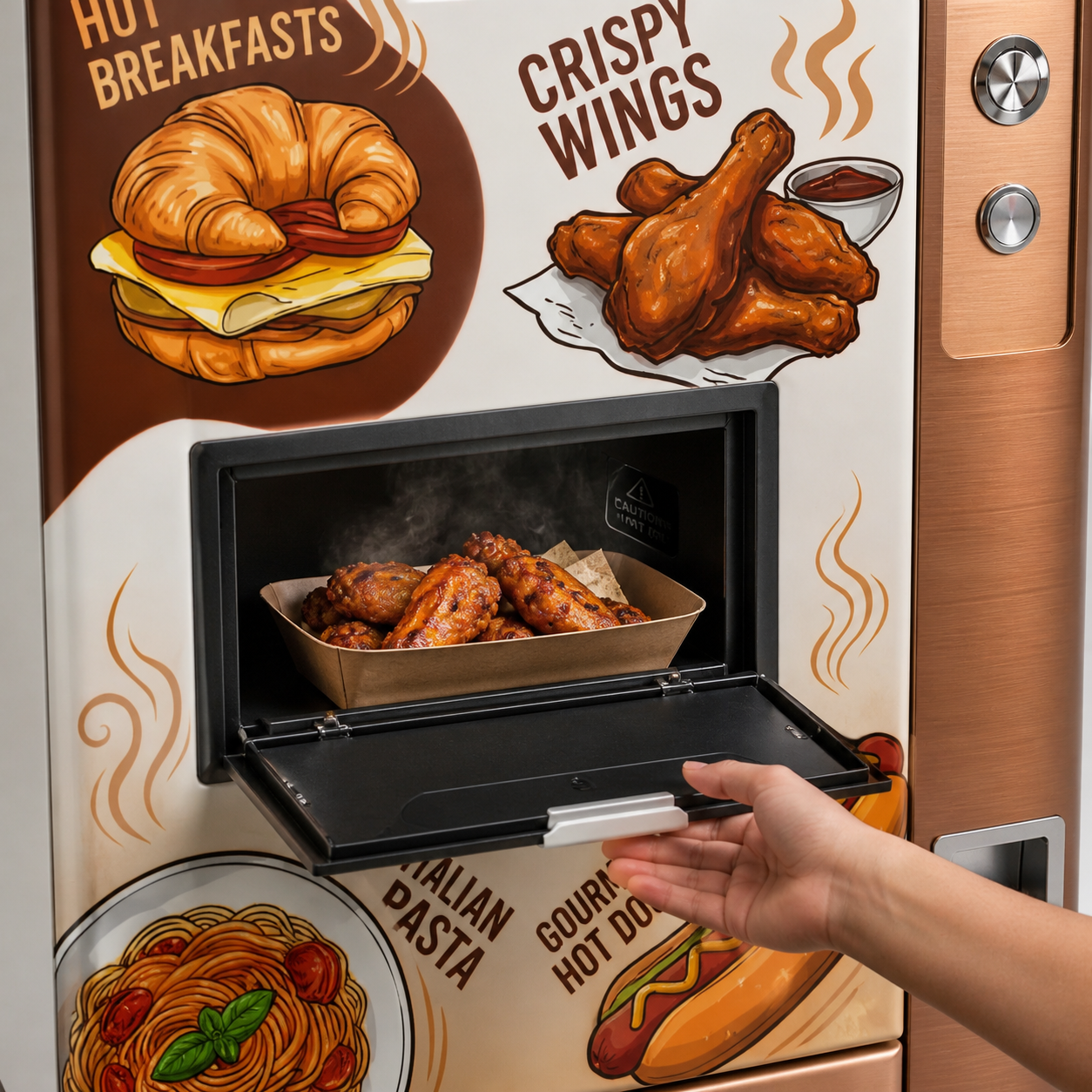
| Corporate campus, hospital staff room, members-only gym | AI grab-and-go cooler | AI Grab & Go Cooler ($2,950), AI Smart Cooler ($4,950) | Open-door shopping for fresh food and premium drinks in staff areas and members-only spaces |
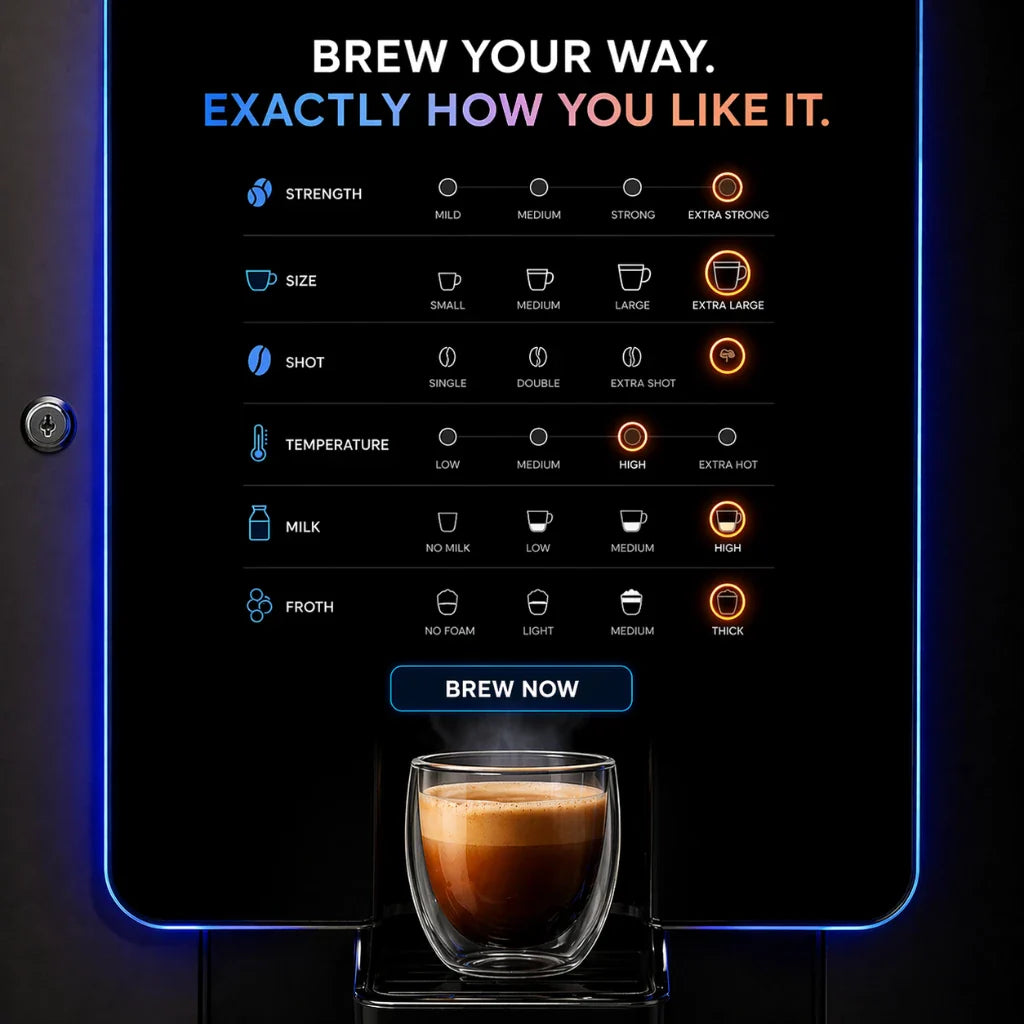
| Office, dealership, clinic waiting room | Coffee | CorePro Coffee ($4,950), Pro Coffee ($7,450) | Hot drinks for people who wait or work long shifts |
| Hotel corridor, narrow hallway | Wall mount | WallMount ($3,450 to $3,850) | Fits where a floor cabinet would block the path |
| Car wash, pool, outdoor campus | Outdoor-rated | Smart Outdoor Combo ($6,950) | Weatherproof cabinet built for exposure and security |
| Premium lobby, glass bottles, fragile items | Elevator | Smart Elevator ($8,650 to $8,950) | A lift delivers items gently instead of dropping them |
| Apartments, pools, family venues | Frozen | Frozen Ice Cream ($9,950) | Ice cream and frozen treats where people relax |
| Hospitals, night-shift plants | Fresh or hot food | Food Elevator ($8,950) | Meals when the cafeteria is closed |
For a first placement, a combo machine is usually the best first purchase because it sells snacks and cold drinks from one footprint and shows you which category the site prefers. You can compare slim, standard and touchscreen formats across our combo vending machines. When a site already has a cafeteria or a drinks cooler, a dedicated snack machine carries more shelf-stable variety, and where drinks drive the sale, a dedicated drink machine holds more cold product. If you want a shortlist of specific models rather than a process, see our picks of the best vending machines to buy.
Machines that sell alcohol, tobacco, vape products, CBD or cannabis need age verification and a legal review before you buy, not after. Federal rules allow cigarette and smokeless tobacco vending machines only in facilities where the retailer ensures no one under 21 is present or permitted to enter at any time, under 21 CFR 1140.16. Alcohol and cannabis are regulated state by state, and many states do not allow them through unattended machines at all. If your state and site allow it, choose from our age verification vending machines, which are age verification ready: the ID scanner is an optional paid add-on that reads government-issued IDs and needs a VMFS Cloud plan to work. Get the license in hand before the order ships.
A custom build makes sense when your product, space or brand does not fit a standard cabinet. VMFS USA lists custom vending machine builds from $3,595 for an entry-level branded unit, from $4,950 for touchscreen builds set up for cloud monitoring, and from $8,990 for refrigerated, elevator or age verification ready builds, with the price updating live in the builder as you add options. Custom builds and wraps take around 45 days to ship rather than the 7 to 21 days for in stock units, so order early if a site is waiting.
Need A Machine That Ships Soon?
In stock VMFS units with no wrap or major changes usually ship within 7 to 21 days, with payment hardware and VMFS Cloud available as add-ons at order.
Shop In-Stock MachinesBuy new if the site is busy, corporate or medical, or if you cannot fix machines yourself; consider used only for quiet sites and when you can repair what breaks. Both can work, and each has a different weak point: a new machine costs more upfront, and a used machine risks downtime, missing parts and payment hardware that will not connect.
| Condition | Warranty | Card Payments | Risk | Best For |
|---|---|---|---|---|
| New | Written supplier or manufacturer warranty | Chosen at order, ready on arrival | Lowest | Busy, corporate and medical sites; first-time buyers |
| Refurbished | Short dealer warranty, terms vary | Depends on the controller | Moderate | Tight budgets with some dealer support |
| Used, sold as is | Usually none | May need a retrofit, or may not work | Highest | Quiet sites and operators who repair their own machines |
A new machine gives you predictable costs. Every wear part starts at zero on the same day, payment hardware is chosen for the site when you order, current cooling and LED lighting cut running costs, and a clean cabinet is easier to get approved at corporate, medical and hospitality sites that will not accept a dented one. Used prices vary so widely by age, brand and condition that published guides disagree by thousands of dollars, so judge a used machine on its model year, parts availability and test results rather than on a typical price.
Buying Used: Advantages
Buying Used: Limitations
If you do buy used, never pay in full for a machine you have not seen run a complete vend cycle. Run it for at least an hour with a thermometer inside and confirm the compressor cycles off. Listen for grinding or a labored start. Vend from every selection, not a sample. Close the door on a dollar bill and pull it: if it slides out easily, the gasket is worn. Test worn and crisp bills, open the service menu, look for error codes, check the cabinet for pry damage and rust, and note the model plate so you can confirm parts are still made. Our full guide to buying a used vending machine covers costs, inspection checks and how used compares with new.
The specs that matter are the ones that decide whether the machine fits the space, stays cold, takes payment and keeps vending: footprint and door path, power, temperature zones, capacity, delivery mechanism, connectivity and security. Read the spec sheet for each before you compare prices, because a cheaper machine that will not fit through the service entrance or cannot hold temperature is not cheaper.
Footprint and door path
Measure every doorway, hallway, elevator and corner on the delivery route, not just the final wall, and compare against crated dimensions.
Power
Plan for a grounded outlet within reach of the cord, ideally on a dedicated circuit, and never an extension cord.
Temperature zones
Ambient for snacks, refrigerated for drinks and fresh food, frozen for ice cream. Dual-zone combos split the cabinet.
Capacity and selections
More selections mean fewer empty slots between visits. Adjustable trays let the mix change without a new machine.
Delivery mechanism
Spiral coils suit packaged snacks, elevators protect glass and fragile items, and AI coolers let shoppers pick from open shelves.
Connectivity and security
Cellular or WiFi telemetry, reinforced locks and good lighting matter most in public or unattended sites.
Capacity should follow your restock schedule. The Smart Combo Vending Machine, for example, offers up to 60 adjustable product slots, which suits a busy break room you visit once or twice a week, while a countertop unit suits a site you pass every few days.
Two specs are easy to miss. First, accessibility: under the ADA Standards, operable parts such as selection buttons, card readers and payment slots should sit within the unobstructed reach range of 15 to 48 inches above the floor, according to the US Access Board guide to operable parts; the products a machine dispenses are not covered. Second, environment: an indoor model placed outdoors or semi-outdoors fails early and, under the VMFS warranty terms, voids coverage, so any exposed site needs a machine from our outdoor vending machines range.
Confirm before you buy that the machine accepts cards and phone wallets, because cash-only machines lose sales every day. Cantaloupe's 2026 report found that 78% of vending sales were cashless in 2025, up from 73% the year before, and that 85% of cashless vending transactions were contactless tap-to-pay. Cashless customers also spent $2.45 per transaction against $1.57 in cash, so card payment support has a direct effect on revenue.
MDB, short for Multi-Drop Bus, is the standard connection that lets a vending machine controller talk to bill validators, coin changers and cashless card readers. NAMA maintains the standard and released MDB version 4.3 in August 2019 with revisions focused on cashless devices. Most card readers connect through MDB, so a machine without it may need an expensive retrofit or may never accept cards. Ask the seller to confirm MDB support, name the exact reader you plan to use, and test a real card or phone payment during any inspection.
| Payment System | Hardware | Monthly Fee | Transaction Fee |
|---|---|---|---|
| Nayax | $450 | $7.95 to $14.95 per device | About 5.95%, or about 2.5% + $0.10 |
| Cantaloupe | $450 | About $9.95 to $18.95 per device | About 5% to 5.95% |
| PAX | $500 to $650 | No fixed platform fee; processor and connectivity costs vary | Varies by processor, often about 2% to 3% + a fixed fee |
The figures come from the VMFS card reader comparison page, which notes that most processing fees land between 3% and 10% per transaction depending on provider and setup. On a new VMFS machine, payment hardware is an add-on you choose at the point of order, so it arrives configured, and every VMFS machine also supports QR code payments. Machines in our vending machines with card readers collection are the simplest starting point for a site where most customers pay by card.
Telemetry tells you what sold, what is empty and what is broken without driving to the machine, and it changes how often you restock. Every VMFS machine is ready to connect to VMFS Cloud, the optional monitoring and reporting service from VMFS USA, over site WiFi or an optional 4G module. Plans are a flat fee per machine per month: Basic at $7.99 covers live sales with margin, slot-level stock, planograms and fault and low-stock alerts; Advertising Cloud at $16 adds screen ads and remote pricing; AI Cloud at $39.99 adds computer-vision stock detection for AI machines. If the connection drops, the machine keeps vending and syncs when it reconnects. When you compare suppliers, ask the same questions of any telemetry: the monthly fee, any per-transaction or per-scan charges, and whether support is included.
Read the warranty before you pay, because it decides who pays when a board, motor or payment module fails in the first year. A good warranty is written, names what is covered and excluded, and explains how a claim is handled and how fast parts ship. If a seller cannot give you that in writing, treat the machine as sold as is.
As a benchmark, the VMFS USA warranty includes a 1-year parts warranty on every machine. Most models can extend coverage at purchase to 2 years for $250 or 3 years for $400, while the Pro and Seaga lines keep a fixed 1-year parts term. The warranty covers parts only, never labor. It covers electrical components, motors, sensors, control boards and payment modules. Check the exclusions wherever you buy; at VMFS they are misuse, vandalism, tampering, cosmetic wear, consumables such as keys, filters and coils, fire, flooding, power surges and unauthorized repairs. To file a claim you provide the serial number, purchase date and a description of the issue, and photos or video speed up remote diagnosis.
Keep a few wear parts on hand whichever supplier you choose. Motors, gaskets and validators are routine replacements, and a small kit from our vending machine parts and accessories range lets you replace a failed part the same day instead of losing a week of sales.
Budget for the machine plus payment hardware, software, freight, first inventory and business setup, because the list price is only part of the cost of getting a machine ready to sell. The table uses current VMFS USA prices; your freight, inventory and permit costs depend on your ZIP code, product mix and city.
| Cost Item | VMFS USA Price | Notes |
|---|---|---|
| Countertop machine | $1,900 to $1,950 | Countertop Snack Vending Machine ($1,900), the lowest-cost new VMFS unit; CounterCompact Vending Machine ($1,950) for age-restricted products |
| Full-size combo machine | $3,650 to $4,950 | Slim Combo Vending Machine and Smart Combo Vending Machine, which sell snacks and cold drinks from one cabinet |
| Custom build | From $3,595 | Builder prices update live as you add options |
| Card reader hardware | $450 to $650 | Nayax, Cantaloupe or PAX; plus monthly and transaction fees |
| VMFS Cloud | $7.99 to $39.99 per month | Per machine; Basic, Advertising or AI plan |
| Extended warranty | $250 (2 years) or $400 (3 years), where offered | Optional on most models; Pro and Seaga lines keep a fixed 1-year parts term |
| Freight and delivery | Quoted to your address | Liftgate or inside delivery; white glove delivery on request |
| First inventory, permits, insurance | Varies by site and city | Plan these before the machine ships |
For price ranges across every machine type and a five-year running-cost view, see our full guide to how much a vending machine costs. Negotiate the whole package, not just the machine: ask about pricing for several machines, bundled payment hardware and extended warranty, and the exact freight method before you compare quotes.
Two quotes for the same machine can differ by hundreds of dollars once the extras are counted, so compare them on the same lines. Ask each supplier for a written quote that lists every item below, then line them up side by side before you look at the total.
| Quote Line | What to Confirm in Writing |
|---|---|
| Machine and configuration | Exact model, temperature zones, number of selections and delivery mechanism |
| Payment hardware | Which reader, bill acceptor or contactless option is on the order, and its monthly and per-sale fees |
| Software | Monthly fee per machine, and any per-transaction or per-scan charges |
| Warranty | Length, parts or parts and labor, extension price, and how claims are handled |
| Freight | Carrier, liftgate or inside delivery, and the delivered price to your ZIP code |
| Lead time | In stock or built to order, and the ship window in days |
| Payment terms | Deposit, balance due date, accepted payment methods and the financing partner, if any |
A quote that leaves a line blank is not cheaper; it is incomplete. When you are ready to compare current models and list prices, browse our vending machines for sale and price each model with the same lines.
You can pay cash or finance; cash costs least over the life of the machine, while financing keeps money free for inventory and your next placement. VMFS USA does not lend in-house. Through its vending machine financing partners, PayPal splits up to $1,500 into four interest-free payments or finances $49 to $10,000 over 3 to 24 months, Klarna offers pay-in-4, pay-in-30-days and monthly plans with a soft credit check, and ClickLease approves up to $30,000 with credit down to a 500 FICO score and no time-in-business requirement. Terms typically run 6 to 48 months, and payments go toward full ownership because VMFS sells rather than leases.
Larger purchases can add an equipment loan from a bank or credit union, and the SBA Microloan program lends up to $50,000, with an average of about $13,000, through nonprofit intermediary lenders, and equipment is an eligible use. Taxes can lower the real cost too: business equipment can qualify for Section 179 expensing or bonus depreciation, which IRS Publication 946 explains. Ask your tax advisor how the current limits apply to you.
Buy your first machine from a manufacturer or specialist supplier unless you can inspect and repair machines yourself, because where you buy decides your warranty, your support and whether anyone answers the phone when something breaks. The table compares the six main channels; our separate guide on where to buy vending machines reviews each in more detail.
| Where to Buy | Price Level | Warranty | Risk |
|---|---|---|---|
| Manufacturer or specialist supplier | Highest | Written and enforceable | Lowest |
| Equipment dealer | Middle | Varies, often short on refurbished units | Moderate |
| Online marketplace or classified listing | Lowest | None, sold as is | Highest |
| Auction or liquidation sale | Low | None | High, with a short inspection window |
| Existing vending route | Based on earnings | Rarely any | Depends on the records |
| Franchise or business opportunity | Premium | Varies by package | Read the disclosures carefully |
A specialist supplier tests machines before shipping, configures payment hardware for your site, puts the warranty in writing and gives you a team to call. You can also specify configuration, payment options and branding instead of accepting whatever a reseller has on the floor. Dealers offer variety and sometimes a short warranty, but quality varies, so ask for a live demo and a list of replaced parts. Marketplaces and auctions reward prepared buyers who know the model and its faults, because there is no warranty and no recourse, and you arrange and pay for transport yourself.
Buying a vending machine business buys revenue and relationships, not just hardware, so the records set the price. Routes are typically valued as a multiple of verified cash flow, so the documents below decide the price you negotiate:
Our guide to vending machine routes for sale covers valuation, and VPlaced's guide to buying a vending machine business lists more questions to ask a seller.
Packages that bundle machines with promised locations, training or a brand cost more, and federal rules require written disclosures before you sign. The FTC's Business Opportunity Rule specifically covers sellers who promise to provide locations for vending machines, and requires a one-page disclosure document, covering earnings claims, legal actions, the cancellation policy and references from past buyers, at least seven calendar days before you sign or pay, under 16 CFR Part 437. Franchisors must provide a Franchise Disclosure Document at least 14 calendar days before you sign or pay, under 16 CFR 436.2. Call the references and visit the promised locations yourself. Our comparison of a vending franchise versus going independent weighs the trade-offs.
Plan delivery before the machine ships, because freight trucks, narrow doorways and missing outlets turn delivery day into the most expensive day of the purchase. Vending machines travel by freight carrier, and appointments, liftgate service and placement requirements vary by location and carrier route. The VMFS shipping information page gives a useful reference: in stock units with no wrap or major changes usually ship within 7 to 21 days, custom builds take around 45 days, and white glove delivery, which can include inside delivery, placement help and packaging removal, is available on request and confirmed for your address during the quote.
Inspect the crate and packaging for visible damage before you sign, and if anything is damaged, note it on the delivery receipt and take photos before the driver leaves. Keep all packaging until your inspection is complete. Follow the manufacturer's instructions on how long a refrigerated machine should stand upright before you plug it in, level the cabinet so doors and mechanisms work properly, and run a test vend from several selections before you load the full planogram. Bring a basic kit: tape measure, level, socket set, surge protector, cleaning supplies and your first inventory.
Set up the business before the machine arrives, because property managers and payment processors expect you to operate as a real business and gaps cause install-day delays. Many operators start as sole proprietors, but an LLC separates personal assets from business risk; our guide on whether you need an LLC for a vending machine business explains the trade-off, and VAdviced shows how to form an LLC for a vending machine business. Open a business checking account and record every product purchase and sale from day one.
Many states tax vending sales, so register for a seller's permit before your first sale, and check city and county licensing, plus health permits if you sell perishable food. Many properties ask for a certificate of insurance showing general liability coverage, often $1 million per occurrence, before they approve a machine; see our vending machine insurance guide. If you grow to 20 or more machines, FDA vending machine labeling rules require calorie disclosure for covered food.
In the first month, start with a simple product mix and restock based on what actually sells. Our guide to what sells best in vending machines helps with the first planogram, and a simple weekly cleaning and restock routine keeps the machine full and working. Visit often in the first weeks, watch the best and worst sellers in your telemetry, and adjust prices and slots before you judge the location. Help people find the machine, too: list it on VendingFinder so shoppers nearby can see it on the map, and use VMarketed's vending machine marketing ideas to build early sales.
Stop the purchase if the seller resists inspection, pushes urgency, or will not put terms in writing; these are the patterns behind most bad vending deals. Any one of the signs below is a reason to slow down, and two or more are a reason to walk away.
Rule of thumb: a legitimate supplier answers every question on this page in writing before you pay. If you have to buy first to get answers, the risk is yours.
Ready To Buy Your First Machine?
Finance a new VMFS machine through PayPal, Klarna or ClickLease, with payments that go toward full ownership.
See Financing Options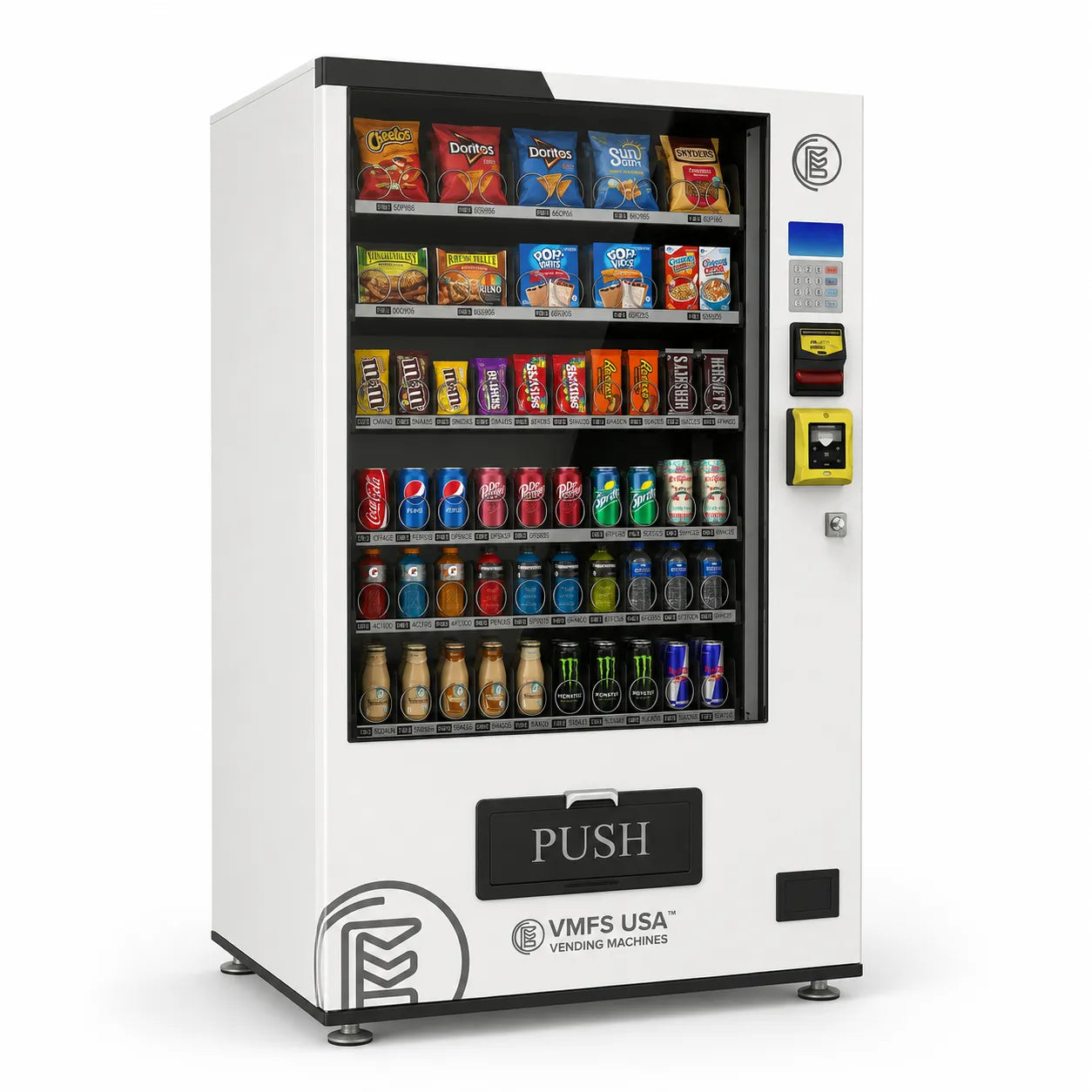
Share:
Eco-Friendly Vending Machines: Energy Use, Standards and Savings
Eco-Friendly Vending Machines: Energy Use, Standards and Savings