


Design the perfect vending solution for your location and customers.

Join the VMFS newsletter and step into a thriving network dedicated to collective success.
One signup. Endless possibilities.
You have seen them in gyms, hotel lobbies, corporate offices, and college campuses. A sleek, fully branded machine that looks nothing like the dusty snack box from 2003. It has a wrap that matches the brand. It sells exactly what the location needs. It takes cards, Apple Pay, and Google Pay. And it is quietly making someone real money every single day.
That is what a custom vending machine actually is. Not just a machine with a logo slapped on it. A purpose-built revenue asset designed for a specific product, a specific audience, and a specific location. The difference between a generic machine and a customized one is the difference between renting a storage unit and owning a retail storefront.
But buying one without a roadmap is expensive. The wrong machine type, the wrong wrap vendor, the wrong placement, the wrong permit assumption — any one of these mistakes can cost you thousands before you sell a single item.
A custom vending machine is a vending unit that has been configured, branded, or built to match a specific product, audience, or business identity. Customization can range from a vinyl wrap and cashless payment upgrade on a standard production machine all the way to a fully bespoke cabinet built from scratch to dispense a non-standard product. The level of customization you need depends on your product, your location, and your budget.
Let's clear up the confusion right away. When most people search for custom vending machines, they are thinking about one of three very different things. Some want a machine customized with their brand's colors and logo. Some want a machine built to dispense a non-standard product. And some want both. Understanding which category you are in determines everything else about this purchase.
A true custom vending machine goes beyond surface-level branding. It starts with the cabinet configuration — the number of trays, the coil spacing, the tray depth — all engineered around your specific product dimensions and weight. Then it layers in the payment technology, the telemetry system, the lighting, the display screen, and finally the exterior branding. Every element is chosen with intention.
A cosmetically customized machine takes a standard production unit and personalizes it visually with a custom vending machine wrap, custom LED lighting colors, or a branded header panel. This is the more affordable path and it is perfectly appropriate for most operators, especially when you are starting out or testing a new location.
The Power of Differentiation: In a hallway with three vending machines, the branded one will always outsell the generic one at the same price point. People trust what they recognize. A custom wrap is not vanity — it is a conversion tool.
The buyer profile is broader than most people expect. Independent operators building routes want branded machines to secure better location contracts — property managers respond to professional presentation. Brands and retailers use custom machines as automated micro-retail touchpoints in high-traffic areas. Gyms, spas, and hotels use them to sell proprietary products without staffing a counter. And entrepreneurs entering the vending business use customization to compete with established operators running generic equipment.
Whatever your reason, the underlying logic is the same: a custom machine signals permanence, professionalism, and commitment to the location host and to the customer standing in front of it.
Not all custom vending machines for sale are the same. The machine type you choose determines what you can sell, where you can realistically place it, and what your margins will look like. Here is a breakdown of the primary categories and what each one is best suited for.
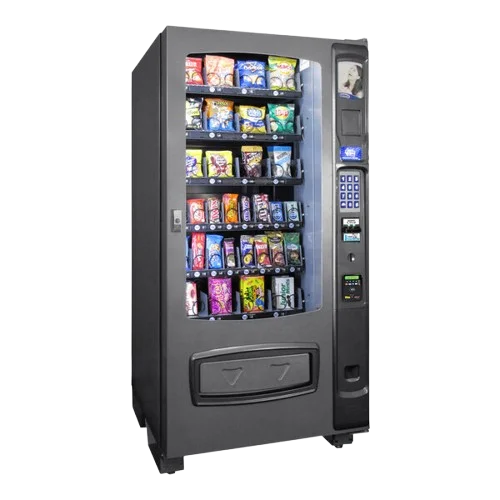
Combo vending machines are the workhorses of the industry. A single cabinet that dispenses both snacks and cold drinks eliminates the need for two separate machines, cuts your location footprint in half, and reduces the number of service visits required. For operators managing multiple sites, this efficiency compounds quickly.
Custom combo machines can be configured with adjustable tray layouts to accommodate your specific product mix, touchscreen interfaces for upselling and promotions, and cashless payment integration. For most new operators, a customized combo unit is the right starting point — it covers the broadest range of consumer needs with the smallest operational overhead.
Coffee vending machines occupy a premium category. A well-placed, well-branded bean-to-cup machine in a corporate office, hotel lobby, or transit hub can generate significantly higher per-transaction revenue than a standard snack machine. Margins on coffee are exceptional — the product cost is low, the perceived value is high, and repeat usage is daily.
Customizing a coffee vending machine typically involves branded cup sleeves, a custom wrap matching the location or brand identity, touchscreen menu customization, and loyalty program integration. The key is placement — a custom coffee machine in the wrong location generates nothing. In the right location, it generates consistent daily revenue.
Some of the most profitable custom vending deployments involve non-traditional products: personal care items in hotel bathrooms, electronics accessories in airports, PPE and safety gear in industrial facilities, fresh food in healthcare settings, and branded merchandise in retail environments. These applications almost always require a fully custom machine configuration rather than a standard unit with a wrap — the product dimensions, refrigeration needs, and dispensing mechanics are too far from standard to make a production unit work cleanly.
| Machine Type | Avg. Unit Cost | Best Placement | Customization Level |
|---|---|---|---|
| Snack Only | $2,000 - $5,000 | Offices, schools | Wrap + config |
| Combo (Snack + Drink) | $4,000 - $8,000 | Multi-use facilities | Wrap + tray + payments |
| Coffee / Hot Beverage | $5,000 - $15,000 | Corporate, hotel, transit | Full branding + menu |
| Specialty / Niche | $8,000 - $25,000+ | Industry-specific | Full custom build |
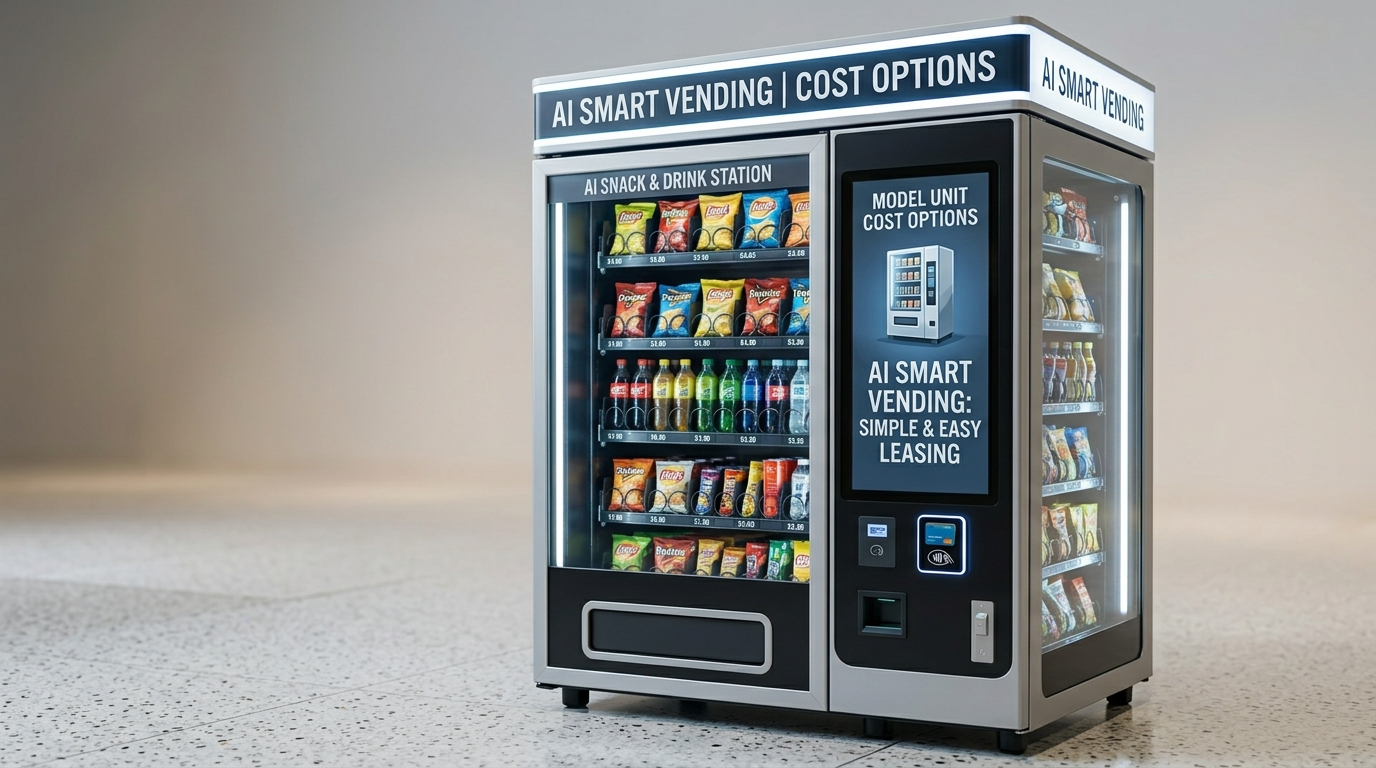
| Micro Market / AI Vending | $10,000 - $30,000 | Large workplaces | Complete custom design |
If there is one upgrade that delivers the highest visible return for the lowest cost, it is the custom vending machine wrap. A professionally designed and installed vinyl wrap transforms a generic grey box into a branded retail experience. It changes how location managers perceive you, how customers interact with the machine, and critically, how long your location contract stays active.
Location hosts do not want ugly machines in their space. A wrapped machine that complements the environment's aesthetic is treated as an amenity. A generic machine is treated as a necessary inconvenience. That difference in perception translates directly to contract renewal rates and the quality of locations you can access in the first place.
"Your machine is your storefront. No serious retailer leaves their storefront unbranded. Neither should you."
The process starts with accurate machine dimensions. Every major vending machine model has slightly different panel dimensions, and a wrap that does not account for seams, vents, and handles will look unprofessional. A good wrap vendor will either have your machine's templates on file or will ask you to provide measurements before design begins.
Design is produced at high resolution — typically 300 DPI minimum — and printed on commercial-grade cast vinyl with UV-resistant laminate. The laminate is critical for any environment with strong natural or artificial light: without it, a wrap will fade significantly within a year. Installation requires heat guns, squeegees, and relief cuts around hardware to achieve a clean, professional result. Budget $150 to $400 for professional installation on top of the material cost.
Your wrap is doing a job. It is not just decoration — it is a visual communication tool. These principles consistently produce better results:
A full custom wrap for a standard combo vending machine typically costs between $300 and $800 for material and print, plus $150 to $400 for professional installation. That total of $500 to $1,200, amortized over the three to five year lifespan of a quality wrap, works out to roughly $10 to $30 per month. Against the revenue a well-branded machine generates in a strong location, this is one of the most financially sound investments in the vending business.
The phrase customize vending machines means different things at different budget levels. Here is the complete process from start to finish, so you can apply whatever level of customization fits your operation and your goals.
Define your product and audience first. Everything downstream from this decision — machine type, tray configuration, refrigeration, price points — depends on knowing exactly what you are selling and who is buying it. Do not skip this step. A machine configured for the wrong product mix in the wrong location is a machine that does not make money.
Choose your base machine. Select a production model that fits your product category, then plan your customizations on top of it. For most operators, starting with a reputable production unit and customizing it is faster, cheaper, and lower-risk than ordering a fully bespoke build from scratch.
Configure the internal layout. Work with your supplier to set coil spacing, tray depth, and motor configurations that match your product dimensions. This is the functional customization that determines whether your machine dispenses reliably. Jams from wrong coil sizing are the most common operational headache for new operators.
Select your payment system. At minimum, integrate a card reader. Cashless payment — credit, debit, Apple Pay, Google Pay — is no longer optional for competitive machines. Card readers with built-in telemetry handle two upgrades in one and give you real-time sales and inventory visibility from day one.
Design and install your custom wrap. Commission wrap design from a specialist with vending machine experience, print on cast vinyl with UV laminate, and have it professionally installed before the machine is placed. This is your machine's public face. Invest in it accordingly.
Add telemetry and remote monitoring. A custom machine without remote visibility is a missed opportunity. Connect your telemetry system before placement so you can track sales, inventory levels, and machine health from anywhere. Read our full guide on remote monitoring for vending machines for platform comparisons and setup guidance.
A custom machine is a premium asset. It deserves a premium location. And a well-branded, professionally wrapped custom machine gives you a significant competitive advantage when negotiating placement — location managers are far more willing to give prime floor space to a machine that looks like it belongs there.
Placement is not just about foot traffic. It is about matching the right product to the right audience in the right environment. A coffee vending machine in a high-traffic corporate lobby is a consistent earner. The same machine in a low-traffic location generates almost nothing. Product-location fit is everything.
Corporate offices with 50 or more employees are among the most reliable locations for custom machines. Captive, daily-repeat audiences with disposable income and predictable usage patterns create steady, forecastable revenue. A customized combo vending machine covering both snacks and beverages, or a premium coffee unit, will perform well in virtually any corporate environment above a minimum headcount threshold.
Gyms and fitness centers are strong locations for specialty custom machines stocked with protein bars, supplements, sports drinks, and recovery products. The audience is health-conscious, the purchase motivation is immediate, and a branded machine that speaks the gym's language feels native to the environment rather than intrusive.
Hotels represent one of the highest per-transaction revenue opportunities in vending. Guests will pay premium prices for convenience. A well-stocked, attractively wrapped machine in a hotel corridor or near the fitness center captures impulse purchases that would otherwise go elsewhere.
Healthcare facilities, transit hubs, university campuses, and industrial workplaces each offer strong placement opportunities depending on your product category. The common thread across all top-performing locations is a captive audience with a clear, unmet need that your machine addresses directly.
Placement Reality Check: Location volume projections are almost always optimistic. Before committing to a placement, ask for actual foot traffic data, not estimates. A location that "sees 500 people a day" and one that has verified data showing 500 daily entries are very different things. Always verify before you place.
This is the section most buyer's guides skim over. Do not make that mistake. Operating a vending machine without the correct permits is not a minor oversight — it is a liability that can result in fines, machine seizure, and loss of your location contract. The requirements vary by state, county, and city, but the categories below apply in most jurisdictions.
If you are operating vending machines as a business, you need a business license in the state and often the county where your machines are located. This is usually the simplest requirement to fulfill, with most states offering online registration, and costs between $50 and $200 depending on the jurisdiction.
Many states require a separate vending machine operator permit issued by the state's department of agriculture, department of health, or a similar regulatory body — particularly for machines selling food and beverages. Requirements differ significantly from one state to the next, and operating without the correct permit creates real legal exposure. Check your state's requirements before your first machine is placed.
If your custom machine sells perishable items — fresh food, refrigerated beverages, dairy products — additional health department permits are typically required. These often involve an inspection of your restocking practices, temperature logging, and product sourcing documentation. Fresh food vending is highly profitable, but the regulatory overhead is meaningfully higher than shelf-stable products.
Placing machines in certain locations requires additional clearance. Government buildings, public schools, hospitals, and transit facilities each have their own permitting and approval processes above and beyond standard business licensing. If your target location falls into one of these categories, build the permit timeline into your placement schedule — approvals can take weeks to months.
Practical Approach: Contact your state's Secretary of State office and Department of Health as your first two calls. Between those two sources, you will identify the majority of permit requirements for your jurisdiction. Then check your city and county for any local business license requirements. Document everything and keep copies on file.
The most common reason operators settle for a generic machine when they wanted a custom one is cost. A fully customized combo machine with payment integration, telemetry, and a professional wrap can run $6,000 to $12,000. That is a real number. But it is also a number that most operators do not have to pay in cash on day one.
Smart operators treat vending machines the same way businesses treat any income-producing asset: as something to be financed against its own future earnings rather than purchased entirely from current capital. The machine pays for itself. Your job is to get it placed and earning as fast as possible.
Many manufacturers and distributors of custom vending machines for sale offer in-house financing or relationships with equipment lenders. This is often the fastest path to approval and allows you to bundle the machine cost, customization, and wrap into a single financed package. Terms typically range from 24 to 60 months with rates that vary based on your credit profile and the lender.
Our full guide on vending machine financing options covers every major lending category, how to compare offers, and the specific questions to ask before signing any financing agreement.
The Small Business Administration's microloan program offers loans up to $50,000 for small business equipment purchases, including vending machines and associated customization costs. These loans carry favorable interest rates and are specifically designed for small operators who may not qualify for conventional bank financing. The application process takes longer than equipment financing but the terms are often meaningfully better.
For operators with established business credit, a business line of credit offers maximum flexibility. Draw what you need for each machine, repay as revenue comes in, and redraw for the next placement. This is particularly effective for operators scaling quickly across multiple locations.
The Rule of Revenue-First Financing: Before financing any custom machine, confirm your placement. A financed machine generating $400 per month at a confirmed location is a profitable asset. A financed machine sitting in storage waiting for a placement is just debt. Placement first, purchase second.
The manufacturer you buy from shapes everything: the available customization options, the parts availability, the service network, and the machine's long-term reliability. Here are the categories and names that matter most in the custom and customizable vending machine market.
Seaga vending machines are a standout choice for operators who want solid, customizable production units at competitive price points. Seaga's lineup covers snack, beverage, combo, and specialty configurations, and their machines are designed with operator serviceability in mind — parts are widely available and the company has a strong dealer network across North America. For new operators buying their first custom unit, Seaga's combo machines are a frequent recommendation because of their reliability, reasonable entry cost, and compatibility with third-party payment and telemetry hardware.
Beyond Seaga, there are several production-tier manufacturers worth evaluating. The healthy vending and specialty product space has strong representation from manufacturers focused on reliable product delivery across a wide range of item sizes and shapes — an important consideration if you are selling non-standard products. The premium tier of the market features machines commonly found in high-volume, high-visibility locations like airports and transit hubs, with best-in-class payment and telemetry integration built in. Ask your local vending distributor for manufacturer comparisons based on your specific product and location needs.
For operators who need a machine built to dispense a product that standard units cannot handle, a specialty fabricator is the answer. These manufacturers build to specification — your product dimensions, your dispensing mechanism, your cabinet size and shape. Lead times are longer, typically 8 to 20 weeks, and costs are higher, but the result is a machine that does exactly what you need it to do with no compromises.
| Manufacturer Tier | Strength | Best For | Price Tier |
|---|---|---|---|
| Seaga | Value, reliability, dealer network | New operators, combo units | Mid-range |
| Production Mid-Tier | Product delivery reliability | Healthy and specialty products | Mid to upper |
| Production Premium Tier | Technology and build quality | High-volume premium locations | Premium |
| Specialty Fabricators | Complete customization | Non-standard products | Custom quote |
Every mistake on this list has cost operators real money. Read through them carefully. The patterns are more common than you think, and every one of them is avoidable.
Buying the machine before securing the location. This is the single most common and most expensive mistake in the vending business. A custom machine without a confirmed placement is a depreciating asset gathering dust. Always lock in your location agreement — ideally in writing — before you place the order.
Underestimating the total cost of ownership. The machine price is not the full cost. Add the wrap, payment system integration, telemetry subscription, product inventory, delivery and installation, permit fees, and a maintenance reserve. Operators who budget only for the machine price are consistently surprised by how much their total outlay exceeds their original number.
Choosing the wrong machine type for the location. A snack-only machine in a location with strong beverage demand is leaving money on the table. A refrigerated machine in a location without a reliable power supply is an operational nightmare. Match the machine's capabilities to the location's specific demands, not to what you happen to have available.
Skipping the wrap and expecting generic to perform. Generic machines in competitive locations consistently underperform branded ones. If you are going to invest in a custom machine, invest in the wrap too. The math always works in your favor over any reasonable time horizon.
Ignoring permit requirements until after placement. Operating without the correct permits puts your entire operation at risk — not just the one machine. A single complaint or inspection can trigger a review of your entire route. Get the permits first. It takes time but it is not optional.
Use this before you spend a dollar. Every item here represents a decision that will affect your machine's performance and your operation's profitability.
The questions real buyers ask before making their first custom vending machine purchase.
The cost ranges widely based on machine type and customization depth. A standard snack machine with a custom wrap and cashless payment integration typically runs $3,000 to $6,000. A fully customized combo machine with telemetry, a professional wrap, and premium payment hardware runs $6,000 to $12,000. Specialty builds for non-standard products can run $15,000 to $25,000 or more. Financing options are available that spread these costs across 24 to 60 months, making the investment manageable against the machine's own monthly revenue.
The best sources are direct from manufacturers like Seaga through their dealer networks, from vending equipment distributors who can bundle customization services, and from specialty fabricators for non-standard builds. Used machines with custom wrap potential are available through vending operator liquidation sales and vending-specific marketplaces, though used machines require thorough mechanical inspection before purchase to avoid inheriting maintenance problems.
The most accessible customization is a vinyl wrap. Commission a design from a vending-experienced graphic designer, have it printed on cast vinyl with UV laminate, and have it professionally installed. Beyond the wrap, you can customize the payment interface screen with branded graphics, add custom LED lighting in your brand colors, and configure the product selection and pricing to match your brand's positioning. For deeper customization, work directly with your machine's manufacturer or distributor on cabinet modifications.
In most jurisdictions, yes. Requirements typically include a state business license, a vending machine operator permit from the state's department of agriculture or health, and a local business license. Machines selling perishable food products require additional health department permitting in most states. Requirements vary significantly by state and city, so checking with your state's Secretary of State office and Department of Health is the correct first step before placing any machine.
Yes, and most operators should consider it. Equipment financing through your supplier or a vending-specific lender, SBA microloans, and business lines of credit are all viable options. The key principle is to confirm your placement before financing — a machine with a confirmed location generating revenue can service its own financing costs from month one in most scenarios. See our detailed guide on vending machine financing options for a full comparison of lenders and terms.
The best placements combine high foot traffic, a captive audience with repeat daily usage, and strong product-audience fit. Corporate offices, gyms, hotels, healthcare facilities, and transit hubs are consistently top performers. Within any location, position the machine in the highest-visibility, highest-traffic area rather than in a back hallway. A branded machine in a prime spot outperforms a generic machine in a poor spot every time, regardless of machine quality.
For most operators, yes. A combo vending machine covering both snacks and beverages eliminates the need for two machines in one location, reduces your footprint requirement, cuts service visit frequency, and increases per-location revenue potential. The upfront cost is higher than a single-category machine, but the operational efficiency and revenue upside typically justify it in any location with sufficient foot traffic to support a full product mix.
Profitability varies significantly by location, product margin, and operational efficiency. A well-placed, well-stocked custom machine in a strong location can net $200 to $500 per month after product cost and service expenses. Operators running efficient multi-machine routes with remote monitoring and optimized restocking schedules can achieve meaningfully higher per-machine margins. The custom branding advantage pays off in better locations, stronger location retention, and the ability to charge premium pricing — all of which improve the profit picture over time.
A custom vending machine wrap is a printed vinyl graphic applied to the exterior panels of a vending machine to brand it with a logo, color scheme, messaging, or design. Wraps are printed on commercial-grade cast vinyl, laminated for durability, and professionally installed. A quality wrap lasts three to five years, costs $500 to $1,200 installed, and is one of the most cost-effective investments a vending operator can make in terms of location retention and consumer engagement.
Start by contacting your state's Department of Health and Secretary of State office to identify the specific permits required in your state. Most states require at minimum a business license and a vending operator permit. Machines selling food or beverages often require health department clearance as well. After state-level permits are confirmed, check your county and city for any additional local licensing requirements. Keep all permits on file and renew them on schedule to avoid fines or operational interruptions.


Share:
Geek Bar Shortage: Market Reality, Wholesale Shifts, And How Retailers Are Adapting
Outdoor Vending Machine Security Guide (Vandal Prevention, Locks, Placement, Lighting)