




Design the perfect vending solution for your location and customers.

Join the VMFS newsletter and step into a thriving network dedicated to collective success.
One signup. Endless possibilities.
Most businesses think about vending machines the same way they think about a paper towel dispenser. Functional. Forgettable. Something you buy once and never think about again.
That mindset is costing them money every single day.
A custom branded vending machine is not a convenience appliance. It is a revenue channel, a brand touchpoint, a customer retention tool, and a passive income stream, all in one piece of equipment. Whether you are exploring custom vending machines for sale for the first time or scaling an existing route, the business case is stronger than most people realize. The businesses that understand this are quietly building advantages their competitors cannot see or explain.
This post breaks down exactly why a custom branded vending machine belongs in your business strategy, who it works for, what it actually costs, and how to get started without making the expensive mistakes most first-timers make.
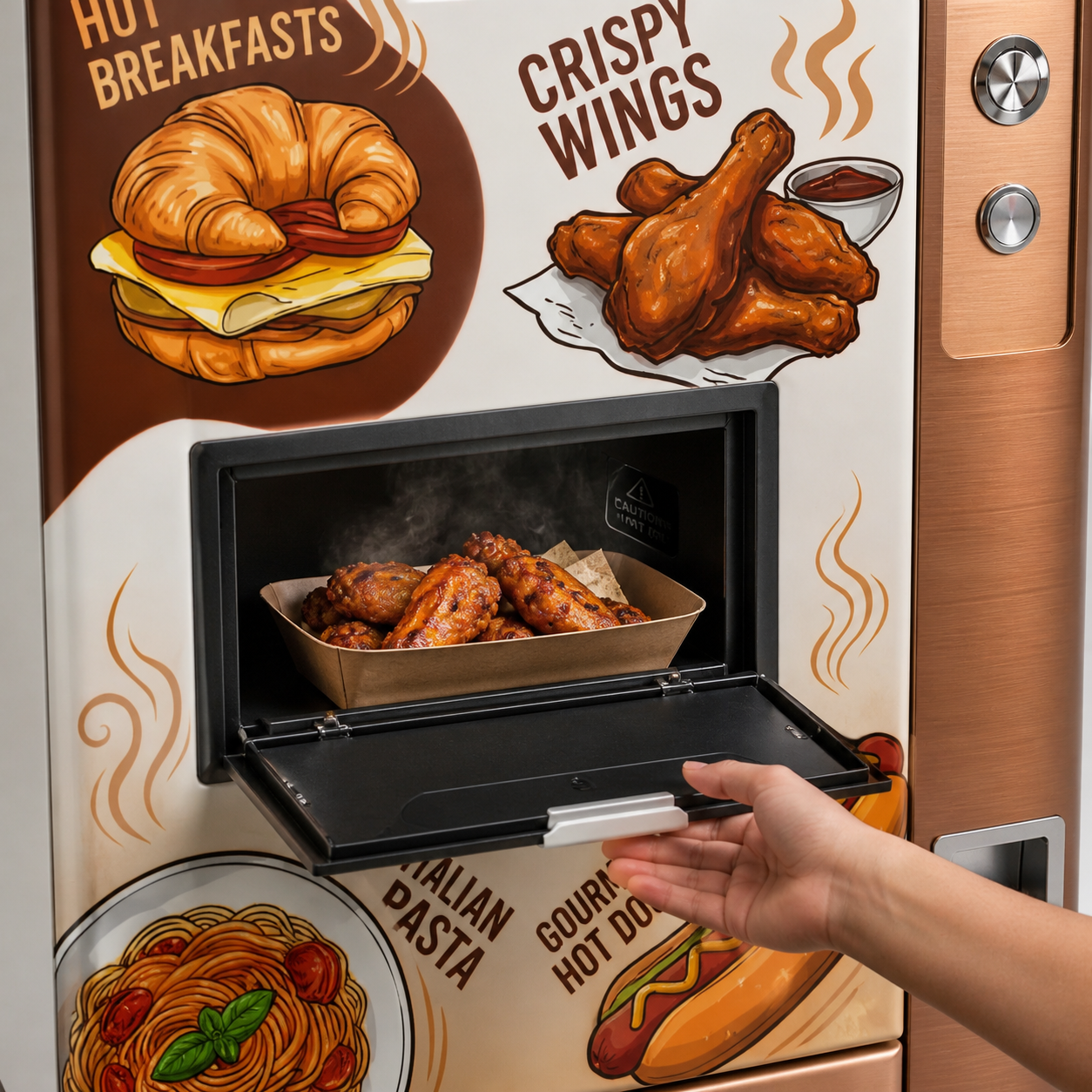
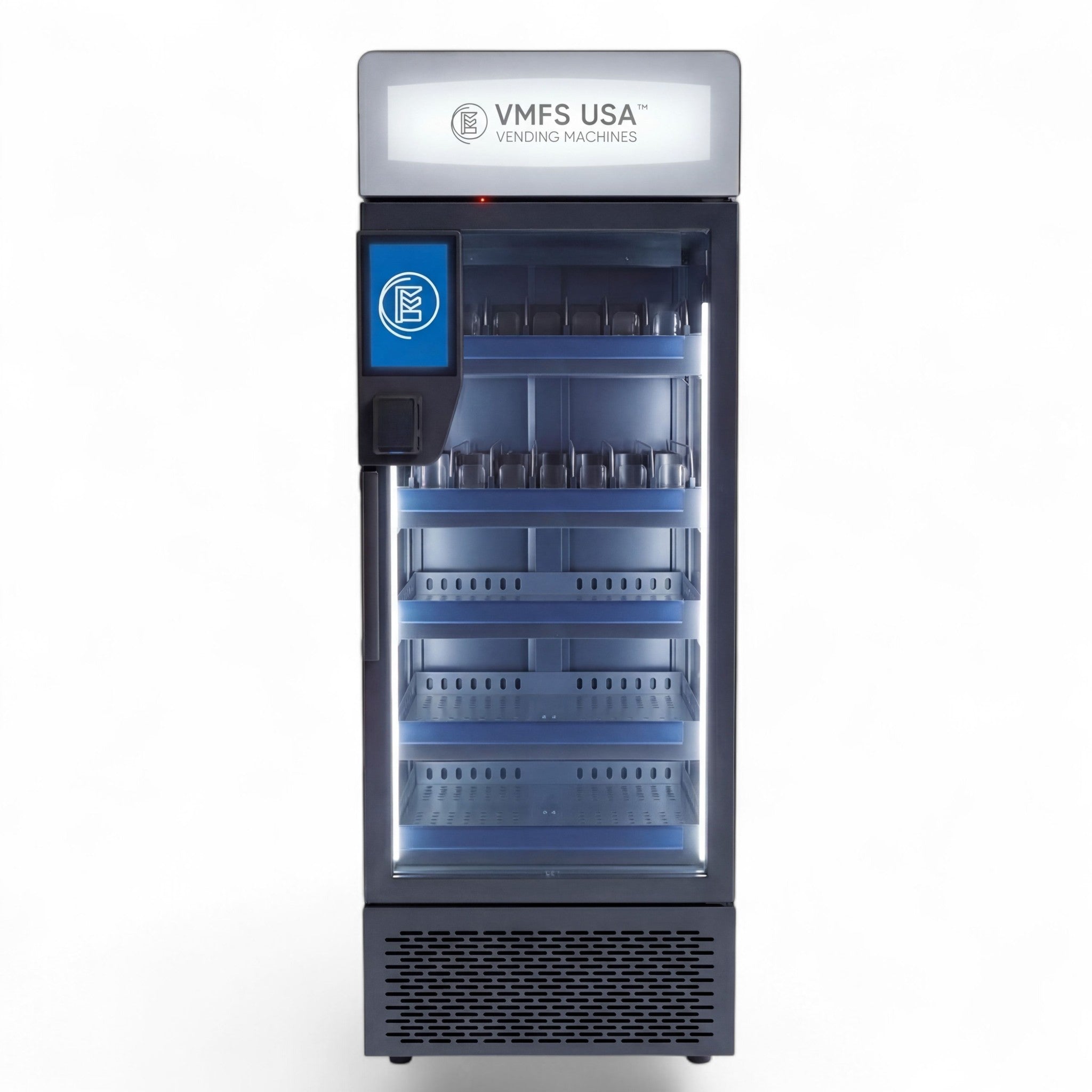
A custom branded vending machine is a vending unit personalized with a business's logo, color scheme, messaging, or product lineup to reflect a specific brand identity. Branding typically involves a full vinyl wrap, custom payment screen graphics, and a curated product selection aligned with the brand's audience. The result is a machine that functions as an automated retail extension of the business rather than a generic appliance sitting in the corner. If you are comparing options, our custom vending machine buyer's guide covers every machine type, cost range, and configuration in detail.
Before we get into tactics, let us establish the real function of a custom branded vending machine in a business context. It is doing at least four jobs simultaneously, and most business owners only think about one of them.
| The Job | What It Means for Your Business |
|---|---|
| Generate revenue passively | A well-placed branded machine sells product 24 hours a day, 7 days a week, with no staff required. Every transaction at 11 p.m. or 6 a.m. is revenue your business captures without being open. |
| Extend your brand into physical space | Every person who walks past your branded machine sees your logo, your colors, and your messaging. In a gym, hotel, or corporate office, that passive brand impression compounds over thousands of daily interactions. |
| Serve your customer in a moment of need | A machine stocked with the right product for your specific audience creates a moment of genuine service that strengthens the customer relationship and drives repeat visits. |
| Differentiate your location from competitors | A business with a custom branded vending machine looks more established, more invested, and more professional than one with a generic grey box or nothing at all. |
"The machine that carries your brand is working for you every hour you are not. That is the kind of asset every business needs more of."
Custom branded vending machines are not a one-size-fits-all solution. But the range of businesses that benefit from them is wider than most people assume. Here are the categories where the return is consistently strongest, and specifically why each one works so well.
Fitness businesses are one of the highest-performing categories for branded vending. Here is why the numbers work so consistently in this environment.
Hotels operate in a convenience economy. Guests are away from home, often in an unfamiliar city, and willing to pay premium prices for products that solve immediate problems. A branded coffee vending machine near the lobby or fitness area, for example, captures high-margin purchases around the clock. Here is what makes branded vending specifically powerful in this context.
Office environments are ideal for branded vending because of the captive, repeat audience. The benefits here stack up quickly and compound over time.
Patients, visitors, and staff all need refreshments, and the healthcare environment creates specific reasons why branded vending works exceptionally well.
Retail businesses can use branded vending machines to serve customers, extend their product range without adding staff, and create additional reasons for customers to linger. A branded machine in a retail environment reinforces the store's identity and gives customers something to interact with while they browse or make purchase decisions. Every minute of additional dwell time increases the probability of an additional sale. Choosing the right location within the store is just as important as the machine itself.
Educational institutions serve large, captive populations with limited off-site dining options. A custom vending machine serves students and staff while generating revenue that can support facility funding, student programs, or equipment purchases. The institution's branding on the machine reinforces community identity in a way a generic machine placed by a third-party operator simply never could.
The custom vending machine wrap is where brand power becomes tangible and measurable. A professionally designed and installed vinyl wrap creates a physical, three-dimensional brand presence that people interact with directly, repeatedly, and in a context where they are already primed to engage.
Think about what a wrapped machine actually does in a space. It stands approximately six feet tall. It is illuminated from the inside. It is positioned in a high-traffic area. And it carries your brand's colors, logo, and messaging at eye level, every hour of every day. No billboard, social media post, or email campaign can replicate that kind of consistent, physical presence at the moment a customer is standing in your space.
A wrap is not just a sticker. When done correctly it is a visual communication tool designed to do specific work. The best performing custom vending machine wraps consistently share these characteristics:
A quality wrap uses cast vinyl with UV-resistant laminate, the same material used for vehicle wraps. It lasts three to five years, maintains color accuracy throughout, and resists peeling, bubbling, and fading in virtually any indoor environment. A cheap wrap on a custom machine is a false economy. The first impression your brand makes on a customer in that space should not be a machine that looks like it is falling apart.
| Variable | Conservative Estimate | Result |
|---|---|---|
| Daily foot traffic past the machine | 150 people per day | 150 brand impressions daily |
| Wrap lifespan | 4 years | 1,460 days of active impressions |
| Total brand impressions generated | 150 x 1,460 | 219,000 impressions |
| Total wrap investment | $700 installed | $0.003 per impression |
Find a cheaper brand impression in any other marketing channel. You will not.
A custom branded vending machine generates revenue through multiple streams, not just product sales. Understanding all of them is what builds a complete and accurate business case for the investment.
Every item dispensed generates a margin. Here is what that looks like across the most common machine types in real operating conditions:
| Machine Type | Avg. Monthly Gross Sales | Typical Net Margin | Avg. Monthly Net Revenue |
|---|---|---|---|
| Snack and Beverage Combo | $400 to $700 | 40% to 55% | $160 to $385 |
| Coffee Vending Machine | $500 to $900 | 60% to 75% | $300 to $675 |
| Specialty Product Machine | $350 to $600 | 45% to 65% | $160 to $390 |
Coffee vending machines sit at the highest end of this range for a specific reason. The raw ingredient cost for a cup of bean-to-cup coffee is often under $0.30, while the selling price in a corporate or hospitality environment runs $1.50 to $3.00. The margin structure is exceptional, which is why a branded coffee vending machine in the right location is consistently one of the highest-return vending investments available to any operator.
Here is what a typical branded combo machine looks like as a financial asset over a standard 48-month financing term:
| Item | Amount |
|---|---|
| Total machine investment (financed) | $8,000 |
| Monthly financing payment (48 months) | $195 |
| Average monthly net revenue from machine | $280 |
| Monthly profit after financing payment | $85 per month from month one |
| Total net revenue over 48 months | $13,440 |
| Total financing cost over 48 months | $9,360 |
| Net profit over 48 months | $4,080 on a fully financed asset |
That calculation does not include the brand impression value, the customer retention benefit, or the revenue from years five, six, and seven once the machine is fully paid off. A paid-off machine in a good location keeps generating $280 or more per month with zero financing cost attached to it. That is what a real passive income asset looks like. For operators ready to move forward, our guide on vending machine financing options walks through every available path to get your machine funded.
A vending machine gives people a reason to stop. In retail, gym, and hospitality settings, every additional minute a customer spends on your premises increases the probability of an additional purchase or a positive experience that drives return visits. This indirect revenue contribution is real and consistently underestimated by first-time operators.
For businesses that currently staff a small retail counter, snack bar, or refreshment service, a branded vending machine can replace that function at significantly lower cost. Eliminating even two or three part-time hours per week represents a meaningful financial benefit that offsets the machine's cost quickly, often faster than the direct product revenue alone would.
Revenue is the measurable outcome. But the customer experience impact of a well-executed branded vending machine is what drives the long-term business case, and it works in two directions at once.
For the customer, the machine solves a real problem. Hunger at 10 p.m. in a hotel. A protein bar after a hard workout. A cold drink during a long office meeting. These are genuine needs in genuine moments, and a machine that meets them creates goodwill. The business that provided the solution gets the credit and the memory that follows.
For the business, the machine demonstrates investment. A branded machine tells customers, members, guests, and employees that the business cares enough about the experience to go beyond the minimum. That signal is subtle but its effect on perception and loyalty compounds over time.
In membership-based businesses like gyms and coworking spaces, this dynamic is particularly valuable. Consider what a single retained member is worth compared to the cost of acquiring a new one:
| Metric | Typical Value |
|---|---|
| Average gym membership monthly fee | $45 to $80 |
| Average member lifetime | 18 to 24 months |
| Lifetime value of one retained member | $810 to $1,920 |
| Cost to acquire a new member | $150 to $400 |
| Cost to retain an existing member | A fraction of acquisition cost |
A member who uses the branded vending machine regularly has one more touchpoint connecting them to the facility. One more reason to stay. One more element of the experience they would lose if they cancelled. Studies on customer loyalty consistently show that the number of positive touchpoints a customer has with a brand directly influences their likelihood to remain a customer. A branded vending machine creates multiple touchpoints per week, at moments when the customer is already engaged with your space.
The price difference between a generic machine and a branded one is often surprisingly small. The performance difference is consistently significant. Here is what the comparison actually looks like across the factors that matter most to your business.
| Factor | Generic Vending Machine | Custom Branded Machine |
|---|---|---|
| Location host perception | Tolerated necessity | Premium amenity worth protecting |
| Consumer engagement | Transactional only | Brand-reinforcing interaction every visit |
| Sales performance | Baseline | Consistently higher in comparable locations |
| Location contract renewal | Negotiable, price-driven | Stronger retention driven by value perception |
| Premium pricing ability | Limited by generic appearance | Branded environment supports higher price points |
| Brand impressions generated | Zero | Thousands per month, passively |
| Customer loyalty contribution | None | Active loyalty touchpoint multiple times per week |
| Differentiation from competitors | None | Immediate and visible |
| Incremental cost over generic | N/A | $500 to $1,500 for wrap and customization |
The wrap and customization that drives this entire difference adds $500 to $1,500 to the total machine cost. On a machine that runs for five to seven years, that is a trivial incremental investment for the return it produces. The question is not really whether to brand your machine. The question is why you have not done it yet.
Getting into custom branded vending is more straightforward than most business owners expect. The process has five clear stages and the decisions at each one are manageable once you know what you are actually choosing between.
Are you placing a machine in your own business to serve your existing customers and generate supplemental revenue? Or are you an operator placing branded machines in third-party locations as a primary business? These are different models with different machine requirements, different financial structures, and different operational demands. Know which one you are before you spend anything.
Product category drives everything else. A gym wanting to sell protein products needs a different machine configuration than a hotel wanting to serve travel essentials. For most businesses entering branded vending for the first time, a combo vending machine covering snacks and beverages is the right starting point. It covers the widest range of customer needs, minimizes restocking frequency, and performs well across virtually every location type.
For businesses with a specific product focus, specialty configurations are available. Our complete custom vending machine buyer's guide covers every major machine type with specs, cost ranges, and placement recommendations to help you make the right call the first time.
Commission your custom vending machine wrap design before the machine arrives. Work with a designer who has experience with vending machine panel dimensions. The templates are specific to each model and a designer unfamiliar with those constraints will produce artwork that does not translate cleanly to installation. Specify cast vinyl with UV-resistant laminate for durability, and schedule professional installation. The wrap is your machine's public face in that location every single day. It has to be done right from the beginning.
A branded machine without cashless payment leaves a significant portion of potential revenue uncaptured. The majority of consumers in corporate, fitness, and hospitality environments prefer to pay by card or mobile wallet. Integrate a card reader that accepts tap-to-pay, and pair it with a telemetry system that provides real-time sales data, inventory alerts, and machine health monitoring. Remote monitoring means you know exactly what is happening with your machine without physically visiting it, which is essential for any operator managing more than one location. Our guide on remote monitoring for vending machines covers the leading platforms and how to configure them correctly.
Placement is the variable that matters most to revenue. Before the machine is purchased or financed, confirm the location in writing. Understand the foot traffic, the audience, and the product needs. Then place the machine in the highest-visibility, highest-traffic position the location offers. Our detailed guide on vending machine placement strategies provides location-by-location guidance on maximizing performance from day one.
The best branded machine in the wrong location is still a poor investment. Placement is not a detail. It is the foundation the entire revenue model sits on. Here is how to evaluate a location correctly and what an ideal placement actually looks like in practice.
| Element | What It Means | Why It Matters |
|---|---|---|
| Volume | High daily foot traffic past the machine | More people means more transactions and more brand impressions per day |
| Dwell time | People spend meaningful time in the location | Extended presence increases purchase probability and brand recall significantly |
| Captivity | Limited or no competing purchase alternatives nearby | A captive audience with a need and no alternative is a highly motivated buyer every time |
A custom branded machine performs best when the location's environment and the machine's branding are in alignment. A fitness-focused machine with athletic brand design in a gym feels native to that space. The same machine in a law firm's break room creates friction. Match the machine's visual identity and product selection to the cultural context of the placement, and both elements reinforce each other in a way that neither could achieve alone.
For businesses placing machines in their own locations, this alignment is automatic. The machine carries your brand, in your space, serving your customers. For operators placing in third-party locations, the machine should complement the host location's identity and serve the actual people in that space, not just the operator's brand preferences.
The upfront cost of a custom branded vending machine, including the machine itself, the wrap, the payment system, and the telemetry, typically runs $5,000 to $12,000 depending on machine type and customization level. That number stops a lot of businesses before they start. It should not.
A vending machine is an income-producing asset. It is financeable against its own future revenue, which means you do not need to pay for it out of pocket to make it work financially. The machine's monthly earnings service the financing cost, and the margin above that cost is profit from month one of placement.
| Financing Type | Best For | Typical Terms | Speed of Approval |
|---|---|---|---|
| Equipment financing via supplier | First-time buyers, bundled packages | 24 to 60 months | Fast, often same week |
| SBA microloan | Operators wanting lower rates and longer terms | Up to 72 months, up to $50,000 | Slower, 4 to 8 weeks |
| Business line of credit | Established operators scaling to multiple machines | Revolving, draw as needed | Moderate, 1 to 3 weeks |
| 0% promotional business credit | Operators with strong business credit history | 12 to 18 month interest-free window | Fast, if pre-approved |
Our full guide on vending machine financing options covers every path with qualification criteria, rate comparisons, and the specific questions you must ask before signing any agreement.
The principle is simple. Confirm your placement before you finance the machine. A financed machine with a confirmed location generating revenue can service its own financing costs from month one in most scenarios. A financed machine sitting in storage waiting for a placement is just debt accumulating interest. Placement first. Purchase second. That sequence changes the entire financial picture of the investment.
Treating the machine as an afterthought. A machine placed in a back corner with a generic wrap and no payment technology is not a branded vending machine. It is a missed opportunity with a logo on it. If you are going to invest in a custom machine, invest completely. The wrap, the payment system, the product curation, and the placement all have to work together for the investment to perform as it should.
Choosing the wrong product mix. The product inside the machine has to match the audience in front of it. Survey your customers, members, or staff before you stock the machine. The products that sell in a corporate office are not the same ones that sell in a gym or a hotel corridor. Getting this wrong wastes inventory and trains your audience not to bother checking the machine.
Skipping remote monitoring. Operating a machine without telemetry is flying blind. You will not know when it needs restocking until customers tell you it is empty. You will not know when a technical issue is costing you sales every day. Remote monitoring is a basic operational requirement for any machine you are depending on for consistent revenue.
Using a cheap wrap. A poorly designed or cheaply printed wrap does the opposite of what you want. It makes your brand look unprofessional and signals to customers and location hosts alike that the operator does not take the business seriously. Invest in quality design and quality materials. The wrap is the face of your brand in that space every single day.
Not securing permits before placement. Vending machine permits are required in most jurisdictions before you operate. Skipping this step creates legal exposure for your business that no amount of monthly revenue justifies. Check local and state requirements, secure the necessary vending machine permits, and document everything before your machine goes live. Our vending machine placement guide includes a permit checklist by business type to make this step straightforward.
Share:
Vending Machine Security: How to Prevent Theft and Vandalism
Complete Medicine Vending Machine Buyer Guide