




Design the perfect vending solution for your location and customers.

Join the VMFS newsletter and step into a thriving network dedicated to collective success.
One signup. Endless possibilities.
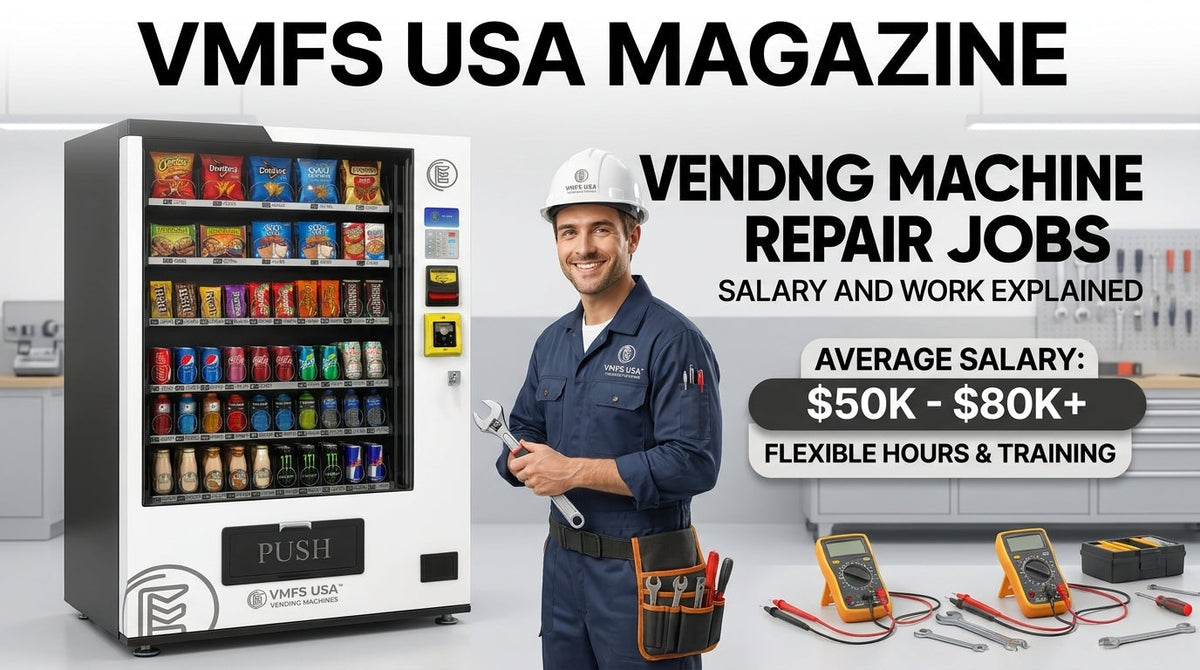
Vending machine repair jobs offer a stable career path within technical field services, yielding average national earnings between $41,364 and $53,000 annually ($19.89 to $25.48 per hour), with top-tier specialized field technicians earning upwards of $69,600 per year. Commercial vending machine technicians maintain, diagnose, and repair electromechanical systems, refrigeration units, payment acceptors, and digital telemetry boards.
Understanding the full scope of [vending machine repair jobs - Salary and Work Explained] requires evaluating daily technical tasks, payment architecture protocols, HVAC requirements, and compensation structures across route operations and dedicated refurbishing shops.
A vending machine technician is an electromechanical specialist responsible for installing, servicing, troubleshooting, and repairing automated retail hardware across commercial locations. These professionals service a broad range of hardware, including commercial snack vending machines, beverage units, and modern smart lockers.
Technicians work on field service routes or inside centralized repair facilities. Their core mission is maximizing machine uptime, as hardware failures directly eliminate sales revenue and harm location contracts.
Daily workflows involve executing scheduled preventative maintenance, responding to emergency dispatch calls, and replacing worn mechanical assemblies. Technicians begin their shifts analyzing telemetry alerts, organizing replacement modules on service trucks, and mapping route calls.
Field technicians work across diverse environments including hospitals, manufacturing plants, universities, and corporate campuses. On site, they inspect power connections, test drop sensors, realign delivery coils, and ensure compliance with hygiene and safety standards.
Vending machine repair compensation scales according to mechanical aptitude, refrigeration credentials, and familiarity with automated payment systems. Entry-level technicians handling basic motor replacements typically start near $33,000 to $38,500 annually.
Mid-career technicians with 3 to 5 years of experience earn between $42,500 and $53,000 per year. Master field technicians certified in EPA refrigeration handling and micro-electronics command salaries reaching $64,000 to $69,600+ annually.
Geographic location and specialized hardware types heavily influence hourly pay rates. Metropolitan markets with high commercial density and cost-of-living metrics deliver compensation rates up to 24% above national medians.
| Experience Level | Average Hourly Wage | Average Annual Salary | Primary Skill Requirements |
| Entry-Level (0-2 Yrs) | $15.86 – $18.50 | $33,000 – $38,500 | Harness replacement, coil clearings, coin jams |
| Mid-Level (3-5 Yrs) | $20.43 – $25.48 | $42,500 – $53,000 | MDB diagnostics, bill validator logic, motor testing |
| Senior Specialist (5+ Yrs) | $27.16 – $33.46 | $56,500 – $69,600 | EPA 608 HVAC repair, telemetry board soldering |
Technicians servicing specialized hardware—such as high-end drink vending machines or specialized retail units—often earn higher hourly premiums due to system complexity. Additionally, independent technicians who manage field service operations capture higher gross profit margins.

Payment system failures account for over 45% of unexpected service calls in automated retail. Technicians diagnose Multi-Drop Bus (MDB) internal communications protocols to isolate signal interruptions between internal logic controllers, bill acceptors, coin mechanisms, and contactless credit card readers.
When a bill validator fails to stack notes, technicians test optical sensor alignment, clear dust buildup from lens arrays, and measure voltage tolerances along the MDB harness. Resolving these payment errors rapidly restores cash flow and operational stability.
Cold inventory equipment requires precise temperature control to prevent perishable inventory spoilage. Technicians clean condenser coils, inspect evaporator fan motors, test defrost timers, and evaluate compressor relay switches.
Handling closed-loop sealed refrigeration circuits requires EPA Section 608 Certification. Technicians must trace lines for refrigerant leaks, purge lines, and recharge systems using R-134a or R-290 refrigerants to keep units operating at optimal efficiency.
Modern automated retail relies on computer vision algorithms, weight-sensor shelves, and cloud-connected telemetry systems. Technicians troubleshooting AI grab and go vending machines service optical camera arrays, microcontrollers, and wireless router modules.
When cloud connections drop, machines fail to authorize credit card pre-authorizations or sync inventory levels. Technicians isolate camera hardware bugs, apply system updates, recalibrate load-cell sensors, and resolve complex AI vending machine troubleshooting errors.

Vending machine repair jobs provide reliable stability, hands-on mechanical work, and autonomy away from traditional desk environments. However, the profession also demands physical stamina, driving in heavy traffic, and performing field repairs in awkward spaces.
┌────────────────────────────────────────┬────────────────────────────────────────┐
│ PROS                                   │ CONS                                   │
├────────────────────────────────────────┼────────────────────────────────────────┤
│ • High job autonomy on field routes    │ • Physical strain from lifting heavy parts│
│ • Consistent demand in commercial hubs │ • Driving stress during peak traffic   │
│ • Diverse mechanical/electronic skills │ • On-call emergency weekend coverage   │
│ • Clear pathways to self-employment    │ • Exposure to outdoor weather elements │
└────────────────────────────────────────┴────────────────────────────────────────┘
Evaluating these career parameters helps prospective technicians assess whether field service routing fits their professional goals.
Commercial technicians rely on specialized hand tools and electronic testing devices to resolve field issues efficiently. Lacking proper instrumentation increases diagnostic time and damages delicate electronic boards.
Investing in high-grade equipment ensures technicians isolate wiring shorts, trace control faults, and carry out essential vending machine tools workflows smoothly.
While a high school diploma serves as the baseline requirement, professional certifications accelerate career advancement and unlock higher pay tiers.
Key industry credentials include:
EPA Section 608 Universal Certification: Mandatory for servicing sealed cooling circuits and handling chemical refrigerants legally.
NAMA Certified Vending Technician: Demonstrates mastery over MDB protocols, coin mechanisms, electrical wiring, and machine diagnostics.
Certified Electronics Technician (CET): Validates advanced component-level micro-soldering and circuit board repair capability.
Technicians holding these credentials qualify for specialized field service roles, maintenance supervisory jobs, or independent route management.
On-site field maintenance focuses on speed, rapid diagnostics, and preventative care. Field technicians resolve coin jams, clear drop sensors, swap faulty circuit boards, and apply routine vending maintenance strategies to minimize downtime.
Field service requires clear communication with property managers and structured schedule management to minimize disruption in busy commercial corridors.

Shop repair involves tearing down older machines to perform structural overhauls, mechanical rebuilding, and full cabinet refinishing. Workshop technicians test power transformers on test benches, repair worn harnesses, sand rust spots, and retrofit legacy units with modern touchscreens and card readers.
| Operating Dimension | On-Site Field Service | Shop Bench Refurbishment |
| Primary Goal | Maximize uptime and clear urgent faults | Rebuild degraded hardware to factory specs |
| Pace & Work Stress | Fast-paced, route-driven, high travel | Controlled environment, lower travel stress |
| Tooling Required | Portable multimeters, hand tools, spare parts | Bench power units, solder stations, paint booths |
| Average Task Time | 15 to 60 minutes per site visit | 8 to 24 labor hours per machine overhaul |
Operators reviewing structural equipment choices can consult our detailed guide on evaluating used vending equipment to determine whether on-site repairs or shop overhauls make economic sense.
Technicians can choose between working as direct W-2 employees for large bottling firms or operating as independent 1099 service contractors. Direct employment offers steady health benefits, company service vans, and stable hourly pay.
Independent service contractors set higher hourly service rates, invoice per job, and build direct service relationships with independent route operators. However, contractor roles require managing operational overhead, insurance policies, and billing administrative work.
Technicians transitioning into independent service operations must structure their businesses properly to limit personal legal liability. Working with high-voltage AC connections and refrigeration equipment carries property damage and bodily injury risks.
Securing commercial general liability coverage and referencing an authoritative vending machine insurance guide protects assets against field accidents. When setting up an independent enterprise, technicians should formally form an LLC for your vending repair business to protect personal wealth and ensure statutory compliance.
Technicians directly impact machine sales margins by keeping equipment operational. Sustained machine downtime damages location relationships, increases vendor churn, and erodes baseline vending machine profit margins.
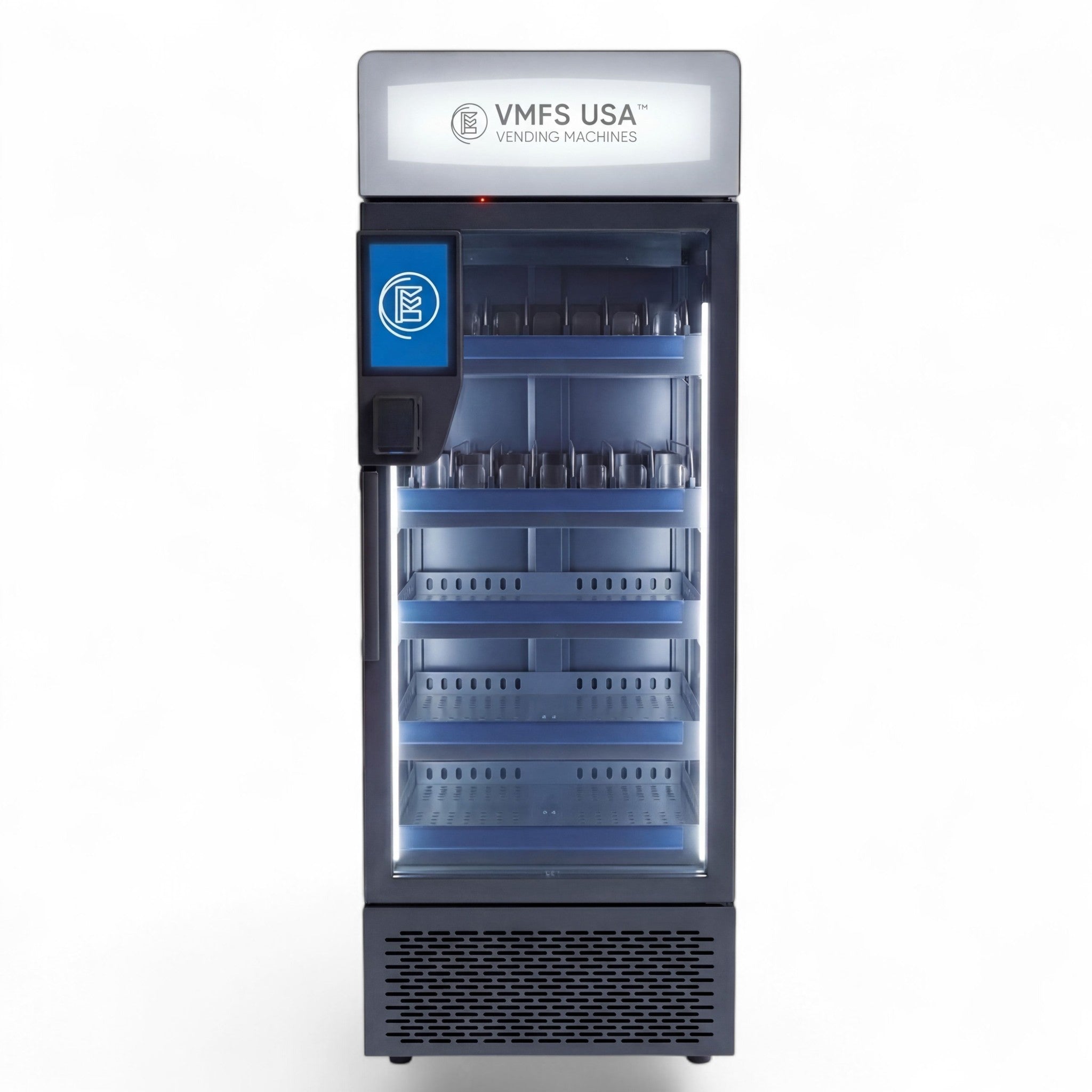
Commercial property managers seeking reliable automated vending services can list your property on VPlaced to connect with top operators to secure fully serviced, high-uptime equipment placement. Route managers looking for ultra-reliable hardware can explore commercial equipment options at VMFS USA to deploy hardware backed by accessible replacement parts.
The national average salary for a vending machine repair job ranges from $41,364 to $53,000 annually ($19.89 to $25.48 per hour). Entry-level technicians earn approximately $33,000, while experienced specialists with refrigeration credentials earn up to $69,600 per year.
A high school diploma or GED combined with mechanical aptitude serves as the core entry requirement. Obtaining an EPA Section 608 Certification and a NAMA Vending Technician credential significantly improves job prospects and starting pay rates.
Technicians use multimeters and diagnostic software to test the Multi-Drop Bus (MDB) wiring harness connecting the machine controller to the payment devices. They clean optical sensors, clear coin chute jams, and update bill validator firmware.
Demand remains consistent across commercial corridors, manufacturing plants, and healthcare facilities that rely on continuous automated food and beverage service. Technicians skilled in smart machine electronics, telemetry systems, and micro-communications experience strong hiring demand.
Spiral drop motor burnouts, broken delivery gate sensors, worn coin return springs, and misaligned bill acceptor stacking gears represent the most frequent field repairs. Resolving these issues requires basic hand tools and targeted component swaps.
A standard valid driver's license with a clean driving record is mandatory for route technician positions. Commercial Driver's Licenses (CDL) are generally not required unless driving heavy freight transport trucks exceeding 26,000 lbs.
Essential tools include a digital multimeter, security Torx drivers, socket sets, wire strippers, contact cleaner spray, and an MDB testing harness. Specialized jobs also require manifold gauges and refrigerant recovery units.
Basic entry-level troubleshooting skills can be mastered within 3 to 6 months of structured on-the-job training. Master-level competency involving advanced electronics, refrigeration, and telemetry systems typically requires 2 to 4 years of field experience.
Field service focuses on rapid, on-site troubleshooting to restore operation in under an hour. Bench repair takes place in a dedicated workshop and involves complete machine teardowns, structural welding, control board soldering, and repainting.
Yes, experienced technicians can operate independent repair services contracting directly with local route operators. Operating independently requires establishing a legal business structure, obtaining liability insurance, and purchasing diagnostic tooling.

Share:
How to Become a Vending Machine Operator: Complete Guide
Vending Machine Commission Rates: How Revenue Gets Split