




Design the perfect vending solution for your location and customers.

Join the VMFS newsletter and step into a thriving network dedicated to collective success.
One signup. Endless possibilities.
An office coffee machine latte calories count ranges from 100 to 180 calories for a standard 8-ounce beverage prepared with whole milk and no added sugar. Caloric density depends entirely on serving size, milk formulation (fresh whole, skim, powdered soluble, or plant-based), and factory dispensing calibrations. Understanding workplace automated latte nutrition requires evaluating ingredient ratios, syrup additions, and dispensing mechanics across commercial machine types.
A standard automated workplace latte consists of 1 to 2 shots of espresso (30–60 ml) combined with 6 to 10 fluid ounces of steamed milk or reconstituted milk powder. Espresso contributes roughly 3 to 5 calories per shot, meaning milk selections supply over 95% of the drink's total energy density.
A basic 8-ounce machine-dispensed latte with whole milk yields 120 calories, while a 12-ounce cup yields 180 calories. Choosing skim milk lowers these values to 70 calories for an 8-ounce cup and 110 calories for a 12-ounce serving.
Commercial systems programmed with factory defaults dispense an espresso-to-milk ratio between 1:3 and 1:5. Knowing how do coffee vending machines work helps facility managers adjust liquid flow rates to control cup portions and caloric delivery per dispense cycle.
Increasing cup size scales the milk volume linearly while espresso volume typically remains constant at one or two shots. A 16-ounce large latte prepared by a commercial bean-to-cup unit contains up to 240 calories when using fresh 3.25% whole dairy milk.
When employees select larger cup options from commercial coffee vending machines, the automated dispenser increases steamed liquid output by extending the pump duration. This adds roughly 15 calories per additional fluid ounce of standard whole milk.
An 8-ounce whole milk workplace latte provides approximately 6 grams of fat, 9 grams of carbohydrates (lactose), and 6 grams of protein. Replacing whole milk with skim milk reduces total fat to near zero grams while preserving protein content.
The table below outlines the nutritional breakdown of a standard 10-ounce office machine latte across different dairy bases without added sugar:
| Milk Base Type | Total Calories (kcal) | Total Fat (g) | Carbohydrates (g) | Protein (g) | Calcium (% DV) |
| Whole Milk (3.25%) | 150 | 8.0 | 12.0 | 8.0 | 25% |
| Reduced Fat (2%) | 120 | 4.8 | 12.2 | 8.1 | 26% |
| Skim / Non-Fat (0%) | 90 | 0.2 | 12.3 | 8.3 | 28% |
| Powdered Dairy Topping | 135 | 4.5 | 18.0 | 4.0 | 15% |
| Oat Milk (Barista) | 140 | 6.5 | 19.0 | 2.0 | 20% |
| Almond Milk (Unsweetened) | 45 | 3.5 | 1.5 | 1.5 | 15% |
Commercial beverage units utilize either fresh liquid dairy maintained in refrigerated internal fridges or dry soluble powders stored in internal hoppers. The physical state of the milk alters carbohydrate density and total caloric output per cup.
Fresh whole milk creates a micro-foam with a rich mouthfeel but contributes 149 calories per cup (8 fl oz). Skim milk lowers total calorie counts by 44% while maintaining identical calcium and protein levels.
Facility managers consulting the guide to purchase office coffee machine should evaluate whether employee preferences lean toward low-calorie skim options or traditional whole-milk espresso drinks.
Powdered milk toppings used in automated vending units contain dehydrated milk solids, whey derivatives, and anti-caking agents. A standard 15-gram powder dispense yields approximately 70 to 90 calories per 8-ounce drink.
Some commercial ingredient blends include added corn syrup solids or maltodextrin to improve solubility in the mixing bowl. These added sugars raise the glycemic index and total carbohydrates compared to natural fresh milk. Reviewing the coffee vending machine supplies list helps identify 100% pure skimmed milk powders free from added sugars.
Barista-grade plant milks formulated for commercial espresso machines contain added vegetable oils and dipotassium phosphate to prevent curdling when combined with acidic coffee. These additives increase total fat and calorie levels relative to non-barista plant milks.
Almond milk contains the lowest calorie count at 45 to 60 calories per 10-ounce latte, though it offers minimal protein (1.5g). Oat milk provides a creamier texture but delivers 130 to 160 calories per cup due to higher natural carbohydrate levels from processed oats.
Automated beverage dispensers can silently add unexpected calories through pre-programmed recipe profiles, automatic sugar dosing, and miscalibrated ingredient dispensers.
Touchscreen espresso kiosks frequently feature automated flavor shots such as vanilla, caramel, or hazelnut. A single fluid ounce (30 ml) pump of standard coffee syrup adds 80 to 100 calories from refined sucrose or high-fructose corn syrup.
Flavored soluble powders used for french vanilla or mocha lattes blend cocoa, sugar, and hydrogenated oils. Dispensing a mocha from an office machine adds 110 to 160 extra calories compared to a standard unflavored latte.
Machine manufacturers program default drink recipes prioritizing beverage texture and visual appeal over low calorie counts. Factory presets often dispense 8 to 10 ounces of milk per drink to fill standard 12-ounce paper cups.
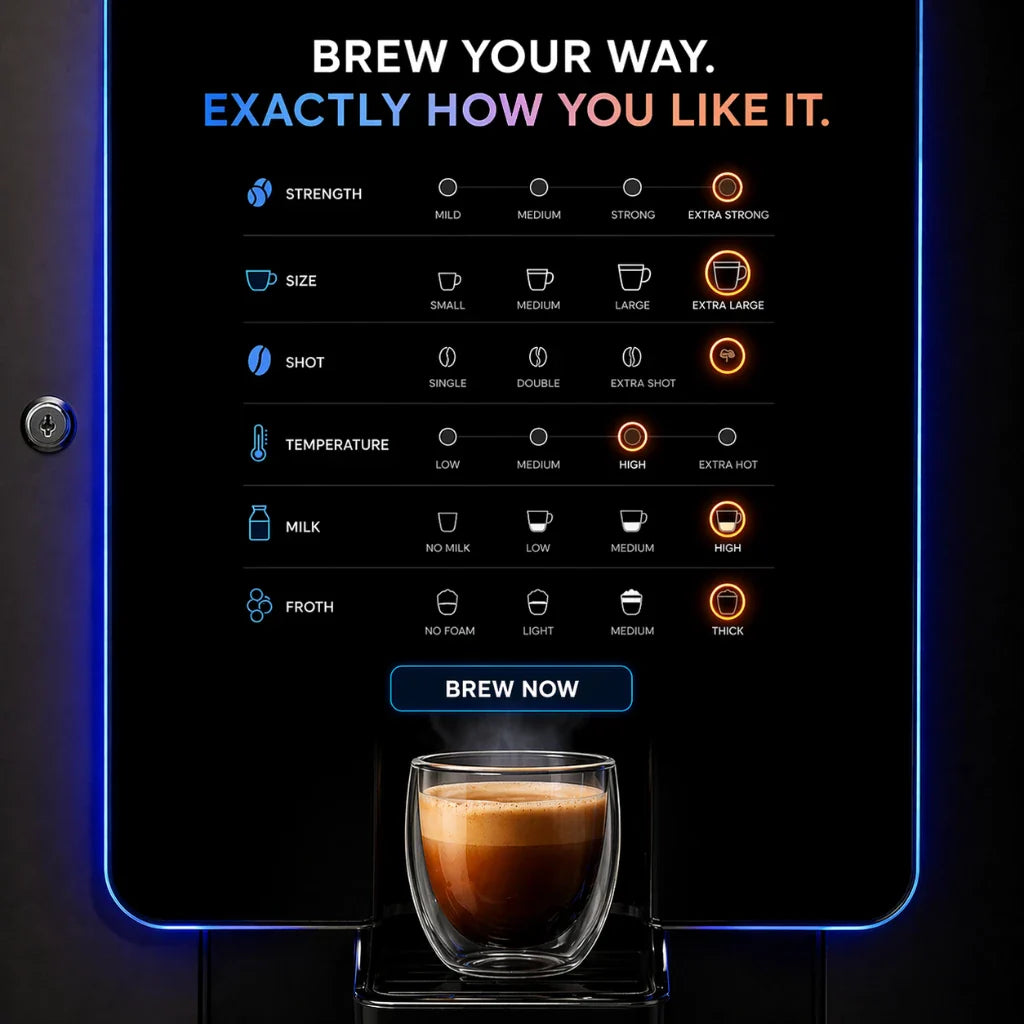
Employees learning how to use a coffee machine in office can adjust touch-screen parameters to reduce milk volume or select extra espresso shots to lower the milk-to-coffee ratio.
Uncalibrated ingredient hoppers can over-dispense milk powder or liquid concentrate by 15% to 30% per cycle. Mechanical wear on auger motors increases powder drop weights over time, raising caloric content without visual changes to the beverage.
Following a consistent coffee vending machine cleaning and maintenance guide ensures ingredient augers rotate accurately and deliver exact nutrient portions.
Commercial coffee hardware relies on distinct brewing and milk-dispensing mechanics that directly influence cup nutritional profiles.
Bean-to-cup kiosks grind whole beans per order and steam liquid milk dynamically. These systems deliver authentic espresso and fresh dairy nutrition, but they require accurate fridge temperature management to maintain liquid milk consistency.
Single-serve pod systems utilize pre-packaged plastic capsules or condensed milk pods. Pod-based dairy elements often contain added stabilizers and sweeteners that elevate carbohydrate levels per fluid ounce compared to plain fresh milk.
Liquid milk units deliver superior flavor and traditional dairy fat ratios, whereas instant soluble machines use spray-dried milk powder. Soluble machines allow precise milligram-level ingredient control, making it easier to maintain fixed caloric limits per cup.
Businesses comparing equipment options can consult the ultimate guide to office coffee machines to weigh the nutritional benefits of fresh dairy against the low-maintenance perks of powder-based kiosks.
| System Architecture | Milk Source | Average 10 oz Latte Calories | Customization Range | Primary Calorie Driver |
| Fresh Milk Bean-to-Cup | Refrigerated Liquid | 140–180 kcal | High (Milk volume, Fat %) | Natural Fat & Lactose |
| Powdered Vending Kiosk | Soluble Dry Powder | 90–130 kcal | Medium (Auger speed) | Added Carbohydrates |
| Capsule / Pod Machine | Shelf-stable Pods | 110–160 kcal | Low (Fixed Pod Recipe) | Added Emulsifiers/Sugar |
| Manual Commercial Group | Fresh Liquid Dairy | 150–200 kcal | High (Barista Technique) | Milk Volume |
Offering low-calorie and customizable espresso beverages supports corporate health initiatives while improving daily employee satisfaction.
A mid-morning workplace latte provides essential micronutrients, including calcium, vitamin D, and potassium. An 8-ounce fresh dairy latte supplies roughly 8 grams of high-biological-value protein, which promotes satiety and stabilizes blood glucose levels compared to sugary soft drinks.
Allowing staff to select non-fat or plant-based milks helps employees manage daily caloric intake. Understanding how coffee machine helps in retaining employees underscores how high-quality, health-conscious office perks boost workplace morale.
Providing high-end coffee options encourages employees to stay on-site during break periods. Offering versatile beverage choices allows workers to meet specific nutritional goals without leaving the office.
Setting up a clear office coffee machine policy template helps establish guidelines for machine maintenance, ingredient choices, and eco-friendly cup use across departments.
Selecting commercial coffee equipment requires matching employee headcount with beverage output, milk formats, and physical placement constraints.

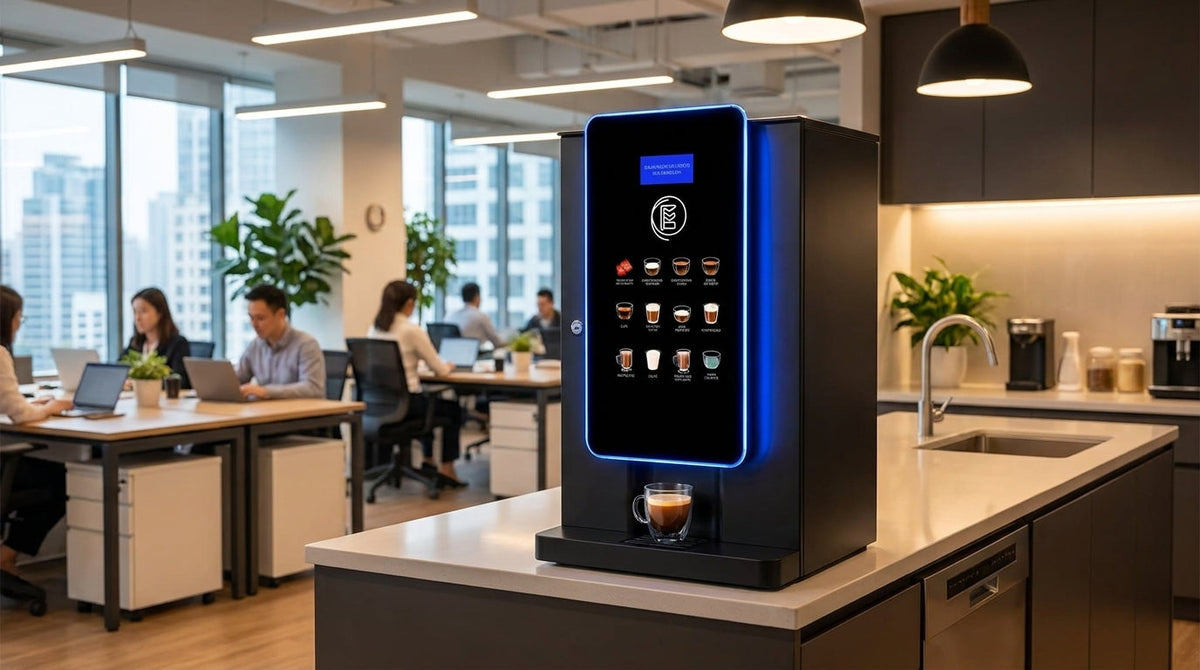
Small teams requiring low-profile equipment benefit from compact bean-to-cup units with integrated milk lines. These kiosks offer premium espresso and fresh foam without occupying excessive counter space.
The Premium Countertop Touch Screen Coffee Machine delivers customizable fresh-milk espresso drinks through a user-friendly touchscreen interface. Its precise liquid dosing allows users to select exact milk quantities to hit specific target calorie goals.
Medium-sized workplaces require higher water boiler capacity and larger ingredient hoppers to handle morning peak traffic without constant refills.
The Pro Coffee Vending Machine provides dual-hopper capacity for fresh beans and soluble powders. It allows facilities teams to offer both low-calorie skim milk powders and rich dairy foam bases from a single unit.
Large corporate hubs, hospital breakrooms, and multi-floor facilities require high-capacity, heavy-duty vending units capable of continuous daily output.
The CorePro Coffee Vending Machine handles high-volume continuous output with minimal intervention. Its high-precision augers maintain exact ingredient portioning across thousands of dispense cycles, ensuring consistent calorie levels in every cup.
Offices expanding their breakroom services can also review specialized options like an Iced Coffee Vending Machine for cold espresso drinks or a Coffee & Snack Vending Machine for integrated food and beverage service. Explore the full catalog of commercial units at the Coffee Vending Machines Collection.
Pros:
Portion Consistency: Automated volumetric pumps deliver exact liquid volumes, maintaining predictable calorie counts per serving.
Menu Diversity: Touchscreen displays allow employees to choose skim, whole, or sugar-free options with a single tap.
Speed: Commercial units grind, tamp, and brew complete milk drinks in under 45 seconds, eliminating long coffee shop lines.
Cons:
Sanitation Overhead: Fresh-milk lines require daily automated flushing and weekly chemical disassembly to prevent bacteria buildup.
Calibration Drift: Soluble powder augers require routine re-weighing to prevent ingredient over-dispensing.
If you are interested in started your own Coffee Vending Business then our detailed resources on How To Start Coffee Vending Business will definitely help you!
A standard 8-ounce office machine latte made with whole milk contains approximately 120 calories. Choosing skim milk lowers the total to around 70 calories per cup.
Powdered milk blends contain 70 to 90 calories per serving, which is lower than fresh whole milk (149 kcal) but higher than skim milk (83 kcal). Some powders contain added corn syrup solids that increase total carbohydrate content.
Select an 8-ounce cup size, choose skim or almond milk options, skip flavored syrups, and opt for a double shot of espresso to lower the overall milk volume.
A standard 1-ounce (30 ml) pump of coffee syrup adds 80 to 100 calories from added sugars. Sugar-free syrups contribute zero calories.
Yes, an 8-ounce almond milk latte contains between 45 and 60 calories, making it one of the lowest-calorie machine-dispensed options available.
Many commercial machines use pre-sweetened milk powders or default recipes programmed with automated syrup dosing to boost beverage flavor profiles.
An office machine mocha combines espresso, milk, and chocolate powder, delivering 200 to 290 calories per 10-ounce serving.
Most fresh-milk commercial systems use 2% or whole milk by default to produce rich micro-foam unless facility managers configure a secondary skim line.
A 12-ounce whole milk machine latte contains roughly 15 grams of carbohydrates from natural milk lactose.
Ingredient hoppers and auger motors should be calibrated monthly using a gram scale to verify that ingredient drop weights match target recipe profiles.


Share:
It Is 2 A.M. and 6.4 Million Americans Are Awake, on the Clock, and Hungry
How to Report Illegal Food Vending - Step by Step Reporting Guide