


Laundry vending machine dimensions vary depending on configuration, with wall-mounted units typically measuring 24 to 42 inches high, 12 to 24 inches wide, and 4.5 to 9.5 inches deep, whereas freestanding floor models range from 68 to 72 inches high, 28 to 39 inches wide, and 30 to 38 inches deep. Selecting the correct machine size ensures smooth installation, ADA compliance, and optimal spatial efficiency in laundromats, apartment complexes, and hotel laundry facilities.
Standard Laundry Vending Machine Dimensions Overview
Laundry vending machines fall into three primary form factors: wall-mounted drop-shelf units, freestanding glass-front or spiral vendors, and countertop dispensing systems. Knowing the precise spatial footprint prevents costly location modifications and ensures uninterrupted foot traffic in commercial washing environments. Operators purchasing equipment through VMFS USA evaluate spatial footprints alongside electrical and mechanical requirements.
Wall-Mounted Laundry Vending Machines
Wall-mounted laundry vending machines measure between 24 and 42 inches in height, 12 to 24 inches in width, and 4.5 to 9.5 inches in depth, with total weights ranging from 40 to 110 pounds empty. These compact units utilize mechanical coin drops or electronic drop-shelf channels designed specifically for single-use detergent boxes, fabric softener sheets, and stain removers.
Because wall-mounted soap venders project less than 10 inches from vertical surfaces, they satisfy strict corridor passage rules while operating effectively in narrow laundromat aisles. The shallow cabinet depth minimizes interference with customer folding tables and seating zones.
Freestanding Full-Size Laundry Vending Machines
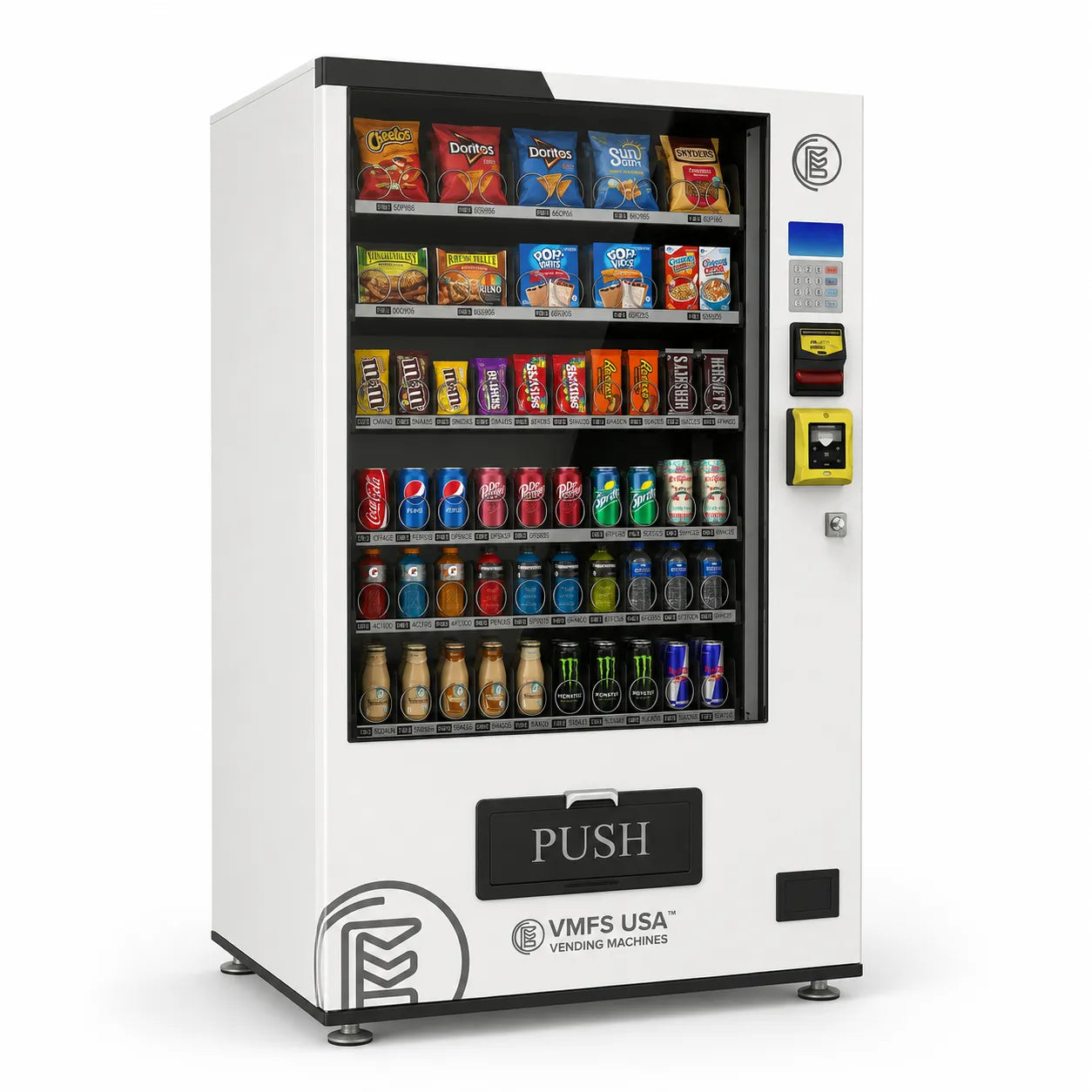
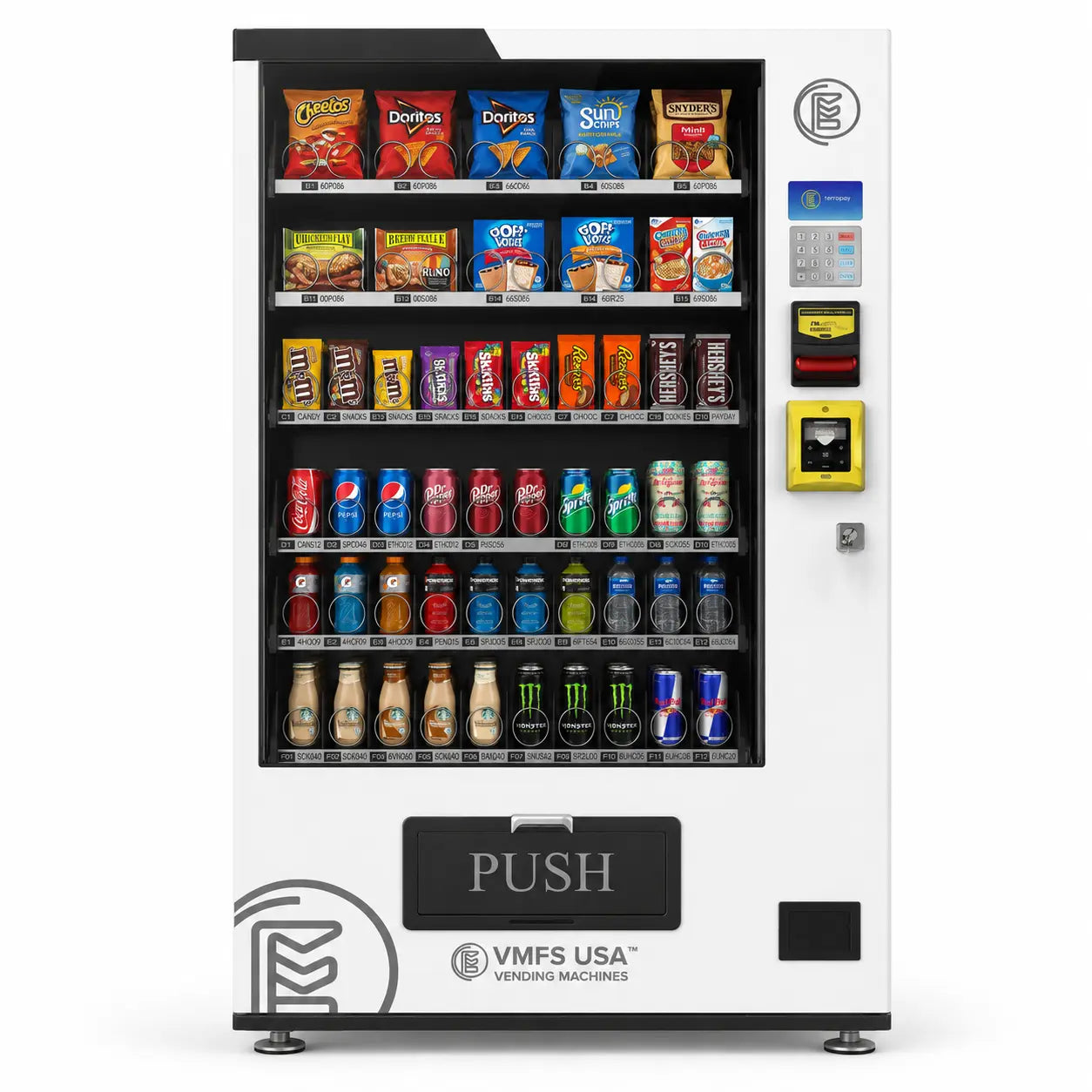
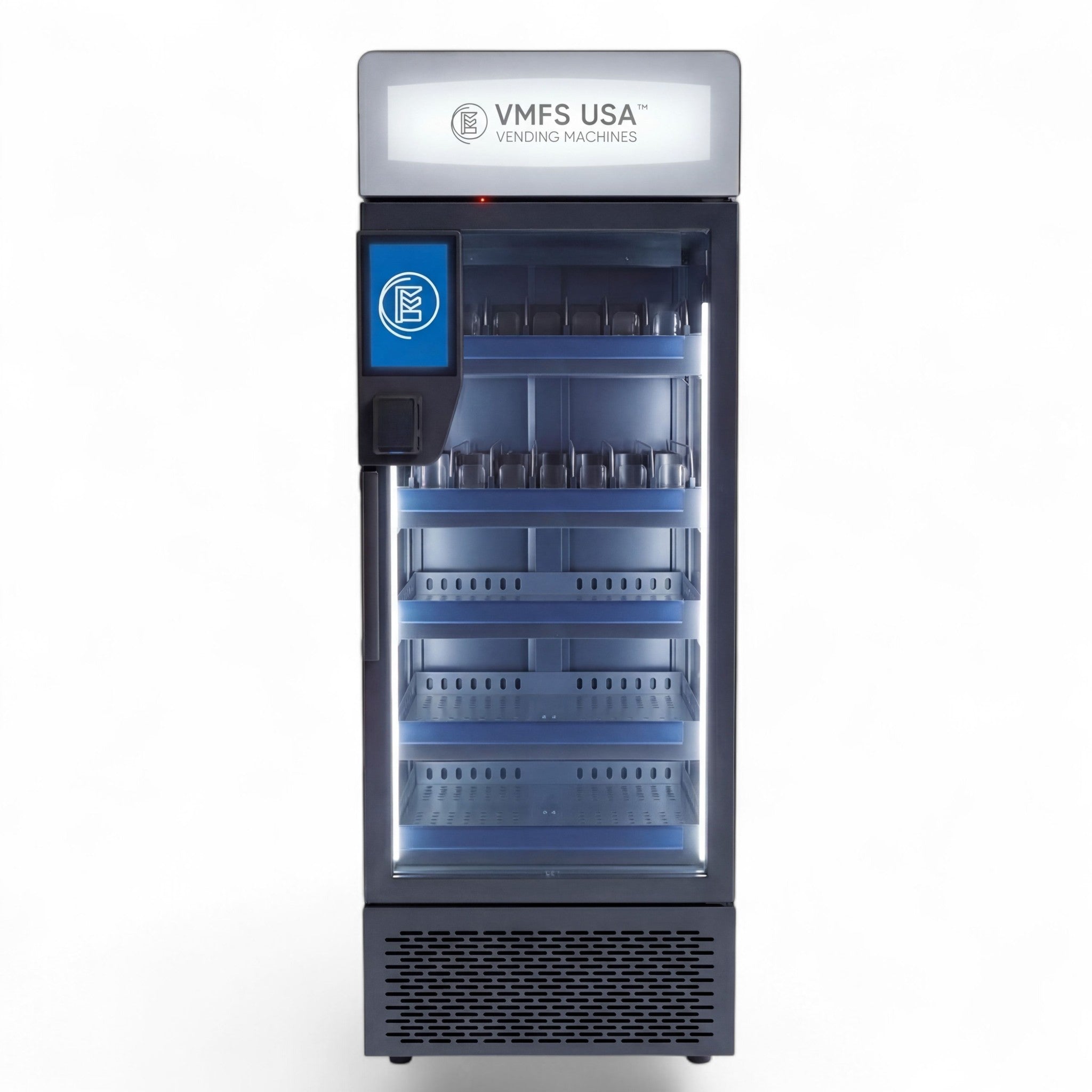
Freestanding laundry vending machines typically feature exterior dimensions of 68 to 72 inches in height, 28 to 39 inches in width, and 30 to 38 inches in depth, weighing between 450 and 850 pounds. These heavy-duty steel units utilize glass fronts or motor-driven coil trays capable of dispensing large liquid detergent bottles, bleach containers, mesh washing bags, and bulk laundry supplies.
Freestanding units demand a dedicated floor footprint of roughly 6 to 10 square feet, plus additional front clearance for door opening during restocking cycles. Reviewing different types of vending machines helps clarify whether a large floor unit or a compact wall dispenser aligns better with available site square footage.
Countertop and Tabletop Soap Dispensers
Countertop laundry vending machines feature compact dimensions averaging 20 to 30 inches in height, 15 to 22 inches in width, and 15 to 20 inches in depth, with empty weights between 35 and 75 pounds. These units rest directly on sturdy folding counters or dedicated mounting stands in residential building laundry quarters.
Tabletop units provide a middle-ground solution for medium-volume locations where wall mounting is prohibited by landlord policies and floor space cannot accommodate a 700-pound machine. Their compact depth allows integration onto standard 24-inch commercial countertops.
Dimensional Comparison Matrix by Machine Category
Selecting the correct laundry vendor requires comparing physical dimensions, weight, capacity, and power requirements across equipment classes.

| Machine Category | Height (in / cm) | Width (in / cm) | Depth (in / cm) | Weight (lbs / kg) | Capacity Range | Recommended Footprint |
| 2-Column Wall Mount | 24–28 in / 61–71 cm | 12.5–15 in / 32–38 cm | 4.5–6 in / 11–15 cm | 40–55 lbs / 18–25 kg | 24–48 items | 1.5 sq ft (wall space) |
| 4-Column Wall Mount | 28–32 in / 71–81 cm | 18–21 in / 46–53 cm | 5.5–8 in / 14–20 cm | 65–85 lbs / 29–39 kg | 48–96 items | 2.5 sq ft (wall space) |
| 8-Column Wall Mount | 36–42 in / 91–107 cm | 22–26 in / 56–66 cm | 8–9.5 in / 20–24 cm | 95–125 lbs / 43–57 kg | 96–192 items | 4.0 sq ft (wall space) |
| Countertop / Tabletop | 20–30 in / 51–76 cm | 15–22 in / 38–56 cm | 15–20 in / 38–51 cm | 35–75 lbs / 16–34 kg | 30–70 items | 3.0 sq ft (tabletop) |
| Narrow Freestanding | 68–72 in / 172–183 cm | 28–33 in / 71–84 cm | 30–34 in / 76–86 cm | 450–600 lbs / 204–272 kg | 150–300 items | 7.0 sq ft (floor space) |
| Wide Freestanding | 72 in / 183 cm | 35–39 in / 89–99 cm | 35–38 in / 89–96 cm | 650–850 lbs / 295–385 kg | 300–500 items | 10.3 sq ft (floor space) |
ADA Compliance and Installation Clearance Standards
Americans with Disabilities Act (ADA) compliance mandates that all operational controls, coin slots, card readers, and delivery bins on laundry vending machines must sit between 15 inches minimum and 48 inches maximum from the finished floor. Following proper height placement prevents legal penalties and guarantees equal access for all facility visitors.

ADA Reach Range and Outlet Height Limits
Under 2010 ADA Standards for Accessible Design Section 308, forward and side reach limits dictate that no customer interaction point may exceed 48 inches above the ground. For wall-mounted laundry dispensers, installers must position the cabinet base high enough so the lowest delivery tray remains above 15 inches, while mounting the highest coin slot or payment terminal below 48 inches.
Unobstructed side reach allows a maximum height of 48 inches and a minimum height of 15 inches. If a customer must reach over an obstruction (such as a 20-inch folding shelf), the maximum reach height drops to 44 inches. Ensure initial vending machine setup incorporates precise measuring tools before driving wall fasteners into studs.
Doorway Entry and Transport Clearance
Commercial doorways present a standard clear opening width of 32 to 36 inches, requiring operators to verify that machine depth or width does not exceed 31 inches during transport. Freestanding glass-front laundry machines measuring 35 to 38 inches deep require operators to remove the front delivery door, coin bezel, or rear harness extensions before navigating through standard commercial entries.
Operational Insight: Always measure entryways, hallway turn radii, elevator cab depth, and door frame lip heights prior to delivery. A machine measuring 35 inches wide cannot clear a standard 32-inch commercial frame without disassembly.
Operators sourcing equipment explore available inventory among ready to ship models to verify exact exterior frame dimensions before finalizing freight delivery instructions.
Wall Anchoring and Structural Load Capacities
Wall-mounted laundry soap dispensers weighing up to 125 pounds fully loaded require secure mounting directly into wood or heavy-gauge metal wall studs using 3/8-inch lag bolts. Mounting wall vendors exclusively into drywall or plaster using plastic anchors leads to structural failure, property destruction, and liability hazards.
-
Wood Stud Mounting: Minimum 2.5-inch steel lag screws anchored into center stud mass.
-
Metal Stud Mounting: Heavy-duty 1/4-inch toggle bolts rated for a minimum 200-pound pullout force per fastener.
-
Concrete / Masonry Mounting: 3/8-inch expansion anchors or concrete screws drilled 2.5 inches deep.
-
Clearance Behind Wall: Ensure 2 inches of hollow depth behind drywall when deploying spring-loaded toggle anchors.

Spatial Planning and Location Layout Engineering
Integrating laundry vending machines into high-density washing environments demands meticulous layout calculations that preserve foot traffic flow. Positioning equipment along primary entry or exit walkways maximizes impulse sales of detergent, bleach, and fabric softener.
Laundromat and Multi-Family Floor Plan Integration
Commercial laundromats require a minimum main aisle width of 36 inches, though 48 to 60 inches is preferred to allow two customers with laundry baskets to pass simultaneously. Wall-mounted vendors projecting 6 to 9 inches off vertical columns reduce effective aisle clearance by that exact dimension, requiring initial layout adjustments.
Placing dispensers near payment kiosks or seating centers significantly boosts product turnover. Reviewing the best vending locations provides broader context on optimizing foot traffic dynamics across commercial spaces. Operators searching for existing locations locally use vendingfinder.com to map active laundry sites in their territory.
Service Door Access and Inventory Restocking Clearance
Freestanding laundry vending machines require a minimum front opening clearance equal to the machine's full cabinet width plus 6 inches to allow the primary door to swing open 90 to 180 degrees. For a 36-inch wide glass-front vendor, operators must maintain at least 42 inches of clear floor space directly in front of the unit for restocking and coin collection.
For wall-mounted units, drop-down or side-swinging cabinet faces require 18 to 24 inches of clear front clearance during restocking. Learning how to choose a profitable vending location ensures spatial constraints do not impede daily route operations.
Comparative Analysis: Wall-Mounted vs. Freestanding Machines
Understanding the tradeoffs between wall-mounted soap dispensers and floor-standing multi-product vending machines simplifies equipment procurement based on location constraints.
+-----------------------------------------------------------------------+
|                         FORM FACTOR COMPARISON                        |
+------------------------------------+----------------------------------+
|        WALL-MOUNTED UNITS          |       FREESTANDING UNITS         |
+------------------------------------+----------------------------------+
| * Zero floor footprint             | * Requires 6 - 10 sq ft floor    |
| * Low unit cost ($400 - $1,500)    | * Higher investment ($3k - $8k)   |
| * Holds single-serve packets       | * Dispenses full-sized bottles   |
| * Simple mechanical coin drops     | * Advanced telemetry & cashless  |
| * Quick 5-minute wall installation | * Requires freight transport     |
+------------------------------------+----------------------------------+
Wall-Mounted Vending Machines
Pros:
-
Zero Floor Footprint: Mounts directly onto walls, columns, or structural dividers, preserving full floor area for washers.
-
Lower Capital Outlay: Entry-level units cost between $400 and $1,500, offering rapid payback periods.
-
Low Maintenance: Mechanical coin-drop mechanisms feature few moving parts, reducing mechanical failure rates.
-
Vandal Resistance: Heavy-gauge steel outer shells resist physical tampering in unattended residential laundry rooms.
Cons:
-
Limited Product Size: Restricts inventory to small, single-use boxes or powder pouches.
-
Lower Storage Capacity: Requires frequent restocking visits (holding only 24 to 120 items).
-
Basic Payment Systems: Most standard models accept only coins, requiring aftermarket retrofits for credit card processing.
Freestanding Glass-Front Machines
Pros:
-
Expanded Product Selection: Accommodates large liquid detergent jugs, fabric softeners, bleach, dryer sheets, and tote bags.
-
High Inventory Capacity: Holds 150 to 500+ items, reducing route restocking frequency.
-
Integrated Cashless Payment: Native support for credit cards, mobile wallets (Apple Pay/Google Pay), and telemetry tracking.
-
Higher Revenue per Transaction: Dispensing full-sized retail items drives average transaction values up from $1.50 to $12.00+.
Cons:
-
Large Floor Footprint: Occupies up to 10.3 square feet of floor space.
-
Higher Upfront Cost: Initial equipment investment ranges from $3,500 to $8,000+.
-
Substantial Mass: Weighs 450 to 850 pounds, requiring professional pallet jacks and lift-gate transport.
Operators evaluating specialized equipment options often compare these units against combo vending machines or explore custom configurations in specialty vending machines when building multi-product routes.
Business Formation, Legal Setup, and Site Agreements
Establishing a commercial laundry vending operation requires proper corporate structuring, formal location contracts, and appropriate risk management. Operating without formal legal protections exposes personal assets to business liabilities.
+-----------------------------------------------------------------+
|                   VENDING BUSINESS LAUNCH STEPS                 |
+-----------------------------------------------------------------+
|  1. Form LLC / Corporate Entity (Asset Protection)              |
|  2. Execute Formal Location Contract (Royalty & Space Rights)   |
|  3. Secure Equipment & Liability Insurance Coverage             |
|  4. Install Compliant Machine (ADA & Electrical Safety)         |
+-----------------------------------------------------------------+
Establishing a dedicated corporate entity isolates business liabilities from personal holdings. You can form an LLC for a vending machine business to ensure proper state registration, tax structuring, and personal asset protection before placing equipment on site.
Securing written permission from property managers or laundromat owners is equally critical. Utilizing a standardized vending machine contract template clarifies space allocation, electricity usage responsibilities, commission splits, and liability terms.
For facility owners who prefer to host equipment managed by third-party vendors:
Location Owner Opportunity: Property managers and laundromat owners can list your location on VPlaced to connect with verified vending operators who supply, install, stock, and service laundry equipment at zero cost to the property.
Prior to deploying machines, analyzing product demand helps select the most profitable vending machine products for your target audience. Understanding expected vending machine profit margin ratios ensures realistic financial forecasts.
Executing a routine vending machine maintenance routine prevents operational downtime, while applying proven vending machine security practices safeguards bill acceptors and coin hoppers against physical tampering. Reviewing whether are vending machines a good investment helps frame overall long-term portfolio growth. When expanding beyond indoor laundry rooms, operators review outdoor vending machines for weatherproof placement options.
Frequently Asked Questions
What are the standard dimensions of a wall-mounted laundry vending machine?
Wall-mounted laundry vending machines measure between 24 and 42 inches high, 12 to 24 inches wide, and 4.5 to 9.5 inches deep. Empty weights range from 40 to 110 pounds depending on cabinet steel gauge and internal column count.
What are the dimensions and weight of a freestanding laundry vending machine?
Freestanding laundry vending machines measure 68 to 72 inches high, 28 to 39 inches wide, and 30 to 38 inches deep. Fully assembled floor units weigh between 450 and 850 pounds empty.
How high should a laundry vending machine be mounted for ADA compliance?
ADA guidelines mandate that all payment slots, coin drops, selection buttons, and product delivery chutes sit between 15 inches minimum and 48 inches maximum off the finished floor. Wall-mounted cabinets are typically installed so the top control panel reaches 46 to 48 inches above the ground.
Will a commercial laundry vending machine fit through a standard 32-inch doorway?
Wall-mounted units and narrow freestanding machines under 31 inches deep easily pass through a standard 32-inch door frame. Wide glass-front vendors measuring 35 to 38 inches deep require removing the door frame, delivery chute, or machine door prior to transport.
How much floor space does a commercial laundry vending machine require?
Freestanding laundry vending machines occupy a physical floor footprint between 6 and 10.3 square feet. Installers must allow an additional 36 to 42 inches of front clearance for service door opening and customer access.
How much weight can a wall-mounted laundry soap dispenser hold?
Wall-mounted laundry soap vendors support 24 to 192 single-use box packages, adding 15 to 40 pounds of inventory weight to the cabinet. Secure anchoring into solid wood or steel wall studs using heavy-duty lag bolts or toggle anchors is required.
What electrical outlet access is required for a laundry vending machine?
Mechanical wall-mounted coin dispensers require no electrical power connections. Electronic glass-front or card-reader-equipped laundry vendors require a standard 115V AC, 60 Hz dedicated 15-amp grounded electrical outlet located within 6 feet of the machine base.
What is the difference between drop-shelf and glass-front laundry vendors?
Drop-shelf wall vendors use internal mechanical drop trays to dispense small single-use boxes of detergent or softener. Glass-front floor vendors use motorized spirals or conveyor belts to dispense larger liquid bottles, bleach jugs, and laundry bags.
Where can I buy commercial laundry vending machines?
Operators purchase commercial laundry equipment from specialized distributors like VMFS USA, equipment manufacturers, or commercial laundry supply vendors. Choosing established suppliers ensures access to replacement parts, technical support, and warranty coverage.
How do I find locations to place my laundry vending machines?
Target high-density multi-family apartment buildings, commercial laundromats, college dormitories, extended-stay hotels, and RV parks. Operators can map existing sites using vendingfinder.com or connect directly with location owners through online placement platforms.
Share:
How Laundry Vending Machine Work - Complete Process Explained