



Design the perfect vending solution for your location and customers.

Join the VMFS newsletter and step into a thriving network dedicated to collective success.
One signup. Endless possibilities.
You put your first vape vending machine in a bar. The owner asks you one question before signing anything: how does it stop a 19-year-old from buying a vape? You say it has built-in age verification. He asks how that actually works. You pause.
If you have been in that conversation and felt unprepared, this guide is for you. Age verification is not just a legal checkbox. It is the technology that determines where you can place a machine, how smooth the customer experience is, whether your compliance log holds up in an audit, and whether a location owner trusts you enough to say yes.
Here is every method, how it actually works, what it costs, where it fits, and which one most US operators are running right now.
The federal Tobacco 21 law requires every buyer of tobacco, vaping, and nicotine products to be 21 or older. With a staffed counter, the cashier handles the check. With an unattended age verification vending machine, the machine itself is legally responsible for that check.
An operator selling from an unverified machine in a venue that is not exclusively 21-plus is not just taking a business risk. In most US states, they are operating in direct violation of nicotine vending regulations. Fines, permit revocation, and machine removal are all documented outcomes for operators who skipped this step.
Beyond compliance, a proper vending machine with age verification changes what you can place and where. Most states restrict unverified nicotine machines to on-premise liquor establishments or other exclusively 21-plus venues. A machine with documented ID verification opens up offices, gyms, hotels, and a much wider location network. The technology is not a cost. It is the thing that unlocks your route.
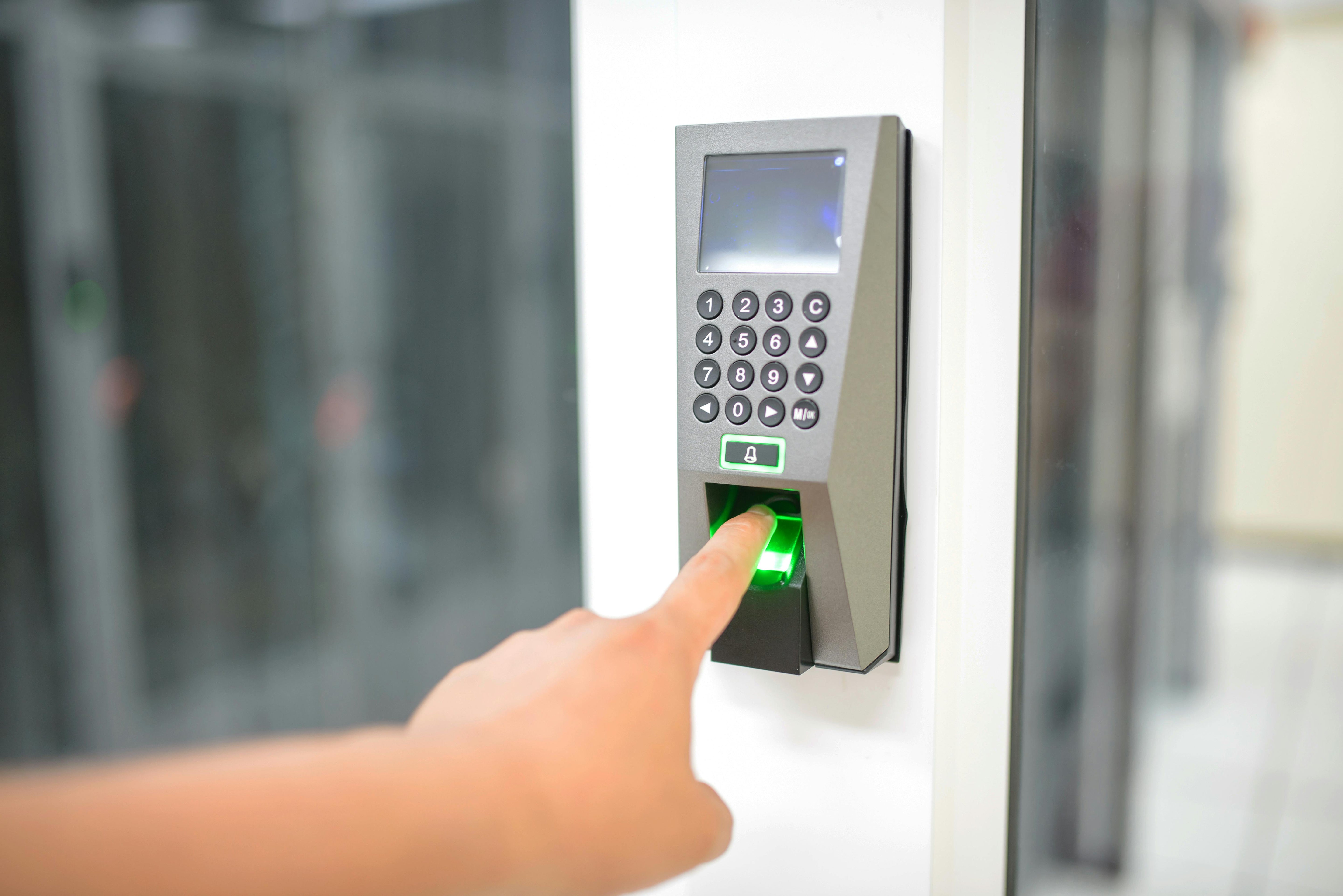
This is the most widely used method among US vending operators right now. The customer holds their driver's license or state ID up to a reader. The scanner reads the barcode on the back or the magnetic stripe, extracts the date of birth, calculates the buyer's current age, and unlocks the machine only if they pass.
The process takes under 10 seconds. No app download. No selfie. No friction beyond presenting an ID you already have in your wallet. For a bar at 11pm where customers want a vape quickly and get frustrated at anything that feels like a bureaucratic delay, this is the method that works without losing sales.
The limitation is that the scanner reads data on the ID but does not confirm the person holding it is the person on the ID. A 17-year-old using an older sibling's license passes the scan. Most operators accept this tradeoff because it mirrors the legal standard applied to bartenders, who are not expected to perform biometric analysis, only to check that an ID was presented and appeared valid.
| Factor | ID Scanner |
|---|---|
| Verification time | Under 10 seconds |
| Cost to operator | $0 per transaction (hardware cost only, typically $200 to $500 as add-on module) |
| Can detect fake IDs | Partially. Reads encoded data but does not check document holograms or physical security features |
| Data stored | Date of birth and verification timestamp only. No name or ID number in compliant systems |
| Best for | Bars, nightclubs, convenience stores, any high-traffic location where speed matters |
| Regulatory acceptance | Accepted in most US states as compliant age verification for nicotine vending |
The machine captures an image of the customer's face using a built-in camera. An AI algorithm analyzes facial features, primarily bone structure and skin texture, to estimate age. Some systems run this estimate only. More advanced versions cross-reference the facial scan against the ID presented, confirming the person holding the ID matches the photo on it.
In September 2025, a smart vending machine at an Austin shop made industry news for using combined facial recognition and ID scanning to verify buyers of consumable hemp products. The operator confirmed the system performed a facial match only and did not upload images to any database, which addressed the main privacy concern location owners raise when they hear "facial recognition."
Facial recognition without ID pairing is still considered insufficient by most US state regulators for nicotine vending because age estimation from a face has documented error rates, particularly for buyers aged 18 to 25, exactly the group you most need to screen accurately. Most serious operators use facial recognition as a secondary layer paired with ID scanning, not as a standalone method.
| Factor | Facial Recognition |
|---|---|
| Verification time | 5 to 15 seconds |
| Cost to operator | Higher hardware cost. Some systems charge per verification transaction. |
| Can detect fake IDs | Yes, when paired with ID scan. Confirms person matches ID photo. |
| Data stored | Privacy-sensitive. Compliant systems store only hashed data, no raw images. |
| Best for | Cannabis dispensaries, high-value product machines, jurisdictions with stricter compliance requirements |
| Regulatory acceptance | Accepted when paired with document scan. Standalone facial age estimation not universally accepted. |
This is the gold standard for compliance-sensitive environments. The customer presents their government-issued ID and looks into the camera. The system scans the document, reads the encoded data, captures a live facial image, and compares the facial geometry against the ID photo. Both checks must pass before the machine unlocks.
CAV Solution's Age Verifier installs in under five minutes via four drilled holes and two MDB plugs. It uses AES-256 encryption, stores only hashed personally identifiable information, and is compatible with both classic MDB vending machines and smart vending units via API. The entire verification process, including ID scan and facial match, takes under 60 seconds.
The tradeoff is friction. Customers who are in a hurry, slightly intoxicated, or unfamiliar with the process may abandon the transaction. For a bar at midnight this is a real conversion cost. For a casino, a regulated cannabis dispensary, or any venue where compliance failure carries significant legal consequences, the friction is worth it.
| Factor | Biometric ID Pairing |
|---|---|
| Verification time | 30 to 60 seconds |
| Cost to operator | Higher upfront hardware cost plus per-transaction API fees (around $1 per verification in some systems) |
| Can detect fake IDs | Yes. Facial match makes borrowed or fake IDs significantly harder to pass |
| Data stored | Hashed data only in compliant systems. CCPA and GDPR compliant configurations available |
| Best for | Cannabis vending, high-value restricted products, markets with strict regulatory scrutiny |
| Regulatory acceptance | Highest compliance confidence. Produces strongest audit trail. |
The customer downloads an app or scans a QR code on the machine screen. They verify their age once through the app using their ID and a selfie. On subsequent visits, they authenticate through the app using face ID or a PIN. The machine links the transaction to the verified account and unlocks.
The appeal to operators is that after the first verification, repeat buyers move through faster than any other method. A regular customer who uses the machine three times a week never has to present their ID again. The app stores the verified age and every future transaction is instant.
The practical problem is the first visit. Asking a customer to download an app to buy a vape is a significant barrier, particularly for impulse purchases in nightlife environments. Some operators report meaningful drop-off at the app download step, especially with older customers who are less comfortable with unfamiliar apps. Mobile verification works best in locations with repeat, habitual buyers who will go through the onboarding friction once.
| Factor | Mobile App and QR Code |
|---|---|
| Verification time | First visit: 2 to 5 minutes for app setup. Repeat visits: under 5 seconds |
| Cost to operator | Depends on platform. Some charge per verified user, others charge monthly. |
| Can detect fake IDs | Yes, during initial onboarding with document and facial verification |
| Data stored | Age verification status stored in app. Operator does not hold raw ID data. |
| Best for | Office locations, gyms, campus settings with repeat daily buyers |
| Regulatory acceptance | Accepted in most jurisdictions. App-based verification is increasingly recognized as compliant. |
The buyer's age is verified during the payment process itself rather than through a separate step. The payment card or digital wallet carries verified age data from the card issuer, which is transmitted to the machine during the transaction. If the age threshold is not met, the payment is declined before the machine even processes the sale.
This method is more common in Europe, where the German girocard system has been used for vending machine age verification since the early 2000s. In the US it is less developed because most card issuers do not currently transmit age data at the point of sale. Apple Pay and Google Pay hold account holder data but age verification at the payment layer is not yet standard in US vending deployments.
The advantage when it works is zero additional friction. The customer taps to pay and the age check happens invisibly. No scanner, no camera, no app. For operators, no additional hardware. As US payment infrastructure evolves, this method is likely to become more relevant.
| Method | Speed | Fake ID Protection | Friction Level | Per-Transaction Cost | Best Location Type |
|---|---|---|---|---|---|
| ID Scanner | Fast | Moderate | Low | $0 (hardware only) | Bars, convenience stores, nightlife |
| Facial Recognition (standalone) | Medium | Low (age estimate only) | Low | Low to medium | Low-risk supplementary use only |
| Biometric ID Pairing | Slower | High | Medium | Medium (~$1 per transaction) | Cannabis, high-value products, strict markets |
| Mobile App / QR Code | Slow first visit, fast repeat | High (on first verification) | High first visit | Low after onboarding | Offices, gyms, campus placements |
| Payment-Linked | Instant | High (issuer-verified) | None | $0 additional | Not yet widely available in US vending |
This is the part of the age verification conversation that most operators skip entirely and then get caught off guard by.
When your id verification vending machine scans a customer's ID, it is collecting personal data. In California, that triggers CCPA obligations. In any state with a biometric privacy law, capturing facial images without disclosure creates legal exposure. Several states are actively expanding biometric data regulations.
The practical implications for operators:
The operators who proactively document their privacy practices are the ones who close location deals with corporate facilities managers and regulated venues. A bar owner does not ask about CCPA. A hospital facilities director often does.
When you are looking at age verification vending machine for sale options, the choice is between machines with verification built in from the factory or standard machines you retrofit with a modular add-on.
Machines sold with age verification integrated from the start are purpose-built for compliance. The software, hardware, and verification system are designed to work together. You do not have to configure compatibility or troubleshoot integration issues. If you are buying your first machine and plan to sell age-restricted products, starting with built-in verification is the cleaner path.
If you are already running machines and want to add verification capability without replacing hardware, snap-on ID scanner modules are available from several suppliers. VapeTM's modular scanner is marketed as a plug-and-play solution that attaches like a Lego block and integrates with their software without additional programming. CAV Solution's Age Verifier installs via four drilled holes and two MDB plugs in under five minutes.
The modular approach also gives operators flexibility that built-in systems do not always offer. VapeTM's system lets operators enable or disable verification per machine or even schedule it by time of day. If a venue has a bouncer checking IDs after 9pm on weekends, the operator can configure the machine to skip the scan during those hours, reducing friction for customers while maintaining compliance when it matters.
Every time an age verifying vending machine performs a verification, it should record that transaction in a cloud dashboard. If a regulator, a landlord, or a state authority questions your operation, your compliance log is your first line of defense.
A proper log includes:
It should not include the buyer's name, ID number, or any personally identifiable information beyond what is legally required in your jurisdiction.
Operators who cannot produce this log when asked are in a significantly weaker position than those who can pull up a timestamped record of every age check performed across their entire route. Most modern id verifying vending machine platforms generate this log automatically and make it accessible through a web dashboard or mobile app.
Most states limit unverified nicotine vending machines to on-premise liquor establishments where every person present is verified as 21-plus by the venue's own staff and licensing. Outside of those environments, a machine without an id identify vending machine verification system typically cannot legally operate.
State regulations are changing rapidly. As of 2025, the number of US states imposing excise taxes on vaping products and tightening machine-specific licensing requirements has expanded beyond the 32 states that had enacted these measures in mid-2024 according to VapeTM's compliance guide. Before you place any machine, confirm your state's current requirements. Understanding how much is a vending machine permit in your state is the starting point, but permit cost is only part of the compliance picture. Some states require the permit to be held per location. Others require the operator to demonstrate compliant age verification technology as a condition of permit issuance.
The compliance infrastructure is only half the equation. A machine with the best age verification technology in the world still generates zero revenue in the wrong location.
Once your verification system is in place, the next question is where to place the machine. Vending placement services connect operators with pre-qualified venues that have already been evaluated for foot traffic, audience match, and compliance environment. Location owners who have agreed to host machines through a placement service have already cleared the conversations about age verification, revenue share, and maintenance terms, which means you spend your time placing machines and restocking rather than convincing property managers from scratch.
An age verification vending machine is a vending unit equipped with technology that confirms a buyer meets the minimum age requirement before dispensing an age-restricted product. Methods include ID barcode scanning, facial recognition, biometric ID pairing, and mobile app verification. These machines are required by law in most US states for selling tobacco, nicotine, vaping products, alcohol, and cannabis through unattended automated retail.
An id verification vending machine prompts the customer to present a government-issued ID when they select an age-restricted product. The machine's scanner reads the barcode or magnetic stripe on the ID, extracts the encoded date of birth, calculates the buyer's current age, and only proceeds with the transaction if the threshold is met. The process typically takes under 10 seconds and requires no app or additional setup from the buyer.
ID scanning reads encoded data from a physical ID document and verifies age based on the date of birth. It is fast, low-friction, and widely accepted by US regulators. Facial recognition captures a live image of the buyer and estimates age using AI algorithms, or in more advanced systems, matches the face against the ID photo. Facial recognition adds an extra layer of identity confirmation but introduces more friction and raises privacy considerations that operators need to address through proper data handling practices.
In most US states, any machine selling nicotine, tobacco, or vaping products in a location that is not exclusively 21-plus requires an automated age verification system. Federal Tobacco 21 law sets the minimum age nationally at 21. State laws add additional requirements around machine placement, permits, and the specific verification methods that qualify as compliant. Requirements vary by state and are tightening as of 2025.
Compliant systems store only hashed data from the verification process, meaning a coded representation that cannot be reverse-engineered to reveal a buyer's identity. They do not store raw ID images, photographs, or personally identifiable information beyond what is required for the compliance log. Operators should confirm their specific machine and software platform's data handling practices and ensure compliance with CCPA in California and any applicable state biometric privacy laws where they operate.
For bars and nightlife venues, the ID barcode scanner is the most practical method. It is fast, requires no app download, works with every government-issued ID, and produces a compliance log of every verification performed. The low friction keeps conversion rates high in an environment where customers expect quick transactions. Biometric pairing is more thorough but the additional time and friction costs sales in high-volume nightlife settings where speed matters.



Share:
ZYN Vending Machines Are the New ATM: Why Smart Operators Are Adding Nicotine Pouches to Their Routes
Mini Vending Machines 2026: Best Locations and How to Get Started