

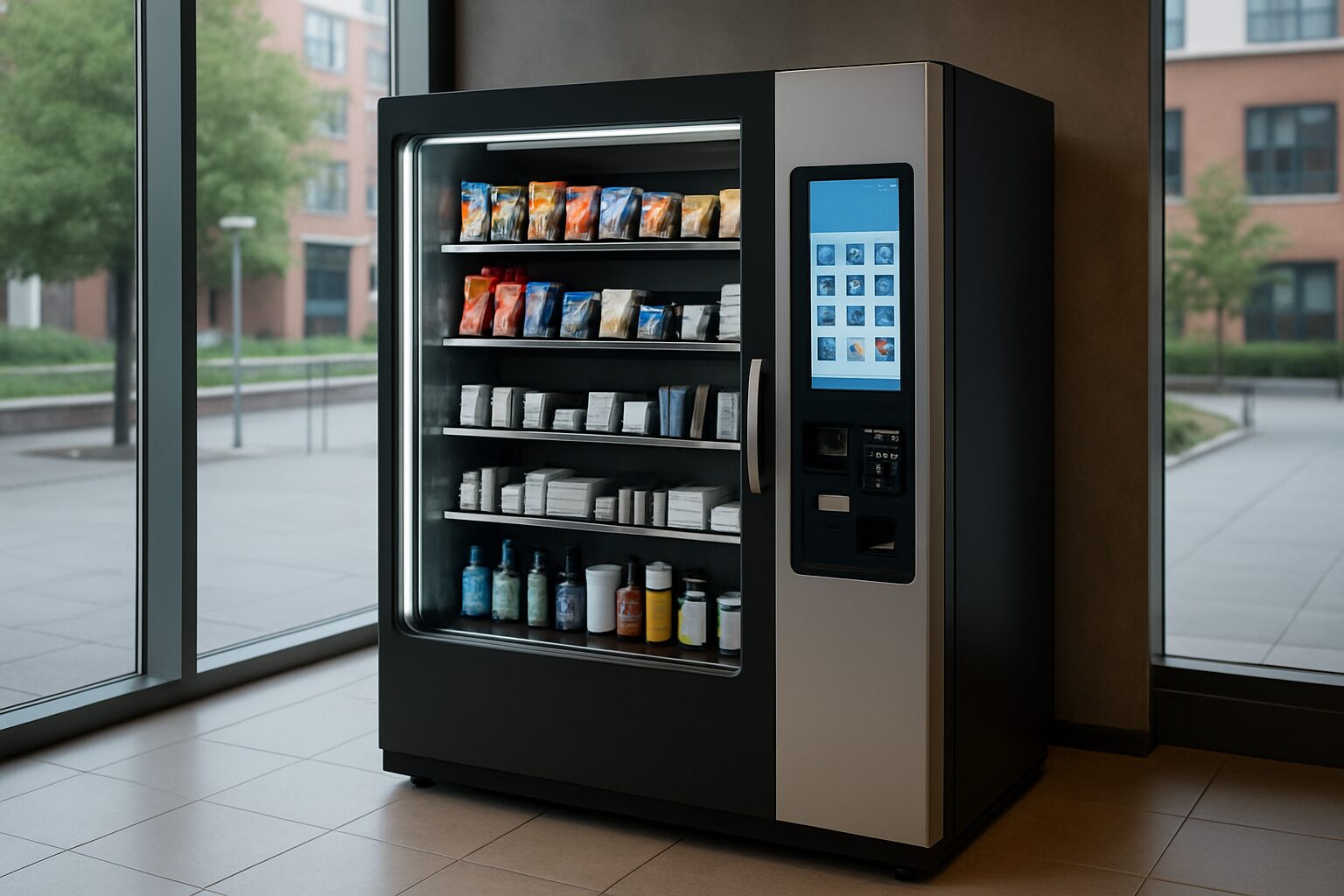


Design the perfect vending solution for your location and customers.

Join the VMFS newsletter and step into a thriving network dedicated to collective success.
One signup. Endless possibilities.
In today's fast-paced retail environment, businesses are turning to smarter, more efficient solutions to meet consumer expectations. One of the most impactful innovations is the vending kiosk—a modern, self-contained unit designed to deliver products without human staff.
These systems aren’t just upgrades to traditional machines. A vending kiosk combines touchscreens, smart inventory, and built-in compliance tools, making it a versatile and powerful addition to any retail strategy. From airports to tech campuses, this technology is quickly changing how and where people shop.
Driven by the rise of automated vending machines, and innovations in AI-powered retail, vending kiosks are helping business owners lower costs while offering customers 24/7 access to curated products.
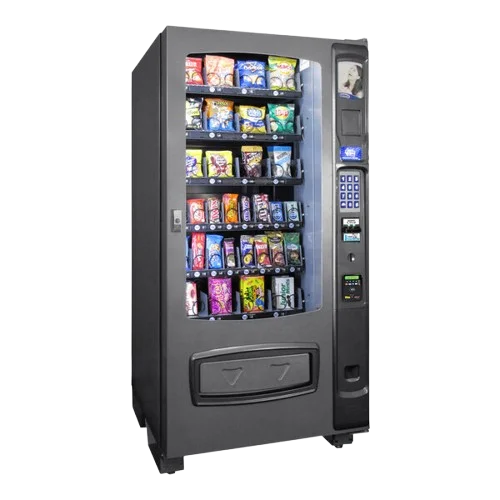
A vending kiosk is a modern self-service machine that enables customers to browse, pay, and receive products without staff assistance. While traditional vending machines were built primarily for snacks and drinks, today’s systems can sell electronics, cosmetics, personal care items, and more.
Unlike a typical vending unit, these kiosks feature:
You might see terms like kiosk vending machine or vending machine kiosk used interchangeably. While the naming varies, the concept is the same: a compact, automated retail system that improves convenience and expands what you can sell.
These systems are often built with intelligent features found in AI vending machines, such as facial recognition, user behavior analytics, and cloud-controlled restocking.
Retail is shifting toward contactless, data-driven experiences—and automated systems are leading the charge. The demand for instant, 24/7 product access has driven the popularity of both automated vending kiosks and remote retail hubs.
Businesses are investing in this technology for its ability to:
A well-placed automated retail kiosk can serve as a mini storefront, operating nonstop with minimal oversight. Meanwhile, customers appreciate the speed, safety, and simplicity of self-checkout and digital interfaces.
This model is especially effective in high-traffic areas like airports, hotels, and universities, where self service vending machines create fast, frictionless experiences without requiring a full retail buildout.
Behind the sleek design of a modern vending kiosk lies a robust combination of hardware and software. These systems are designed to operate independently, while still offering a full-service user experience.
Customers interact with a touchscreen that guides them through product selection, pricing, and payment. This is where touchscreen vending machines shine—providing clear images, instructional prompts, and multi-language support.
Each unit connects to a cloud dashboard, allowing operators to monitor inventory levels, sales data, and system health in real time. This not only streamlines operations but also helps reduce restocking trips and service issues.
Many advanced systems—especially AI vending machines—include ID verification tools for age-restricted products. Features like facial recognition, encrypted payment handling, and locked compartments make them suitable for regulated sales.
Thanks to their flexibility and small footprint, automated vending kiosks are being deployed across a wide range of environments.
A self service vending kiosk offers more than just convenience—it expands your reach without requiring a full retail footprint. These systems are being used to sell travel essentials, over-the-counter items, tech accessories, and even age-restricted accessories (when equipped with the proper verification tools).
With the ability to run 24/7 and adapt to specific markets, vending kiosks are becoming a go-to solution for forward-thinking operators.
From lower overhead to real-time data tracking, smart vending machines offer significant advantages for modern business owners.
A well-positioned vending kiosk can quickly pay for itself by creating a passive sales channel that runs continuously—even in spaces that would otherwise require retail staff or set hours.
At first glance, it’s easy to lump vending kiosks in with traditional machines. But the differences go far beyond just a larger screen or a new payment method. A vending kiosk machine is built not just to dispense products, but to deliver an experience—and that’s what sets it apart.
In short, a vending kiosk behaves more like a remote-controlled store than a static snack dispenser. And in today’s environment, that’s exactly what both consumers and operators are looking for.
That’s why businesses ready to scale turn to vending machine kiosk models that blend performance and adaptability.
When you’re vending more than just soda or candy, legal compliance becomes critical. Fortunately, modern kiosks are built with this in mind—especially when integrated with AI vending machines that support secure authentication tools.
This makes it possible to vend:
And unlike older machines, today's kiosks are modular. Whether you're selling razors, chargers, or even nicotine-free tobacco accessories, a self service vending machine can be configured with temperature controls, locked compartments, and adjustable tray widths—ensuring you meet product safety and storage standards.
Many operators choose our self service vending machine models for high-compliance environments like hotels, lounges, and university campuses.
The beauty of a vending kiosk is its flexibility. Whether you're a startup looking to enter the retail space without renting property or an enterprise expanding into unattended locations, kiosks scale with your ambition.
The ability to remotely manage these machines, update pricing in real time, and track performance metrics makes vending kiosks ideal for anyone looking to modernize their retail strategy and scale with precision.
Those looking to enter unattended retail often start with automated vending machines that offer modular layouts and real-time controls.
A vending kiosk is a self-service, touchscreen-based retail machine that lets customers browse, purchase, and receive products without staff involvement. It typically includes smart software, cashless payments, and backend data control.
Yes. With low overhead, no staffing requirements, and the ability to operate 24/7, vending kiosks offer strong ROI. Profits are especially high in high-traffic locations or when selling premium accessories or wellness products.
A traditional vending machine is usually mechanical, limited to snacks or drinks, and has fixed pricing and inventory. A vending kiosk is fully digital, supports flexible product lines, offers cloud-based monitoring, and can run promotions or age-verification systems.
This is one reason operators are shifting to automated vending kiosk setups that provide deeper control and scalability.
Yes, as long as the machine is equipped with age verification tools such as facial recognition or ID scanning. These systems are now standard in AI vending machines built for compliance-heavy industries.
Kiosks are used across industries: travel (airports), education (campuses), retail (malls, lobbies), fitness (gyms), and health/wellness (clinics). Their adaptability makes them useful in nearly any 21+ or general retail environment.
The modern consumer expects speed, autonomy, and reliability. And the modern operator needs lower costs, smarter insights, and scalable solutions. The vending kiosk sits right at that intersection.
It’s not just a machine—it’s an intelligent retail platform. Whether you're a brand looking to meet your customer where they are, or an entrepreneur seeking passive income streams, smart vending machines and kiosks offer the tools and tech to do it right.
The future of retail won’t wait behind a counter. It’s already active, 24/7, inside a vending kiosk near you.


Share:
Are Cigarette Rolling Machines Worth It? Profits, Demand, and Tips
Are Cigarette Rolling Machines Worth It? Profits, Demand, and Tips