



Design the perfect vending solution for your location and customers.

Sales, inventory and alerts for your whole route, from one machine to a fleet.
Answer a few questions about your location, products and budget and get a shortlist.
Estimate revenue, payback period and margin before you buy.
Sales, setup help, warranty and parts from the VMFS USA team.
Join the VMFS newsletter and step into a thriving network dedicated to collective success.
One signup. Endless possibilities.
The advice you usually get about starting a vending route assumes you already have five thousand dollars sitting somewhere. Buy a machine, find a spot for it, hope the spot works. That sequence is backwards, and it is also the reason a lot of first machines end up in a garage six months later.
There is a version of this business that starts with almost nothing out of pocket, and it works because it inverts the order of operations. You secure the location first. A signed placement is an asset, and once you hold one, every route to acquiring the machine opens up: revenue share terms, monthly financing, taking over a unit the site already has, or simply starting with a machine small enough that the numbers are trivial. What you cannot do is skip the location and hope.
This guide walks the whole sequence with real figures attached, so you can see exactly where money is genuinely required and where it is not. When you get to the point of choosing equipment, the full range of vending machines for sale covers everything from compact units to full combo cabinets.
Being honest about this matters, because posts that promise a genuinely zero dollar business are lying and you will find out the hard way in week three. Starting with no money means starting with no capital outlay on equipment. It does not mean starting with no expenses at all.
Here is the real floor. You will need a business registration, which runs anywhere from 50 to 500 USD depending on your state. An EIN from the IRS is free. General liability insurance with a million dollars of coverage typically costs 30 to 60 USD a month and most commercial locations will ask for a certificate before they let you through the door. A sales tax or seller's permit is usually 0 to 100 USD. And you need enough cash to fill the machine the first time, which is roughly 200 to 400 USD of product for a full size cabinet.
Realistic minimum to start: somewhere between 350 and 900 USD, almost none of it on the machine itself. The equipment is the part you can defer. The paperwork and the first fill are not.
The equipment is deferrable because a confirmed location changes what you can negotiate. Before you have a site, you are a stranger asking for terms. After you have one, you are an operator with revenue attached to a signature, and that is a completely different conversation whether you are talking to a site owner, a seller, or a lender. Vending machine financing through registered outside partners becomes far more accessible once there is a placement behind the application, and it converts a lump sum into a monthly number your first machine can cover on its own.
Research is the one part of this business that genuinely costs zero, and most beginners skip it anyway. What you are looking for is a specific combination: steady daily foot traffic, limited food options within a short walk, and people who are stuck in the building for a stretch of time.
Go and stand in the places you are considering. Count how many people pass through in twenty minutes at the busiest hour. Note whether there is a gas station or deli within two minutes on foot, because if there is, your machine is competing with a full shelf and losing. Watch whether people are waiting for something, because waiting is when vending sells. The industry rule of thumb is roughly one vend per day for every eight to ten people who regularly occupy a site, which lets you estimate revenue before you commit to anything. A fifty person office should produce five to six vends a day, which at 2.25 USD average is around 350 USD a month gross. That is your baseline, and snack vending machines are usually where a route like that starts because the product is shelf stable and forgiving of a slow first month.
You do not need a thirty page business plan. You need four numbers written down: expected monthly gross per machine, cost of goods, commission owed to the site, and everything else. If those four numbers do not leave a profit, no amount of hustle will fix it, and better to learn that on paper than after the machine is bolted to a wall.
Here is what a single machine at a moderate site actually looks like once you run it through. Cost of goods in vending typically sits between 40 and 55 percent of retail. Commission to the host site commonly runs 10 to 25 percent of gross sales, and plenty of smaller sites take zero because the machine is a perk rather than a revenue line for them. Cashless processing takes another 5 to 6 percent of card sales on top of a monthly reader fee. Running your own numbers before you commit is worth an afternoon, and the ROI calculator handles the arithmetic if you would rather not build a spreadsheet.
| Line | Amount | Note |
|---|---|---|
| Gross monthly sales | 350 USD | 50 person office, moderate traffic |
| Cost of goods at 48 percent | 168 USD | Buy at club stores, not retail |
| Site commission at 15 percent | 53 USD | Many small sites take nothing |
| Card reader fee and processing | 22 USD | Monthly fee plus a percentage of card sales |
| Net before your time and fuel | 107 USD | One machine, one site |
That number is why nobody gets rich on one machine and why the whole model depends on repetition. Ten machines at that level is a little over a thousand a month for maybe eight hours of route work a week. That is a genuinely good business. One machine is a side project.
This is where the actual unavoidable spending happens, and it is worth doing properly rather than cheaply. An LLC is the common choice because it separates your personal assets from the business, and most commercial sites will ask you to be a registered entity before they sign anything.
What varies enormously is the licensing layer, and it varies by state, by county, and by what you are selling. Snacks and packaged drinks are usually straightforward. Anything refrigerated, fresh, or age restricted brings health department involvement, additional permits, and in some cases inspection. Getting this wrong after a machine is placed is far more expensive than getting it right beforehand, and VAdviced covers vending compliance and licensing as a paid service in the network if you would rather not work through it alone.
This is the step that costs time instead of money, and it is the step that determines whether you have a business at all. A mediocre machine at an excellent site outperforms an excellent machine at a mediocre site every single time, and it is not close.
The pitch that works is not about the machine. It is about solving a problem the site already has. Employees leaving the building for twenty minutes to get a drink is a productivity problem. Customers waiting in a service lobby with nothing to do is a satisfaction problem. Frame your offer as free amenity, zero cost to them, fully maintained by you, and the conversation gets much easier. If prospecting is the part you would rather not do at all, vending machine placement is handled as a dedicated service within the VMFS network, matching operators to sites that have already been qualified.
Expect to hear no a lot. Eight to twelve approaches per signed placement is normal when you are starting with no track record. This is not a sign the model is broken. It is the cost of entry, and it drops sharply once you can point to an existing site as a reference.
Once you have a signed placement, you have options that did not exist before. Some sites already have a machine sitting unused because a previous operator walked away, and taking over service on that unit costs you nothing but a conversation. Some operators consolidating their routes will hand off placements. And revenue share arrangements, where you pay a percentage until the machine is covered, are a normal part of the industry.
The other option people miss is simply starting smaller. A compact unit needs a fraction of the capital, a fraction of the product inventory, and fits sites that could never take a full cabinet. Mini vending machines are frequently the smartest first purchase precisely because they lower every number in the equation at once, and they are far easier to relocate if the first site underperforms.
If you do buy, buy something you will not be repairing in month two, because a breakdown at your first placement can cost you the relationship before you have built any goodwill. Units in the in stock collection ship within 7 to 21 days rather than on a manufacturing lead time, which matters when a site has agreed to a placement and is waiting on you to deliver. Every machine carries a one year parts warranty.
Your product mix decides your margin more than almost anything else you control. Start narrow. Eight to twelve high velocity items outperform a machine crammed with thirty slow ones, because slow items tie up capital and expire.
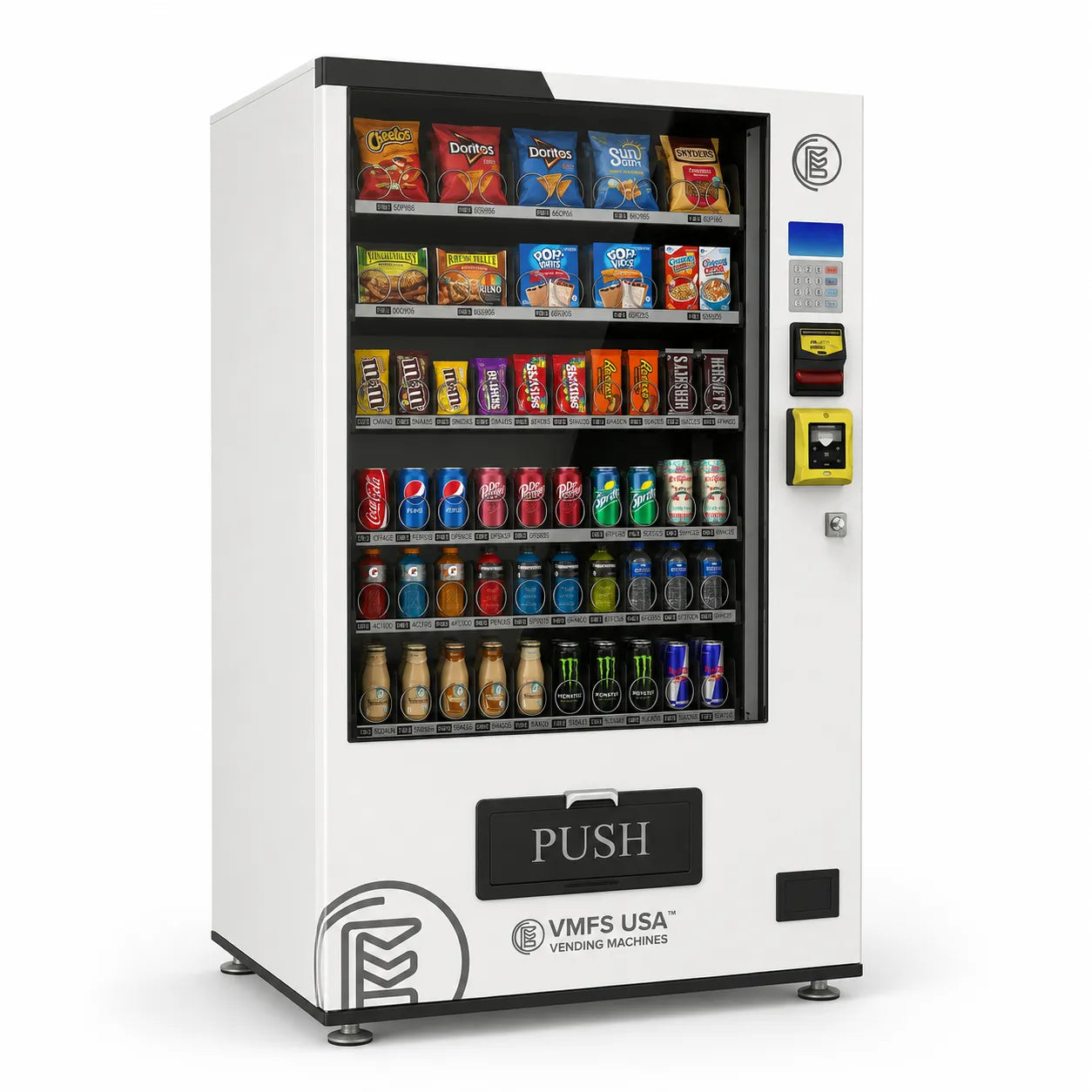
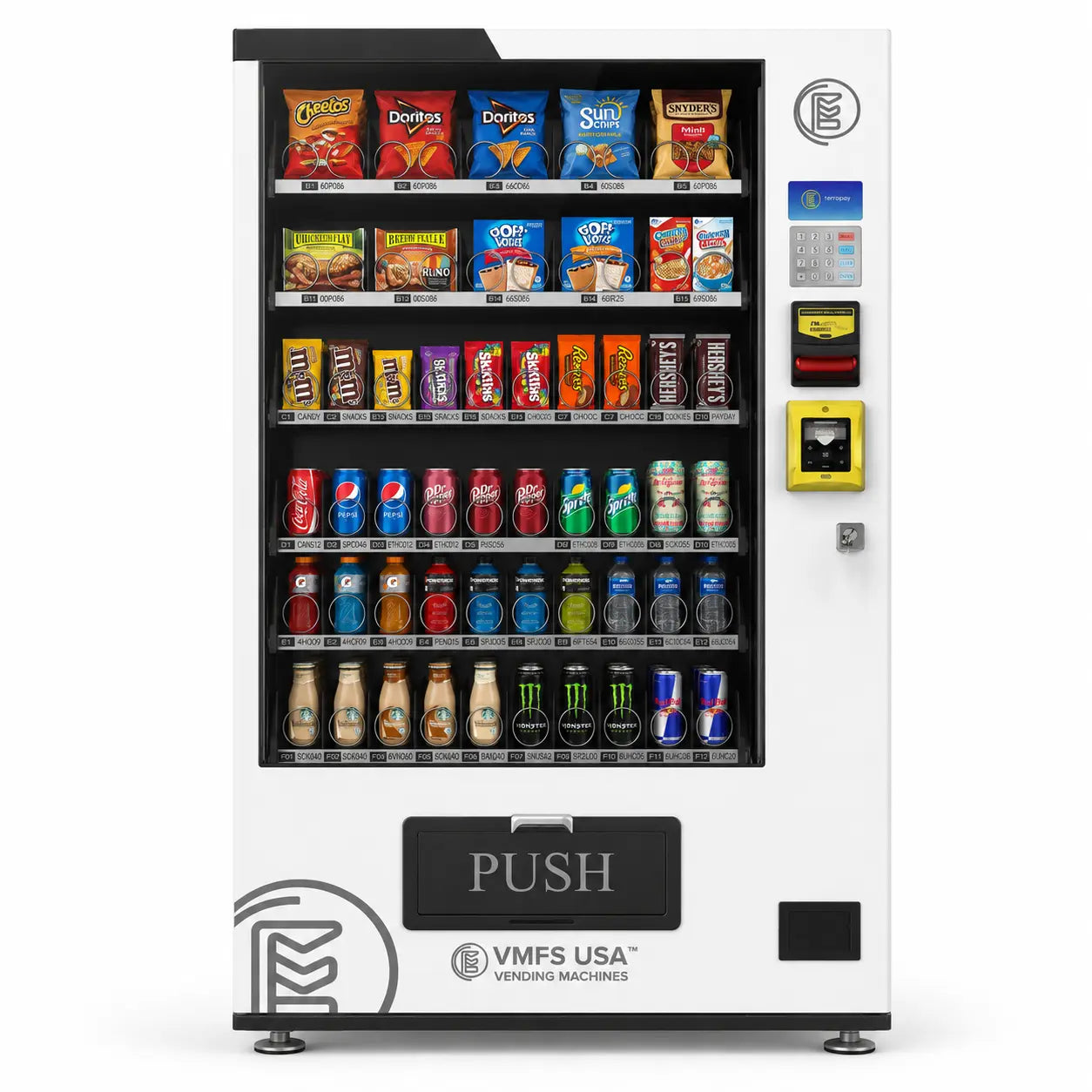
Buy at club stores rather than retail, because the difference between 48 percent cost of goods and 60 percent is most of your profit. Price in clean increments so people with cash can actually pay. And keep the mix responsive: whatever sells out first between visits deserves more slots, and whatever has not moved in a month should be gone. If your site wants both snacks and drinks in one footprint, combo vending machines cover both from a single cabinet and a single power outlet, which also makes the placement conversation simpler.
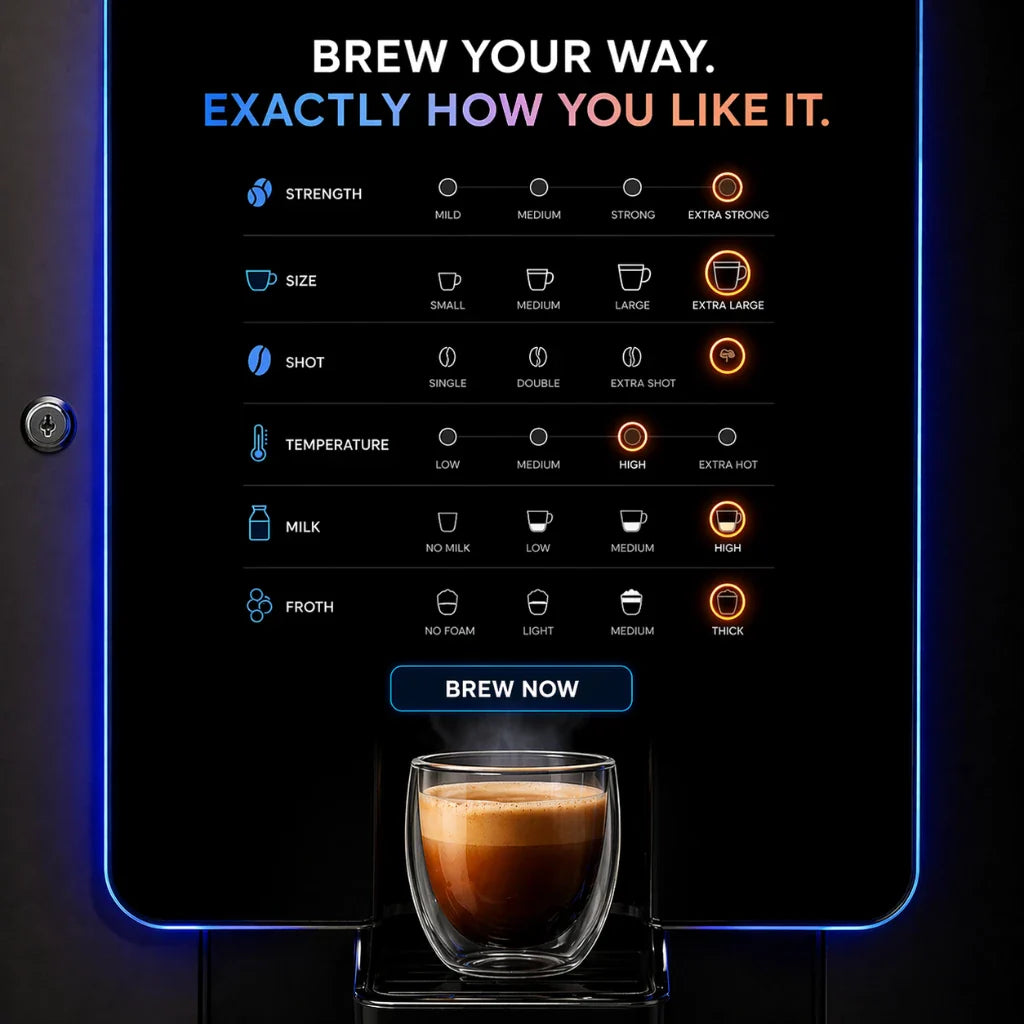
Payment acceptance is not optional any more. A cash only machine is invisible to a large share of the people walking past it, and adding card and contactless acceptance widens who can buy at all. On a modern build like the smart combo vending machine, payment hardware is configured at the point of order to suit the site rather than retrofitted afterward, which avoids the compatibility problems that come with bolting a reader onto older equipment.
Setup is free and it is where a lot of first placements quietly go wrong. Position the machine where people naturally pause and where it is visible from the entrance to the space. A machine around a corner earns a fraction of what the same machine earns in the line of sight.
Confirm the site has a dedicated outlet on a circuit that will not trip, particularly for refrigerated units, and check that the door has clearance to open fully. Refrigerated cabinets need airflow clearance at the back and sides, and a machine pushed flat against a wall runs its compressor constantly and fails early. If you are placing soda and beverage vending machines, let the unit reach temperature fully before you load it, then run test purchases from several selections before you leave.
Working capital is the constraint in a no money start, so the goal is to hold as little stock as possible while never running empty. Those pull against each other, and the resolution is data rather than instinct.
Visit on a fixed schedule at first, note what sold, and let the pattern emerge over four to six weeks. Once you know your velocity, you can bring exactly what the machine needs instead of loading the car and hoping. Machines that can report their own sales remove the guesswork entirely, and VMFS Cloud provides that remote visibility as a subscription at 7.99 USD a month. It is optional and machines run perfectly well without it, but the moment you have more than three or four placements, knowing what to bring before you leave the house saves more than it costs.
A vending machine does not need a marketing budget, but it does benefit from being noticed. The cheapest win is cleanliness: a machine with a clean glass front and neatly faced product outsells an identical machine that looks neglected, because people trust it more.
Beyond that, work with the site rather than around them. A single mention in the company newsletter or the building's internal chat introduces you to everyone at once for free. As you grow past a handful of machines, getting property managers to know your name before a competitor calls them becomes its own workstream, which is where VMarketed handles operator marketing and lead generation.
It is also worth studying what works before you invent anything. Use VendingFinder to locate well run machines near you, then go and look at them. Note how they are merchandised, what payment options are on the front, and where in the room they sit. The good ones are teaching you for free.
Maintenance is what separates a route that compounds from one that decays. Most of it costs nothing but attention, and doing it on every visit prevents almost every expensive failure.
Wipe the glass and the payment surfaces, check the door seal, listen to the compressor cycle, and test a few selections. Watch for the early signs: a motor that hesitates, a validator that rejects one note in ten, a cabinet that feels warmer than it should. Each of those is cheap to fix now and expensive to fix after it strands you. Keep a handful of common spares in the car, since vending machine parts and accessories for routine wear items cost very little compared to a call out.
Budget your time honestly. Plan on one to two hours per machine per week in the first months, including travel, restocking, and cash collection. That figure drops considerably once you know your velocity and can consolidate visits, but it never reaches zero.
The discipline that makes this model work is simple: the first machine funds the second, the second funds the third. Resist the urge to add three placements at once because a good month made you optimistic. Route quality collapses faster than most people expect when service slips.
Expand when your current sites run without drama for two consecutive months. At that point, look at whether the constraint is placements or capacity, because they need different answers. If your existing machines are running empty between visits, the problem is capacity and a dual combo vending machine at a proven site returns more than an unproven new location ever will. If your machines are half full when you arrive, the problem is placements and you need to go back to prospecting.
Further out, the equipment itself becomes a competitive lever rather than just a container. AI grab and go vending machines let customers open a door, take what they want, and get charged automatically, which suits high trust environments like corporate campuses and gyms and typically lifts basket size well above traditional vending because people take more than one item. That is a later stage move, but it is worth knowing the ceiling is considerably higher than a snack cabinet.
Can you really start a vending machine business with no money?
You can start with no capital tied up in equipment, which is the expensive part, but not with literally zero. Budget roughly 350 to 900 USD for business registration, general liability insurance, sales tax registration, and your first product fill. The machine itself can be deferred through financing, revenue share terms, taking over an unused unit at a site, or starting with a compact format. What you cannot defer is the paperwork and the inventory.
How much does one vending machine earn per month?
Gross revenue at a moderate site commonly lands between 250 and 600 USD a month, with a rough guide of one vend per day for every eight to ten people who regularly occupy the location. After cost of goods at 40 to 55 percent, site commission at 10 to 25 percent, and cashless processing fees, net is typically 80 to 180 USD per machine. The business works through repetition across many machines rather than through any single unit.
Do you have to pay the location a commission?
Often, but not always. Commission commonly runs 10 to 25 percent of gross sales at commercial sites. Smaller offices, workshops, and clinics frequently take nothing because the machine is an employee perk rather than a revenue line for them. Always agree the terms in writing before installation, including who pays for electricity and what happens if either side wants the machine removed.
How long does it take to get the first location?
Most operators approach eight to twelve sites before securing their first placement. That ratio improves substantially once you have one working site to reference, because the objection is almost always about reliability rather than about the machine. Going in person, being registered and insured, and leading with what the site gains rather than what you sell all shorten the process considerably.
Is it better to start with one big machine or a small one?
For a first placement with no track record, smaller is usually the better decision. A compact unit needs less capital, less inventory, and fits locations that could not accommodate a full cabinet. It is also far easier to relocate if the site underperforms, which protects you from the most expensive early mistake: a large machine stranded at a location that never produced.
The order of operations is the whole method. Research the site, win the placement, then solve the equipment. Reversing those steps is what turns a vending business into a machine in a garage, and it happens to more first time operators than anyone admits.
When you have a placement confirmed and you are ready to put equipment behind it, you can buy vending machines across snack, drink, combo, coffee, frozen, and specialty builds, with financing available through registered outside partners and in stock units shipping within 7 to 21 days. Start with the site, work backward to the machine, and let the first placement pay for the second.
If you would rather see the full picture before committing to a format, the vending machines lineup covers every category alongside placement, compliance, and marketing support across the VMFS network.
Share:
How Clinics & Hospital Vending Machines Support Patients and Staff
How Clinics & Hospital Vending Machines Support Patients and Staff