




Design the perfect vending solution for your location and customers.

Join the VMFS newsletter and step into a thriving network dedicated to collective success.
One signup. Endless possibilities.
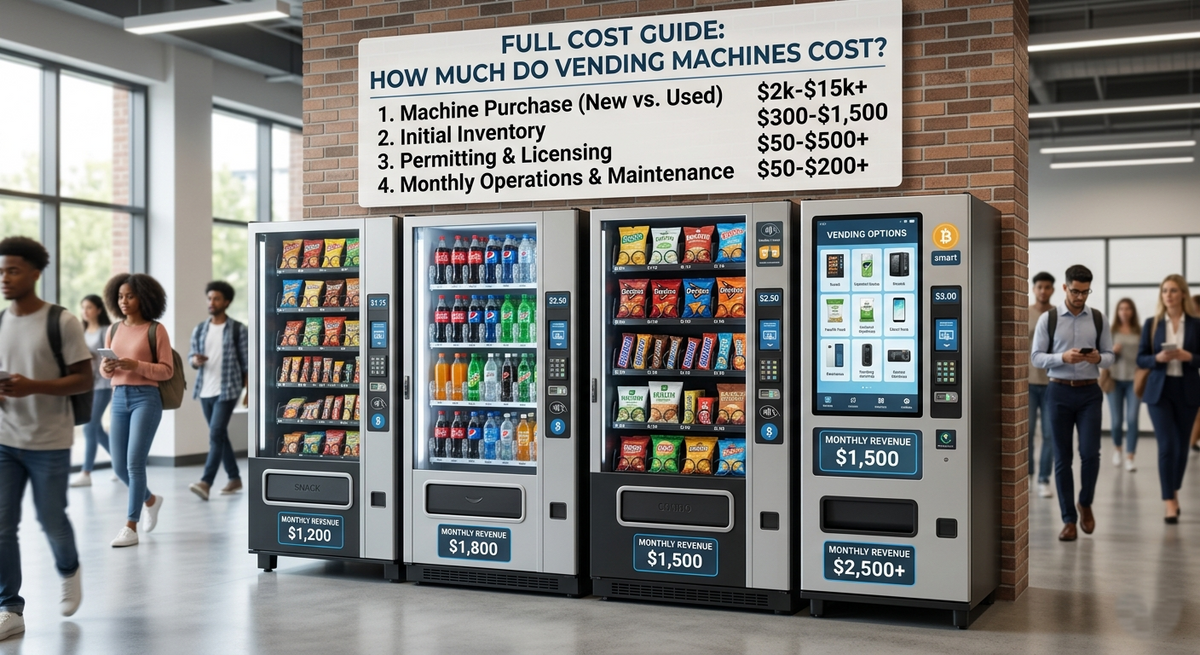
In 2026, a vending machine costs between $500 and $20,000 USD. Used machines cost $500–$5,000, refurbished units cost $2,000–$8,000, and new commercial machines range from $3,000 to $10,000+ depending on refrigeration, payment technology, and product capacity.
Most operators shopping for snack, drink, or combo machines should expect prices in the $3,000 to $10,000 range, depending on capacity, refrigeration, and payment technology. How much does a soda vending machine cost specifically? Soda and beverage units run $4,000 to $8,000 new because of refrigeration and insulation hardware.
The biggest factors that influence how much a vending machine cost in 2026 include whether the machine is new or used, the type of products it dispenses, its physical size and capacity, and the features it includes. Machines with refrigeration, cashless payment systems, touch screens, and remote monitoring cost more upfront than basic models. Understanding how much does vending machines cost across categories helps buyers set realistic budgets and choose a vending machine that fits both their location and revenue goals.

From VMFS USA
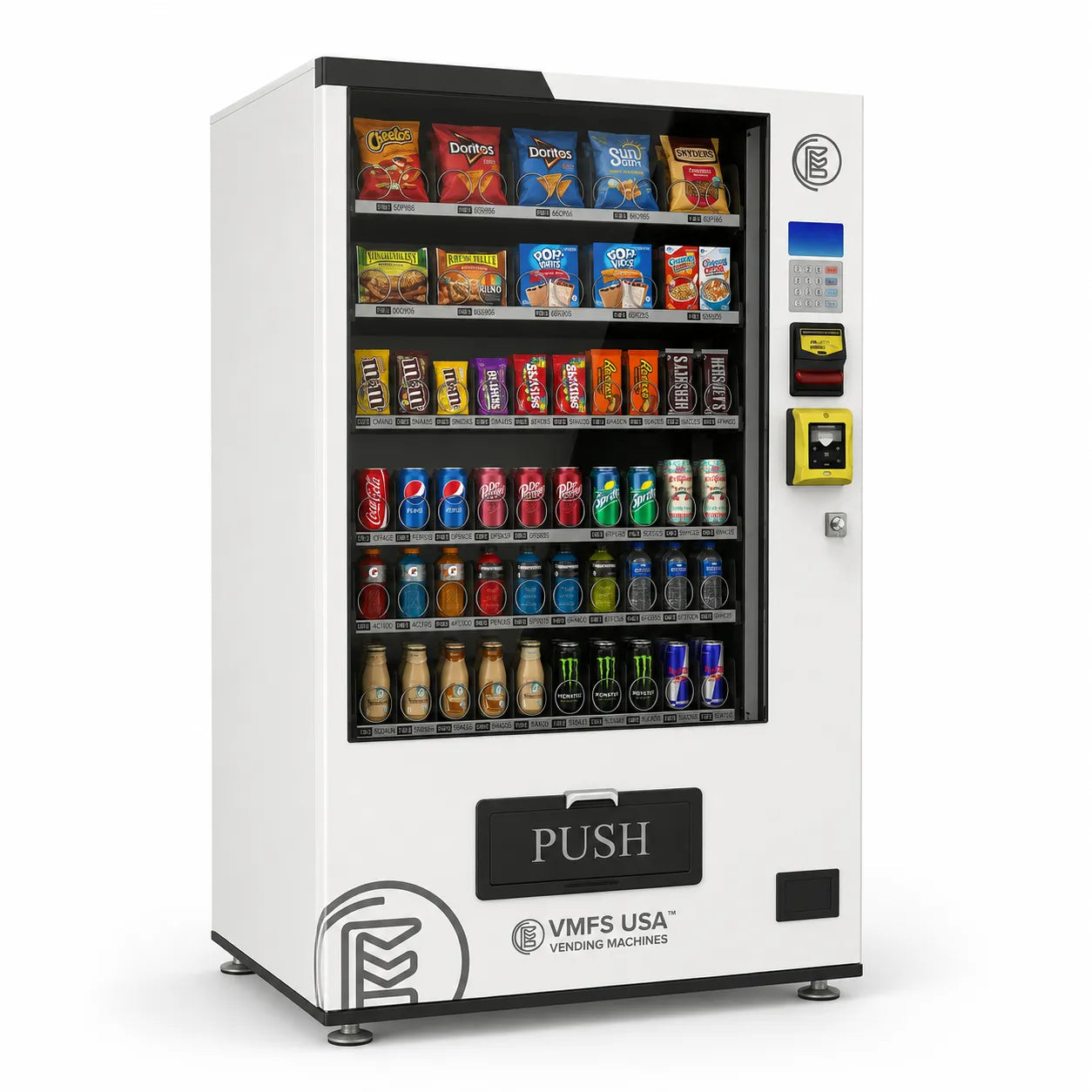
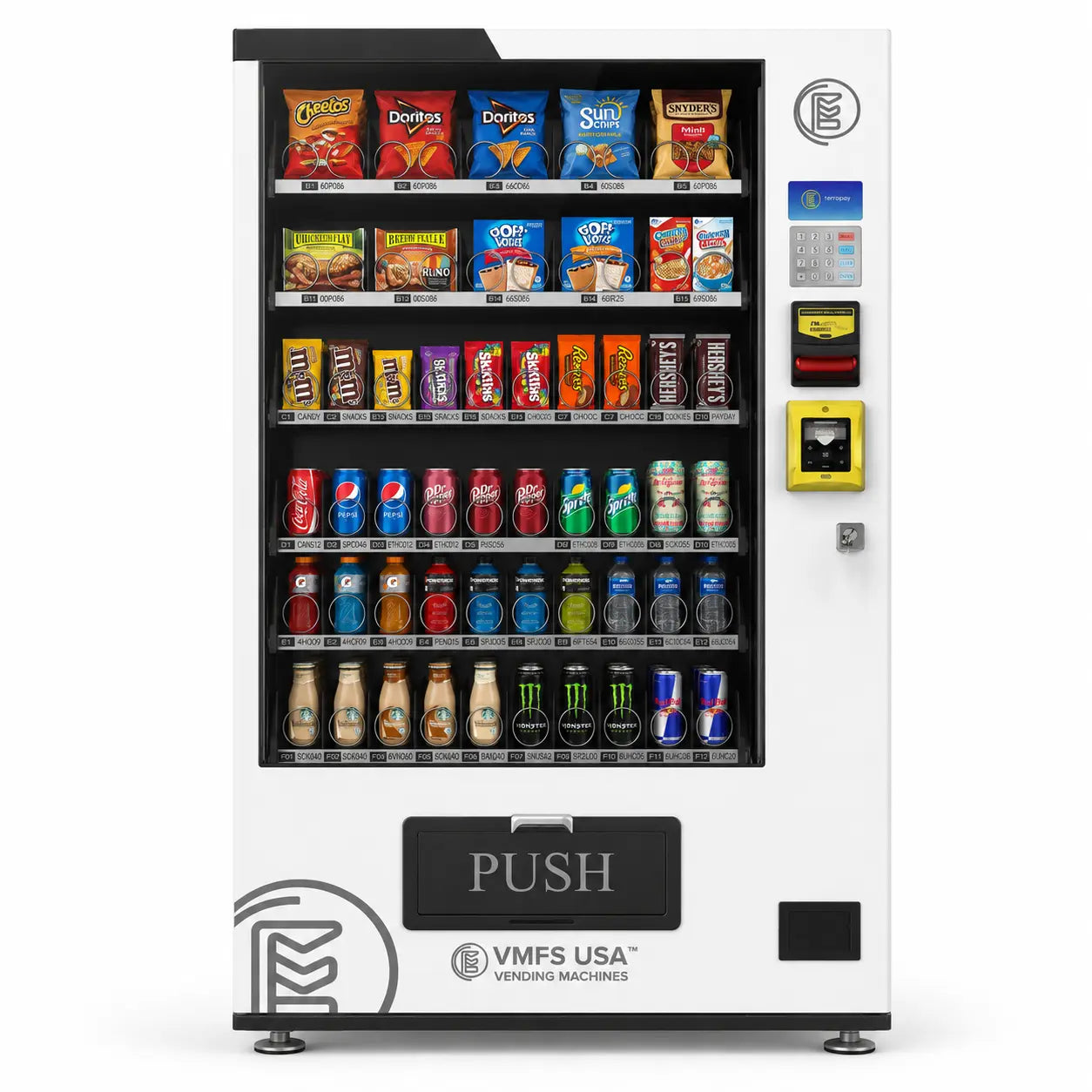
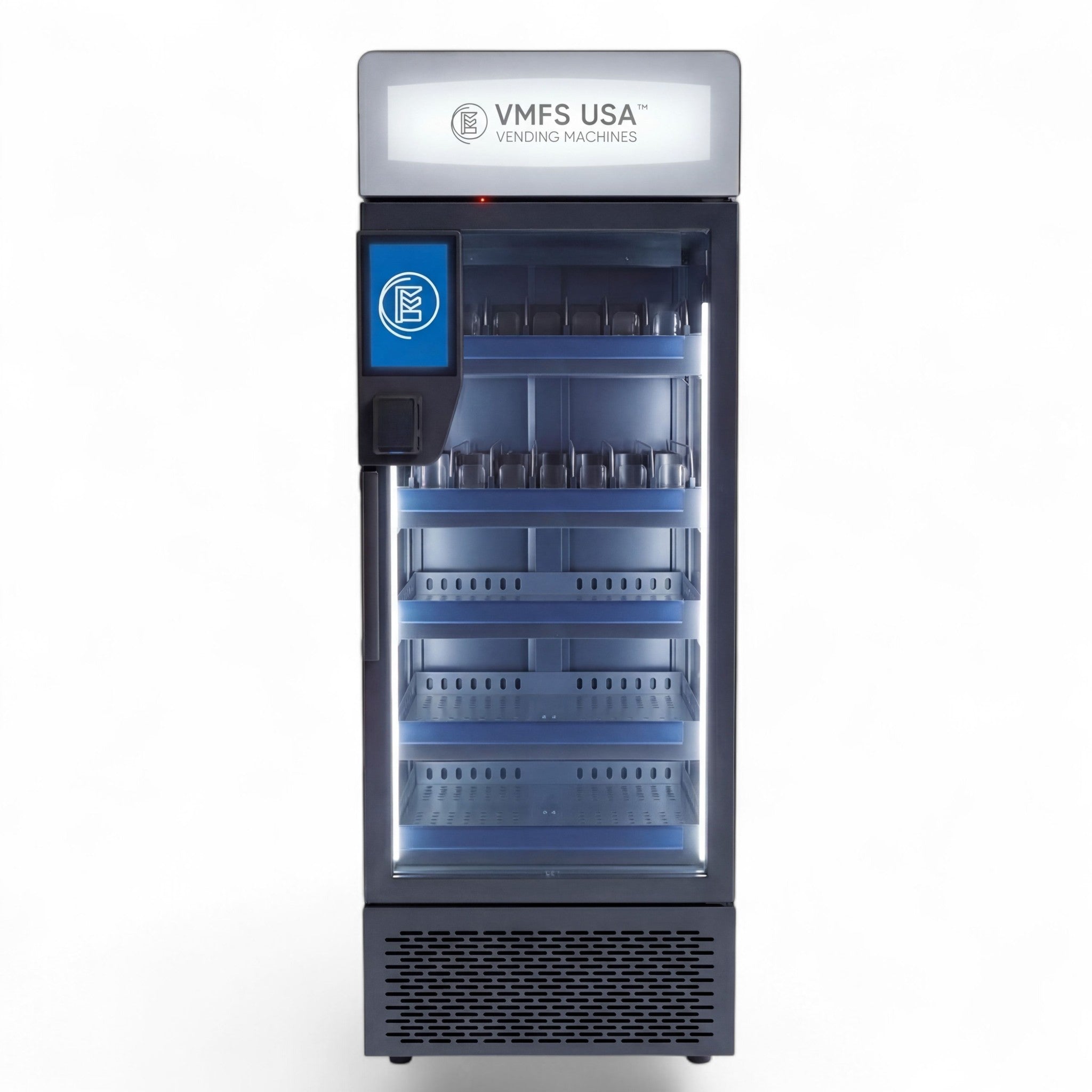
CounterCompact Vending Machine - $4,300 | Drink & Snack Vending Machine RDS - From $6,200 | ScreenMount Vending Machine - $3,450 | Build Your Advertisement Vending Machine - $3,800
Shop the full vending machine collection
Vending machine prices vary mainly because different machines are built to handle different products, volumes, and environments. A machine designed to vend cold drinks or age-restricted products costs more than a basic snack unit because of added hardware, compliance requirements, and technology. The table below answers how much a vending machine cost across every common category in 2026, with US pricing.
| Vending Machine Type | Typical Cost Range | Primary Cost Drivers |
|---|---|---|
| Soda and Beverage Vending Machines | $4,000 to $8,000 | Refrigeration system, insulation, higher power usage |
| Snack Vending Machines | $3,000 to $6,000 | Cabinet size, tray configuration, payment options |
| Combo Vending Machines | $4,000 to $10,000 | Dual product handling, refrigeration, larger footprint |
| Coffee Vending Machines | $6,000 to $12,000 | Water system, heating components, cleaning requirements |
| Cigarette and Vape Vending Machines | $5,000 to $12,000 | Secure cabinets, access control, compliance features |
| Age Verification Vending Machines | $6,000 to $15,000 | ID scanners, software, regulatory compliance |
| AI Vending Machines | $10,000 to $20,000 | Cameras, sensors, software, cloud connectivity |
| Digital Vending Machines | $5,000 to $12,000 | Touch screens, media displays, cashless systems |
| Ice Cream and Frozen Vending Machines | $5,000 to $14,000 | Freezer units, thermal control, larger footprint |
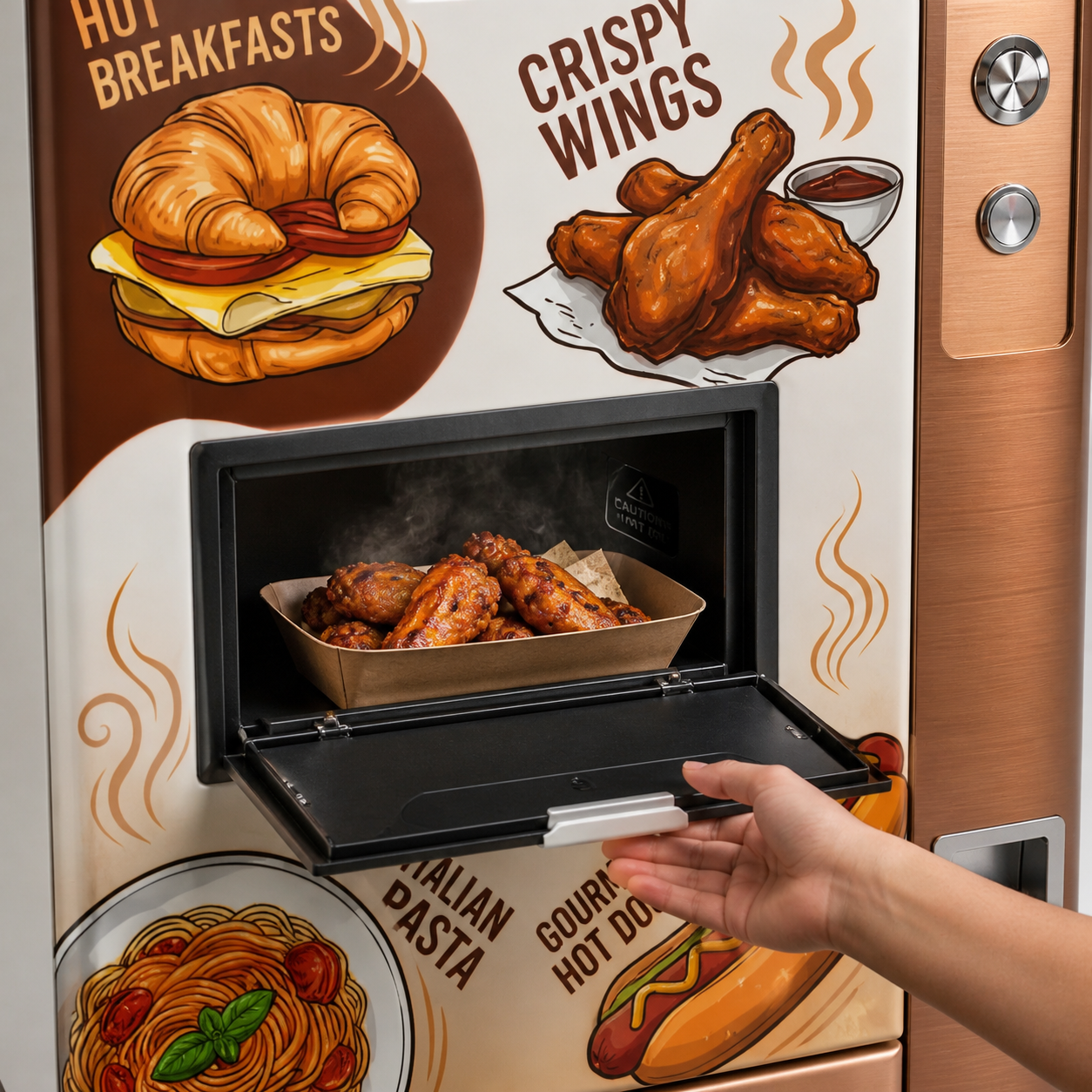
| Hot Food Vending Machines | $8,000 to $18,000 | Heating elements, food safety controls, microwave or oven systems |
Machines with refrigeration, digital interfaces, or compliance requirements naturally sit at higher price points because they include more components and stricter build standards. Simpler machines cost less upfront but may limit product options or pricing flexibility. The best choice depends on what you plan to sell, where the machine will be placed, and how much daily usage the location can realistically support. If you want to model exact ROI for your specific product mix, run the numbers in our vending machine ROI calculator.
How much does a soda vending machine cost in 2026? A new soda vending machine costs $4,000 to $8,000 in the US. Used soda machines start as low as $800 to $2,500, while refurbished beverage machines run $2,500 to $5,500. The soda vending machine price you actually pay depends on five factors:
For high-traffic locations, we recommend a new or recently refurbished beverage machine. The lower repair frequency and modern payment systems usually justify the higher upfront soda vending machine price. Browse current models in our drinks vending machine collection.
When evaluating vending machine costs, one of the biggest pricing variables is whether the machine is new, used, or refurbished. Each option comes with different upfront costs, risk levels, and long-term considerations. Understanding these differences helps buyers choose the right balance between price, reliability, and performance.
New vending machines are factory-built units that have not been previously operated. These machines typically cost more upfront, but they offer the latest technology, updated payment systems, and manufacturer warranties. Most new vending machines fall in the $3,000 to $20,000 range, depending on size, features, and machine type. So how much is a vending machine new? Plan on $3,500 to $7,000 for a quality new snack or drink unit. Buyers often choose new machines when they need reliability, modern design, cashless payments, or advanced functionality for high-traffic locations.
Used vending machines are pre-owned units sold through secondary markets or operators exiting the business. So how much is a used vending machine? Prices range from $500 to $5,000, depending on age, condition, and functionality. Auction sites and liquidation sales sometimes have used vending machine cost as low as $200 to $400 per unit, though those typically need significant repairs. While used machines can significantly reduce upfront costs, they often lack modern payment options, energy efficiency improvements, and warranty coverage. Buyers should factor in potential repair costs and limited upgrade options when considering used equipment.
Refurbished vending machines sit between new and used machines in both price and reliability. These machines are professionally restored, tested, and updated, often with new components, refreshed cabinets, and upgraded payment systems. Refurbished machines typically cost $2,000 to $8,000, less than brand-new units while offering better reliability than standard used machines. For many operators, refurbished vending machines provide a practical middle ground when balancing budget constraints with performance expectations. We back our refurbished and new machines with a comprehensive vending machine warranty for added peace of mind.
| Machine Condition | Typical Cost Range | Best For |
|---|---|---|
| New | $3,000 to $20,000 | High-traffic locations, modern features, long-term use |
| Used | $500 to $5,000 | Low-budget entry, testing locations, basic needs |
| Refurbished | $2,000 to $8,000 | Balanced cost, improved reliability, moderate traffic |
Choosing between new, used, and refurbished vending machines should be based on more than just price. Location demand, expected usage, and long-term operating plans matter just as much as upfront cost. In many cases, investing slightly more upfront can reduce maintenance issues and improve performance over time. If the upfront vending machine cost stretches your budget, our flexible financing options let you spread payments over 12 to 60 months.
Beyond standard snack and drink units, specialty vending machines serve specific products and locations. Here is how much a vending machine cost looks for the most common specialty categories in 2026.
How much is a vape vending machine? A vape vending machine costs $5,000 to $12,000 new. The vape vending machine price reflects the cost of secure cabinets, age verification hardware (ID scanners and cameras), and compliance software required by most states. Used vape vending machine cost runs $2,500 to $6,000, but used units often need software updates to meet current regulations. Compliance is critical: integrate proper age verification methods before placing any vape unit on location.
An ice vending machine costs $15,000 to $80,000 for full-size outdoor units like Kooler Ice or Twice the Ice systems. Smaller indoor ice vending machine cost ranges from $3,000 to $10,000. The ice vending machine price reflects the cost of water filtration, ice production hardware, and weatherproofing. Operating costs are higher than other categories because of water and electricity usage.
Ice cream vending machine prices range from $5,000 to $14,000 depending on freezer size and elevator delivery systems. Soft serve ice cream vending machines run $10,000 to $25,000 due to mixing and dispensing hardware. See current models in our frozen vending machine collection.
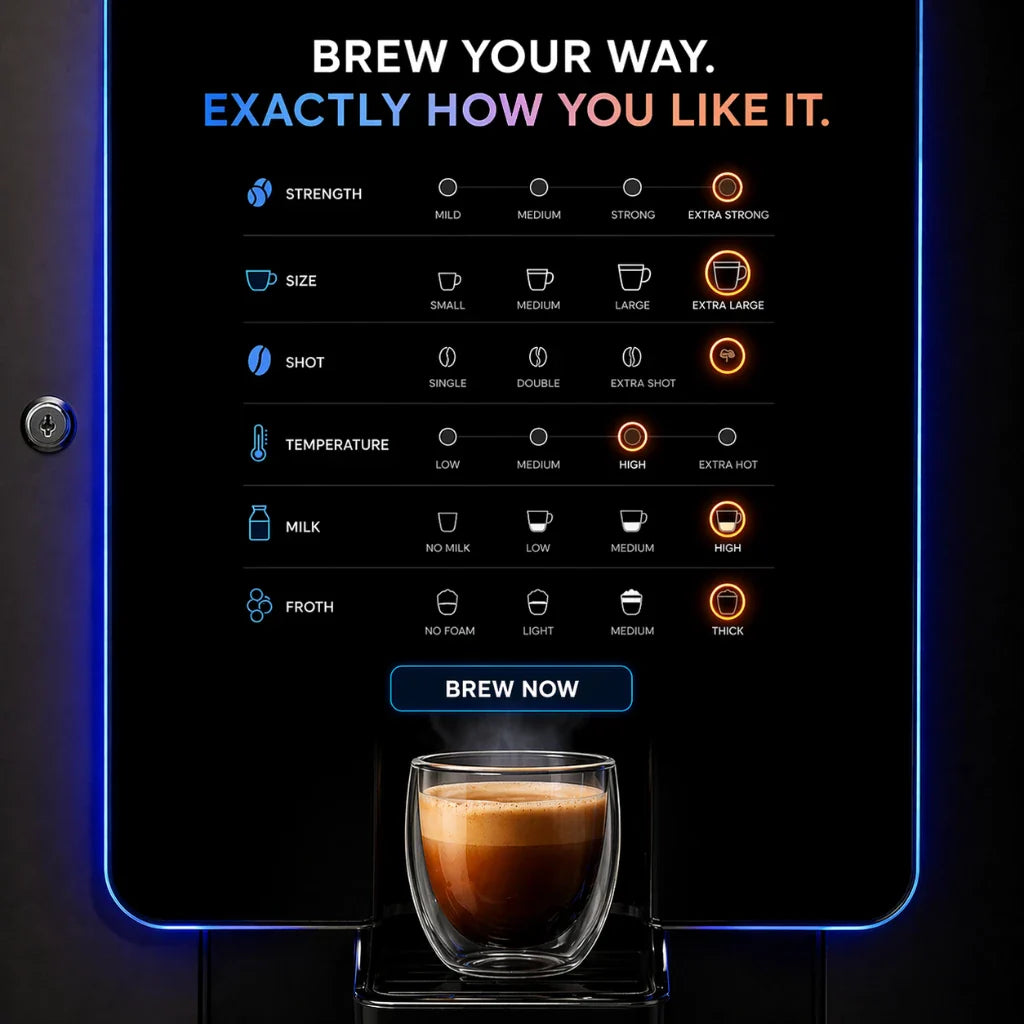
The coffee vending machine price runs $6,000 to $12,000 for tabletop and compact units, or $10,000 to $18,000 for full-size commercial coffee machines with bean-to-cup brewing. The cost reflects water hookup or reservoir hardware, heating elements, and frequent cleaning cycle requirements. Browse our coffee vending machine lineup for current pricing.
How much does a custom vending machine cost? A fully custom vending machine costs $8,000 to $30,000, depending on the product, dispensing system, and branding. Custom-branded standard machines (snack, drink, combo) with custom wraps and graphics cost $1,000 to $3,000 above the base machine price. Specialty custom builds for unusual products (cosmetics, electronics, flowers, cannabis) require engineering and run higher. Get a tailored quote through our custom vending machine builder.
Renting or leasing a vending machine costs $50 to $200 per month for standard snack or drink units, often with a 12 to 36-month minimum term. Some location-based "free placement" programs install the machine at no cost in exchange for the property owner taking a smaller revenue share. For most serious operators, buying outright or financing through our financing program is more economical than long-term rental.
Several factors directly influence vending machine costs. While base pricing is often tied to machine type, the final price buyers pay depends on size, technology, build quality, and configuration. Understanding these cost drivers helps prevent overspending on features that do not match the location or product strategy.

Larger vending machines cost more because they require bigger cabinets, stronger internal components, and higher storage capacity. Machines designed for high-traffic locations typically include more selections and deeper inventory, which increases manufacturing and shipping costs. Smaller machines cost less upfront but may limit revenue potential in busy environments. Vending machine cost range smallest to largest typically spans from $1,500 for a countertop unit to $25,000 for a large commercial elevator machine. Most vending machines weigh between 500 and 800 pounds empty, so freight is also a meaningful part of the total delivered cost.
Refrigerated vending machines are more expensive than non-refrigerated units due to cooling systems, insulation, and higher power requirements. Soda and beverage machines, fresh food machines, and some combo units fall into this category. Refrigeration not only increases purchase price but also impacts long-term operating costs.
Machines equipped with cashless payment systems, mobile payments, and remote monitoring cost more than cash-only models. These features add hardware and software costs but are often necessary in modern locations where customers expect card and contactless options. Connectivity also enables sales tracking and inventory management, which can improve long-term performance. Learn more about modern vending machine payment systems and what they add to total cost.
Touch screens, digital displays, and interactive interfaces raise vending machine prices due to added components and software. These features are common in digital vending machines and AI-enabled models, where user experience and product presentation play a larger role in driving sales. The digital vending machine cost typically runs $5,000 to $12,000, and the smart vending machine price for IoT-connected units with sales tracking and remote management ranges from $6,000 to $15,000.
Machines built with heavier-gauge steel, reinforced doors, and higher-quality internal components generally cost more but offer better durability and longer service life. Established manufacturers like Seaga, Royal Vendors, AMS, and Crane often charge higher prices, reflecting reliability, warranty coverage, and access to replacement parts. Browse our curated Seaga vending machine collection for trusted models.
Custom tray layouts, specialized product delivery systems, secure compartments, and compliance features all add to machine cost. Machines designed for specific products or regulated items require additional engineering, which increases pricing compared to standard snack or drink machines.
The key to managing vending machine cost is selecting features that directly support the products being sold and the location where the machine will operate. Paying for unnecessary upgrades can raise upfront costs without improving real-world performance.
When calculating how much vending machines cost, the purchase price is only part of the total investment. Ongoing operating expenses play a major role in long-term profitability and should be planned for from the start. These costs vary by machine type, location, and product mix, but every vending operator will encounter them in some form.
Inventory is one of the most consistent ongoing costs in a vending machine business. Initial stocking usually requires $200 to $500 per machine. Restocking frequency depends on location traffic and product demand. High-traffic locations require more frequent restocks, which increases both product costs and labor time.
Vending machines require a continuous power supply, and electricity costs vary depending on machine size and refrigeration needs. Most operators pay $10 to $40 per machine per month in electricity. Snack machines generally use less power than soda and beverage vending machines or refrigerated food machines. Larger machines and those with cooling systems contribute more to monthly utility costs, especially in locations where machines operate 24/7.
All vending machines require routine maintenance, including cleaning, part replacement, and occasional repairs. Annual maintenance budgets typically run $100 to $500 per machine. Over time, components such as motors, coin mechanisms, cooling units, and payment readers may need service or replacement. While modern machines are built for durability, maintenance should be treated as a predictable operating expense rather than an unexpected cost.
Machines that accept card, mobile, or contactless payments incur processing fees on each transaction, typically 2.5% to 3.5% per sale plus a fixed per-transaction fee of $0.10 to $0.30. These fees add up over time in high-volume locations. Despite the added cost, cashless payments often increase overall sales by 20 to 30% by improving convenience for customers.
Some property owners request a commission in exchange for hosting a vending machine. This is common in high-traffic locations such as offices, hospitals, gyms, or transportation hubs. Commissions are usually negotiated at 5% to 25% of gross sales and should be factored into pricing and profitability calculations. To find compliant high-traffic placements, use our location matching service or browse vetted property owners on VPlaced.
Vending machine operators may need business licenses, sales tax permits, or health-related approvals depending on the products sold and local regulations. First-year permitting costs typically fall between $150 and $700 per machine. Costs vary by city and state and may require periodic renewal, which is why it helps to understand vending machine permit costs and requirements before placing machines. For complex multi-state compliance, VAdviced provides vending licensing and regulatory advisory services.
Factoring in these ongoing costs provides a clearer picture of the true cost of owning and operating a vending machine. Looking beyond the initial purchase price allows operators to set realistic expectations and maintain profitability over time.
Adding everything together gives you a realistic estimate of how much does it cost to own a vending machine in the first year. Here is a typical breakdown for a single new snack and drink combo machine in a moderate-traffic US location:
| Cost Category | Year 1 Cost | Notes |
|---|---|---|
| New combo vending machine | $5,500 | Average new combo unit with cashless payment |
| Shipping and installation | $300 to $600 | White-glove delivery in continental US |
| Initial product inventory | $300 | Snacks plus drinks for first 1-2 weeks |
| Business license and permits | $150 to $700 | Varies by state and city |
| Liability insurance | $500 to $1,000 | $1M general liability coverage |
| Electricity (12 months) | $240 to $480 | $20 to $40 per month |
| Restocking inventory (12 months) | $2,400 to $4,800 | Based on $200-$400 monthly restock |
| Maintenance and repairs | $100 to $500 | Reserve for parts, payment reader updates |
| Payment processing fees | $150 to $400 | ~3% of $5,000 to $13,000 in sales |
| Total Year 1 Cost | $9,640 to $14,280 | For one combo machine in moderate-traffic location |
This estimate of how much does a vending machine cost in year one assumes you buy the machine outright. Financing spreads the upfront capital cost over time but adds interest. With our financing program, monthly payments typically run $120 to $250 per machine over a 36-month term.

When evaluating vending machine cost, many buyers focus only on the upfront price. In reality, return on investment depends far more on location quality, product selection, and operational efficiency than on whether a machine costs a few thousand dollars more or less. A lower-priced machine does not automatically deliver better ROI, and a higher-priced machine is not guaranteed to perform well.
A vending machine placed in a high-traffic, purpose-driven location will almost always outperform a cheaper machine placed in a low-demand area. Offices, hospitals, gyms, residential buildings, and transportation hubs tend to support higher and more consistent sales than casual or low-use locations. Even a basic machine can generate strong returns if the location supports daily repeat purchases.
ROI improves when the machine type matches the buying behavior of the location. Beverage machines perform best where hydration and convenience matter, while digital or automated machines work better where customers expect variety and speed. Mismatched machines, regardless of price, often struggle to reach break-even.
Machines with higher upfront costs may reduce long-term expenses through better reliability, fewer service calls, and stronger sales tracking. Cheaper machines can require more frequent maintenance, lack cashless payments, or limit pricing flexibility, all of which can reduce revenue over time. ROI should be evaluated based on total cost of ownership, not just purchase price.
Successful vending operators often think in terms of routes rather than individual machines. A machine that performs consistently and requires minimal attention is often more valuable than one with slightly higher revenue but greater operational demands. Over time, consistency and scalability have a bigger impact on profitability than chasing the lowest-cost equipment.
The most effective approach is choosing a vending machine that fits the location, supports the right products, and aligns with long-term operating goals. When these factors are balanced, ROI becomes predictable and sustainable. New to the industry? Start with our complete guide on how to start a vending business.
Understanding how much does a vending machine cost is only half the equation. The other half is how much does a vending machine make a month. Industry averages put net profit per machine between $300 and $600 per month, with high-performing locations reaching $800 to $1,500 per month. So how much money does a vending machine make annually? Most well-placed machines net $3,600 to $7,200 per year after costs, with payback periods of 12 to 24 months for new machines.
How much can a vending machine make in a top location? In hospitals, factories, and transit hubs, single machines have generated $2,000 to $5,000 per month in gross revenue. Use our ROI calculator to model your specific scenario based on machine cost, location traffic, and product mix.
A vending machine costs $500 to $20,000 in the US in 2026. New vending machines run $3,000 to $20,000, used machines cost $500 to $5,000, and refurbished units fall between at $2,000 to $8,000. The exact answer to how much does a vending machine cost depends on machine type, condition, and features.
A standard new vending machine costs $3,000 to $10,000, depending on whether you choose a snack, drink, or combo unit. So how much is a vending machine for a typical first-time operator? Plan on $4,000 to $7,000 for a quality new machine that includes cashless payment hardware.
How much a vending machine cost in 2026 depends primarily on type and condition. New snack machines start at $3,000, soda machines at $4,000, combo units at $4,000, and AI-powered machines reach $20,000. Used machines start as low as $500 at auctions and liquidation sales.
A new soda vending machine costs $4,000 to $8,000 in 2026. Used soda machines run $800 to $2,500, and refurbished beverage machines cost $2,500 to $5,500. The soda vending machine price reflects refrigeration hardware, capacity (typically 200 to 500 cans/bottles), and payment system features.
How much does vending machines cost on average across all categories? The industry average for a new commercial vending machine in 2026 is approximately $5,500 to $7,000. Used machines average $2,000 to $3,500, and refurbished machines average $4,000 to $5,500.
How much does it cost to buy a vending machine outright? Plan on $3,000 to $10,000 for a standard new machine, plus $300 to $600 in shipping and installation. Including initial inventory, permits, and insurance, total upfront cost to buy a vending machine and place it on location runs $4,500 to $12,000.
A used vending machine costs $500 to $5,000 depending on age, condition, and features. Auction prices can drop to $200 to $400 per machine, but those units typically need significant repairs. The most reliable used vending machine cost range for an operator-grade unit is $1,500 to $3,500.
A custom vending machine costs $8,000 to $30,000 depending on the product type, dispensing mechanism, and branding. Custom branding alone (wraps, graphics, custom front panels) on a standard machine adds $1,000 to $3,000. Specialty custom builds for unusual products run higher.
Renting a vending machine costs $50 to $200 per month with a typical 12 to 36-month minimum term. Some "free placement" programs install machines at no cost in exchange for a higher revenue share to the property owner. For long-term operations, buying or financing usually beats rental costs.
A vape vending machine costs $5,000 to $12,000 new. The vape vending machine price includes secure cabinets, ID scanners, age verification software, and compliance features required by most US states.
An ice vending machine costs $15,000 to $80,000 for full-size outdoor units, or $3,000 to $10,000 for smaller indoor models. The ice vending machine price reflects water filtration, ice production hardware, and weatherproofing.
How much does it cost to own a vending machine in year one totals $9,640 to $14,280 for one new combo unit in a moderate-traffic location. This includes the machine, shipping, inventory, permits, insurance, electricity, and ongoing restocking. After year one, annual operating costs drop to $3,500 to $6,500.
A vending machine makes $300 to $600 per month in net profit on average, with top locations reaching $800 to $1,500. Annual revenue per machine typically runs $3,600 to $18,000, with payback on a new machine in 12 to 24 months.
Most full-size vending machines weigh 500 to 800 pounds empty and 700 to 1,000 pounds loaded. Compact countertop units weigh 80 to 200 pounds. Weight matters for shipping costs (often $200 to $600), floor load capacity, and installation logistics.
Understanding how much does a vending machine cost is an important first step before investing in any vending machine business. Vending machine prices range from a few hundred dollars for used units to $30,000 or more for fully custom or AI-powered commercial machines. What matters most is not finding the cheapest option, but choosing a machine that fits the location, product type, and expected usage.
Throughout this guide, we covered average vending machine costs, different machine types, factors that affect pricing, and the ongoing expenses that come with operating a machine. These details help set realistic expectations and prevent surprises after the machine is installed. A well-matched vending machine, placed in the right environment and stocked with the right products, has a much better chance of performing consistently over time.
Before buying a vending machine, take time to compare options, understand total ownership costs, and think about long-term goals rather than short-term savings. When cost, location, and product selection are aligned, vending machines can be a practical and scalable business opportunity.
Last updated: May 2026. Pricing data is reviewed quarterly by the VMFS USA operations team based on current US market conditions, manufacturer pricing, and operator-reported costs. Prices vary by region, dealer, and time of year. This article is informational and not legal or financial advice. For tailored vending business advisory, visit VAdviced.
Share:
Comparing Vending Machine Costs: New vs. Used Machines
Can you put a vape vending machine in a bar?