


Design the perfect vending solution for your location and customers.

Sales, inventory and alerts for your whole route, from one machine to a fleet.
Answer a few questions about your location, products and budget and get a shortlist.
Estimate revenue, payback period and margin before you buy.
Sales, setup help, warranty and parts from the VMFS USA team.
Join the VMFS newsletter and step into a thriving network dedicated to collective success.
One signup. Endless possibilities.
Machines & Economics | Tea Vending | By the VMFS USA Team | September 2026
Walk up to almost any hot drinks machine in America and count the buttons. Espresso, americano, latte, cappuccino, mocha, hot chocolate, and then, somewhere near the bottom, one that says tea. Press it and you get hot water in a cup, and a bag sitting in a rack beside the machine if somebody remembered to fill it.
That is how this industry has treated tea for forty years. Not as a product, as a courtesy. An afterthought bolted onto a coffee machine for the people who did not want coffee.
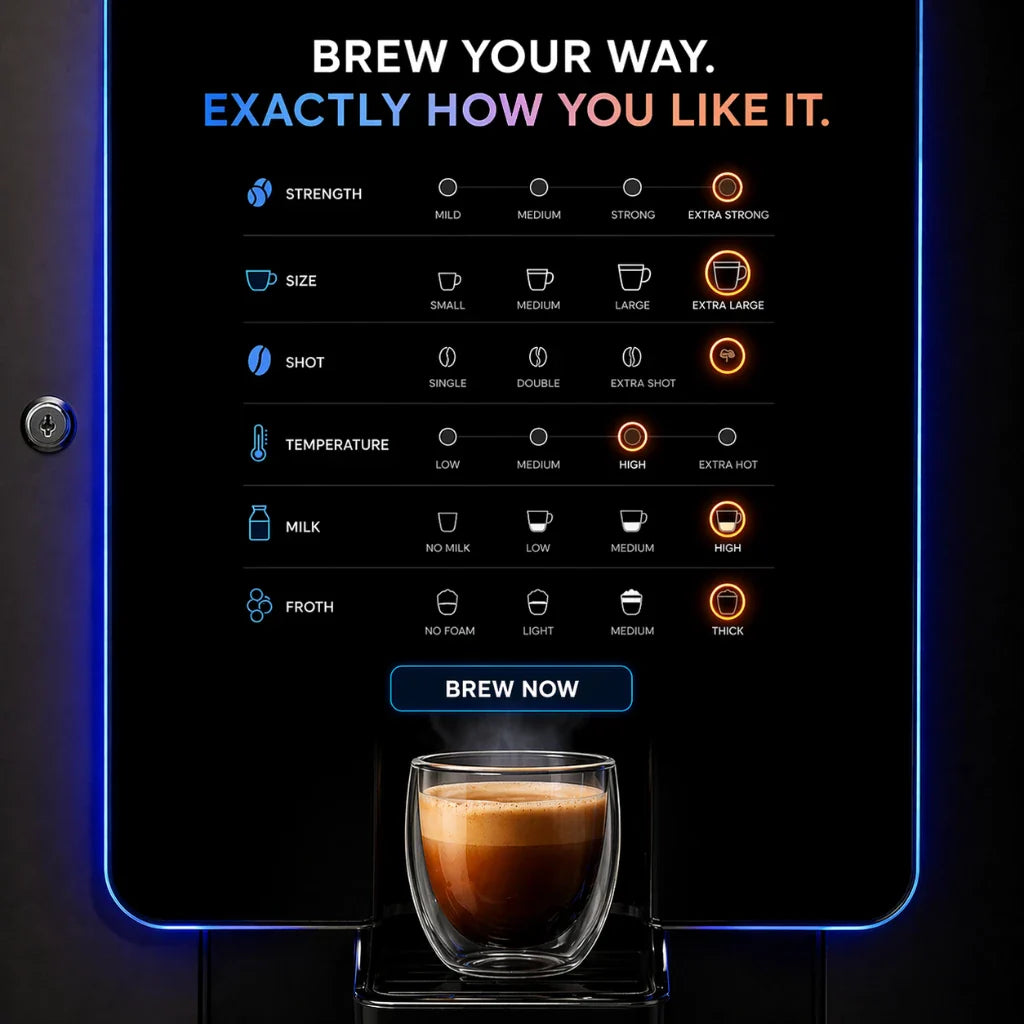
We looked closely at a machine recently that inverts that completely, and it reframed how we think about the category. A proper tea vending machine is not a coffee machine with a tea button. It is a hot water system with tea as the point of the exercise, and those are different pieces of engineering built around different expectations.
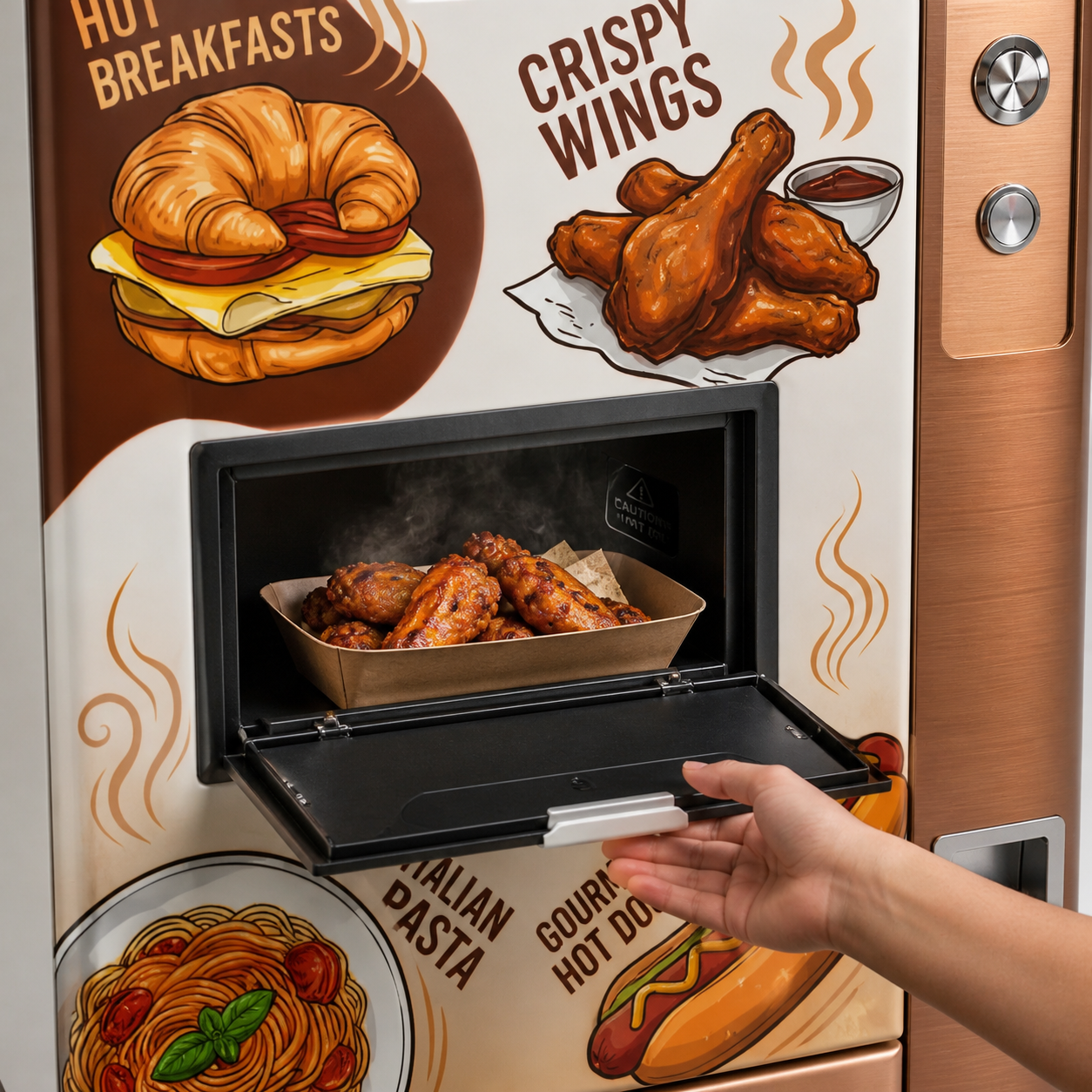
Where this comes from: we supply and operate vending machines across the United States, including hot beverage formats. The photographs here are our own from the show floor.

It is worth being specific about what goes wrong, because every failure is an engineering decision made in favour of coffee.
The point worth carrying: tea has not underperformed in American vending because Americans do not drink tea. It has underperformed because the equipment was never designed to make it properly, and people quite reasonably stopped expecting anything good from the tea button.
The differences are not cosmetic. They sit in the water system, which is where every tea problem originates.
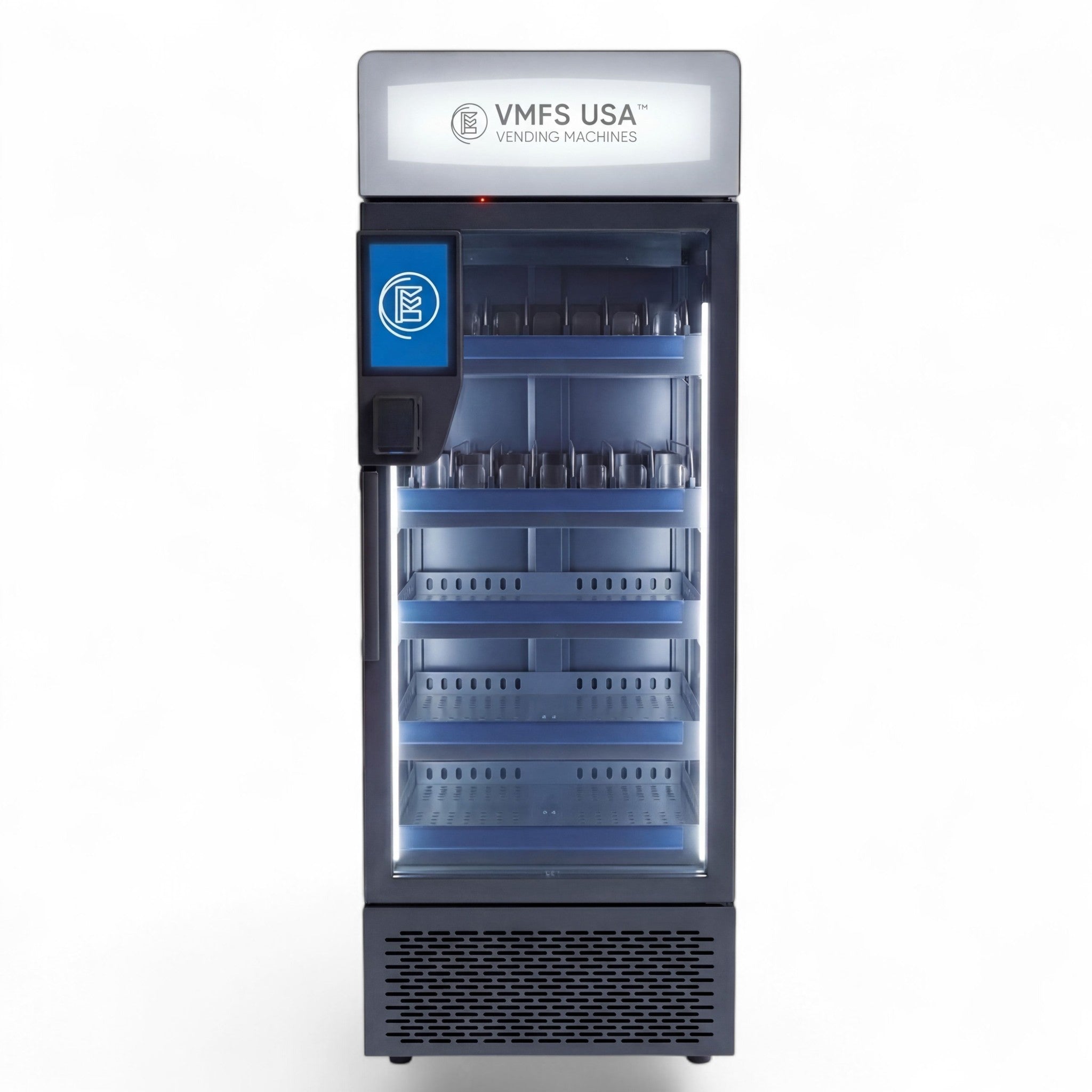
Look at the machine in these images and notice what is missing. No brightly lit product window, no wrap, no visible mechanism. A slim wood fronted cabinet that would sit comfortably in a reception area without anybody calling it a vending machine.
That is a deliberate commercial decision and it matters more than it first appears:

Tea has a cost structure that very few vended products can match, and it is the quiet reason this category deserves more attention than it gets.
| Factor | Why it works in tea's favour |
|---|---|
| Product cost | A teabag and hot water is among the cheapest servings in vending, while the retail price sits close to coffee |
| Shelf life | Long and stable. No cold chain, no expiry pressure, effectively no spoilage waste |
| Restock weight | Light and compact, which matters across a long route |
| Machine complexity | No grinder, no milk system, no brewing group. Fewer moving parts than an espresso machine and correspondingly fewer faults |
| Cleaning burden | No milk means none of the daily sanitation a milk based coffee machine demands |
| Repeat rate | Tea drinkers are habitual. Multiple cups a day from the same people is normal rather than exceptional |
That fourth row deserves attention if you already operate hot drinks. Milk systems are the single largest source of service calls and daily labour on an espresso unit. A tea focused machine removes that burden entirely, which changes the running cost meaningfully across a route. It is worth weighing against what a full coffee vending machine demands day to day.
The audience is narrower than coffee and considerably more loyal, which suits a machine at this price point.
Workplaces with a genuine tea population.
Every office has people who do not drink coffee and have quietly accepted poor tea for years. They are a minority of the building and a reliable one, and they will use a good machine several times a day rather than occasionally.
Premium and hospitality settings.
Hotel lobbies, private clubs, law and finance offices, clinics. Places where a conventional machine would be refused and where a tea service reads as hospitality rather than vending.
Wellness oriented venues.
Yoga and pilates studios, spas, treatment centres and clinics, where coffee is frequently considered inappropriate and herbal tea fits the setting exactly. This is a genuinely underserved group and almost nobody is selling to it.
Sites with a large international population.
University campuses, hospitals and companies with substantial staff from tea drinking cultures. In much of the world tea is the default hot drink rather than the alternative, and that expectation does not disappear on arrival in the United States.
What goes in the machine matters more here than in most categories, because a tea drinker choosing a machine over their own kettle is making a quality judgement rather than a convenience one.
We would be doing you a disservice by suggesting a tea machine replaces a coffee machine in most American sites. Coffee volume is higher almost everywhere and that is unlikely to change.
The realistic positions are these:
Worth noting separately that cold tea is its own category with its own machines and a very different customer. Our bubble tea vending machine sits in that space and has almost nothing in common with the hot tea format discussed here beyond the leaf.
A small section on things that sound trivial and that tea drinkers notice immediately, because this is a category where the details carry more weight than the headline specification.
None of this is expensive and all of it separates a machine people use daily from one they try twice. In a category built on habit, the details that affect the second cup matter as much as the ones that sell the first.
Establish the water supply first, because it decides whether a site is possible at all. Then be honest about whether the building has a genuine tea population or merely a few people who would be pleased, since those support very different machines.
Placement for this format is unusual, because you are looking for the rooms that refuse ordinary vending rather than the busiest corridors, and that is what our partners at VPlaced screen for. Hot water and beverage service brings its own permitting questions, which VAdviced handles, and positioning a tea machine as hospitality rather than vending is VMarketed territory.
On our side, compact hot drink options include the premium countertop touch screen machine for smaller sites and the tabletop unit where floor space is genuinely tight, and everything we carry is in the shop. What is ready to move is in in stock units, typically shipping within 7 to 21 days with a one year parts warranty. If a venue needs a specific finish to suit an interior, that is a custom build conversation.
Once a machine is live, listing it on VendingFinder is worth doing, because tea drinkers genuinely seek out a machine that does it properly.
A machine built around hot water delivery and tea selection rather than around espresso, with water at genuine brewing temperature, a dedicated water path that carries no coffee residue, proper filtration and real variety on screen. It is a different piece of engineering from a coffee machine with a tea button.
Mostly water temperature. Espresso systems hold water below boiling because coffee at a full boil tastes scorched, while black tea needs water at or near boiling to extract properly. Add a shared water path carrying coffee residue and no steeping time, and the result is predictable regardless of how good the teabag is.
The margin structure is excellent, since a teabag and hot water is among the cheapest servings in vending while retail pricing sits close to coffee, with long shelf life, no spoilage and no milk system to service. The constraint is volume, because American tea demand is genuinely smaller than coffee, so site selection matters more than it does with coffee.
Either a plumbed water connection or a tank that somebody fills. Plumbed is preferable for anything with real volume, and it is a considerably harder ask of a building than a power outlet, so establish it at the site before choosing equipment. Filtration should be part of that conversation, since water quality directly determines the product.
In most American workplaces coffee carries the volume, so a tea machine usually works best as a complement rather than a replacement. In wellness venues, clinics, premium receptions and sites with a large international population, a tea led machine can genuinely be the better single choice.
Stop Treating Tea as a Button
We supply hot beverage systems across the United States and help operators match the machine to the audience. Tell us about the site and who drinks what.
See Hot Drinks Machines
Share:
Vending Machine Location Profit: Why the Same Machine Makes $500 or $700 a Month
Weight Sensors in AI Vending Machines: The Real Pros and Cons