

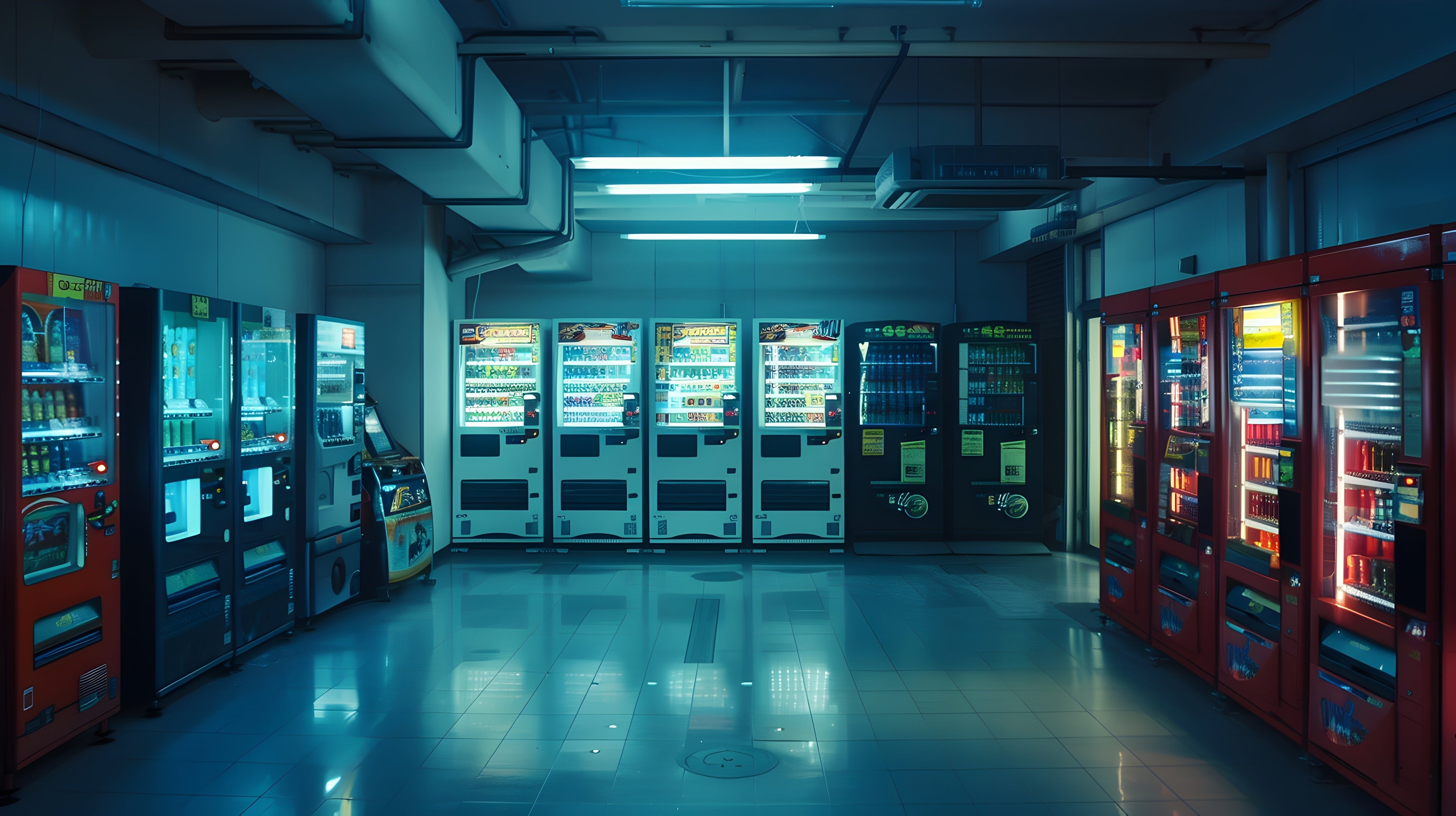


Design the perfect vending solution for your location and customers.

Join the VMFS newsletter and step into a thriving network dedicated to collective success.
One signup. Endless possibilities.
A Narcan vending machine is a public access vending unit that dispenses naloxone nasal spray, fentanyl test strips, wound care kits, and other harm reduction supplies, typically free of charge, around the clock. The machines look almost identical to a snack vending unit. The mission is the opposite. Where a snack machine sells convenience, a naloxone vending machine sells time, the 90 seconds that separate a reversed overdose from a fatal one.
This is a category that did not exist in mainstream United States deployment until 2017. Today, hundreds of these machines are placed across all 50 states, funded primarily by opioid settlement dollars, federal grants, and county health department budgets. According to the most recent CDC provisional data, the United States recorded an estimated 70,231 drug overdose deaths in the 12 months ending November 2025, a 15.9 percent decline from the prior year and the lowest annual total since 2019. CDC, April 2026. Public health researchers credit several factors for that drop. Wider access to naloxone is one of them, and harm reduction vending machines are the most measurable distribution channel public health agencies have ever deployed.
This guide is built for two audiences. Public health departments, hospitals, universities, and harm reduction nonprofits evaluating whether to deploy a Narcan vending machine. And vending operators considering whether harm reduction vending fits their business model. The article walks through how the machines work, what they cost, how they are funded, where they are placed, what laws apply, the data on their effectiveness, and a 90 day roadmap to go from order to live deployment.
A Narcan vending machine costs between $5,000 and $15,000 per unit, plus roughly $30 to $45 per two dose Narcan carton at public interest pricing, plus restocking and telemetry costs. Most US deployments are funded by opioid settlement funds, SAMHSA grants, or local health department budgets, not by the operator. Real world data from peer reviewed studies shows fatal overdose declines of 10 to 15 percent in the first year after deployment in counties where these machines were introduced. Standing orders and Good Samaritan laws in all 50 states make naloxone distribution legal. The most important deployment decisions are location, hours of access (24/7 wins), and whether dispensing is anonymous and free of cost. Browse the Narcan Vending Machine on VMFS USA.
A Narcan vending machine is a secure, ambient temperature, elevator delivery vending unit configured to dispense naloxone nasal spray and ancillary harm reduction supplies. The hardware is the same class of equipment used in pharmacy vending and specialty retail vending. The configuration is what makes it a Narcan machine, not the chassis itself.
A typical configuration includes naloxone nasal spray (the brand name is Narcan, the generic ingredient is naloxone hydrochloride), fentanyl test strips, xylazine test strips, sharps disposal containers, wound care kits, hygiene kits, condoms, pregnancy tests, gun locks, and educational brochures with QR codes that link to local treatment resources. Some programs add Plan B emergency contraception, drug deactivation pouches, and basic first aid supplies. The exact mix is set by the program operator, not by the machine manufacturer.
The defining technical features are an elevator delivery system (so the boxed nasal spray is lowered gently rather than dropped), tamper resistant locking, ADA compliant reach height, cashless payment optionality (most programs run free distribution but the option to take payment exists), and remote inventory telemetry so operators know when to restock without site visits. The VMFS Narcan Vending Machine ships with a 72 slot configuration, 600 unit capacity, ambient temperature operation, and elevator delivery, which is the standard spec for harm reduction deployment in the United States.
Three independent forces converged between 2023 and 2026 to make harm reduction vending a real category instead of a pilot program.
Until 2023, every Narcan vending machine deployment had to navigate prescription law workarounds, standing orders, or pharmacist of record arrangements. After OTC approval, those barriers collapsed. Any agency that can purchase Narcan can stock a vending machine with it, with no prescriber involvement required.
The result is what Vending Times called one of the fastest growing vending applications in the public health space. The trade publication estimated the United States had roughly 80 harm reduction vending machines deployed in 2022. By 2026, the count is in the hundreds and growing. Source: Vending Times, 2026.
72 slots, 600 unit capacity, elevator delivery, tamper resistant. The standard spec for harm reduction deployment.
View MachineRefrigerated OTC medication and wellness vending for hospitals, campuses, and airports.
View MachineElevator delivery with built in advertising screen, ideal for community education campaigns.
View MachineThe full lineup of specialty vending solutions including PPE, hygiene, and harm reduction units.
View CollectionFrom the user perspective, the interaction takes 20 seconds. A person walks up to the machine, selects an item from the keypad or touchscreen, the elevator descends to the selected slot, the item is gently lowered to the pickup tray, and the user retrieves it through an ADA compliant access door. Most programs do not require ID, registration, or any payment, which is the entire point of low barrier access.
Behind the glass, the machine is engineered specifically for the constraints of medical packaging:
For programs that want operator side data on top of donor side reporting, integrating a cloud platform like VMFS Cloud turns the deployment into a measurable public health intervention. Dose count, restocking frequency, machine uptime, and time of day usage patterns are all visible from the dashboard. Grant reporting becomes a download instead of a manual count.
The honest answer is between $9,000 and $25,000 for the first year of a single machine deployment, depending on configuration, product mix, and how the program handles maintenance.
| Cost Item | Typical Range (USD) | Notes |
|---|---|---|
| Machine hardware (Narcan model) | $5,000 to $15,000 | The VMFS Narcan Vending Machine is currently listed at $7,694. Iowa Johnson County reported approximately $5,000 per unit for their deployment. Premium configurations with larger touchscreens, outdoor housing, or AI inventory exceed $15,000. |
| Naloxone (Narcan, 2 dose nasal spray) | $30 to $45 per carton | Public interest price is approximately $41 per two dose carton (Emergent BioSolutions, 2024 to 2026 pricing). Some bulk state purchase programs negotiate lower. OTC retail is $44.99. |
| Fentanyl test strips | $1 to $2 per strip | Banned in some states under drug paraphernalia statutes. Confirm legality in the deployment state before stocking. |
| Other harm reduction supplies | $500 to $2,000 initial | Wound care kits, hygiene kits, condoms, gun locks, sharps containers, brochures. |
| Installation, electrical, signage | $300 to $1,500 | Indoor surface installation is cheapest. Outdoor installation requires weatherproof housing and may require permitting. |
| Telemetry and cloud platform | $0 to $40 per month | VMFS Cloud is included with VMFS machines. Third party telemetry runs $20 to $40 per machine per month. |
| Payment processing (if charging) | $10 to $25 per month plus 3 percent per transaction | Only relevant if the program charges. Most do not. |
| Restocking and program staff time | $50 to $300 per month | One half day visit per month is typical for a single machine in an active community. |
Operators who plan to scale beyond a single unit should also factor in route logistics. A four machine route across one metro area runs roughly $40,000 to $60,000 in year one all in, with year two operating costs dropping to roughly $15,000 to $25,000 because the hardware is amortized. To model the unit economics for a specific deployment plan, our ROI Calculator handles the math for any machine type and any product mix.
Five funding sources cover the overwhelming majority of current deployments. Operators and program coordinators planning a launch should evaluate each.
Through 2038, US states and local governments are receiving distributions from settlements with opioid manufacturers, distributors, and pharmacy chains. Wisconsin alone allocated $2 million of its settlement funds specifically to a public health vending machine program, awarding grants to county health departments to purchase, install, and stock machines with Narcan and fentanyl test strips. Source: Wisconsin Department of Health Services. Boulder County, Colorado committed $86,000 in settlement funds across 2024 and 2025 for a single Boulder Community Health vending machine. Colorado at the state level allocated $3 million to its naloxone bulk purchase fund in 2025. Most counties operate an Opioid Advisory Committee or equivalent that issues annual RFPs.
The Substance Abuse and Mental Health Services Administration funds State Opioid Response grants annually. SOR funding may be used for naloxone purchase, harm reduction supplies, and equipment that increases naloxone access. State health departments are the prime grantees and typically subgrant to local agencies and nonprofits.
The Health Resources and Services Administration funds rural health and substance use disorder initiatives, including community based participatory research that has explicitly funded harm reduction vending machine pilots. Federal Office of Rural Health Policy grants are particularly relevant for rural deployments.
Hospitals deploy machines as a public health initiative tied to community benefit reporting requirements. Universities deploy them through student health services budgets, often initiated by student government advocacy. A peer reviewed study of a single Midwestern University health vending machine reported 297 naloxone units, 232 emergency contraceptives, and 64 pregnancy tests dispensed during the October 2024 to May 2025 academic year. Source: Journal of American College Health, 2026.
Boulder Community Health initially funded its harm reduction supplies through donations to the hospital's PILLAR Program before drawing on settlement dollars. Rotary Clubs, faith based organizations, and community foundations have funded individual deployments across the country.
For a structured pitch to a funder, programs need three things: a clear local overdose data brief, a budget line item showing one year and three year operating costs, and a placement plan tied to overdose hotspot data. The strongest applications include a memorandum of understanding with the host site already signed. For specialized advisory support on harm reduction program structure, regulatory positioning, and grant writing strategy, the team at Vadviced vending business advisory works specifically with operators in regulated and public health vending categories.
Placement is the single biggest determinant of whether a harm reduction vending program saves lives or sits idle. Peer reviewed evaluation of the Clark County, Nevada vending machine deployment, the first mainland US program from 2017, was associated with a 15 percent reduction in overdose fatalities in the first year. A subsequent Hamilton County, Ohio program reported a 10 percent decrease in fatal overdoses in the first year, against a statewide 5 percent increase. Source: Johns Hopkins Bloomberg School of Public Health, Opioid Principles.
The locations producing those results share four characteristics: high overdose risk in the catchment area, 24 hour or near 24 hour access, low barrier (no ID, no registration, no staff interaction), and a host site that is comfortable being publicly associated with the program.
| Location Type | Why It Works | Example Deployments |
|---|---|---|
| Public libraries | 24 hour exterior installation possible. Trusted civic space. Already serving vulnerable populations. | Iowa Johnson County (two of three machines at libraries) |
| Hospital lobbies and emergency departments | Captures discharging patients and family members of overdose survivors. Highest documented dispensing rates per machine. | Denver Health VENDY program, Boulder Community Health, University of Cincinnati Medical Center |
| Bars, music venues, late night businesses | High overlap with at risk populations. Open during overdose peak hours (10 PM to 4 AM). Builds owner reputation. | The Deadwood bar in Iowa City |
| Universities and college campuses | Student health services budget access. Strong student advocacy base. Captures young adults at peak fentanyl exposure risk. | University of Colorado Boulder, large Midwestern University study |
| Day shelters, food banks, drop in centers | Direct access to the highest risk population. Compass Day Center in Washington reported overdoses on site dropped from several per month to fewer than 10 in all of 2025 after machine deployment. | Seattle and King County Public Health expanded to 19 sites in 2024 |
| Transit hubs and bus stations | High foot traffic, anonymous access, consistent overdose risk patterns. | Multiple deployments in mid sized US cities |
| Outdoor public installations | Allegheny County, Pennsylvania unveiled an outdoor naloxone vending machine, removing the requirement of entering any building. | Allegheny County Health Department, Baltimore Charm City Care Connection |
For outdoor, weatherproof, or 24/7 exterior deployments, an indoor only chassis will fail. The Outdoor Smart Combo Vending Machine and equivalent weatherproofed configurations exist for this exact use case.
Selecting the right host site is half placement strategy and half community relations. For programs that want to outsource site identification, the location placement professionals at Vplaced location placement service handle host outreach, lease negotiation, and site selection across the United States, including for harm reduction and public health vending programs.
Weatherproof chassis for 24/7 exterior installations at libraries, transit hubs, and shelters.
View MachineFull system bundle with telemetry, cloud reporting, and outdoor housing for public health programs.
View SystemSlim profile for tight spaces in clinic hallways and library entryways.
View MachineLarge screen build for community education content alongside dispensing.
View MachineThe legal posture of naloxone distribution in 2026 is the strongest it has ever been. Three layers of federal and state law combine to make harm reduction vending operations defensible.
FDA approval of OTC Narcan in March 2023 means naloxone can be sold or distributed without a prescription, prescriber relationship, or pharmacist of record. This eliminated the most common legal barrier to vending machine deployment. The OTC product is the same 4 mg nasal spray dose that has been used in public interest distribution since 2016.
All 50 states have either standing orders that authorize pharmacists to dispense naloxone without an individual prescription, or statutes that explicitly authorize community distribution. Even with OTC approval, standing orders remain useful because they cover other formulations of naloxone (intramuscular, generic) that have not received OTC approval. The National Governors Association tracked these orders and confirmed they remain active in most states. Source: National Governors Association.
Every state has some form of Good Samaritan law that protects bystanders who administer naloxone in good faith from civil and, in most states, criminal liability. The specifics vary. Some states limit immunity to lay administrators, others extend it to drug possession charges incurred at the scene of an overdose. The practical implication for vending programs is that the user who picks up Narcan from the machine and administers it to someone overdosing is almost certainly protected from liability in their state.
This is the one area where vending programs hit legal walls. Fentanyl test strips, sterile syringes, and certain wound care supplies are still classified as drug paraphernalia in some states. Iowa programs cannot dispense fentanyl test strips through their vending machines because of this. Source: Global Health NOW, December 2025. Programs in restrictive states stock naloxone and educational materials only.
Almost every successful US harm reduction vending program runs free distribution. There are operational reasons and there are mission reasons.
Operationally, free dispensing eliminates the friction that prevents the highest risk users from approaching the machine. Adding any payment requirement (even $1) drops uptake significantly. The Compass Day Center experience in Washington and the Iowa Johnson County data both showed that anonymous, free, no questions asked dispensing was correlated with the strongest reach into the populations most likely to encounter an overdose.
Mission wise, harm reduction is a public health intervention, not a retail product. Charging users to access overdose reversal medication runs counter to the framework most public health funders operate under. Funders specifically restrict their grants to free distribution programs.
That said, three legitimate paid models exist:
For commercial and B2B partnership models, our Commercial vending solutions page outlines how VMFS structures these arrangements.
The following are documented case studies from the public domain. They are useful both as proof of concept for funders and as benchmarks for new programs setting expectations.
| Program | Period | Documented Outcome |
|---|---|---|
| Clark County, Nevada (Trac B Exchange) | 2017 first year | 15 percent reduction in overdose fatalities associated with naloxone vending machine introduction (Allen et al., 2022, Annals of Medicine) |
| Hamilton County, Ohio (Cincinnati) | 2021 first year | 10 percent decrease in fatal overdoses, against a statewide 5 percent increase. Single machine outside an HIV nonprofit reached 2,500+ users and supplied naloxone used in approximately 5,000 overdose reversals (Arendt, ongoing tracking) |
| Frederick County, Maryland Health Department | March 2024 to early 2026 | 5,100+ doses of naloxone provided to the public. 2,144 doses dispensed in the first 9 months alone |
| Harm Reduction Michigan | 2023 to 2024 | 184 naloxone boxes placed across 85 jurisdictions in 47 counties. 24,428 doses distributed in two years |
| King County, Washington (Seattle area) | 2024 to 2025 | Vending machine users reported using naloxone obtained from machines to respond to over 800 overdoses. Compass Day Center on site overdoses dropped from several per month to fewer than 10 in all of 2025 |
| Carelon Behavioral Health (Washington State) | October 2021 to April 2024 | 13 machine locations across North Central, Southwest, and Pierce regions. State expanding additional regions |
| Large Midwestern University (PubMed published) | October 2024 to May 2025 | 297 naloxone units, 232 emergency contraceptive units, 64 pregnancy tests dispensed in one academic year. Naloxone was the top dispensed item |
| Emergency Department Pilot (peer reviewed) | October 2023 to May 2024 | 1,470 boxes of naloxone dispensed. 46.2 percent of survey respondents would not have otherwise had access. 75.9 percent obtained naloxone to be prepared for an overdose emergency |
The pattern across these programs is consistent. Once a machine is placed in the right location with low barrier access, naloxone uptake is immediate, sustained, and measurable. The data is more than sufficient to justify funder investment.
Cloud connected with real time inventory dashboards. Ideal for grant reporting requirements.
View MachineComputer vision inventory tracking and predictive restocking, ideal for low touch programs.
View MachineElevator delivery for boxed medical packaging with full smart features.
View MachineBuilt in display for community education, treatment resources, and program branding.
View MachineThe single biggest driver of program success after launch is community awareness. A machine in a hospital lobby that nobody knows about will dispense fewer than 10 naloxone kits per month. The same machine after a coordinated outreach campaign dispenses hundreds.
The proven outreach playbook for harm reduction vending includes five components:
For programs that need a structured marketing plan, including community partnership development, content creation, and grant reporting integration, the marketing specialists at Vmarketed vending business marketing work specifically with vending operators in regulated and public health categories.
For an organization moving from decision to deployed machine, the realistic timeline is 60 to 90 days. Faster is possible if funding is already secured and the host site is already identified. Slower happens when funding takes a grant cycle to land.
| Phase | Days | Tasks |
|---|---|---|
| Phase 1: Funding and program design | Days 1 to 30 | Identify funder (settlement funds, SOR, hospital budget). Build budget. Draft program protocol. Identify peer advisory board members. Confirm legal posture in deployment state. |
| Phase 2: Site selection and machine order | Days 15 to 45 | Identify three candidate host sites. Conduct site visits. Sign MOU with chosen host. Order machine (lead time on the VMFS Narcan Vending Machine is 1 to 7 business days for processing plus shipping, with custom configurations taking longer). |
| Phase 3: Naloxone procurement | Days 30 to 60 | Establish account with Emergent BioSolutions for public interest pricing or arrange through state bulk purchase program. Order initial 90 day supply of naloxone. Order ancillary supplies (test strips where legal, hygiene kits, brochures). |
| Phase 4: Installation and training | Days 60 to 75 | Receive and install machine. Configure trays. Stock initial inventory. Train host site staff on basic restocking and incident reporting. Configure cloud telemetry dashboards. Verify ADA compliance on installed reach range. |
| Phase 5: Launch and outreach | Days 75 to 90 | Soft launch with peer advisory board feedback. Press release. Provider outreach. QR code education materials posted. Open dispensing. |
To get a quote tailored to a specific deployment plan, hardware configuration, and shipping destination, the VMFS Quote Request form is the fastest path to a configured price. For organizations that need help selecting the right machine type before requesting a quote, the VMFS Vending Machine Quiz walks through configuration questions in three minutes.
Get a configured quote on a Narcan Vending Machine, modeled deployment costs, a 90 day launch plan, and connections to location placement, marketing, and legal advisory partners across the VMFS Family.
View the Narcan Machine Request a Quote Talk to a Specialist


Share:
AI Vending Machine Payback: Pre-Made vs Custom Build (2026)
Starting a Hot Food Vending Business in 2026: Costs, Margins and Data