



Design the perfect vending solution for your location and customers.

Sales, inventory and alerts for your whole route, from one machine to a fleet.
Answer a few questions about your location, products and budget and get a shortlist.
Estimate revenue, payback period and margin before you buy.
Sales, setup help, warranty and parts from the VMFS USA team.
Join the VMFS newsletter and step into a thriving network dedicated to collective success.
One signup. Endless possibilities.
Machines & Economics | Mystery Ball Vending | By the VMFS USA Team | September 2026
Here is a rule that holds for almost every machine in this industry. A customer walks up, buys one thing, and leaves. Snack machines, drinks machines, coffee machines, food machines. One transaction, one item, done. We have written before about how that single item ceiling has quietly capped vending revenue for sixty years.
Mystery ball machines break that rule so thoroughly that we think they belong in a category of their own, and it took us a while to work out why.
It is not the product. Nobody urgently needs a small toy in a plastic capsule. It is that this is the only vending format where the customer, rather than the machine, decides when the transaction ends.
We have pilot units running across the United States on this format, and the numbers behind that one sentence are the reason.
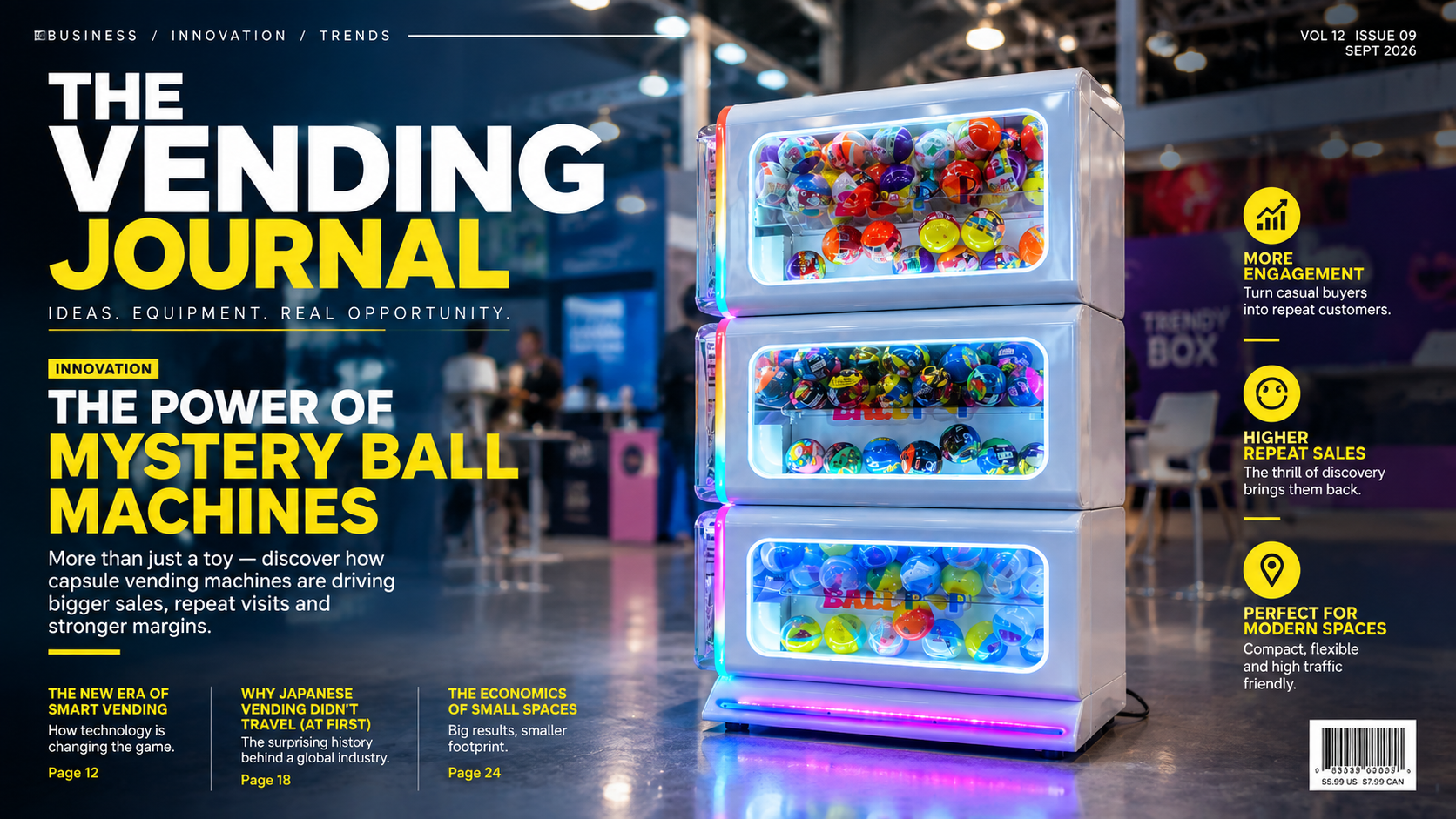
Where this comes from: we supply and operate vending machines across the United States and run pilot programmes across several formats. These photographs are our own from the show floor, and what follows is the economics rather than the marketing.

Think about what happens at a snack machine. You want a specific item, you buy that item, and the wanting is satisfied. The transaction has a natural end and the machine enforces it.
Now think about what happens at a capsule machine. Somebody buys one, opens it, and gets a result. That result is either the one they wanted, in which case they are delighted and frequently buy again to try for a second, or it is not the one they wanted, in which case they have a reason to buy again immediately.
Both outcomes point the same direction. There is no natural stopping point built into the product, because what the customer is actually purchasing is not a toy. It is an attempt.
The structural point: every other vending machine sells a solution to a want. Mystery ball machines sell a chance at one, and a chance that does not land leaves the want intact. That is why this is the only format in ordinary vending where a single customer routinely buys three, four or five units in one visit without the operator doing anything to encourage it.
Add series collecting on top and it compounds. When capsules belong to a set, the customer is no longer buying an object at all. They are buying the gap in a collection, and that gap does not close until the set does.
We would ask any operator considering this category to sit with that for a moment, because it means your revenue per customer is not determined by your pricing in the way it is everywhere else in vending. It is determined by your product mix and how well the series is constructed.
Look at the first photograph again. That is three machines occupying roughly the floor area of a wastebasket, stacked vertically, each with its own lit window and its own product tier.
We think revenue per square foot is the most underused metric in American vending, and it is the number that makes this format work in places where nothing else fits.
A conventional cabinet needs a wall, several feet of clearance and a conversation with a property owner about giving up floor space. A capsule stack does not, and that changes which sites you can even ask about:
That last point is worth dwelling on. A capsule stack in a laundromat, a barber shop or an auto shop waiting room is not competing with anything, because no operator was ever going to put a full cabinet there. Similar logic applies to the compact formats across our mini vending machines range, which exist for exactly these sites.

We have spent a lot of this year writing about fresh food, smoothies, hot meals and refrigerated cabinets, all of which are genuinely exciting and all of which carry real operational weight. Cold chains, cleaning schedules, expiry dates, health permits, temperature logging.
Capsule vending is the opposite end of that spectrum entirely, and after a year of fresh food conversations the contrast is striking:
| Fresh food machine | Mystery ball machine | |
|---|---|---|
| Expiry | Days | None |
| Refrigeration | Constant, and the main running cost | None |
| Health permits | Yes, and involved | Generally not applicable |
| Cleaning regime | Scheduled and documented | Wipe the glass |
| Power draw | Significant, continuous | Lighting and a small motor |
| Waste risk | Real and ongoing | Effectively zero |
| Restock weight | Heavy | Light, and pours in bulk |
That combination makes this the lowest barrier entry point in the entire industry, and the most forgiving format for an operator learning the business. A mistake in fresh food costs you stock and possibly a permit conversation. A mistake here costs you a slow week while capsules that did not sell sit patiently waiting for a different audience.
It also makes it the ideal second or third machine at a site that already has something bigger, since the incremental cost of adding one is small and the incremental space required is negligible.
The mechanism is old and the mechanism is fine. What has changed is everything around it, and this is where our pilots have been most interesting.

We run pilots rather than simply listing equipment because the interesting variables in this category are not mechanical at all. The mechanism works. What nobody can tell you from a datasheet is what American sites and American customers actually respond to.
The first line has produced the finding that most changed our thinking. Average spend per customer in this format behaves nothing like the rest of vending, and any operator modelling it on snack machine assumptions will substantially underestimate a good site and substantially overestimate a bad one.
Our capsule pilots sit deliberately across very different environments rather than in one favourable category, because the whole point of running them is to find out where the format breaks rather than to confirm where it works.
Broadly, that means three groups of sites:
Four things have already changed how we talk to operators about this category:
The third point has been the most commercially useful, because it saves operators money rather than costing it. Several pilot sites perform better on two modules than three, which is not what anybody expects and not something you would ever discover from a specification sheet. It also affects which builds we recommend across the smart vending options we hold, since reporting capability is what makes that call possible.
Our position, plainly: we would rather understand how a format behaves in American sites before recommending it widely. That is why we pilot across categories rather than importing whatever performs well elsewhere and hoping, and it is the same discipline we apply to our outdoor, hot food and fresh beverage programmes.
If the open ended transaction is what makes this format work, then what goes in the capsules is what determines whether it works at your site. This is the part operators underestimate, and it is where the difference between a good machine and a dead one actually lives.
We would go as far as saying that in this category the machine is a commodity and the mix is the business. Two operators running identical hardware at similar sites can see completely different results, and it is almost always this rather than anything mechanical.
The site brief is narrower than for most formats and it is worth being precise about it.
Finding and securing those sites is its own discipline, and property owners with a corner of space can list it through VPlaced. Getting the machine noticed once it is in, particularly the lighting and placement decisions that make somebody turn their head, is where VMarketed is useful.
If you are new to vending, this is a reasonable place to begin, and we say that rarely. The capital is modest, the operating burden is minimal, the compliance surface is small, and a mistake is cheap. Those four things together make it a genuinely good teacher.
If you are already operating, it is the format that makes marginal sites work and adds range at existing ones without asking anybody for more floor space.
On our side, you can look at the compact formats in specialty vending machines, see what is ready to move in in stock units, or browse everything across the shop. In stock units typically ship within 7 to 21 days with a one year parts warranty. Once a machine is live, listing it on VendingFinder is worth doing, since collectors genuinely hunt for these.
We are also still adding pilot locations, particularly family venues and clustered small sites. If you have somewhere that would make a good test, we would like to hear from you.
The economics are unusual because a single customer frequently buys several capsules in one visit rather than the single item that caps every other vending format. Combined with no expiry, no refrigeration and a tiny footprint, the operating burden is the lowest in the industry. Individual ticket sizes are small, so it relies on volume and repeat attempts.
Because what they are buying is an attempt rather than an object. If the capsule contains what they hoped for they often try again, and if it does not the original want is still unsatisfied. Series and collectible sets amplify this considerably, since the customer is effectively buying the gap in a collection.
Very little, which is the format's quiet advantage. A stack of three modules occupies roughly the floor area of a wastebasket while offering three product tiers and three price points, and it scales upward rather than outward. That makes it viable at sites where a full cabinet was never going to fit.
Cashless payment more than anything. The old limit on this category was the change in somebody's pocket, which capped how many attempts they could make regardless of how much they wanted to continue. Card and mobile payment removed that ceiling, and remote monitoring separately made small scattered sites practical to service.
It is one of the better ones. Modest capital, minimal operating burden, no cold chain, no expiry and a small compliance surface mean mistakes are cheap and recoverable. The main thing to get right is product sourcing, which is where the real skill in this category sits.
The Machine That Fits Where Nothing Else Does
We have mystery ball pilots running across the country and we are learning how the format behaves in American sites. Tell us about your location and we will help you spec it.
Visit the Shop
Share:
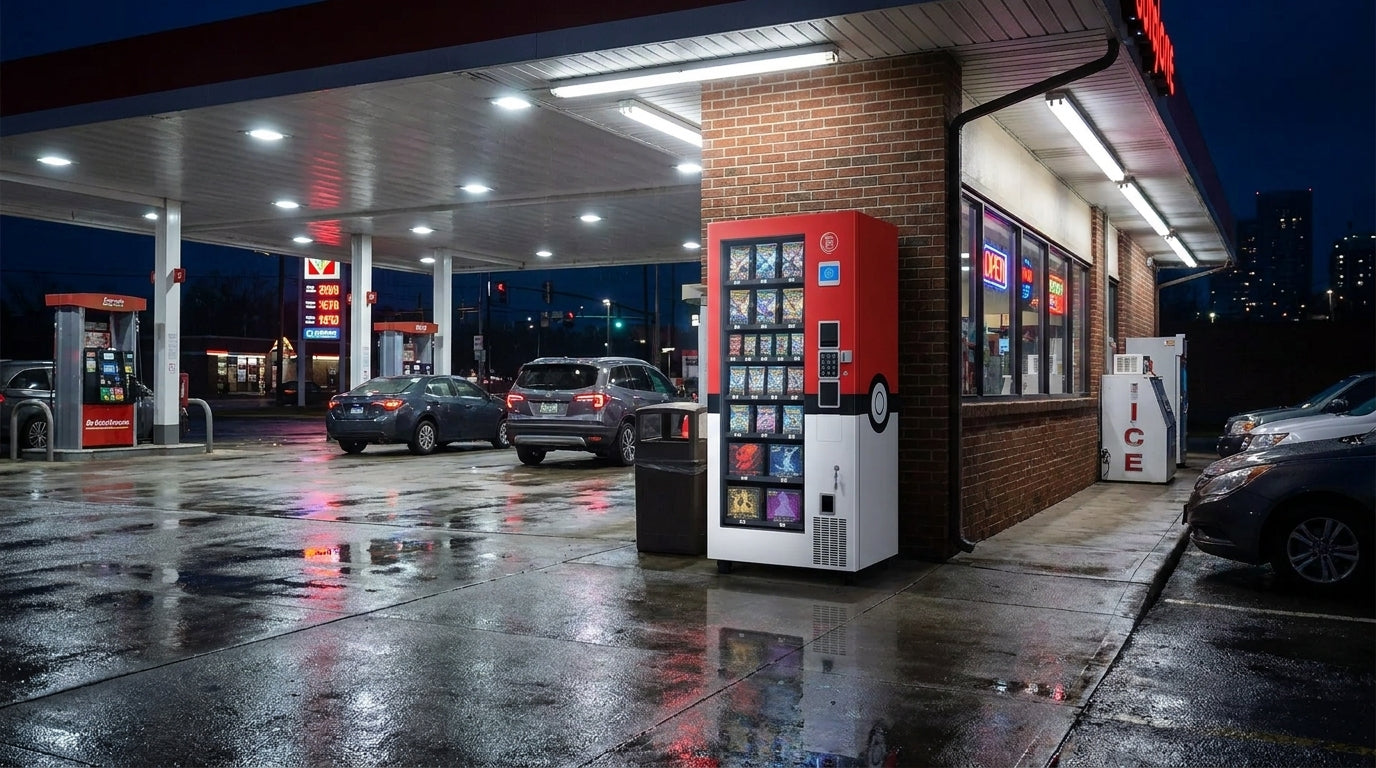
When Did Pokemon Vending Machines Come Out? Complete History & Launch Timeline
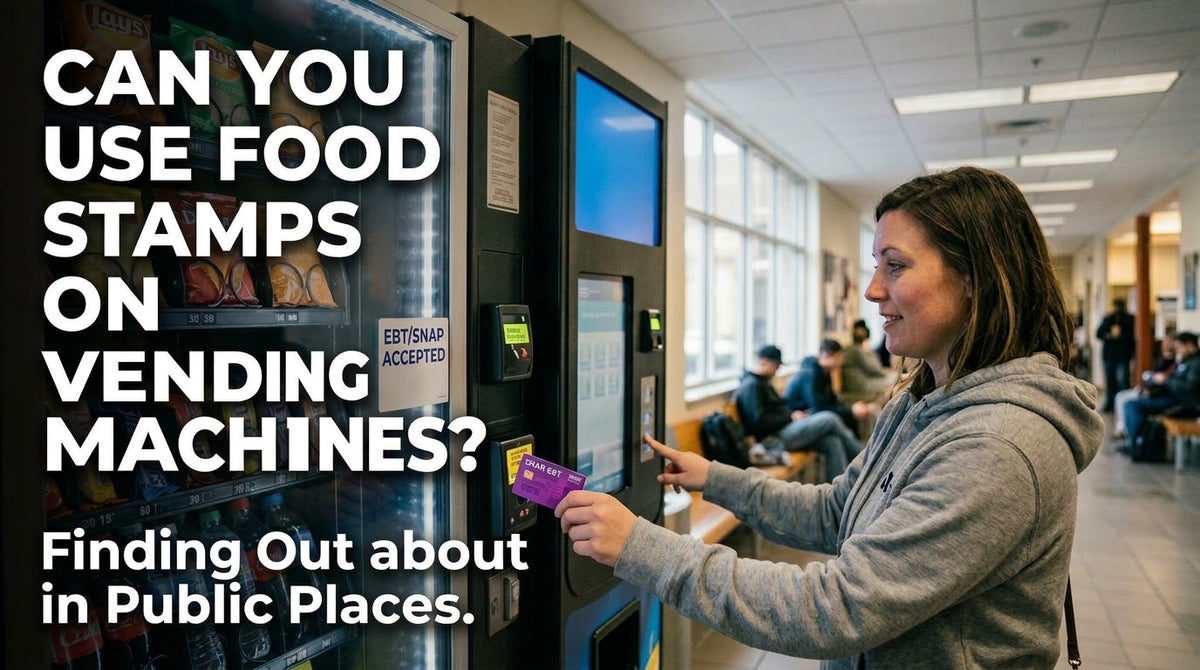
Can You Use Food Stamps on Vending Machines? SNAP EBT Rules