




Design the perfect vending solution for your location and customers.

Join the VMFS newsletter and step into a thriving network dedicated to collective success.
One signup. Endless possibilities.
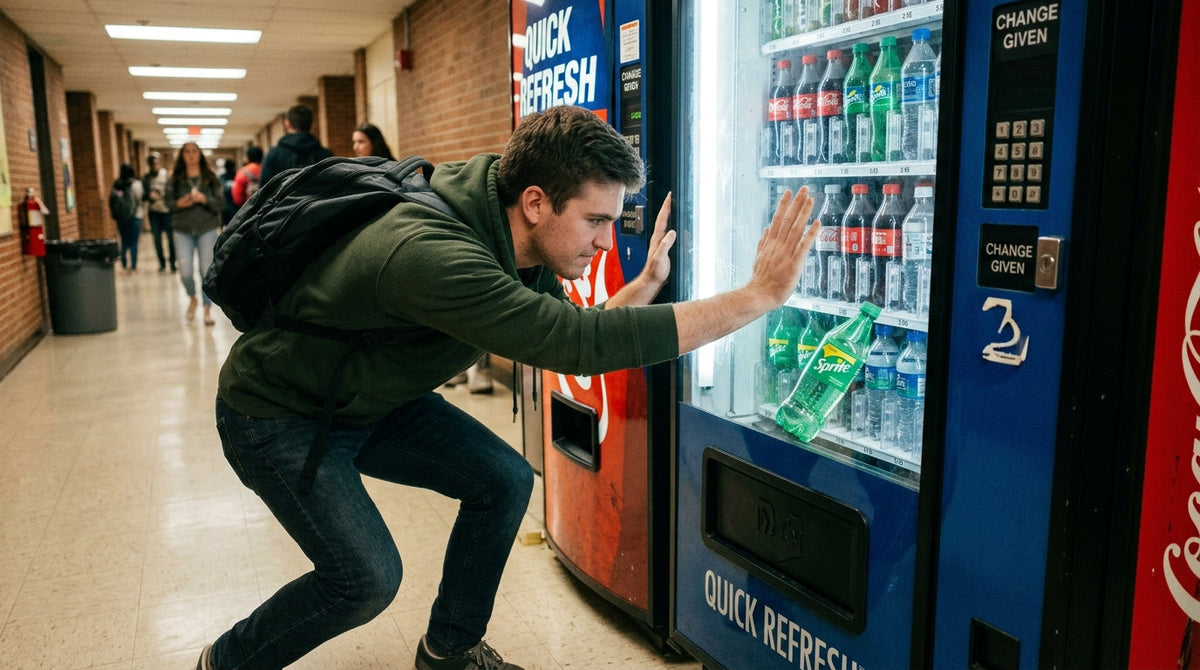
If a drink is stuck in a vending machine, the safe fix is to buy the same item a second time so the coil pushes the trapped bottle forward, or to firmly tap the machine at chest height. Never rock, shake, or tilt the unit. A fully stocked beverage machine can weigh more than 990 pounds (450 kg), and tip-overs have caused documented deaths. This guide covers every reliable retrieval method, why drinks jam in the first place, how modern machines self-correct, and exactly how to claim a refund when the drink simply will not drop.

The fastest safe method is to purchase the same selection a second time. When the coil (the spiral wire holding the row of bottles) rotates again, it advances the whole column forward and pushes the hung bottle off the shelf. You pay once more, but you receive both drinks, so the net cost is nothing beyond a short wait. This works because most beverage jams are a single bottle caught on the front glass, not a mechanical failure of the entire lane.
If a second purchase is not practical, apply a firm, flat-handed push or a controlled tap to the front of the cabinet at roughly chest height, keeping both feet planted and your body upright. The goal is a small forward nudge to the product, not momentum against the machine. If neither works within two attempts, stop and request a refund. Everything below explains when each approach applies and why forcing the machine is never worth the risk.
Drinks jam far less often than snacks, and when they do it is usually bad luck in how the bottle falls rather than a broken machine. Understanding the mechanism tells you which fix will actually work. A stuck drink is almost always a placement or geometry problem inside a single lane, which is why re-vending resolves the large majority of cases without any tools or service call.
The most common cause is a bottle loaded off-center in the spiral coil. Each coil is driven by a small DC motor that rotates the wire a fixed number of turns per vend, advancing the front product until it drops off the shelf edge. When a bottle sits lopsided, it catches on the front glass or on the neighboring bottle instead of dropping cleanly. Mixing wide and narrow products in the same coil compounds the problem, because the coil pitch is calibrated for one diameter. Operators who load carefully see very few jams, which is one reason correct drink vending machine capacity planning matters as much as the machine itself.

Tall PET bottles are the worst offenders. Their high center of gravity lets them tip forward mid-dispense and wedge diagonally between the coil and the front glass. Cold-drink cabinets add another variable: condensation. A sweating bottle has more surface friction against the glass, so instead of sliding it grips and hangs. This is why beverage jams cluster in humid environments and on machines packed with 20 oz contour bottles rather than uniform 12 oz cans.
Occasionally the drink leaves the shelf correctly but lodges in the delivery chute or against the anti-theft flap at the pickup bin. Bottle caps, torn labels, or a previous product left behind can narrow the path. In these cases the item is past the coil, so re-vending will not help; a light tap near the delivery door, or simply reaching in and repositioning the flap, usually frees it.
A machine that repeatedly fails to vend may have a deeper fault. Poor ventilation causes the compressor and control board to overheat, which can interrupt vend cycles and leave products half-dispensed. A coil that will not turn at all points to a failed motor or a controller fault, not a stuck bottle. If the display shows an error, the keypad is unresponsive, or multiple selections fail, the unit needs an operator, not customer intervention. Knowing the normal sequence helps you tell the difference, and our guide on how to use a drink vending machine walks through what a healthy vend looks like from payment to pickup.

Work these methods in order. Each is progressively more hands-on, and you should stop the moment the drink drops. The whole sequence should take under two minutes.
Select the exact same slot number and pay again. The coil completes another full rotation and drives the stuck bottle forward off the shelf, releasing both your original drink and the second one. On machines with cashless readers this is effortless, since you simply tap twice. This is the single most reliable method because it uses the machine's own dispensing force, applied in the correct direction, with no risk to you or the cabinet. If the same slot is now empty on screen, the machine already knows the row failed and you should move to the refund process instead.
If re-buying is not an option, place your palm flat on the front glass directly in front of the stuck bottle and give one or two firm taps, or a short forward push. Stand upright, feet shoulder-width, and never lean your weight into the machine. The physics you want is a small jolt transmitted to the bottle, not the cabinet swaying. Beverage machines are top-heavy when stocked, so any motion of the machine body itself is a warning sign to stop immediately.
If the drink has dropped into the bin but is caught behind the spring-loaded flap, push the flap fully inward and remove the product by hand. Do not force your arm upward past the flap into the chute; anti-theft designs are built to prevent exactly that, and you can trap your hand or damage the mechanism. If the bottle is visibly still up in the coil and not in the bin, no amount of reaching will retrieve it safely.
Modern machines equipped with drop sensors handle jams automatically. When the sensor beam in the delivery bin is not broken within the expected window, the controller either runs the motor again to dislodge the item or refunds your payment in full. Wait 10 to 20 seconds after a failed vend before doing anything else; the machine may be mid-recovery. If it refunds you, take the money and re-select rather than fighting the stuck product.
Do not rock, shake, tilt, or climb a vending machine. This is not a liability disclaimer; it is a documented cause of death. A U.S. Consumer Product Safety Commission review found at least 37 deaths and 113 injuries from tipping vending machines between 1978 and 1995, almost all involving people who rocked a machine to free a stuck product or retrieve change (CPSC data, summarized here). Earlier forensic research published in medical literature found victims were overwhelmingly young and male, with an average age near 20.
The mechanism is simple cause and effect: a full-size beverage machine is top-heavy because the heaviest inventory sits high in the cabinet, and its narrow base offers little resistance once the unit starts to lean. A machine that can exceed 990 pounds fully loaded needs only a few degrees of tilt before its center of gravity passes the base and it falls forward faster than a person can step clear. These incidents dropped sharply after a 1995 industry campaign added warning labels and after manufacturers began anchoring machines, but the physics have not changed. The weight and footprint that make tipping lethal are the same specifications operators plan around when they review drink vending machine dimensions for a site.
The stuck-product problem is largely an engineering issue that newer machines have solved. If you operate or are buying equipment, the anti-jam features below are the difference between constant customer complaints and a machine that quietly handles failures on its own.
An infrared sensor projects a beam across the delivery bin. When a product falls, it breaks the beam, confirming a successful vend. If the beam is never broken, the controller knows the item hung up. Some machines add a second sensor lower in the chute to distinguish a full drop from a partial one where the bottle dangles halfway. This detection layer is the foundation of every guaranteed-vend feature, because the machine cannot fix a jam it does not know occurred.
Once a jam is detected, guaranteed-vend technology gives the machine two options: run the motor again for another partial rotation to shake the product loose, or refund the payment in full. On cashless machines the refund posts straight back to the card. This closes the exact loop that drives frustrated customers to rock a machine, which is why guaranteed vend is now standard on quality combo and beverage units and a specification worth prioritizing over price alone.
The most robust designs remove the drop entirely. Mechanical pickers, small sweeper arms, physically clear the chute so nothing lingers. Elevator or lift-style machines go further: a shelf collects the product and lowers it gently to the pickup door instead of letting it fall. Because the item is never dropped, glass bottles and delicate items cannot wedge or shatter, and the jam rate approaches zero. Elevator delivery is the reason many operators choose it for mixed drink-and-snack sites where product variety would otherwise cause frequent hang-ups.
Not every method suits every situation. This table maps each approach to when it works, its risk level, and its success rate for beverage jams specifically.
| Method | Best For | Risk | Typical Success |
|---|---|---|---|
| Re-buy same slot | Bottle hung on coil or front glass | None | High |
| Controlled tap / firm push | Bottle barely caught, upright cabinet | Low | Moderate |
| Free the delivery flap by hand | Drink already in bin, caught on flap | Low | High |
| Wait for auto re-vend / refund | Sensor-equipped modern machines | None | High |
| Request operator refund | Any failed vend | None | High (money back) |
| Rock / tilt / shake | Never | Severe (injury or death) | Not worth it |
When the drink will not come out and re-buying is not worth it, a refund is your right. Consumer protection principles across most jurisdictions require operators to return payment when a machine takes money without dispensing the product. The process is straightforward if you capture the right details before you walk away.
Before leaving, record the essentials: the machine's ID or serial number (usually a sticker near the payment interface), the location, the date and exact time, the slot number or item you selected, the amount paid, and your payment method. Photograph the front of the machine showing the ID and the payment area. Card users should also note the pending charge. This documentation is what turns a refund request into a quick approval rather than a drawn-out dispute.
Look for a customer-service phone number, QR code, or website on the machine, typically near the coin or bill slot. Call or submit the online form with your documented details. If it is a branded Coca-Cola or Pepsi machine, the beverage company runs its own refund line and will often issue reimbursement, sometimes as a coupon. If no contact information is visible, notify the facility where the machine sits: the office manager, front desk, or building security usually knows who services it and may hold an internal refund process.
Payment method determines both speed and format. Card and mobile-wallet refunds usually return to the original payment method, and a pending authorization often clears on its own within 24 to 72 hours. Cash refunds are handled differently, since machines rarely dispense cash for errors; operators typically mail a check or arrange a digital transfer, which can take one to two weeks.
| Payment Method | Refund Route | Typical Timeline |
|---|---|---|
| Credit / debit card | Back to original card | 24 to 72 hours for pending holds |
| Mobile wallet | Back to linked account | 1 to 3 business days |
| Cash | Mailed check or transfer | 1 to 2 weeks |
If the operator does not respond within one to two weeks, follow up once for a status update. If a request is denied unfairly, ask for the reason in writing and escalate to the facility's management or a consumer protection agency. As a last resort for card payments, you can dispute the charge with your bank or card issuer using your documentation. Most operators resolve issues long before this stage, because a single unresolved refund costs them far more in reputation than the drink was worth.
Every stuck drink is a lost sale, a refund cost, and a customer who trusts the machine less next time. Worse, it invites the exact rocking behavior that damages cabinets and creates liability. The fix is equipment-level, not a matter of asking customers to be gentle. Machines with guaranteed-vend sensors, correct coil pitch for your product mix, and elevator delivery for tall bottles convert the jam problem from a recurring complaint into a non-event.
Placement and loading discipline matter too. Matching product diameter to coil pitch, avoiding wide-narrow mixing in a single lane, and stocking to the machine's rated capacity all reduce hang-ups before they start. If you are weighing models and budgets, our drink vending machine pricing guide breaks down what guaranteed-vend and elevator features add to the purchase and how quickly reduced refunds and higher uptime recover the cost.
Browse guaranteed-vend beverage and combo units engineered to eliminate stuck-drink complaints, protect your cabinet, and keep every sale.
Shop Drink Vending MachinesRunning an unusual location, a specific bottle lineup, or tight footprint constraints? A purpose-built unit avoids the coil-pitch and capacity mismatches that cause most jams in the first place.
Spec a beverage machine around your exact product mix, capacity, and space, with anti-jam delivery configured from the start.
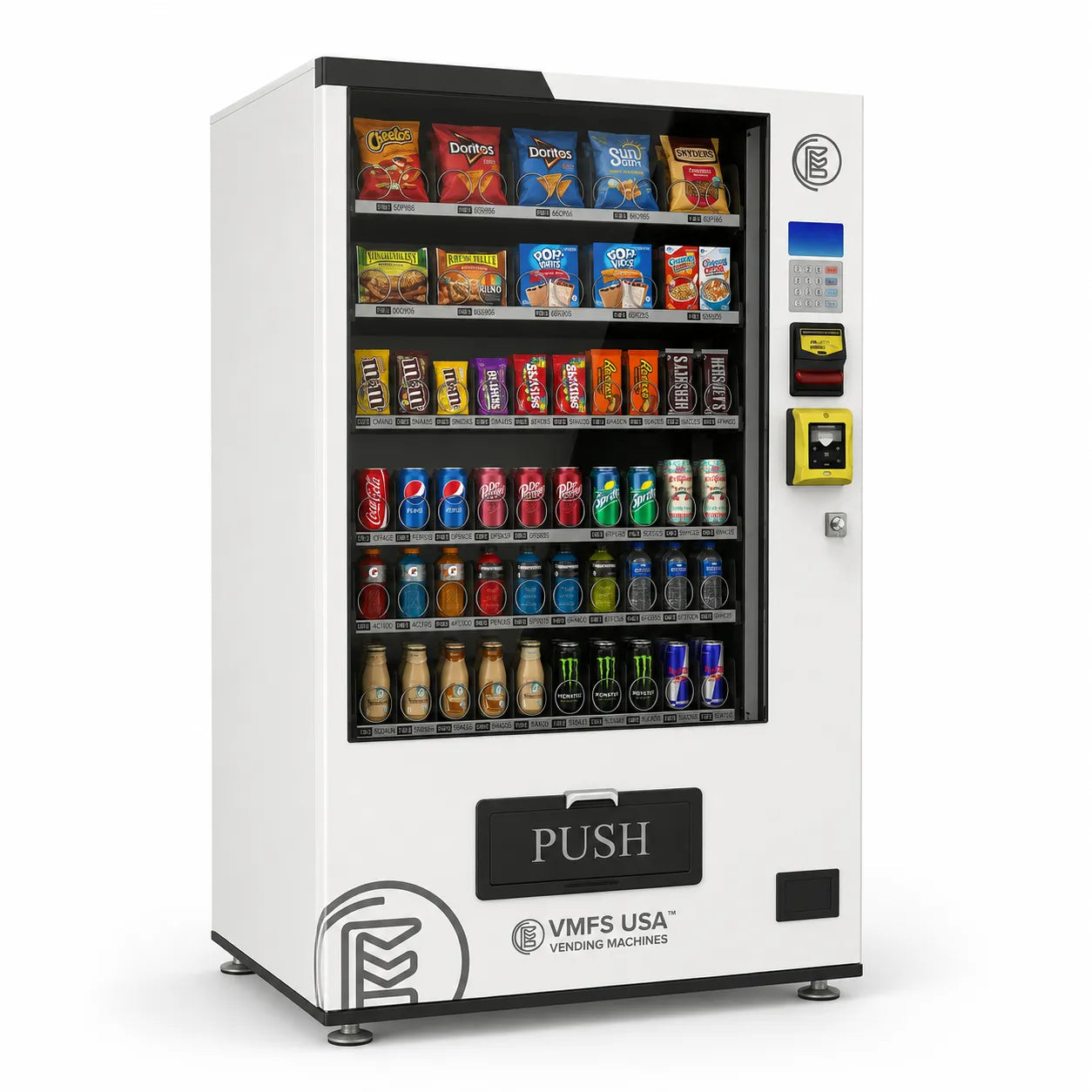
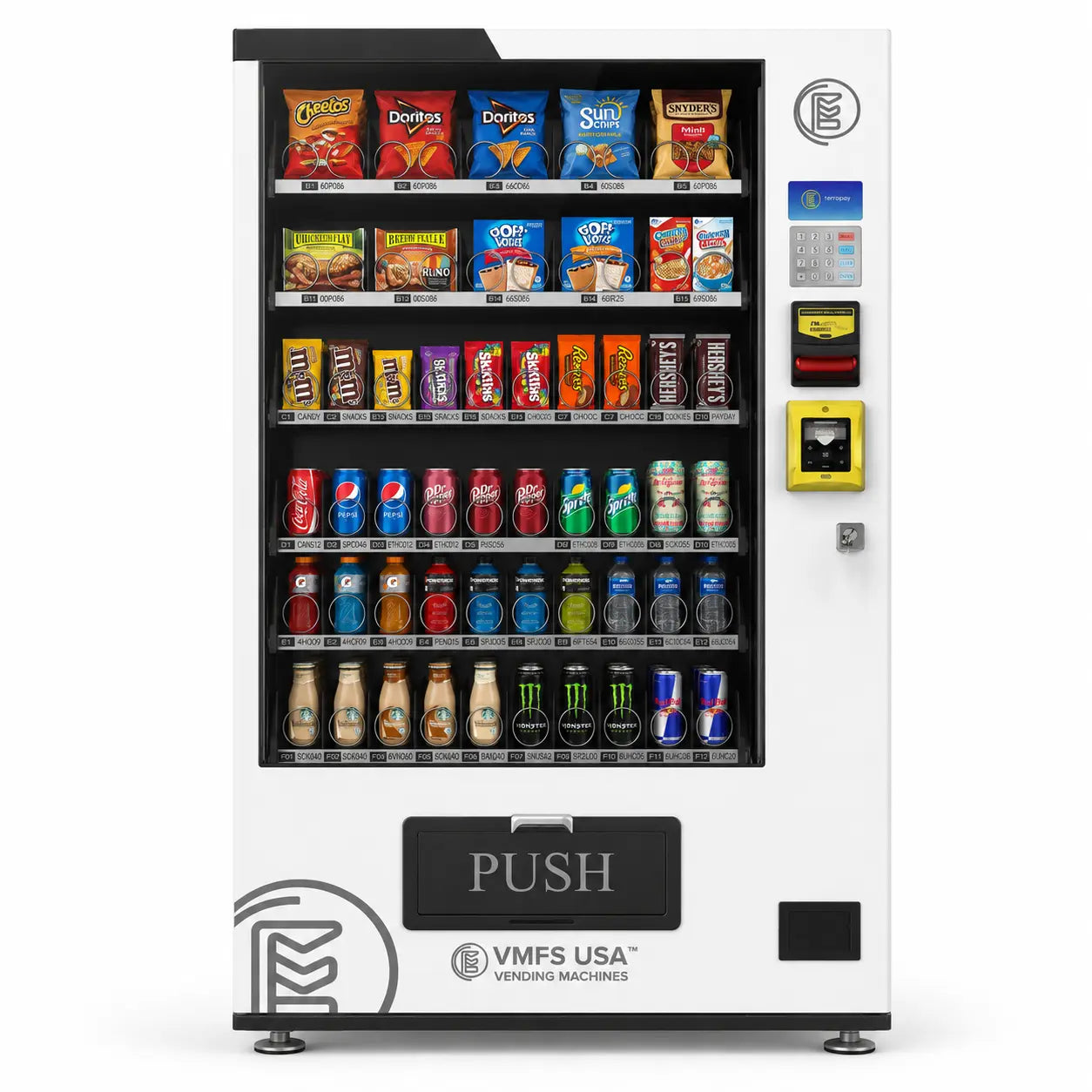
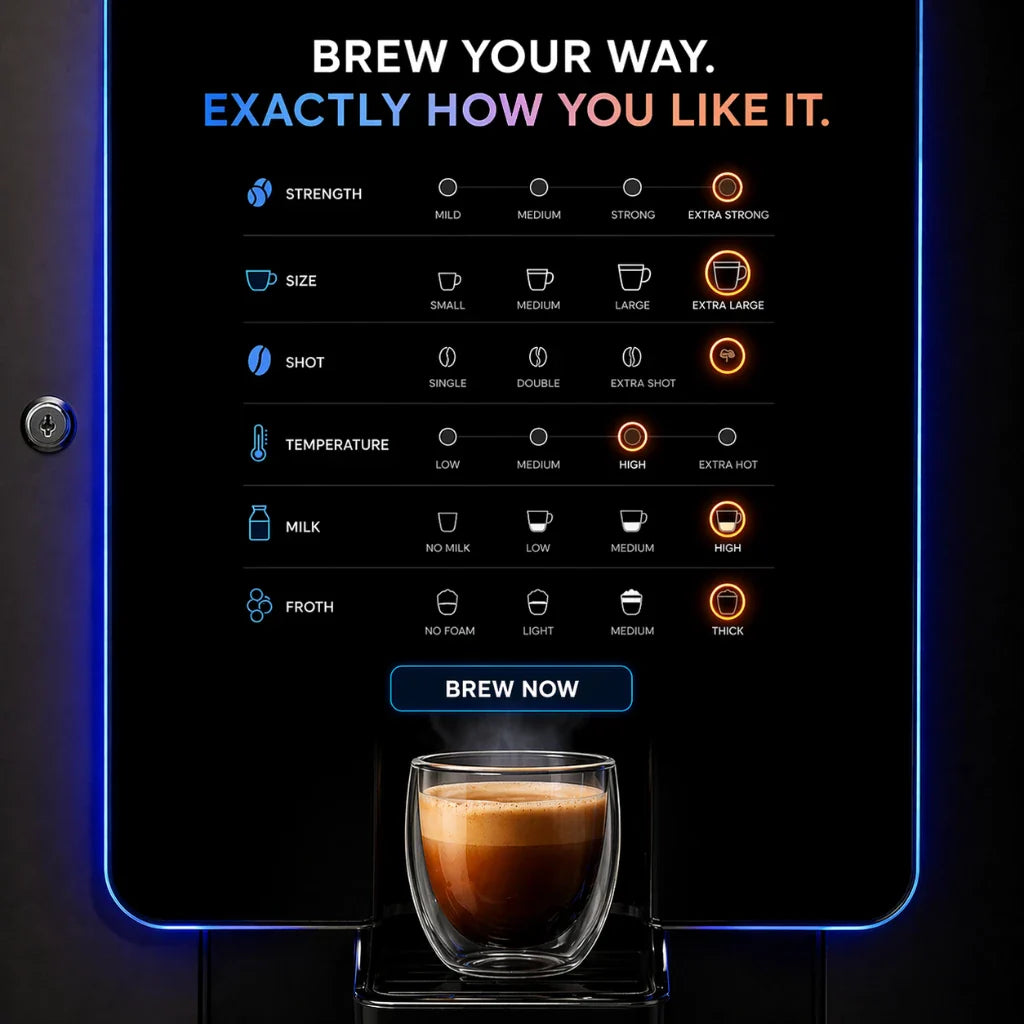
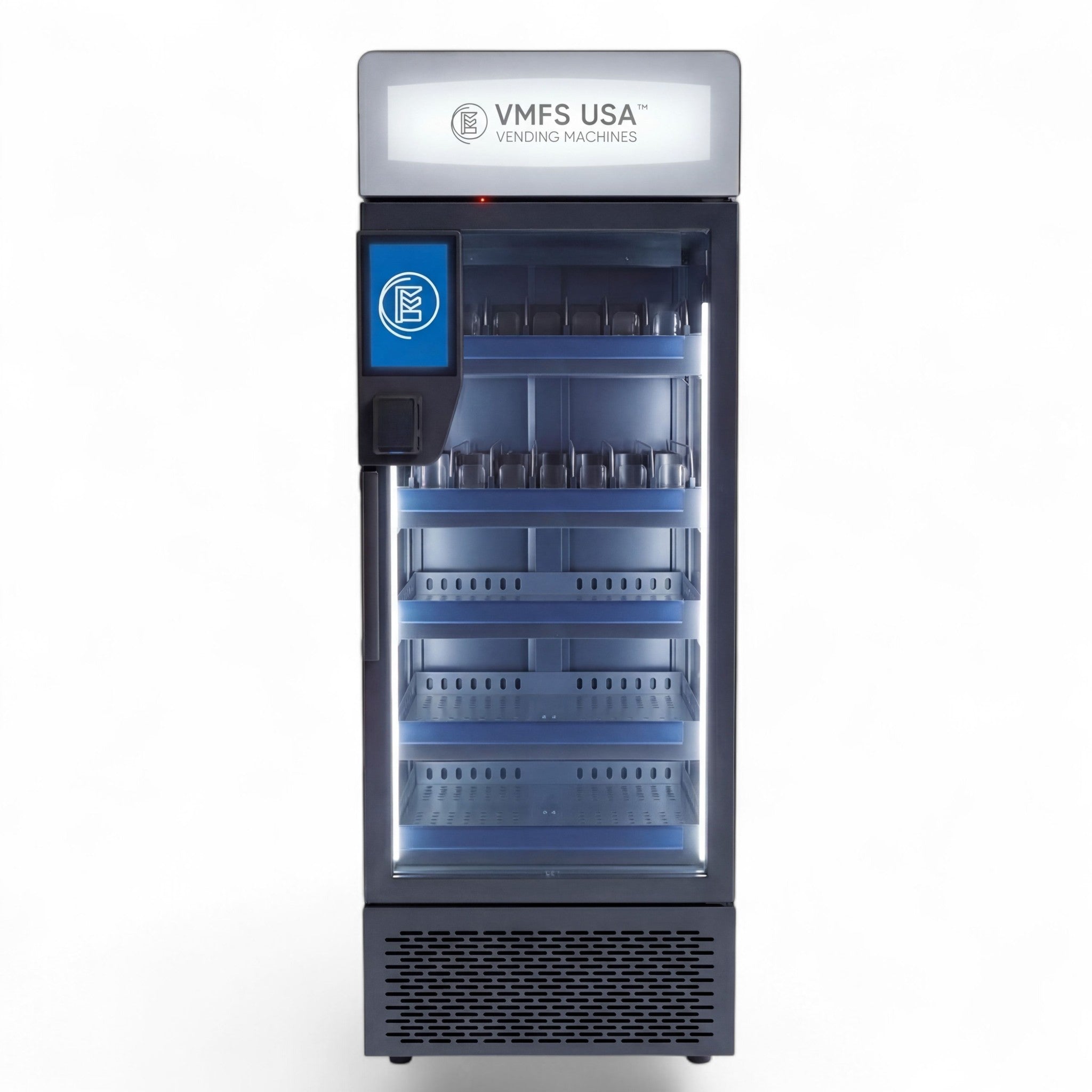
Configure Your MachineThese units pair guaranteed-vend sensors or elevator delivery with capacity built for high-traffic sites:
Share:
How to Program a Snack Vending Machine: Complete Guide
Pokemon Vending Machine Black Screen Fix: The Complete Troubleshooting Guide