



Design the perfect vending solution for your location and customers.

Sales, inventory and alerts for your whole route, from one machine to a fleet.
Answer a few questions about your location, products and budget and get a shortlist.
Estimate revenue, payback period and margin before you buy.
Sales, setup help, warranty and parts from the VMFS USA team.
Join the VMFS newsletter and step into a thriving network dedicated to collective success.
One signup. Endless possibilities.
A drink vending machine typically costs between $2,500 and $12,000, with price driven primarily by beverage capacity, refrigeration system quality, and how much smart technology, such as cashless payment and remote inventory monitoring, is built into the unit. A compact countertop model sits at the low end of that range, while a high-capacity, fully connected machine with advanced cooling and multiple payment options pushes toward the top. Because this range is wide enough to be nearly meaningless on its own, this guide breaks the number down by machine type, explains exactly which components drive cost up or down, and walks through every additional expense that sits outside the sticker price but still affects total investment.
Table of Contents
Four factors explain nearly all of the price variation between the cheapest and most expensive drink vending machines on the market, and understanding each one individually makes it possible to predict where a specific configuration will land in the overall price range before ever requesting a quote.
A machine's total can or bottle capacity, along with how many distinct beverage selections it offers side by side, directly drives material cost, since more slots require more internal structure, more individual coil or drop mechanisms, and a larger overall cabinet to house everything. A compact unit holding 200 to 300 units costs meaningfully less to manufacture than a high-capacity machine holding 500 or more, not just because of raw materials but because the mechanical complexity of coordinating that many independent dispensing points scales up the engineering involved. This is the single largest driver of price within the category, more influential than brand or even technology level in most comparisons.
Beverage vending depends entirely on reliable refrigeration, and the compressor size, insulation quality, and cooling recovery speed built into a machine all affect its price directly. A machine designed to serve high-volume locations needs a more powerful compressor capable of maintaining temperature even during rapid, repeated door or dispensing openings, and that additional cooling capacity adds cost that a lower-volume, lighter-duty unit simply doesn't carry. Machines built for outdoor placement carry this cost further still, since they need reinforced insulation and weatherproofing to maintain consistent internal temperature despite external climate swings.
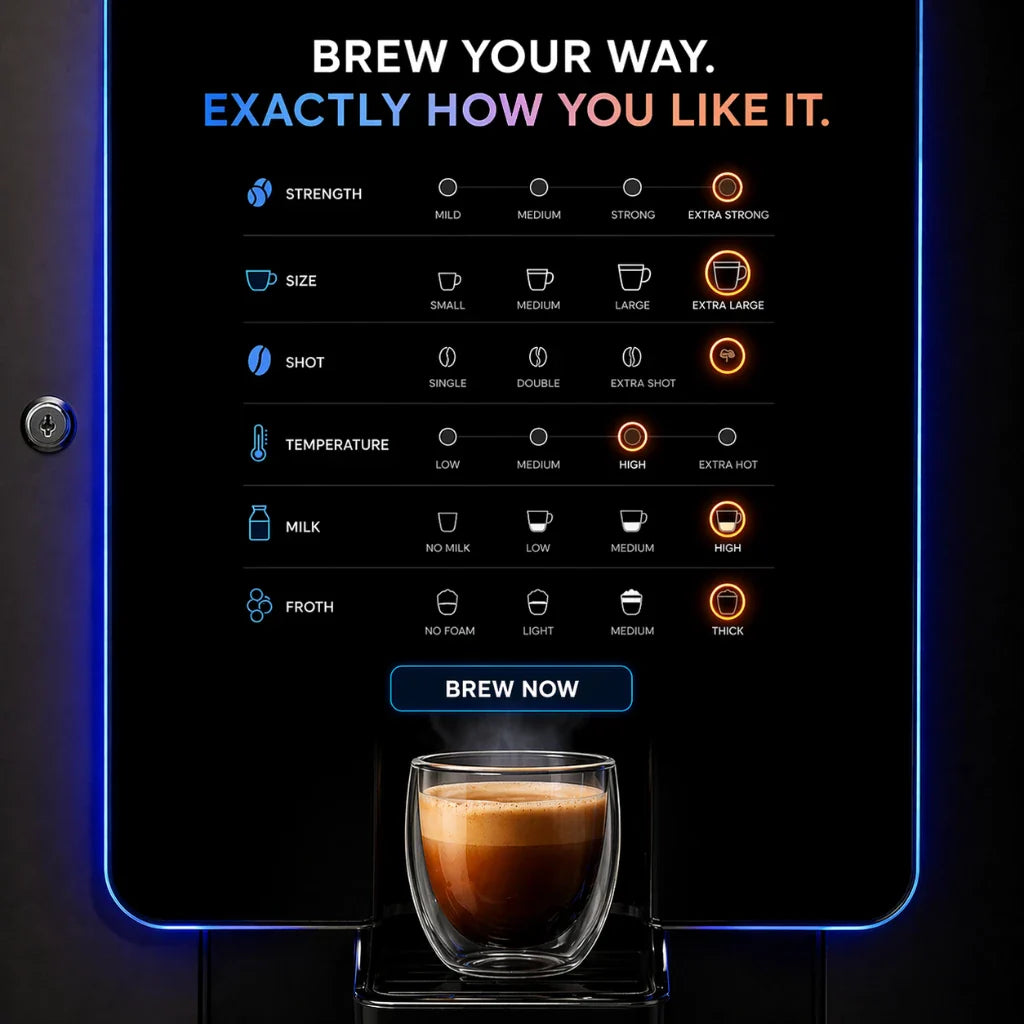
Tap-to-pay terminals, mobile wallet support, touchscreen selection interfaces, and remote telemetry that reports inventory levels back to an operator's dashboard all add cost individually, and a machine bundling several of these features together commands a meaningfully higher price than a mechanically similar unit running on simpler, offline technology. This technology layer has become increasingly standard rather than optional over the past several years, since buyer expectations around cashless payment now shape purchasing decisions almost as much as raw capacity does.
Condition status creates the widest single price swing within the category, since a used or refurbished machine can sell for a fraction of an equivalent new unit's price, though that discount comes bundled with tradeoffs in warranty coverage, remaining mechanical life, and how current the technology inside actually is. This tradeoff deserves its own detailed treatment later in this guide, since it's often the single biggest lever a buyer can pull to control upfront cost.
Breaking the overall $2,500 to $12,000 range down by specific machine type makes budgeting far more actionable than working from the category-wide figure alone.
Compact drink machines, sometimes countertop-sized units meant for small offices or break rooms, typically run $2,500 to $4,000. These units sacrifice total capacity and selection variety in exchange for a minimal footprint, which makes them a strong fit for locations where floor space is the binding constraint rather than expected sales volume.
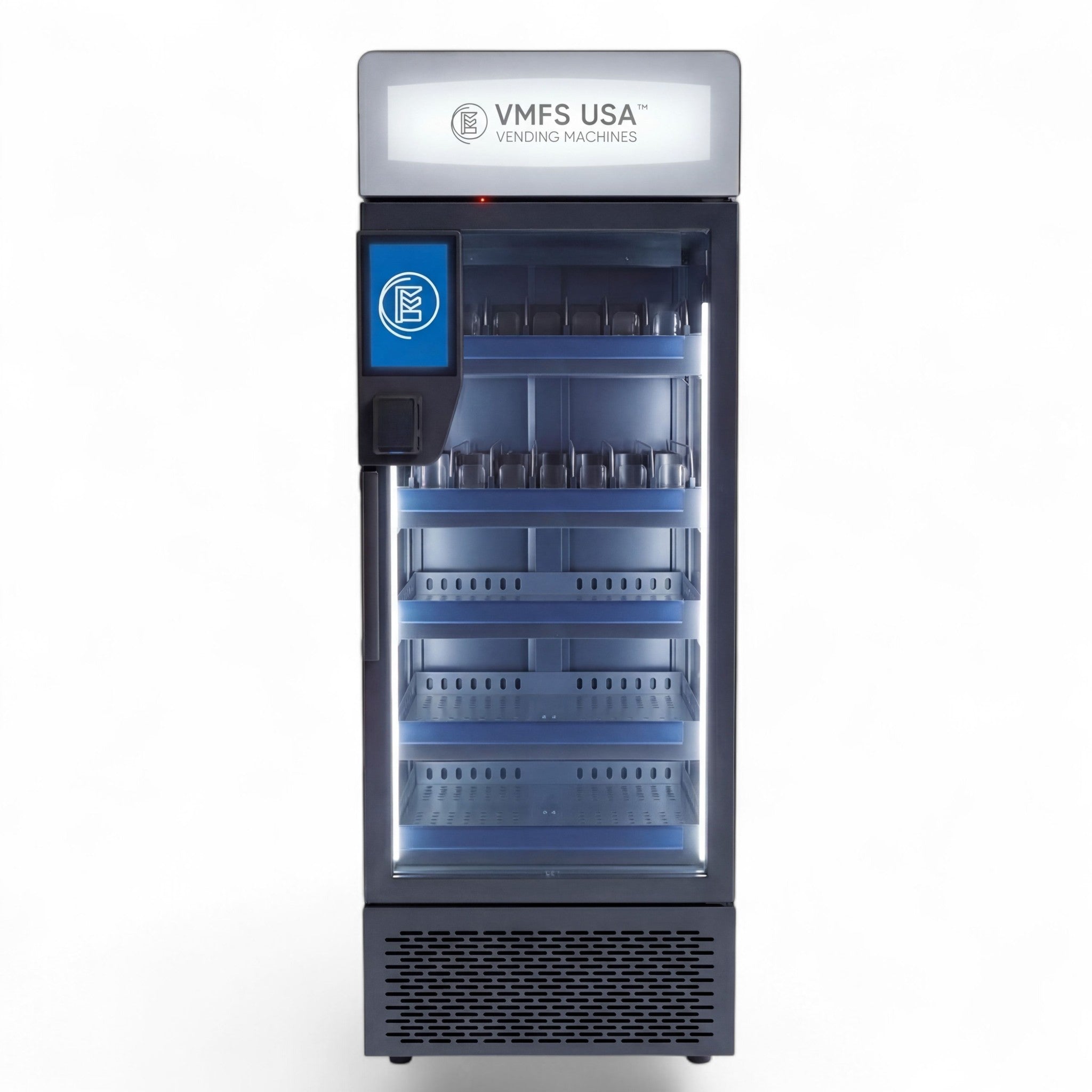
Standard free-standing drink machines, the most common configuration found in offices, gyms, and retail environments, generally run $4,000 to $7,500 depending on capacity and technology level. This tier represents the bulk of the market, balancing meaningful capacity against a price point accessible to most first-time operators.
High-capacity machines built for high-traffic locations, often holding 500 or more units across a wider selection range, typically run $7,500 to $12,000. These machines justify their higher price through reduced restock frequency and the ability to serve genuinely high-volume locations without running empty between service visits.
Machines combining drink and snack dispensing in one unit generally price closer to the standard and high-capacity drink machine ranges, since the added snack compartment doesn't dramatically change the core cost drivers already covered, capacity, refrigeration, and technology, that apply equally to single-category and combo configurations.
| Machine Type | Typical Price Range | Best Fit |
|---|---|---|
| Compact/countertop | $2,500–$4,000 | Small offices, break rooms, tight spaces |
| Standard can/bottle | $4,000–$7,500 | Offices, gyms, moderate-traffic sites |
| High-capacity | $7,500–$12,000 | High-traffic facilities, large offices |
| Combo drink/snack | $4,500–$9,000 | Locations wanting both categories in one unit |
Beyond the headline number, a drink vending machine's price reflects several distinct cost centers that combine into the final figure. Compressor quality and refrigerant capacity make up a substantial share of manufacturing cost, since reliable cooling is the single function the entire machine exists to support. The control board and any connected software layer, responsible for coordinating payment authorization, dispensing commands, and telemetry reporting, represents a second major cost center, particularly on machines with advanced smart features. Cabinet construction, including the steel gauge used, insulation quality, and security features like reinforced locks and tamper-resistant glass, rounds out the remaining cost, and this is often where cheaper machines cut corners in ways that show up later as increased service and security issues rather than upfront savings that hold over the equipment's full working life.
Full manufacturer warranty coverage from day one. Current-generation cashless payment and telemetry technology. Maximum remaining mechanical life before major components need replacement. Predictable maintenance costs in the early years of ownership.
Meaningfully lower upfront cost, often 40 to 60 percent less than an equivalent new unit. Reduced or entirely absent warranty coverage. Technology may lag behind current cashless payment standards. Higher risk of near-term repair needs depending on prior usage and maintenance history.
The decision between new and used ultimately comes down to how much upfront capital an operator has available versus how much risk tolerance they have for unplanned repair costs in the machine's first year or two of operation under new ownership. A buyer with limited startup capital but strong mechanical aptitude, or access to reliable local repair support, often does well with a used machine, while a buyer prioritizing predictability and minimal early-ownership disruption typically comes out ahead paying the premium for new equipment.
The machine's purchase price is only the starting point for total launch investment, and several additional cost categories deserve explicit budgeting rather than being treated as afterthoughts.
Freight delivery for a machine weighing several hundred pounds isn't trivial, and installation, including positioning the unit, connecting power, and confirming proper leveling and ventilation clearance, adds a further line item that varies by delivery distance and site accessibility.
Stocking a new machine's full capacity for the first time requires upfront inventory purchase, which for a mid-size machine holding several hundred units can represent a meaningful capital outlay before the first sale even happens.
Most venue placements involve a revenue share or flat monthly fee paid to the property owner, and this ongoing cost directly affects net profitability even though it's not part of the upfront purchase price. Operators sourcing a location through a matching platform such as VPlaced's location owner matching process should factor whatever revenue share terms result from that match into their total cost model before finalizing a specific machine purchase, since the two decisions, equipment tier and placement terms, interact directly to determine payback timeline.
Routine maintenance, including periodic servicing of refrigeration components and payment terminal upkeep, represents a recurring cost that should be budgeted as an ongoing percentage of revenue rather than treated as a one-time expense that ends once the machine is installed and running.
| Machine Type | Tier | Notable Feature |
|---|---|---|
| Seaga Prosper Beverage Vending Machine | Standard/High-capacity | Dedicated beverage dispensing with strong cooling capacity |
| Drink and Snack Vending Machine (RDS) | Standard combo | Dual-category dispensing in one connected unit |
| Smart Combo Vending Machine | Standard combo | Balanced capacity with connected smart technology |
| Seaga Envision IQ Combo Vending Machine | Full-feature | Advanced interface and remote monitoring |
| Seaga QuickBreak QB4000 | High-capacity | Larger slot count for high-traffic combo placement |
Capacity and price scale together almost linearly within this category, because every additional beverage slot requires its own dispensing mechanism, adds to the cabinet's structural requirements, and increases the refrigeration load the compressor needs to handle. This relationship means that buying more capacity than a location's actual foot traffic can support isn't just a wasted feature, it's capital tied up in equipment scale the site doesn't need, extending payback time unnecessarily. Understanding expected capacity requirements before shopping, rather than defaulting to the largest available unit, is one of the most reliable ways to avoid overspending relative to a specific location's real demand. A detailed look at drink vending machine capacity covers how to estimate the right capacity tier for a given location's traffic pattern, which directly informs which price tier actually makes sense before a purchase decision gets made.
Total cost of getting a drink vending machine into operation extends beyond equipment and placement into the business formation and compliance side of the launch, a category first-time operators frequently underbudget.
Registering a formal business entity carries its own cost and ongoing obligations, and the specific structure chosen affects both upfront formation fees and long-term liability exposure. Many vending operators form an LLC for their vending machine business given the liability protection it offers relative to its moderate formation cost, while a sole proprietorship avoids formal registration cost entirely but leaves personal assets exposed to business liability. Operators launching with a partner should review a partnership structure for a vending machine business before splitting formation costs and ownership terms, and most states also require a registered agent for a vending machine business, which carries its own modest annual fee regardless of entity type chosen.
Beyond entity formation, a general business license, a vending machine permit for the specific unit, and sales tax registration all carry filing fees that vary by jurisdiction but should be included in any complete launch budget rather than treated as negligible afterthoughts once the equipment purchase is finalized.
Reaching an accurate total investment figure means adding the machine's purchase price to delivery and installation, initial inventory stocking, and business formation and licensing costs, all before a single sale has occurred. From there, comparing that total against realistic expected monthly net revenue at the intended location produces a payback timeline that reflects the true cost of getting the machine into operation, not just the sticker price of the equipment itself. A higher-capacity, higher-cost machine can still deliver a faster payback than a cheaper unit if the location's traffic genuinely supports the added volume, which is why capacity-to-traffic matching matters more to ROI than simply minimizing upfront spend.
Oversized machines tie up capital without corresponding revenue to justify it.
Equipment, inventory, licensing, and formation costs all belong in one total figure.
Upfront savings can be offset by reduced warranty and higher early repair risk.
Operators without sufficient upfront capital sometimes finance equipment purchases through vendor financing programs, small business loans, or equipment-specific leasing arrangements, each carrying different interest cost and ownership implications worth comparing before committing to a specific financing path. Financing can make sense when it allows an operator to deploy a higher-capacity, better-positioned machine sooner than saving for a full cash purchase would permit, provided the additional revenue that capacity generates outpaces the financing cost over the loan or lease term.
Higher capacity supports genuinely high-traffic locations without frequent restocking. Advanced telemetry reduces wasted service visits. Stronger refrigeration performance under heavy, repeated use.
Lower upfront capital requirement, easier for first-time operators to enter the market. Simpler mechanically, often easier to service without specialized technical support. Faster to deploy across multiple lower-traffic sites within the same budget.
The most common budgeting mistake is focusing exclusively on the machine's purchase price while ignoring delivery, initial inventory, and business formation costs that can add a meaningful percentage on top of the equipment cost alone. A second frequent error is buying more capacity than a location's realistic traffic supports, which extends payback time unnecessarily and ties up capital that could otherwise fund a second, better-matched placement. A third mistake is choosing used equipment purely on price without factoring in the realistic likelihood of near-term repair costs, which can erode or even exceed the upfront savings within the first year of ownership if the machine's prior maintenance history was poor.
Cost is one part of a broader purchase decision that also includes capacity planning, placement strategy, and ongoing compliance, each worth reviewing in more depth before finalizing a specific drink vending machine configuration. Matching equipment tier to actual site demand, more than any single feature or brand consideration, remains the factor most likely to determine whether a given purchase turns into a strong investment or an oversized expense sitting underused in a location that never needed that much capacity in the first place.
Compare current pricing across every capacity tier covered above, or configure a custom build.
From dedicated beverage machines to combo units that add snack capacity.
Drink vending machines typically cost between $2,500 and $12,000, with price driven mainly by beverage capacity, refrigeration quality, and how much smart technology, like cashless payment and telemetry, is built into the unit.
Compact or countertop drink machines sit at the lower end of the price range, typically $2,500 to $4,000, trading total capacity for a minimal footprint.
Used machines often sell for 40 to 60 percent less than an equivalent new unit, though buyers should weigh that savings against reduced warranty coverage and higher near-term repair risk.
Yes, capacity and price scale together almost linearly, since every additional beverage slot requires its own dispensing mechanism and adds to the refrigeration load the compressor must handle.
Delivery and installation, initial inventory stocking, revenue share paid to the venue, and ongoing maintenance all add to total investment beyond the equipment price itself.
Yes, entity formation fees, a registered agent, business licensing, and sales tax registration all carry costs that belong in a complete launch budget alongside the equipment price.
Yes, options include vendor financing programs, small business loans, and equipment leasing, each with different interest cost and ownership implications worth comparing before committing.
Add the machine's total upfront investment, including installation and initial inventory, then compare it against expected monthly net revenue at the intended location to estimate a payback timeline.
Not necessarily. A higher-tier machine only justifies its added cost in a location with traffic strong enough to actually use the extra capacity and features.
Focusing exclusively on the machine's purchase price while ignoring delivery, initial inventory, and business formation costs is the most common error, often followed by buying more capacity than the location actually needs.
Share:
How Much Does a Smart Combo Vending Machine Cost?
Pokémon Vending Machine Maintenance Schedule: What to Check and When