




Diseñe la solución de vending perfecta para su ubicación y clientes.

Únete al boletín de VMFS y forma parte de una red próspera dedicada al éxito colectivo.
Un registro. Posibilidades infinitas.
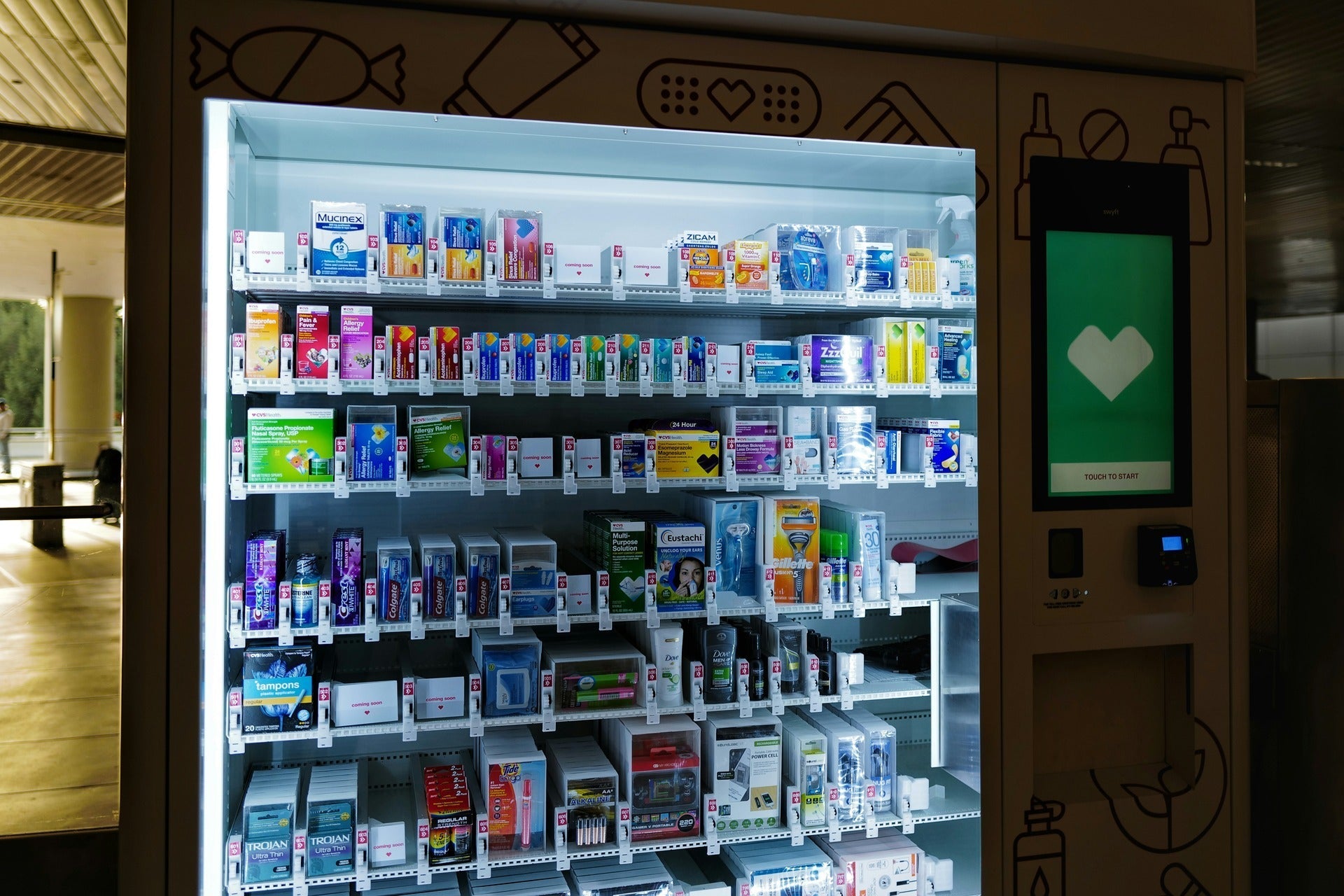
Alguien está en el pasillo de un hotel a medianoche con un dolor de cabeza terrible. La recepción está cerrada. La farmacia más cercana está a diez minutos en coche. Y su máquina expendedora está a cuatro metros y medio, llena, iluminada y lista para resolver ese problema en treinta segundos.
Pero comprar uno sin una hoja de ruta es un dolor de cabeza completamente distinto. Las normas federales son reales. Los requisitos estatales varían más de lo que la mayoría de los operadores esperan. La selección del producto debe ser precisa. Y las decisiones de ubicación que tome de antemano determinarán si este se convertirá en uno de sus activos con mayor margen de beneficio o en una costosa máquina acumulando polvo en un pasillo.
Esta guía lo abarca todo: tipos de máquinas, qué productos de venta libre puede y no puede vender legalmente, el panorama exacto de permisos federales y estatales, qué debe saber antes de comprar, estrategia de colocación, costos, financiamiento y cómo configurar el monitoreo remoto para que siempre sepa exactamente qué sucede con su máquina.
Una máquina expendedora de medicamentos es una unidad expendedora especializada diseñada para dispensar medicamentos de venta libre, productos de salud y artículos de cuidado personal en lugares donde el acceso a farmacias es limitado o inaccesible. Estas máquinas funcionan las 24 horas y se ubican comúnmente en hoteles, hospitales, aeropuertos, gimnasios, universidades y campus corporativos. Dispensan únicamente productos de venta libre. Los medicamentos con receta no se pueden dispensar a través de ninguna máquina expendedora estándar.
Los términos máquina expendedora de medicamentos y máquina expendedora de farmacia a menudo se usan indistintamente, pero en la práctica describen cosas ligeramente diferentes.
Una máquina expendedora de farmacia generalmente se refiere a una máquina operada en colaboración con una farmacia autorizada o adyacente a ella, que ofrece una selección selecta de medicamentos de venta libre bajo la supervisión de la farmacia. La Universidad de Purdue, por ejemplo, opera máquinas expendedoras de farmacia en todo el campus, que dispensan medicamentos de venta libre y productos de cuidado personal directamente a través del sistema de farmacias de la universidad. Una máquina expendedora de medicamentos es la categoría más amplia que abarca cualquier máquina especializada con productos de salud y bienestar, independientemente de si está afiliada a una farmacia autorizada.
Para la mayoría de los operadores independientes, la categoría práctica es la venta de medicamentos, no la venta en farmacias. El modelo de afiliación a farmacias conlleva una complejidad regulatoria considerablemente mayor y suele aplicarse a despliegues institucionales, no a operadores de rutas independientes.
Esta es la primera pregunta que debemos resolver. La selección de su producto define el tipo de máquina, los requisitos regulatorios y su público objetivo. Equivocarse en esto cuesta tiempo, dinero y, en algunos casos, exposición legal.
La Guía de Políticas de Cumplimiento de la FDA (CPG Sec. 450.400) es explícita al respecto: no existe ninguna disposición en la Ley Federal de Alimentos, Medicamentos y Cosméticos que prohíba la venta de medicamentos de venta libre en máquinas expendedoras. Sin embargo, todo producto dispensado debe cumplir plenamente con los requisitos de etiquetado de la FDA, y la máquina debe mostrar el etiquetado completo de cada producto o exhibir los productos de forma que el etiquetado obligatorio sea visible para el comprador antes de realizar su selección.
Los productos OTC estándar legales en la mayoría de las configuraciones de venta incluyen:
Varias categorías de productos OTC tienen restricciones que los hacen inadecuados o legalmente problemáticos para las máquinas expendedoras. Infórmese sobre estas restricciones antes de finalizar su lista de productos.
Los productos que contienen pseudoefedrina están prohibidos a nivel federal en las máquinas expendedoras. La Ley para Combatir la Epidemia de Metanfetamina de 2005 (CMEA), incorporada a la Ley Patriota y vigente desde el 30 de septiembre de 2006, prohíbe explícitamente la venta sin receta de medicamentos para el resfriado que contengan pseudoefedrina, efedrina y fenilpropanolamina en mostradores o máquinas expendedoras. Estos productos deben venderse en mostrador con verificación de identificación con foto, con un límite de compra de 3.6 gramos al día y 9 gramos cada 30 días, y con un registro de compras actualizado durante al menos dos años. Una máquina expendedora no puede cumplir estos requisitos, lo que impide totalmente la venta de productos con pseudoefedrina en cualquier operación de venta sin receta, independientemente del estado.
Los productos de dextrometorfano (DXM) están sujetos a restricciones de edad a nivel estatal. El estado de Washington, por ejemplo, exige un comprobante de edad para la venta minorista de productos que contengan dextrometorfano y prohíbe su venta en máquinas expendedoras a menos que se integre la verificación de edad. Varios otros estados tienen normas similares. Consulte los requisitos específicos de DXM de su estado antes de vender cualquier producto para la tos.
Los medicamentos con receta de cualquier tipo no pueden dispensarse en una máquina expendedora estándar de venta libre. Esto incluye cualquier producto que requiera receta médica, por muy conocido o accesible que parezca en el mercado.
Las sustancias controladas quedan excluidas por completo bajo todas las circunstancias.
Antes de entrar en los requisitos a nivel estatal, comprenda la línea de base federal que se aplica independientemente de dónde opere su máquina.
Todo producto de venta libre dispensado en una máquina expendedora de medicamentos debe cumplir con los requisitos de etiquetado de la FDA. La etiqueta completa de información farmacológica debe ser visible para el comprador antes de que finalice su decisión de compra. Esto significa que la máquina muestra una copia completa del etiquetado obligatorio para cada producto o que los productos se presentan de forma que el etiquetado obligatorio sea legible a través de la ventana de la máquina antes de la compra. No se pueden reenvasar productos de venta libre en cantidades más pequeñas ni retirar ninguna parte de la etiqueta original del fabricante. El producto debe dispensarse exactamente como sale del fabricante, en su envase original sellado.
Como se mencionó anteriormente, la CMEA prohíbe a nivel federal la venta de cualquier producto que contenga pseudoefedrina, efedrina o fenilpropanolamina. Esta es una ley federal aplicada por la DEA sin soluciones alternativas a nivel estatal. Cualquier operador que venda estos productos a través de una máquina expendedora se enfrenta a graves sanciones federales, independientemente del estado en el que opere.
La Ley de Envases para la Prevención de Envenenamientos exige envases a prueba de niños para la mayoría de los medicamentos de venta libre. Los productos dispensados por su máquina deben llegar en su envase original a prueba de niños del fabricante. No compre productos cuyo envase original haya sido alterado o reemplazado.
Aquí es donde los operadores se equivocan con más frecuencia. Los requisitos estatales varían considerablemente, y el consejo de "simplemente obtener una licencia comercial" que se lee en las guías genéricas de venta no aplica del todo a la venta de medicamentos. Aquí se presenta la situación real por categoría de requisito.
Todos los estados exigen una licencia comercial para operar comercialmente. Esta es la licencia básica y suele costar entre $50 y $200, según el estado. No autoriza por sí sola a operar una máquina expendedora ni a vender productos de salud.
La mayoría de los estados exigen un permiso de operador de máquinas expendedoras aparte de la licencia comercial. La autoridad emisora y el costo varían considerablemente según el estado. Florida, por ejemplo, exige una Licencia de Servicio de Alimentos para Máquinas Expendedoras de la División de Hoteles y Restaurantes para cualquier máquina que dispense alimentos o productos de consumo, que incluye una inspección física y una calcomanía adherida a cada máquina. Delaware cobra una tarifa anual de calcomanía de $5 por máquina, además de la licencia comercial estándar. California exige un permiso de vendedor del Departamento de Administración de Impuestos y Tasas. Para obtener un desglose completo por estado, nuestra guía sobre permisos y requisitos legales para máquinas expendedoras cubre los requisitos específicos de licencia de operador de cada estado, con enlaces oficiales a cada autoridad estatal.
Este es el nivel de permisos que la mayoría de los operadores de venta libre pasan por alto. Varios estados clasifican la venta de medicamentos de venta libre bajo la jurisdicción de la junta de farmacia o del Departamento de Salud, lo cual va más allá de los permisos estándar para la venta de alimentos.
El estado de Washington exige un Registro de Comerciante del Departamento de Hacienda para cualquier negocio que venda medicamentos sin receta y que no sea una farmacia autorizada. Los productos deben estar en su empaque original. Está específicamente prohibido vender medicamentos con restricciones de venta, como límites de edad o cantidad, en máquinas expendedoras. La Junta Estatal de Farmacias también supervisa el cumplimiento de las normas de venta de medicamentos.
Florida requiere que los operadores se pongan en contacto con la Junta de Farmacia para cualquier venta de productos de salud que se acerque al territorio de supervisión farmacéutica, aunque los operadores de máquinas OTC estándar generalmente operan bajo la licencia de venta de la DBPR en lugar de un permiso de farmacia.
Oregón exige receta médica para productos que contienen pseudoefedrina, lo que refuerza la prohibición federal con medidas de control a nivel estatal. Los operadores de Oregón también deben cumplir con las directrices de la junta farmacéutica estatal sobre la venta de productos de venta libre en general.
La estrategia correcta en cada estado es contactar con la Junta de Farmacia y el Departamento de Salud de su estado antes de solicitar su máquina. Entre ambas autoridades, podrá identificar todos los requisitos de permisos para su selección de producto y tipo de ubicación. No se base en las guías generales de permisos de venta para el cumplimiento de los productos sanitarios. Siempre acuda a la autoridad estatal principal.
Si su máquina expendedora vende productos perecederos o de temperatura controlada, generalmente se requiere un permiso del departamento de salud, además de su licencia de operador. La mayoría de los medicamentos de venta libre estándar son estables y no requieren este requisito. Productos como suplementos refrigerados, ciertas gotas oftálmicas sensibles a la temperatura o cualquier producto alimenticio sí lo requieren. Consulte con su departamento de salud local si su selección de productos incluye algún producto que requiera control de temperatura.
Además de los permisos estatales, muchos condados y ciudades exigen su propia licencia comercial para las operaciones de venta ambulante. El sistema parroquial de Luisiana es un ejemplo conocido, donde los requisitos varían considerablemente entre 64 parroquias. Maryland exige una licencia de $2.50 por máquina expedida por los secretarios del Tribunal de Circuito de cada condado. Siempre consulte los requisitos del condado y la ciudad después de obtener sus permisos estatales, no en lugar de ellos.
Hospitales, aeropuertos, universidades y edificios gubernamentales imponen requisitos adicionales a los permisos estándar de los operadores. Los centros de salud suelen exigir a los operadores que cuenten con una cobertura de seguro específica, cumplan con las políticas de contratación de instalaciones y se sometan a auditorías internas. Los contratos de concesión aeroportuaria implican el proceso de aprobación de la autoridad aeroportuaria, independientemente de cualquier permiso gubernamental de venta. Incluya en su planificación plazos de aprobación específicos para cada ubicación. Estos plazos pueden tardar semanas o meses en instalaciones reguladas.
El cumplimiento normativo en la venta de medicamentos es bastante manejable para la mayoría de los operadores. La clave está en investigar los requisitos de la junta de farmacia y del Departamento de Salud de su estado antes de comprar la máquina. Los operadores con problemas casi siempre omiten este paso y se basan en las directrices generales de venta que no contemplan las normas específicas de los productos de venta libre.
Estas son las preguntas y realidades que distinguen a los operadores que construyen una operación rentable de venta de medicamentos de quienes aprenden lecciones costosas. Léalas todas antes de realizar cualquier pedido.
Esto aplica a todas las categorías de máquinas expendedoras, pero es especialmente importante para las máquinas expendedoras de medicamentos, cuyos requisitos de cumplimiento dependen del tipo de ubicación. Una máquina autorizada para su ubicación en un hotel puede tener requisitos adicionales para su ubicación en un hospital. Confirme su ubicación, obtenga un acuerdo por escrito y verifique los requisitos de cumplimiento específicos de la ubicación antes de realizar el pedido de su máquina. Una máquina financiada almacenada es simplemente una deuda. Una máquina ubicada en una ubicación confirmada es un activo que genera ingresos.
La prohibición federal de la CMEA sobre la pseudoefedrina en las máquinas expendedoras es absoluta. Sin embargo, las restricciones del DXM, los requisitos de verificación de edad y las normas adicionales de la categoría de venta libre varían según el estado. Washington prohíbe los productos que contienen DXM en las máquinas expendedoras a menos que se integre la verificación de edad. Oregón trata la pseudoefedrina como un producto con receta. Otros estados tienen sus propias particularidades. Infórmese sobre las normas de su estado para cada categoría de producto antes de decidirse por uno.
En estados como Washington, cualquier negocio que venda medicamentos sin receta y que no sea una farmacia autorizada debe registrarse como comerciante en el Departamento de Hacienda estatal. Esta es una categoría de registro específica, distinta de una licencia comercial general o un permiso para la venta de alimentos. Existen clasificaciones similares en otros estados con diferentes nombres. Consulte directamente con la Junta de Farmacia de su estado si un registro específico de vendedor de medicamentos sin receta aplica a su operación.
A diferencia de la venta de refrigerios o bebidas, la venta de medicamentos de venta libre caducados genera una responsabilidad legal real. Su operación debe contar con un sistema para el seguimiento de las fechas de caducidad de los productos en cada ranura de cada máquina. La gestión de inventario integrada con telemetría que detecta las fechas de caducidad próximas no es opcional para una operación de venta de medicamentos seria. El seguimiento manual en varias máquinas es propenso a errores y no es escalable. Los sistemas digitales con alertas de caducidad deben integrarse en su operación desde el primer día.
El seguro estándar para operadores de máquinas expendedoras cubre daños y responsabilidad civil general. La venta de productos y medicamentos para la salud aumenta la exposición a la responsabilidad civil por productos defectuosos, que su póliza estándar no cubre. Un cliente que presenta una reacción adversa a un producto de venta libre dispensado en su máquina, incluso si se trata de un producto correctamente sellado y etiquetado, utilizado según las instrucciones, genera una posible responsabilidad civil contra la que una póliza general no cubre. Obtenga cobertura de responsabilidad civil por productos defectuosos antes de que su primera máquina entre en funcionamiento. Trabaje con una aseguradora comercial con experiencia en farmacias minoristas o distribución de productos para la salud.
El requisito de la FDA no solo exige que el producto que se dispensa tenga la etiqueta intacta, sino que el etiquetado obligatorio debe ser visible para el posible comprador antes de tomar la decisión de compra. Esto significa que la configuración de la pantalla de su máquina debe permitir a los clientes leer la etiqueta de información farmacológica de cada producto a través de la ventana de la máquina antes de seleccionar y pagar. Las máquinas que ocultan el envase del producto tras puertas o paneles opacos podrían no cumplir con este requisito para los medicamentos de venta libre. Verifique la configuración de la pantalla de su máquina con esta norma antes de abastecerla.
Una persona que compra ibuprofeno a medianoche en el pasillo de un hotel no lleva el cambio exacto. Su máquina debe aceptar tarjetas de crédito, débito y opciones de pago sin contacto, como Apple Pay y Google Pay, como mínimo. Cualquier establecimiento con un sistema de pago con credencial de empleado o identificación del campus también debe integrarse con estos sistemas. Una máquina que solo acepta efectivo en esta categoría de producto tendrá un rendimiento significativamente inferior y frustrará precisamente a los clientes a los que intenta atender.
Los productos de venta libre (OTC) vienen en una gama mucho más amplia de tamaños y formas de envases que los productos estándar de aperitivos y bebidas. Los blísteres, los envases tubulares, las botellas, las bolsas y los productos en caja tienen diferentes dimensiones. Una máquina expendedora estándar con bobinas, configurada para productos de tamaño aperitivo, se atascará con frecuencia con envases de venta libre irregulares. Elija una máquina expendedora de productos de salud especializados con estantes ajustables que se adapte a diversos envases, o adapte cuidadosamente su selección de productos a las configuraciones de bobinas que se ajusten a las dimensiones específicas de su producto antes de realizar el pedido.
Las máquinas expendedoras de medicamentos en ubicaciones estratégicas en hoteles y aeropuertos mueven los productos más rápido de lo que esperan los operadores, especialmente para artículos de alta demanda como analgésicos y productos para el resfriado durante las temporadas altas de viajes y enfermedades. Si a esto le sumamos el requisito de seguimiento de vencimientos, se prevén visitas más frecuentes que las que requiere una máquina de refrigerios estándar. Elabore su programa de reabastecimiento basándose en los datos de ventas reales de su sistema de telemetría, no en suposiciones. Presupueste el tiempo y el costo de un mantenimiento más frecuente, especialmente durante los primeros seis meses, antes de que se establezcan sus patrones de ventas.
El mercado mundial de máquinas expendedoras de medicamentos se valoró en miles de millones de dólares, según informes recientes, y crece a una tasa anual compuesta que refleja tanto las tendencias de automatización pospandemia como la demanda práctica de acceso a productos sanitarios las 24 horas. Los operadores hoteleros, los administradores de instalaciones hospitalarias y las autoridades aeroportuarias están cada vez más abiertos a la venta de medicamentos como un auténtico servicio, más que como una novedad. Los operadores que consolidan su presencia ahora están forjando relaciones con las ubicaciones y una trayectoria de renovación que será muy difícil de reemplazar para los futuros participantes.
El tipo de máquina que elija determinará la capacidad de su producto, la flexibilidad de configuración, la fiabilidad de la dispensación y la inversión total. A continuación, se comparan las principales categorías.
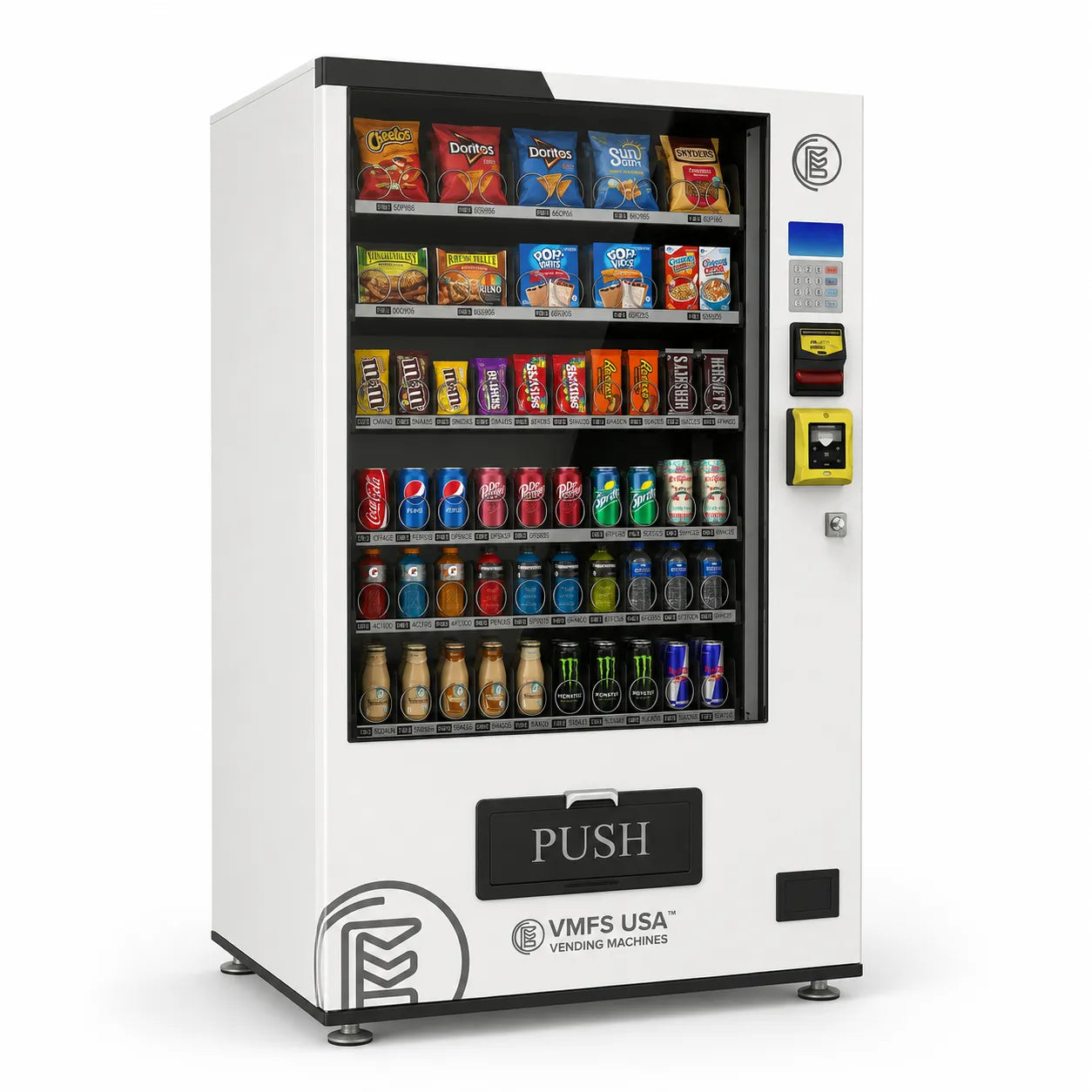
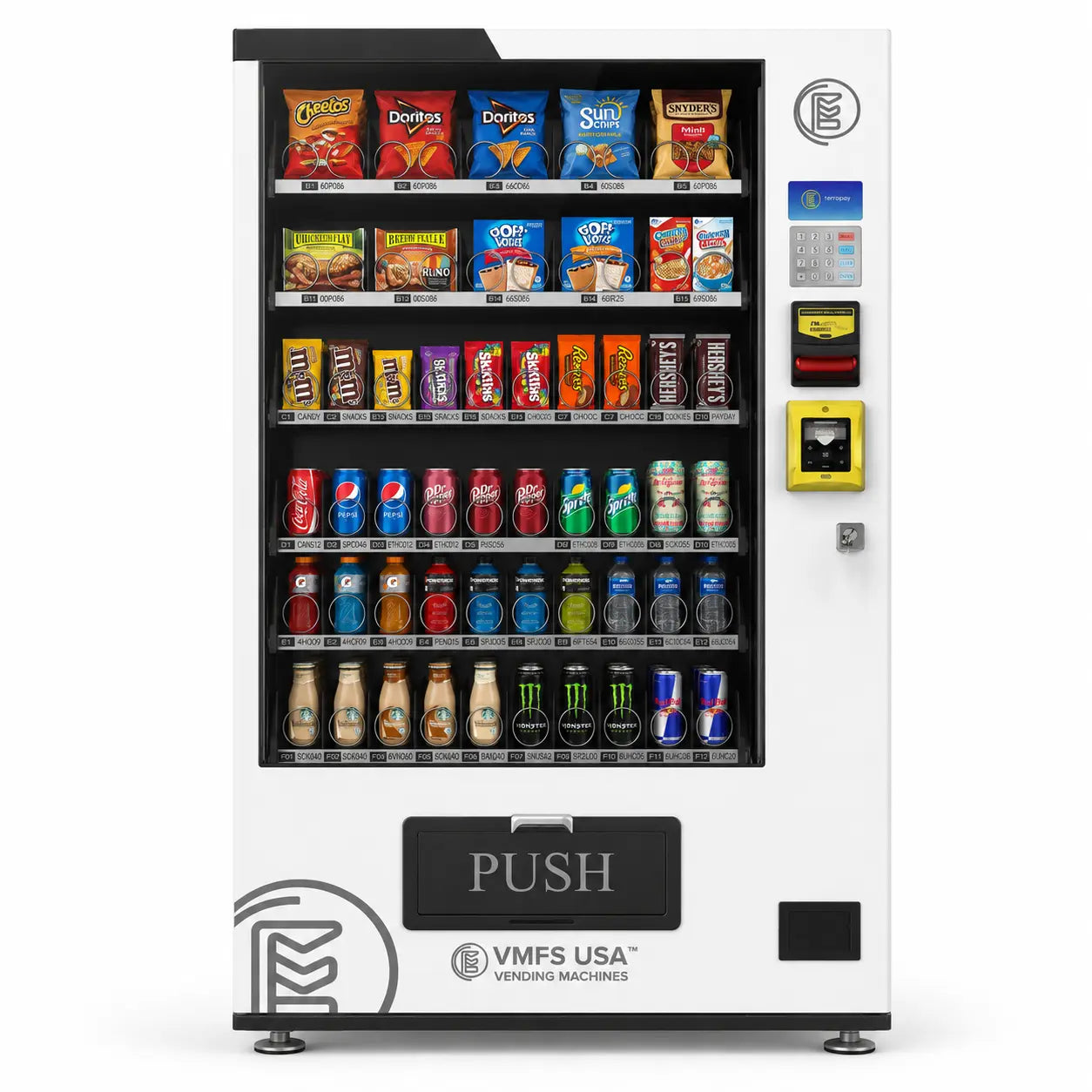
Una máquina expendedora estándar basada en bobinas, reconfigurada con un tamaño de bobina adecuado para la venta libre, es la opción más accesible. Estas máquinas funcionan con productos en formatos de envase consistentes y fáciles de usar. La principal limitación es el riesgo de atascos en envases de tamaños irregulares. Para operadores con una selección de productos cuidadosamente seleccionada en formatos estándar, esto funciona. Para operadores que buscan la máxima flexibilidad de productos, una unidad especializada es un mejor punto de partida.
Rango de costo: $2,500 a $6,000 configurado con envoltura personalizada y hardware de pago.
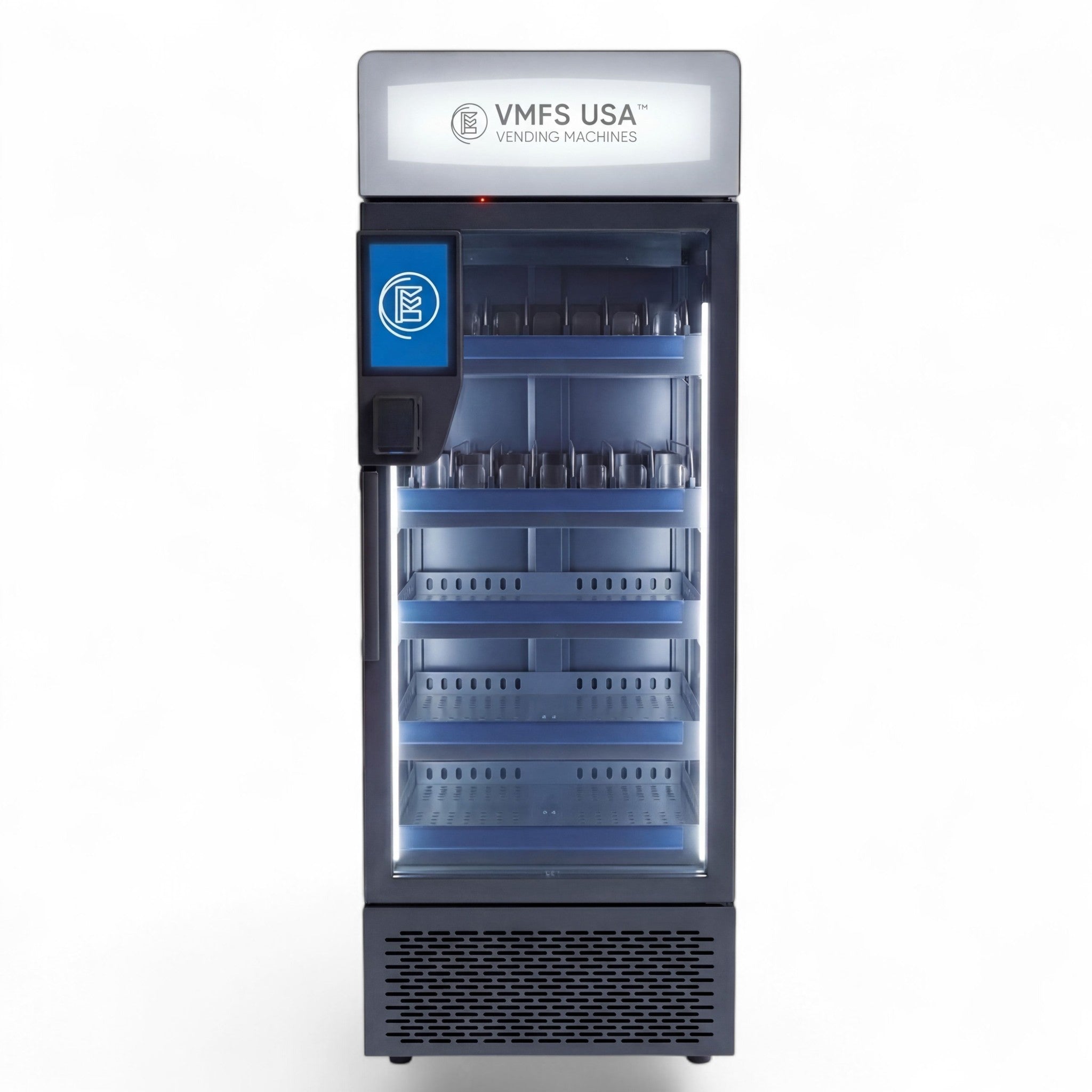
Las máquinas expendedoras de productos de salud diseñadas específicamente para este fin utilizan estantes ajustables en lugar de bandejas de bobinas, lo que permite una gama mucho más amplia de tamaños y formas de productos con un riesgo mínimo de atascos. Suelen incluir funciones de seguridad mejoradas, mejor visibilidad del producto para cumplir con el etiquetado de la FDA, dispensación con precinto de seguridad y registro de transacciones adecuado para entornos de cumplimiento normativo. Para la mayoría de los operadores de venta de medicamentos serios, esta es la categoría de máquina ideal.
Rango de costo: $5,000 a $15,000 dependiendo de la capacidad y características.
Para operadores con requisitos específicos de producto, entornos de colocación únicos o formatos de producto no estándar, una máquina expendedora personalizada y diseñada según especificaciones es la opción más flexible. Un diseño personalizado le permite especificar las dimensiones del gabinete, el mecanismo de dispensación, la integración de seguridad, la marca y la configuración del producto desde cero. Antes de decidir entre una unidad de producción especializada y una personalizada, nuestra guía del comprador de máquinas expendedoras personalizadas explica en detalle los criterios de decisión, junto con comparaciones de costos para cada enfoque.
Rango de costo: $8,000 a $25,000 o más dependiendo de la especificación.
En el extremo superior, los quioscos de dispensación automatizada de farmacia operan bajo la supervisión de la farmacia y pueden dispensar una gama seleccionada de medicamentos de venta libre junto con herramientas de monitorización de la salud. Estos suelen ser implementados por cadenas de farmacias o sistemas de salud, no por operadores independientes, y los requisitos regulatorios son considerablemente más complejos. No es el punto de partida adecuado para la mayoría de los operadores que leen esta guía.
Rango de costos: $15,000 a $40,000 y más.
| Tipo de máquina | Rango de costos | Mejor para | Limitación clave |
|---|---|---|---|
| Máquina estándar reconfigurada | De $2,500 a $6,000 | Tamaños de productos uniformes de nivel básico | Riesgo de atasco en envases irregulares de medicamentos de venta libre |
| Máquina expendedora de productos de salud especializados | De $5,000 a $15,000 | Hoteles, aeropuertos, campus | Costo inicial más alto |
| Máquina de medicamentos hecha a medida | De $8,000 a $25,000+ | Entornos únicos, productos especiales | Mayor plazo de entrega, mayor coste |
| Quiosco de dispensación de farmacia | De $15,000 a $40,000+ | Sistemas de salud, cadenas de farmacias | Requisitos regulatorios complejos |
La ubicación determina si su máquina expendedora de farmacia se convierte en un activo con alto margen de beneficio o en una máquina que apenas cubre sus costos. Las mejores ubicaciones comparten tres características: tráfico constante, acceso limitado a alternativas farmacéuticas cercanas y un público con una necesidad inmediata y recurrente de productos de salud.
Los hoteles son la categoría más sólida para la venta de medicamentos. Los huéspedes que están fuera de casa olvidan sus medicamentos, se enferman inesperadamente y necesitan artículos de salud esenciales para viajar en momentos en que no hay otra opción. La naturaleza cautiva del huésped, combinada con su disposición a pagar precios convenientes, genera algunos de los ingresos por transacción más altos en la venta. Una máquina de buena marca y bien surtida en el pasillo de un hotel funciona las 24 horas sin competencia significativa. Constantemente recupera su inversión más rápido que cualquier otra categoría de colocación.
Pacientes, visitantes y personal clínico necesitan acceso rápido a analgésicos, primeros auxilios y artículos de cuidado personal de venta libre sin salir del edificio. Los requisitos de cumplimiento para las colocaciones hospitalarias son más exigentes que en la mayoría de las categorías, pero la estabilidad de los ingresos y la seguridad de las colocaciones justifican el esfuerzo adicional para los operadores preparados para cumplir con dichos requisitos. Los contratos con centros de salud suelen ser más largos y estables que la mayoría de los otros tipos de ubicaciones una vez establecidos.
Los viajeros experimentan dolores de cabeza, mareos, problemas digestivos y fatiga con mayor frecuencia que la población general. Son cautivos, están presionados por el tiempo y están dispuestos a pagar precios de conveniencia sin una resistencia significativa. Los acuerdos de ubicación en aeropuertos implican la negociación con la autoridad concesionaria de la instalación y suelen conllevar tarifas de ubicación más altas o repartos de ingresos, pero el volumen de ventas en una terminal con mucho tráfico justifica el acuerdo.
Las universidades tienen una gran población con acceso limitado al transporte y pocas opciones de farmacia, especialmente en las zonas residenciales y de residencias estudiantiles. El programa de venta de farmacias de la Universidad de Purdue demuestra la viabilidad de esta categoría a gran escala: medicamentos de venta libre, anticonceptivos y productos de cuidado personal se venden a través de máquinas expendedoras en el campus a precios generalmente inferiores a los de las farmacias minoristas. Los acuerdos de colocación en el campus suelen tramitarse a través de la administración de instalaciones o los departamentos de servicios estudiantiles.
Los entornos corporativos con una gran cantidad de empleados son excelentes opciones para la venta de medicamentos, especialmente en edificios donde los empleados trabajan horarios largos o irregulares. Los departamentos de RR. HH. suelen responder positivamente a las propuestas que mejoran el acceso a la salud de los empleados, lo que facilita la negociación de la colocación en comparación con otras categorías. Una máquina expendedora personalizada en un entorno corporativo también aporta valor a la imagen de marca, que va más allá de los ingresos directos por producto.
Las lesiones deportivas, las agujetas y la recuperación post-entrenamiento hacen que los gimnasios sean el lugar ideal para una máquina con analgésicos, electrolitos, productos de primeros auxilios y suplementos de recuperación. Esta es también una de las categorías donde la máquina puede servir como expendedora especializada, combinando productos de salud de venta libre con artículos específicos para el fitness, con un valor de transacción promedio más alto.
Una máquina expendedora de medicamentos con un aspecto limpio, profesional y que comunica claramente su contenido vende más que una caja gris genérica en el mismo lugar. En el sector sanitario y hotelero, la apariencia de la máquina influye directamente en la confianza de los clientes para realizar una compra y en si el proveedor renueva el contrato de colocación.
Un rotulador personalizado para una máquina expendedora de medicamentos cumple dos funciones: la hace visible y accesible, informando de su disponibilidad a distancia, incluso antes de que el cliente esté frente a ella; y le indica al encargado del local que se trata de un servicio premium que justifica el espacio, lo que influye directamente en la calidad de la ubicación y las condiciones del contrato.
La monitorización remota es más importante para la venta de medicamentos que para casi cualquier otra categoría. Un espacio vacío en una máquina expendedora de refrigerios es una venta perdida. Un espacio vacío en una máquina expendedora de medicamentos es una persona que necesitaba analgésicos a las 2 de la madrugada y no pudo conseguirlos. Esta experiencia se refleja tanto en el anfitrión del establecimiento como en el operador, y es la que da por finalizados los contratos de colocación más rápido que cualquier otra cosa.
Un sistema de telemetría en su máquina expendedora automática de medicamentos le proporciona información en tiempo real sobre los niveles de inventario por ranura, registros de transacciones con marcas de tiempo, estado de la máquina, monitoreo del suministro eléctrico y alertas de fallas de dispensación. Cuando una ranura baja de su límite, recibe una alerta antes de que se vacíe. Si la máquina sufre un corte de energía, lo sabe de inmediato. Si ocurre una falla de dispensación, lo sabe antes de que un cliente la reporte.
En el caso específico de la venta de medicamentos, la telemetría también proporciona el registro de auditoría que exigen los entornos regulados. Cada transacción queda registrada. Cada producto dispensado queda registrado. Este registro facilita la elaboración de informes de cumplimiento para los administradores de instalaciones, las autoridades estatales y la documentación de su propio seguro de responsabilidad civil por productos defectuosos.
El seguimiento de vencimientos integrado con su sistema de telemetría es esencial. A diferencia de los snacks, los medicamentos de venta libre tienen fechas de vencimiento importantes desde el punto de vista legal y médico. Un sistema digital que señaliza las fechas de vencimiento próximas en todo su inventario elimina el riesgo de dispensar productos caducados y la responsabilidad que ello conlleva. Nuestra guía de monitoreo remoto para máquinas expendedoras abarca las principales plataformas de telemetría, con instrucciones de configuración y comparaciones entre ellas.
| Artículo de costo | Rango estimado | Notas |
|---|---|---|
| Máquina expendedora de productos de salud especializados | De $5,000 a $15,000 | Se recomiendan unidades especialmente diseñadas con estantes ajustables. |
| Envoltura y marca personalizadas | De $500 a $1,200 instalados | Vinilo fundido con laminado UV, instalación profesional. |
| Hardware de pago sin efectivo | $300 a $700 | Lector de tarjetas con función de pago táctil, integrado con telemetría |
| Telemetría con seguimiento de vencimientos | De $20 a $60 por mes | Conectado a celular, alertas de inventario y monitoreo de salud |
| Inventario inicial de productos | De $400 a $1,000 | Depende de la capacidad de la máquina y de la selección del producto. |
| Permisos estatales y locales | De $100 a $600 por año | Varía significativamente según el estado y la categoría del producto. |
| Seguro de responsabilidad por productos | $300 a $800 por año | Esencial para cualquier operación de venta de productos de salud. |
| Registro de comerciante o vendedor OTC | $50 a $200 por año | Requerido en varios estados para vendedores de medicamentos de venta libre que no sean farmacias |
La inversión total del primer año para una sola máquina expendedora de productos de salud especializados, que incluye la máquina, la marca, el hardware de pago, el inventario, los permisos y el seguro, generalmente oscila entre $7,500 y $19,000, según el tipo de máquina y los requisitos de ubicación.
| Tipo de ubicación | Ventas brutas mensuales promedio | Margen neto típico | Ingresos netos mensuales promedio |
|---|---|---|---|
| Hotel (de categoría media a alta) | De $600 a $1,200 | 65% a 80% | $390 a $960 |
| Terminal del aeropuerto | $800 a $1,800 | 55% a 70% | $440 a $1,260 |
| Hospital o centro de atención sanitaria | $500 a $900 | 60% a 75% | $300 a $675 |
| Campus universitario | $400 a $700 | 60% a 75% | $240 a $525 |
| Campus corporativo | $350 a $600 | 65% a 78% | $228 a $468 |
Los márgenes de los medicamentos de venta libre son excepcionales debido a su bajo costo y a la alta prima por conveniencia. Un huésped de hotel que paga $8 por un paquete doble de ibuprofeno que cuesta $0.60 al por mayor presenta una estructura de margen genuina, inexistente en las máquinas expendedoras de alimentos y bebidas. Una sola máquina de hotel bien ubicada, que genera $700 netos al mes, produce $8,400 al año con una sola unidad ubicada que requiere muy poco mantenimiento en comparación con los ingresos que genera.
Las máquinas expendedoras de medicamentos son activos generadores de ingresos y se financian en su totalidad con sus propios ingresos futuros. El financiamiento de equipos a través de un proveedor de máquinas expendedoras o una entidad crediticia especializada permite distribuir la inversión total, incluyendo la máquina, la marca y el hardware de pago, en un período de 24 a 60 meses. En un hotel u hospital confirmado que genere $500 o más en ingresos netos mensuales, un pago mensual de financiamiento de $200 a $300 genera una ganancia significativa desde el primer mes.
Vale la pena evaluar los microcréditos de la SBA para los operadores que califican, especialmente para las primeras máquinas, donde se valoran plazos más largos y tasas más bajas. Las líneas de crédito comerciales son ideales para operadores que expanden su negocio a múltiples ubicaciones. Nuestra guía completa sobre opciones de financiamiento para máquinas expendedoras cubre todas las opciones disponibles, con comparaciones de prestamistas, criterios de calificación y las preguntas específicas que debe hacer antes de firmar cualquier acuerdo.
Una máquina expendedora de medicamentos es una unidad expendedora especializada diseñada para dispensar medicamentos de venta libre, productos de salud y artículos de cuidado personal en lugares donde el acceso a farmacias es limitado o inaccesible las 24 horas. Funcionan las 24 horas y se ubican comúnmente en hoteles, hospitales, aeropuertos, universidades y campus corporativos. Dispensan únicamente productos de venta libre. Los medicamentos con receta no pueden dispensarse legalmente a través de ninguna máquina expendedora estándar.
Una máquina expendedora de medicamentos es la categoría más amplia que abarca cualquier máquina especializada que ofrezca productos de salud y bienestar sin receta. Una máquina expendedora de farmacia generalmente se refiere a una máquina operada en colaboración con una farmacia autorizada o adyacente a ella, a menudo bajo la supervisión de la junta farmacéutica, cuyos productos se obtienen y gestionan a través de la propia farmacia. El programa de venta de farmacias del campus de la Universidad de Purdue es un ejemplo real del modelo de venta de farmacias. La mayoría de los operadores independientes trabajan en la categoría de venta de medicamentos en lugar del modelo de venta de farmacias, que conlleva una complejidad regulatoria considerablemente mayor.
No. En principio, la FDA permite la venta de medicamentos de venta libre, pero varias categorías de productos están restringidas o prohibidas. Los medicamentos para el resfriado que contienen pseudoefedrina están prohibidos a nivel federal en las máquinas expendedoras según la Ley de Combate a la Epidemia de Metanfetamina de 2005. Los productos que contienen dextrometorfano enfrentan restricciones de edad a nivel estatal, lo que dificulta su venta en varios estados. Los medicamentos con receta y las sustancias controladas no pueden venderse bajo ninguna circunstancia. Su selección de productos debe excluir estas categorías y cumplir con cualquier restricción adicional específica de su estado sobre la venta de productos de venta libre.
Sí, y más de una en la mayoría de los estados. Como mínimo, necesita una licencia comercial estatal y un permiso de operador de máquina expendedora. Varios estados exigen además un registro de comerciante o un registro equivalente de vendedor de medicamentos sin receta para cualquier negocio que venda medicamentos sin receta fuera de una farmacia autorizada. Algunos estados someten la venta de medicamentos sin receta a la supervisión de la junta farmacéutica. El estado de Washington es un claro ejemplo: se exige el registro de comerciante, se prohíbe específicamente la venta de productos sin receta restringidos y la junta farmacéutica proporciona supervisión adicional. Siempre contacte directamente con la Junta de Farmacia y el Departamento de Salud de su estado antes de solicitar cualquier máquina.
Los hoteles son consistentemente la categoría de colocación con mayor rendimiento, combinando huéspedes cautivos, operación 24 horas, una necesidad genuina de producto y una fuerte disposición a pagar precios convenientes. Los aeropuertos obtienen resultados igualmente sólidos con un alto volumen de clientes y viajeros con prisas. Los centros de salud generan un volumen estable con acuerdos de colocación estables a largo plazo. Los campus universitarios y corporativos tienen un buen rendimiento con un tráfico recurrente predecible. El mercado global de venta de medicamentos está creciendo a una fuerte tasa anual compuesta, impulsado por la demanda de acceso a productos de salud las 24 horas, lo que hace que la colocación temprana sea particularmente valiosa.
Una máquina expendedora automática de medicamentos es cualquier máquina que dispensa productos de venta libre automáticamente, sin intervención del personal, las 24 horas del día. El término enfatiza la naturaleza de la operación, siempre disponible y sin personal, lo cual constituye la principal propuesta de valor para hoteles, aeropuertos y hospitales donde el acceso a la farmacia no está disponible a toda hora. La máquina acepta el pago, verifica la transacción y dispensa el producto seleccionado automáticamente, independientemente de la hora del día o la cantidad de personal en el establecimiento.
Una máquina expendedora estándar reconfigurada para medicamentos de venta libre cuesta entre $2,500 y $6,000. Una máquina expendedora de medicamentos de venta libre, diseñada específicamente, cuesta entre $5,000 y $15,000. Una máquina totalmente personalizada cuesta entre $8,000 y $25,000 o más. La inversión total del primer año, que incluye la máquina, la marca, el sistema de pago, el inventario, los permisos y el seguro, suele oscilar entre $7,500 y $19,000 por unidad. Las opciones de financiamiento de equipos permiten a la mayoría de los operadores distribuir este costo en un período de 24 a 60 meses, mientras la máquina genera ingresos desde el primer día.
Compartir:
Por qué su empresa necesita una máquina expendedora personalizada
¿Qué se puede personalizar realmente en una máquina expendedora? (Análisis completo)