


Snacks Vending Machines in Seattle, WA
Boost your business revenue with premium snack vending machines. Reliable, profitable solutions for Seattle locations. Start earning passive income today with minimal effort required.
Stop Guessing. Configure Your Snack Vending Machine.
Answer a few quick questions about your location, your product mix, your temperature needs, and your budget. Our Snack Vending System will match you with the right base model, add the right modules (refrigeration, ad screen, outdoor protection, payment suite), and show you real time pricing and lead time as you build.
Skip the back and forth. Skip the spec sheet overwhelm. See your exact configuration, your exact cost, and your exact delivery window before you commit.
- Real time pricing as you add or remove features
- Live lead time estimate based on your configuration
- Recommended product mix for your location type
- Capacity, slot count, and weight limits shown per setup
- Option presets for food, drinks, electronics, retail, and frozen

Why Snack Vending Machines?
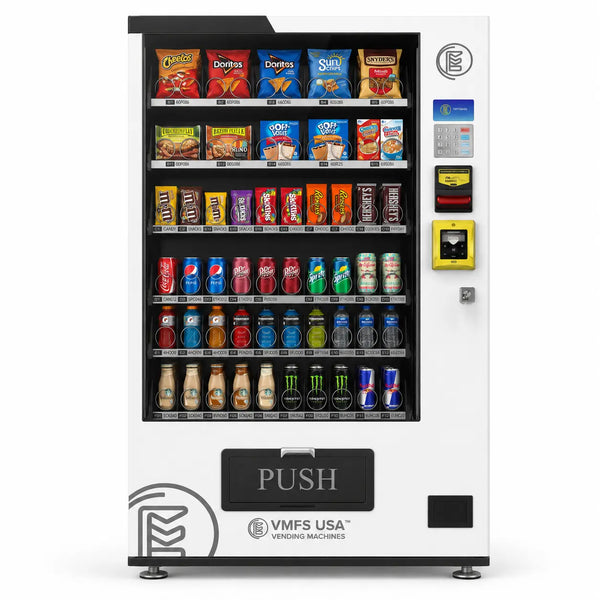
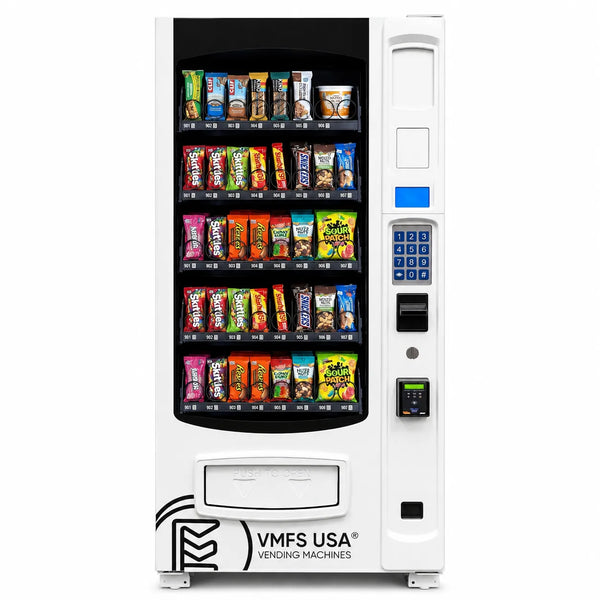
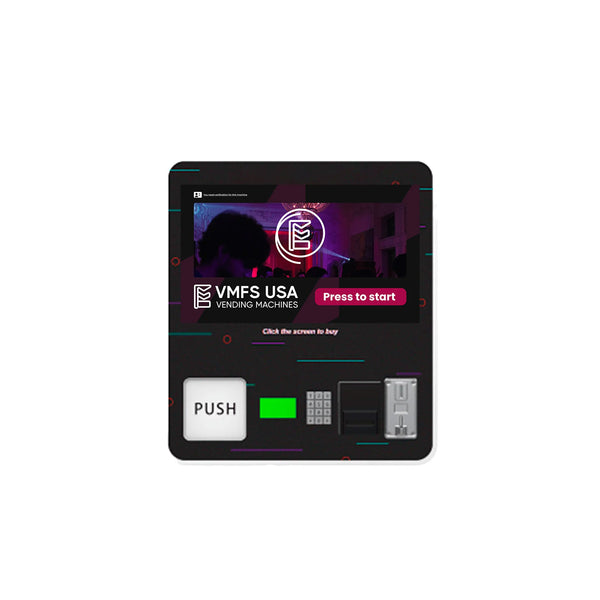
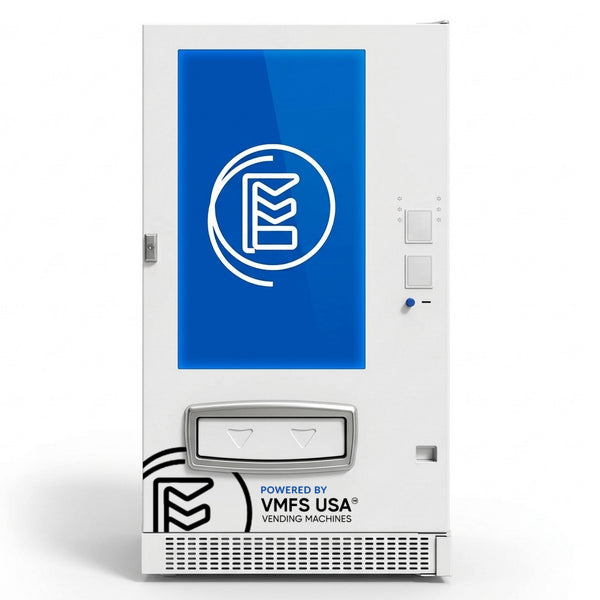
A snack vending machine offers Seattle businesses convenient access to premium on-the-go snacks with impressive capacity and modern features. These countertop snack vending machines dispense chips, candy, granola bars, protein bars, nuts, baked snacks, jerky, and cookies from a single cabinet, with storage ranging from 168 to 800 items across up to 60 adjustable slots. Healthy snack vending machines feature dual-layer toughened glass with optional defogging, energy-efficient operation, and premium delivery systems including drop-down or elevator mechanisms. The VMFS Cloud dashboard provides real-time sales tracking and inventory management for seamless operations. Explore our complete selection of
snack vending machines
designed to maximize profitability and customer satisfaction in Seattle.
Built For Packaged Snacks
Designed specifically for packaged snacks including chips, candy, granola bars, protein bars, nuts, baked snacks, and healthy on-the-go options across multiple slot sizes
High-Capacity Snack Format
From 168 to 800 snack items across up to 60 adjustable slots, with coil delivery sized for both candy-sized and snack-sized products in a single cabinet
Reliable Coil Dispensing
Photoelectric sensors and guaranteed delivery system ensure each snack is dispensed accurately, with anti-theft outlet design and secure dispensing to prevent shrinkage
Universal Venue Fit
Designed for offices, gyms, schools, hospitals, hotels, retail spaces, transit hubs, apartment lobbies, and any high-traffic venue where impulse snack demand exists
24/7 Cloud Monitoring
Real-time sales, live inventory, low-stock alerts, and fault notifications stream to the VMFS Cloud dashboard from any device, with U.S.-based support and software updates
Why Snacks Machines Perform in Seattle, Washington
Seattle's booming tech sector and dense concentration of corporate campuses in neighborhoods like South Lake Union create ideal venues for
snack vending machines
, where employees working long hours demand convenient, 24/7 access to packaged snacks without relying on café staffing. The city's health-conscious culture—driven by its strong gym and fitness scene—fuels consistent demand for nutritious snack options in workout facilities and wellness centers. High foot traffic through Seattle-Tacoma International Airport, transit hubs like the light rail stations, and retail spaces ensures machines capture impulse purchases throughout the day. With machines holding 300 to 800 snack varieties and generating $200 to $500 net profit monthly after restocking, the ROI works especially well in Seattle's mix of offices, hospitals, and hospitality venues.
Professional placement services
help operators identify high-traffic Seattle locations, maximizing machine performance in a competitive, fast-paced market.
Best Locations in Seattle
High-value deployment sites where snack vending delivers the strongest revenue per square foot.
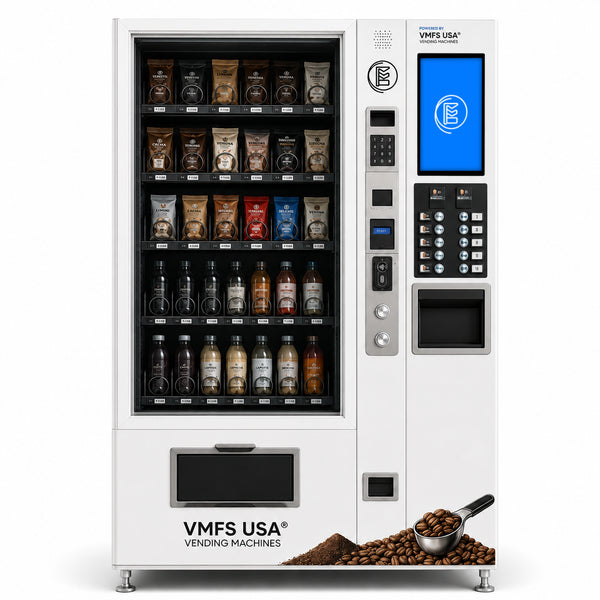
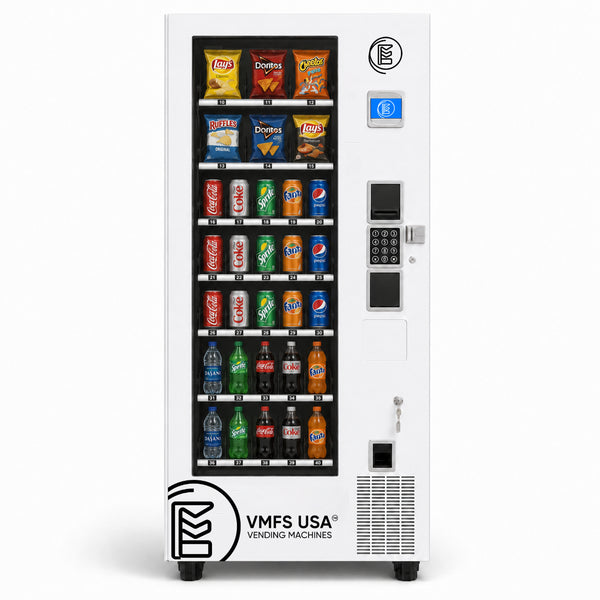
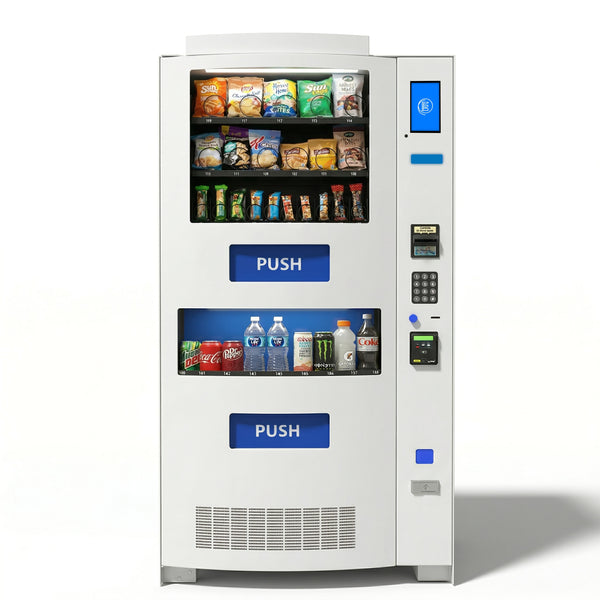
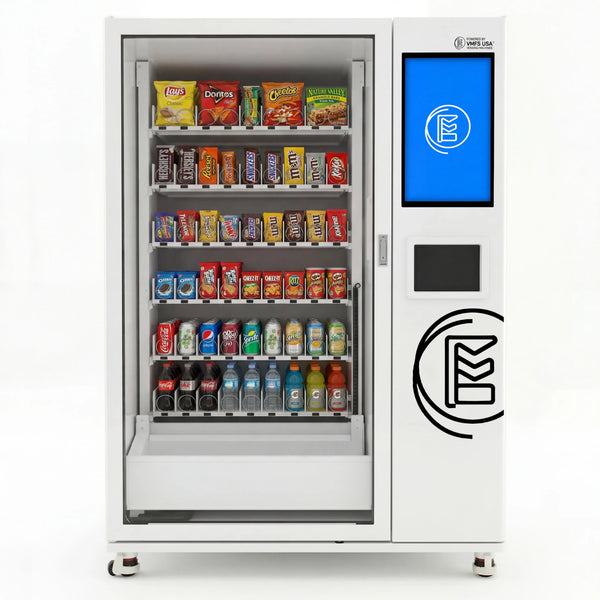
Snack Vending Machines Available for Seattle
Every unit below ships configured, compliance-ready, and backed by VMFS Cloud monitoring.
How Operators Use Snack Vending in Seattle
Tech Campus Breakroom
Amazon headquarters in South Lake Union and Microsoft offices throughout the Puget Sound region employ tens of thousands of software engineers, product managers, and corporate staff who need quick snacks between meetings and code reviews. The snack vending machine stocks protein bars, granola bars, nuts, and chips to fuel focused work sessions and post-lunch energy dips. Coil delivery handles standard packaging reliably, while the 300 to 800 snack capacity means the machine runs three to five weeks between restocks even with sustained daily traffic from high-income workers. Net profit runs 200 to 400 dollars per month after restocking costs, turning a single breakroom placement into reliable recurring revenue with minimal service overhead.
Seattle Airport Terminal
Seattle-Tacoma International Airport processes 50 million passengers annually, with travelers moving through security, gates, and connecting flights constantly seeking portable snacks before flights. Premium nuts, protein bars, candy, chips, and baked snacks appeal to time-pressured passengers needing grab-and-go options that don't require sitting down. The snack vending machine's tap-to-pay system and cloud monitoring ensure zero downtime during peak travel hours, while elevator delivery protects delicate packaged goods and handles high-velocity product rotation. Airport locations generate 250 to 400 dollars net profit monthly due to premium pricing tolerance and continuous passenger flow, making terminal placement among the highest-yield venues in the region.
University Dormitory
University of Washington residence halls in the University District house thousands of undergraduates and graduate students who face limited dining access during late-night study sessions and weekend mornings. The snack vending machine stocks chips, candy, granola bars, protein bars, and jerky to support all-nighters, workout recovery, and casual snacking when dining halls close. High-capacity 300 to 800 snack configurations eliminate daily stockouts during midterm and final exam weeks when demand spikes, while coil delivery ensures reliability for the rough handling typical of student-heavy facilities. Dormitory placements generate 150 to 300 dollars net profit per month with strong impulse purchasing, making dorm revenue predictable and volume-driven.
Downtown Office Corridor
Pike Place Market, Pioneer Square, and the Financial District contain hundreds of office buildings, law firms, consulting practices, and media companies where workers in professional settings purchase snacks throughout the day. Granola bars, protein bars, nuts, and premium chips appeal to office professionals seeking healthier snack options or afternoon energy boosts without leaving their floors. The snack vending machine accepts all payment methods including Apple Pay and Google Pay, common among downtown office workers, and real-time VMFS Cloud monitoring tracks sales patterns by time of day and product category to optimize inventory. Office corridor placements earn 200 to 350 dollars net profit monthly from consistent weekday traffic and corporate tenant demand for employee amenities that reduce off-site snack runs.
What Ships With Every Snack Unit
Regulations for Operating in Seattle, WA
Licensing, permits, sales tax, and health department standards for snack vending operators in Washington.
State License Requirements
In Washington State, the Department of Health (DOH) oversees food service operations, including vending machines dispensing packaged snacks. Operators selling packaged snacks (chips, candy, granola bars, protein bars, nuts, and baked snacks) from coin-operated or card-operated countertop vending machines must register with the Washington Department of Revenue for a reseller permit (sales tax) and comply with food labeling rules. Packaged snacks are generally considered taxable food under Washington law, though some exemptions apply to certain prepared foods. All packaged foods must display manufacturer labeling including ingredient lists, allergen declarations, net weight, and expiration or best-by dates. Operators must obtain a Washington State Unified Business Identifier (UBI) number and register for a reseller permit through the Department of Revenue. An EIN from the IRS may be required if operating as a business entity other than a sole proprietorship; sole proprietors may use their Social Security Number. Business entity formation (LLC, corporation, or partnership) is not mandated by state vending regulations but is often recommended for liability protection. The Washington Department of Health's Food Safety Program regulates labeling compliance, allergen disclosure, and food handling practices. Permit renewals and reseller permits typically renew annually; operators should verify current renewal schedules with DOH and the Department of Revenue.
City and County Permits
Seattle requires operators to obtain a Seattle Business License (filed through the City of Seattle Department of Finance and Administrative Services) before operating any vending machine within city limits. A Certificate of Use or similar operational permit may be required depending on machine location and zoning classification; operators should contact the Seattle Department of Construction and Inspections (SDCI) to verify zoning compliance for the intended placement site. Fire Safety Compliance: countertop snack vending machines typically do not require separate fire permits if they contain no heating elements and are electrically powered only; however, placement in multi-tenant buildings, schools, or public facilities may trigger additional fire code review through the Seattle Fire Department. King County (in which Seattle is located) does not typically impose county-level vending permits for snack machines, though county health standards apply if machines are placed in unincorporated King County areas. Coin-operated machine declarations are not separately required in Seattle for snack vending, though operators should maintain records of machine location, ownership, and compliance documentation. Surrounding municipalities (such as Shoreline, Renton, and Federal Way) have varying permit and zoning rules; operators placing machines in adjacent jurisdictions must confirm local requirements with those municipalities directly. Seattle Business License renewal is typically annual; late penalties apply if renewal is not completed by the expiration date (penalties vary and should be confirmed with the Department of Finance and Administrative Services at 206-684-8484). The Seattle Department of Construction and Inspections can be reached at 206-684-8600 for zoning and placement inquiries.
Sales Tax Rate
The combined sales tax rate in Seattle, Washington is 10.25% (Washington State base rate of 6.5% plus King County rate of 0.5% plus Seattle City rate of 3.25%). All packaged snacks, including chips, candy, granola bars, protein bars, nuts, and baked snacks, are classified as taxable food under Washington law and are subject to the full combined rate. Some prepared foods (such as hot sandwiches, baked goods sold warm, and certain ready-to-eat items) may be exempt from tax or taxed at a lower rate depending on specific preparation and presentation; however, pre-packaged snacks sold from vending machines are universally taxable at the standard rate. Operators must register with the Washington Department of Revenue and obtain a reseller permit to collect and remit sales tax. Tax must be remitted to the Department of Revenue according to the filing frequency assigned at registration (typically monthly or quarterly). Registration is performed online through the Department of Revenue website (dor.wa.gov) or by phone at 360-705-6705. Out-of-state operators are subject to economic nexus rules and must register if they have annual gross revenue from sales in Washington exceeding a threshold; current thresholds and nexus determinations should be confirmed directly with the Department of Revenue.
Health Department Standards
The Washington State Department of Health, in coordination with the Seattle-King County Public Health Department, establishes standards for vending machine equipment and operation. Countertop snack vending machines must have food-contact surfaces (shelves, dispensing mechanisms) constructed of smooth, non-absorbent, corrosion-resistant materials (such as stainless steel or food-grade plastic) that can be easily cleaned and sanitized. Machines must maintain an internal operating temperature appropriate to the type of snack stored; refrigerated machines must hold products at 41 degrees Fahrenheit or below if holding any perishable items (though most packaged snacks do not require refrigeration). Machines must have automatic shut-off or power management features to prevent food spoilage and reduce energy waste. All packaged snacks must display manufacturer labeling with visible expiration or best-by dates; operators must regularly inspect machines and remove any expired or damaged products. Label legibility is required; all allergen information and ingredient lists must be clearly visible to consumers. The Seattle-King County Public Health Department conducts unannounced inspections of vending machines in food service establishments, schools, healthcare facilities, and government buildings to verify compliance with labeling, temperature control, and sanitation standards. Secondary oversight applies in schools (through school district health and safety offices), healthcare facilities (through facility compliance officers and state health licensing), and government buildings (through facility management and health department liaisons). Seattle's climate includes relatively mild winters and moderate humidity year-round, but operators should ensure machines are equipped with humidity control or moisture-resistant seals to protect packaged snacks from moisture damage and mold growth in the damp Pacific Northwest environment. VMFS snack and vending machines deployed in Seattle ship with the appropriate spec standard, including energy-saving design and a 1-year standard warranty with extended coverage options.
Disclaimer
Regulatory information is for reference only and current as of 2026. Operators should verify current requirements with the relevant agency before deployment. VMFS USA is not a legal or tax advisor. For operator-side legal guidance covering placement contracts, host venue agreements, documentation, business incorporation, tax registration, licenses, and permits, operators can consult <a href="https://vadviced.com">VAdviced</a>. For professional placement and location matching support, operators can work with <a href="https://vplaced.com">VPlaced</a>.
Seattle at a Glance
Geographic Identity
- County
- King County
- Metro Area
- Seattle-Tacoma-Bellevue
- Time Zone
- America/Los_Angeles (Pacific Time)
- Area Codes
- 206, 425, 253
- ZIP Codes
- 98101 to 98199
- Primary Airport
- SEA Seattle-Tacoma International Airport
- Secondary Airport
- None
- Major Port
- Port of Seattle, a major container and cruise port
- Nickname
- The Emerald City
Market Stats
- City Population
- 753,675
- Metro Population
- 4.02 million
- Annual Visitors
- 10.9 million (2023)
- Visitor Economy
- $10.1 billion annual economic impact
- Airport Passengers
- 50.7 million annual travelers through SEA
- Hospitality Jobs
- None
- Top Industries
- Technology, Aerospace and Defense, E-commerce, Healthcare, Biotechnology, International Trade, Real Estate
- Demand Driver
- Major tech company headquarters, international gateway status, convention activity, and year-round tourism drive strong visitor and consumer demand across the Seattle metropolitan area.
Climate Profile
- Climate Zone
- Oceanic
- Average Humidity
- 70 to 80 percent year round
- Summer High
- 79 degrees Fahrenheit in July and August
- Winter Low
- 37 degrees Fahrenheit, outdoor operating conditions year round
- Seasonal Hazard
- None
- Environmental Exposure
- Frequent cloud cover and wet conditions require weatherproofed enclosures and enhanced drainage to prevent moisture accumulation and corrosion in outdoor placements.
- Deployment Note
- Seattle's mild, wet oceanic climate demands fully weatherproofed units with sealed electronics and elevated drainage systems to handle persistent moisture and frequent rain. VMFS ships all Seattle outdoor units with weatherproofed and corrosion resistant specifications as standard.
Location & Service Area
- Key Neighborhoods
- Downtown, Capitol Hill, Ballard, Fremont, Queen Anne, University District, Wallingford, Green Lake, Beacon Hill, West Seattle, Eastlake, Magnolia
- Nearby Cities
- Tacoma, Bellevue, Kirkland, Redmond, Renton, Federal Way, Kent, Auburn
- Service Radius
- VMFS delivers, installs, and services machines throughout King County, with extended coverage to Pierce and Snohomish counties on request.
Your Location. Working 24/7.
Answers to common questions from Seattle operators. Didn't see yours? Send us a message — our US-based team responds within one business day.
What is the typical monthly profit from hosting a snack vending machine in a Seattle office or institutional setting?
How often does a snack vending machine need restocking in a busy Seattle location like a hospital or university housing complex?
What electrical requirements and space does a countertop snack vending machine need in a Seattle office break room?
Does a snack vending machine accept mobile payments like Apple Pay and Google Pay popular with Seattle tech workers?
What warranty and maintenance support is available if a vending machine breaks down at a Seattle venue?
How should operators find the right placement for snack machines across Seattle neighborhoods and venue types?
Deploy Snack Vending Machinesin Seattle, WA Today
Request a custom quote today for
snack vending machines
at your Seattle, WA location, and we handle machine selection, delivery, configuration, and ongoing support from start to finish. Every deployment begins with a site assessment covering foot traffic patterns, snack mix balance across chips, candy, granola bars, and healthier options, power requirements, and network needs for our cloud platform, with placement strategy available through our
placement experts
if you want professional location matching across your properties. Whether you are placing a single unit in a downtown Seattle office breakroom or rolling out 30 or more machines across a university campus, hospital system, or tech company headquarters throughout the region, your quote includes hardware, installation, staff training, and 12 months of cloud monitoring at no extra cost.
Deploy Snack Vending Across Seattle
1,200+ machines deployed. 1-year warranty standard. Free lifetime support. One team from site survey to uptime.