


Food Vending Machines in Washington, DC
Automated convenience meets freshness—grab hot meals, cold snacks, and fresh beverages anytime, anywhere across Washington, DC.
Stop Guessing. Configure Your Food Vending Machine.
Answer a few quick questions about your location, your product mix, your temperature needs, and your budget. Our Food Vending System will match you with the right base model, add the right modules (refrigeration, ad screen, outdoor protection, payment suite), and show you real time pricing and lead time as you build.
Skip the back and forth. Skip the spec sheet overwhelm. See your exact configuration, your exact cost, and your exact delivery window before you commit.
- Real time pricing as you add or remove features
- Live lead time estimate based on your configuration
- Recommended product mix for your location type
- Capacity, slot count, and weight limits shown per setup
- Option presets for food, drinks, electronics, retail, and frozen

Why Food Vending Machines?
A food vending machine revolutionizes workplace nutrition and convenience in Washington, DC by delivering diverse meal options from a single configurable cabinet. Whether you need a hot food vending machine for fresh entrees and ramen or a cold food vending machine for salads, wraps, and sandwiches, these premium units accommodate 250 to 800 items across 30 to 72 adjustable slots. Fresh food vending machines feature elevator delivery for meal containers, while hot food vending machines include heated delivery systems for on-demand hot entrees. Cold food vending machines maintain optimal temperatures for dairy, healthy snacks, and ready-to-eat convenience foods, with frozen food vending machine options for breakfast items and frozen meals. Each
fresh food vending machine
features multiple temperature zones pre-calibrated before shipping, coil delivery for packaged goods, and seamless VMFS Cloud dashboard integration for real-time sales tracking and inventory management.
Configurable Temperature Zones
One food vending machine system configurable for cold food, hot food, fresh food, frozen items, ambient products, or dual-zone mixed programs, with temperature settings calibrated before shipping based on the product mix
Versatile Delivery Options
Standard and custom-pitch coil delivery for packaged goods, elevator delivery for fresh meal containers and fragile items, heated delivery for hot food on demand, plus door-access AI cooler for mixed fresh and cold assortments
Wide Food Compatibility
Stocks salads, wraps, sandwiches, fresh meals, frozen meals, ramen, pizza, hot food entrees, healthy snacks, dairy items, microwavable meals, and ready-to-eat convenience foods from a single cabinet
Built For Demanding Venues
Designed for gyms (post-workout fresh meals), hospitals (24/7 staff and patient meals), schools (hot food when cafeteria is closed), warehouses with multiple shifts, corporate campuses, hotels, airports, and any venue needing consistent food access
VMFS Cloud Remote Management
Real-time sales, live inventory, temperature graphs across zones, fault alerts, and pricing updates stream to the VMFS Cloud dashboard from any device, with U.S.-based support and software updates included
Why Food Vending Machines Perform in Washington, District of Columbia
Washington's dense corporate corridor and 24/7 government workforce create exceptional demand for convenient meal solutions beyond traditional cafeterias. The city's federal offices, law firms, and consulting hubs operate extended hours with employees seeking fresh, hot meals during irregular shifts—precisely where
food vending machines
excel. Unlike standard snack machines, modern hot food and cold food vending units deliver restaurant-quality sandwiches, prepared salads, and warm entrées with configurable temperature zones, capturing premium ticket sales of $400–$1,000 monthly per machine in high-traffic venues. Washington's transit-dependent population and downtown retail density amplify foot traffic through office lobbies, Metro stations, and medical facilities where 24/7 food access without kitchen staffing becomes invaluable. With machine capacities reaching 800 items and real-time inventory monitoring, operators maximize uptime and revenue. Success requires strategic placement in venues matching local commute and shift patterns—
professional placement services
help identify optimal Washington locations that drive consistent performance.
Best Locations in Washington
High-value deployment sites where food vending delivers the strongest revenue per square foot.
Food Vending Machines Available for Washington
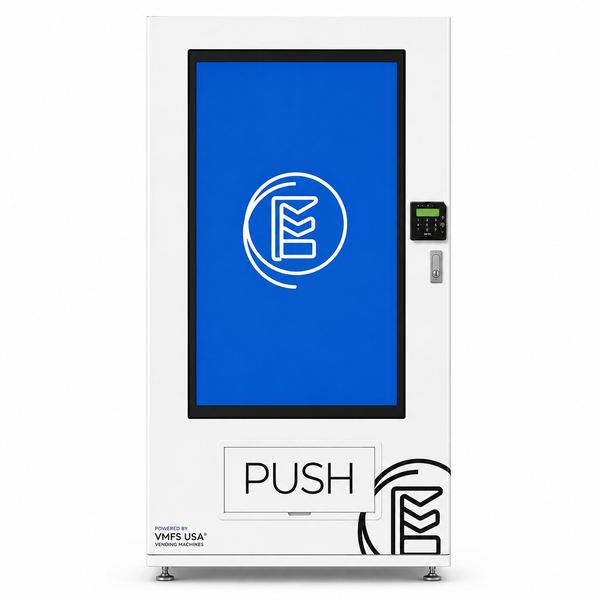
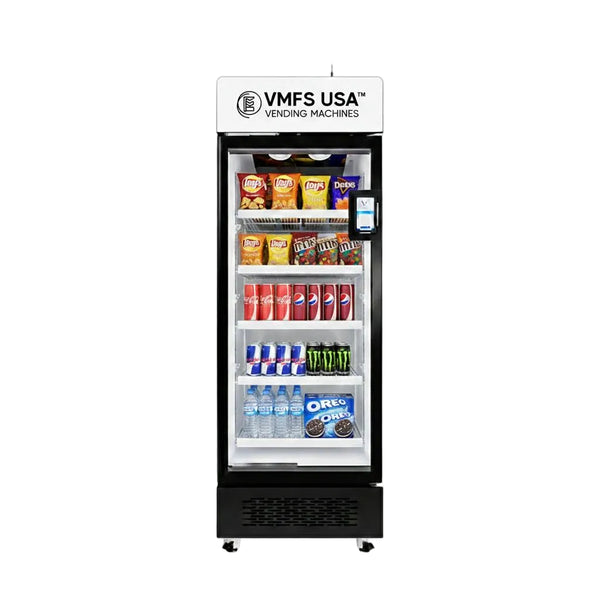
Every unit below ships configured, compliance-ready, and backed by VMFS Cloud monitoring.

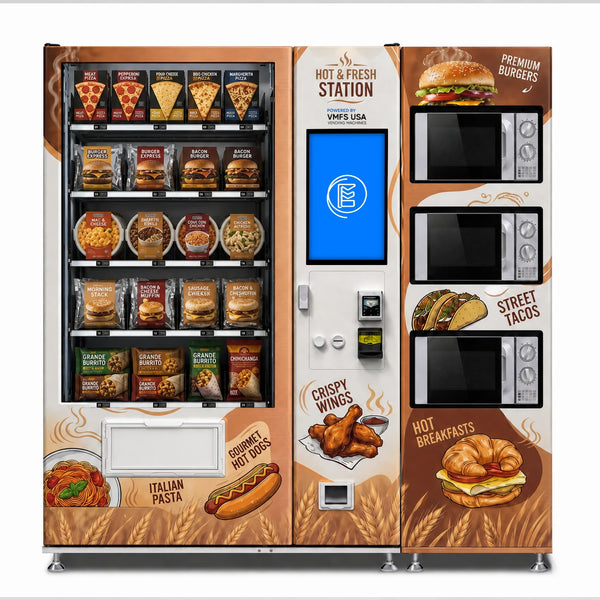
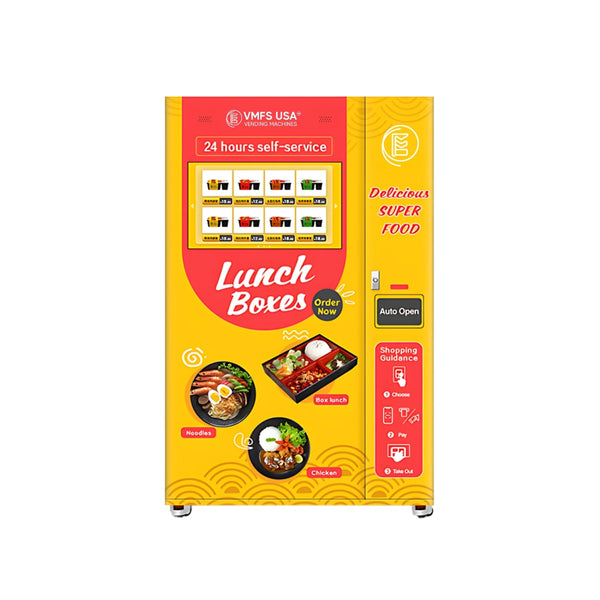
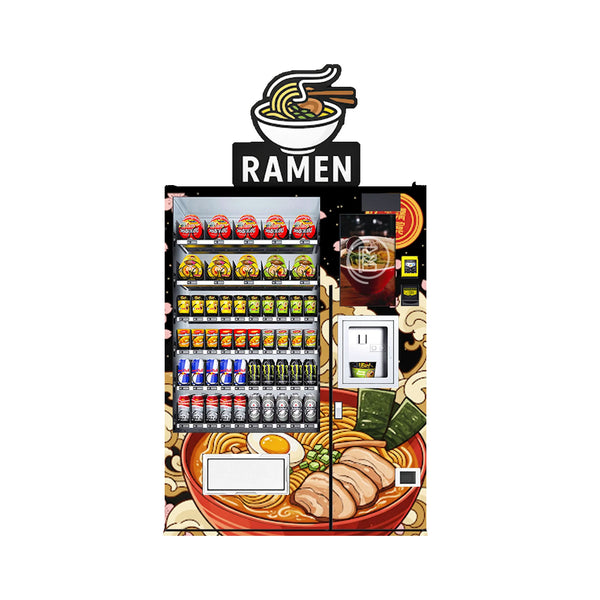
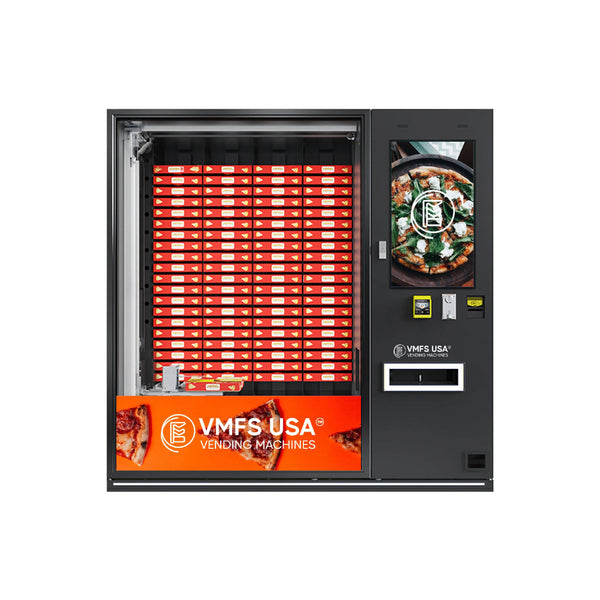

How Operators Use Food Vending in Washington
Government Office Breakroom
The Executive Office of the President, Department of Defense, and major agencies across the National Mall and L Street Corridor employ tens of thousands of federal workers on tight schedules. A fresh food vending machine stocked with fresh salads, wraps, hot entrees, and breakfast items serves as a critical tenant amenity that reduces lunch hour departures and eliminates midday productivity gaps. The configurable temperature zones deliver refrigerated fresh meals, hot pizza and ramen on demand, and frozen backups in a single cabinet, while elevator delivery protects delicate meal containers and the 250 to 800 item capacity spans weeks between restocks. Net revenue runs 400 to 1,000 dollars per machine monthly, positioning the unit as a reliable amenity that improves employee retention and satisfaction.
Hotel and Hospitality Lobby
Premium properties along K Street, the George Washington University area, and near Union Station host business travelers and leisure guests expecting convenient meal access during odd hours and between meetings. A fresh food vending machine stocked with wraps, sandwiches, fresh salads, microwavable meals, and ready-to-eat items eliminates guest reliance on closed restaurants and room service delays. Dual temperature zones hold refrigerated fresh containers and frozen entrees while heated delivery dispenses hot ramen and pizza on demand, and the large capacity reduces visible restocking disruptions in high-traffic lobbies. Guest convenience translates to 400 to 1,000 dollars monthly net profit per machine, reinforcing the hotel experience and capturing impulse revenue from captive populations.
Medical Center and Hospital Campus
Georgetown University Hospital, MedStar Washington Hospital Center, and specialized facilities operate round the clock with physicians, nurses, and support staff working overnight and extended shifts who need reliable meal access. A fresh food vending machine loaded with hot entrees, frozen meals, ramen, sandwiches, and fresh salads addresses the 24/7 demand for varied nutrition without forcing staff to abandon stations for distant cafeterias. Heated delivery serves hot food immediately while refrigerated and frozen zones preserve fresh meals and long shelf life backups, and the 250 to 800 item capacity eliminates stock-outs during night shift peaks. Net revenue of 400 to 1,000 dollars per machine monthly justifies placement in breakrooms, corridors, and department areas where tired staff converts meal access into loyalty and repeat utilization.
Metro Transit and Union Station Hub
Union Station, the Metro system hub stations, and regional transit centers move hundreds of thousands of commuters daily with irregular schedules and minimal food retail during early morning and late evening hours. A fresh food vending machine stocked with breakfast items, sandwiches, wraps, fresh salads, and frozen meals captures the captive commuter market during rush hour gaps and shoulder periods when traditional concessions remain closed. Heated delivery dispenses hot ramen and pizza to waiting passengers while refrigerated fresh containers and frozen backups stock the cabinet for weeks, and the 250 to 800 item capacity handles high-volume commuter throughput without multiple daily refills. Transit-adjacent placement generates 400 to 1,000 dollars monthly net profit per machine, monetizing a reliable passenger base with limited alternative meal options.
What Ships With Every Food Unit
Regulations for Operating in Washington, DC
Licensing, permits, sales tax, and health department standards for food vending operators in District of Columbia.
State License Requirements
The District of Columbia Department of Health (DOH) oversees food service operations, including vending machines, through its Food Service and Animal Control Administration (FSACA). All operators must obtain a Food Service License from FSACA before deploying food vending machines selling fresh, frozen, hot-delivery, or ambient food categories including salads, wraps, sandwiches, fresh meals, frozen meals, ramen, pizza, healthy snacks, and dairy items. The District requires a Food Service License application submitted to DOH-FSACA with documentation of food safety training (ServSafe or equivalent), equipment specifications, and operational procedures. For fresh food items such as salads, wraps, and sandwiches, operators must implement date-marking systems with clear labeling of preparation and expiration dates; fresh items typically must be discarded after seven days of refrigerated storage unless otherwise specified. Dairy products require strict temperature control between 35-40 degrees Fahrenheit with continuous cold-chain documentation. Hot food vending machines must maintain hot-hold temperatures of 135 degrees Fahrenheit or higher, with automatic shut-off features and daily temperature logging. Allergen disclosure is mandatory for all prepared meals and sandwiches, with clear labeling on the machine or accompanying packaging. Operators must register for a District of Columbia Business License and obtain an Employer Identification Number (EIN) from the Internal Revenue Service; the District accepts all business entity types (sole proprietorship, LLC, corporation, partnership) but registration requirements vary by entity. Sales tax registration is handled through the District of Columbia Office of the Chief Financial Officer (OCFO), and operators must remit sales tax monthly. Food Service Licenses are valid for two years from issuance and must be renewed with updated documentation and inspection sign-off.
City and County Permits
Washington, District of Columbia does not have county-level government; all permitting occurs at the District level through the Department of Health, Department of Business Licensing, and Department of Energy and Environment (DOEE). A Business License from the Department of Business Licensing is required and must be renewed annually; applications are submitted online through the District's business licensing portal. A Certificate of Use permit may be required depending on machine placement location and is obtained through DOEE or the Office of the Zoning Administrator if the vending machine is placed in a location subject to zoning restrictions. Fire safety compliance is required; machines placed in commercial buildings or public spaces must meet fire code standards reviewed by the District's Fire and Emergency Medical Services (FEMS) department. Coin-operated machine declarations are not required in the District, but machines placed on private property require written host venue agreements. Placement in schools, hospitals, government buildings, or other regulated facilities may require additional permits from those institutions' administrative offices. Business License renewal occurs annually with late penalties assessed if renewal is not completed by the expiration date; contact the Department of Business Licensing at 202-442-4623 for renewal timelines and current penalty amounts. Certificate of Use renewals follow the same annual cycle. The Department of Health Food Service Licensing line can be reached at 202-442-9015 for permit-specific questions.
Sales Tax Rate
The District of Columbia sales tax rate is 5.75 percent on most prepared food and vended items. Hot prepared foods vended from hot food vending machines are subject to the full 5.75 percent sales tax rate as restaurant meals. Cold prepared foods such as sandwiches, salads, wraps, and fresh meals are taxed at 5.75 percent when sold as prepared food items from vending machines. Frozen meals and ambient snacks are taxed at 5.75 percent. Beverages vended from machines are subject to 5.75 percent sales tax; this includes soft drinks, water, juice, and coffee beverages. Packaged grocery items (unopened, shelf-stable snacks with no preparation) may have different tax treatment in some contexts, but vended food prepared or assembled within the District is treated as prepared food and taxed at the standard rate. Operators register for a District of Columbia Sales Tax License through the OCFO Tax Administration office; registration is required before sales begin and is available online. Remote sellers (out-of-state vending operators) with sales into the District above 200 dollars in a calendar year must register and remit District sales tax; the economic nexus threshold is 200 dollars annually or any physical presence in the District. Monthly sales tax returns are submitted to OCFO by the 20th of the following month.
Health Department Standards
The District of Columbia Department of Health Food Service and Animal Control Administration (FSACA) establishes health standards for all food vending machines. Refrigerated hot food vending machines must feature multi-zone temperature controls with separate zones for refrigerated storage (35-40 degrees Fahrenheit), frozen storage (0 degrees Fahrenheit or below), and hot-hold delivery (135 degrees Fahrenheit or higher). Food contact surfaces must be stainless steel or food-grade materials approved by the District and must be cleanable without disassembly. All machines must be equipped with calibrated thermometers in each temperature zone, automatic shut-off features if internal temperatures fall outside safe ranges, and sanitization cycles between service cycles. Machines may be placed in commercial spaces, offices, retail locations, and public buildings but are restricted in schools (K-12) unless approved by the school's food service director and health department, and in healthcare facilities unless approved by facility administration and health department. Operational requirements include date-marking all fresh meals, sandwiches, salads, and dairy products with preparation and expiration dates visible on packaging or the machine display; strict cold-chain documentation with temperature logs recorded at least twice daily; and unannounced inspections by FSACA staff occurring at minimum annually. Secondary health department oversight applies for machines placed in schools, hospitals, correctional facilities, and government buildings, with those institutions' health and safety offices conducting additional inspections. The District's urban environment (high humidity, variable temperatures, and proximity to the Potomac River) may affect equipment performance; machines with sealed, insulated compartments and energy-saving compressors are recommended to maintain temperature stability. VMFS food vending machines deployed in Washington ship with the appropriate specification standard, including configurable temperature zones (refrigerated, frozen, hot delivery, ambient, and dual-zone configurations) with energy-saving operation and a 1-year standard warranty with extended coverage options.
Disclaimer
Regulatory information is for reference only and current as of 2026. Operators should verify current requirements with the relevant agency before deployment. VMFS USA is not a legal or tax advisor. For operator-side legal guidance covering placement contracts, host venue agreements, documentation, business incorporation, tax registration, licenses, and permits, operators can consult <a href="https://vadviced.com">VAdviced</a>. For professional placement and location matching support, operators can work with <a href="https://vplaced.com">VPlaced</a>.
Washington at a Glance
Geographic Identity
- County
- Independent City
- Metro Area
- Washington-Arlington-Alexandria, DC-VA-MD-WV
- Time Zone
- America/New_York (Eastern Time)
- Area Codes
- 202, 771
- ZIP Codes
- 20001 to 20599
- Primary Airport
- DCA Ronald Reagan Washington National Airport
- Secondary Airport
- IAD Washington Dulles International Airport
- Major Port
- None
- Nickname
- The Nation's Capital
Market Stats
- City Population
- 705,749
- Metro Population
- 6.3 million
- Annual Visitors
- 24.6 million (2023)
- Visitor Economy
- 17.8 billion annual economic impact
- Airport Passengers
- 76 million annual travelers through DCA, IAD, and BWI
- Hospitality Jobs
- None
- Top Industries
- Government and Federal Services, Tourism and Hospitality, Professional Services, Education and Research, Healthcare, Real Estate and Construction, Technology and Communications
- Demand Driver
- Federal government concentration, international diplomacy, world-class museums and monuments, convention activity, and year-round tourism drive consistent visitor demand and spending.
Climate Profile
- Climate Zone
- Humid Subtropical
- Average Humidity
- 55 to 75 percent year round
- Summer High
- 88 degrees Fahrenheit or higher with moderate to high humidity from June through September
- Winter Low
- regularly between 25 and 35 degrees Fahrenheit, indoor placements recommended during winter months
- Seasonal Hazard
- None
- Environmental Exposure
- High summer heat and humidity require enhanced refrigeration capacity and sealed electronics to prevent moisture intrusion during peak cooling season.
- Deployment Note
- Washington's humid subtropical climate demands weatherproofed units with sealed electronics and enhanced refrigeration cycles to manage summer heat and humidity. Winter freezing risk requires heated cabinets for temperature sensitive products. VMFS ships all Washington outdoor units with these specs standard.
Location & Service Area
- Key Neighborhoods
- Downtown, Capitol Hill, Logan Circle, U Street Corridor, Shaw, Georgetown, Dupont Circle, Foggy Bottom, Anacostia, Columbia Heights, Kalorama, Chevy Chase
- Nearby Cities
- Arlington, Alexandria, Bethesda, Silver Spring, Rockville, Falls Church
- Service Radius
- VMFS delivers, installs, and services machines throughout the District of Columbia and Arlington County, with extended coverage to Montgomery and Fairfax counties on request.
Your Location. Working 24/7.
Answers to common questions from Washington operators. Didn't see yours? Send us a message — our US-based team responds within one business day.
What kind of monthly revenue can a property owner expect from hosting a food vending machine in Washington, DC?
How often does the vending machine need restocking, and what products work best for Washington, DC demand patterns?
What are the space and power requirements for installing a food vending machine at a Washington, DC property?
What warranty and maintenance support is included if the machine breaks down or needs service?
Does the food vending machine accept only cash, or does it support contactless and mobile payments that Washington, DC commuters prefer?
How does 24/7 food access help fill demand in Washington, DC where many employers and hospitals operate round the clock?
What documentation and legal agreements are needed before placing a machine at a property in Washington, DC?
Deploy Food Vending Machines in Washington, DC Today
Request a custom quote today for your Washington, DC location, and our team handles machine selection, delivery, configuration, and ongoing support from start to finish. Every deployment begins with a site assessment covering foot traffic patterns, food mix balance across fresh meals, frozen entrees, hot food, and healthy snacks, temperature zone configuration and power requirements, network setup for the cloud platform, and our
placement experts
can coordinate location matching strategy for operators seeking professional site selection, with hospitals, federal office buildings, university campuses, and corporate headquarters prioritized for highest meal volume. Whether you need a single
food vending machine
in a small venue like a medical clinic or a rollout of 30 or more machines across a larger venue type like a government complex, your quote includes hardware, installation, staff training, and 12 months of cloud monitoring at no extra cost.
Deploy Food Vending Across Washington
1,200+ machines deployed. 1-year warranty standard. Free lifetime support. One team from site survey to uptime.