


Elevator Vending Machines in Detroit, MI
Maximize Your Revenue with Premium Elevator Vending Machines Across Detroit's Busiest Buildings Today
Stop Guessing. Configure Your Elevator Vending Machine.
Answer a few quick questions about your location, your product mix, your temperature needs, and your budget. Our Elevator Vending System will match you with the right base model, add the right modules (refrigeration, ad screen, outdoor protection, payment suite), and show you real time pricing and lead time as you build.
Skip the back and forth. Skip the spec sheet overwhelm. See your exact configuration, your exact cost, and your exact delivery window before you commit.
- Real time pricing as you add or remove features
- Live lead time estimate based on your configuration
- Recommended product mix for your location type
- Capacity, slot count, and weight limits shown per setup
- Option presets for food, drinks, electronics, retail, and frozen

Why Elevator Vending Machines?
Premium elevator vending machines in Detroit, Michigan offer a revolutionary solution for high-volume retail locations seeking maximum profitability and product protection. These sophisticated units feature robotic lift technology that gently delivers products to the pickup tray with zero drops or damage, making them ideal for fragile items including snacks, drinks, electronics, and fresh food. With capacity for up to 800 slots and advanced remote cloud monitoring capabilities,
elevator vending machines
provide Detroit businesses with reliable inventory management and real-time operational insights. Whether you're outfitting corporate offices, hospitals, or retail environments, these high-margin machines deliver superior performance and customer satisfaction while minimizing product loss and maximizing revenue potential for your business.
Zero Product Damage
Robotic elevator lift delivers every item intact, protecting glass bottles, fresh food, electronics, and premium SKUs that coil machines physically destroy
High-Capacity Footprint
Up to 800 items across chilled, ambient, and frozen zones in a single cabinet — the highest SKU density in the industry
Premium Product Compatibility
Handles fragile, high-ticket, and temperature-sensitive inventory including glass-bottled beverages, sushi, salads, and small electronics
24/7 Cloud Monitoring
Real-time sales reporting, per-slot inventory tracking, temperature alerts, and cashless payment data stream to your VMFS Cloud dashboard
Why Elevator Machines Perform in Detroit, Michigan
Detroit's automotive heritage and bustling convention center district create ideal conditions for elevator vending machines. The city's harsh winters and humid summers cause traditional outdoor vending to malfunction, while enclosed elevator placement in hotels, office towers, and the Cobo Center protects merchandise from weather damage. High foot traffic through downtown corridors and airport terminals generates consistent sales, and elevator positioning captures captive audiences during peak business hours when quick access to snacks and beverages becomes essential.
Best Locations in Detroit
High-value deployment sites where elevator vending delivers the strongest revenue per square foot.
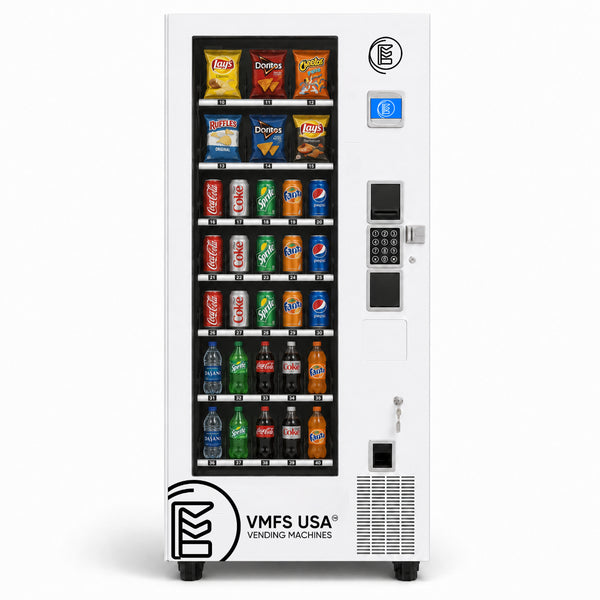
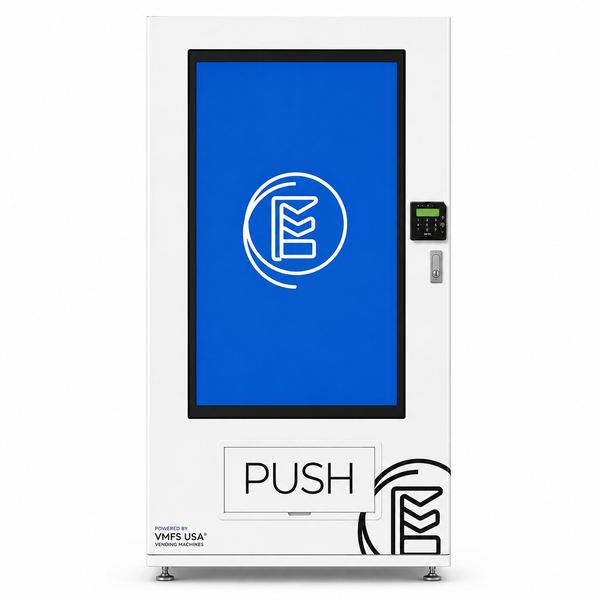
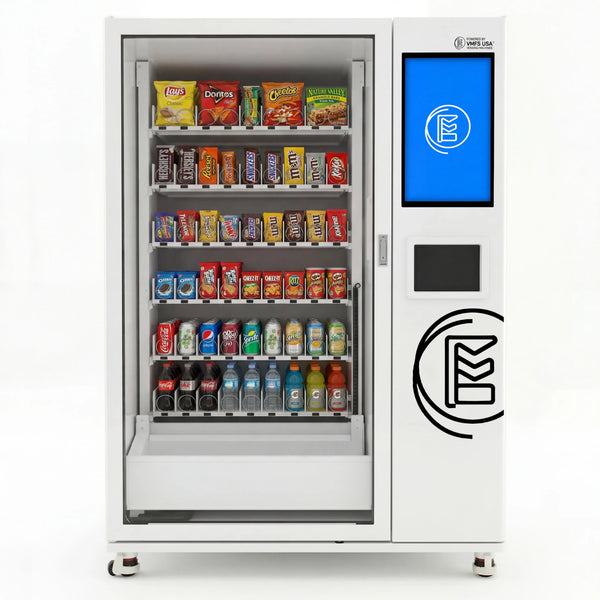
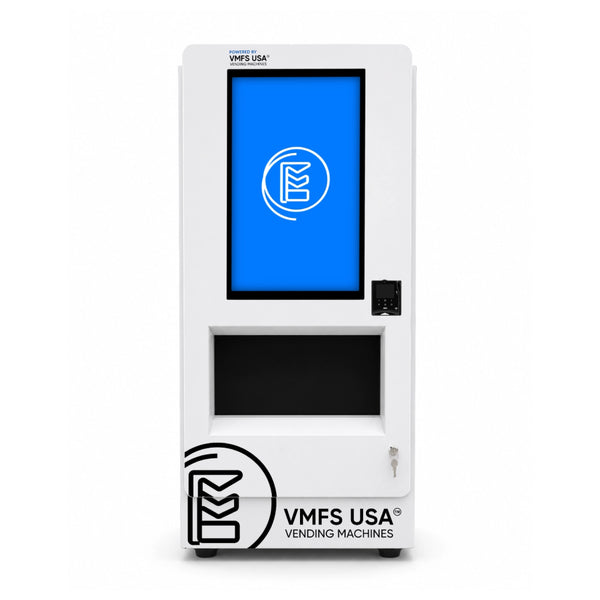
Elevator Vending Machines Available for Detroit
Every unit below ships configured, compliance-ready, and backed by VMFS Cloud monitoring.
How Operators Use Elevator Vending in Detroit
Auto Manufacturing Plant Break Room
Plants like the GM Detroit-Hamtramck Assembly and Ford Michigan Assembly employ thousands of shift workers who need quick meals and beverages during short breaks. Machines stock fresh sandwiches, salads in protective containers, premium coffee, energy drinks, and protein snacks tailored to blue collar appetites and budget consciousness. An elevator unit protects delicate items like salad containers and glass beverage bottles from the crushing damage of traditional coil delivery, ensuring products arrive intact for consumption during tight break windows. High volume throughput during shift changes and consistent 24 hour demand across multiple shifts create predictable revenue with minimal downtime, making these facilities anchor locations for any Detroit vending route.
Casino Floor Lounge Area
Properties like MGM Grand Detroit, MotorCity Casino, and Greektown Casino draw continuous foot traffic across gaming floors, restaurants, and lounge seating where guests spend hours in climate controlled environments. Machines stock premium spirits in single serve bottles, craft snacks, gourmet chocolates, energy drinks, and specialty coffee to capture impulse spending from players with disposable income. Gentle elevator delivery protects glass bottles and premium packaging that coil machines would dent or shatter, maintaining the upscale presentation expected in gaming venues where guests expect quality. Casinos generate higher per unit revenue than most venues because patrons spend 30 to 50 percent above retail prices for convenience items, and 24 hour operation ensures capture of overnight gaming crowds.
Detroit Metropolitan Airport Terminal Corridor
McNamara Terminal and North Terminal process over 30 million passengers annually through security checkpoints, gate areas, and concourse zones where travelers need food, beverages, and electronics during layovers and gate waits. Machines stock travel essentials including phone chargers, premium snacks, cold beverages, and ready to eat meals that meet TSA regulations and satisfy travelers with limited time between flights. Elevator delivery units prevent damage to phone chargers, power banks, and fragile snack packaging that standard coil mechanisms crush or misalign during dispensing at high altitudes and pressure changes. Airport venues generate consistent premium pricing, cashless payment penetration, and uptime criticality during peak travel periods, making this category essential for capturing rushed travelers with urgent needs.
Medical Center Hospital Network
Major institutions including Henry Ford Health System facilities, Detroit Medical Center, and Beaumont Hospital employ staff and serve patients across 24 hour cycles with limited access to outside food options. Machines stock sugar free beverages, protein snacks, fresh fruit cups, nuts, whole grain options, and supplements that support healthcare worker and patient recovery needs throughout day and night shifts. Elevator delivery protects fresh food containers, glass supplement bottles, and delicate packaging from impact damage caused by coil machines, ensuring products remain safe and appealing for health conscious consumers in medical settings. Hospital and healthcare campuses guarantee reliable demand during overnight shifts when outside options close, and staff vending privileges create steady revenue independent of patient census or visiting hours fluctuations.
What Ships With Every Elevator Unit
Regulations for Operating in Detroit, MI
Licensing, permits, sales tax, and health department standards for elevator vending operators in Michigan.
State License Requirements
Michigan vending machines are regulated by the Michigan Department of Agriculture and Rural Development (MDARD). Food vending machines that dispense potentially hazardous foods (those requiring time and temperature control for safety) require a food service license, while machines dispensing only shelf-stable snacks and non-potentially hazardous items may be exempt from licensing depending on the specific food category. Operators must register for Michigan sales tax with the Michigan Department of Treasury and obtain an EIN from the federal government if operating as a business entity. Michigan does not issue a single statewide vending operator license; instead, regulation is category-specific. Vending machines dispensing tobacco products are subject to strict compliance with Michigan tobacco tax laws and age-verification requirements. Alcohol vending is prohibited in Michigan. Water vending machines and ice vending machines must meet specific safety and sanitation standards set by MDARD. Food service licenses must be renewed annually, typically on the anniversary of issuance. Commodity-specific permits for tobacco require state tax stamp compliance and reporting.
City and County Permits
Detroit requires all vending machine operators to obtain a City of Detroit Business License from the Finance Department before deploying machines. A Certificate of Occupancy or Certificate of Use may be required depending on the machine location and whether the space is already licensed for food service. Zoning approval is necessary; vending machines are subject to Detroit zoning ordinances and placement restrictions in certain districts. Fire safety inspection and clearance are required, particularly for machines in enclosed spaces, conducted by the Detroit Fire Department. Wayne County does not impose a separate county vending permit but defers to local city requirements. Operators must verify zoning compliance with the Detroit Planning and Development Department. No specific coin-operated machine declaration is required at the state or local level, but operators should confirm location-specific rules with property owners and municipal authorities. Business licenses in Detroit are typically renewed annually; late renewal penalties apply and are assessed by the Finance Department. The Detroit Finance Department can be reached through the City of Detroit's main line or online portal. Contact the Detroit Planning and Development Department at their main office for zoning and Certificate of Use questions.
Sales Tax Rate
The combined sales tax rate in Detroit, Michigan is 6 percent, consisting of the Michigan state sales tax rate of 6 percent; Detroit does not impose a separate city sales tax surtax. Most food items sold through vending machines are taxable unless they qualify as exempt groceries (unprepared foods are generally exempt, while prepared foods and certain snacks are taxable). Beverages including soda, energy drinks, and sweetened drinks are typically taxable; water may be exempt depending on packaging and whether it is considered a grocery item or prepared beverage. Candy and certain snack items are taxable. Operators must register with the Michigan Department of Treasury for sales tax purposes and remit taxes monthly or quarterly depending on sales volume. Out-of-state vending machine operators with economic nexus in Michigan (typically defined as over 200 dollars in sales or significant presence) must register and remit Michigan sales tax. Registration can be completed online through the Michigan Department of Treasury website.
Health Department Standards
Michigan vending machines are regulated by the Michigan Department of Agriculture and Rural Development (MDARD) at the state level, with local health departments providing secondary oversight and enforcement. All food vending machines must have food-contact surfaces made of nonporous, easily cleanable materials such as stainless steel. Machines must be equipped with accurate thermometers (if refrigerated), automatic temperature control and shutdown mechanisms for cold-holding units, proper air screening to prevent pest entry, and water-tight seals. Placement rules require machines to be positioned away from overhead leakage sources, on clean and level floors free of water accumulation, and with adequate clearance for cleaning and restocking. Operational requirements include date-marking of all foods with safe-handling information, clear visibility of ingredient and allergen labels, and compliance with HACCP principles where applicable. Unannounced health inspections are conducted by local health departments; operators in Detroit may be subject to inspection by the Wayne County Health Department or the Detroit Health Department depending on jurisdiction. Schools, healthcare facilities, and government buildings in Detroit may have additional oversight requirements and stricter operational standards. Detroit's climate includes cold winters and humid summers; machines must be equipped to maintain proper food temperatures year-round and have condensation-control features. VMFS elevator machines deployed in Detroit ship with Michigan-compliant food safety specifications and temperature-control systems appropriate for the local climate.
Disclaimer
Regulatory information is for reference only and current as of 2026. Operators should verify current requirements with the relevant agency before deployment. VMFS USA is not a legal or tax advisor.
Detroit at a Glance
Geographic Identity
- County
- Wayne County
- Metro Area
- Detroit-Warren-Dearborn
- Time Zone
- America/Detroit (Eastern Time)
- Area Codes
- 313, 248, 586
- ZIP Codes
- 48201 to 48228, 48231 to 48235, 48238 to 48240, 48243
- Primary Airport
- DTW Detroit Metropolitan Wayne County Airport
- Secondary Airport
- MBS MBS International Airport
- Major Port
- Port of Detroit, a freshwater port on the Detroit River
- Nickname
- The Motor City
Market Stats
- City Population
- 639,111
- Metro Population
- 4.3 million
- Annual Visitors
- None
- Visitor Economy
- None
- Airport Passengers
- 36 million annual travelers through DTW
- Hospitality Jobs
- None
- Top Industries
- Automotive Manufacturing, Advanced Manufacturing, Healthcare, Finance and Banking, Technology, Logistics and Distribution
- Demand Driver
- Detroit's economy is driven by major automotive headquarters and manufacturing operations, combined with growing technology and healthcare sectors that attract corporate investment and skilled workers.
Climate Profile
- Climate Zone
- Humid Continental
- Average Humidity
- 65 to 75 percent year round
- Summer High
- 82 degrees Fahrenheit average high, 88 degrees Fahrenheit peak, June through August
- Winter Low
- 22 degrees Fahrenheit average low, regularly below freezing, indoor placement recommended December through February
- Seasonal Hazard
- Lake Effect Snow, November to March
- Environmental Exposure
- Heavy winter snowfall and freeze thaw cycles affect ground level placements, requiring robust drainage and corrosion resistant materials.
- Deployment Note
- Detroit outdoor units require weatherproofed construction, sealed electronics, enhanced drainage systems, and corrosion resistant housing to withstand cold winters and lake effect snow. VMFS ships all Detroit outdoor units with these specifications standard.
Location & Service Area
- Key Neighborhoods
- Downtown Detroit, Midtown, Corktown, Rivertown, New Center, University District, Indian Village, Woodbridge, Rosedale Park, Palmer Woods, Sherwood Forest, Virginia Park
- Nearby Cities
- Dearborn, Dearborn Heights, Hamtramck, Highland Park, Ferndale, Westland, Garden City, Livonia, Novi
- Service Radius
- VMFS delivers, installs, and services machines throughout Wayne County and Oakland County, with extended coverage to Macomb County and surrounding regions on request.
Your Location. Working 24/7.
Answers to common questions from Detroit operators. Didn't see yours? Send us a message — our US-based team responds within one business day.
How does revenue sharing work, and when does a property owner receive payment?
What products go in the machine, and how often does restocking happen?
How much floor space is needed, and what does installation involve?
What happens when a machine breaks down, and how quickly is service restored?
Does the machine accept cards and mobile payments, or only cash?
How does the machine perform during winter months and the automotive industry seasonal cycles?
Deploy Elevator Vending Machines in Detroit, MI Today
Request a custom quote today for your location in Detroit, and we handle machine selection, delivery, configuration, and ongoing support from start to finish. Every deployment begins with a site assessment covering foot traffic patterns, product mix alignment, power and network requirements, and compliance logistics specific to your venue. Whether you need a single unit in a boutique hotel lobby or a rollout of 40 or more machines across a casino floor, an airport concourse, or a medical center campus, your quote includes hardware, installation, staff training, and 12 months of cloud monitoring at no extra cost.
Deploy Elevator Vending Across Detroit
1,200+ machines deployed. 1-year warranty standard. Free lifetime support. One team from site survey to uptime.