


Elevator Vending Machines in Boston, MA
Maximize Revenue with 24/7 Elevator Vending Machines in Boston. Automated convenience for busy buildings, consistent profits, minimal maintenance required.
Stop Guessing. Configure Your Elevator Vending Machine.
Answer a few quick questions about your location, your product mix, your temperature needs, and your budget. Our Elevator Vending System will match you with the right base model, add the right modules (refrigeration, ad screen, outdoor protection, payment suite), and show you real time pricing and lead time as you build.
Skip the back and forth. Skip the spec sheet overwhelm. See your exact configuration, your exact cost, and your exact delivery window before you commit.
- Real time pricing as you add or remove features
- Live lead time estimate based on your configuration
- Recommended product mix for your location type
- Capacity, slot count, and weight limits shown per setup
- Option presets for food, drinks, electronics, retail, and frozen

Why Elevator Vending Machines?
Elevator Vending Machines in Boston, Massachusetts Premium
elevator vending machines
revolutionize vending in Boston with advanced robotic lift technology that gently delivers products to the pickup tray, eliminating drops and damage. Ideal for snacks, drinks, electronics, and fresh food, these machines feature up to 800 slots and cloud-based remote monitoring for optimal performance. Perfect for high-volume, high-margin locations throughout Massachusetts, elevator vending machines maximize profitability while protecting product integrity and enhancing customer satisfaction.
Zero Product Damage
Robotic elevator lift delivers every item intact, protecting glass bottles, fresh food, electronics, and premium SKUs that coil machines physically destroy
High-Capacity Footprint
Up to 800 items across chilled, ambient, and frozen zones in a single cabinet — the highest SKU density in the industry
Premium Product Compatibility
Handles fragile, high-ticket, and temperature-sensitive inventory including glass-bottled beverages, sushi, salads, and small electronics
24/7 Cloud Monitoring
Real-time sales reporting, per-slot inventory tracking, temperature alerts, and cashless payment data stream to your VMFS Cloud dashboard
Why Elevator Machines Perform in Boston, Massachusetts
Boston's robust convention and hospitality economy drives consistent foot traffic through major hotels, airports, and office towers where elevator vending machines thrive. The city's harsh winters and humid summers create climate-controlled elevator environments ideal for protecting temperature-sensitive products and preventing jamming. High-density commercial corridors like the Financial District and Seaport demand convenient, space-efficient vending solutions in lobbies and restricted-access areas. Elevator placement captures affluent business travelers and corporate professionals who value premium snacks and beverages during brief transit moments, generating higher per-unit revenue than traditional street-level machines while solving accessibility challenges in Boston's aging infrastructure and newer luxury developments.
Best Locations in Boston
High-value deployment sites where elevator vending delivers the strongest revenue per square foot.
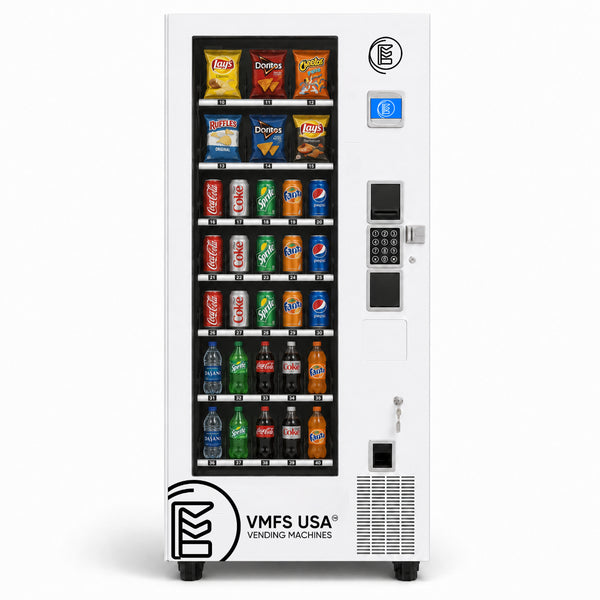
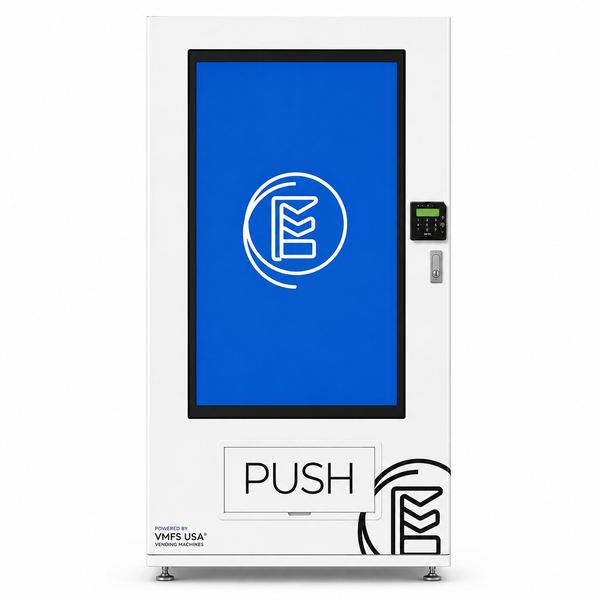
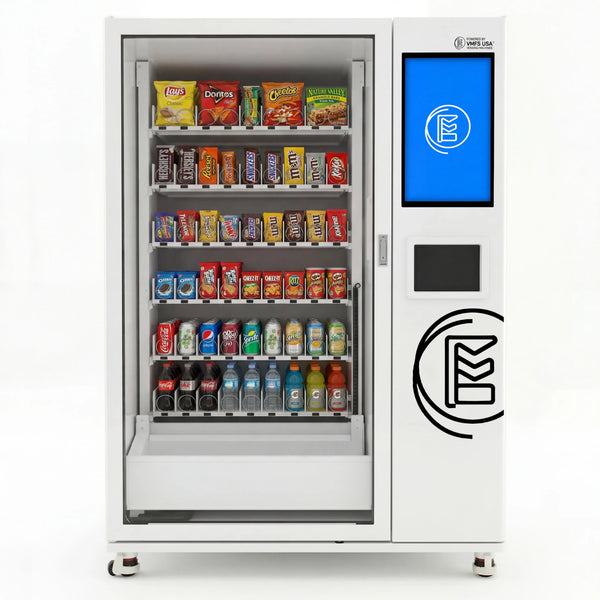
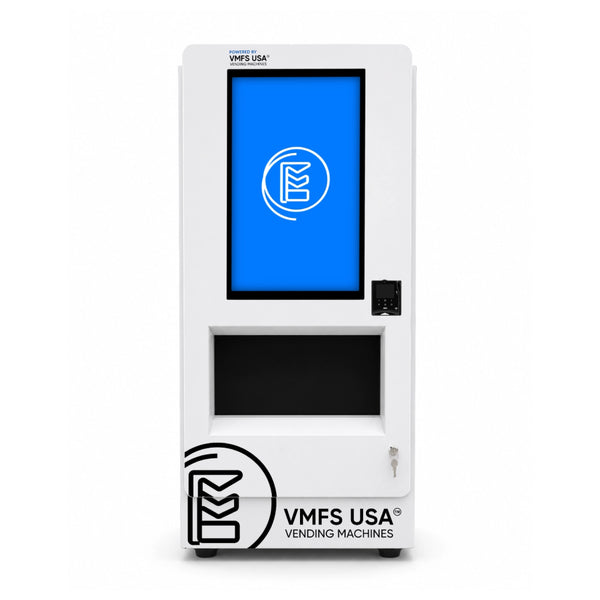
Elevator Vending Machines Available for Boston
Every unit below ships configured, compliance-ready, and backed by VMFS Cloud monitoring.
How Operators Use Elevator Vending in Boston
Medical Center Vending
Boston Medical Center, Massachusetts General Hospital, and Brigham and Women's Hospital operate round the clock with medical staff, patients, and visitors needing food and beverages during odd hours when cafeterias close. Machines stock fresh sandwiches, salads, protein drinks, electrolyte beverages, and premium coffee to meet healthcare worker needs during overnight shifts and weekend coverage. Gentle elevator delivery units protect fragile containers of fresh food and glass beverage bottles that would crack or rupture in traditional coil machines, preserving product quality and reducing damage claims. Healthcare facilities value reliable vending access during off hours when staff cannot leave patients unattended, making machines essential amenities that justify premium pricing and high transaction volume.
University Housing and Campus
Students living in dormitories across Boston University, Northeastern University, and Harvard's Cambridge campus need convenient snacks and drinks accessible after library hours and on weekends when dining facilities have limited service. Machines stock energy bars, instant oatmeal, fresh fruit, cold brew coffee, electrolyte drinks, and healthy grab and go meals tailored to student budgets and late night study sessions. The elevator delivery unit prevents crushing of fragile snack bars, fresh produce, and beverage bottles that suffer damage in traditional spiral machines, extending product shelf life and reducing waste. University housing generates consistent transaction volume because students lack transportation and compete for limited campus food options, creating reliable daily revenue from captive user populations.
Corporate Office Tower
Downtown Boston towers including Prudential Center, Copley Place, and the Financial District office buildings house thousands of workers spending 8 to 10 hours daily in their workplace. Machines stock fresh salads, grain bowls, cold pressed juices, kombucha, protein bars, electrolyte drinks, and premium coffee to support worker productivity without leaving the building. Gentle elevator delivery protects delicate salad containers, glass bottles, and beverage seals that fail in coil dispensers, maintaining freshness and preventing leakage that damages inventory and costs money. Office tenants treat vending as a workplace amenity that reduces turnover, increases retention, and justifies premium rent, making machines a strong revenue source through daily repeat transactions from concentrated worker populations.
Airport Terminal and Concourse
Boston Logan International Airport serves millions of travelers annually with limited food service hours and long security lines that create urgency for quick meals. Machines stock ready to eat sandwiches, premium snacks, beverages, phone chargers, travel accessories, and convenience items positioned in gates and terminal corridors where foot traffic peaks during rush windows. Elevator delivery units eliminate crushing damage to bread based products, beverage bottles, and electronic accessories that suffer in coil machines, protecting fragile items from the high vibration of busy airport environments. Airport terminals generate rapid transaction velocity through cashless payment, serve customers with high purchase willingness during travel stress, and require uptime reliability during peak arrival and departure periods when food service cannot keep pace with demand.
What Ships With Every Elevator Unit
Regulations for Operating in Boston, MA
Licensing, permits, sales tax, and health department standards for elevator vending operators in Massachusetts.
State License Requirements
In Massachusetts, the Department of Public Health (DPH) and the Division of Standards oversee vending machine operations. Machines that vend potentially hazardous foods (foods requiring temperature control for safety, such as sandwiches, dairy products, and prepared foods) require a Food Service License issued by the local board of health. Machines vending only shelf-stable, non-potentially hazardous snacks (candy, chips, crackers, and similar items) typically do not require a food service license but may still require a business license. Massachusetts does not issue a separate statewide vending operator license; instead, licensing is managed at the local board of health level. Operators must register for a Massachusetts Sales and Use Tax Account with the Department of Revenue to collect and remit sales tax; an EIN from the IRS is required for business entity formation. Tobacco vending machines are heavily restricted under Massachusetts law (essentially prohibited for all-ages accessibility in most venues); alcohol cannot be sold through vending machines. Bottled water and ice may be vended but are subject to the same licensing and tax requirements as other products. Food service licenses typically require renewal annually, with renewal timelines set by individual local boards of health. Operators should contact their city or town board of health for specific license type determination and renewal schedules.
City and County Permits
In Boston, operators must obtain a Boston Business License from the Inspectional Services Department (ISD), which serves as the city's primary business licensing authority. A Certificate of Occupancy or Certificate of Use may be required depending on machine placement location and venue type. Zoning approval is mandatory; vending machines must comply with Boston zoning ordinances, and operators should verify permitted uses in their intended location by contacting the Boston Zoning Board of Appeals or the Planning and Development Agency. Fire Safety approval may be required for machines placed in commercial buildings or public spaces; contact the Boston Fire Department's Office of Inspectional Services. At the county level, Suffolk County does not impose a separate vending machine permit but operators must ensure compliance with state and city requirements. No specific coin-operated machine declaration is required in Boston, but machines must be registered under the business license. Neighboring municipalities (Cambridge, Brookline, Newton, Quincy, and others in the greater Boston area) each maintain independent licensing requirements; operators deploying machines in multiple municipalities must obtain permits in each jurisdiction. Boston business licenses must be renewed annually; late penalties apply for non-renewal. For business licensing inquiries, contact the Boston Inspectional Services Department at 617-534-5395 or visit their office at 1010 Massachusetts Avenue, Boston, MA 02118.
Sales Tax Rate
The combined state and local sales tax rate in Boston, Massachusetts is 6.25 percent (Massachusetts state rate of 6.25 percent plus no additional city or county surtax). Shelf-stable, non-potentially hazardous food items such as candy, chips, and crackers are generally taxable. Prepared foods, hot foods, and potentially hazardous foods are subject to the meals tax of 7 percent in some contexts, but standard vending of packaged snacks is taxed at 6.25 percent. Bottled water and beverages are taxable. Operators must register with the Massachusetts Department of Revenue for a Sales and Use Tax Account and remit tax on a monthly, quarterly, or annual basis depending on sales volume. The economic nexus threshold for out-of-state remote sellers is sales of more than 100,000 dollars in the prior calendar year or more than 200 sales transactions; vending operators with physical machines in Boston have economic nexus and must collect and remit sales tax. For registration and remittance details, contact the Department of Revenue at 617-887-6367 or visit mass.gov/dor.
Health Department Standards
The Massachusetts Department of Public Health establishes baseline health and sanitation standards for vending machines, with local boards of health enforcing these standards and conducting inspections. Vending machines must have food-contact surfaces made of non-corrosive, easily cleanable materials (stainless steel preferred). Machines vending potentially hazardous foods must maintain accurate temperature control, with built-in thermometers or remote monitoring to ensure foods stay within safe temperature zones (below 41 degrees Fahrenheit for cold items, above 135 degrees Fahrenheit for hot items). Automatic shut-off mechanisms are required on some machines to prevent food spoilage when power is interrupted. All machines must be screened or sealed to prevent pest or insect contamination. Placement rules stipulate that machines must not be located directly under overhead plumbing or sources of potential leakage, and floors must be clean, level, and maintained in good condition. Operators must implement date-marking on all foods, ensure label visibility for allergens and ingredients, and permit unannounced inspections by local health departments. Secondary oversight may apply if machines are placed in schools (requiring school district approval and compliance with nutrition standards), healthcare facilities (requiring facility health and safety clearance), or government buildings (requiring additional security and sanitation protocols). Boston's climate presents seasonal temperature variations; machines placed outdoors must be equipped with temperature regulation to prevent food spoilage in summer heat and freezing in winter. VMFS USA elevator machines deployed in Boston ship with full compliance to Massachusetts DPH standards and local board of health requirements.
Disclaimer
Regulatory information is for reference only and current as of 2026. Operators should verify current requirements with the relevant agency before deployment. VMFS USA is not a legal or tax advisor.
Boston at a Glance
Geographic Identity
- County
- Suffolk County
- Metro Area
- Boston-Cambridge-Newton, MA-NH
- Time Zone
- America/New_York (Eastern Time)
- Area Codes
- 617, 857, 781, 339
- ZIP Codes
- 02101 to 02137
- Primary Airport
- BOS Boston Logan International Airport
- Secondary Airport
- MHT Manchester-Boston Regional Airport
- Major Port
- Port of Boston, a major container and general cargo port
- Nickname
- The Hub
Market Stats
- City Population
- 645,966
- Metro Population
- 4.9 million
- Annual Visitors
- 27.3 million (2023)
- Visitor Economy
- $17.6 billion annual economic impact
- Airport Passengers
- 40.4 million annual travelers through BOS
- Hospitality Jobs
- None
- Top Industries
- Higher Education and Research, Healthcare and Life Sciences, Finance and Banking, Technology and Innovation, Tourism and Hospitality, Professional Services
- Demand Driver
- Strong tourism driven by historic sites and cultural institutions, combined with major university populations, world-class hospitals, and dense corporate headquarters in finance and technology sectors.
Climate Profile
- Climate Zone
- Humid Continental
- Average Humidity
- 55 to 75 percent year round
- Summer High
- 82 degrees Fahrenheit average high with peaks near 90 degrees Fahrenheit in July and August
- Winter Low
- 29 degrees Fahrenheit average low, regularly below freezing from December through February
- Seasonal Hazard
- Nor'easter Winter Storms, November to March
- Environmental Exposure
- Heavy snow load in winter months affects ground level placements and requires reinforced structural support and enhanced drainage systems.
- Deployment Note
- Boston's humid continental climate with cold winters and moderate summers requires weatherproofed units with sealed electronics and insulated compartments for winter operation. Enhanced drainage and reinforced structural design handle significant snow accumulation. VMFS ships all Boston outdoor units with these cold climate and moisture protection specifications as standard.
Location & Service Area
- Key Neighborhoods
- Downtown, Back Bay, Beacon Hill, Cambridge, Somerville, Brookline, Newton, Allston, Jamaica Plain, South Boston, Dorchester, Roxbury
- Nearby Cities
- Quincy, Cambridge, Somerville, Brookline, Newton, Medford, Malden, Waltham
- Service Radius
- VMFS delivers, installs, and services machines throughout Suffolk County and Middlesex County, with extended coverage to Norfolk County and Essex County on request.
Your Location. Working 24/7.
Answers to common questions from Boston operators. Didn't see yours? Send us a message — our US-based team responds within one business day.
How does revenue sharing work, and when does the property owner receive payment?
What products work best in a financial services building in the Financial District versus a hospital like Mass General?
How frequently does the machine get restocked, especially during winter months in Boston?
What happens if the machine breaks down or stops accepting payments during peak tourist season at the Prudential Center or Copley Square?
Does the machine accept mobile payments and contactless cards, or is cash still required?
How does Boston winter weather affect machine operation, and what happens if the machine freezes or cannot dispense frozen products?
Deploy Elevator Vending Machines in Boston, MA Today
Request a custom quote for your Boston property and we handle machine selection, delivery, configuration, and ongoing support across your location. Every deployment begins with a site assessment covering foot traffic patterns, product mix strategy, power and network requirements, and compliance with local regulations specific to Boston venues. Whether you need a single unit in a medical office building or a rollout of 40 or more machines across a university campus or corporate tower, your quote includes hardware, installation, staff training, and 12 months of cloud monitoring at no extra cost.
Deploy Elevator Vending Across Boston
1,200+ machines deployed. 1-year warranty standard. Free lifetime support. One team from site survey to uptime.