


Elevator Vending Machines in Baltimore, MD
Experience hassle-free snacking solutions with our innovative elevator vending machines. Premium products delivered exactly where your customers are.
Stop Guessing. Configure Your Elevator Vending Machine.
Answer a few quick questions about your location, your product mix, your temperature needs, and your budget. Our Elevator Vending System will match you with the right base model, add the right modules (refrigeration, ad screen, outdoor protection, payment suite), and show you real time pricing and lead time as you build.
Skip the back and forth. Skip the spec sheet overwhelm. See your exact configuration, your exact cost, and your exact delivery window before you commit.
- Real time pricing as you add or remove features
- Live lead time estimate based on your configuration
- Recommended product mix for your location type
- Capacity, slot count, and weight limits shown per setup
- Option presets for food, drinks, electronics, retail, and frozen

Why Elevator Vending Machines?
Premium elevator vending machines in Baltimore, Maryland revolutionize automated retail with advanced robotic lift technology that safely delivers products to the pickup tray without drops or damage. Perfect for snacks, drinks, electronics, and fresh food items, these machines feature capacities up to 800 slots and cloud-based remote monitoring systems ideal for high-volume, high-margin locations. Our
elevator vending machines
combine maximum product protection with operational efficiency, ensuring superior customer satisfaction and reliable performance across Baltimore's competitive retail environment.
Zero Product Damage
Robotic elevator lift delivers every item intact, protecting glass bottles, fresh food, electronics, and premium SKUs that coil machines physically destroy
High-Capacity Footprint
Up to 800 items across chilled, ambient, and frozen zones in a single cabinet — the highest SKU density in the industry
Premium Product Compatibility
Handles fragile, high-ticket, and temperature-sensitive inventory including glass-bottled beverages, sushi, salads, and small electronics
24/7 Cloud Monitoring
Real-time sales reporting, per-slot inventory tracking, temperature alerts, and cashless payment data stream to your VMFS Cloud dashboard
Why Elevator Machines Perform in Baltimore, Maryland
Baltimore's robust hospitality and convention economy makes elevator vending machines particularly valuable in the city's downtown hotels, inner harbor attractions, and convention centers. High foot traffic from tourists and business travelers creates consistent demand for convenient snacks and beverages in lobbies and upper floors. The region's humid summers and indoor climate-controlled environments mean elevator placement protects temperature-sensitive products from spoilage while reducing merchandise damage during transport, a critical advantage over traditional ground-level machines that face Baltimore's moisture challenges.
Best Locations in Baltimore
High-value deployment sites where elevator vending delivers the strongest revenue per square foot.
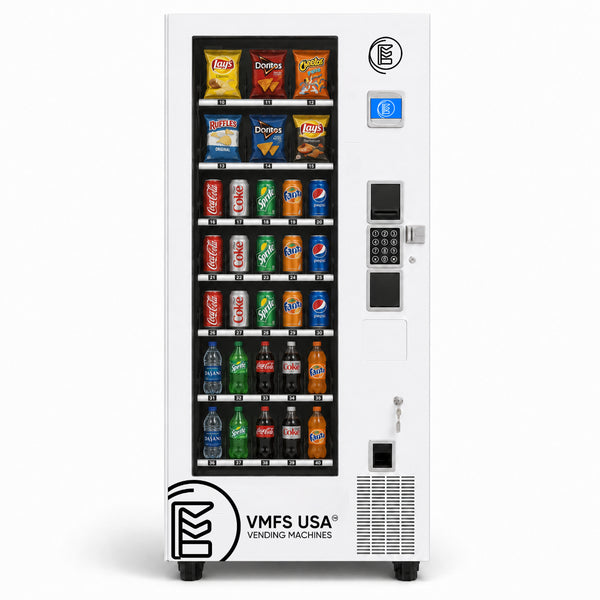
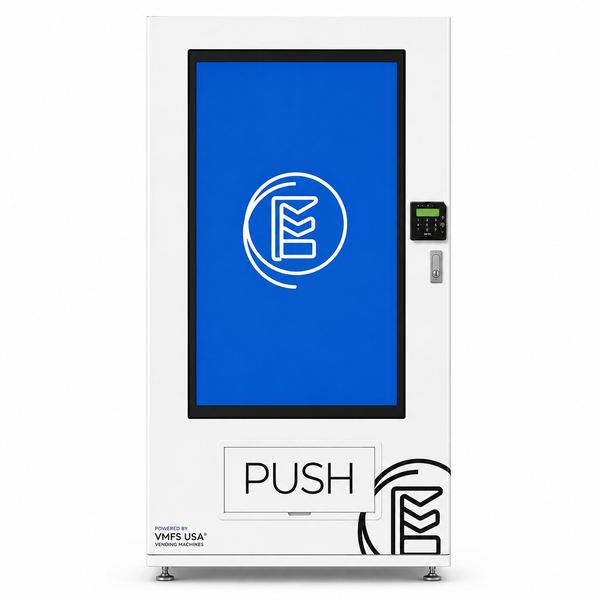
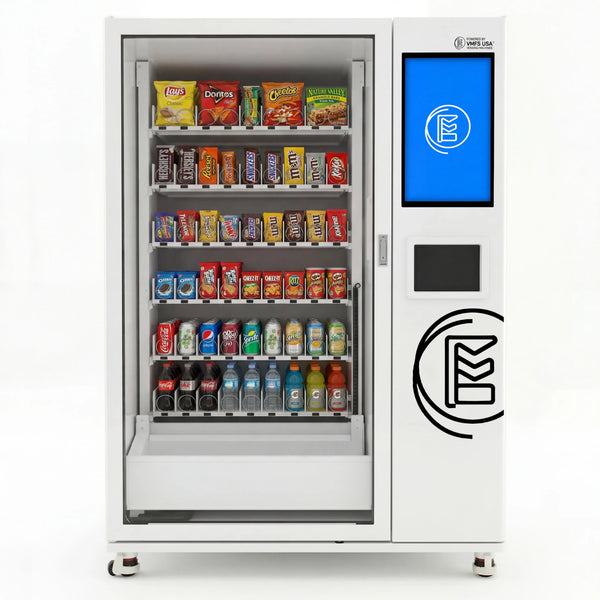
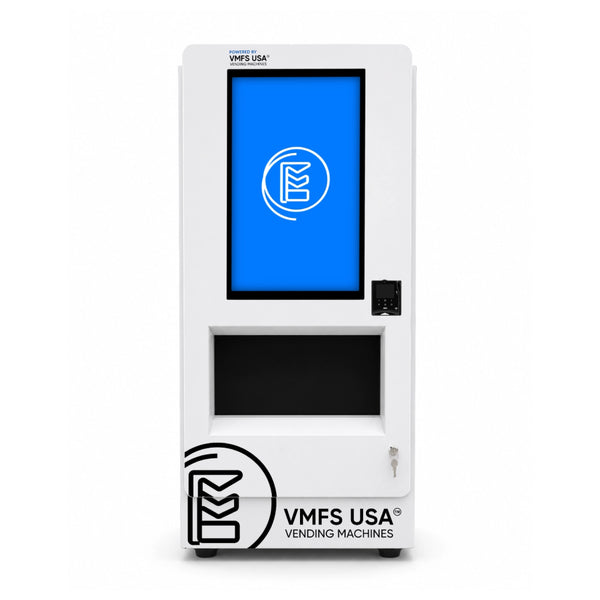
Elevator Vending Machines Available for Baltimore
Every unit below ships configured, compliance-ready, and backed by VMFS Cloud monitoring.
How Operators Use Elevator Vending in Baltimore
Hospital And Medical Center
Johns Hopkins Hospital, University of Maryland Medical Center, and Mercy Medical Center serve thousands of staff, patients, and visitors daily across Baltimore. The elevator delivery unit stocks premium beverages, fresh snacks, protein items, and over the counter wellness products that address the needs of people managing health concerns and working extended shifts. Gentle elevator delivery protects refrigerated items and supplement bottles from damage compared to traditional coil drop mechanisms, critical in medical settings where packaging integrity matters. Twenty four hour access to quality provisions drives consistent revenue as staff and visitors rely on in building vending during nights, weekends, and holiday closures when external options are limited.
University Housing And Campus Dining
Johns Hopkins University and University of Maryland Baltimore campuses house thousands of students across dormitories and residential facilities in Federal Hill and East Baltimore. Machines stock grab and go meals, energy drinks, snacks, and study fuel items calibrated to student budgets and late night study sessions. The elevator delivery unit prevents damage to fresh containers and fragile packaging during placement and restocking, preserving product quality in compact residential rooms where students expect reliable access. Students pay premium prices for convenience during off hours when dining facilities close, and repeat transactions from concentrated populations on campus drive high per machine volume.
Harbor And Entertainment District Venues
National Aquarium, Power Plant Live, and venues surrounding the Inner Harbor draw millions of tourists and locals annually to Baltimore's waterfront. Machines stock premium beverages, local snacks, branded merchandise, and ready to eat items priced at 30 to 50 percent above retail that capitalize on captive audiences and impulse purchases in entertainment settings. Gentle elevator delivery protects glass bottles, cans, and delicate food packaging from the impacts of traditional coil machines in high traffic public spaces. Tourism venues generate consistent foot traffic across extended hours with customers willing to pay convenience premiums, making per machine revenue substantially higher than suburban placements.
Fire And Police Station Break Rooms
Baltimore Fire Department stations and Police Department facilities across Harbor East, Southwest, and other districts house personnel working extended shifts with limited meal break windows. Machines stock protein rich snacks, coffee, energy beverages, and ready to eat meals that sustain shift workers during twelve hour rotations. The elevator delivery unit prevents damage to hot beverage containers and fresh food items during routine restocking, maintaining product quality in busy institutional break rooms. Twenty four hour access to provisions supports retention and morale among essential personnel, and institutional purchasing agreements provide predictable revenue with minimal seasonal fluctuation.
What Ships With Every Elevator Unit
Regulations for Operating in Baltimore, MD
Licensing, permits, sales tax, and health department standards for elevator vending operators in Maryland.
State License Requirements
In Maryland, the Department of Health oversees food service licensing and vending machine operations. Machines that vend potentially hazardous foods (foods requiring time-temperature control for safety) require a Food Service License, while machines vending only shelf-stable snacks typically do not require a food license but may require general business registration. Operators must register for a Maryland sales tax license through the Comptroller of Maryland and obtain an EIN from the IRS if operating as a business entity other than a sole proprietorship. Maryland does not issue a statewide vending operator license; instead, licensing is based on the type of food or goods dispensed. Tobacco and alcohol vending are heavily restricted and require specific state permits separate from general vending licenses. Water and ice vending may require additional health department approval depending on source and handling. Food service licenses must be renewed annually, typically with renewal periods aligned to the calendar year. Business entities operating vending machines should be formally registered with the Maryland Department of Assessments and Taxation.
City and County Permits
Baltimore City requires vending machine operators to obtain a Business License from the Baltimore City Department of Finance, which involves submitting an application and paying associated fees. Operators must also obtain a Certificate of Use from the Baltimore Department of Planning if the machine will be placed in a commercial or mixed-use space, as zoning approval may be required depending on location. Fire safety approval may be necessary for machines placed in buildings requiring compliance with Baltimore Fire Code standards. Baltimore County (if applicable to the deployment location) may require separate permits and county-level business licenses in addition to city permits. Some properties require a Coin-Operated Machine Declaration or similar filing with property managers or municipal authorities. Renewal of business licenses typically occurs annually, and late renewal may result in penalties. Operators should contact the Baltimore City Department of Finance at 410-396-6600 for business license information and the Department of Planning at 410-396-8200 for zoning and certificate of use requirements. Permit processing timelines vary; operators should allow 2-4 weeks for standard approvals.
Sales Tax Rate
The combined sales tax rate in Baltimore City, Maryland is 6% (5% state rate plus 1% Baltimore City tax). Most food items vended through machines are subject to sales tax unless they qualify as exempt food categories under Maryland law; exempt foods are generally limited to unprepared grocery items and certain prepared foods sold for off-premises consumption in limited circumstances. Vended snacks, beverages, and candy are typically fully taxable. Operators must register for a sales tax license with the Maryland Comptroller of Maryland and remit sales tax on a monthly or quarterly basis depending on sales volume. Out-of-state vending operators with no Maryland business location may be exempt from Maryland sales tax registration if they have no economic nexus in the state; however, if the operator is remote-deploying machines in Maryland, nexus is typically established. Operators should contact the Comptroller of Maryland at 410-260-7533 for registration and remittance procedures.
Health Department Standards
The Maryland Department of Health regulates food service vending machines under COMAR 10.15.03 (Food Service License Rules), and Baltimore City operates an additional Health Department (BCHD) that enforces local food safety standards. Machines vending potentially hazardous foods must have NSF-certified food contact surfaces, accurate thermometers or temperature monitoring systems, automatic shut-off mechanisms if refrigeration or heating is required, and proper screening to prevent pest entry and product contamination. Machine placement must avoid overhead leakage, standing water, and unsanitary floor conditions; machines must be positioned at least 6 inches above the floor and away from direct water sources. Operators must implement date-marking protocols for any prepared foods, ensure label visibility for all products including allergen information, and be prepared for unannounced health inspections. Secondary oversight may occur in schools, healthcare facilities, and government buildings, which may have additional contractual or facility-specific requirements. Baltimore's humid subtropical climate and urban environment require machines to be sealed against moisture intrusion and rodent access; machines should include adequate drainage and ventilation to prevent condensation and mold. VMFS elevator machines deployed in Baltimore ship with Maryland and Baltimore City health code compliant specifications, including sealed components, stainless steel or food-grade materials, and appropriate temperature control configurations.
Disclaimer
Regulatory information is for reference only and current as of 2026. Operators should verify current requirements with the relevant agency before deployment. VMFS USA is not a legal or tax advisor.
Baltimore at a Glance
Geographic Identity
- County
- Baltimore City
- Metro Area
- Baltimore-Columbia-Towson
- Time Zone
- America/New_York (Eastern Time)
- Area Codes
- 410, 443
- ZIP Codes
- 21201 to 21297
- Primary Airport
- BWI Baltimore/Washington International Airport
- Secondary Airport
- DCA Ronald Reagan Washington National Airport
- Major Port
- Port of Baltimore, one of the busiest ports on the US East Coast
- Nickname
- The Charm City
Market Stats
- City Population
- 635,029
- Metro Population
- 2.8 million
- Annual Visitors
- 13.7 million (2023)
- Visitor Economy
- 6.7 billion annual economic impact
- Airport Passengers
- 36.5 million annual travelers through BWI
- Hospitality Jobs
- None
- Top Industries
- Healthcare and Life Sciences, Port and Logistics, Advanced Manufacturing, Government and Federal Services, Professional Services, Tourism and Hospitality, Education
- Demand Driver
- The convergence of federal government employment, world class medical institutions, major port activity, and historic cultural attractions drive sustained demand across Baltimore's economy.
Climate Profile
- Climate Zone
- Humid Subtropical
- Average Humidity
- 65 to 75 percent year round
- Summer High
- 88 degrees Fahrenheit average with peaks above 90 degrees Fahrenheit from June through September
- Winter Low
- 35 degrees Fahrenheit average, regularly drops below freezing from December through February
- Seasonal Hazard
- Nor'easter and Heavy Snow, November to March
- Environmental Exposure
- Winter ice and snow accumulation require drainage provisions and heated cabinet specs for refrigerated units in exposed locations.
- Deployment Note
- Baltimore's humid subtropical climate with cold winters and occasional heavy snow demands weatherproofed cabinets with enhanced drainage and heated refrigeration cycles for winter operation. VMFS ships all Baltimore outdoor units with these specifications as standard.
Location & Service Area
- Key Neighborhoods
- Inner Harbor, Federal Hill, Canton, Fells Point, Harbor East, Mount Washington, Hampden, Fell's Point, Roland Park, Canton, Locust Point, Pigtown
- Nearby Cities
- Columbia, Towson, Dundalk, Glen Burnie, Catonsville, Ellicott City, Bel Air
- Service Radius
- VMFS delivers, installs, and services machines throughout Baltimore City and Baltimore County, with extended coverage to Anne Arundel, Howard, and Carroll counties on request.
Your Location. Working 24/7.
Answers to common questions from Baltimore operators. Didn't see yours? Send us a message — our US-based team responds within one business day.
How much revenue can a property owner expect from hosting a vending machine, and what are the payment terms?
What products work best in Baltimore venues, and how often does restocking happen?
What space and installation requirements does the operator need on the property?
If the vending machine breaks down or needs repairs, how long does downtime typically last in Baltimore?
What payment methods does the machine accept, and can property owners monitor sales remotely?
How does Baltimore winter weather affect vending machine performance and product selection?
Deploy Elevator Vending Machines in Baltimore, MD Today
Request a custom quote today for your Baltimore location, and our team handles machine selection, delivery, configuration, and ongoing support end to end. Every deployment starts with a site assessment covering foot traffic patterns, product mix strategy, power and network requirements, and compliance logistics specific to your venue type and local regulations. Whether you need a single unit in a boutique hotel lobby downtown or a rollout of 40 or more machines across a medical center campus or university housing complex, your quote includes hardware, installation, staff training, and 12 months of cloud monitoring at no extra cost.
Deploy Elevator Vending Across Baltimore
1,200+ machines deployed. 1-year warranty standard. Free lifetime support. One team from site survey to uptime.