


Coffee Vending Machines in Minneapolis, MN
Elevate your Minneapolis office with premium coffee vending machines that deliver fresh, delicious beverages to your team daily.
Stop Guessing. Configure Your Coffee Vending Machine.
Answer a few quick questions about your location, your product mix, your temperature needs, and your budget. Our Coffee Vending System will match you with the right base model, add the right modules (refrigeration, ad screen, outdoor protection, payment suite), and show you real time pricing and lead time as you build.
Skip the back and forth. Skip the spec sheet overwhelm. See your exact configuration, your exact cost, and your exact delivery window before you commit.
- Real time pricing as you add or remove features
- Live lead time estimate based on your configuration
- Recommended product mix for your location type
- Capacity, slot count, and weight limits shown per setup
- Option presets for food, drinks, electronics, retail, and frozen

Why Coffee Vending Machines?
A
coffee vending machine
transforms workplace beverage service in Minneapolis by delivering café-quality drinks on demand. Our bean-to-cup vending machine technology freshly grinds whole beans for each order, brewing espresso, cappuccino, latte, mocha, americano, decaf, hot chocolate, tea, and 20+ specialty beverages from a single unit. Whether you need a compact tabletop office coffee machine producing 150 cups daily or the Coffee Pro XL flagship delivering 600 cups per day, our hot drinks vending machine solutions offer rapid bean-to-cup brewing in just 30-60 seconds per cup. Advanced features include 9-bar espresso pressure, 3000W heating power, aluminum boiler with continuous temperature control, programmable self-cleaning, and VMFS Cloud dashboard integration for real-time sales tracking and inventory management, ensuring your Minneapolis office stays fully stocked with premium beverages.
Bean-To-Cup Brewing
Built-in grinder freshly grinds 7 to 16 grams of whole beans per order for true cafe-quality espresso, cappuccino, latte, mocha, and 20+ specialty drinks with no pre-ground coffee going stale
High-Capacity Brewing System
Capacity ranges from 150 cups per day on compact tabletop models up to 600 cups per day on the Coffee Pro XL flagship, with brewing time of 30 to 60 seconds per drink
Premium Drink Menu
Espresso, cappuccino, latte, mocha, americano, decaf, hot chocolate, tea selections, and iced coffee on select models, with adjustable strength, cup size, and ingredient ratios for every recipe
Automated Cleaning And Maintenance
Programmable self-cleaning of mixing circuits, product outlets, and grinder; tool-free access to removable parts; aluminum boiler resists scaling for long-term reliability rated for 750,000+ grinder cycles
VMFS Cloud Remote Management
Real-time sales, ingredient stock levels, fault alerts, and remote menu updates stream to the VMFS Cloud dashboard from any device, with U.S.-based support and software updates included
Why Coffee Machines Perform in Minneapolis, Minnesota
Minneapolis's dense corporate office cluster along the Mississippi riverfront and downtown business district creates ideal conditions for high-capacity
coffee vending machines
that brew fresh cups in 30–60 seconds without requiring barista staffing. The city's Fortune 500 headquarters, including Target, UnitedHealth, and 3M, generate sustained morning and afternoon caffeine demand across hundreds of breakrooms, while the growing health and wellness sector—from Mayo Clinic's Minneapolis operations to premium gyms—adds foot traffic from time-conscious professionals seeking quick, quality beverages. Bean-to-cup machines with 150–600 cup daily capacity perfectly serve Minneapolis's high-density venues, generating $300–$700 monthly profit per unit after ingredient costs. Real-time inventory monitoring ensures consistent uptime in competitive markets, and
professional placement services
help operators identify optimal breakroom and transit locations where Minneapolis's busy workforce congregates year-round, even during harsh winters when outdoor café traffic declines.
Best Locations in Minneapolis
High-value deployment sites where coffee vending delivers the strongest revenue per square foot.
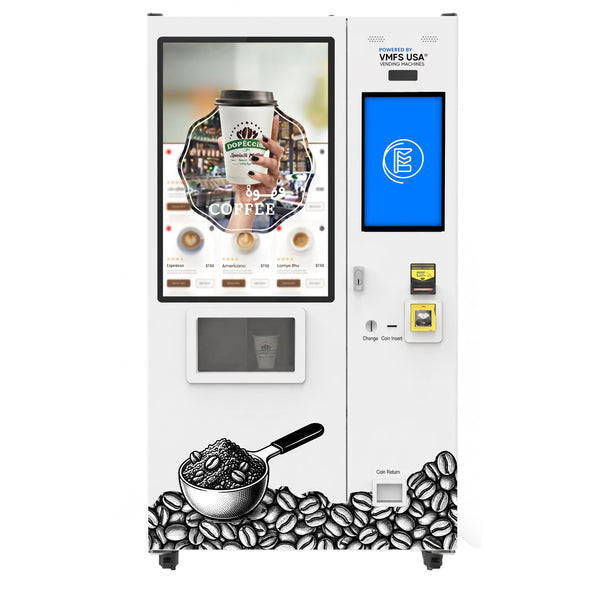
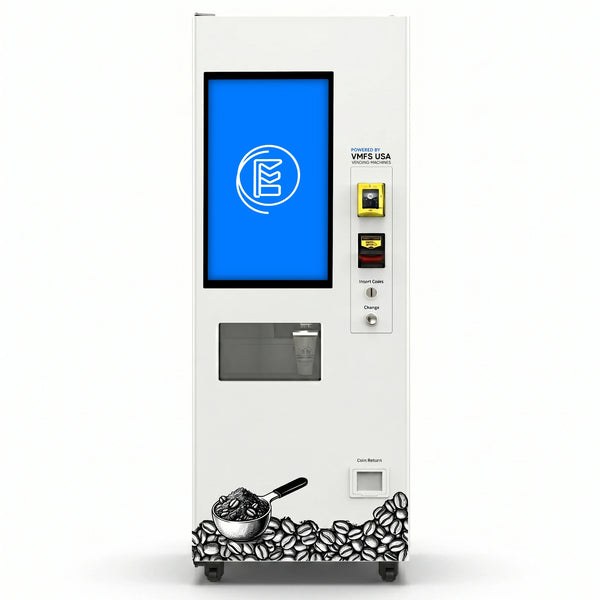
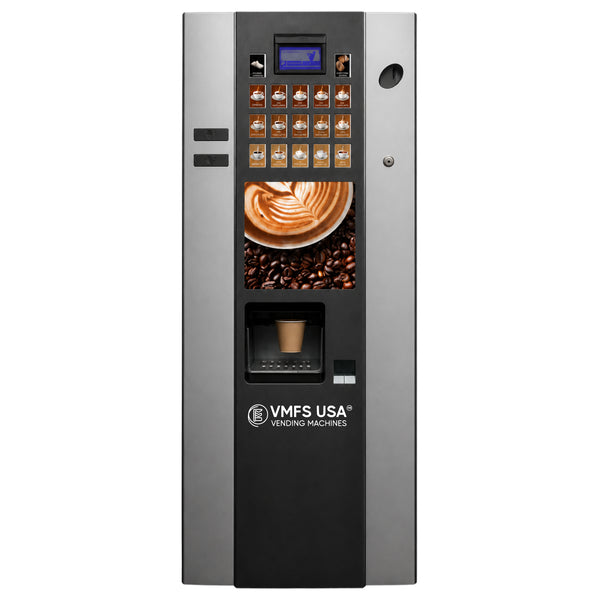
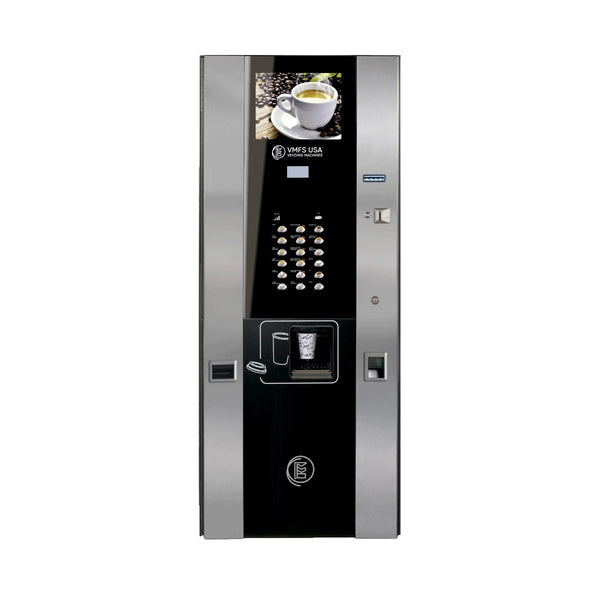
Coffee Vending Machines Available for Minneapolis
Every unit below ships configured, compliance-ready, and backed by VMFS Cloud monitoring.

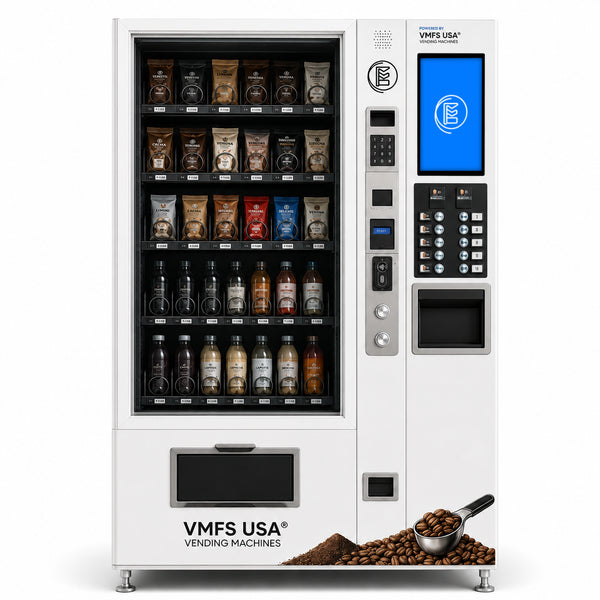
How Operators Use Coffee Vending in Minneapolis
Corporate Breakroom
Properties across the IDS Center, US Bank Plaza, and major office parks in the North Loop and downtown Minneapolis rely on employee amenities to retain talent during competitive hiring seasons. The machine stocks espresso, cappuccino, latte, and americano for morning demand, with decaf and hot chocolate for afternoon users. Bean-to-cup brewing delivers consistency across 150 to 600 cups per day without daily restocking visits, while the 9-bar espresso pressure and 30 to 60 second brew cycle handle sustained mid-morning and post-lunch rushes. Net profit runs 250 to 400 dollars per month after ingredient refill costs of 150 to 300 dollars, making corporate breakrooms the highest revenue category because employers view coffee service as a non-negotiable workplace benefit.
Medical Center Breakroom
Fairview Health Services, Hennepin Healthcare, and University of Minnesota Medical Center operate around the clock with nursing staff, physicians, and support teams cycling through 24-hour shifts. The machine stocks freshly brewed coffee, espresso, cappuccino, and hot chocolate calibrated for night shift workers who need reliable access outside standard cafeteria hours. The coffee vending machine's cloud monitoring ensures uptime during graveyard shifts, while the 600 cup per day capacity on flagship models eliminates the restocking burden that strains hospital supply chains. Monthly net profit reaches 300 to 400 dollars per location because medical centers operate continuously and staff rotate through all hours, driving consistent sales when other venues close.
Tech Campus Amenity
Concentrations of software companies, digital agencies, and innovation labs in the St. Louis Park corridor and the Mill District depend on high-quality break spaces to compete for engineering and product talent. The machine dispenses espresso shots, cold lattes, iced coffee, and specialty drinks with adjustable strength and milk ratios that appeal to younger workforces with refined coffee preferences. The bean-to-cup vending machine eliminates long lines at nearby coffee shops and delivers professional espresso quality on-site, while high-capacity brewing handles the dense foot traffic typical of tech offices. Monthly returns of 300 to 400 dollars profit per machine justify placement because tech employers view in-office coffee quality as a recruiting advantage and cost offset against remote work policy competition.
Airport and Transit Hub
Minneapolis St Paul International Airport, Union Station, and major transit corridors serve commuters and travelers who demand immediate access to premium beverages before flights or transfers. The machine stocks cappuccino, latte, espresso, iced coffee, and hot chocolate with the speed and payment flexibility to handle high-volume transactions without bottlenecking departure gates. The coffee vending machine accepts cash, credit cards, Apple Pay, and Google Pay to process transactions in under two minutes, while the 600 cup per day brewing capacity and 1,700 gram bean canisters survive peak morning and afternoon travel surges. Net profit reaches 350 to 400 dollars monthly because transit venues charge premium pricing and operate 24/7 with no customer acquisition cost, making airport and hub placements the highest margin category in the market.
What Ships With Every Coffee Unit
Regulations for Operating in Minneapolis, MN
Licensing, permits, sales tax, and health department standards for coffee vending operators in Minnesota.
State License Requirements
In Minnesota, the Department of Health (MDH) and the Minnesota Department of Agriculture (MDA) jointly oversee vending machines and food service operations. Coffee vending machine operators must obtain a Mobile Food Unit License or Food Service License from MDH if the machine involves preparation or service of beverages. Operators selling hot coffee, espresso, milk-based drinks, hot chocolate, tea, and iced coffee must register with the Minnesota Department of Revenue for a sales tax account and obtain an Employer Identification Number (EIN) from the IRS or register as a sole proprietor. Minnesota requires that all food service operations maintain proper business entity documentation (sole proprietorship, LLC, corporation, or partnership). Milk and dairy products used in espresso drinks and milk-based beverages must comply with Minnesota's Grade A milk standards; all dairy ingredients must be properly refrigerated and date-marked with a shelf-life label visible on the machine or in the storage unit. Allergen disclosure is mandatory for any recipe or ingredient blend containing nuts, dairy, soy, or other major allergens; this information must be clearly posted on the machine or available at point of sale. All ingredient labels must be legible and indicate the source and expiration date. Permits must be renewed annually, and operators must maintain compliance documentation available for inspection.
City and County Permits
Minneapolis requires all vending machine operators to obtain a Business License from the City of Minneapolis Business Licensing Division. Operators must also secure a Certificate of Use or similar approval confirming the machine placement complies with zoning regulations specific to the property type (office, retail, institutional, healthcare, etc.). Fire safety approval may be required for machines placed in public buildings or commercial spaces; contact the Minneapolis Fire Department (311 or 612-673-2080 for non-emergencies) to confirm fire code compliance. Hennepin County does not impose a separate county vending machine permit, but operators must ensure compliance with any county health department guidelines if the venue spans county jurisdiction. Coin-operated machine declarations are not specifically required at the city or county level in Minneapolis, but operators must register the business and the machine locations with the city during annual business license renewal. Municipalities surrounding Minneapolis (such as St. Paul, Bloomington, and Edina) may have separate licensing requirements; operators placing machines in multiple jurisdictions should contact each city's business licensing office. Minneapolis business licenses must be renewed annually, typically by the business anniversary date; late renewal penalties vary and operators should contact the Business Licensing Division at 311.
Sales Tax Rate
The combined sales tax rate in Minneapolis, Minnesota is 8.225% (Minnesota state rate of 6.875% plus Hennepin County surtax of 1.25% plus Minneapolis city surtax of 0.1%). Hot beverages prepared on-site by a vending machine, including brewed coffee, espresso, and milk-based hot drinks, are taxed as prepared food at the full combined rate of 8.225%. Packaged or pre-made beverages stored in a vending machine (such as bottled iced coffee or ready-to-drink cold tea) may qualify for different tax treatment depending on packaging and preparation method; operators should confirm the tax category with the Minnesota Department of Revenue. Operators must register with the Minnesota Department of Revenue and obtain a sales tax permit; registration can be completed online at revenue.state.mn.us. All vending machine operators must collect and remit sales tax monthly or as required by the department. Out-of-state sellers with no physical location in Minnesota but generating sales into Minnesota may be subject to economic nexus rules; operators should consult the Minnesota Department of Revenue or a tax professional if applicable.
Health Department Standards
The Minnesota Department of Health (MDH) and the Hennepin County Health Department establish standards for office coffee machines and hot beverage vending equipment. Coffee machines must be equipped with a boiler or heating system that maintains water temperature between 195 and 205 degrees Fahrenheit for proper extraction and food safety; continuous automatic temperature control is mandatory. All food-contact surfaces (dispensing nozzles, brew group components, milk frothers, and ingredient hoppers) must be made of food-grade stainless steel or approved food-contact materials and must be cleaned and sanitized according to MDH guidelines, typically daily or after each shift. Machines must include automatic shut-off features that activate after 30 minutes of inactivity to prevent overheating and energy waste. Programmable self-cleaning cycles are strongly recommended and required in high-volume settings; these cycles must flush brewing components with hot water at regular intervals (typically every 4 to 8 hours). Machines must be placed in climate-controlled environments with ambient temperatures between 50 and 85 degrees Fahrenheit to ensure consistent operation and prevent condensation or thermal stress; Minneapolis winters and temperature fluctuations require machines to be installed indoors away from external walls or unheated areas. All perishable ingredients, especially powdered milk, dairy creamers, and milk-based drink mixes, must be date-marked with the receipt or opening date and shelf-life duration clearly visible on the ingredient label or container. Ingredient labels must be legible at a distance of 3 feet and must list all allergens prominently. Unannounced inspections by MDH or Hennepin County Health Department staff may occur at any time; operators must maintain records of cleaning logs, temperature logs, ingredient invoices, and allergen certifications. Schools, healthcare facilities, and government buildings in Minneapolis may require additional local health department oversight or secondary inspections. Minneapolis experiences significant seasonal temperature and humidity variation; machines must be rated for indoor placement and equipped with condensation management features. VMFS and coffee vending machines deployed in Minneapolis ship with the appropriate spec standard, including aluminum boiler with continuous temperature control and energy-saving design and a 1-year standard warranty with extended coverage options.
Disclaimer
Regulatory information is for reference only and current as of 2026. Operators should verify current requirements with the relevant agency before deployment. VMFS USA is not a legal or tax advisor. For operator-side legal guidance covering placement contracts, host venue agreements, documentation, business incorporation, tax registration, licenses, and permits, operators can consult <a href="https://vadviced.com">VAdviced</a>. For professional placement and location matching support, operators can work with <a href="https://vplaced.com">VPlaced</a>.
Minneapolis at a Glance
Geographic Identity
- County
- Hennepin County
- Metro Area
- Minneapolis-St. Paul-Bloomington
- Time Zone
- America/Chicago (Central Time)
- Area Codes
- 612, 651
- ZIP Codes
- 55401 to 55489
- Primary Airport
- MSP Minneapolis-St. Paul International Airport
- Secondary Airport
- None
- Major Port
- None
- Nickname
- The City of Lakes
Market Stats
- City Population
- 397,638
- Metro Population
- 3.68 million
- Annual Visitors
- 10.6 million (2023)
- Visitor Economy
- $8.4 billion annual economic impact
- Airport Passengers
- 37.7 million annual travelers through MSP
- Hospitality Jobs
- None
- Top Industries
- Healthcare and Medical Devices, Finance and Banking, Technology and Software, Manufacturing, Professional Services, Retail and Commerce
- Demand Driver
- Strong corporate headquarters presence, major medical device manufacturing, diverse convention and event traffic, and year-round business and leisure visitor activity drive demand across Minneapolis.
Climate Profile
- Climate Zone
- Humid Continental
- Average Humidity
- 50 to 70 percent year round
- Summer High
- 85 degrees Fahrenheit typical with peaks near 90 degrees Fahrenheit in July and August
- Winter Low
- regularly below 0 degrees Fahrenheit, indoor placements recommended during winter months
- Seasonal Hazard
- Winter Storm, November to March
- Environmental Exposure
- Heavy snow load and freeze thaw cycles require reinforced structural design and enhanced drainage to prevent ice accumulation and water infiltration.
- Deployment Note
- Minneapolis outdoor vending requires weatherproofed units with sealed electronics, insulated compartments for winter protection, and reinforced refrigeration cycles to handle extreme temperature swings from below zero in winter to near 90 degrees Fahrenheit in summer. VMFS ships all Minneapolis outdoor units with these specifications standard.
Location & Service Area
- Key Neighborhoods
- Downtown Minneapolis, Northeast Minneapolis, Southeast Minneapolis, Uptown, Loring Park, Whittier, Phillips, Powderhorn Park, Calhoun Isles, Seward, Longfellow, St. Anthony
- Nearby Cities
- St. Paul, Bloomington, Edina, Minneapolis, Richfield, Golden Valley, Plymouth, Minnetonka, Eagan, Coon Rapids
- Service Radius
- VMFS delivers, installs, and services machines throughout Hennepin County and Ramsey County, with extended coverage to Dakota County and other Twin Cities metro areas on request.
Your Location. Working 24/7.
Answers to common questions from Minneapolis operators. Didn't see yours? Send us a message — our US-based team responds within one business day.
How much net profit can a facility in Minneapolis expect from a coffee vending machine each month?
What espresso and milk drink options does the bean-to-cup machine offer for Minneapolis office workers and medical professionals?
What electrical infrastructure and space does a Minneapolis facility need to install the coffee machine?
What happens if the machine breaks down, and does warranty coverage protect against downtime in winter conditions?
Does the machine accept contactless payments like Apple Pay and Google Pay used by Minneapolis professionals?
How often does the coffee machine need restocking, and what documentation supports placement agreements with Minneapolis venues?
Deploy Coffee Vending Machines in Minneapolis, MN Today
Request a custom quote today for
coffee vending machines
at your Minneapolis location, and we handle machine selection, delivery, configuration, and ongoing support from start to finish. Every deployment begins with a site assessment that covers foot traffic patterns, drink menu balance across espresso, cappuccino, latte, and specialty hot drinks, ingredient canister capacity and power requirements, and network specifications for cloud platform integration, with placement strategy available through our
placement experts
for operators seeking professional location matching in high-traffic offices, hotels, and hospital lobbies throughout Minneapolis. Whether you need a single unit in a small medical clinic or a rollout of 30 or more machines across a large corporate campus or university dormitory system, your quote includes hardware, installation, staff training, and 12 months of cloud monitoring at no extra cost.
Deploy Coffee Vending Across Minneapolis
1,200+ machines deployed. 1-year warranty standard. Free lifetime support. One team from site survey to uptime.