


Coffee Vending Machines in Buffalo, NY
Elevate your Buffalo office with premium coffee vending machines. Fresh, hot drinks available instantly. Boost employee satisfaction and productivity today.
Stop Guessing. Configure Your Coffee Vending Machine.
Answer a few quick questions about your location, your product mix, your temperature needs, and your budget. Our Coffee Vending System will match you with the right base model, add the right modules (refrigeration, ad screen, outdoor protection, payment suite), and show you real time pricing and lead time as you build.
Skip the back and forth. Skip the spec sheet overwhelm. See your exact configuration, your exact cost, and your exact delivery window before you commit.
- Real time pricing as you add or remove features
- Live lead time estimate based on your configuration
- Recommended product mix for your location type
- Capacity, slot count, and weight limits shown per setup
- Option presets for food, drinks, electronics, retail, and frozen

Why Coffee Vending Machines?
A coffee vending machine delivers fresh, premium beverages directly to your Buffalo workplace. Our bean-to-cup vending machine grinds whole beans on-demand for each order, crafting espresso, cappuccino, latte, mocha, americano, decaf, hot chocolate, tea, and 20+ specialty drinks from a single unit. Tabletop models brew up to 150 cups daily, while the Coffee Pro XL flagship reaches 600 cups per day with bean-to-cup brewing in just 30-60 seconds per cup. These hot drinks vending machines feature 9-bar espresso pressure, 3000W heating power, aluminum boilers with continuous temperature control, and programmable self-cleaning cycles. The VMFS Cloud dashboard provides real-time sales and inventory tracking. Explore our
coffee vending machines
to find the perfect office coffee machine for your Buffalo business needs.
Bean-To-Cup Brewing
Built-in grinder freshly grinds 7 to 16 grams of whole beans per order for true cafe-quality espresso, cappuccino, latte, mocha, and 20+ specialty drinks with no pre-ground coffee going stale
High-Capacity Brewing System
Capacity ranges from 150 cups per day on compact tabletop models up to 600 cups per day on the Coffee Pro XL flagship, with brewing time of 30 to 60 seconds per drink
Premium Drink Menu
Espresso, cappuccino, latte, mocha, americano, decaf, hot chocolate, tea selections, and iced coffee on select models, with adjustable strength, cup size, and ingredient ratios for every recipe
Automated Cleaning And Maintenance
Programmable self-cleaning of mixing circuits, product outlets, and grinder; tool-free access to removable parts; aluminum boiler resists scaling for long-term reliability rated for 750,000+ grinder cycles
VMFS Cloud Remote Management
Real-time sales, ingredient stock levels, fault alerts, and remote menu updates stream to the VMFS Cloud dashboard from any device, with U.S.-based support and software updates included
Why Coffee Machines Perform in Buffalo, New York
Buffalo's robust healthcare and corporate sector creates consistent weekday foot traffic and high caffeine demand across hospitals, medical offices, and downtown business centers.
Coffee vending machines
thrive in these environments because they deliver fresh-brewed coffee in 30–60 seconds without requiring barista staff, meeting the urgent morning and afternoon caffeine needs of medical professionals and office workers on tight schedules. With daily brewing capacity of 150–600 cups per machine and 24/7 availability, these units capture revenue during early shifts, lunch breaks, and evening rotations when traditional cafés close. Real-time inventory monitoring prevents stockouts during peak demand periods, while bean-to-cup technology justifies premium pricing in professional venues. Buffalo's winter climate and transit-dependent commuting patterns further boost afternoon coffee sales. Smart placement through
professional placement services
in hospitals, medical plazas, and corporate towers typically generates $300–$700 net monthly profit per machine, making Buffalo an attractive market for vending operators.
Best Locations in Buffalo
High-value deployment sites where coffee vending delivers the strongest revenue per square foot.
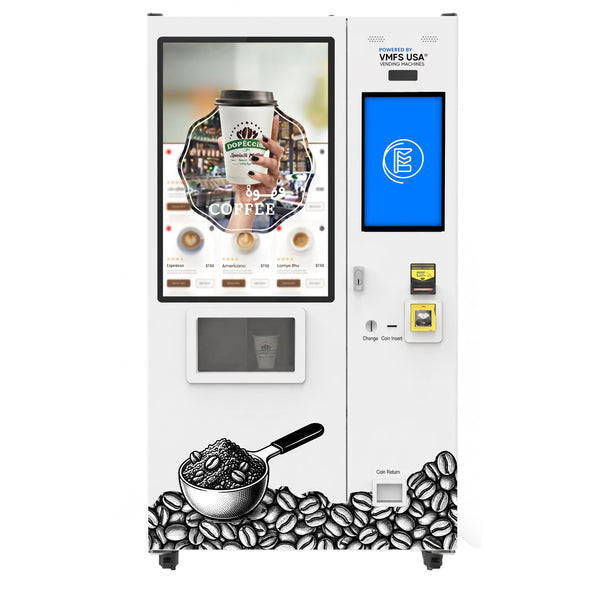
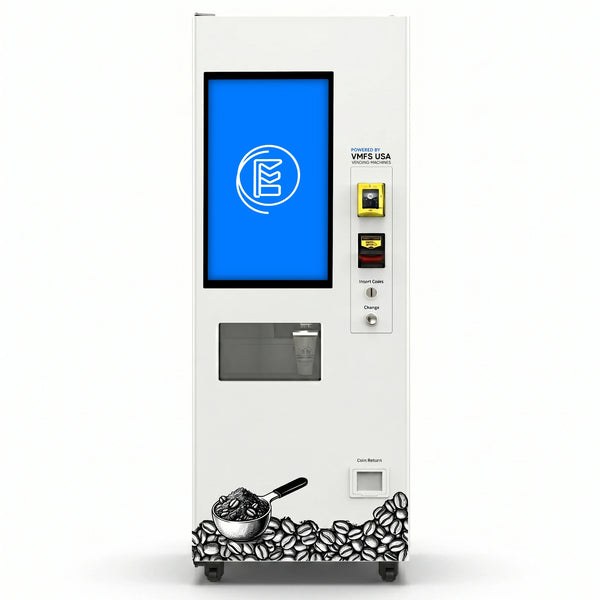
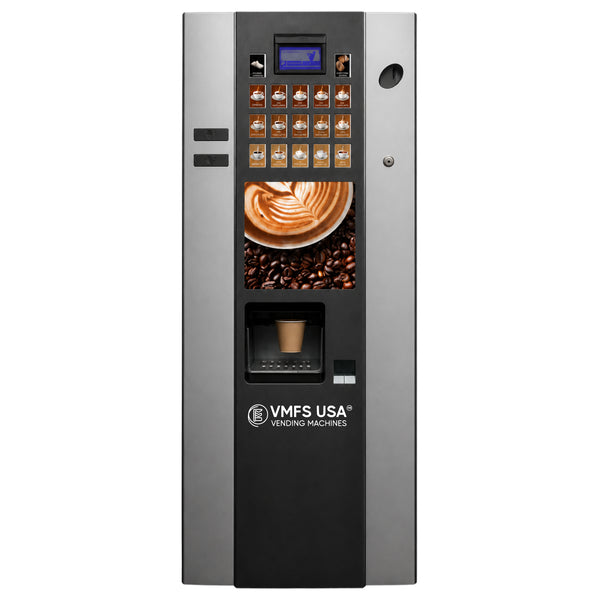
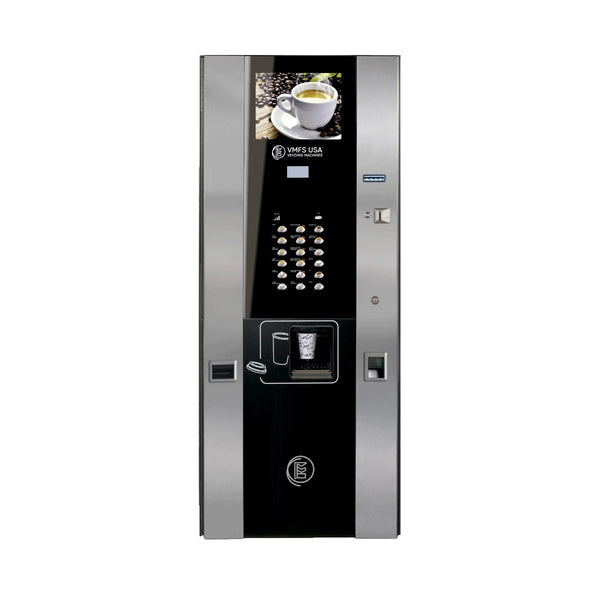
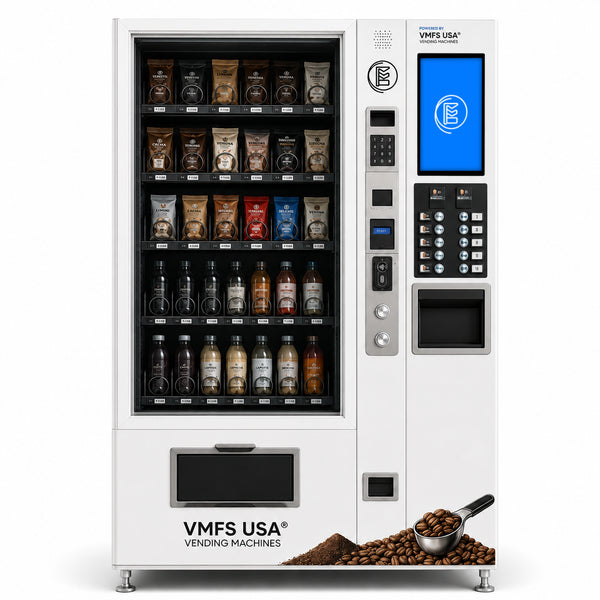
Coffee Vending Machines Available for Buffalo
Every unit below ships configured, compliance-ready, and backed by VMFS Cloud monitoring.

How Operators Use Coffee Vending in Buffalo
Medical Center Breakroom
Buffalo General Hospital, Roswell Park Comprehensive Cancer Center, and Mercy Hospital operate 24/7 with nursing staff, residents, and support workers cycling through shifts around the clock. The coffee vending machine stocks freshly brewed coffee, espresso, cappuccino, hot chocolate, and tea to fuel night shift staff and early morning rounds when cafeterias remain closed. Bean-to-cup brewing delivers consistent quality across 150 to 600 cups per day without requiring daily restocking, and the 9-bar espresso pressure system handles milk-based drinks and hot chocolate reliably during sustained overnight demand. Medical centers generate 250 to 400 dollars net profit per machine per month because staff rely on accessible caffeine during irregular hours when convenience matters most.
Corporate Office Breakroom
Key Landing, M&T Bank headquarters, Delaware North Companies, and Citigroup offices throughout downtown Buffalo and the Northland district employ thousands of workers arriving for morning coffee rushes and afternoon caffeine slumps. The coffee vending machine stocks espresso, cappuccino, latte, americano, and decaf selections with adjustable strength to match corporate preference and meet both early shift and mid-afternoon demand. High-capacity brewing of 150 to 600 cups per day handles sustained employee traffic without daily refilling, while the real time VMFS Cloud monitoring system tracks inventory and ensures uptime during peak morning hours. Corporate breakrooms generate 200 to 350 dollars net profit per machine per month because employers view accessible coffee as a retention amenity that reduces breakroom traffic to external shops.
University Campus Dormitory
Canisius College, University at Buffalo (UB), and Buffalo State College house thousands of undergraduate and graduate students in residence halls where traditional cafeteria hours do not match late night study sessions and early morning class schedules. The coffee vending machine stocks espresso, cappuccino, iced coffee, and hot chocolate to support all-night study marathons and early morning finals preparation across the student body. Bean-to-cup brewing capacity of 150 to 600 cups per day eliminates daily restocking burden, and the tap-to-pay system with Apple Pay and Google Pay integration matches student payment behavior and usage patterns. University dormitories generate 180 to 320 dollars net profit per machine per month because students purchase coffee consistently during off hours when dining facilities remain closed and exam periods drive sustained caffeine demand.
Hotel Lobby and Transit Corridor
Omni Buffalo Hotel, Hampton Inn Downtown, Hyatt Regency Buffalo, and the Amtrak Station on Exchange Street serve travelers arriving early, departing late, or waiting between connections who need immediate hot drinks without entering restaurants. The coffee vending machine stocks premium espresso, cappuccino, latte, and specialty hot drinks alongside iced coffee variants with built-in ice makers to serve guest preferences regardless of season. Bean-to-cup brewing maintains consistent quality across 150 to 600 cups per day with 24/7 uptime and payment flexibility through cash, credit, debit, Apple Pay, and Google Pay to accommodate travelers carrying varied payment methods. Hotels and transit locations generate 250 to 400 dollars net profit per machine per month because captive guest audiences purchase premium drinks at higher margins during morning departures and evening arrivals when convenience outweighs price sensitivity.
What Ships With Every Coffee Unit
Regulations for Operating in Buffalo, NY
Licensing, permits, sales tax, and health department standards for coffee vending operators in New York.
State License Requirements
The New York State Department of Agriculture and Markets (NYSDAM) oversees food service operations, including vending machines that dispense prepared beverages. Operators selling coffee, espresso, milk-based drinks, hot chocolate, tea, and iced coffee through vending machines must obtain a Food Service Establishment Permit from the local health department, which acts as the primary licensing authority under New York State Public Health Law Article 81. New York does not issue a separate state vending machine license; instead, operators must comply with food service licensing based on the type of beverage preparation occurring in the machine. For milk-based espresso drinks and other dairy-containing beverages, operators must follow New York Food Safety Regulations (10 NYCRR Part 81) regarding milk and dairy product storage, time-temperature control, and handling to prevent spoilage and contamination. All perishable dairy ingredients must be clearly date-marked and rotated using FIFO (first-in, first-out) protocols. Ingredient labeling and allergen disclosure are mandatory for any machine that displays ingredient information to consumers; allergen statements must clearly identify the presence of milk, tree nuts, peanuts, and other major allergens in compliance with New York labeling standards. Operators must register for New York Sales Tax with the Department of Taxation and Finance and obtain a Certificate of Authority; an EIN (Employer Identification Number) from the IRS is required for most business entities, though sole proprietors may use their Social Security Number in some cases. Business entity formation (LLC, C-Corporation, S-Corporation, or sole proprietorship) is a prerequisite for licensing and tax registration. Food Service Establishment Permits are typically renewed annually, with renewal deadlines communicated by the local health department; penalties for late renewal or non-compliance are assessed on a case-by-case basis and may include permit suspension or revocation.
City and County Permits
Buffalo, New York requires operators to obtain a Business License from the City of Buffalo Department of Permitting, Inspections, and Compliance (DPIC). A Certificate of Use permit is required to verify that the vending location complies with zoning regulations; operators must confirm that the proposed placement (office, retail, restaurant, educational facility, etc.) is permissible under the Buffalo Zoning Ordinance for vending operations. Fire Safety Compliance is verified through the Buffalo Fire Department, which may require inspections for machines that use electrical heating elements or pressurized boilers; operators should contact the Buffalo Fire Department at the main non-emergency line for specific placement approvals. At the county level, Erie County does not impose separate vending machine permits beyond what the City of Buffalo requires, though operators should verify compliance with any county health oversight if the machine is placed in a county-owned or county-operated facility. Coin-operated machine declarations or filings are not separately required by Buffalo or Erie County; however, operators must disclose the nature of the equipment (self-service food service machine) on the City Business License application. Surrounding municipalities within Erie County (such as Cheektowaga, Tonawanda, and West Seneca) maintain their own permitting processes; operators placing machines in those jurisdictions must obtain separate municipal business licenses and certificates of use for each location. Renewal timelines for the Buffalo Business License vary annually, and late penalties are assessed based on the city's current fee schedule (contact DPIC directly for current penalty amounts). Contact the Buffalo DPIC at 311 or visit the City of Buffalo website for permit applications and renewal information.
Sales Tax Rate
The combined sales tax rate in Buffalo, New York is 8.75%, consisting of the New York State rate of 4% plus the Erie County rate of 4.75%. Prepared hot beverages, including coffee, espresso, milk-based espresso drinks, hot chocolate, and hot tea dispensed directly from a vending machine are classified as prepared foods and are subject to the full 8.75% sales tax under New York Tax Law Article 28. Iced coffee and cold tea are also taxable as prepared foods when they are freshly prepared or mixed in the machine; however, if a vending machine dispenses only pre-packaged, sealed beverages (such as bottled iced coffee), the tax treatment may differ depending on ingredients and packaging. Operators must register for a New York Sales Tax Certificate of Authority with the New York Department of Taxation and Finance; registration is available online through the Department's website or by mail. Operators must remit sales tax to New York based on gross receipts from all taxable beverage sales, typically on a monthly or quarterly basis depending on sales volume. No economic nexus threshold applies to operators physically present in New York (such as those deploying and servicing machines in Buffalo), as physical presence establishes sales tax collection obligation regardless of revenue. Out-of-state operators who ship beverages or goods into New York for resale through vending machines are subject to the same 8.75% tax unless the transaction qualifies for a documented exemption (e.g., resale to a licensed retailer).
Health Department Standards
The New York State Department of Health establishes food service standards, and the Erie County Department of Health oversees local enforcement for vending machines in Buffalo through unannounced inspections and routine compliance reviews. Vending machines that dispense hot beverages must be equipped with a boiler or heating element that maintains water temperatures at or above 180 degrees Fahrenheit for safe preparation; boilers must include continuous temperature control devices to prevent both under-heating (risk of pathogenic contamination) and over-heating (risk of equipment damage and scalding hazards). All food contact surfaces, including brew baskets, dispenser nozzles, and tubing, must be food-grade stainless steel or similar non-corrosive materials that resist bacterial growth and are easily cleanable. Automatic or programmable self-cleaning cycles are required for machines serving milk-based beverages; self-cleaning must occur at least daily and use approved sanitizing solutions to eliminate residual dairy proteins and prevent mold and bacterial biofilm in milk frothers or milk lines. Machines must be placed in locations that protect them from direct sunlight, excessive humidity, and temperature extremes; placement should be in climate-controlled indoor environments to ensure stable equipment performance. All perishable ingredients, particularly powdered milk, liquid milk, and cream used in milk-based espresso drinks, must be clearly date-marked with the manufacturer's expiration date or an operator-assigned use-by date; expired or improperly stored ingredients must be discarded immediately. Label visibility is mandatory; ingredient lists and allergen warnings must be legible and prominently displayed on or near the machine's product selection interface. Unannounced inspections by the Erie County Department of Health may occur at any time; operators must maintain operational readiness and documentation of cleaning logs, ingredient inventory, temperature monitoring, and equipment maintenance. Secondary oversight applies in schools (New York State Education Department), healthcare facilities (New York State Department of Health), and government buildings (agency-specific health and safety requirements), which may impose stricter standards than standard retail vending. Buffalo's winters (average lows around 20 degrees Fahrenheit December through February) and relatively high humidity during spring and summer months require machines with robust temperature insulation and condensation management to prevent equipment failure and ingredient spoilage. VMFS USA and coffee vending machines deployed in Buffalo ship with the appropriate spec standard, including an aluminum boiler with continuous temperature control and energy-saving design, and a 1-year standard warranty with extended coverage options.
Disclaimer
Regulatory information is for reference only and current as of 2026. Operators should verify current requirements with the relevant agency before deployment. VMFS USA is not a legal or tax advisor. For operator-side legal guidance covering placement contracts, host venue agreements, documentation, business incorporation, tax registration, licenses, and permits, operators can consult <a href="https://vadviced.com">VAdviced</a>. For professional placement and location matching support, operators can work with <a href="https://vplaced.com">VPlaced</a>.
Buffalo at a Glance
Geographic Identity
- County
- Erie County
- Metro Area
- Buffalo-Niagara Falls-Niagara Falls, ON
- Time Zone
- America/New_York (Eastern Time)
- Area Codes
- 716, 718
- ZIP Codes
- 14200 to 14299
- Primary Airport
- BUF Buffalo Niagara International Airport
- Secondary Airport
- None
- Major Port
- Port of Buffalo, a freshwater port on Lake Erie
- Nickname
- The City of Good Neighbors
Market Stats
- City Population
- 255,284
- Metro Population
- 1.2 million
- Annual Visitors
- None
- Visitor Economy
- None
- Airport Passengers
- 8.3 million annual travelers through BUF
- Hospitality Jobs
- None
- Top Industries
- Healthcare, Manufacturing, Education, Professional Services, Logistics, Real Estate, Technology
- Demand Driver
- A combination of healthcare and medical institutions, educational anchors including the University at Buffalo, regional manufacturing and industrial operations, and growing technology sector development drive demand and employment in Buffalo.
Climate Profile
- Climate Zone
- Humid Continental
- Average Humidity
- 65 to 75 percent year round
- Summer High
- 82 degrees Fahrenheit average high from June through August
- Winter Low
- 22 degrees Fahrenheit average low, regularly below freezing from December through February
- Seasonal Hazard
- Lake Effect Snow, November to March
- Environmental Exposure
- Heavy lake effect snow and ice accumulation require reinforced structural design and enhanced drainage systems for semi outdoor placements near Lake Erie.
- Deployment Note
- Buffalo experiences significant winter snow load and lake effect weather requiring weatherproofed units with reinforced drainage, heated cabinets for refrigeration cycles in sub freezing months, and structural capacity for snow accumulation. VMFS ships all Buffalo outdoor units with these winter hardening specifications standard.
Location & Service Area
- Key Neighborhoods
- Downtown Buffalo, Allentown, Black Rock, Elmwood Village, Niagara Falls Boulevard, West Side, Fruit Belt, East Buffalo, Delaware District, Parkside
- Nearby Cities
- Niagara Falls, Tonawanda, North Tonawanda, Lackawanna, West Seneca, Cheektowaga, Amherst, Lockport
- Service Radius
- VMFS delivers, installs, and services machines throughout Erie and Niagara counties, with extended coverage to Genesee and Wyoming counties on request.
Your Location. Working 24/7.
Answers to common questions from Buffalo operators. Didn't see yours? Send us a message — our US-based team responds within one business day.
How much net profit can a facility in Buffalo, NY expect from a coffee vending machine?
What payment methods does the bean-to-cup machine accept, and does it work with mobile wallets?
How often does the machine need restocking and maintenance in a Buffalo office or hospital setting?
What space and electrical requirements does installation demand in a Buffalo facility?
How can operators structure placement agreements and ensure legal compliance with Buffalo venues?
Where should operators target placement in Buffalo given the local economy and morning coffee demand patterns?
Deploy Coffee Vending Machines in Buffalo, NY Today
Request a custom quote today for
coffee vending machines
at your Buffalo location, and we handle machine selection, delivery, configuration, and ongoing support from start to finish. Every deployment begins with a site assessment covering foot traffic patterns, drink menu balance across espresso, cappuccino, latte, and specialty hot drinks, ingredient canister capacity and power requirements, and network setup for the cloud platform, with placement strategy available through our
placement experts
for operators seeking professional location matching in high-foot-traffic offices, medical facilities, and hotel corridors across Buffalo. Whether you need a single unit in a small clinic waiting room or a rollout of 30 or more machines across a large hospital campus or corporate office park, the quote includes hardware, installation, staff training, and 12 months of cloud monitoring at no extra cost.
Deploy Coffee Vending Across Buffalo
1,200+ machines deployed. 1-year warranty standard. Free lifetime support. One team from site survey to uptime.