


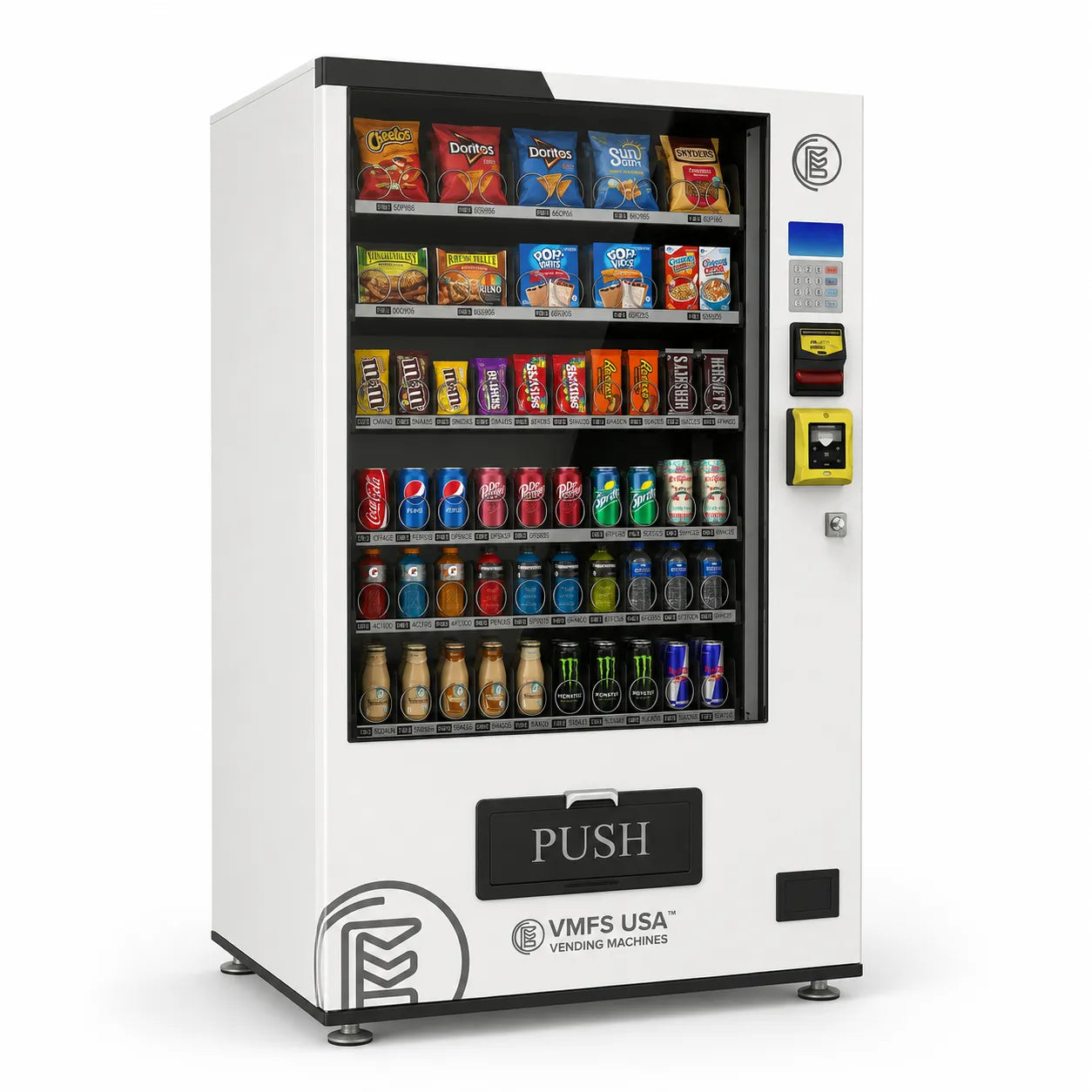
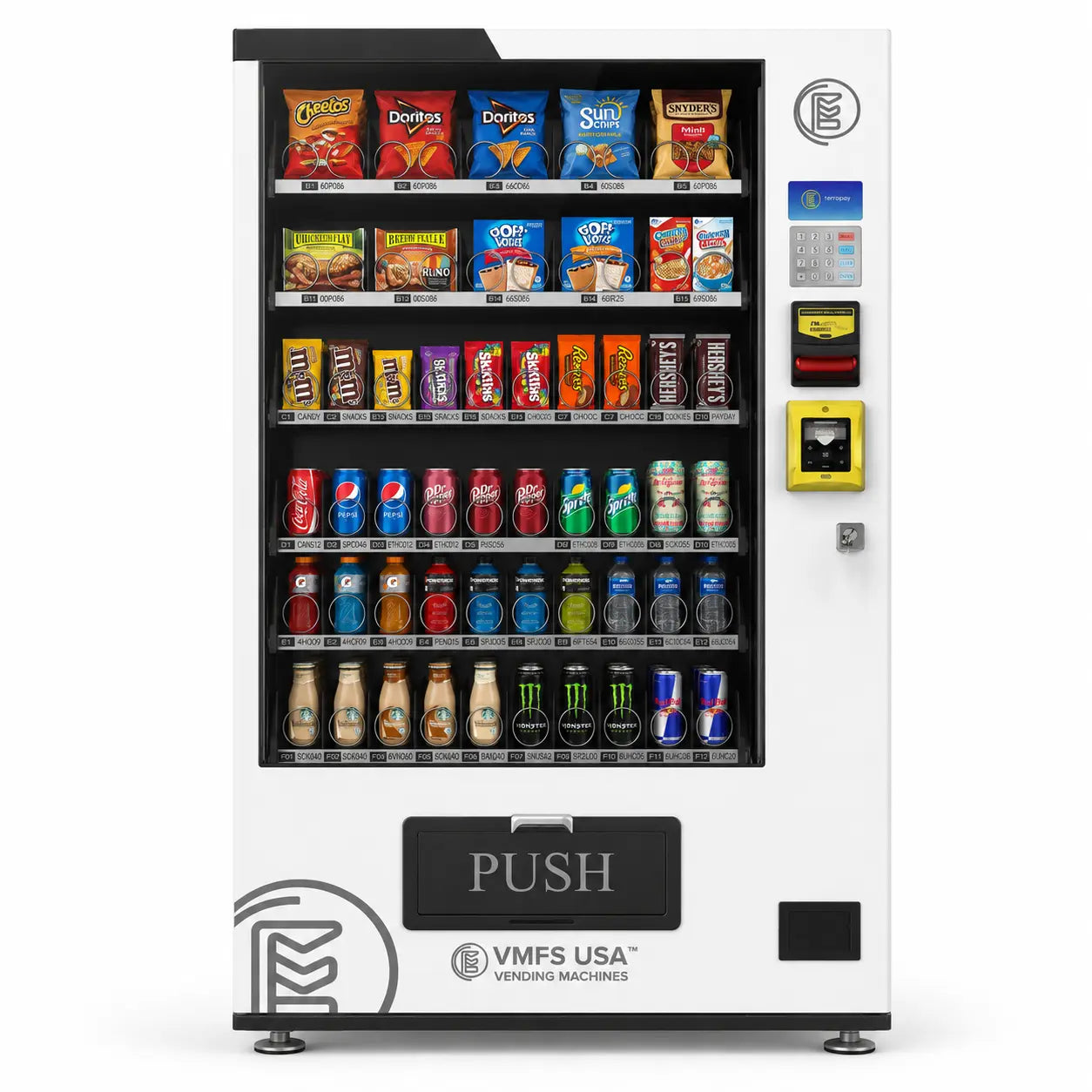
Su máquina expendedora no es solo una caja de snacks.
Es una pequeña tienda minorista con espacio de estantería limitado.
Cada ranura es un bien inmueble limitado.
Cada producto debe ganarse su lugar.
Elegir los productos adecuados es uno de los mayores impulsores de ganancias.
1. Entienda las 4 categorías de productos
La mayoría de las máquinas expendedoras exitosas se basan en estas categorías:

1️⃣ Productos básicos (Alto volumen)
Son artículos cotidianos que la gente reconoce y en los que confía.
Ejemplos:
- Agua embotellada
- Coca-Cola, Pepsi
- Papas fritas populares
- Barritas de chocolate
Por qué son importantes:
- Se venden constantemente
- Tienen márgenes predecibles
- Generan confianza en la máquina
Mezcla objetivo: 40%–60% de su máquina
2️⃣ Artículos de alto margen
Estos aumentan su venta promedio y elevan los beneficios.
Ejemplos:
- Bebidas energéticas
- Bebidas premium
- Barritas proteicas
- Snacks especializados
Por qué son importantes:
- Se venden a precios más altos
- Aumentan el tamaño promedio del ticket
- Generan más dólares por ranura
Mezcla objetivo: 20%–30%
3️⃣ Productos específicos de la ubicación
Aquí es donde usted adapta la máquina a la audiencia.
Ejemplos:
- Snacks saludables en gimnasios
- Bebidas más grandes en almacenes
- Comidas rápidas en hospitales
- Opciones para niños en escuelas
Aquí es donde los datos importan más, porque un ajuste incorrecto mata la rotación.
4️⃣ Ranuras experimentales
Deje siempre una pequeña sección para realizar pruebas.
Regla: Mantenga de 2 a 4 ranuras para nuevos productos, rote cada 30–60 días.
Los datos le dicen qué se queda, la emoción no.
2. Expectativas de margen
Ejemplo típico de mayorista vs. minorista:
| Producto | Costo mayorista | Precio minorista | Margen bruto |
|---|---|---|---|
| Refresco | $0.60 | $1.75 | ~65% |
| Papas fritas | $0.50 | $1.50 | ~66% |
| Bebida energética | $1.50 | $3.00 | ~50% |
| Barrita de chocolate | $0.55 | $1.75 | ~68% |
Objetivo de margen bruto global típico: 45% – 60%
Después de las tarifas de procesamiento y el desperdicio ocasional, el margen neto suele ser:
30% – 50%
3. No sobreabastezca productos de baja rotación
Error común de principiante: cargar demasiados productos de nicho que se mueven lentamente.
Si un producto no se vende en 30 días, reconsidérelo.
El inventario estático es capital congelado y reduce su beneficio por ranura.
4. Adapte la mezcla de productos a la ubicación
Las diferentes ubicaciones exigen estrategias diferentes.
Almacén / Industrial
- Snacks altos en calorías
- Bebidas energéticas
- Porciones más grandes
- Precios competitivos
Entorno de oficina
- Mezcla equilibrada
- Opciones conscientes de la salud
- Bebidas premium
- Mayor tolerancia al precio
Escuela
- Porciones más pequeñas
- Restricciones de cumplimiento
- Límite de precio más bajo
Gimnasio
- Productos proteicos
- Bebidas bajas en azúcar
- Se acepta precios premium
Su mezcla de productos debe coincidir con el entorno, no con su gusto personal.

5. Conceptos básicos de la estrategia de precios
La mayoría de las máquinas para principiantes operan en el rango de:
$1.50 – $3.00 por artículo
Rangos comunes:
Bebidas energéticas: $2.75 – $3.50
Agua: $1.25 – $2.00 [depende de la ubicación]
Evite bajar los precios para "ser amable". La conveniencia tiene valor y usted está operando un negocio.
6. Use datos, no emociones
Que a usted le guste un producto no significa que se venda.
Después de 30–60 días:
- Revise los más vendidos
- Elimine los de bajo rendimiento
- Aumente la capacidad para los artículos de alta rotación
Si utiliza monitoreo en la nube, haga un seguimiento de:
- Velocidad de SKU
- Tasa de venta
- Frecuencia de reabastecimiento
Sus 10 productos más vendidos a menudo generan la mayor parte de los ingresos.
7. Gestión de caducidad y desperdicio
Rangos típicos de vida útil:
Snacks: 2–4 meses
Bebidas: 3–6 meses
Siempre:
- Rote el inventario
- Reabastezca de adelante hacia atrás
- Evite comprar en exceso artículos de lenta rotación
El desperdicio reduce el beneficio rápidamente, especialmente con categorías premium o frescas.
8. ¿Cuántos productos debe tener?
Para una máquina combinada estándar:
- 30–40 selecciones totales
- 60%–70% bebidas
- 30%–40% snacks
Las bebidas a menudo superan a los snacks en ingresos totales.
9. Plan de productos para principiantes
Si no está seguro de por dónde empezar, utilice una mezcla base simple y ajuste después de 30 días:
- 2–3 refrescos
- 2 aguas
- 1 bebida deportiva
- 2 bebidas energéticas
- 4 variedades de papas fritas
- 4 barritas de chocolate
- 2 opciones más saludables
- 2 snacks premium
10. Vending moderno y categorías especializadas
Aquí es donde el comercio minorista automatizado evoluciona, y funciona mejor cuando la audiencia es específica.
Productos de nicho y especializados [mejor en ubicaciones específicas]
Ejemplos por tipo de ubicación:
Ubicaciones de fitness
- Paquetes de creatina
- Bebidas pre-entrenamiento
- Batidos de proteínas
- Snacks de recuperación
Ubicaciones de viaje
- Cargadores de teléfono
- Artículos de aseo en tamaño de viaje
- Auriculares
- Adaptadores
Escuelas y Universidades
- Útiles escolares
- Hojas de respuesta
- Productos de higiene
Ubicaciones de tecnología y pasatiempos
- Tarjetas coleccionables
- Artículos de colección
- Pequeña electrónica
- Accesorios
Los productos de nicho suelen:
- Venderse a precios más altos
- Tener márgenes más sólidos
- Requerir la ubicación correcta para moverse rápido
Pruebe cuidadosamente antes de escalar.
11. Vending de comida fresca [Mayor ticket, mayor riesgo]
El vending de comida fresca puede ser fuerte, pero requiere disciplina operativa.
Ejemplos:
- Sándwiches
- Ensaladas
- Parfaits de yogur
- Wraps
- Recipientes de comida preparada
Requisitos:
- Refrigeración potente
- Gestión estricta de caducidad
- Reabastecimiento más frecuente
- Cumplimiento con el departamento de salud
Pros: Precios más altos [a menudo $5–$12], posicionamiento premium, fuerte demanda en hospitales y oficinas
Riesgos: Vida útil corta, desperdicio, complejidad operativa
La comida fresca funciona mejor en hospitales, oficinas grandes, universidades y aeropuertos.
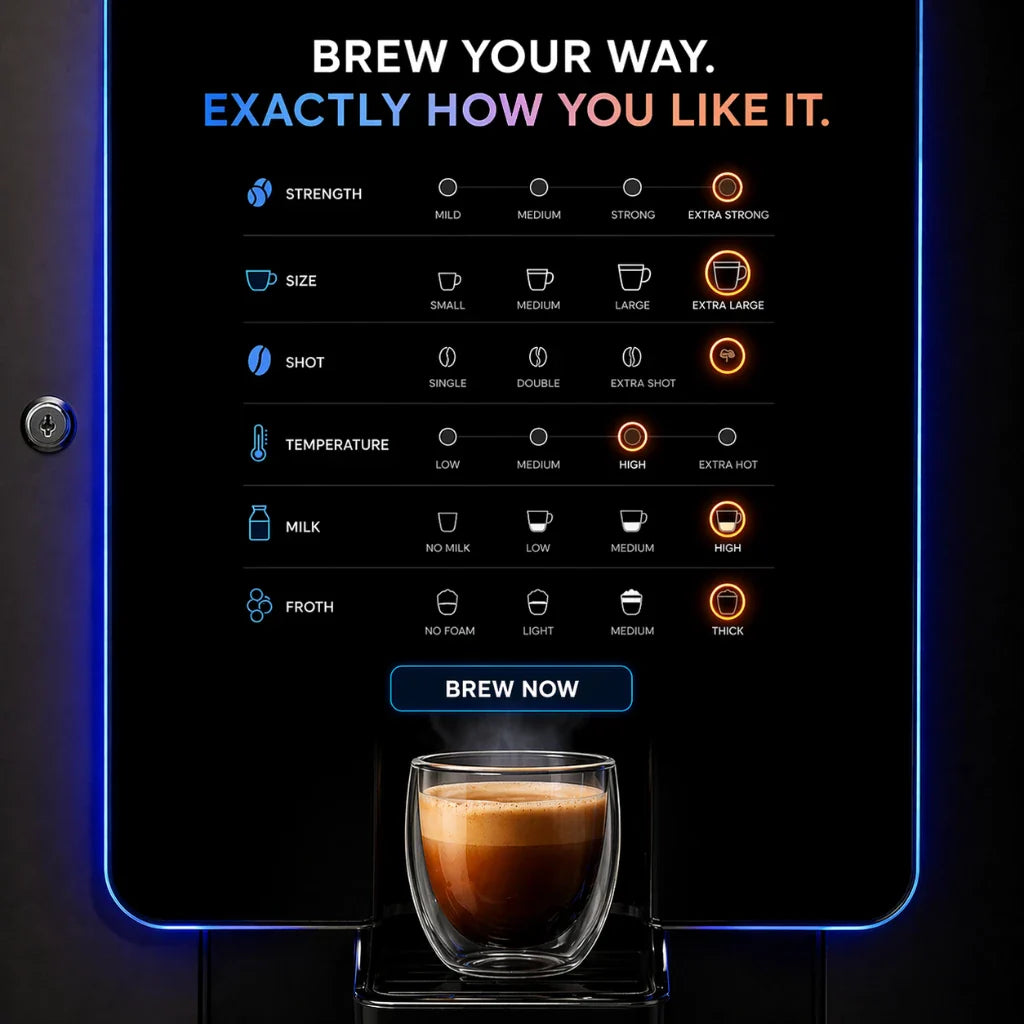
12. Sistemas de vending de café
Los sistemas de café modernos están creciendo rápido porque el café es una compra diaria recurrente.
Los sistemas de café modernos a menudo incluyen:
- Molienda de grano fresco
- Múltiples tipos de bebidas
- Pagos sin efectivo
- Pedidos mediante pantalla táctil
Precio típico: $2.00 – $4.50 por taza
Requisitos: limpieza regular, gestión del agua, mantenimiento rutinario
Ideal para oficinas, campus corporativos, concesionarios de automóviles e instalaciones industriales.
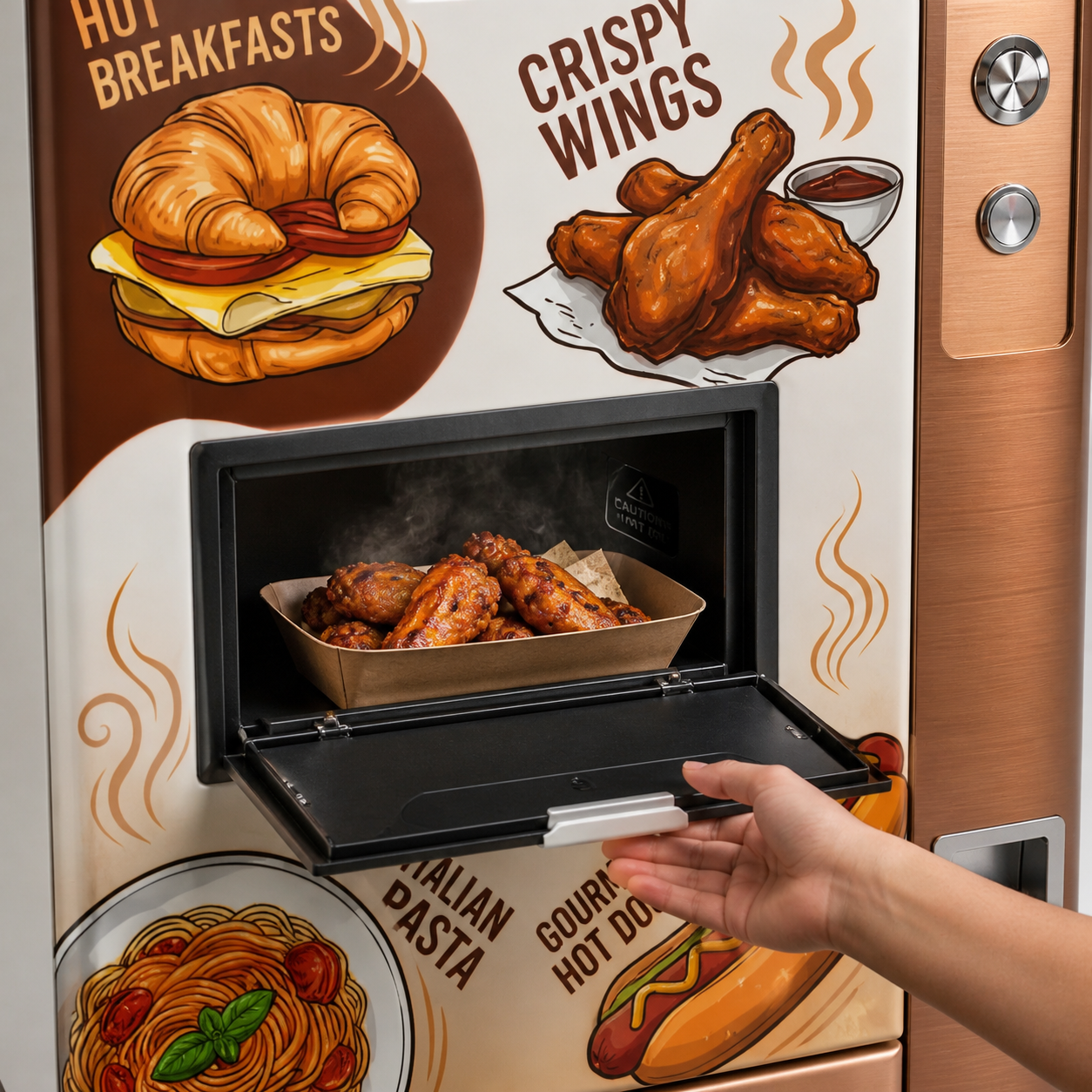
13. Vending de comida caliente [Pizza y más]
La automatización de alimentos calientes se está expandiendo, pero requiere una mayor inversión.
Ejemplos:
- Máquinas expendedoras de pizza
- Sistemas de venta de comida caliente
- Sistemas asistidos por microondas
Precio típico por artículo: $8 – $15+
Estos sistemas requieren hardware de cocción avanzado, mayores necesidades eléctricas y más planificación.
Mejor en universidades, distritos de vida nocturna, áreas públicas de alto tráfico y lugares de eventos.
14. Productos de alto valor e innovadores
El comercio minorista automatizado ahora incluye categorías de mayor valor como:
- Electrónica
- Productos de belleza
- Flores
- Medicamentos de venta libre
- Mercancía
- Venta minorista de marca personalizada
- Productos de vapeo [donde sea legal y con verificación de edad adecuada]
Estos sistemas a menudo requieren características avanzadas como verificación de edad, casilleros inteligentes, sistemas de elevación y experiencias de pantalla táctil.
Pueden reducir el volumen pero aumentar los ingresos por venta; mejor en aeropuertos, hoteles, zonas turísticas y lugares de eventos.
15. Elegir la categoría adecuada para usted
Antes de abastecer cualquier cosa, responda esto:
- ¿Quién es mi audiencia?
- ¿Cuál es su tolerancia al precio?
- ¿Cuánto tiempo permanecen en el edificio?
- ¿Es una compra por impulso o por necesidad?
- ¿Con qué frecuencia puedo reabastecer?
Ubicaciones simples, comience con lo tradicional.
Ubicaciones premium de alto tráfico, considere la innovación después de probar.
16. No añada complejidad sin datos
Los nuevos operadores generalmente no deberían comenzar con:
- Comida fresca
- Sistemas de comida caliente
- Electrónica de alto valor
Comience de forma sencilla, aprenda las operaciones y luego escale lo que funciona.

17. Estrategia híbrida [Operadores avanzados]
Los operadores experimentados a menudo combinan:
- Productos básicos
- Una sección premium
- Una sección experimental
- Un segmento de nicho adaptado a la ubicación
Esto aumenta la estabilidad y mantiene fuertes los ingresos.
18. Regla final de la estrategia de producto
Su máquina expendedora no se trata de variedad.
Se trata de demanda, margen, rotación y eficiencia.
Cada ranura debe justificarse a sí misma.
Los datos ganan, la emoción pierde.
Compartir:
Cómo elegir un lugar de venta rentable
¿Cuánto puede ganar realmente una máquina expendedora?