




Design the perfect vending solution for your location and customers.

Join the VMFS newsletter and step into a thriving network dedicated to collective success.
One signup. Endless possibilities.
The best selling vending machine items are bottled water, soda, chips, chocolate and candy bars, cookies and crackers, granola and protein bars, and energy and sports drinks. Water usually earns the most per slot because it sells every day and carries the widest markup.
This guide ranks what sells by category and by location, shows how to work out margin per item, corrects the industry figures most guides repeat, and covers seasonal items, school rules and the products worth stocking beyond snacks. It also includes a full list of the best vending machine snacks for 2026, by category and by location.
Recognizable snacks and cold drinks sell best in almost every vending location: bottled water, 20oz soda, single-serve chips, chocolate bars, cookies, granola and protein bars, and energy drinks. They win because a vending purchase takes seconds, and a brand the customer already knows removes the hesitation that kills a sale.
That list is accurate but incomplete, because it describes what people pick up rather than what pays the operator. Two items can sell the same number of units and leave very different profit behind once wholesale cost, shelf life and the location's commission are counted. The rest of this guide works from that operator view: which items move, what each one earns per slot, and how the right mix changes between an office, a warehouse, a gym and a school. If you are still choosing hardware, every format discussed here, from snack and drink machines to combo and coffee machines, is part of our range of new vending machines.
Bottled water
The most consistent seller in nearly every site and usually the widest markup in the cabinet. Give it two or three facings.
Soda and zero sugar soda
Cola, lemon-lime and citrus flavors, with at least one zero sugar option in every planogram.
Chips and salty snacks
Single-serve chips, pretzels and popcorn move fast everywhere, but have the shortest shelf life of the dry snacks.
Chocolate and candy
Classic impulse buys. Strong sellers indoors, a service problem in hot or unconditioned sites.
Bars and nuts
Granola bars, protein bars, nuts and trail mix sell well in offices, gyms and healthcare, and keep for months.
Energy, sports and coffee drinks
High-volume, higher-priced drinks. Energy drinks earn their slots on dollars per vend rather than on margin percentage.
For a broader brainstorm of unusual products and machine concepts, our list of vending machine item ideas goes well beyond snacks and drinks. This page stays focused on the products that sell week after week in standard snack, drink and combo machines, and on how to pick between them with data.
The most reliable data on US vending comes from the NAMA Foundation's industry census, run with the research firm Technomic, and it describes a $31.1 billion convenience services industry in 2025. That total covers vending, micro markets, office coffee and pantry services together, and the latest census reports average annual growth of 8.1% since 2023.
Vending is the largest piece. The 2022-2023 NAMA census estimated vending revenue at $18.2 billion, about 68% of the industry, from roughly 2.89 million machines run by around 10,450 vending operators. Average sales per machine were $6,284 a year. Those figures replace two numbers that still circulate widely: the 4.6 million machine count and the claim that cold drinks are more than half of vending sales. Neither appears in the current census.
One more correction is worth making, because this page previously repeated it. The often-quoted split of snacks 33%, beverages 29% and coffee 24% is real, but the census reports it for pantry services (the free or subsidized snack and drink programs run inside offices), not for vending machines. The census does not publish a snack-versus-drink revenue split for vending. The practical takeaway is to stop planning around a national percentage and plan around your own sales by item, which is the only split that matters for your machines.
| Census figure | Value | What it means for product selection |
|---|---|---|
| Industry revenue, 2025 | $31.1 billion | A growing market, so product choice rather than demand is usually the constraint |
| Vending revenue, 2023 | $18.2 billion (about 68%) | Vending is still the largest convenience services channel |
| Machines in use, 2023 | About 2.89 million | Mature, crowded market: the planogram is one of the few levers you fully control |
| Sales per machine, 2023 | $6,284 a year | Small changes in mix and price move a meaningful share of annual revenue |
| Machines accepting cashless | About 75% | Card and mobile payment is now the norm, which supports higher price points |
| Operators adding better-for-you items in the past year | 53% | Operators are already adding healthier items at scale |
The newest census also reports that 65% of operators cite client requests for healthier product mixes and 59% see better-for-you products as a growth opportunity. Read together, the data says the classics still carry the machine, while the mix is shifting toward bars, nuts, zero sugar drinks and water because the people signing placement agreements are asking for it.
The most profitable vending machine item in a typical snack and drink machine is bottled water, because it combines daily repeat demand with the lowest wholesale cost relative to its vend price. Published operator guides agree on that point: one uses a bottle bought for about 50 cents and sold for two dollars as its example, and the small business lender Nav singles out water and premium beverages as earning notably higher margins than the rest of the cabinet.
Across the whole machine, the same guides put product cost at roughly a quarter to a half of the vend price. Nav, citing 365 Retail Markets, uses product cost of about 50% of the selling price as a general rule, while other operator guides describe typical markups of 300% to 400% on snack and drink items. In margin terms that is a gross margin of about 50% at the low end and 75% or more at the high end, before the location's commission. Buying at club-store or distributor prices rather than grocery retail is what keeps you at the upper end, and our guide on where to buy vending snacks wholesale covers the sourcing side.
Gross margin per item is the vend price minus your landed cost, divided by the vend price. Landed cost means the case price divided by units per case, plus any deposit or bottle fee, plus the share of card-processing fees that applies to a cashless sale. Two related numbers matter just as much: gross profit per vend (price minus cost, in dollars) and gross profit per slot per service cycle (gross profit per vend multiplied by units sold between visits).
The worked example below shows why percentage alone misleads. The costs and prices are illustrative inputs for the arithmetic, not benchmarks: replace them with your own invoice costs and shelf prices.
| Example item | Your cost (example) | Vend price (example) | Gross profit per vend | Gross margin |
|---|---|---|---|---|
| Bottled water, 16.9oz | $0.40 | $2.00 | $1.60 | 80% |
| Single-serve chips | $0.45 | $1.75 | $1.30 | 74% |
| Chocolate bar | $0.85 | $2.00 | $1.15 | 58% |
| Protein bar | $1.40 | $3.25 | $1.85 | 57% |
| Energy drink, 16oz | $1.80 | $3.50 | $1.70 | 49% |
In this example the energy drink has the lowest margin percentage but the second-highest dollars per vend, and the protein bar beats the chips on dollars despite a lower percentage. If an energy drink sells eight units a visit and a candy bar sells four, the energy drink slot earns roughly three times as much gross profit even though its margin percentage is lower. That is why category-level reports that show only margin percentage hide your best slots. Rank every slot by gross profit per service cycle and let that ranking decide facings.
Commission comes off the top. Nav lists location commissions of roughly 5% to 20% of gross sales, so a 15% commission on a $2.00 vend removes 30 cents before product cost. Our breakdown of margin per item and per machine walks through the full calculation, including how to compare two machines on the same route.
Rule of thumb: Margin percentage tells you whether an item is priced sensibly. Gross profit per slot per visit tells you whether it deserves the slot. Use the first to set prices and the second to choose products.
Within each category a short list of national brands carries most of the volume, because recognition is what turns a glance into a purchase. The table below lists consistent performers by category and the companies behind them, which also answers a question many operators ask when setting up wholesale accounts: a handful of manufacturers make most of what sells.
| Category | Consistent sellers | Who makes the leading brands |
|---|---|---|
| Water | Dasani, Aquafina, smartwater, plus one premium or sparkling option | Coca-Cola (Dasani, smartwater), PepsiCo (Aquafina) |
| Soda | Coca-Cola, Coca-Cola Zero Sugar, Diet Coke, Pepsi, Sprite, Fanta | Coca-Cola, PepsiCo |
| Sports and hydration | Gatorade, Powerade, BodyArmor, Propel | PepsiCo (Gatorade, Propel), Coca-Cola (Powerade, BodyArmor) |
| Chips and popcorn | Lay's, Sun Chips, Smartfood, Pringles, SkinnyPop | PepsiCo, Mars (Pringles), Hershey (SkinnyPop) |
| Chocolate and candy | Snickers, M&M's, Twix, Skittles, Reese's, Kit Kat, Hershey's | Mars, Hershey |
| Cookies and crackers | Oreo, Chips Ahoy!, Ritz, Cheez-It, Wheat Thins, belVita | Mondelez, Mars (Cheez-It) |
| Bars | Quaker, CLIF, KIND | PepsiCo (Quaker), Mondelez (CLIF), Mars (KIND) |
| Ready-to-drink tea and coffee | Gold Peak, bottled coffee and cold brew | Coca-Cola (Gold Peak) and several coffee brands |
Brand ownership in the table comes from each company's own brand page: PepsiCo, Coca-Cola, Mars, Hershey and Mondelez. PepsiCo is the clearest example of one supplier covering both sports drinks and snack bars at scale, with Gatorade and Quaker in the same portfolio. Consolidation matters to an operator because one distributor relationship can cover a large share of the planogram, and manufacturer promotions often run across a whole portfolio at once.
Drinks are the most reliable performers per slot because thirst repeats daily while hunger is occasional. A sensible starting set is still water in two or three facings, classic soda in two or three with at least one zero sugar option, one or two sports or electrolyte drinks, one or two energy drinks, and one facing each of ready-to-drink coffee and juice or tea. At busy sites the chilled column empties first however you weight it, which is why a dedicated unit from the drinks vending machines range outperforms a compromise cabinet once volume justifies it.
Snacks are where most of the waste happens, because shelf life is shorter and taste preferences are narrower. Chips, chocolate and cookies are the evergreen tier. Granola bars, protein bars, nuts and trail mix have moved from niche to core and often outsell candy in offices, gyms and healthcare. A balanced starting point is roughly 40% salty, 30% sweet and 30% filling or neutral items such as bars, nuts and crackers. The filling bucket is the one most operators under-weight. Dedicated snack vending machines give better visibility and fewer vend failures than squeezing food into a drinks-first cabinet.
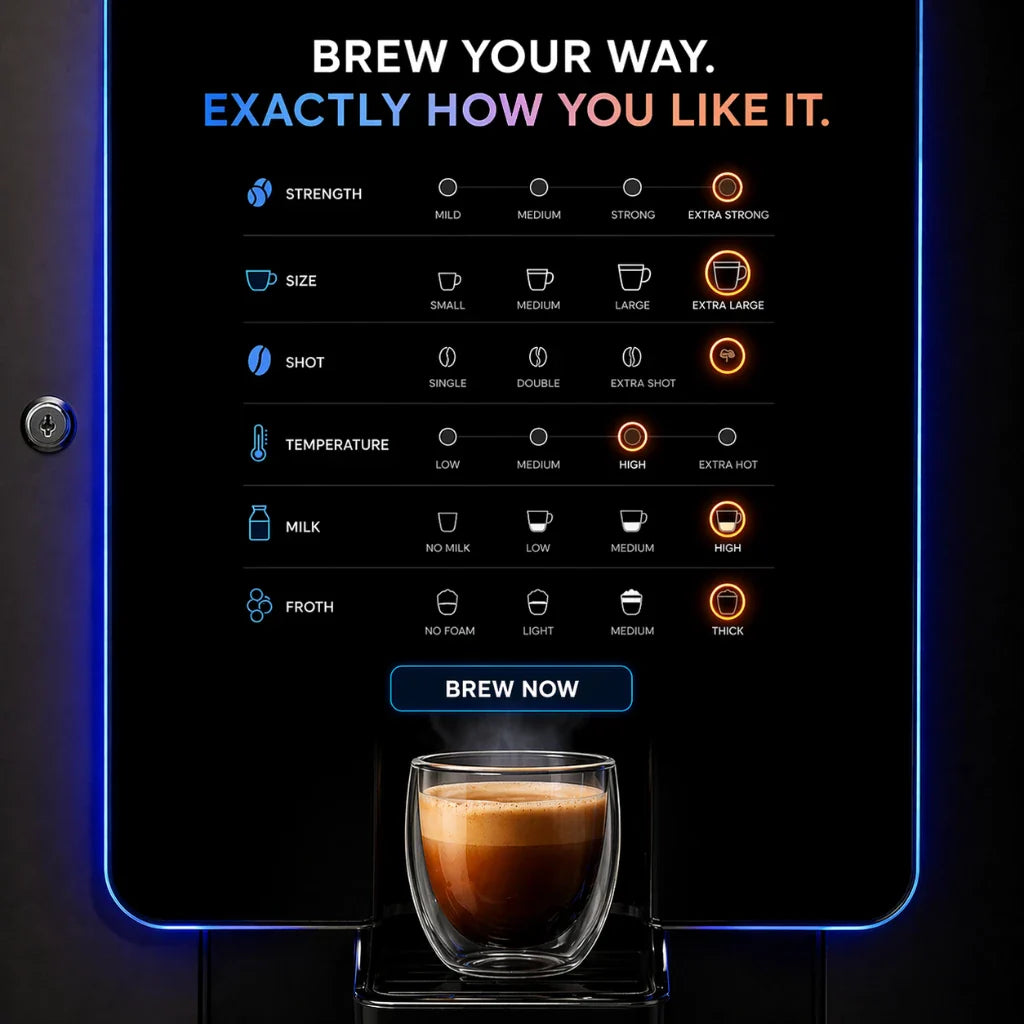
Coffee is the category many small operators skip. In pantry programs the census puts coffee at 24% of revenue, and offices, hospitals and transport sites buy hot drinks all day. Bottled cold brew covers part of that demand in a cold drink machine, but freshly brewed drinks need hardware from the coffee vending machines range, such as the CorePro Coffee Vending Machine at $4,950.
Match the machine to the product mix
Combo machines carry snacks and cold drinks in one footprint, one outlet and one placement agreement.
Shop combo vending machinesWhat sells best depends on who uses the machine, so build each planogram for the site rather than copying one layout across the route. The table shows where to lead and what to weight toward in common US placements.
| Location | Lead category | Weight toward | Price tolerance |
|---|---|---|---|
| Offices | Water and coffee | Bars, lighter snacks, zero sugar drinks, sparkling water | Moderate to high |
| Factories and warehouses | Sports and energy drinks | Filling snacks, jerky, larger portions, pastries | Low to moderate |
| Hospitals and clinics | Water and coffee | Protein bars, nuts, crackers, neutral snacks around the clock | High |
| Gyms and studios | Protein drinks and electrolytes | Protein bars, premium water, jerky | Highest |
| Apartment buildings | Soda and water | Classic snacks, evening and late-night items | Moderate |
| Hotels | Bottled drinks | Candy bars, travel-size snacks, toiletries | High |
| Car washes and laundromats | Soda and water | Chips, gum, low price points, laundry supplies | Lowest |
| Schools (students) | Water | Only items that meet USDA Smart Snacks | Low |
Gyms are the outlier and deserve their own layout, because buyers there pay more for protein, electrolytes and recovery drinks than anywhere else on a typical route. Our guide to gym vending machines covers that planogram in detail. Industrial sites reward the opposite approach: larger portions, high-calorie snacks and energy drinks, at prices that respect shift workers' budgets.
Small sites need a different format, not just a different product list. Salons, laundromats, car washes and small offices rarely justify a full cabinet, and forcing one in means carrying dozens of selections where a few would turn faster. Mini vending machines such as the CounterCompact Vending Machine at $1,950 keep the number of selections small, and a smaller cabinet makes problems easy to see: with 8 to 12 selections, a slow-moving item stands out after one or two visits. Qualifying a site before you build the planogram is covered in our guide to the best vending locations.
Operators who already know what they want to sell can work backwards to the site. VMFS location matching pairs operators with properties by machine type and audience, which is the faster route to a gym or clinic placement if your product mix is built for one.
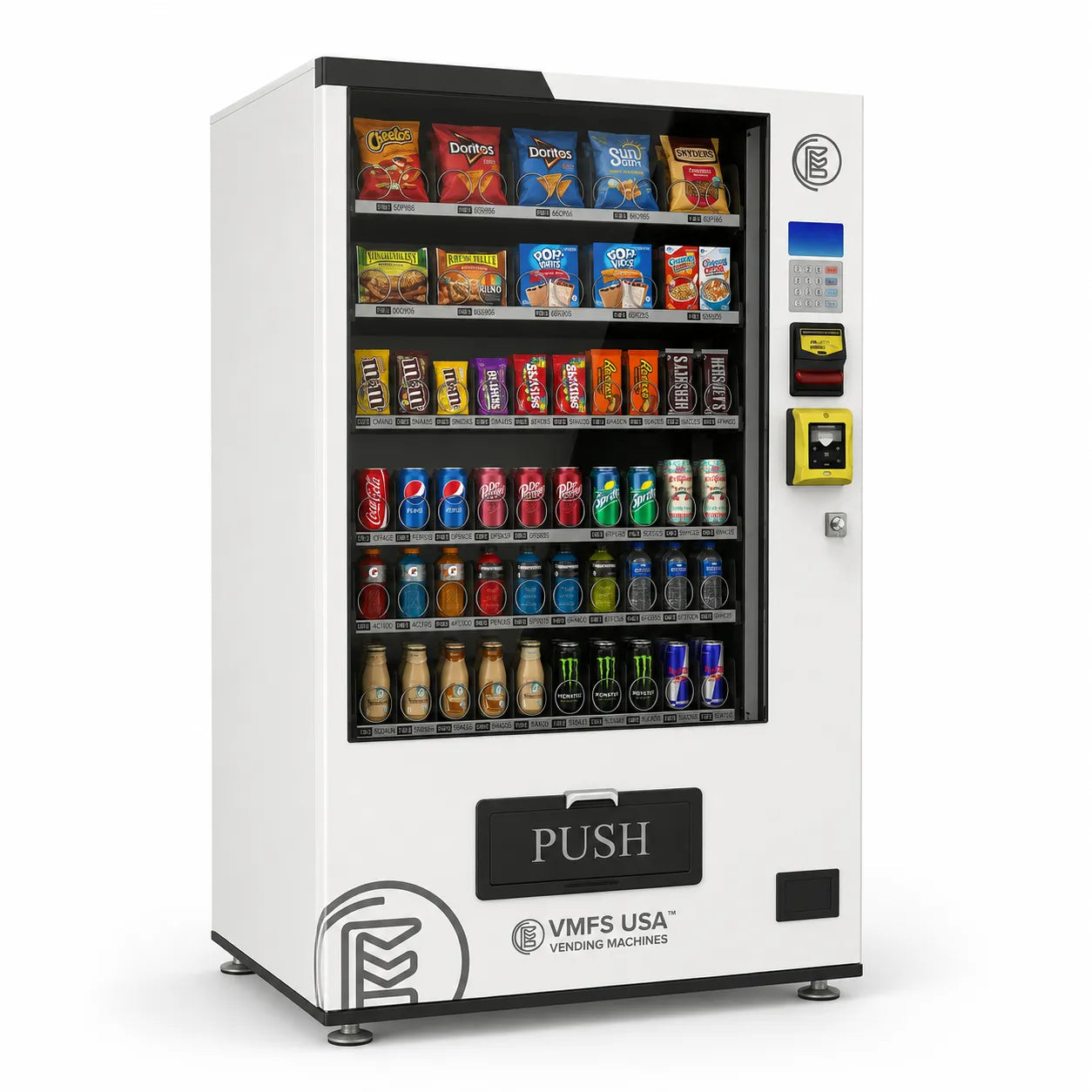
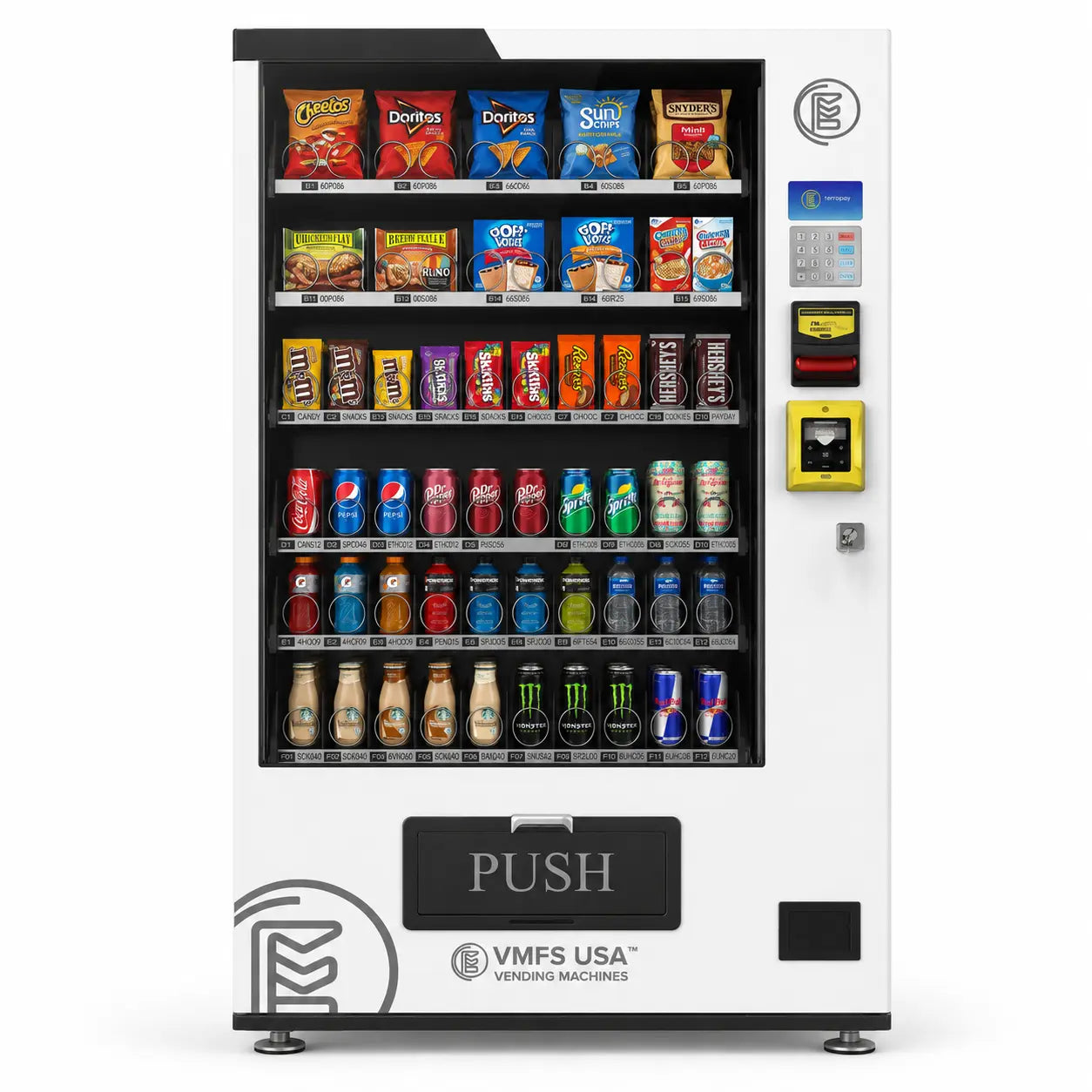
The best vending machine snacks for 2026 are single-serve chips, chocolate bars, candy, cookies and crackers, granola and protein bars, nuts and trail mix, jerky, popcorn and a small breakfast set of pastries. These are the snacks that customers recognize in a second, that hold their quality for weeks, and that drop cleanly from a spiral. If you are filling a vending machine with snacks for the first time, this section is your shopping list.
Consumption data shows how strong the classics still are. A Centers for Disease Control and Prevention study of national NHANES dietary data from 2005 to 2014 found that candy supplied 9.9% of all calories adults got from vending machines, salty grain snacks 9.2%, and cookies and potato chips 5.1% each. Soft drinks, fruit drinks and tea led with 40.9%, which is why a snack machine sells best with a cold drink machine beside it, or as a combo machine that carries both.
9.5 million
US adults who ate or drank from a vending machine on a given day (CDC analysis of NHANES 2005 to 2014)
9.9%
Share of vending calories from candy, the top snack category (CDC, NHANES)
$2.01
Average vending ticket in 2025 on the Cantaloupe network
Each category below lists the snacks that sell most consistently, why they earn their slot, and the one thing that most often goes wrong with them in a machine.
| Snack category | Best sellers to stock | Why it sells | Watch out for |
|---|---|---|---|
| Salty chips | Lay's Classic, Doritos Nacho Cheese, Cheetos Crunchy, Sun Chips, Pringles single-serve cans | The fastest impulse buy in almost every site | Short shelf life and wide bags that hang on a spiral |
| Chocolate bars | Snickers, Reese's Peanut Butter Cups, Twix, Kit Kat, M&M's Peanut | Familiar brands and a reliable afternoon craving | Melting in hot or unconditioned sites |
| Candy and gummies | Skittles, Starburst, Sour Patch Kids, fruit snacks | Non-melting sweet option for summer and warm sites | Soft bags that deform under spiral pressure |
| Cookies and crackers | Oreo, Chips Ahoy!, Cheez-It, Ritz Bits, Lance crackers | Filling, shareable and good with coffee | Medium shelf life, so set par levels carefully |
| Bars | Nature Valley, KIND, CLIF, Quest and other protein bars | Strong in offices, gyms and healthcare, with long shelf life | Higher cost per unit, so price for dollars per vend |
| Nuts, trail mix and jerky | Planters peanuts, almonds, trail mix, Jack Link's, Slim Jim | Protein and long shelf life; top picks for industrial sites | Sodium limits rule many of them out of schools |
| Popcorn and pretzels | Smartfood, SkinnyPop, Rold Gold pretzels | Lighter salty choice that offices ask for | Large, light bags need a wide spiral pitch |
| Breakfast pastries | Pop-Tarts, honey buns, mini donuts, muffins | Morning traffic at factories, hospitals and transit | The shortest shelf life in the snack machine |
Rank inside each category with your own sales data, but start with these names. They are national brands with broad distribution, so a club store or a vending distributor will carry them, and our guide on buying vending snacks wholesale shows where to source them at prices that protect margin.
Starter mix: In a 40-selection snack machine, a balanced first load is about 16 salty selections, 12 sweet selections and 12 filling or better for you selections such as bars, nuts, jerky and crackers. That follows the 40/30/30 split described above. After two service cycles, let sales data move the facings.
Beyond the evergreen list, a few snack types are earning permanent slots. Protein chips and higher-protein bars sell well in gyms and offices. Spicy rolled tortilla chips and bold global flavors attract younger buyers on campuses. Sugar-free candy and lower-sugar bars answer the client requests that NAMA tracks, where 65% of operators report clients asking for healthier mixes. Keto and low-carb snacks, plant-based jerky and gluten-free crackers round out the test list. Give each new item two service cycles at a fair position before you decide, and use a simple plan to market a snack vending machine so regular buyers notice what is new.
Healthier picks deserve a closer look, because only 8% of offerings in a typical snack-only machine met the NAMA nutrition standard in 2022. Our full guide to healthy snacks for vending machines covers that product list, pricing and the rules for schools and hospitals in depth.
The location table above shows which category leads at each site. This table goes one step further and names the specific snacks to load first. If you are still choosing a site, VPlaced shows how much a snack vending machine makes per month at different location tiers, which helps you compare sites before you sign.
| Location | Best snacks to stock first | Snacks to limit |
|---|---|---|
| Offices | Protein and granola bars, popcorn, almonds, crackers, dark chocolate, a few classic chips | Large indulgent pastries outside the morning window |
| Factories and warehouses | Jerky, peanuts, king-size candy bars, honey buns, larger chip bags, cookies | Chocolate on hot loading docks |
| Hospitals and clinics | Nuts, trail mix, protein bars, crackers, pretzels, mild chips for night shifts | Strong-smelling or messy snacks near patient areas |
| Gyms and studios | Protein bars, protein chips, jerky, nut packs, rice cakes | Candy and full-sugar pastries |
| Colleges and dorms | Spicy chips, cookies, candy, microwave popcorn, late-night pastries | Slow-moving premium health items |
| Apartment buildings | Classic chips, chocolate, cookies, microwave popcorn, evening snacks | Too many single-brand facings |
| Hotels | Chocolate bars, travel-size cookies, nuts, gum and mints | Short-dated pastries at low-traffic properties |
| Schools (students) | Only items that meet USDA Smart Snacks, such as some baked whole grain chips and whole grain bars | Regular chips and standard candy bars during the school day |
School and public building rules can be stricter than the federal baseline, so check which snacks you can legally sell before you load those sites.
The snack list only performs if the machine handles it well. Among our vending machines for sale, a full-size spiral cabinet carries the widest range, a countertop unit suits small sites with eight to twelve fast sellers, and a combo cabinet adds cold drinks so one placement covers both. A snack vending machine built from $3,595 lets you choose tray layout and payment options around your planogram, while the Countertop Snack Vending Machine at $1,900 is the lowest-cost new machine in the catalog. Every machine supports QR code payments, and card readers are optional add-ons that capture the higher cashless ticket.
Best snacks loading checklist
A strong snack lineup only earns money when people know where the machine is. When you list your machines on VendingFinder, nearby shoppers can find your location on its map.
Better-for-you items are under-stocked in most machines, which makes them an opportunity rather than a sacrifice. Under the voluntary commitment NAMA made with the Partnership for a Healthier America, the 2022 progress report found that 23% of offerings in an average vending machine met the NAMA nutrition standard, against a 2019 baseline of 24% and a target of 33% by the end of 2023.
| Machine type | Share of offerings meeting the NAMA standard (2022) |
|---|---|
| Beverage only | 38% |
| Mixed snack and drink | 22% |
| Snack only | 8% |
In a typical snack-only machine, fewer than one selection in ten qualified. Because granola bars, nuts and trail mix usually cost about the same as candy at wholesale and sell at similar or higher prices, moving a snack machine toward a larger share of better-for-you items rarely costs margin. It also makes the machine eligible for corporate wellness programs, hospitals and clinics that ask what share of your offering meets a recognized standard before they sign. Healthy vending machines set up for those sites give the client a clear answer. What does not work well is removing every classic snack at once; a mixed set lets customers choose by mood. Product lists, nutrition thresholds and evidence on mixed versus fully healthy machines are covered in our guide to healthy vending machine snacks.
Food and drinks sold to students on a US school campus during the school day must meet USDA Smart Snacks standards in 7 CFR 210.11. The regulation defines the school day as the period from midnight before to 30 minutes after the end of the official school day, so after-hours sales and staff-only machines fall outside it. A snack must first meet a general standard: a grain product that is at least 50% whole grain by weight or lists a whole grain first, a food whose first ingredient is a fruit, vegetable, dairy or protein food, or a combination food with at least a quarter cup of fruit or vegetable.
| Smart Snacks limit | Snack items | Entree items |
|---|---|---|
| Calories | 200 or fewer | 350 or fewer |
| Sodium | 200 mg or less | 480 mg or less |
| Total fat | 35% of calories or less | 35% of calories or less |
| Saturated fat | Less than 10% of calories | Less than 10% of calories |
| Total sugars | 35% of weight or less | 35% of weight or less |
Run a standard best-seller list against those limits and most of it fails: regular chips exceed the sodium and fat limits, standard chocolate bars exceed calories and sugar, and full-sugar soda is not an allowed beverage. Elementary schools can sell plain water and milk or 100% juice in containers of 8 fluid ounces or less, middle schools up to 12 ounces, and high schools may add calorie-free and low-calorie drinks within size limits. Elementary and middle school items must be caffeine-free. States and districts can set stricter rules, and compliance and licensing questions can go to VAdviced, the legal and compliance service in the V Systems network.
The two most common hidden costs in a product mix are expired stock and items that jam, and both come from choosing products without checking their packaging and date codes. Neither shows up in a best-seller list, yet both turn a good-selling item into a poor-earning one.
| Category | Relative shelf life | Write-off risk |
|---|---|---|
| Bottled water | Longest | Very low |
| Jerky and meat snacks | Long | Low |
| Granola and protein bars, nuts | Long | Low |
| Candy and chocolate | Medium to long | Low, but heat sensitive |
| Regular soda | Medium to long | Low |
| Diet and zero sugar soda | Shorter than regular soda | Moderate |
| Cookies and crackers | Medium | Moderate |
| Chips and pretzels | Short | High |
| Pastries and baked goods | Shortest | Highest |
The shortest-life categories, chips and pastries, are also the most commonly over-faced, because they sell quickly and operators load extra to avoid stockouts. Diet and zero sugar sodas are the quiet risk: they often carry shorter best-by windows than regular soda, and a flat-tasting diet drink can lose a regular customer. Read the date code on every case, set par levels so short-life items sell through well before their dates, and track write-offs as a share of stock value each month. If write-offs climb, the fix is usually fewer facings of short-life items, not a different brand. The facing and rotation steps are covered in our guide to loading and stocking a vending machine.
A product that will not vend costs you twice: the refund, and the customer who stops using the machine. Wide flat bags can bridge across a spiral and hang instead of dropping. Rigid tubes and very narrow items need a spiral pitch matched to their width, or they wedge or slip through. Soft packaging can deform under spiral pressure and stop advancing cleanly. Chocolate softens in heat and sticks to the spiral and to itself, so in a warm warehouse or an outdoor site it becomes a service call.
Two of these problems are solved with hardware rather than product choice. Fragile items, glass bottles and premium packaging belong in elevator vending machines, which lower the item to the delivery bin instead of dropping it. Heat is a siting decision: if the machine stands on a loading dock or an outdoor lot, take chocolate out of the planogram and use a cabinet rated for the conditions, which is what separates outdoor vending machines from an indoor unit pushed under an awning.
Seasonal changes and trend items should adjust a proven core, not replace it. Shift weighting a few times a year, keep a small number of slots for tests, and let sales data decide which trends earn a permanent place.
Regional climate stretches or shortens these windows. A machine in Miami sells cold drinks for most of the year, while one in Minneapolis leans on hot drinks and comfort snacks for months. Plan seasonal changes per site rather than per calendar.
The trends that are showing up in vending are the same ones the census points to: better-for-you, protein, and functional drinks. Worth testing are protein chips and higher-protein bars, keto and low-carb snacks, plant-based jerky and chickpea or lentil snacks, sugar-free candy, sparkling and electrolyte waters, functional drinks with added vitamins, global and spicy flavor formats, and gluten-free or allergy-friendly options for offices that ask for them. Eco-friendly packaging is a smaller factor at the machine, but some corporate clients ask about it, and recyclable packaging is easy to prefer when two products are otherwise equal.
Run trend items as a controlled experiment. Cap them at around 10% of slots, give each one two service cycles at a fair position, then decide: an item that sold through earns a permanent slot, an item that sold a little earns one more cycle at eye level, and an item that sold nothing comes out. Change one thing per cycle so the data stays readable.
Why test trend items
Where tests go wrong
Products beyond food and drink can sell well, but they are a niche that works only where the location creates a clear need. The census shows how small the segment still is: operators report that only about 1% of their vending machines offer non-consumable items. Among vending operators, 14% have machines offering over-the-counter medicines, 11% personal protective equipment, 3% electronics, 3% office supplies and 1% beauty supplies.
The pattern behind the successful niches is need plus no alternative nearby: a traveler without a charger, a hospital visitor at 2am, a laundromat customer without detergent. Niche items often carry higher prices and margins, but they turn slowly, so they belong in dedicated hardware at sites where the need is obvious rather than in the bottom row of a snack machine.
Fresh and frozen food
Meals, salads, sandwiches and ice cream need refrigeration or freezing and short rotation. Use food vending machines or frozen vending machines, not a snack planogram.
Medicine and first aid
Pain relief, allergy tablets, bandages and hygiene items for hospitals, campuses, hotels and workplaces. See medicine vending machines.
Electronics and accessories
Chargers, cables and earbuds at airports, transit hubs and hotels. The Electronics Vending Machine is built for boxed items.
Beauty and personal care
Cosmetics, travel toiletries and fragrance at malls, salons and gyms. Browse cosmetics vending machines.
Collectibles and toys
Trading cards and blind boxes draw repeat buyers at family and hobby sites. Dedicated trading card vending machines handle packs and boxes.
Age-restricted products
Vapes, tobacco and alcohol need ID checks and local licensing. Federal law sets the minimum age for tobacco and vape sales at 21 (FDA Tobacco 21). See age verification vending machines.
Food categories that need temperature control are a hardware decision before they are a product decision. In micro markets, where open shelves and coolers make fresh food practical, the census reports that about 22% of sales come from fresh or prepared food and about 10% from frozen food. That share is only reachable in vending with the right equipment. AI grab and go vending machines such as the AI Grab & Go Cooler Vending Machine at $2,950 bring that open-door format to smaller sites, and they also lift basket size, because a customer with the door open will take a drink and a sandwich together instead of making two purchases.
Local specialties and souvenirs in tourist areas, books at transport hubs and fitness accessories such as resistance bands in gyms follow the same niche trade-off: higher price, slower turn, and stock chosen for one specific audience. Treat them as a test under the same two-cycle rule as any trend item.
The most reliable way to decide what to sell is to rank every item by its own sales and gross profit, then give more space to winners and remove the items that do not move. In most machines a small group of items carries most of the sales, and the instinctive response to a slow machine, adding variety, is usually wrong. More facings of what already sells is the better fix.
Two operating rules follow from that. Any item with zero sales across two consecutive service visits is dead, so replace it rather than waiting. Any item that sells out before every visit needs another facing before it needs a price increase. Both rules depend on product-level data rather than category totals, which is why remote sales tracking is worth its cost even on a small route.
Every VMFS machine ships with the communication module for VMFS Cloud, and the Basic plan at $7.99 per machine per month reports live slot stock, real-time sales with margin, and low-stock alerts. That turns the review above into a report you read rather than a count you take by hand, and it pairs naturally with a planned restock schedule so your best slot is never the one sitting empty. To lay out trays and selections before loading, the VMFS planogram builder shows the layout and average price for each tray.
Price vending items for convenience rather than against the grocery store, and keep pricing simple with two or three price bands instead of a different price on every slot. Nobody standing at a machine mid-shift is comparing against a supermarket shelf, and simple bands speed up the decision. Adjust by location: a gym accepts premium prices for protein drinks that a laundromat would resist for soda. Our operator pricing guide covers price bands and price increases in detail.
How easily you can change a price decides whether pricing happens at all. On a traditional spiral machine every change means relabeling selections by hand, which is why many machines run on prices set years ago. Smart touch screen vending machines with remote pricing turn a seasonal change into a few minutes of work across the route instead of a visit per site.
Payment method also changes how much customers are willing to spend. The NAMA census notes that consumers tend to spend more per transaction when they are not inserting cash, and about 75% of machines now accept cashless payment. That is a large part of why premium water, protein bars and energy drinks price well, and why vending machines with card readers tend to post higher average tickets on the same planogram.
Put the pieces together and the product strategy is short: stock the recognizable best sellers, buy at wholesale so margins hold, rank slots by gross profit per visit, keep short-life items tight, match the set to the location, stay inside school and age rules, and test trends in a few slots at a time. A standard product list managed this way will outperform a more unusual list that is managed without sales data.
Find a location that fits your product mix
VMFS location matching connects operators with properties looking for vending, from offices and gyms to hospitals and apartments.
Get matched to a locationAlso referenced in the text: the NAMA 2024-25 State of Convenience Services release, Cantaloupe Micropayment Trends Report 2026, Nav, the FDA Tobacco 21 rule, and the brand portfolios published by PepsiCo, The Coca-Cola Company, Mars, The Hershey Company and Mondelez International.
Share:
How To Start A Vending Machine Business In Alabama
How To Start A Vending Machine Business In Alabama