


Snacks Vending Machines in Washington, DC
Boost your revenue with automated snack vending machines. Premium equipment, proven profits, and hassle-free management for Washington DC locations.
Stop Guessing. Configure Your Snack Vending Machine.
Answer a few quick questions about your location, your product mix, your temperature needs, and your budget. Our Snack Vending System will match you with the right base model, add the right modules (refrigeration, ad screen, outdoor protection, payment suite), and show you real time pricing and lead time as you build.
Skip the back and forth. Skip the spec sheet overwhelm. See your exact configuration, your exact cost, and your exact delivery window before you commit.
- Real time pricing as you add or remove features
- Live lead time estimate based on your configuration
- Recommended product mix for your location type
- Capacity, slot count, and weight limits shown per setup
- Option presets for food, drinks, electronics, retail, and frozen

Why Snack Vending Machines?
A snack vending machine offers Washington, D.C. businesses and venues the perfect solution for convenient on-the-go snacking. These ambient snack machines dispense an impressive variety including chips, candy, granola bars, protein bars, nuts, baked snacks, jerky, and cookies from a single sleek cabinet. With capacities ranging from 168 to 800 snacks across up to 60 adjustable slots, healthy snack vending machines accommodate diverse inventory needs. Premium models feature advanced delivery systems like drop-down or elevator mechanisms, energy-saving designs, and double-layer toughened glass with optional defogging technology. The countertop snack vending machines are managed effortlessly through the VMFS Cloud dashboard, providing real-time sales analytics and inventory tracking. Explore our collection of
snack vending machines
to find the perfect fit for your D.C. location today.
Built For Packaged Snacks
Designed specifically for packaged snacks including chips, candy, granola bars, protein bars, nuts, baked snacks, and healthy on-the-go options across multiple slot sizes
High-Capacity Snack Format
From 168 to 800 snack items across up to 60 adjustable slots, with coil delivery sized for both candy-sized and snack-sized products in a single cabinet
Reliable Coil Dispensing
Photoelectric sensors and guaranteed delivery system ensure each snack is dispensed accurately, with anti-theft outlet design and secure dispensing to prevent shrinkage
Universal Venue Fit
Designed for offices, gyms, schools, hospitals, hotels, retail spaces, transit hubs, apartment lobbies, and any high-traffic venue where impulse snack demand exists
24/7 Cloud Monitoring
Real-time sales, live inventory, low-stock alerts, and fault notifications stream to the VMFS Cloud dashboard from any device, with U.S.-based support and software updates
Why Snacks Machines Perform in Washington, District of Columbia
Washington's dense federal office corridor and corporate headquarters cluster drives exceptional demand for convenient breakroom snacking. With over 180,000 government and private sector employees concentrated downtown and in Rosslyn, plus a thriving tech and consulting scene, office workers generate sustained impulse purchasing throughout business hours and beyond.
Snack vending machines
excel in these high-traffic venues by delivering 24/7 packaged snack access without requiring staff presence, while their 300–800 unit capacity handles peak lunch and afternoon slump demand efficiently. Operators can expect $200–$500 monthly net profit per machine after restocking, with real-time inventory monitoring optimizing stock rotation. Securing prime office, hospital, and transit locations is simplified through
professional placement services
, ensuring machines reach Washington's most foot-traffic-dense environments.
Best Locations in Washington
High-value deployment sites where snack vending delivers the strongest revenue per square foot.
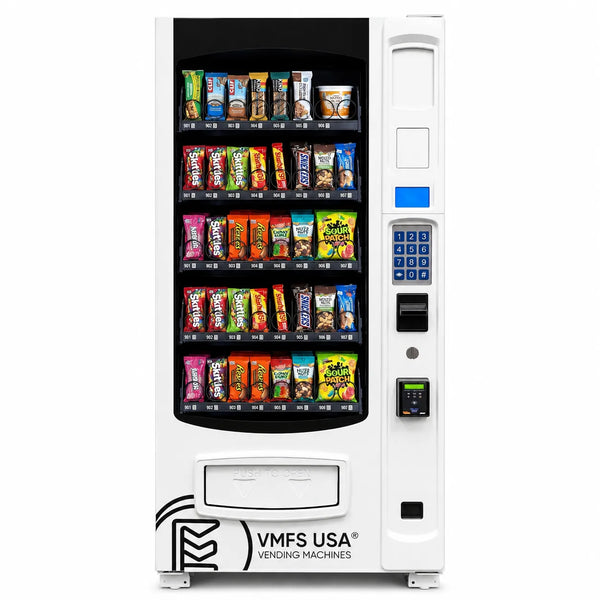
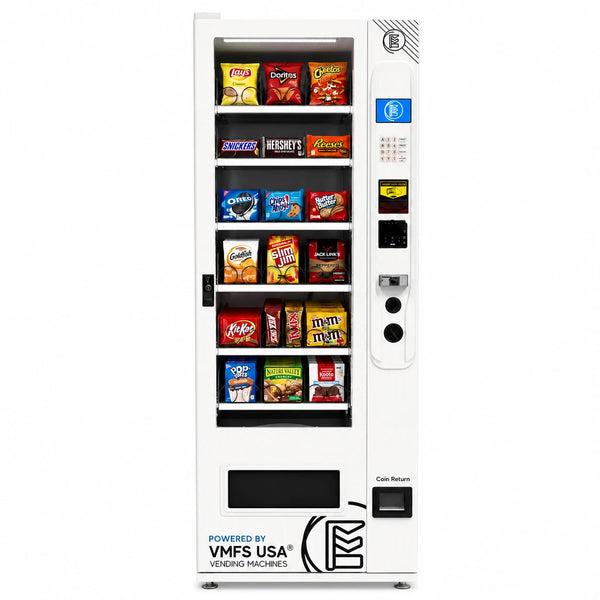
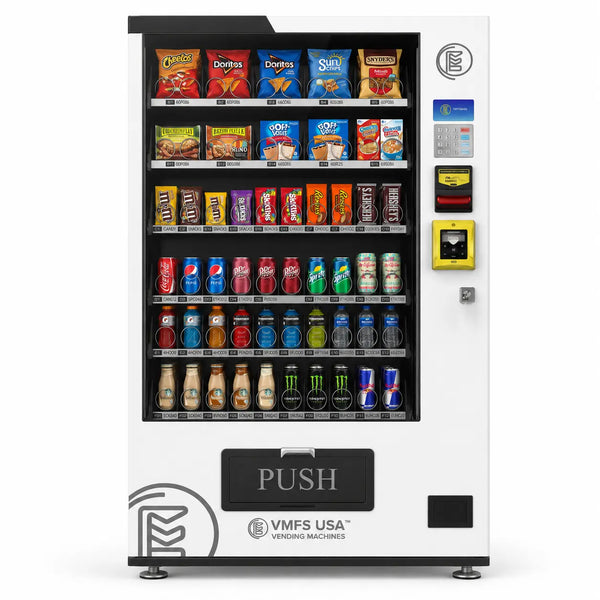
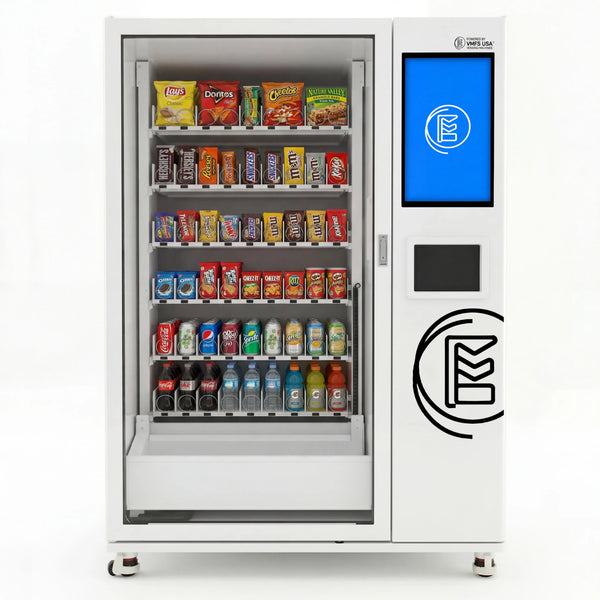
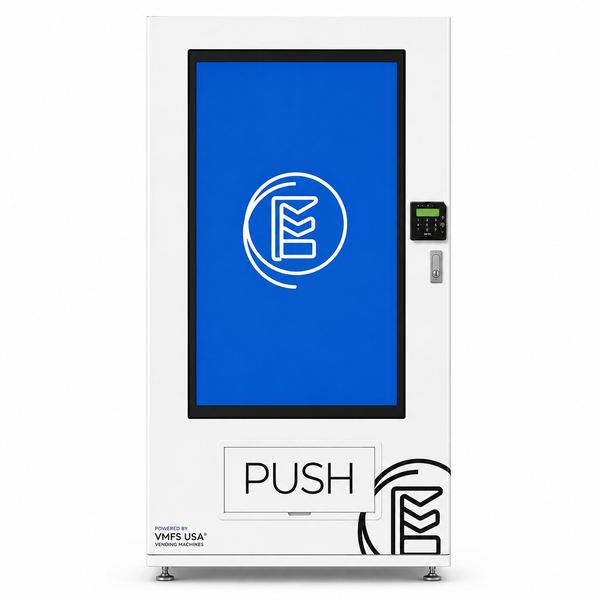
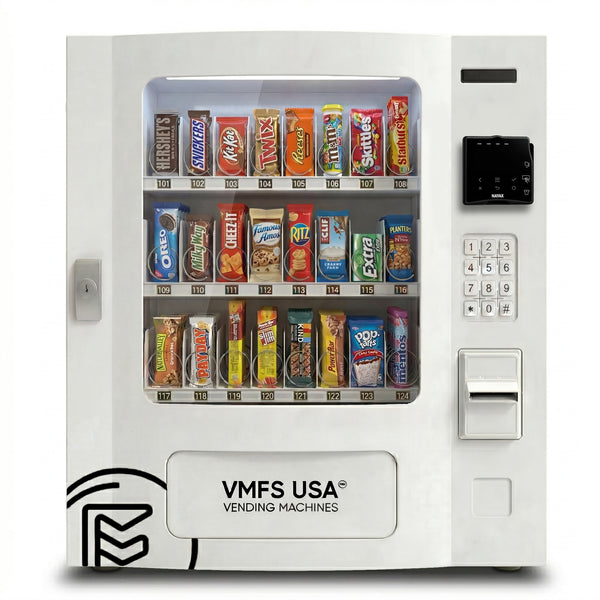
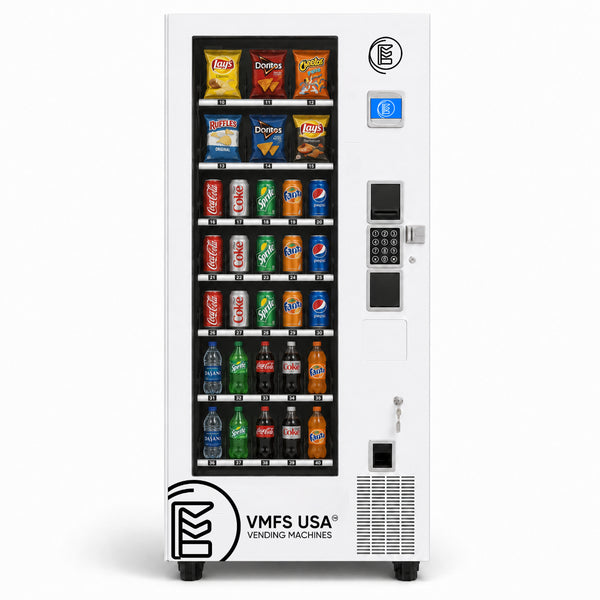
Snack Vending Machines Available for Washington
Every unit below ships configured, compliance-ready, and backed by VMFS Cloud monitoring.
How Operators Use Snack Vending in Washington
Federal Office Building Breakroom
The snack vending machine serves employees across the White House complex, Treasury Department, and State Department offices clustered in downtown and around the National Mall. Operators stock premium chips, chocolate candy, protein bars, and granola bars to fuel government workers through long policy sessions and budget cycles. The ambient temperature cabinet with coil delivery maintains consistent product presentation across 300 to 500 snack capacity, handling sustained demand from thousands of federal employees without requiring daily restocking visits. Federal office breakrooms generate $200 to $350 net profit per month after restocking costs, making this category reliable because government agencies budget for employee amenities and maintain consistent occupancy year-round regardless of tourism or seasonal fluctuations.
Lobby Hotel Corridor
The snack vending machine placed in hotel lobbies across properties in the Penn Quarter, Georgetown, and the Dupont Circle hospitality corridor captures impulse purchases from business travelers and convention attendees moving through lobbies during early mornings and late evenings. Premium packaged nuts, gourmet chips, candy bars, and protein bars stock the machine to match guest expectations for quick, convenient snacking without leaving the property. The snack vending machine accepts Apple Pay, Google Pay, and tap-to-pay, eliminating friction for travelers who carry no cash, while elevator delivery on premium models ensures reliable access to delicate snack boxes and candy items without jamming. Hotel lobbies drive $250 to $400 net profit per month because front desk staff actively promote the machine to guests, and 24/7 uptime captures late-night arrivals and early departures when nearby retail is closed.
Think Tank Research Campus
The snack vending machine serves analysts and researchers at the Brookings Institution, American Enterprise Institute, Center for Strategic and International Studies, and other policy organizations concentrated throughout the city. Operators stock protein bars, granola bars, nuts, jerky, and healthy baked snacks to match the preferences of educated professionals working extended hours during policy research cycles and publication deadlines. The high-capacity 400 to 600 snack configuration handles sustained demand from research staff working through lunch hours and evening sessions without daily restocking, while real-time VMFS Cloud monitoring alerts operators when specific healthy snack categories run low so restocking stays efficient. Think tank campuses generate $180 to $320 net profit per month because researchers prioritize convenience and health-conscious options, and the stable professional audience maintains consistent purchasing patterns throughout the year.
Metro Station Commuter Corridor
The snack vending machine placed at busy Metro stations including Gallery Place, Metro Center, and L'Enfant Plaza captures commuters during peak morning and evening rush periods when travelers move quickly between platforms and trains. Stations stock chips, candy, protein bars, granola bars, and jerky to serve workers grabbing breakfast before boarding and professionals buying afternoon snacks during commutes. The snack vending machine with tap-to-pay capability processes transactions in seconds for rushing commuters, while 168 to 300 snack capacity ensures high-turnover product rotates quickly, and coil delivery reliably dispenses bags and boxes without jamming during peak traffic. Metro stations drive $220 to $380 net profit per month because commuter volume is predictable and dense, cash flow is immediate from thousands of daily transactions, and the captive audience has no competing retail options at train platforms during peak hours.
What Ships With Every Snack Unit
Regulations for Operating in Washington, DC
Licensing, permits, sales tax, and health department standards for snack vending operators in District of Columbia.
State License Requirements
The District of Columbia Department of Health (DOH) oversees food service licensing and vending machine operations. Operators selling packaged snacks (chips, candy, granola bars, protein bars, nuts, baked snacks) from snack vending machines must obtain a Food Service License from the DC DOH if the machine is stocked, serviced, or located within DC jurisdiction. The license applies to the vending operation, not individual machines. Operators must register for a DC Business License through the DC Department of Licensing and Consumer Protection (DLCP). Sales tax registration is required with the DC Office of the Chief Financial Officer (OCFO) if the operator has nexus in DC; out-of-state operators without physical presence may not be required to register unless they meet DC economic nexus thresholds, which currently apply to remote sellers making sales into DC. Operators must obtain an Employer Identification Number (EIN) from the IRS and establish a business entity (sole proprietorship, LLC, corporation, or partnership) recognized by DC. Packaged snacks must comply with FDA labeling requirements including ingredient lists, allergen declarations, and net weight statements. Expiration dates or best-by dates must be clearly marked on packaging and monitored by the operator. Allergen information must be visible and accurate. The Food Service License must be renewed annually; renewal applications are submitted to DC DOH. Late renewal may result in fines or operational suspension.
City and County Permits
Washington, District of Columbia is a single jurisdiction (the District functions as both city and county), so all permits are issued at the DC level. Operators must obtain a Business License from the DC Department of Licensing and Consumer Protection (DLCP), valid for one year from issuance. A Certificate of Occupancy or Certificate of Use may be required depending on the vending location and whether the location is a new commercial space. Zoning compliance is mandatory; snack vending machines in retail, office, or food service locations typically comply with commercial zoning, but operators should verify with the DC Office of Zoning before placement. Fire Safety Inspection and approval is required for any machine placed in a commercial or public building; the DC Fire and EMS Department conducts inspections. No specific coin-operated machine declaration is required, but machines must comply with DC health and safety codes. Surrounding municipalities (Maryland and Virginia) have separate jurisdictional requirements; if a vending operation spans multiple jurisdictions, separate licensing and permits are necessary for each location outside DC. Business License renewal occurs annually; late renewal incurs penalties. For permits and licensing questions, contact the DC Department of Licensing and Consumer Protection at the main office serving business licensing or call the general DC government line. Fire Safety Inspection requests are directed to the DC Fire and EMS Department.
Sales Tax Rate
The combined sales tax rate in Washington, District of Columbia is 6 percent (state/local combined rate with no additional county surtax, as DC is a single jurisdiction). Most packaged snacks sold through vending machines are subject to sales tax, including candy, confectionery, granola bars, protein bars, and processed snack foods. Certain items may qualify for exemptions if they meet USDA definitions of essential foods (e.g., some nuts, seeds, or dried fruits sold in bulk without added sugar or processing), but pre-packaged snack items typically do not qualify for food tax exemptions in DC. Operators must register for sales tax with the DC Office of the Chief Financial Officer (OCFO) and remit sales tax monthly or quarterly depending on sales volume; the OCFO will assign a tax account number upon registration. Out-of-state operators without physical presence in DC must register if they meet DC economic nexus thresholds; DC currently applies a nexus standard to remote sellers. Operators should verify current nexus rules with the OCFO.
Health Department Standards
The DC Department of Health (DOH) Food Protection Division establishes health and sanitation standards for all food vending operations, including snack vending machines. Snack vending machines must have food-contact surfaces (dispensing chutes, shelving, or contact areas) constructed of stainless steel, food-grade plastic, or other non-porous, easily cleanable materials. Machines must be maintained in a sanitary condition with regular cleaning and inspection; any visible contamination or pest evidence will result in citation. Refrigerated snack machines must maintain proper temperature control (below 41 degrees Fahrenheit for perishable items if applicable, though most packaged snacks do not require refrigeration). Machines must be equipped with a thermometer to monitor internal temperature. Automatic shut-off or temperature alarms are recommended to ensure food safety. Placement rules require machines to be located in clean, well-lit areas away from direct sunlight, excessive heat, moisture, and pest entry points; restrooms and areas where raw food is prepared are prohibited. Operational requirements include clear marking of expiration dates on all packaged items, unobstructed visibility of labels and ingredient information, and immediate removal of expired products. DC DOH conducts announced and unannounced inspections of vending operations; operators must cooperate with inspectors and correct any violations within the specified timeframe. Secondary local health department oversight applies in schools (DC Department of Education Food Services Division), healthcare facilities (facility-specific food service rules), and government buildings (General Services Administration or relevant agency). Operators placing machines in these locations must comply with facility-specific food safety policies and obtain facility approval. DC's moderate humidity and temperature variations require machines to be monitored seasonally; excessive moisture can damage packaging and promote mold, so machines should be placed in climate-controlled or protected environments when possible. VMFS snack vending machines deployed in Washington, District of Columbia ship with the appropriate spec standard, including energy-saving design and a 1-year standard warranty with extended coverage options.
Disclaimer
Regulatory information is for reference only and current as of 2026. Operators should verify current requirements with the relevant agency before deployment. VMFS USA is not a legal or tax advisor. For operator-side legal guidance covering placement contracts, host venue agreements, documentation, business incorporation, tax registration, licenses, and permits, operators can consult <a href="https://vadviced.com">VAdviced</a>. For professional placement and location matching support, operators can work with <a href="https://vplaced.com">VPlaced</a>.
Washington at a Glance
Geographic Identity
- County
- Independent City
- Metro Area
- Washington-Arlington-Alexandria, DC-VA-MD-WV
- Time Zone
- America/New_York (Eastern Time)
- Area Codes
- 202, 771
- ZIP Codes
- 20001 to 20599
- Primary Airport
- DCA Ronald Reagan Washington National Airport
- Secondary Airport
- IAD Washington Dulles International Airport
- Major Port
- None
- Nickname
- The Nation's Capital
Market Stats
- City Population
- 705,749
- Metro Population
- 6.38 million
- Annual Visitors
- 24.6 million (2022)
- Visitor Economy
- 17.7 billion annual economic impact
- Airport Passengers
- 90 million annual travelers through DCA, IAD, and BWI
- Hospitality Jobs
- None
- Top Industries
- Government and Federal Services, Tourism and Hospitality, Professional Services, Education and Research, Healthcare, Real Estate and Construction
- Demand Driver
- Federal government presence, international diplomatic activity, and year-round tourism centered on national monuments, museums, and political attractions drive consistent visitor volume and local spending.
Climate Profile
- Climate Zone
- Humid Subtropical
- Average Humidity
- 55 to 75 percent year round
- Summer High
- 88 to 92 degrees Fahrenheit with high humidity from June through August
- Winter Low
- regularly 25 to 35 degrees Fahrenheit, winter indoor placement recommended
- Seasonal Hazard
- None
- Environmental Exposure
- Urban heat island effect increases ambient temperatures near deployed units by 5 to 10 degrees Fahrenheit compared to surrounding areas, requiring enhanced cooling capacity.
- Deployment Note
- Washington's humid subtropical climate with hot summers and cold winters requires weatherproofed units with sealed electronics and reinforced refrigeration for summer cooling cycles. Winter frost protection is necessary for outdoor placements. VMFS ships all Washington outdoor units with these specifications standard.
Location & Service Area
- Key Neighborhoods
- Downtown, Capitol Hill, U Street Corridor, Dupont Circle, Georgetown, Adams Morgan, Shaw, Foggy Bottom, Arlington, Ballpark District, Kalorama, Logan Circle
- Nearby Cities
- Arlington, Alexandria, Bethesda, Silver Spring, Rockville, Falls Church, Takoma Park, Hyattsville
- Service Radius
- VMFS delivers, installs, and services machines throughout Washington, D.C. and Arlington County, with extended coverage to Fairfax and Montgomery counties on request.
Your Location. Working 24/7.
Answers to common questions from Washington operators. Didn't see yours? Send us a message — our US-based team responds within one business day.
What monthly profit can a property owner expect from hosting a snack vending machine in a Washington, DC office building or medical facility?
How often does the machine need restocking in a Washington, DC hospital, university, or corporate office with consistent daily traffic?
What electrical requirements and space does a snack vending machine need in a Washington, DC office lobby or break room?
What happens if the snack vending machine breaks down, and how long is the warranty protection?
Does the machine accept mobile payments like Apple Pay and Google Pay, or just cash in Washington, DC where contactless payment dominates?
How does a property manager or facility operator find the right snack vending machine placement partner and ensure the placement contract protects both sides?
Deploy Snack Vending Machinesin Washington, DC Today
Request a custom quote today for
snack vending machines
at your Washington, DC location, and we handle machine selection, delivery, configuration, and ongoing support from start to finish. Every deployment begins with a site assessment covering foot traffic patterns, snack mix balance across chips, candy, granola bars, and healthy snacks, power requirements, and network needs for our cloud platform, with placement strategy coordinated through our
placement experts
for operators seeking professional location matching. Whether you run a single unit in a congressional office breakroom or a rollout of 30 or more machines across a hotel property, university dormitory network, or hospital campus in Washington, DC, your quote includes hardware, installation, staff training, and 12 months of cloud monitoring at no extra cost.
Deploy Snack Vending Across Washington
1,200+ machines deployed. 1-year warranty standard. Free lifetime support. One team from site survey to uptime.