


Snacks Vending Machines in Baltimore, MD
Transform your Baltimore business with convenient, profitable snack vending machines. Boost revenue and customer satisfaction with our reliable, customizable solutions today.
Stop Guessing. Configure Your Snack Vending Machine.
Answer a few quick questions about your location, your product mix, your temperature needs, and your budget. Our Snack Vending System will match you with the right base model, add the right modules (refrigeration, ad screen, outdoor protection, payment suite), and show you real time pricing and lead time as you build.
Skip the back and forth. Skip the spec sheet overwhelm. See your exact configuration, your exact cost, and your exact delivery window before you commit.
- Real time pricing as you add or remove features
- Live lead time estimate based on your configuration
- Recommended product mix for your location type
- Capacity, slot count, and weight limits shown per setup
- Option presets for food, drinks, electronics, retail, and frozen

Why Snack Vending Machines?
A snack vending machine offers Baltimore businesses a convenient way to provide employees and customers with instant access to quality snacks. These
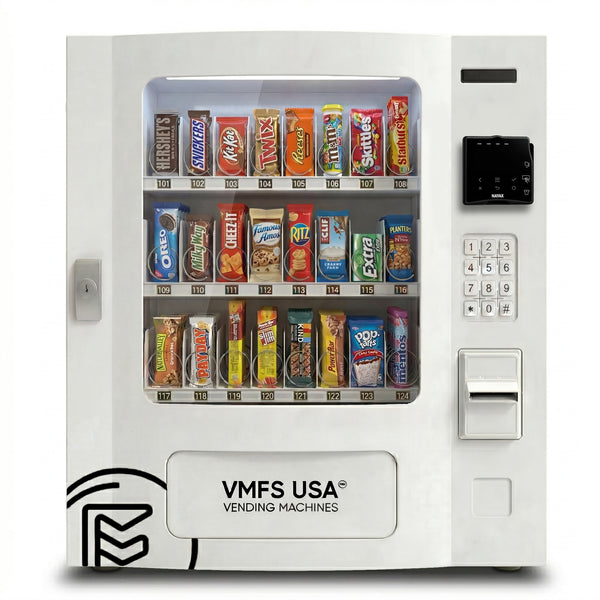
countertop snack vending machines
dispense chips, candy, granola bars, protein bars, nuts, baked snacks, jerky, cookies, and healthy on-the-go options from a single cabinet. With capacities ranging from 168 to 800 snacks across up to 60 adjustable slots, healthy snack vending machines accommodate diverse product mixes. Premium models feature convenient drop-down or elevator delivery systems, while energy-efficient designs and double-layer toughened glass with optional defogging protect your inventory. The VMFS Cloud dashboard provides real-time sales tracking and inventory management, making snack vending machine operation effortless for Baltimore operators.
Built For Packaged Snacks
Designed specifically for packaged snacks including chips, candy, granola bars, protein bars, nuts, baked snacks, and healthy on-the-go options across multiple slot sizes
High-Capacity Snack Format
From 168 to 800 snack items across up to 60 adjustable slots, with coil delivery sized for both candy-sized and snack-sized products in a single cabinet
Reliable Coil Dispensing
Photoelectric sensors and guaranteed delivery system ensure each snack is dispensed accurately, with anti-theft outlet design and secure dispensing to prevent shrinkage
Universal Venue Fit
Designed for offices, gyms, schools, hospitals, hotels, retail spaces, transit hubs, apartment lobbies, and any high-traffic venue where impulse snack demand exists
24/7 Cloud Monitoring
Real-time sales, live inventory, low-stock alerts, and fault notifications stream to the VMFS Cloud dashboard from any device, with U.S.-based support and software updates
Why Snacks Machines Perform in Baltimore, Maryland
Baltimore's dense corporate office corridor along the Inner Harbor and in Towson generates steady weekday foot traffic from knowledge workers who rely on convenient snacking between meetings and throughout their shifts, making
snack vending machines
ideal for breakrooms, lobbies, and common areas where 24/7 access eliminates staffing costs while capturing impulse purchases. The city's growing hospital network, including Johns Hopkins Medical Institutions, and thriving education sector spanning University of Maryland and Loyola University create high-volume venues with consistent daytime and evening populations seeking quick nutrition without leaving campus or facility grounds. Baltimore's transit infrastructure, including the Central Light Rail line and commuter rail hubs, channels thousands of daily passengers through stations and waiting areas where packaged snacks address immediate hunger during layovers and transfers. Countertop and full-size snack vending machines in these environments typically generate $200 to $500 net monthly profit after restocking, with 300 to 800-unit capacity supporting Baltimore's competitive venue mix. Real-time inventory monitoring ensures machines remain stocked during peak hours, maximizing revenue in a market where location is critical to success—making
professional placement services
invaluable for identifying high-traffic Baltimore venues and negotiating optimal placements.
Best Locations in Baltimore
High-value deployment sites where snack vending delivers the strongest revenue per square foot.
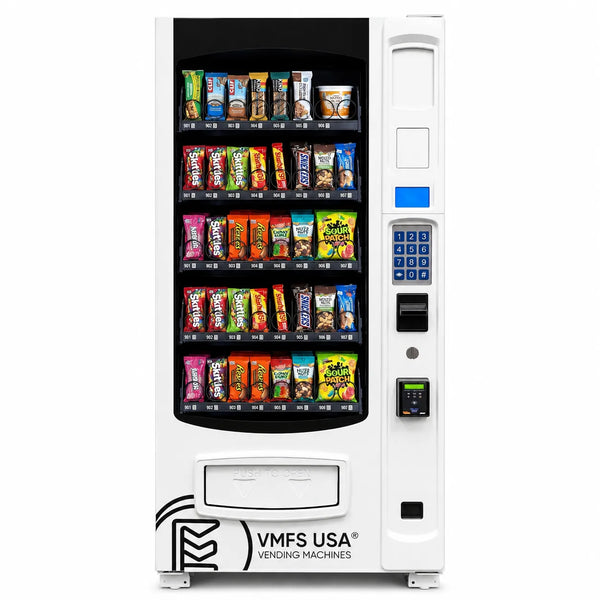
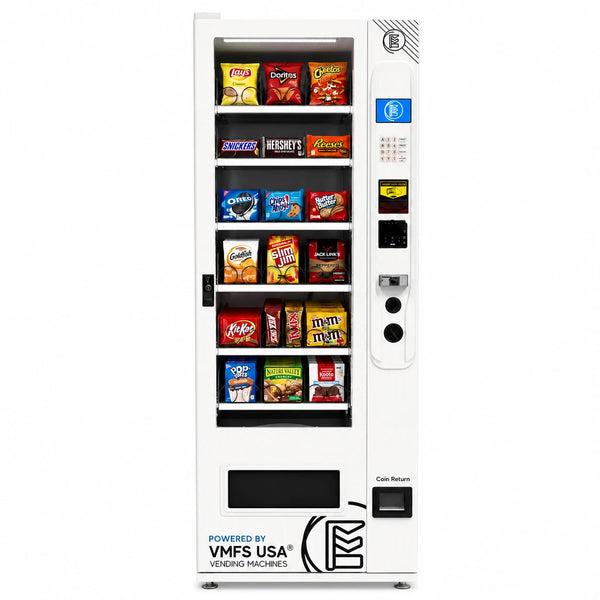
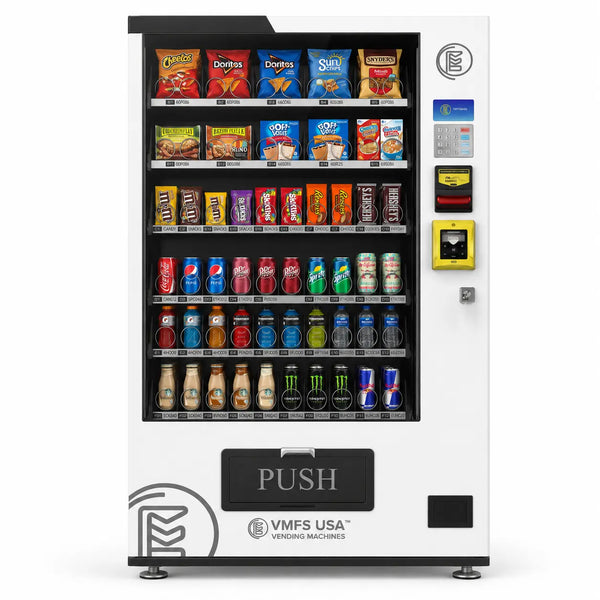
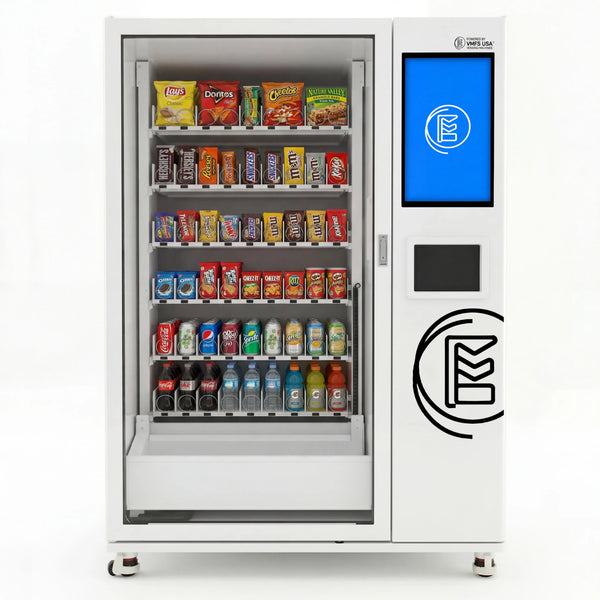
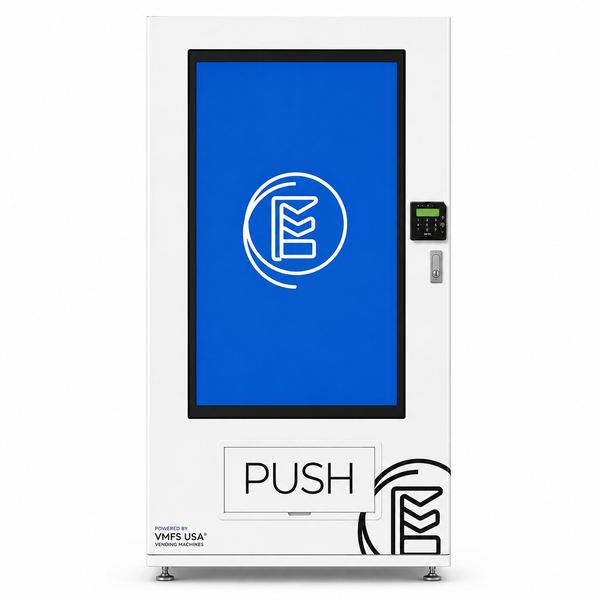
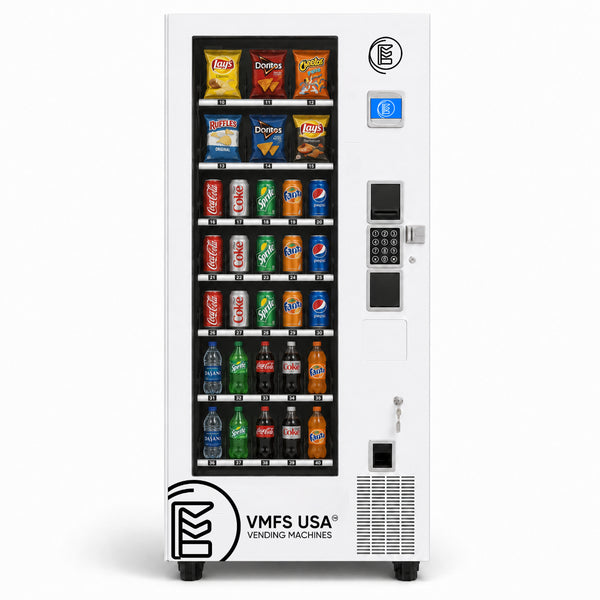
Snack Vending Machines Available for Baltimore
Every unit below ships configured, compliance-ready, and backed by VMFS Cloud monitoring.
How Operators Use Snack Vending in Baltimore
Hospital Breakroom
Johns Hopkins Hospital, University of Maryland Medical Center, and Mercy Medical Center employ thousands of nurses, residents, and clinical staff working overnight shifts and irregular hours. These locations stock protein bars, granola bars, nuts, jerky, and healthy on-the-go snacks like dried fruit and rice cakes to support sustained energy for medical professionals. A snack vending machine with 300 to 800 snack capacity and reliable coil or elevator delivery ensures that night shift staff and emergency department workers have access to quick nutrition without leaving the facility, and real time VMFS Cloud monitoring tracks inventory across multiple hospital locations. Hospital breakrooms generate $200 to $400 net profit per machine per month because staff members make frequent impulse purchases during 12 hour shifts, and the reliable uptime satisfies both employees and hospital administrators seeking tenant amenities that improve retention.
Port Authority and Transportation Hub
Baltimore Penn Station, BWI Airport terminals, and the Port of Baltimore serve commuters, travelers, and logistics workers moving through the region on tight schedules. These venues stock premium chips, packaged nuts, candy bars, protein bars, and baked snacks that appeal to passengers grabbing food before flights or trains. A snack vending machine positioned in transit areas operates 24/7 with tap to pay, Apple Pay, and Google Pay integration, and the high capacity configuration means restocking happens only twice per week even during peak travel periods. Guest convenience drives $250 to $400 net profit per machine monthly at transit hubs because captive audiences with limited time make unplanned snack purchases, and operators benefit from consistent foot traffic independent of weather or business cycles.
Corporate Breakroom
T. Rowe Price, Under Armour headquarters, and BGE offices throughout Baltimore employ thousands of office workers in Fells Point, Harbor East, and the Inner Harbor area. These locations stock chips, candy, granola bars, and protein bars for employees taking breaks between meetings and conference calls. A snack vending machine delivers consistent inventory with coil or elevator mechanisms that reliably dispense every product type, and real time cloud monitoring shows operators which items move fastest so restocking aligns with demand. Corporate breakrooms generate $150 to $300 net profit per machine monthly because employees make daily impulse purchases, and property managers value the snack vending machine as a low cost tenant amenity that improves workplace satisfaction without adding staffing burden.
University Dorm and Student Center
University of Maryland Baltimore, Johns Hopkins University, and Morgan State University house thousands of students in residence halls and common areas throughout the city. These venues stock chips, candy, granola bars, protein bars, and baked snacks that fuel late night studying and social gatherings in dormitories. A snack vending machine with 168 to 300 snack slots and tap to pay acceptance ensures students have access during closed dining hours and weekends, and elevator delivery on premium models prevents jams with high volume candy and bar traffic. Student centers and dormitories produce $180 to $350 net profit per machine monthly because captive residential populations make repeated small purchases throughout the day and evening, and reliable 24/7 access solves a genuine student need that campus operators recognize and support.
What Ships With Every Snack Unit
Regulations for Operating in Baltimore, MD
Licensing, permits, sales tax, and health department standards for snack vending operators in Maryland.
State License Requirements
In Maryland, the Department of Health oversees food service licensing and vending machine operations. Operators selling packaged snacks (chips, candy, granola bars, protein bars, nuts, baked snacks) from countertop vending machines must obtain a Food Service License from the Maryland Department of Health if the machine dispenses potentially hazardous foods or if the operator is engaged in food service activities. For packaged, shelf-stable snacks only, a license may not be required; however, operators should verify with the Department of Health. Maryland requires all food service licensees to register for a Maryland Employer Identification Number (EIN) through the Maryland Department of Assessments and Taxation and obtain a Federal Employer Identification Number (EIN) from the IRS if operating as a business entity. Business entity registration (sole proprietorship, LLC, corporation) must be filed with the Maryland State Department of Assessments and Taxation. All packaged food sold must comply with FDA labeling standards, including ingredient lists, allergen declarations (tree nuts, peanuts, milk, eggs, soy, wheat, fish, shellfish, sesame), and clearly marked expiration or best-by dates on the product packaging. Operators must ensure compliance with the Food and Drug Administration's Food Labeling Guide. Maryland requires sales tax registration through the Comptroller of Maryland. Food service licenses are typically renewed annually; renewal frequency should be confirmed directly with the Maryland Department of Health, Office of Food Protection. Late renewal may result in operating without a valid license, subject to penalties and enforcement action.
City and County Permits
In Baltimore City, operators must obtain a Business License (also called a General Business License or Trade License) from the Baltimore City Department of Finance. A Certificate of Use may be required depending on the vending location and zoning classification; this should be verified with the Department of Planning. Zoning compliance is mandatory; vending machine placement in commercial, retail, or food service areas is typically permitted, but placement in residential zones or restricted areas requires verification with Baltimore City Planning. Fire safety inspection and approval may be required for machines placed in commercial establishments, schools, or public buildings; contact the Baltimore City Fire Department or the Office of the Fire Marshal for requirements specific to the proposed location. At the county level, Baltimore County (if operating outside city limits) requires a Business License through the Baltimore County Office of the Comptroller and may impose additional zoning or health department permits. Coin-operated machine declarations are not a separate state or city requirement in Maryland for packaged snack vending; however, operators should confirm local placement rules with venue hosts and property managers. Permit renewal timelines vary; the Baltimore City Business License typically requires annual renewal. Late penalties apply if renewal is not completed by the expiration date; contact the Baltimore City Department of Finance for current penalty schedules. For Baltimore City: Department of Finance (Business License): 410-396-3400; Department of Planning (Zoning and Certificate of Use): 410-396-8400; Baltimore City Fire Department (Fire Safety): 410-396-2340.
Sales Tax Rate
The combined sales tax rate in Baltimore, Maryland is 6% (5% state rate plus 1% Baltimore City surtax). Packaged snacks including candy, granola bars, chips, nuts, and baked goods are generally taxable under Maryland law. Beverages (if sold) are also taxable; Maryland taxes both food and beverages at the standard sales tax rate with limited exceptions for certain unprepared groceries (bread, milk, fresh produce), which do not apply to vended snacks. Operators must register for a Maryland sales tax license through the Comptroller of Maryland and remit collected sales tax monthly or quarterly depending on sales volume. The economic nexus threshold for out-of-state sellers is met if an operator has annual sales exceeding $100,000 or 200 or more separate transactions in Maryland during the prior calendar year; out-of-state sellers meeting this threshold must register and remit Maryland sales tax. Registration occurs through the Maryland Comptroller's Office online portal or by mail.
Health Department Standards
The Maryland Department of Health, Office of Food Protection, and the Baltimore City Health Department oversee countertop snack vending machine operations. For refrigerated machines, equipment surfaces must be food-grade, easily cleanable stainless steel or approved plastic; all contact surfaces must be sanitized regularly. Machines must have automatic temperature controls to maintain safe storage temperatures (typically 41 degrees Fahrenheit or below for refrigerated compartments). Interior and exterior surfaces must be inspected and maintained to prevent pest intrusion and contamination. Sanitation standards require daily inspection, removal of expired or damaged products, and documented cleaning logs. Operators must mark expiration or best-by dates clearly on all packaged snacks, visible to the consumer prior to purchase. Unannounced inspections by Baltimore City Health Department staff may occur at any vending location. Placement rules require machines to be positioned away from restrooms, in areas free from dust, pests, and direct sunlight where feasible. Secondary oversight applies to vending machines placed in schools (Baltimore City Public Schools requires health and safety clearance), hospitals and healthcare facilities (Maryland Board of Physicians oversight), and government buildings (agency-specific policies). Climate considerations specific to Baltimore include high humidity and temperature fluctuations, particularly in summer months; machines must have adequate ventilation and temperature stability to prevent condensation, mold growth, and product degradation. VMFS snack and beverage vending machines deployed in Baltimore ship with the appropriate specifications including energy-efficient refrigeration, durable construction, and climate-control features suitable for Mid-Atlantic conditions, along with a 1-year standard warranty and extended maintenance and coverage options available for operators.
Disclaimer
Regulatory information is for reference only and current as of 2026. Operators should verify current requirements with the relevant agency before deployment. VMFS USA is not a legal or tax advisor. For operator-side legal guidance covering placement contracts, host venue agreements, documentation, business incorporation, tax registration, licenses, and permits, operators can consult <a href="https://vadviced.com">VAdviced</a>. For professional placement and location matching support, operators can work with <a href="https://vplaced.com">VPlaced</a>.
Baltimore at a Glance
Geographic Identity
- County
- Baltimore County
- Metro Area
- Baltimore-Columbia-Towson
- Time Zone
- America/New_York (Eastern Time)
- Area Codes
- 410, 443
- ZIP Codes
- 21201 to 21299
- Primary Airport
- BWI Baltimore/Washington International Airport
- Secondary Airport
- DCA Ronald Reagan Washington National Airport
- Major Port
- Port of Baltimore, one of the busiest general cargo ports on the US East Coast
- Nickname
- The Charm City
Market Stats
- City Population
- 641,155
- Metro Population
- 2.8 million
- Annual Visitors
- 12.9 million (2022)
- Visitor Economy
- 5.3 billion annual economic impact
- Airport Passengers
- 36.5 million annual travelers through BWI
- Hospitality Jobs
- None
- Top Industries
- Healthcare and Life Sciences, Port and Maritime Trade, Technology and Innovation, Education, Manufacturing, Government and Administration
- Demand Driver
- Baltimore's economy is driven by its role as a major East Coast port, significant healthcare and research institutions, federal government employment, and growing tourism centered on the Inner Harbor and cultural attractions.
Climate Profile
- Climate Zone
- Humid Subtropical
- Average Humidity
- 55 to 70 percent year round
- Summer High
- 88 degrees Fahrenheit average with peaks near 95 degrees Fahrenheit in July and August
- Winter Low
- regularly drops below 32 degrees Fahrenheit, indoor placements recommended December through February
- Seasonal Hazard
- Nor'easter Snow and Ice, December to March
- Environmental Exposure
- Winter ice and snow load on rooftop and exposed placements requires reinforced structural design and heated drainage systems.
- Deployment Note
- Baltimore's humid subtropical climate with cold winters and summer heat requires weatherproofed units with sealed electronics and reinforced refrigeration for temperature cycling. Winter nor'easters demand snow and ice load rating for outdoor installations. VMFS ships all Baltimore outdoor units with weatherproofing, sealed electronics, enhanced drainage, and structural reinforcement for seasonal ice load as standard specification.
Location & Service Area
- Key Neighborhoods
- Inner Harbor, Federal Hill, Canton, Fells Point, Harbor East, Hampden, Roland Park, Fell's Point, Locust Point, Mount Washington, Highlandtown, Canton
- Nearby Cities
- Towson, Columbia, Dundalk, Essex, Catonsville, Glen Burnie, Bel Air, Annapolis
- Service Radius
- VMFS delivers, installs, and services machines throughout Baltimore City and Baltimore County, with extended coverage to Anne Arundel and Howard counties on request.
Your Location. Working 24/7.
Answers to common questions from Baltimore operators. Didn't see yours? Send us a message — our US-based team responds within one business day.
What kind of net profit can a Baltimore venue expect from hosting a snack vending machine?
How often does the machine need restocking in a Baltimore office or institutional setting?
What electrical infrastructure does the venue need to support a snack vending machine?
Does the machine accept credit cards and mobile payments popular in Baltimore?
What happens if the machine breaks down, and how long is downtime typically?
Are there placement contracts, and where can operators and venues understand the legal requirements in Baltimore, MD?
Deploy Snack Vending Machinesin Baltimore, MD Today
Get a custom quote today for
snack vending machines
at your Baltimore location, and we handle machine selection, delivery, configuration, and ongoing support from start to finish. Every deployment starts with a site assessment covering foot traffic patterns, snack mix balance across chips, candy, granola bars, and healthy snacks, power requirements, and network setup for cloud monitoring, and if you want professional location matching our
placement experts
can coordinate placement strategy across your portfolio. Whether you need a single unit in a medical office or research facility downtown or a rollout of 30 or more machines across a hospital system, university campus, or hotel chain throughout Baltimore, your quote includes hardware, installation, staff training, and 12 months of cloud monitoring at no extra cost.
Deploy Snack Vending Across Baltimore
1,200+ machines deployed. 1-year warranty standard. Free lifetime support. One team from site survey to uptime.