


Food Vending Machines in Tucson, AZ
Turn your location into a revenue stream with 24/7 automated food vending machines. Fresh, convenient, profitable solutions for Tucson businesses.
Stop Guessing. Configure Your Food Vending Machine.
Answer a few quick questions about your location, your product mix, your temperature needs, and your budget. Our Food Vending System will match you with the right base model, add the right modules (refrigeration, ad screen, outdoor protection, payment suite), and show you real time pricing and lead time as you build.
Skip the back and forth. Skip the spec sheet overwhelm. See your exact configuration, your exact cost, and your exact delivery window before you commit.
- Real time pricing as you add or remove features
- Live lead time estimate based on your configuration
- Recommended product mix for your location type
- Capacity, slot count, and weight limits shown per setup
- Option presets for food, drinks, electronics, retail, and frozen

Why Food Vending Machines?
A food vending machine revolutionizes workplace nutrition and convenience in Tucson, Arizona by offering diverse food options from a single configurable cabinet. Whether you need a hot food vending machine for freshly heated entrees and ramen, a cold food vending machine for sandwiches and dairy products, or a fresh food vending machine for salads and wraps, these versatile units deliver exactly what your location demands. With capacities ranging from 250 to 800 items across 30 to 72 adjustable slots, hot food vending machines feature coil delivery for packaged goods, elevator delivery for fresh meal containers, and heated delivery systems for hot entrees on demand. Cold food vending machines maintain optimal temperatures with multiple calibrated zones, while
fresh food vending machines
showcase breakfast items, healthy snacks, and ready-to-eat convenience foods. The VMFS Cloud dashboard provides real-time sales tracking and inventory management, ensuring your food vending machine always stocks the right mix of frozen meals, hot options, and fresh items your customers crave.
Configurable Temperature Zones
One food vending machine system configurable for cold food, hot food, fresh food, frozen items, ambient products, or dual-zone mixed programs, with temperature settings calibrated before shipping based on the product mix
Versatile Delivery Options
Standard and custom-pitch coil delivery for packaged goods, elevator delivery for fresh meal containers and fragile items, heated delivery for hot food on demand, plus door-access AI cooler for mixed fresh and cold assortments
Wide Food Compatibility
Stocks salads, wraps, sandwiches, fresh meals, frozen meals, ramen, pizza, hot food entrees, healthy snacks, dairy items, microwavable meals, and ready-to-eat convenience foods from a single cabinet
Built For Demanding Venues
Designed for gyms (post-workout fresh meals), hospitals (24/7 staff and patient meals), schools (hot food when cafeteria is closed), warehouses with multiple shifts, corporate campuses, hotels, airports, and any venue needing consistent food access
VMFS Cloud Remote Management
Real-time sales, live inventory, temperature graphs across zones, fault alerts, and pricing updates stream to the VMFS Cloud dashboard from any device, with U.S.-based support and software updates included
Why Food Vending Machines Perform in Tucson, Arizona
Tucson's robust university and research sector, anchored by the University of Arizona and multiple medical institutions, creates dense populations of shift-based workers and students requiring 24/7 meal access.
Food vending machines
thrive in these environments—offering hot, fresh meals in campus lounges, hospital break rooms, and research facilities without requiring kitchen staff or traditional food service infrastructure. The city's desert climate and sprawling geography mean fewer nearby dining options in many commercial zones, making on-site cold and hot food vending critical for employee retention and student satisfaction. High-capacity machines (250–800 items) with configurable temperature zones generate $400–$1,000 monthly net profit per unit in Tucson's academic and healthcare venues, where ticket velocity is driven by predictable meal demand. Strategic placement through
professional placement services
ensures machines land in high-traffic break rooms and transit areas where Tucson's workforce depends on quick, reliable food access.
Best Locations in Tucson
High-value deployment sites where food vending delivers the strongest revenue per square foot.
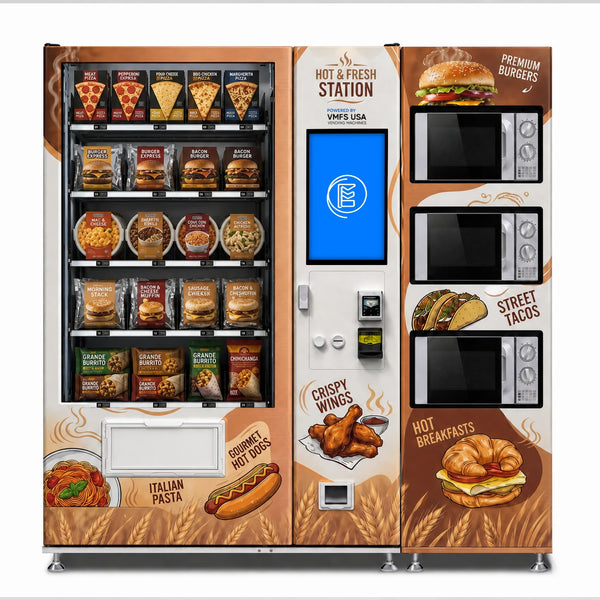
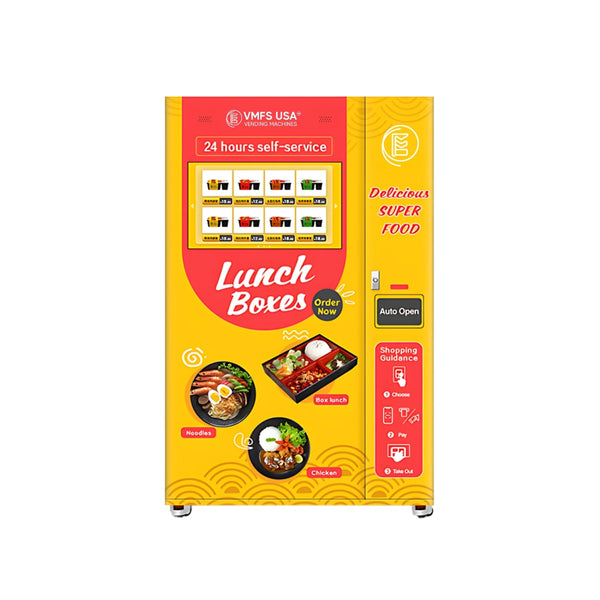
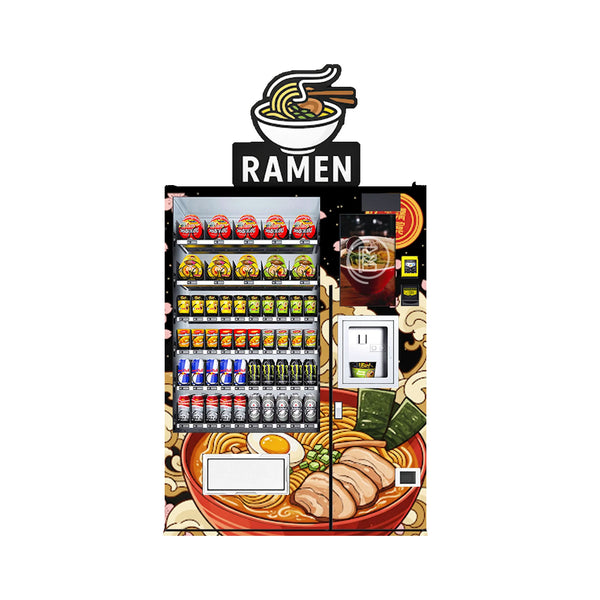
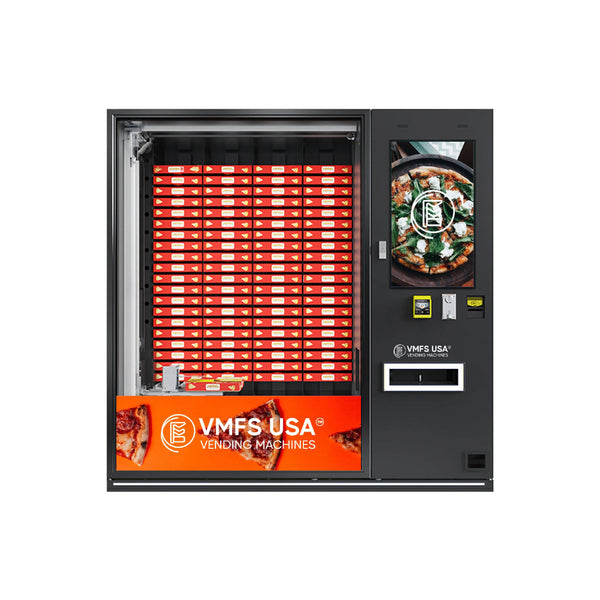
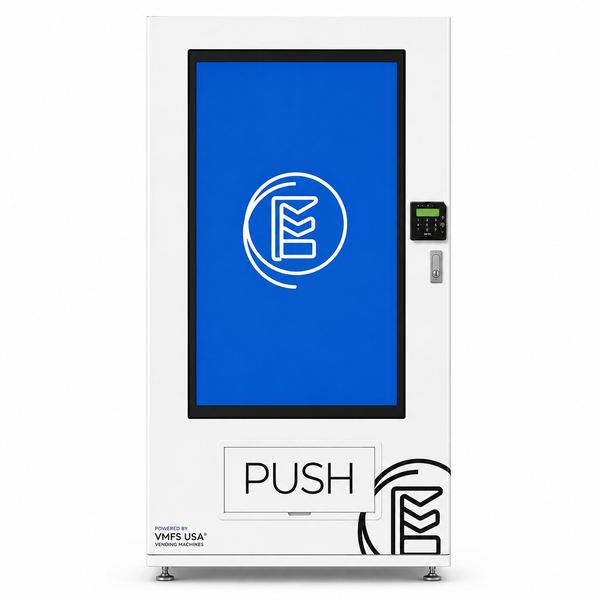
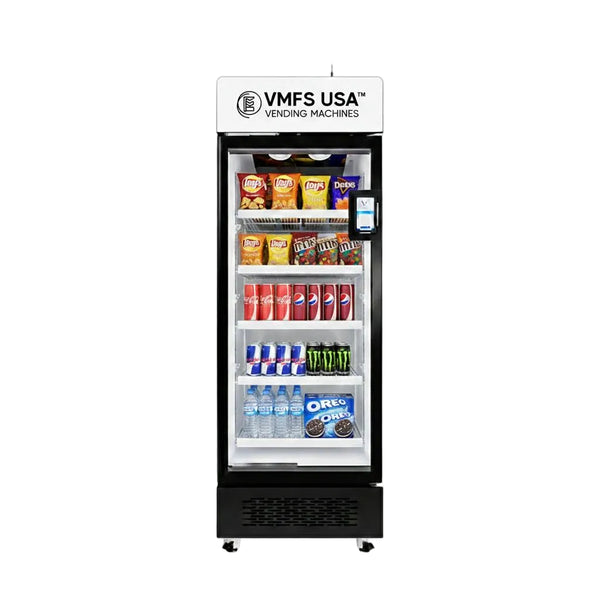
Food Vending Machines Available for Tucson
Every unit below ships configured, compliance-ready, and backed by VMFS Cloud monitoring.


How Operators Use Food Vending in Tucson
Medical Center
Banner University Medical Center and TMC HealthCare operate large campuses with around-the-clock staffing across nursing units, imaging departments, and administrative offices. Night shift nurses, residents, and day staff need fresh meals, hot entrees, ramen, and sandwiches without leaving the facility. A fresh food vending machine with refrigerated, frozen, and heated delivery zones stocks 250 to 800 items in one cabinet, eliminating multiple trips to distant cafeterias while the elevator delivery system protects fresh meal containers. Net profit per machine reaches 400 to 1,000 dollars monthly, providing reliable 24/7 meal access that hospitals require for staff retention and satisfaction.
Corporate Office Park
Tech and defense contractors operating in the Oro Valley and Rita Ranch corridors, including major employers like Raytheon and local software firms, house hundreds of employees in campus-style office parks with limited nearby food options. Workers need quick breakroom access to fresh salads, wraps, sandwiches, and breakfast items during standard shifts and extended project work. The food vending machine consolidates refrigerated and ambient zones into one unit, reducing restocking frequency across 30 to 72 adjustable slots while accepting Apple Pay and tap-to-pay for frictionless transactions. Monthly net profit of 400 to 1,000 dollars makes the machine a valued tenant amenity that drives employee retention and productivity.
University Campus Dormitory
University of Arizona residence halls and graduate housing near campus core and Arizona State Residence Hall house thousands of students with meal plans and late-night hunger patterns across all hours. Students stock up on fresh salads, sandwiches, ramen, frozen meals, and microwavable entrees between class and study sessions, particularly after library hours when dining halls close. A fresh food vending machine with multiple temperature zones handles the full range of products in one cabinet, with real time VMFS Cloud monitoring tracking inventory so restocking aligns with dormitory demand. The 250 to 800 item capacity and 400 to 1,000 dollar monthly net profit provide reliable access that on-campus housing demands.
Manufacturing and Warehouse Facility
Light manufacturing, aerospace parts assembly, and logistics operations in the South Park Industrial and Airport districts run multiple shifts with workers clocking 6 AM to 10 PM schedules. Shift crews need hearty hot meals, frozen entrees, pizza, ramen, and sandwiches that fuel physical labor without requiring trips off-site during break windows. The hot food vending machine delivers heated meals on demand in the same cabinet as frozen stock and ambient snacks, handling diverse dietary needs while heated delivery eliminates cold, unappetizing meals. With 250 to 800 item capacity reducing daily restocking and 400 to 1,000 dollar monthly net profit, the machine covers all shift changes reliably.
What Ships With Every Food Unit
Regulations for Operating in Tucson, AZ
Licensing, permits, sales tax, and health department standards for food vending operators in Arizona.
{"type":"root","children":[{"type":"paragraph","children":[{"type":"text","value":"State License Requirements
Arizona's Department of Health Services (ADHS) and the Department of Liquor and Cannabis Regulation (DLCR) oversee vending machines, depending on product type. Food vending machine operators must obtain a Food Service License from ADHS for any operation involving fresh, frozen, hot-delivery, or ambient food categories including salads, wraps, sandwiches, fresh meals, frozen meals, ramen, pizza, healthy snacks, and dairy items. Registration requires submission of a completed license application with operational plans detailing equipment specifications, food sourcing, and storage protocols. Arizona requires all food service operators to register for an Arizona Department of Revenue (DOR) transaction privilege tax (sales tax) license and obtain a Federal Employer Identification Number (EIN) from the IRS; sole proprietors may use a Social Security Number if not hiring employees, but business entity registration (LLC, Corporation, or Partnership) is strongly recommended. Commodity-specific rules mandate date-marking on all fresh foods, prepared meals, salads, wraps, and sandwiches with clear use-by dates; dairy products must be stored at 41 degrees Fahrenheit or below with documented cold-chain maintenance and temperature logs; allergen disclosures are required on all sandwich and prepared meal labels; hot-hold foods must maintain a minimum temperature of 135 degrees Fahrenheit at the point of vending with continuous monitoring and documentation. Food Service Licenses must be renewed annually, with renewal applications submitted to ADHS prior to expiration. All vending operators must comply with Arizona Revised Statutes Title 36 (Public Health) Chapter 4 (Food and Recreational Water) and maintain records of equipment cleaning, temperature verification, and product rotation available for inspection.
City and County Permits
Tucson, Arizona requires all food vending machine operators to obtain a City of Tucson Business License from the Finance and Asset Management Department; the application must specify vending machine food service as the primary business activity. A Certificate of Use or Permitted Use determination is required to confirm that vending machine placement locations (convenience stores, offices, apartment complexes, etc.) comply with zoning ordinances; operators should contact the City of Tucson Planning and Development Services at (520) 837-6800 to verify site-specific zoning eligibility. Fire safety permits may be required if machines include heating elements or refrigeration units with electrical systems, obtainable through the Tucson Fire Department; contact (520) 837-8673 for fire code compliance review. Pima County Environmental Quality requires a Food Service License identical to the state license mentioned above, and the Pima County Health Department (520-617-6700) conducts food safety inspections for all vending machines within unincorporated county areas. A Coin-Operated Machine Declaration is not required in Tucson or Pima County for food vending machines (as opposed to laundry or gaming machines), but operators must maintain proof of food service licensure at the primary business address. Renewal timelines mirror state licensure (annual); late penalties for Tucson business license renewals typically range but operators should contact the Finance and Asset Management Department directly at (520) 837-6800 for current late-fee schedules. Surrounding municipalities including South Tucson, Oro Valley, and Marana each have independent business license and zoning requirements; operators placing machines in those jurisdictions must obtain permits from those municipalities separately.
Sales Tax Rate
The combined sales tax rate in Tucson, Arizona is 7.65 percent, consisting of the Arizona state rate of 5.6 percent plus the Pima County rate of 0.7 percent and the City of Tucson rate of 1.35 percent. Prepared hot foods (hot-held sandwiches, ramen, pizza, and hot prepared meals from vending machines) are taxed as restaurant meals at the full 7.65 percent rate. Cold prepared foods including salads, wraps, and ambient-temperature sandwiches may qualify for lower taxation or exemption under Arizona's prepared food vs. grocery food distinction; cold items in sealed, shelf-stable packaging are sometimes treated as groceries at 0 percent (exempt), while freshly made cold items may be taxed at the full rate. Dairy products including yogurt and milk are generally exempt or taxed at 0 percent if unpackaged or freshly prepared, but pre-packaged dairy items from retail channels may be subject to the full rate; operators should verify treatment with ADHS and the Arizona Department of Revenue for their specific product mix. Operators must register with the Arizona Department of Revenue Transaction Privilege Tax Division (online at azdor.gov or by mail) to obtain a license number, and must remit tax monthly or quarterly depending on sales volume; returns are submitted electronically through the DOR online system or by paper form. Out-of-state vending operators with no Arizona physical presence are not required to register or remit Arizona tax if they use a local Arizona management company or platform to place machines, but if operating their own machines or generating more than 200 transactions or $1,000 in Arizona sales in a calendar year, economic nexus may trigger registration requirements; operators should consult the DOR directly for nexus guidance specific to their setup.
Health Department Standards
The Arizona Department of Health Services (ADHS) and Pima County Health Department establish comprehensive standards for refrigerated hot food and cold food vending machines. Machines must include multi-zone temperature controls with separate refrigerated sections (maintained at 41 degrees Fahrenheit or below), frozen sections (0 degrees Fahrenheit or below), and hot-delivery sections (135 degrees Fahrenheit or above), all capable of independent monitoring and automatic shut-off if temperature deviates more than 2 degrees Fahrenheit from the set point. All food-contact surfaces must be food-grade stainless steel or NSF-approved materials, seamless and cleanable; machines must include calibrated bi-metal dial or digital thermometers in each temperature zone, visible and accessible without opening food compartments. Sanitation cycles must be performed daily with documented cleaning logs (product removal, surface wipe-down with approved sanitizer, drain and line flushing for any water systems); machines without automated sanitation must be manually serviced. Placement rules require vending machines to be located in areas with adequate ambient climate control (65-75 degrees Fahrenheit is optimal for Tucson's desert climate; operators must ensure machines do not experience direct sunlight or outdoor heat exposure that could compromise cold-chain or hot-hold capabilities). Operational requirements mandate date-marking (use-by or sell-by dates) on all fresh meals, sandwiches, salads, wraps, dairy products, and prepared foods, with dates clearly visible on the product label or machine display; cold-chain documentation including time-temperature logs must be maintained for all refrigerated items, with products removed if temperature exceeds 41 degrees Fahrenheit for more than 2 hours cumulatively. Hot-hold foods must be equipped with continuous temperature recording (digital display or data logger) and removed from the machine if temperature drops below 135 degrees Fahrenheit for more than 30 minutes. Label visibility requirements mandate that all ingredient lists, allergen warnings (including the "Big 8" allergens: milk, eggs, peanuts, tree nuts, soy, wheat, fish, and shellfish), and manufacturer contact information be legible and facing the customer or accessible via QR code linked to full product information. Secondary oversight applies in schools, healthcare facilities, and government office buildings, where the Pima County Health Department and individual institution food service directors conduct additional unannounced inspections (typically quarterly or semi-annually); operators must provide 24-hour access for inspection and maintain all documentation on-site. Tucson's desert climate (extreme summer heat, low humidity, significant temperature swings between day and night) creates specific operational demands: machines must be capable of rapid cool-down during peak afternoon temperatures (which can exceed 110 degrees Fahrenheit) and must have backup power or insulation to maintain cold-chain during brief power interruptions common in older commercial buildings. VMFS food vending machines deployed in Tucson ship with the appropriate spec standard, including configurable temperature zones (refrigerated, frozen, hot delivery, ambient, and dual-zone) with energy-saving operation and a 1-year standard warranty with extended coverage options.
Disclaimer
Regulatory information is for reference only and current as of 2026. Operators should verify current requirements with the relevant agency before deployment. VMFS USA is not a legal or tax advisor. For operator-side legal guidance covering placement contracts, host venue agreements, documentation, business incorporation, tax registration, licenses, and permits, operators can consult
VAdviced
. For professional placement and location matching support, operators can work with
VPlaced
."}]}]}
Tucson at a Glance
Geographic Identity
- County
- Pima County
- Metro Area
- Tucson, Arizona
- Time Zone
- America/Phoenix (Arizona Time)
- Area Codes
- 520
- ZIP Codes
- 85701 to 85799
- Primary Airport
- TUS Tucson International Airport
- Secondary Airport
- None
- Major Port
- None
- Nickname
- The Old Pueblo
Market Stats
- City Population
- 542,629
- Metro Population
- 1.27 million
- Annual Visitors
- 2.6 million (2022)
- Visitor Economy
- $2.3 billion annual economic impact
- Airport Passengers
- 4.2 million annual travelers through TUS
- Hospitality Jobs
- None
- Top Industries
- Aerospace and Defense, Healthcare, Education, Mining, Agriculture, Technology, Retail and Commerce
- Demand Driver
- University of Arizona enrollment, military presence at Davis-Monthan Air Force Base, growing healthcare sector, and regional tourism centered on desert attractions and cultural heritage.
Climate Profile
- Climate Zone
- Hot Desert
- Average Humidity
- 30 to 50 percent year round
- Summer High
- 100 to 110 degrees Fahrenheit from June through August
- Winter Low
- rarely below 40 degrees Fahrenheit, year round outdoor operating conditions
- Seasonal Hazard
- Monsoon Season, July 1 to September 30
- Environmental Exposure
- Desert dust and intense solar radiation require dust sealed panels and reflective coatings to prevent overheating and component degradation.
- Deployment Note
- Tucson outdoor deployments require dust sealed electronics, enhanced refrigeration cycles for extreme heat, and reflective or light colored housing to manage solar gain. VMFS ships all Tucson outdoor units with these specifications as standard.
Location & Service Area
- Key Neighborhoods
- Downtown Tucson, Midtown, University District, Foothills, South Tucson, West Side, Catalina Foothills, Oro Valley, Sahuarita, Rita Ranch
- Nearby Cities
- Oro Valley, Marana, Sahuarita, Vail, Green Valley, Tucson, Sierra Vista
- Service Radius
- VMFS delivers, installs, and services machines throughout Pima County, with extended coverage to Santa Cruz and Cochise counties on request.
Your Location. Working 24/7.
Answers to common questions from Tucson operators. Didn't see yours? Send us a message — our US-based team responds within one business day.
What kind of monthly profit can a property owner expect from hosting a food vending machine in Tucson?
How often does a food vending machine need restocking in a Tucson venue with shift-based operations?
What electrical requirements and space does a food vending machine need in a Tucson property?
What food options work best for Tucson venues with diverse meal demand?
Are food vending machines fully cashless and what payment methods do they accept?
What warranty and maintenance coverage options are available if a machine breaks down?
Deploy Food Vending Machines in Tucson, AZ Today
Request a custom quote today for
food vending machines
at your Tucson location, and we handle machine selection, delivery, configuration, and ongoing support for your property. Every deployment starts with a site assessment covering foot traffic patterns, food mix balance across fresh meals, frozen entrees, hot food, and healthy snacks, temperature zone configuration and power requirements, network setup for the cloud platform, and placement strategy that can be coordinated through our
placement experts
for operators wanting professional location matching, with hospitals, semiconductor manufacturers, university campuses, and corporate offices prioritized for highest meal volume. Whether you need a single unit in a small medical office or a rollout of 30 or more machines across a large manufacturing facility or university campus in Tucson, the quote includes hardware, installation, training, and 12 months of cloud monitoring at no extra cost.
Deploy Food Vending Across Tucson
1,200+ machines deployed. 1-year warranty standard. Free lifetime support. One team from site survey to uptime.