


Food Vending Machines in Chicago, IL
Transform Your Chicago Business with 24/7 Automated Food Solutions—Premium Hot and Cold Vending Machines Delivering Convenience and Revenue Daily
Stop Guessing. Configure Your Food Vending Machine.
Answer a few quick questions about your location, your product mix, your temperature needs, and your budget. Our Food Vending System will match you with the right base model, add the right modules (refrigeration, ad screen, outdoor protection, payment suite), and show you real time pricing and lead time as you build.
Skip the back and forth. Skip the spec sheet overwhelm. See your exact configuration, your exact cost, and your exact delivery window before you commit.
- Real time pricing as you add or remove features
- Live lead time estimate based on your configuration
- Recommended product mix for your location type
- Capacity, slot count, and weight limits shown per setup
- Option presets for food, drinks, electronics, retail, and frozen

Why Food Vending Machines?
A food vending machine offers Chicago businesses a versatile solution for employee and customer nutrition. Whether you choose a hot food vending machine, cold food vending machine, or fresh food vending machine, these configurable cabinets dispense salads, wraps, sandwiches, fresh meals, frozen meals, ramen, pizza, hot entrees, healthy snacks, breakfast items, dairy products, and ready-to-eat convenience foods. With capacities ranging from 250 to 800 items across 30 to 72 adjustable slots, cold food vending machines and hot food vending machines accommodate diverse product selections. Advanced delivery systems include coil mechanisms for packaged goods, elevator delivery for fresh meal containers, and heated delivery for hot food on demand. Each food vending machine features pre-calibrated temperature zones and VMFS Cloud dashboard integration for real-time sales monitoring and inventory management. Explore our
fresh food vending machines
to discover the perfect fit for your Chicago location.
Configurable Temperature Zones
One food vending machine system configurable for cold food, hot food, fresh food, frozen items, ambient products, or dual-zone mixed programs, with temperature settings calibrated before shipping based on the product mix
Versatile Delivery Options
Standard and custom-pitch coil delivery for packaged goods, elevator delivery for fresh meal containers and fragile items, heated delivery for hot food on demand, plus door-access AI cooler for mixed fresh and cold assortments
Wide Food Compatibility
Stocks salads, wraps, sandwiches, fresh meals, frozen meals, ramen, pizza, hot food entrees, healthy snacks, dairy items, microwavable meals, and ready-to-eat convenience foods from a single cabinet
Built For Demanding Venues
Designed for gyms (post-workout fresh meals), hospitals (24/7 staff and patient meals), schools (hot food when cafeteria is closed), warehouses with multiple shifts, corporate campuses, hotels, airports, and any venue needing consistent food access
VMFS Cloud Remote Management
Real-time sales, live inventory, temperature graphs across zones, fault alerts, and pricing updates stream to the VMFS Cloud dashboard from any device, with U.S.-based support and software updates included
Why Food Vending Machines Perform in Chicago, Illinois
Chicago's dense corporate office corridors and 24/7 shift-based workforce across healthcare, manufacturing, and hospitality create ideal conditions for
food vending machines
to thrive. Downtown Loop offices, hospital networks, and O'Hare-area hotels generate constant foot traffic from employees and travelers seeking convenient meal solutions outside traditional cafeteria hours. Cold food vending machines stocked with fresh sandwiches and salads, paired with hot food options like pizza and pasta, capture high-ticket transactions in venues where kitchen staffing isn't feasible. With Chicago's climate driving indoor foot traffic and venues ranging from corporate breakrooms to airport terminals, operators can deploy machines with 300–800-item capacity and real-time inventory tracking to maximize $400–$1,000 monthly net profit per location.
Professional placement services
help identify premium spots across Chicago's mixed-use venues, ensuring machines reach decision-makers during peak demand windows.
Best Locations in Chicago
High-value deployment sites where food vending delivers the strongest revenue per square foot.
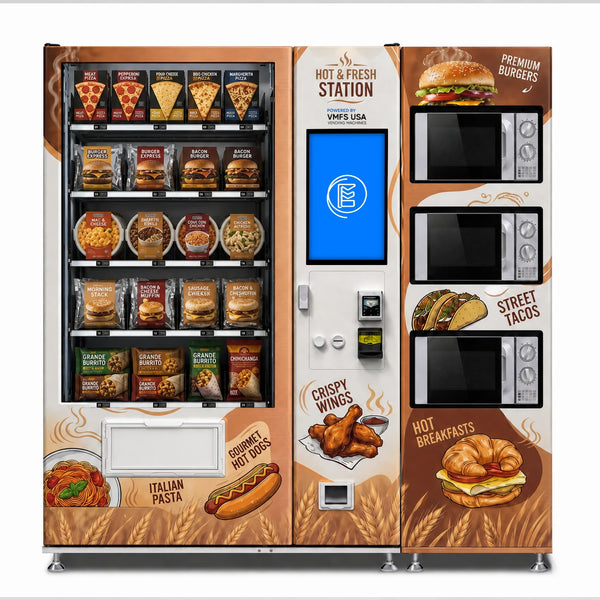
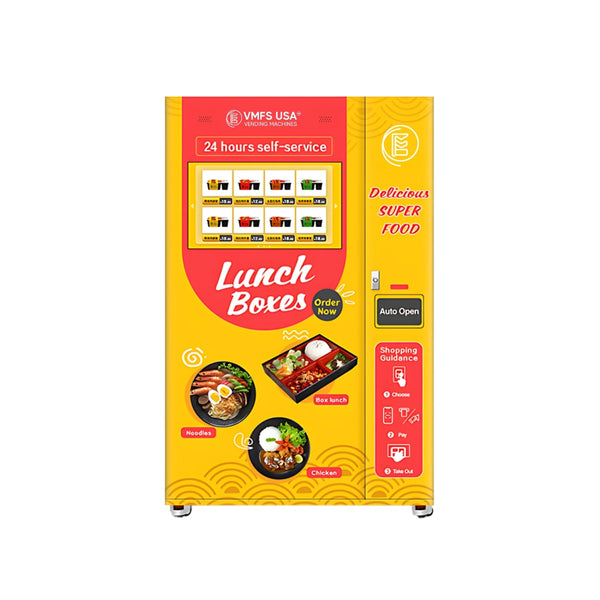
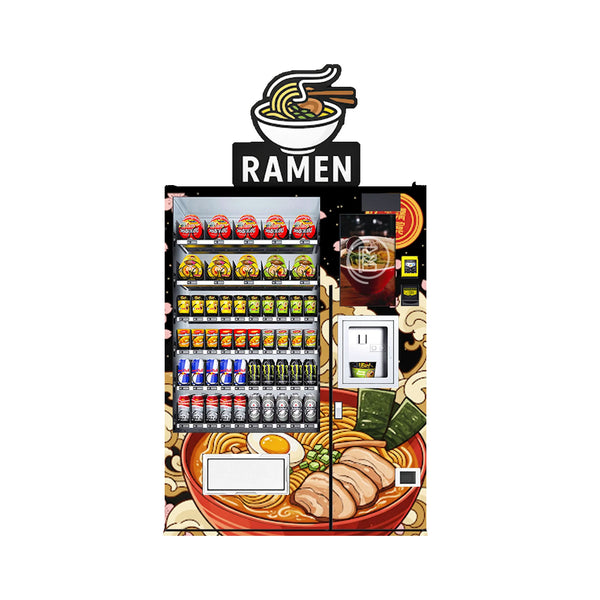
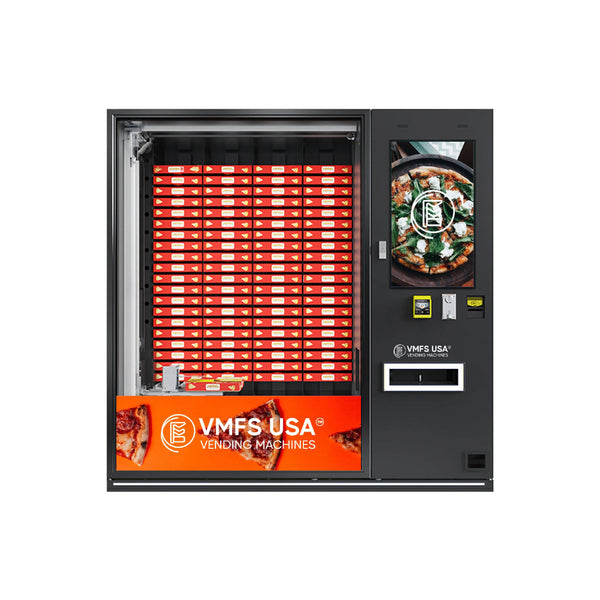
Food Vending Machines Available for Chicago
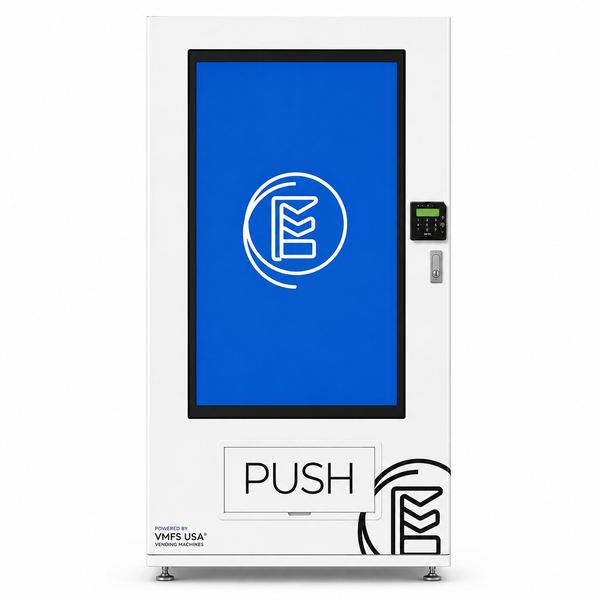
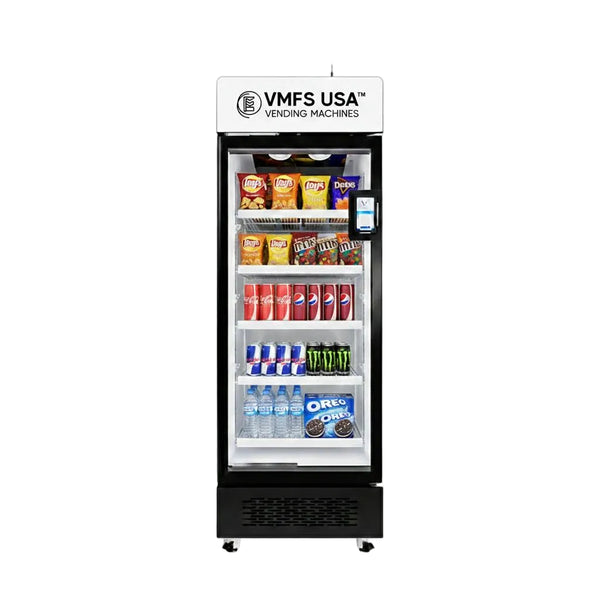
Every unit below ships configured, compliance-ready, and backed by VMFS Cloud monitoring.


How Operators Use Food Vending in Chicago
Corporate Breakroom
Loop, Magnificent Mile, and Near North Side office towers house major employers in finance, consulting, and professional services where employees grab meals between meetings. A fresh food vending machine stocked with fresh salads, wraps, sandwiches, and breakfast items serves busy professionals who skip traditional cafeterias. The configurable temperature zones handle refrigerated fresh meals and ambient snacks in one cabinet, with elevator delivery protecting delicate containers and capacity up to 800 items reducing restocking frequency to weekly or biweekly cycles. Net profit of 400 to 1000 dollars monthly makes the machine a valuable tenant amenity that boosts employee satisfaction and reduces lunch-hour departures.
Hospital Night Shift
Northwestern Medicine, Rush University Medical Center, and University of Chicago Medicine operate around the clock requiring constant meal access for medical staff working overnight rotations. The food vending machine stocks fresh meals, frozen entrees, ramen, and sandwiches designed for nurses and physicians grabbing nutrition between patient care. Heated delivery provides hot food on demand for ramen and hot entrees, refrigerated zones keep fresh meals safe, and 250 to 800 item capacity means staff find variety despite limited 24/7 cafeteria hours. Monthly revenue of 500 to 800 dollars per machine reflects reliable 24/7 demand from a captive shift-working population with limited meal alternatives.
Warehouse and Distribution
O'Hare International Airport cargo facilities, intermodal rail yards in the Global Entry port, and third-party logistics centers around the I-90 corridor operate with early morning and late evening shift changes requiring hearty on-site meals. The hot food vending machine delivers pizza, hot entrees, and ramen heated to serving temperature alongside frozen meals and sandwiches for workers clocking 10 to 12 hour shifts. Dual-zone capacity handles frozen inventory with months of shelf life while hot delivery serves demand during peak shift transitions, and 800 item capacity reduces restocking to biweekly intervals even at high-volume locations. Monthly profit of 600 to 1000 dollars reflects consistent shift-coverage demand from logistics workers who cannot leave facility grounds during breaks.
University Campus Housing
University of Chicago, Northwestern University Evanston campus, Illinois Institute of Technology, and DePaul University residence halls need convenience meals for students during late-night study sessions and weekend downtime when dining halls close. The fresh food vending machine stocks fresh salads, sandwiches, ramen, and frozen meals tailored to student budgets and study schedules, with microwavable options for dorm common areas. Refrigerated and frozen zones keep inventory fresh across the academic calendar, elevator delivery protects salad containers during vending, and 250 to 800 item capacity reduces restocking to once weekly even in high-traffic dorm locations. Monthly net profit of 400 to 700 dollars reflects student convenience spending on meals between classes and exam preparation sessions.
What Ships With Every Food Unit
Regulations for Operating in Chicago, IL
Licensing, permits, sales tax, and health department standards for food vending operators in Illinois.
State License Requirements
The Illinois Department of Public Health (IDPH) oversees food vending machines in Illinois. Operators selling food through vending machines must obtain a Food Service License from IDPH, which covers fresh, frozen, hot-delivery, and ambient food categories including salads, wraps, sandwiches, fresh meals, frozen meals, ramen, pizza, healthy snacks, and dairy items. To register for sales tax at the state level, operators must apply for an Illinois Sales Tax Permit through the Illinois Department of Revenue. An Employer Identification Number (EIN) from the IRS is required for most business entities; operators must establish their business entity (sole proprietorship, LLC, corporation, etc.) and register with the Illinois Secretary of State if applicable. Commodity-specific rules include mandatory date-marking on fresh food items, salads, wraps, sandwiches, and prepared meals (typically 7 days from preparation for non-potentially hazardous items, 3-5 days for potentially hazardous items under Illinois Food Code); dairy products must be stored at 41 degrees Fahrenheit or below with documented cold-chain maintenance; allergen disclosure must be clearly labeled on sandwiches and prepared meals; hot food vending machines must maintain holding temperatures of 135 degrees Fahrenheit or above for potentially hazardous foods with continuous temperature monitoring and documentation. IDPH Food Service Licenses must be renewed annually, with renewal applications due before expiration.
City and County Permits
In Chicago, operators must obtain a Chicago Business License from the City of Chicago Department of Finance, a Food Service License (separate from state IDPH) from the Chicago Department of Public Health, a Certificate of Use or zoning approval from the Chicago Department of Zoning and Land Management confirming the vending machine location is permitted under local zoning ordinances, and compliance with Chicago Fire Department standards for electrical and placement safety. Chicago also requires registration with the Cook County Assessor's Office if the machine is considered personal property. Operators must declare coin-operated or electronic payment machines with the City if required by local municipal code. The surrounding municipalities of Evanston, Oak Park, Skokie, and Des Plaines have their own vending machine and food service requirements; operators placing machines in these areas must verify local requirements separately. Chicago business licenses and health permits typically require renewal annually, with late penalties assessed for renewals submitted after the expiration date (contact the Chicago Department of Public Health at 312-747-9884 for current penalty amounts and renewal deadlines).
Sales Tax Rate
The combined sales tax rate in Chicago, Illinois is 10.25 percent, consisting of the Illinois state rate of 6.25 percent plus the Cook County rate of 1.25 percent and the City of Chicago rate of 2.75 percent. Hot prepared foods, fresh meals, sandwiches, and wraps vended from machines are generally taxed as prepared food at the full 10.25 percent rate. Packaged grocery items such as ambient snacks and beverages may be subject to different tax treatment; however, prepared foods and hot-hold items are treated as restaurant-prepared meals and are fully taxable. Operators must register with the Illinois Department of Revenue for a Sales Tax Permit and remit sales tax monthly or quarterly depending on sales volume; registration is available online at tax.illinois.gov. Out-of-state sellers with economic nexus in Illinois (gross revenue from Illinois sales exceeding 100,000 dollars in the current or prior 12 months) must register and remit Illinois sales tax; consult the Illinois Department of Revenue for specific nexus thresholds and filing requirements.
Health Department Standards
The Chicago Department of Public Health enforces health standards for food vending machines in Chicago, with oversight from the Illinois Department of Public Health at the state level. Hot food and refrigerated food vending machines must include multi-zone temperature controls with separate sections for refrigerated storage (below 41 degrees Fahrenheit), frozen storage (at 0 degrees Fahrenheit or below), hot-hold delivery (135 degrees Fahrenheit or above), and ambient storage as applicable. Equipment must feature NSF-certified food-contact surfaces, calibrated thermometers in each temperature zone, automatic shut-off mechanisms if temperature excursions occur, and daily or shift-based sanitation cycles documented by the operator. Placement rules prohibit machines within 10 feet of bathrooms or waste receptacles and require placement on clean, well-lit, accessible surfaces. Operational requirements mandate strict date-marking on all fresh meals, sandwiches, salads, prepared foods, and dairy products with clear visibility to consumers; cold-chain documentation must log temperatures at loading, delivery, and retrieval; hot-hold documentation must record holding temperatures and duration; all labels must remain visible and legible. Unannounced inspections by Chicago Department of Public Health are conducted at minimum annually and may occur at secondary locations such as schools, healthcare facilities, and government buildings where machines are placed; these venues often have additional food service oversight. Chicago's climate involves temperature fluctuations and humidity that can affect machine operation; machines must include environmental controls to maintain consistent internal temperatures regardless of exterior conditions. VMFS food vending machines deployed in Chicago ship with the appropriate specification standard, including configurable temperature zones for refrigerated, frozen, hot-delivery, and ambient storage with energy-saving operation, comprehensive monitoring systems, and a standard 1-year warranty with extended coverage options available.
Disclaimer
Regulatory information is for reference only and current as of 2026. Operators should verify current requirements with the relevant agency before deployment. VMFS USA is not a legal or tax advisor. For operator-side legal guidance covering placement contracts, host venue agreements, documentation, business incorporation, tax registration, licenses, and permits, operators can consult <a href="https://vadviced.com">VAdviced</a>. For professional placement and location matching support, operators can work with <a href="https://vplaced.com">VPlaced</a>.
Chicago at a Glance
Geographic Identity
- County
- Cook County
- Metro Area
- Chicago-Naperville-Elgin, IL-IN-WI
- Time Zone
- America/Chicago (Central Time)
- Area Codes
- 312, 773, 872
- ZIP Codes
- 60601 to 60699
- Primary Airport
- ORD Chicago O'Hare International Airport
- Secondary Airport
- MDW Chicago Midway International Airport
- Major Port
- Port of Chicago, a major Great Lakes and inland waterway port
- Nickname
- The Windy City
Market Stats
- City Population
- 2,693,976
- Metro Population
- 9.6 million
- Annual Visitors
- 66.6 million (2023)
- Visitor Economy
- $74.2 billion annual economic impact
- Airport Passengers
- 84 million annual travelers through ORD and MDW
- Hospitality Jobs
- 180,000+ tourism and hospitality jobs across Chicago metropolitan area
- Top Industries
- Finance and Banking, Healthcare, Transportation and Logistics, Manufacturing, Technology, Professional Services, Tourism and Hospitality
- Demand Driver
- Chicago attracts major conventions, corporate headquarters, international business travelers, and year-round leisure visitors to one of the largest metropolitan areas in the United States.
Climate Profile
- Climate Zone
- Humid Continental
- Average Humidity
- 55 to 75 percent year round with higher levels in summer months
- Summer High
- 85 to 90 degrees Fahrenheit with occasional peaks above 90 degrees Fahrenheit from June through August
- Winter Low
- regularly below 20 degrees Fahrenheit from December through February, indoor placements recommended during winter months
- Seasonal Hazard
- Severe Winter Weather, December to February
- Environmental Exposure
- Heavy snow load and freeze thaw cycles affect ground level placements, requiring elevated mounting and enhanced drainage systems during winter months.
- Deployment Note
- Chicago's humid continental climate demands weatherproofed units with sealed electronics and reinforced refrigeration cycles to handle temperature swings and winter weather stress. VMFS ships all Chicago outdoor units with these specifications as standard.
Location & Service Area
- Key Neighborhoods
- Downtown, Loop, River North, West Loop, Pilsen, Wicker Park, Bucktown, Lincoln Park, Lakeview, Hyde Park, Streeterville, Chinatown
- Nearby Cities
- Evanston, Oak Park, Cicero, Des Plaines, Schaumburg, Arlington Heights, Naperville, Aurora
- Service Radius
- VMFS delivers, installs, and services machines throughout Cook County, with extended coverage to DuPage, Lake, and Will counties on request.
Your Location. Working 24/7.
Answers to common questions from Chicago operators. Didn't see yours? Send us a message — our US-based team responds within one business day.
how much net profit can a property owner expect monthly from hosting a food vending machine in chicago?
what temperature zones and delivery options work best for chicago office buildings and hospitals?
how often does a food vending machine need restocking in chicago given shift work and 24-7 facility demand?
what payment methods are essential for chicago venues with diverse visitor demographics and seasonal tourism?
what electrical and space requirements apply to installing a vending machine in chicago office buildings or hotels?
how do placement agreements and warranties work for chicago property owners?
Deploy Food Vending Machines in Chicago, IL Today
Request a custom quote for
food vending machines
at your Chicago location, and we handle machine selection, delivery, configuration, and ongoing support across your property. Every deployment starts with a site assessment covering foot traffic, food mix balance across fresh meals, frozen entrees, hot food, and healthy snacks, temperature zone configuration and power requirements, network setup for the cloud platform, and placement strategy can be coordinated through our
placement experts
for operators wanting professional location matching, with hospitals, manufacturing facilities, university campuses, and corporate office towers prioritized for highest meal volume. Whether you need a single unit in a small medical office or a rollout of 30 or more machines across a large hospital system or downtown office complex, the quote includes hardware, installation, training, and 12 months of cloud monitoring at no extra cost.
Deploy Food Vending Across Chicago
1,200+ machines deployed. 1-year warranty standard. Free lifetime support. One team from site survey to uptime.