


Combo Vending Machines in Seattle, WA
Automated Revenue Solutions for Seattle Businesses – Fresh Snacks and Beverages Available 24/7 in High-Traffic Combo Locations
Stop Guessing. Configure Your Combo Vending Machine.
Answer a few quick questions about your location, your product mix, your temperature needs, and your budget. Our Combo Vending System will match you with the right base model, add the right modules (refrigeration, ad screen, outdoor protection, payment suite), and show you real time pricing and lead time as you build.
Skip the back and forth. Skip the spec sheet overwhelm. See your exact configuration, your exact cost, and your exact delivery window before you commit.
- Real time pricing as you add or remove features
- Live lead time estimate based on your configuration
- Recommended product mix for your location type
- Capacity, slot count, and weight limits shown per setup
- Option presets for food, drinks, electronics, retail, and frozen

Why Combo Vending Machines?
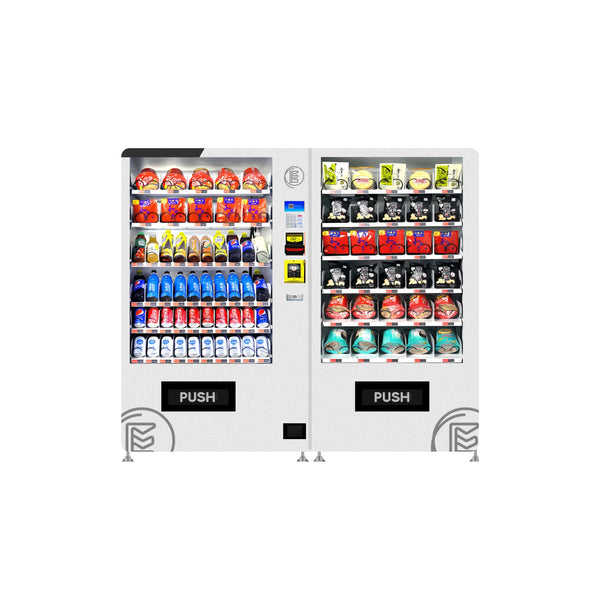
Premium Combo Vending Machines in Seattle, Washington offer businesses an efficient all-in-one solution by combining snacks and drinks in a single cabinet. These innovative snack and drink vending machines eliminate the need for multiple units, maximizing your venue's floor space while providing customers with complete refreshment options. Our
combo vending machines
feature up to 1,050 product capacity across 72 adjustable slots, with a refrigerated drink side and ambient snack compartment. Choose from multiple delivery mechanisms including traditional drop-down, Combo delivery on premium models, and conveyor systems on select machines. Every unit includes VMFS Cloud monitoring, giving you real-time sales and inventory tracking to optimize your vending operation effortlessly.
{"type":"root","children":[{"type":"paragraph","children":[{"type":"text","value":"Two Categories One Cabinet
Vends both snacks and drinks (sometimes coffee) from a single footprint, so a venue captures impulse and thirst purchases without funding two separate machines
High Capacity Range
Up to 1,050 products across up to 72 adjustable slots, with refrigerated drink side and ambient snack side handling the full convenience product mix
Multiple Delivery Options
Drop-down delivery on standard models, Combo delivery on premium Combo models for fragile or high-ticket items, and conveyor delivery on select models
Universal Venue Fit
Designed for offices, breakrooms, hospitals, universities, hotels, factories, apartment buildings, transit hubs, and any high-traffic venue where both snack and drink demand exists
24/7 Cloud Monitoring
Real-time sales, live inventory, temperature alerts, and fault notifications stream to the VMFS Cloud dashboard from any device]}]}
Why Combo Machines Perform in Seattle, Washington
Seattle's thriving tech and corporate culture creates dense office breakroom networks where employees seek convenient refreshment options throughout their workday. Combo vending machines excel in these compact Seattle workspaces, delivering both snacks and cold beverages in a single footprint—ideal for space-conscious breakrooms in Amazon satellite offices, smaller tech startups, and downtown corporate towers. The Pacific Northwest's health-conscious workforce appreciates the broader product variety a
combo vending machines
solution provides, while operators benefit from reduced capital investment compared to dual-unit deployments and simplified restocking across Seattle's geographically dispersed business districts.
Best Locations in Seattle
High-value deployment sites where combo vending delivers the strongest revenue per square foot.
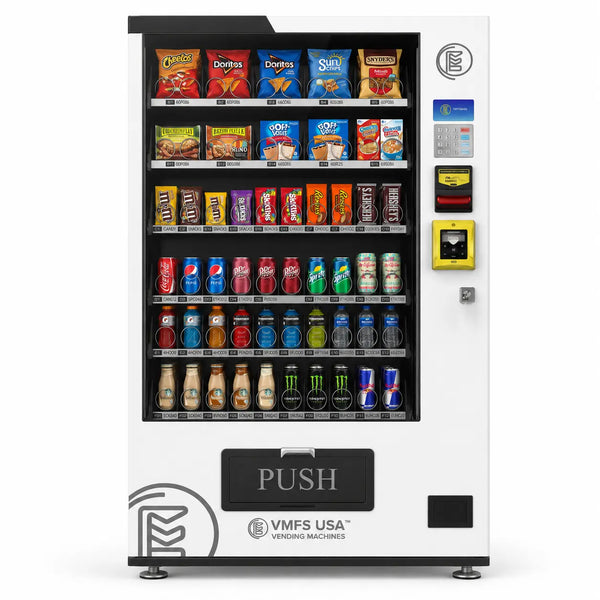
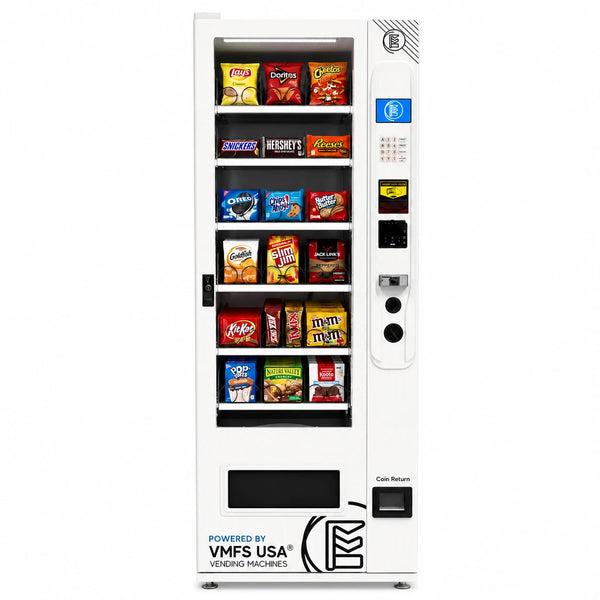
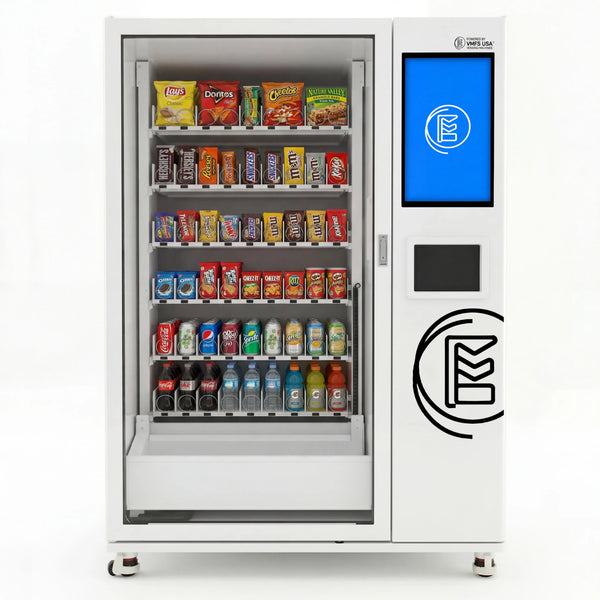
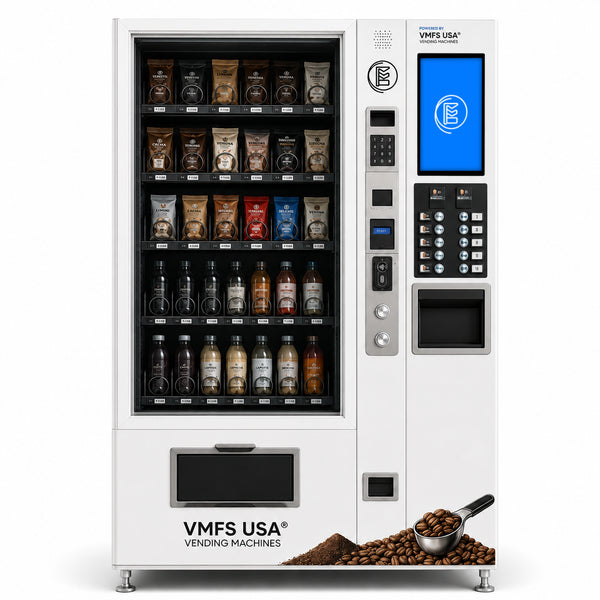
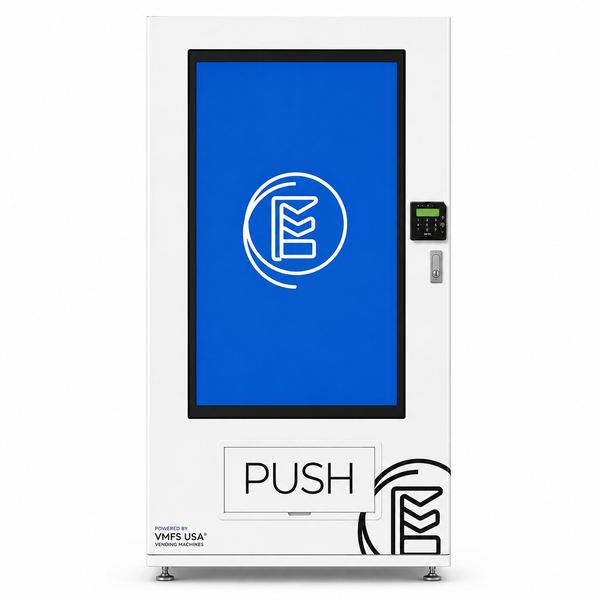
Combo Vending Machines Available for Seattle
Every unit below ships configured, compliance-ready, and backed by VMFS Cloud monitoring.


How Operators Use Combo Vending in Seattle
Tech Campus Breakroom
Seattle's major tech employers including Amazon, Microsoft, Google, and Meta maintain large engineering and product teams across the city's Puget Sound region. These campuses stock the Combo vending machine with protein bars, nuts, chips, sparkling water, sodas, and cold brew coffee to fuel extended work sessions. The single cabinet captures both snack and beverage purchases without requiring dual machines, keeping the refrigerated drink section crisp while shelf-stable snacks remain accessible on the ambient side. Drop-down delivery ensures reliable restocking of high-velocity items like energy drinks and granola bars that move constantly through busy campus populations. A Combo vending machine becomes an essential employee amenity that reduces time away from desks and boosts workplace satisfaction while delivering strong per-machine revenue from a concentrated, high-income professional base.
Downtown Office Tower Lobby
Skyscrapers in the downtown core and Pioneer Square district house finance firms, law offices, consulting groups, and corporate headquarters with thousands of daily workers and visiting clients. The machine stocks premium coffee, bottled water, fresh juice, protein boxes, healthy snacks, and premium candy to serve both break-time needs and quick lunch supplements. A snack and drink vending machine solves the space constraint inherent to lobby placements by combining both categories in a single footprint while maintaining cold storage for beverages and ambient conditions for packaged goods. The Combo delivery system handles the volume of impulse purchases from transient office workers passing through multiple times daily. Operators capture significant per-machine earnings from high foot traffic density and the inability of busy professionals to leave the building for convenience items.
Hotel Guest Room Floor
Properties including the Four Seasons, Fairmont Olympic, Westin, and Marriott locations throughout downtown and Capitol Hill maintain guest room corridors where visitors need beverages and snacks at all hours. Machines stock bottled water, sodas, juices, energy drinks, premium chips, candy, granola bars, and protein snacks to serve guests between meals and late-night cravings. The Combo vending machine operates 24/7 without staff presence, keeping guests satisfied during overnight hours when front desk services are limited and nearby shops are closed. Refrigerated storage keeps drinks properly chilled while the ambient section protects snacks, and reliable drop-down delivery prevents jams that frustrate guests at inconvenient times. Hotels recognize the machine as a convenience that improves guest experience while generating venue revenue share, making placement easy to secure in competitive hospitality markets.
Medical Center Night Shift Support
Harborview Medical Center, Swedish Medical Center, and University of Washington Medical Center employ large nursing, lab, and support staff working overnight and extended shifts requiring sustained nutrition and hydration. The machine stocks coffee, bottled water, electrolyte drinks, protein bars, nuts, sandwiches, and energy snacks optimized for staff who cannot leave work areas during critical patient care hours. A Combo vending machine provides reliable access to both warm and cold beverages plus substantial snacks without requiring staff to fund two separate cabinets or navigate to distant break rooms. Conveyor or drop-down delivery mechanisms handle high-frequency purchases from dozens of shift workers moving through common areas at consistent times, ensuring products reach consumers without mechanical failure. Medical centers view the machine as essential infrastructure supporting employee retention and safety during grueling overnight operations, guaranteeing consistent per-machine performance across multiple shifts.
What Ships With Every Combo Unit
Regulations for Operating in Seattle, WA
Licensing, permits, sales tax, and health department standards for combo vending operators in Washington.
{"type":"root","children":[{"type":"paragraph","children":[{"type":"text","value":"State License Requirements
In Washington, the Department of Health (DOH) oversees vending machines that dispense food. Combo vending machines that dispense both refrigerated drinks and shelf-stable snacks require a food-service license because they include potentially hazardous refrigerated beverages. The Washington State Department of Revenue handles sales tax registration; operators must obtain a Unified Business Identifier (UBI) number and register for a Reseller Permit. While Washington does not issue a separate statewide vending operator license, the DOH food-service license covers the vending operation. Operators must establish a business entity (sole proprietorship, LLC, corporation, etc.) and obtain an EIN from the IRS for tax purposes. Commodity-specific rules apply: sugary beverages are subject to Washington's sugary beverage tax (currently 1.75 cents per ounce as of 2024, though rates may change), bottled water is exempt from the sugary beverage tax, and dairy products in vended form must comply with food-safety standards. The DOH food-service license renewal occurs annually, typically on a calendar-year basis, with renewal deadlines set by the department.
City and County Permits
In Seattle, operators must obtain a Seattle Business License (required for all businesses operating within city limits) from the Department of Finance and Administrative Services. A Certificate of Use or Certificate of Occupancy may be required depending on the placement location and zoning classification. Zoning compliance is mandatory; some zoning districts restrict vending machines or require conditional use permits, so operators should verify the specific zone of each placement location. The Seattle Fire Department may require fire-safety clearance or inspection for machines placed in certain facilities such as schools or healthcare settings. At the county level (King County), no separate vending-specific permit is typically required beyond state and city requirements, though some placement locations (e.g., government buildings, schools) may have additional local oversight. Operators should verify requirements with any secondary jurisdiction if the machine will be placed outside Seattle proper (e.g., in unincorporated King County areas). The Seattle Business License renews annually, and failure to renew by the due date incurs late penalties. For specific requirements, operators can contact the Seattle Department of Finance and Administrative Services at the main city line or visit their business licensing office. County-level questions can be directed to King County's business licensing division.
Sales Tax Rate
The combined sales tax rate in Seattle is 10.25 percent, consisting of the Washington State base rate of 6.5 percent plus King County's rate of 3.75 percent. However, the sugary beverage tax (1.75 cents per ounce, subject to change) is a separate excise tax and applies in addition to sales tax on beverages meeting the definition (drinks with added sugars exceeding specified thresholds). Bottled water is exempt from the sugary beverage tax but subject to standard sales tax. Shelf-stable snacks are subject to the standard 10.25 percent sales tax. Operators must register with the Washington State Department of Revenue for a Reseller Permit and remit sales tax and any applicable sugary beverage tax according to the department's filing schedule (typically monthly or quarterly depending on sales volume). Out-of-state sellers with no physical presence in Washington are generally not required to collect and remit Washington sales tax unless they meet the economic nexus threshold, which is currently tied to sales into the state; operators should consult the Department of Revenue for current nexus rules if applicable to their business model.
Health Department Standards
The Washington State Department of Health sets standards for vending machines that dispense food, including Combo machines. Machines must maintain refrigerated sections at 41 degrees Fahrenheit or below for potentially hazardous drinks and products; thermometers must be visible and accurate, and machines must have automatic shut-off capabilities if refrigeration fails. Surfaces must be food-grade, cleanable, and free of contamination. Machines must be screened or enclosed to prevent pest access. Placement requirements include protection from overhead leakage (machines should not be placed directly under water pipes, HVAC condensation sources, or exterior water intrusion risks), level and clean floors, and adequate ventilation. Operationally, perishable products must be date-marked and removed upon expiration; all product labels must be clearly visible, and unannounced inspections by the DOH or local health authorities are permitted. The Public Health Division of Seattle-King County also provides local oversight and may conduct secondary inspections, particularly for machines placed in schools, healthcare facilities, or government buildings. Seattle's climate includes frequent rainfall and humidity; machines should be positioned to prevent water intrusion and condensation damage, and operators should ensure adequate drainage around equipment. VMFS Combo vending machines deployed in Seattle ship with refrigeration systems certified to maintain proper temperature compliance, appropriate food-grade materials, and pest-screening features meeting Washington DOH and local Seattle-King County health standards.
Disclaimer
Regulatory information is for reference only and current as of 2026. Operators should verify current requirements with the relevant agency before deployment. VMFS USA is not a legal or tax advisor. For operator-side legal guidance covering placement contracts, documentation, business incorporation, tax registration, licenses, and permits, operators can consult VAdviced at https://vadviced.com.]}]}
Seattle at a Glance
Geographic Identity
- County
- King County
- Metro Area
- Seattle-Tacoma-Bellevue
- Time Zone
- America/Los_Angeles (Pacific Time)
- Area Codes
- 206, 425, 253
- ZIP Codes
- 98101 to 98199
- Primary Airport
- SEA Seattle-Tacoma International Airport
- Secondary Airport
- None
- Major Port
- Port of Seattle, a major container and cruise port
- Nickname
- The Emerald City
Market Stats
- City Population
- 753,675
- Metro Population
- 4.02 million
- Annual Visitors
- 10.9 million (2023)
- Visitor Economy
- $12.8 billion annual economic impact
- Airport Passengers
- 50.7 million annual travelers through SEA
- Hospitality Jobs
- None
- Top Industries
- Technology, Boeing and Aerospace, Healthcare, International Trade, Real Estate and Construction, Maritime and Logistics, Biotechnology
- Demand Driver
- Strong tech industry presence, major corporate headquarters including Amazon, consistent business travel, and growing international connectivity drive sustained economic demand and foot traffic.
Climate Profile
- Climate Zone
- Oceanic
- Average Humidity
- 70 to 80 percent year round
- Summer High
- 79 degrees Fahrenheit in July and August
- Winter Low
- 37 degrees Fahrenheit, outdoor operating conditions year round
- Seasonal Hazard
- None
- Environmental Exposure
- Frequent cloud cover and wet conditions require weatherproofed electrical connections and drainage provisions in all outdoor installations.
- Deployment Note
- Seattle's mild maritime climate demands weatherproofed units with sealed electronics and enhanced drainage to manage persistent moisture and precipitation. Cold winters rarely require heated cabinets, but corrosion resistant hardware is recommended for longevity. VMFS ships all Seattle outdoor units with weatherproofed specifications and sealed electrical enclosures as standard.
Location & Service Area
- Key Neighborhoods
- Downtown, Capitol Hill, Ballard, Queen Anne, Fremont, University District, Wallingford, Green Lake, Beacon Hill, West Seattle, Eastlake, Magnolia
- Nearby Cities
- Bellevue, Redmond, Kirkland, Renton, Federal Way, Tacoma, Sammamish, Shoreline
- Service Radius
- VMFS delivers, installs, and services machines throughout King County, with extended coverage to Pierce and Snohomish counties on request.
Your Location. Working 24/7.
Answers to common questions from Seattle operators. Didn't see yours? Send us a message — our US-based team responds within one business day.
How does revenue split work, and what percentage does the host property keep from sales at a Seattle location?
How often does the Combo machine need restocking, and does Seattle weather affect inventory cycles?
What is the physical footprint of a Combo machine, and how much electrical power does it require?
If the machine breaks down or needs service, how quickly can a technician visit a Seattle property?
Does the Combo machine accept mobile payments like Apple Pay and Google Pay, and does Seattle adoption of cashless transactions matter?
How does the Combo machine perform in Seattle's wet winter climate, and can it operate reliably in covered outdoor spaces?
Deploy Combo Vending Machines in Seattle, WA Today
Request a custom quote for your Seattle, WA location and we handle machine selection, delivery, configuration, and ongoing support from start to finish. Every deployment begins with a site assessment covering foot traffic patterns, product mix balance between snacks and drinks, refrigeration and power requirements, network requirements for the cloud platform, and compliance logistics specific to your venue. Whether you need a single unit in a tech campus breakroom or a rollout of 30 or more snack and drink vending machines across a hospital system, hotel corridor network, or university dormitory complex, the quote includes hardware, installation, staff training, and 12 months of cloud monitoring at no extra cost.
Deploy Combo Vending Across Seattle
1,200+ machines deployed. 1-year warranty standard. Free lifetime support. One team from site survey to uptime.