


Combo Vending Machines in Phoenix, AZ
Maximize Profits with Premium Combo Vending Machines in Phoenix – Passive Income While You Sleep, Installed Fast.
Stop Guessing. Configure Your Combo Vending Machine.
Answer a few quick questions about your location, your product mix, your temperature needs, and your budget. Our Combo Vending System will match you with the right base model, add the right modules (refrigeration, ad screen, outdoor protection, payment suite), and show you real time pricing and lead time as you build.
Skip the back and forth. Skip the spec sheet overwhelm. See your exact configuration, your exact cost, and your exact delivery window before you commit.
- Real time pricing as you add or remove features
- Live lead time estimate based on your configuration
- Recommended product mix for your location type
- Capacity, slot count, and weight limits shown per setup
- Option presets for food, drinks, electronics, retail, and frozen

Why Combo Vending Machines?
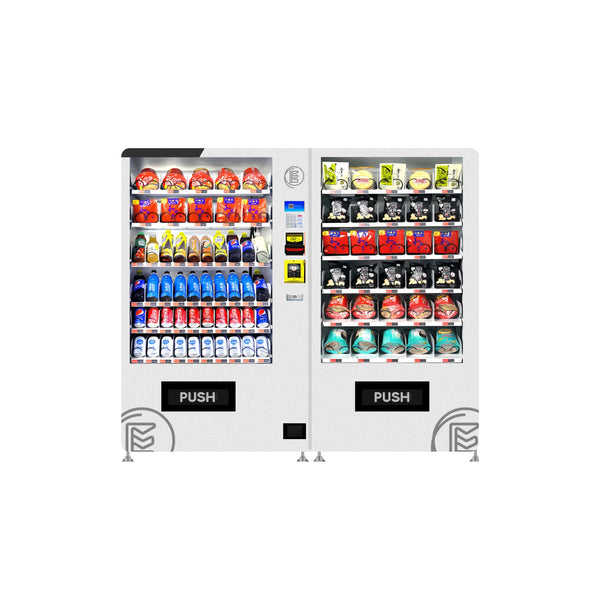
Premium Combo Vending Machines in Phoenix, Arizona offer a space-efficient solution by combining snacks and drinks in a single cabinet, eliminating the need for separate machines at your venue. These snack and drink vending machines maximize your footprint with up to 1,050 product capacity across up to 72 adjustable slots, featuring a refrigerated drink side paired with an ambient snack section. Multiple delivery options including drop-down, Combo delivery on premium models, and conveyor systems on select machines provide flexibility for different products. Explore our full selection of
combo vending machines
and leverage VMFS Cloud monitoring for real-time sales and inventory tracking to optimize your vending operations.
{"type":"root","children":[{"type":"paragraph","children":[{"type":"text","value":"Two Categories One Cabinet
Vends both snacks and drinks (sometimes coffee) from a single footprint, so a venue captures impulse and thirst purchases without funding two separate machines
High Capacity Range
Up to 1,050 products across up to 72 adjustable slots, with refrigerated drink side and ambient snack side handling the full convenience product mix
Multiple Delivery Options
Drop-down delivery on standard models, Combo delivery on premium Combo models for fragile or high-ticket items, and conveyor delivery on select models
Universal Venue Fit
Designed for offices, breakrooms, hospitals, universities, hotels, factories, apartment buildings, transit hubs, and any high-traffic venue where both snack and drink demand exists
24/7 Cloud Monitoring
Real-time sales, live inventory, temperature alerts, and fault notifications stream to the VMFS Cloud dashboard from any device]}]}
Why Combo Machines Perform in Phoenix, Arizona
Phoenix's booming corporate office sector and year-round heat create ideal conditions for combo vending machines. The city's sprawling business parks, medical complexes, and hospitality venues demand efficient space utilization, making dual-function machines perfect for tight breakroom footprints. Arizona's intense climate drives consistent cold beverage demand, while office workers need convenient snack access—combo machines deliver both with refrigerated drink sides and snack columns in a single unit. Lower capital investment and reduced maintenance complexity make
combo vending machines
the smart choice for Phoenix's venue mix of corporate offices, hospitals, hotels, and multifamily properties, maximizing placement flexibility without sacrificing product variety or profitability.
Best Locations in Phoenix
High-value deployment sites where combo vending delivers the strongest revenue per square foot.
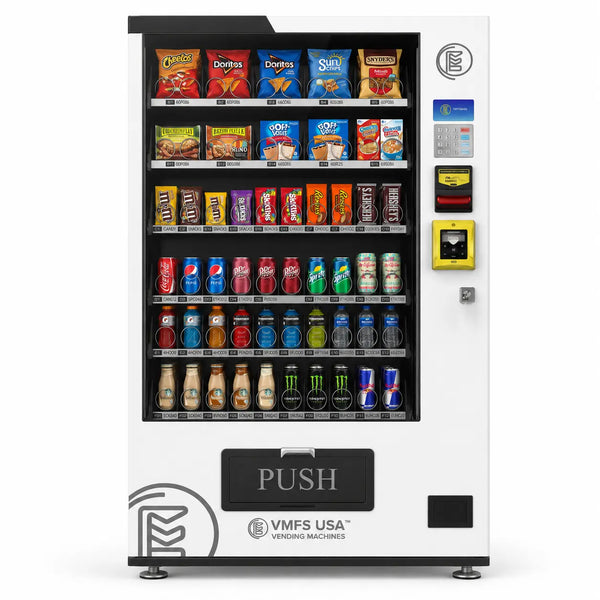
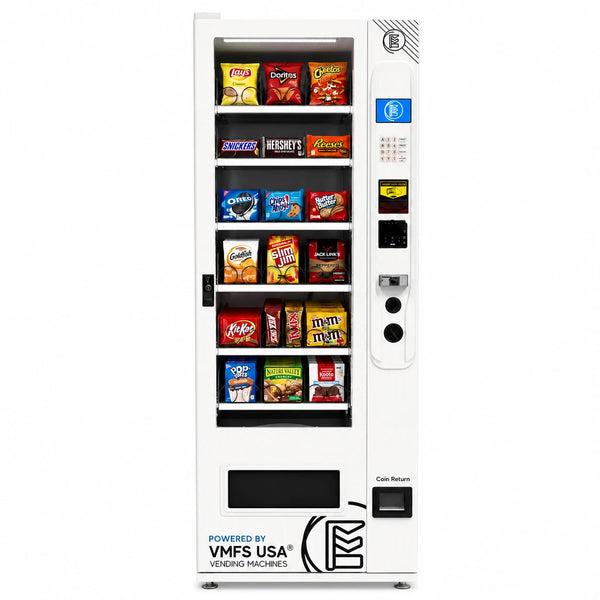
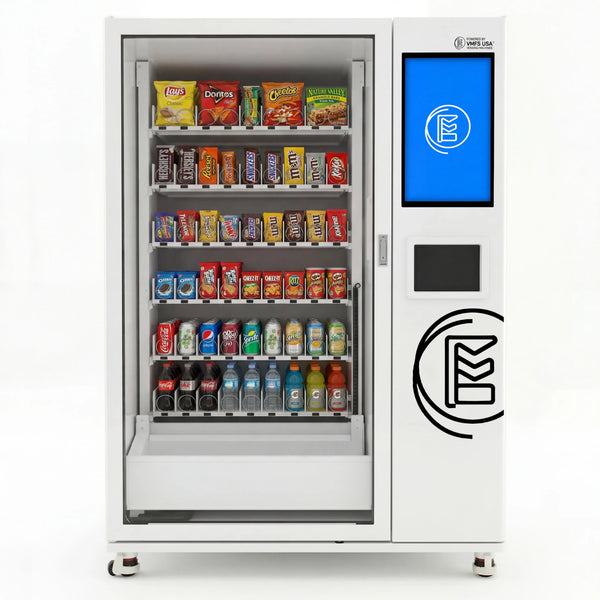
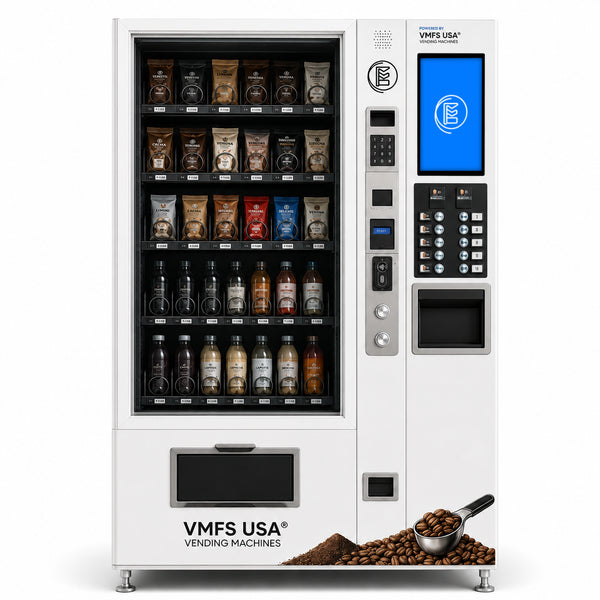
Combo Vending Machines Available for Phoenix
Every unit below ships configured, compliance-ready, and backed by VMFS Cloud monitoring.


How Operators Use Combo Vending in Phoenix
Corporate Office Campus
Phoenix's major corporate corridors in Scottsdale, the Financial District near Central Avenue, and employer campuses like those housing financial services and tech firms draw thousands of office workers daily. Combo vending machines stock premium coffee, sparkling water, protein bars, nuts, and fresh sandwiches to support working professionals during business hours and extended days. The refrigerated drink side maintains cold beverages while the ambient snack side holds shelf-stable items, and the reliable drop-down delivery handles the consistent midday and afternoon traffic without jamming on high-volume selections. Corporate tenants view on-site snacking amenities as employee retention tools, and operators capture 30 to 50 percent above retail margins on convenience-priced items that workers buy rather than leave the building.
Medical Facility Break Area
Hospitals, surgical centers, and medical offices concentrated in the Phoenix Medical Center district and scattered throughout Maricopa County employ shift workers and staff covering 24/7 operations. Combo vending machines are stocked with coffee, bottled water, protein bars, fruit, nuts, and energy drinks to fuel healthcare workers during overnight shifts and between patient care blocks. The single cabinet eliminates the need to fund separate snack and drink machines while maintaining cold drinks on one side and ambient snacks on the other, and the conveyor or drop-down delivery ensures reliable access during critical periods when staff cannot leave the facility. Medical staff depend on reliable nutrition access around the clock, making this placement a steady revenue generator with predictable purchasing patterns and minimal downtime requirements.
Hotel And Resort Corridor
Phoenix's extensive hospitality properties including major chains along the Arizona Mills corridor, Tempe hospitality clusters, and resort destinations attract out-of-state and international guests who seek convenient snacking and beverages without leaving the premises. Combo vending machines stock bottled water, soft drinks, juice, energy drinks, candy, chips, and snack cakes to serve guests during early mornings, late nights, and between meals when front desk and room service are inconvenient. The snack and drink vending machine format captures both impulse purchases in a single transaction, reduces the footprint compared to two machines, and the 24/7 uptime with cloud monitoring ensures stock reliability during all hours when guests are most likely to need a quick purchase. Hospitality operators generate steady per-machine revenue from guest convenience spending, and the all-hours availability reduces property staff burden for late-night requests.
Warehouse And Logistics Break Room
Distribution centers, fulfillment operations, and logistics hubs throughout the Phoenix metropolitan area including major carriers and manufacturing support facilities run multiple shifts with break rooms serving 200 to 500 workers per facility. Combo vending machines are stocked with water, sports drinks, soft drinks, salty snacks, granola bars, nuts, and energy drinks to fuel shift workers during physically demanding warehouse operations and early morning or late evening hours. The single cabinet handles both snack and drink categories without requiring separate equipment investments, the refrigerated side keeps beverages cold during heat cycles while the ambient side stores shelf-stable goods, and the drop-down delivery withstands heavy use from workers grabbing items quickly between production cycles. Warehouse operators see lower capital outlay than funding two separate machines and consistent revenue from workers with limited time for off-site breaks, generating predictable per-unit performance across multiple shift cycles.
What Ships With Every Combo Unit
Regulations for Operating in Phoenix, AZ
Licensing, permits, sales tax, and health department standards for combo vending operators in Arizona.
{"type":"root","children":[{"type":"paragraph","children":[{"type":"text","value":"State License Requirements
Arizona's Department of Health Services (ADHS) regulates food service operations, including vending machines that dispense potentially hazardous foods. Combo vending machines that dispense both refrigerated beverages and shelf-stable snacks may trigger food-service licensing requirements if the refrigerated component contains potentially hazardous foods (such as milk-based drinks or refrigerated dairy products). Machines vending only shelf-stable snacks and non-potentially-hazardous beverages (such as bottled water or shelf-stable juices in sealed containers) may have reduced regulatory requirements. Arizona requires operators to register for a sales tax license through the Arizona Department of Revenue. A federal Employer Identification Number (EIN) from the IRS is required for business entity registration, and operators must establish a legal business entity (sole proprietorship, LLC, corporation, or partnership). Arizona does not require a statewide vending operator license separate from food-service licensing, but operators must comply with local health department regulations. Specific commodity rules apply: sugary beverages and certain non-water beverages are subject to sales tax; bottled water may qualify for a lower tax rate in some cases; ice and dairy products are subject to specific handling and temperature rules if included in the vending mix. Food-service licenses and permits require renewal annually or biennially depending on the local health department's schedule, and renewal timelines vary by county. Operators should verify with their local health department whether their specific machine configuration requires a food-service license.
City and County Permits
Phoenix requires all vending machine operators to obtain a City of Phoenix Business License through the Finance Department. Additionally, operators must obtain a Certificate of Use or similar approval from the Phoenix Planning and Development Department to confirm the vending machine's placement complies with local zoning regulations. Fire safety inspections may be required depending on machine location, particularly in commercial or public buildings, and can be arranged through the Phoenix Fire Department. Maricopa County does not typically require a separate county vending permit if the city permit is in place, but operators should verify placement in unincorporated areas or facilities under county jurisdiction. Some municipalities surrounding Phoenix (such as Tempe, Mesa, or Scottsdale) may have their own vending machine regulations and permit requirements if machines are placed outside Phoenix city limits. Phoenix business licenses typically require renewal annually. Late renewal penalties apply and are assessed by the Finance Department; operators should contact the Phoenix Finance Department's Business License Division at the city offices or through the city website for current penalty schedules. Coin-operated machine declarations are not specifically required under Phoenix code for standard vending machines, but operators should verify with the Finance Department if their machine configuration triggers any additional filings.
Sales Tax Rate
The combined sales tax rate in Phoenix, Arizona is 8.6 percent, consisting of the Arizona state rate of 5.6 percent plus the Maricopa County surtax and the City of Phoenix surtax. Most food and beverage items vended through a Combo machine are taxable under Arizona law, including sugary drinks, snacks, and shelf-stable beverages. Bottled water is generally taxable in Arizona unless it meets specific exemptions; operators should verify current exemption status with the Arizona Department of Revenue. Operators must register for a sales tax license with the Arizona Department of Revenue before operating. Sales tax is remitted through the Arizona Department of Revenue on a frequency determined at registration (typically monthly or quarterly depending on sales volume). Out-of-state sellers with economic nexus in Arizona (generally defined as over $10,000 in annual sales or 200 or more transactions into Arizona) must register and remit Arizona sales tax. Operators should contact the Arizona Department of Revenue for registration and current nexus thresholds.
Health Department Standards
The Arizona Department of Health Services and the Maricopa County Department of Environmental Quality oversee health standards for vending machines. For Combo machines vending refrigerated beverages, the refrigerated compartment must maintain a temperature of 41 degrees Fahrenheit or below to prevent bacterial growth in potentially hazardous products. All food-contact surfaces must be smooth, non-absorbent, and cleanable; stainless steel and food-grade plastics are standard. Thermometers (either built-in or external) must be present and functional in refrigerated compartments. Automatic shut-off mechanisms are required for refrigerated units to prevent temperature excursions during power loss or mechanical failure. Machines must be equipped with screening or protective measures to prevent pest entry and contamination. Placement rules require that machines be positioned to avoid overhead leakage from pipes, condensation, or roof areas and must be placed on clean, level flooring free of standing water or debris. Perishable or potentially hazardous products must be date-marked and rotated according to FIFO (first in, first out) protocols; all product labels must be visible and legible to consumers. Unannounced inspections are conducted by county health inspectors during regular food-service facility audits. Secondary local health department oversight may apply if machines are placed in schools, healthcare facilities, or government buildings, which may have additional sanitation and product-approval requirements. Phoenix experiences hot, dry desert climate conditions; machines must be equipped with adequate cooling capacity to maintain temperature compliance in ambient temperatures that regularly exceed 100 degrees Fahrenheit during summer months, and operators should consider placing machines in shaded or climate-controlled environments where possible. VMFS Combo vending machines deployed in Phoenix ship with refrigeration systems compliant with Arizona health standards, including thermometer integration, automatic shut-off capability, and cooling capacity rated for Phoenix's thermal environment.
Disclaimer
Regulatory information is for reference only and current as of 2026. Operators should verify current requirements with the relevant agency before deployment. VMFS USA is not a legal or tax advisor. For operator-side legal guidance covering placement contracts, documentation, business incorporation, tax registration, licenses, and permits, operators can consult VAdviced at https://vadviced.com.]}]}
Phoenix at a Glance
Geographic Identity
- County
- Maricopa County
- Metro Area
- Phoenix-Mesa-Chandler
- Time Zone
- America/Phoenix (Arizona Time)
- Area Codes
- 602, 623, 480
- ZIP Codes
- 85001 to 85099
- Primary Airport
- PHX Phoenix Sky Harbor International Airport
- Secondary Airport
- None
- Major Port
- None
- Nickname
- The Valley of the Sun
Market Stats
- City Population
- 1,580,025
- Metro Population
- 5.0 million
- Annual Visitors
- 16.7 million (2023)
- Visitor Economy
- $21.1 billion annual economic impact
- Airport Passengers
- 48 million annual travelers through PHX
- Hospitality Jobs
- None
- Top Industries
- Real Estate and Construction, Healthcare, Aerospace and Defense, Retail Trade, Technology, Manufacturing, Hospitality and Tourism
- Demand Driver
- Strong winter tourism season, growing corporate relocations, major convention center activity, and year-round warm climate attracting residents and visitors.
Climate Profile
- Climate Zone
- Hot Desert
- Average Humidity
- 20 to 30 percent year round
- Summer High
- 110 to 115 degrees Fahrenheit in June through August
- Winter Low
- rarely below 50 degrees Fahrenheit, outdoor operating conditions year round
- Seasonal Hazard
- Dust Storms, May to September
- Environmental Exposure
- Intense solar radiation and dust storms require dust sealed panels and reflective housing to prevent overheating and equipment degradation.
- Deployment Note
- Phoenix outdoor placements require dust sealed enclosures, enhanced refrigeration cycles for extreme summer heat, and UV resistant materials. Intense solar exposure demands reflective or light colored housings. VMFS ships all Phoenix outdoor units with dust sealing, reinforced cooling, and solar protection as standard.
Location & Service Area
- Key Neighborhoods
- Downtown Phoenix, Scottsdale, Tempe, Arcadia, Paradise Valley, Ahwatukee, Chandler, Gilbert, Camelback, Central Phoenix, Maryvale, South Phoenix
- Nearby Cities
- Scottsdale, Tempe, Mesa, Chandler, Gilbert, Glendale, Peoria, Surprise
- Service Radius
- VMFS delivers, installs, and services machines throughout Maricopa County, with extended coverage to Pinal County on request.
Your Location. Working 24/7.
Answers to common questions from Phoenix operators. Didn't see yours? Send us a message — our US-based team responds within one business day.
How does revenue split work, and what commission does the property owner receive?
What is the restocking schedule for a Combo machine in a Phoenix office building or medical facility?
Does the machine handle the Phoenix summer heat, and how much refrigeration power is required?
What payment methods does Combo accept, and how quickly does cash get collected?
What is the physical footprint and installation process for a Combo machine at a Phoenix property?
How does the snack to drink inventory balance work, and can it be adjusted for different Phoenix venue types?
Deploy Combo Vending Machines in Phoenix, AZ Today
Request a custom quote for snack and drink vending machines at your Phoenix, AZ location, and our team handles machine selection, delivery, configuration, and ongoing support from start to finish. Every deployment begins with a site assessment that covers foot traffic patterns, product mix balance between snacks and drinks, refrigeration and power requirements, network requirements for our cloud platform, and compliance logistics specific to your facility. We place everything from a single unit in a small medical office breakroom to rollouts of 30 or more machines across large hotel corridors or manufacturing plants throughout Phoenix, AZ, and your quote includes hardware, installation, staff training, and 12 months of cloud monitoring at no extra cost.
Deploy Combo Vending Across Phoenix
1,200+ machines deployed. 1-year warranty standard. Free lifetime support. One team from site survey to uptime.