


AI Vending Machines in Washington, DC
Transform your space with smart AI vending machines. Instant convenience, zero hassle, maximum profit—the future of retail is here in Washington, DC.
Stop Guessing. Configure Your AI Grab & Go Vending Machine.
Answer a few quick questions about your location, your product mix, your temperature needs, and your budget. Our AI Grab & Go Vending System will match you with the right base model, add the right modules (refrigeration, ad screen, outdoor protection, payment suite), and show you real time pricing and lead time as you build.
Skip the back and forth. Skip the spec sheet overwhelm. See your exact configuration, your exact cost, and your exact delivery window before you commit.
- Real time pricing as you add or remove features
- Live lead time estimate based on your configuration
- Recommended product mix for your location type
- Capacity, slot count, and weight limits shown per setup
- Option presets for food, drinks, electronics, retail, and frozen
Why AI Vending Machines?
Seattle-Tacoma International Airport|Amazon Spheres Campus District|Fairmont Olympic Hotel Corridor|Capitol Hill Tech Office Zone|King Street Station Transit Terminal|University of Washington Medical Center
AI Recognition Accuracy
Dual 1080p overhead cameras paired with weight sensor verification track every item the moment it leaves the shelf, charging customers only for what they take with 99 percent product recognition accuracy
Configurable Open-Shelf Capacity
Up to 360 products across refrigerated and frozen zones in a single configurable cabinet, with no coils, no slot constraints, and no jamming
Premium Product Range
Handles fresh meals, frozen items, snacks, beverages, glass bottles, protein products, and electronics on the same open shelves where coil machines physically fail
24/7 Cloud Monitoring
Real-time sales, live inventory, temperature alerts, fault notifications, and contactless payment data stream to the VMFS Cloud dashboard from any device
Why AI Machines Perform in Washington, District of Columbia
Washington's thriving hospitality and convention economy drives millions of annual visitors through hotels, airports, and event venues requiring 24/7 food access, making AI Grab & Go vending machines ideal for high-traffic corridors. The capital's humid summers and unpredictable weather demand refrigeration systems that reliably preserve fresh and frozen items year-round without temperature fluctuations. Unlike traditional machines prone to payment rejections and mechanical jams during peak tourist seasons, contactless-enabled AI vending machines eliminate friction points while AI recognition technology accurately dispenses sandwiches, salads, and beverages without errors. Government offices, hospitals, and corporate campuses throughout D.C. benefit from unattended 24/7 operation, reducing labor costs during nights and weekends when staff availability is critical. Explore how
AI Vending machines
maximize revenue in Washington's demanding hospitality infrastructure.
Best Locations in Washington
High-value deployment sites where ai grab & go vending delivers the strongest revenue per square foot.
AI Grab & Go Vending Machines Available for Washington
Every unit below ships configured, compliance-ready, and backed by VMFS Cloud monitoring.

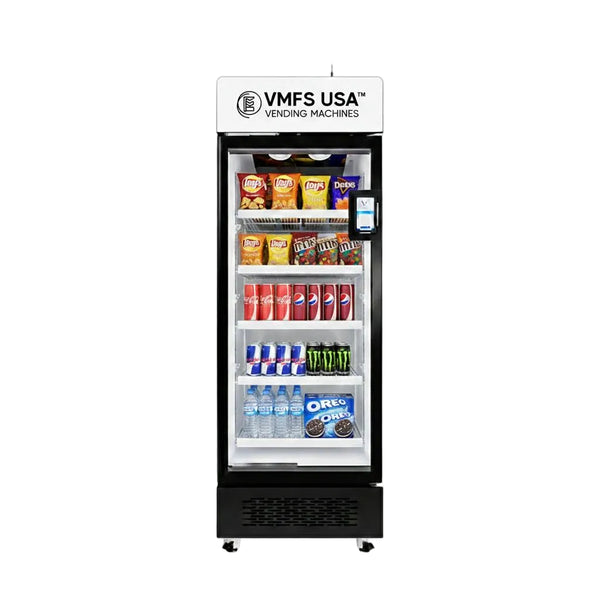
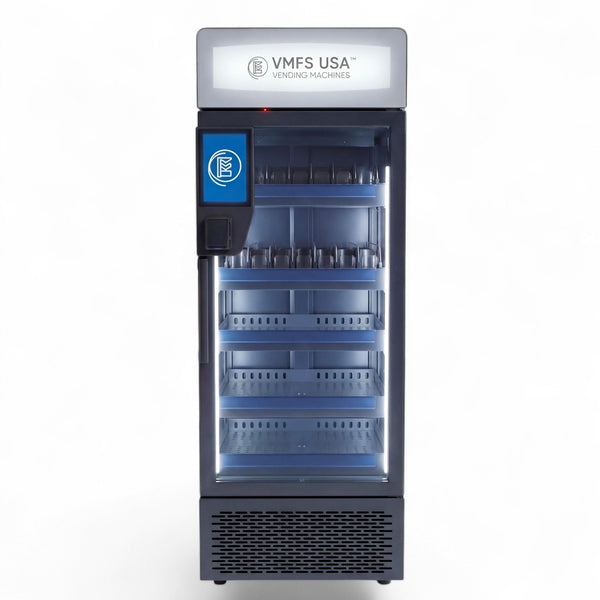
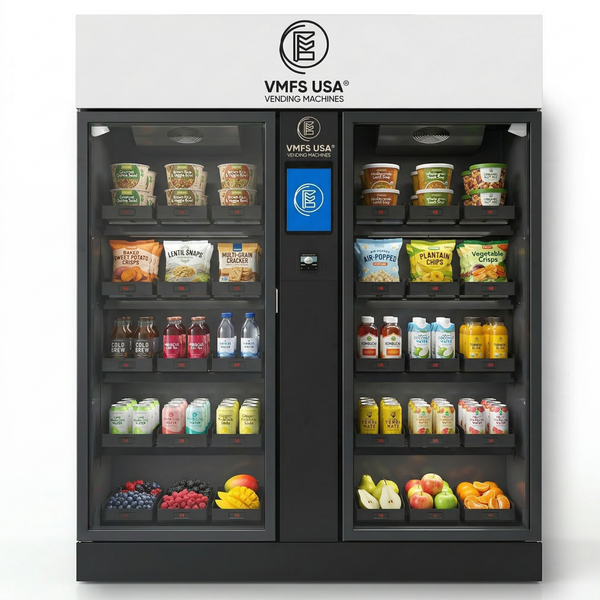
How Operators Use AI Grab & Go Vending in Washington
Federal Office Building Break Room
The Treasury Department, State Department, and countless agency offices throughout Downtown and the Federal Triangle employ over 300,000 workers who need lunch and snacks during the workday. An AI Grab & Go machine stocks fresh salads, grain bowls, sandwiches, yogurt, hard boiled eggs, kombucha, cold brew coffee, and electrolyte drinks tailored to health conscious federal employees. Dual overhead AI cameras with weight sensor verification eliminate the friction of traditional coil machines that jam with fresh containers, while refrigerated open shelf design and walk out checkout cut transaction time to under 10 seconds during peak lunch hours. Federal buildings operate strict vendor contracts but reward consistent uptime and compliance, making reliable machines that serve high volume during concentrated lunch periods and afternoon energy dips a proven revenue driver with predictable daily traffic.
Capitol Hill Congressional Office Break Room
Congressional offices, committee spaces, and legislative support buildings across Capitol Hill pack staff into tight schedules with unpredictable meeting times, creating constant demand for grab and go meals and beverages between 10 a.m. and 7 p.m. Machines stock prepared salads, wraps, protein boxes, fresh fruit, string cheese, nuts, electrolyte drinks, cold coffee, and green tea for staffers working extended hours on legislation and constituent services. The AI Grab & Go system charges accurately for individual items taken from open shelves without coil errors, while contactless payment via card or mobile wallet fits the fast paced environment where staffers have no time for coin slots or traditional checkout friction. High density office occupancy and consistent 12 hour operating windows generate predictable per machine revenue with minimal spoilage due to accurate weight sensing and real time cloud monitoring of inventory levels.
Museum and Cultural Institution Lobby
The Smithsonian Institution museums along the National Mall, the Kennedy Center, and the Library of Congress draw 30 million annual visitors seeking convenient refreshment between galleries and performances. Machines stock premium beverages including single serve wine and craft beer, fresh sandwiches, charcuterie boxes, imported cheeses, chocolate, pastries, and bottled water in climate controlled displays that match the institution's brand positioning. Dual overhead AI cameras and weight sensor verification handle delicate items and glass bottles that destroy traditional coil machines, while open shelf refrigerated design and walk out checkout appeal to guests moving between exhibits with children, bags, or tickets in hand. Visitors at cultural venues accept premium pricing 30 to 50 percent above retail for convenience, and institutions benefit from revenue share arrangements while outsourcing food service labor and restocking logistics.
Hotel Corridor and Conference Space
The Marriott Marquis, Grand Hyatt Washington, and Hilton properties throughout Downtown and near Union Station host 20 million annual room nights plus convention and meeting attendees who need items outside traditional front desk hours. Machines stock premium snacks, fresh sandwiches, chilled beverages, single serve wine and spirits, protein bars, electrolyte drinks, phone chargers, and hygiene items in refrigerated displays available 24/7 without front desk staffing. An AI vending machine charges accurately for glass bottles, phone chargers, and mixed items through dual overhead cameras and weight verification, eliminating coil jams and checkout delays that frustrate late night guests, while the walk out experience matches modern hotel expectations for frictionless service. Hotels operate on revenue share models where reliable 24/7 uptime and premium product positioning generate strong per machine economics while reducing labor costs and freeing front desk staff from minor transaction handling.
What Ships With Every AI Grab & Go Unit
Regulations for Operating in Washington, DC
Licensing, permits, sales tax, and health department standards for ai grab & go vending operators in District of Columbia.
State License Requirements
In Washington, District of Columbia, the Department of Health (DOH) oversees food service establishments and vending machines. Vending machines that dispense potentially hazardous foods (foods requiring refrigeration, such as sandwiches, dairy products, or prepared foods) require a Mobile Food Facility License or Food Service License from DOH. Machines dispensing only shelf-stable snacks, candy, beverages in sealed containers, or non-potentially hazardous items may have reduced licensing requirements but must still comply with local regulations. To register for sales tax, operators must register with the District of Columbia Department of Revenue and Finance (DORF) and obtain a Sales Tax Identification Number. A statewide vending operator license specific to vending does not exist in the District; instead, licensing is determined by the type of food or goods being vended. All business entities must have a valid Federal Employer Identification Number (EIN) and be registered with the DC Department of Consumer and Regulatory Affairs (DCRA). The District does not impose commodity-specific vending restrictions on tobacco or alcohol through vending machines at the state level, though local jurisdictions may have their own rules. Water and ice vending from machines is permitted but must comply with water quality standards if applicable. Licenses and permits must be renewed annually, typically on the anniversary of issuance, with late renewal penalties assessed by the issuing agency.
City and County Permits
Washington, District of Columbia is a single jurisdiction (city and county are unified), so all permits are issued through District agencies. A Basic Business License is required from the DCRA and must be renewed annually; this is the foundational permit for all vending operations. A Certificate of Use or Certificate of Occupancy may be required depending on the machine's location, particularly if placed in a building or on private property. Zoning approval must be obtained to confirm that vending machine placement complies with District zoning regulations; operators should consult the DCRA Office of Zoning or the Zoning Administrator. Fire Safety Certification or Fire Marshal Approval may be required depending on the location and type of machine; contact the DC Fire and Emergency Medical Services Department for guidance. The District does not have a separate county-level permitting structure. Automated retail and AI-operated vending machines are typically classified under the vending machine or automated retail category and must comply with the same licensing and permitting requirements as traditional vending machines. Renewal timelines are typically annual, with late penalties varying by permit type and assessed by each issuing agency; contact the DCRA for specific penalty schedules. The main contact for business licensing is the DCRA at (202) 442-4400 or through their website at dcra.dc.gov.
Sales Tax Rate
The District of Columbia sales tax rate is 5.75 percent on most taxable sales. Most food and beverage items sold through vending machines are subject to sales tax, including refrigerated and frozen items such as sandwiches, frozen meals, ice cream, and dairy products. Certain categories of food may qualify for tax exemption under specific circumstances; for example, some unprepared foods and certain beverages may be exempt depending on preparation and packaging. Operators must register with the DC Department of Revenue and Finance (DORF) to obtain a Sales Tax Identification Number before operating. Remittance is typically done monthly or quarterly depending on sales volume; operators should verify the filing schedule with DORF upon registration. The District does not currently impose a specific economic nexus threshold for out-of-state sellers, though remote sellers must comply with federal nexus rules and may be required to collect DC sales tax if they have sufficient presence in the District. Operators should contact DORF at (202) 727-4829 or visit otr.dc.gov for registration and remittance details.
Health Department Standards
The District of Columbia Department of Health (DOH) Food Safety Division establishes health and safety standards for vending machines. Refrigerated vending machines must maintain internal temperatures of 41 degrees Fahrenheit or below for potentially hazardous foods and 0 degrees Fahrenheit or below for frozen items; machines must be equipped with visible, accurate thermometers and automatic temperature monitoring or alarm systems. All food-contact surfaces must be smooth, non-absorbent, and easily cleanable; machines must be clean and free of pests and physical hazards. Machines must be placed in locations protected from overhead leakage, with clean and well-maintained floor conditions. Operational requirements include date-marking on potentially hazardous and fresh items with clear visibility, proper labeling of all vended products with ingredients and allergen information where applicable, and compliance with unannounced health inspections conducted by DOH. Secondary oversight may apply if machines are placed in schools, healthcare facilities, or government buildings; these locations may have additional health and safety requirements. Environmental considerations in Washington include managing moisture and temperature variations in urban settings to ensure proper refrigeration function. VMFS AI Grab & Go vending machines deployed in Washington ship with appropriate specifications including NSF-certified refrigeration systems maintaining required temperatures, stainless steel food-contact surfaces, integrated thermometers with alarm systems, AI camera recognition systems, and full compliance with DOH health and safety standards.
Disclaimer
Regulatory information is for reference only and current as of 2026. Operators should verify current requirements with the relevant agency before deployment. VMFS USA is not a legal or tax advisor. For operator-side legal guidance covering placement contracts, documentation, business incorporation, tax registration, licenses, and permits, operators can consult VAdviced at https://vadviced.com.
Washington at a Glance
Geographic Identity
- County
- Independent City
- Metro Area
- Washington-Arlington-Alexandria, DC-VA-MD-WV
- Time Zone
- America/New_York (Eastern Time)
- Area Codes
- 202, 571, 703
- ZIP Codes
- 20001 to 20599
- Primary Airport
- DCA Ronald Reagan Washington National Airport
- Secondary Airport
- IAD Washington Dulles International Airport
- Major Port
- None
- Nickname
- The Nation's Capital
Market Stats
- City Population
- 705,749
- Metro Population
- 6.3 million
- Annual Visitors
- 24.5 million (2023)
- Visitor Economy
- 17.8 billion annual economic impact
- Airport Passengers
- 134 million annual travelers through DCA, IAD, and BWI
- Hospitality Jobs
- None
- Top Industries
- Government and Public Administration, Tourism and Hospitality, Professional Services, Healthcare, Education, Real Estate and Construction
- Demand Driver
- Federal government employment, international diplomacy, major cultural institutions, and year-round tourism drive consistent demand across the hospitality and service sectors.
Climate Profile
- Climate Zone
- Humid Subtropical
- Average Humidity
- 50 to 70 percent year round
- Summer High
- 88 degrees Fahrenheit or higher with high humidity from June through September
- Winter Low
- regularly drops below 32 degrees Fahrenheit, indoor placement recommended during winter months
- Seasonal Hazard
- None
- Environmental Exposure
- Urban heat island effect in downtown areas increases ambient temperatures 5 to 10 degrees Fahrenheit above surrounding regions, requiring enhanced refrigeration capacity for beverage units.
- Deployment Note
- Washington experiences warm humid summers with moderate winter cold and no major seasonal weather hazards. Outdoor units require weatherproofed enclosures, sealed electronics, and enhanced refrigeration cycles to handle summer heat and humidity. VMFS ships all Washington outdoor units with these specifications standard.
Location & Service Area
- Key Neighborhoods
- Downtown, Capitol Hill, Georgetown, Dupont Circle, Logan Circle, U Street Corridor, Adams Morgan, Navy Yard, Foggy Bottom, Anacostia, Columbia Heights, Kalorama
- Nearby Cities
- Arlington, Alexandria, Falls Church, Bethesda, Silver Spring, Rockville, College Park, Takoma Park
- Service Radius
- VMFS delivers, installs, and services machines throughout Washington, District of Columbia and surrounding areas in the District, Arlington County, and Fairfax County, with extended coverage to Montgomery County and Prince George's County on request.
Your Location. Working 24/7.
Answers to common questions from Washington operators. Didn't see yours? Send us a message — our US-based team responds within one business day.
What revenue split does the operator offer property owners hosting an AI vending machine in Washington, DC?
How often does the operator restock machines placed in high traffic DC venues like Metro stations, office buildings in the NoMa district, or convention centers?
What physical space and electrical requirements does installation of an AI vending machine require in a DC property?
If an AI vending machine malfunctions in a DC office building or retail location, what is the typical downtime and support process?
Do the AI cameras accurately recognize all payment methods and items, particularly in DC's diverse retail and office environments with varied lighting conditions?
How does seasonal tourism and convention traffic in Washington, DC impact machine placement strategy and product selection?
Deploy AI Vending Machines in Washington, DC Today
Request a custom quote for your Washington, DC location and we handle machine selection, delivery, AI configuration, and ongoing support from start to operation. Every deployment begins with a site assessment that covers foot traffic patterns, product mix requirements, refrigeration and power infrastructure, cloud platform network needs, and compliance logistics specific to your property. Whether you need a single unit in a boutique hotel lobby on K Street or a rollout of 40 or more machines across a hospital system or university residence halls, your quote includes hardware, installation, staff training, and 12 months of cloud monitoring at no extra cost. Contact us today to discuss your AI Grab & Go vending machines deployment and learn how to generate new revenue from your existing space.
Deploy AI Grab & Go Vending Across Washington
1,200+ machines deployed. 1-year warranty standard. Free lifetime support. One team from site survey to uptime.