


AI Vending Machines in Minneapolis, MN
Transform your business with AI-powered vending machines that maximize profits while minimizing effort. Smart technology, zero hassle, instant results for Minneapolis entrepreneurs.
Stop Guessing. Configure Your AI Grab & Go Vending Machine.
Answer a few quick questions about your location, your product mix, your temperature needs, and your budget. Our AI Grab & Go Vending System will match you with the right base model, add the right modules (refrigeration, ad screen, outdoor protection, payment suite), and show you real time pricing and lead time as you build.
Skip the back and forth. Skip the spec sheet overwhelm. See your exact configuration, your exact cost, and your exact delivery window before you commit.
- Real time pricing as you add or remove features
- Live lead time estimate based on your configuration
- Recommended product mix for your location type
- Capacity, slot count, and weight limits shown per setup
- Option presets for food, drinks, electronics, retail, and frozen
Why AI Vending Machines?
Minneapolis-St. Paul International Airport|IDS Center Business District|Marquette Hotel Corridor|North Loop Creative District|Target Field Station Transit Hub|University of Minnesota Twin Cities Campus
AI Recognition Accuracy
Dual 1080p overhead cameras paired with weight sensor verification track every item the moment it leaves the shelf, charging customers only for what they take with 99 percent product recognition accuracy
Configurable Open-Shelf Capacity
Up to 360 products across refrigerated and frozen zones in a single configurable cabinet, with no coils, no slot constraints, and no jamming
Premium Product Range
Handles fresh meals, frozen items, snacks, beverages, glass bottles, protein products, and electronics on the same open shelves where coil machines physically fail
24/7 Cloud Monitoring
Real-time sales, live inventory, temperature alerts, fault notifications, and contactless payment data stream to the VMFS Cloud dashboard from any device
Why AI Machines Perform in Minneapolis, Minnesota
Minneapolis's thriving convention and hospitality economy, combined with harsh winter weather and year-round foot traffic through downtown hotels, airports, and corporate campuses, creates ideal conditions for AI Grab & Go success. The city's cold climate demands reliable refrigeration that performs in sub-zero temperatures, while contactless payment technology eliminates frozen-payment rejections common in traditional machines. High-traffic venues like Minneapolis-St. Paul International Airport, the Minneapolis Convention Center, and dense corporate corridors on IDS Plaza require 24/7 staffless operation that AI technology provides. Advanced computer vision accurately recognizes fresh and frozen items without coil jams, delivering consistent uptime essential for hospitality and business travelers who demand convenience.
AI Vending machines
solve Minneapolis's unique operational challenges while capturing premium margins from convention visitors and corporate employees during peak demand periods.
Best Locations in Minneapolis
High-value deployment sites where ai grab & go vending delivers the strongest revenue per square foot.
AI Grab & Go Vending Machines Available for Minneapolis
Every unit below ships configured, compliance-ready, and backed by VMFS Cloud monitoring.

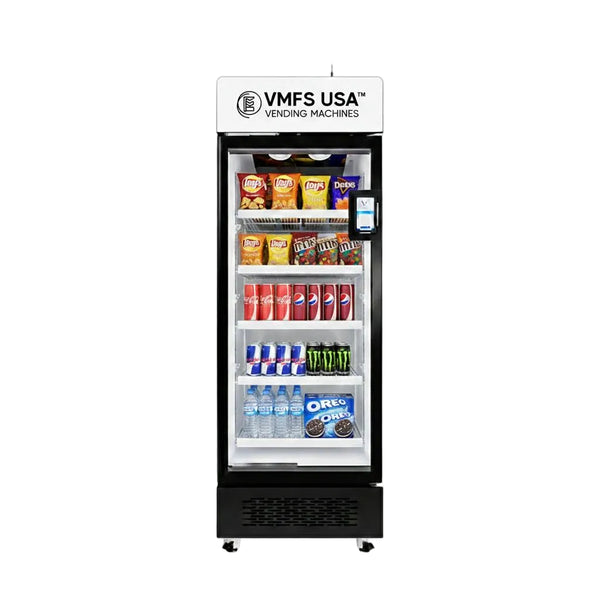
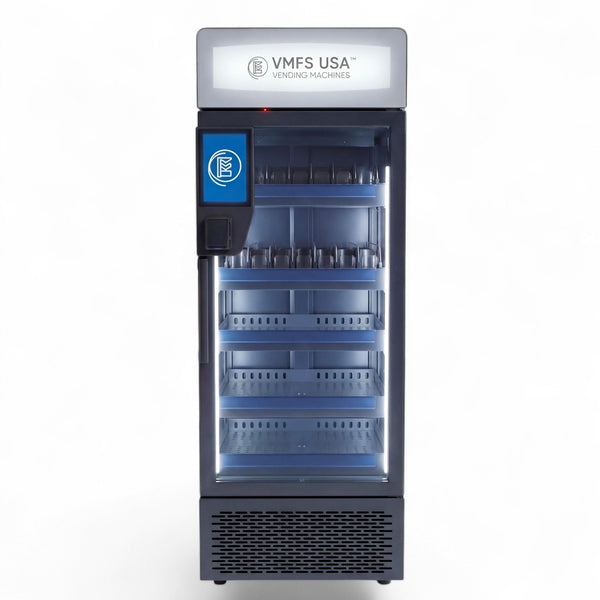
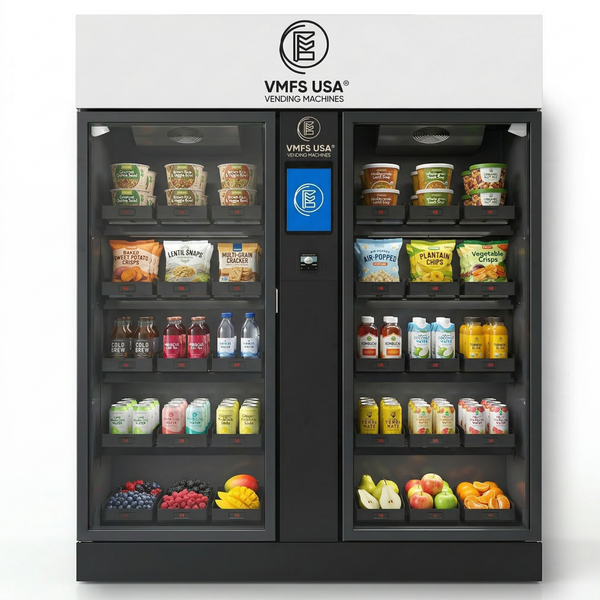
How Operators Use AI Grab & Go Vending in Minneapolis
Corporate Office Campus
The IDS Center, Capella Tower, and major office parks along the Mississippi corridor house thousands of workers who need quick meals and beverages throughout their shifts. The AI Grab & Go machine stocks fresh salads, prepared sandwiches, breakfast bowls, kombucha, cold brew coffee, and ready to eat proteins. Dual overhead AI cameras and weight sensors verify every item taken without coils or buttons, so delicate salads in clamshell containers and glass bottles ring up accurately at walk out checkout with no friction. Corporate campuses pay premium rates for tenant amenities that reduce lunch line wait times and boost employee satisfaction, making per machine revenue predictable and high volume.
Medical Center Facility
Hennepin Healthcare and University of Minnesota Medical Center operate 24/7 with night shift staff, residents, and visitors who need reliable access to meals and drinks outside standard cafeteria hours. The machines stock fresh prepared meals, frozen entrees, snacks, electrolyte drinks, coffee, and bottled beverages sized for quick consumption between rounds. An AI vending machine with refrigerated open shelf design eliminates the coil jams that plague traditional units in high traffic medical settings, and weight sensor accuracy ensures correct charges for frozen items and glass bottles that would fail mechanical machines. Medical facilities guarantee high frequency traffic and consistent revenue because staff and visitors depend on these machines when kitchens are closed, making uptime critical and payment via card or mobile wallet non negotiable.
University Housing And Student Center
The University of Minnesota Twin Cities campus, including residence halls near the stadium and student centers on Washington Avenue, houses thousands of residents who snack and refuel between classes and study sessions. Stock includes protein bars, cold pressed juices, energy drinks, fresh fruit, nuts, breakfast sandwiches, and ready to eat bowls that appeal to student budgets and dietary preferences. The AI Grab & Go vending format removes friction that kills sales at traditional machines, offering instant walk out checkout with Apple Pay and Google Pay instead of fumbling for coins or waiting for change. University populations generate high per machine transaction counts because students value speed and convenience, and dormitory machines operate around the clock when dining halls close, creating reliable revenue from a captive user base.
Airport Terminal And Ground Transportation
Minneapolis Saint Paul International Airport and the light rail stations serving downtown generate continuous traveler traffic through security checkpoints, gate areas, and rail platforms. Stock the machines with fresh sandwiches, salads, snacks, beverages, phone chargers, and travel essentials priced 30 to 50 percent above retail because travelers accept premium pricing for convenience and speed. Dual overhead AI cameras with weight sensor verification handle the high SKU mix of glass bottles, electronics, and fresh items that mechanical machines cannot track, while contactless payment and walk out checkout serve time pressed passengers without creating bottlenecks. Airport and transit hub terminals guarantee high transaction volume during peak travel periods, making machine uptime essential and the AI vending model's reliable performance a direct driver of operator margin and property revenue share.
What Ships With Every AI Grab & Go Unit
Regulations for Operating in Minneapolis, MN
Licensing, permits, sales tax, and health department standards for ai grab & go vending operators in Minnesota.
{"type":"root","children":[{"type":"paragraph","children":[{"type":"text","value":"State License Requirements
In Minnesota, the Department of Health oversees vending machine regulations. Vending machines that dispense potentially hazardous foods (foods requiring refrigeration such as sandwiches, dairy products, and prepared foods) require a food service license or conditional use permit from the Minnesota Department of Health. Machines dispensing only shelf-stable snacks, beverages in sealed containers, and non-potentially hazardous items do not require a food service license but may require a basic vending machine registration. To register for sales tax at the state level, operators must apply for a Minnesota Tax ID through the Minnesota Department of Revenue; this is required regardless of whether the vending operation is the primary business. Minnesota does not issue a statewide vending operator license, but individual machines may require permits depending on location and product type. Operators must establish a business entity (sole proprietorship, LLC, S-Corp, or C-Corp) and obtain a Federal Employer Identification Number (EIN) from the IRS if hiring employees or operating as a partnership or corporation. Tobacco products sold through vending machines in Minnesota are subject to state age-verification requirements and must comply with the Tobacco Tax Act; alcohol sales through automated machines are prohibited under Minnesota law. Sales tax permits must be renewed annually, and operators must remit sales tax monthly or quarterly depending on sales volume. For machines dispensing bottled water or ice, standard sales tax applies unless the items qualify under specific exemptions. Vending machine permits typically renew annually, and operators should verify current renewal timelines with the Minnesota Department of Health prior to deployment.
City and County Permits
Minneapolis requires a Business License for all vending operations, obtainable through the Minneapolis Regulatory Services division. A Certificate of Occupancy or Certificate of Use may be required depending on the permanent or semi-permanent nature of machine placement and the specific location. Zoning compliance is mandatory; operators must verify that the proposed placement location is zoned for vending machine operations or obtain a conditional use permit from the City of Minneapolis Planning Division. Fire safety inspection may be required, particularly if machines are placed in buildings with fire code jurisdiction; contact the Minneapolis Fire Department for specific requirements. At the county level, Hennepin County may impose additional permitting requirements depending on the specific placement location; contact Hennepin County Environmental Health if the machine is placed in a location under county jurisdiction. Minneapolis classifies AI Grab & Go vending machines as automated retail machines and may require registration as such with the city; operators should contact Minneapolis Regulatory Services at 311 or the business licensing office to confirm whether a separate automated retail machine declaration is needed. Surrounding municipalities in the Twin Cities metropolitan area (such as St. Paul, Bloomington, and Edina) have their own business licensing and zoning requirements; operators deploying machines in multiple jurisdictions must obtain permits in each city. Permits typically renew annually; late renewal penalties vary by jurisdiction and may result in fines or suspension of operation. Late penalties can accumulate if renewal deadlines are missed. Contact Minneapolis Regulatory Services by calling 311 or visiting the city website for current permit requirements, renewal timelines, and fee information.
Sales Tax Rate
The combined sales tax rate in Minneapolis, Minnesota is 8.575%, consisting of the Minnesota state sales tax rate of 6.875% plus the Hennepin County local sales tax rate of 1.25% and the Minneapolis city sales tax rate of 0.45%. Most vended goods including snacks, beverages, and prepared foods are subject to this combined rate. Refrigerated and frozen items such as ice cream, frozen meals, and chilled beverages are taxable under standard sales tax rules. Bottled water in sealed containers is generally taxable; however, operators should verify whether any local exemptions apply. Certain food items such as uncooked vegetables, fruits, and unprepared groceries may be exempt from sales tax, but pre-packaged prepared foods and beverages are taxable. To register for sales tax collection, operators must obtain a Minnesota Tax ID from the Minnesota Department of Revenue through their online registration system or by mail; registration must be completed before the machine begins operations. Operators must remit collected sales tax to the Minnesota Department of Revenue on a schedule determined by the department based on sales volume, typically monthly for higher-volume operators. Out-of-state operators or operators with no physical presence in Minnesota must register if they have economic nexus; Minnesota's economic nexus threshold is met when an out-of-state seller has sales of more than $100,000 in Minnesota during the prior 12 months or 200 or more transactions in Minnesota during the same period. Operators should consult the Minnesota Department of Revenue website or contact the department directly for current nexus thresholds and remittance procedures.
Health Department Standards
The Minnesota Department of Health establishes statewide standards for vending machines dispensing potentially hazardous foods, including temperature control requirements, equipment specifications, and operational protocols. Vending machines must maintain internal temperatures of 41 degrees Fahrenheit or below for refrigerated potentially hazardous foods and 0 degrees Fahrenheit or below for frozen items; machines must be equipped with internal thermometers accurate to plus or minus 2 degrees Fahrenheit and visible to operators during routine maintenance. Surfaces in contact with food must be stainless steel or food-contact approved materials, cleanable and sanitized regularly. Machines must have automatic shut-off mechanisms to prevent over-temperature conditions and should include emergency defrost procedures. Machines should be screened or sealed to prevent dust, insects, and environmental contamination. Placement rules require that vending machines be positioned in areas free from overhead leakage, adequate drainage, and clean floor conditions; machines placed near water sources or in damp environments require additional protective measures. Operators must implement date-marking practices for fresh and frozen items with clearly visible expiration dates or "use-by" dates to prevent the sale of expired products. All product labels must be legible and clearly visible to customers. The Minnesota Department of Health conducts unannounced inspections of vending machines, particularly those dispensing potentially hazardous foods, to verify compliance with temperature control and food safety standards. Local health departments in Hennepin County may conduct secondary inspections, especially for machines placed in schools, healthcare facilities, government buildings, and other sensitive locations. Minneapolis may require additional oversight for machines in municipal buildings or parks. Climate and environmental considerations specific to Minneapolis include cold winters that may affect machine operation and require heated compartments or relocating machines seasonally; operators should account for temperature fluctuations and indoor heating in placement planning. VMFS AI Grab & Go vending machines deployed in Minneapolis ship with temperature-controlled compartments meeting Minnesota Department of Health refrigeration standards, integrated thermometers, automatic temperature monitoring, and AI camera recognition systems that track product freshness and expiration dates.
Disclaimer
Regulatory information is for reference only and current as of 2026. Operators should verify current requirements with the relevant agency before deployment. VMFS USA is not a legal or tax advisor. For operator-side legal guidance covering placement contracts, documentation, business incorporation, tax registration, licenses, and permits, operators can consult VAdviced at https://vadviced.com."}]}]}
Minneapolis at a Glance
Geographic Identity
- County
- Hennepin County
- Metro Area
- Minneapolis-St. Paul-Bloomington
- Time Zone
- America/Chicago (Central Time)
- Area Codes
- 612, 763
- ZIP Codes
- 55401 to 55499
- Primary Airport
- MSP Minneapolis-St. Paul International Airport
- Secondary Airport
- None
- Major Port
- None
- Nickname
- The City of Lakes
Market Stats
- City Population
- 397,853
- Metro Population
- 3.68 million
- Annual Visitors
- 11.6 million (2023)
- Visitor Economy
- $8.4 billion annual economic impact
- Airport Passengers
- 38 million annual travelers through MSP
- Hospitality Jobs
- None
- Top Industries
- Healthcare and Life Sciences, Technology and Software, Manufacturing, Finance and Insurance, Retail Trade, Business Services
- Demand Driver
- Strong corporate headquarters concentration, major medical institutions, convention center activity, and regional retail and entertainment draw drive consistent local and regional foot traffic.
Climate Profile
- Climate Zone
- Humid Continental
- Average Humidity
- 45 to 55 percent winter and 55 to 65 percent summer
- Summer High
- 85 to 90 degrees Fahrenheit with moderate humidity from June through August
- Winter Low
- regularly below 0 degrees Fahrenheit, indoor placements recommended during winter months
- Seasonal Hazard
- Winter Severe Weather, November to March
- Environmental Exposure
- Heavy snow load and freeze thaw cycles affect ground level placements, requiring robust drainage and structural reinforcement.
- Deployment Note
- Minneapolis outdoor vending requires weatherproofed units with sealed electronics, enhanced drainage systems, and insulated compartments to withstand extreme winter temperatures below zero degrees Fahrenheit and heavy seasonal snowfall. VMFS ships all Minneapolis outdoor units with these cold climate specifications as standard.
Location & Service Area
- Key Neighborhoods
- Downtown Minneapolis, Northeast Minneapolis, Southeast Minneapolis, Southwest Minneapolis, North Minneapolis, Uptown, Loring Park, Phillips, Powderhorn Park, Calhoun-Isles, St. Anthony West, Longfellow
- Nearby Cities
- St. Paul, Bloomington, Minneapolis, Edina, Richfield, Minnetonka, Plymouth, Brooklyn Center
- Service Radius
- VMFS delivers, installs, and services machines throughout Hennepin County and Ramsey County, with extended coverage to surrounding counties in the Twin Cities metropolitan area on request.
Your Location. Working 24/7.
Answers to common questions from Minneapolis operators. Didn't see yours? Send us a message — our US-based team responds within one business day.
How does revenue split work, and what are the payment terms for hosting an AI vending machine at a Minneapolis, MN location?
How often does the machine get restocked, and how does product selection work for venues in different Minneapolis, MN neighborhoods?
What physical space and installation requirements does an AI vending machine need at a Minneapolis, MN business?
What happens if the AI vending machine breaks down during winter in Minneapolis, MN, and how long is typical downtime?
How accurate is the AI camera recognition system for contactless payment and inventory, especially when customers purchase multiple items quickly?
How does seasonal traffic variation in Minneapolis, MN affect machine performance and revenue, particularly during summer tourism and winter slowdown?
Deploy AI Vending Machines in Minneapolis, MN Today
Request a custom quote for your Minneapolis, MN location, and we handle machine selection, delivery, AI configuration, and ongoing support across your entire deployment. Every quote starts with a site assessment covering foot traffic patterns, product mix requirements, refrigeration and power infrastructure, cloud platform network needs, and local compliance logistics. Whether you are placing a single unit in a boutique hotel in the North Loop or rolling out 40 or more https://vmfsusa.com/collections/ai-grab-and-go-vending-machines across a corporate campus in the Golden Triangle, your quote includes hardware, installation, staff training, and 12 months of cloud monitoring at no extra cost.
Deploy AI Grab & Go Vending Across Minneapolis
1,200+ machines deployed. 1-year warranty standard. Free lifetime support. One team from site survey to uptime.