


AI Vending Machines in Boston, MA
AI Grab & Go Vending Machines in Boston
Experience the future of convenience with intelligent vending machines that learn your preferences, offer personalized recommendations, and deliver instant gratification right to your neighborhood.
Stop Guessing. Configure Your AI Grab & Go Vending Machine.
Answer a few quick questions about your location, your product mix, your temperature needs, and your budget. Our AI Grab & Go Vending System will match you with the right base model, add the right modules (refrigeration, ad screen, outdoor protection, payment suite), and show you real time pricing and lead time as you build.
Skip the back and forth. Skip the spec sheet overwhelm. See your exact configuration, your exact cost, and your exact delivery window before you commit.
- Real time pricing as you add or remove features
- Live lead time estimate based on your configuration
- Recommended product mix for your location type
- Capacity, slot count, and weight limits shown per setup
- Option presets for food, drinks, electronics, retail, and frozen
Why AI Vending Machines?
Logan International Airport|Financial District|Seaport District|Massachusetts Institute of Technology Campus|Boston Medical Center|Prudential Center
AI Recognition Accuracy
Dual 1080p overhead cameras paired with weight sensor verification track every item the moment it leaves the shelf, charging customers only for what they take with 99 percent product recognition accuracy
Configurable Open-Shelf Capacity
Up to 360 products across refrigerated and frozen zones in a single configurable cabinet, with no coils, no slot constraints, and no jamming
Premium Product Range
Handles fresh meals, frozen items, snacks, beverages, glass bottles, protein products, and electronics on the same open shelves where coil machines physically fail
24/7 Cloud Monitoring
Real-time sales, live inventory, temperature alerts, fault notifications, and contactless payment data stream to the VMFS Cloud dashboard from any device
Why AI Machines Perform in Boston, Massachusetts
Boston's thriving biotech and healthcare corridor drives consistent foot traffic through hospitals, research facilities, and corporate campuses where traditional vending machines struggle with weather-related malfunctions and payment failures during New England's harsh winters. AI Grab & Go vending machines excel in these high-demand environments, eliminating coil jams that plague standard machines while offering 100% contactless payments and AI-powered recognition for both fresh and frozen items. The machines' robust refrigeration systems handle Boston's temperature fluctuations, and their 24/7 autonomous operation solves staffing challenges at busy medical centers, universities, and tech hubs where employees need reliable nutrition access outside business hours. Learn more about deploying
AI Vending machines
in demanding institutional settings.
Best Locations in Boston
High-value deployment sites where ai grab & go vending delivers the strongest revenue per square foot.
AI Grab & Go Vending Machines Available for Boston
Every unit below ships configured, compliance-ready, and backed by VMFS Cloud monitoring.

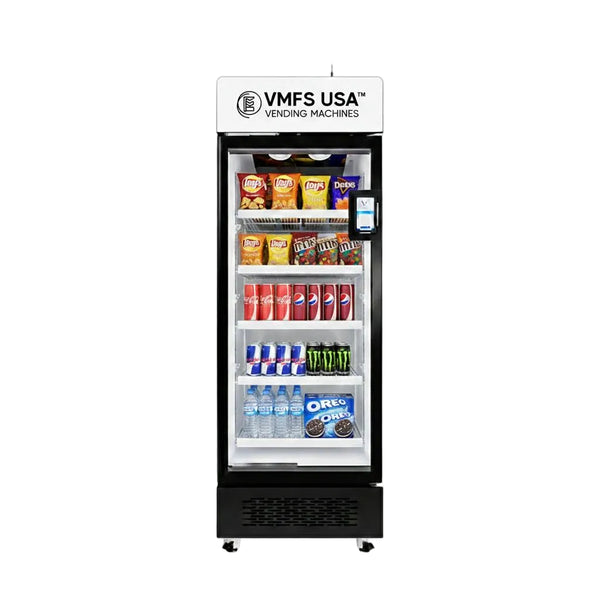
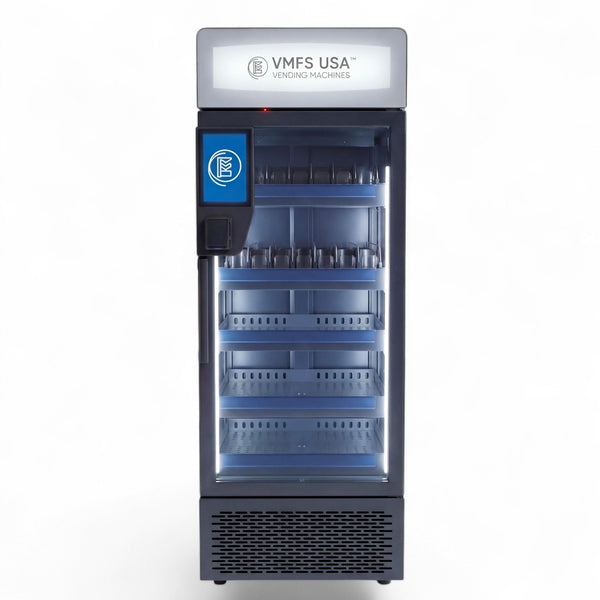
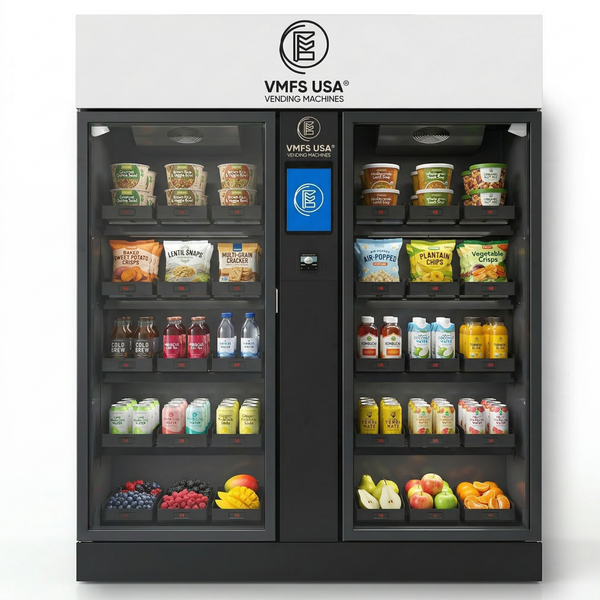
How Operators Use AI Grab & Go Vending in Boston
Medical Center Campus
Boston Medical Center, Massachusetts General Hospital, and Brigham and Women's Hospital operate 24/7 with staff working night shifts, early mornings, and irregular schedules when cafeteria hours don't align with meal breaks. The AI Grab & Go machine stocks fresh sandwiches, frozen entrees, protein snacks, electrolyte drinks, coffee, and bottled water tailored to healthcare workers fueling between patient care. Dual overhead AI cameras with weight sensor verification handle glass bottles and frozen containers that jam coil machines, while the open shelf design and walk out checkout eliminate checkout line friction during critical care gaps. Medical centers generate consistent high-volume transactions because staff return multiple times per shift and cannot leave the building, making machines reliable revenue generators in a captive, trusted environment.
University Housing and Research Facilities
MIT, Boston University, and Harvard have residential dorms, graduate student housing, and research parks where students and postdocs live and study around the clock in locations like Cambridge and Allston. Stock includes fresh breakfast bowls, salads, kombucha, protein bars, cold brew coffee, and snack items matched to student nutrition and convenience habits during exam periods and late lab sessions. AI vending machines handle lightweight fresh items and glass bottles without mechanical failure, and contactless payment through Apple Pay and Google Pay removes the friction of card readers or cash handling that deters late night users. Student housing generates reliable off-hours revenue because dining services close early and residents depend on accessible nutrition when study demands are highest.
Corporate Office Tower and Financial District
Towers in the Financial District, Prudential Center, and Copley Square house major financial services, tech, and professional services firms with large daytime and hybrid work populations. The machine stocks fresh salads, prepared meals, breakfast bowls, premium snacks, electrolyte drinks, and coffee to serve office workers who skip trips outside the building and spend 30 to 50 percent above retail for convenience. Refrigerated open shelf design eliminates coil machine jams when stocking glass bottles and fresh containers, while walk out checkout and dual AI cameras reduce transaction time during peak lunch hours when speed matters. High-density employee bases in premium office space generate strong per-machine revenue because captive workers value time savings and corporate tenants treat vending as a tenant retention amenity worth revenue sharing.
Airport Terminal and Transportation Hub
Boston Logan International Airport and South Station transit hub process thousands of travelers daily with limited time and high payment capacity in controlled locations where contactless checkout is expected. Stock includes fresh sandwiches, salads, beverages, snacks, phone chargers, and premium ready meals positioned for travelers with layovers, delays, and train connections. AI Grab & Go machines handle the volume surges during peak travel windows because dual AI cameras and weight verification prevent the revenue leakage and downtime that plague coil machines under sustained high transaction load, while Apple Pay and Google Pay accept payments from domestic and international visitors instantly. Transportation hubs guarantee traffic, reward uptime and accuracy, and attract travelers willing to pay premium prices for immediate access during time-critical moments.
What Ships With Every AI Grab & Go Unit
Regulations for Operating in Boston, MA
Licensing, permits, sales tax, and health department standards for ai grab & go vending operators in Massachusetts.
State License Requirements
In Massachusetts, the Department of Public Health (DPH) regulates vending machines that dispense food and beverages. Vending machines that dispense potentially hazardous foods (foods requiring refrigeration such as sandwiches, prepared salads, dairy products, and certain beverages) require a Food Service License from the local board of health with oversight by the Massachusetts DPH. Machines dispensing only non-potentially hazardous foods and beverages (shelf-stable snacks, candy, bottled water, and canned goods) may be exempt from licensure depending on local board of health rules, though some municipalities require registration even for these machines. All food vending operations must register with the Massachusetts Department of Revenue for a Sales Tax Account Number and obtain a Federal Employer Identification Number (EIN) from the IRS; business entity formation (LLC, corporation, or sole proprietorship) is required before licensure. Vending operators must comply with specific commodity rules: tobacco products require a Tobacco Tax Stamp and cannot be vended to minors; alcoholic beverages cannot be vended by automated machines under Massachusetts law; bottled water vended from machines must meet FDA and Massachusetts drinking water standards; and ice vending machines must comply with health department sanitation standards. Massachusetts does not issue a statewide vending operator license; instead, operators obtain individual licenses from each municipality where machines are placed. Food Service Licenses typically require renewal annually, and operators must maintain current licensing throughout operation to avoid penalties and suspension of vending rights.
City and County Permits
Boston requires vending machine operators to obtain a Business License from the Boston Licensing Board before operating any vending machine, whether it dispenses food or non-food items. Additionally, operators must obtain a Certificate of Occupancy or Certificate of Use from the Boston Inspectional Services Department confirming that the proposed location complies with zoning regulations; AI Grab & Go machines are classified as automated retail machines under Boston zoning code and are permitted in commercial zones, some industrial zones, and certain institutional locations, though placement in residential areas or schools may be restricted or require special approval. The Boston Fire Department may require fire safety inspections and approval, particularly if the machine is placed in a public building, transit station, or high-occupancy location; machines must not obstruct emergency exits or create fire hazards. No separate county-level permits are required in Massachusetts as the state operates under a municipal home rule system; however, operators must verify zoning and permit requirements with each individual city or town where machines are installed since surrounding municipalities (Cambridge, Brookline, Newton, etc.) maintain separate licensing procedures and may have different rules for automated retail machines. Business License renewal in Boston is typically required annually, and late renewal can result in fines and license revocation. Operators should contact the Boston Licensing Board at the City Hall location for specific guidance on business license applications and the Boston Inspectional Services Department for zoning and certificate approval. County-level oversight is minimal in Massachusetts, but the Suffolk County Register of Deeds may be contacted for property-related title searches if needed for certain location approvals.
Sales Tax Rate
The sales tax rate in Boston, Massachusetts is 6.25 percent, consisting of the Massachusetts state sales tax rate of 6.25 percent with no additional local city or county surtax. Most food and beverage items sold through vending machines are subject to the full 6.25 percent sales tax, including refrigerated items (dairy products, prepared foods, beverages), frozen items (ice cream, frozen meals), and shelf-stable snacks. Bottled water and certain beverages are taxable. However, some items may be exempt or subject to reduced rates under Massachusetts law: unprepared food ingredients sold for home consumption may qualify for exemption in limited cases, but prepared foods and most ready-to-eat items are fully taxable. Operators must register with the Massachusetts Department of Revenue to obtain a Sales Tax Account Number and file sales tax returns, typically on a monthly, quarterly, or annual basis depending on sales volume. Remittance is made directly to the Department of Revenue. Operators must also register for a Resale Certificate if purchasing inventory for resale to avoid paying sales tax on wholesale purchases. Out-of-state sellers with no physical presence in Massachusetts are generally not required to collect and remit Massachusetts sales tax unless they meet the economic nexus threshold; as of 2024, Massachusetts requires remote sellers with more than 200 transactions or more than 100,000 dollars in sales into the state in the prior calendar year to register and collect sales tax, though this threshold may change and operators should verify current requirements with the Department of Revenue.
Health Department Standards
The Massachusetts Department of Public Health and the local Boston Board of Health enforce health and sanitation standards for all food vending machines. Vending machines that dispense potentially hazardous foods must maintain proper refrigeration at temperatures of 41 degrees Fahrenheit or below for cold foods and 135 degrees Fahrenheit or above for hot foods, with built-in thermometers visible to operators and inspectors for temperature verification. Machine interiors and all food-contact surfaces must be made of non-corrosive, easily cleanable materials such as stainless steel or food-grade plastic; machines must be designed to prevent contamination from condensation, pests, or external debris. Machines must include automatic shut-off mechanisms if refrigeration fails, preventing dispensing of potentially hazardous foods and alerting operators to equipment malfunction. Machines must be screened or sealed to prevent insect and rodent entry, with regular inspection and maintenance schedules documented. Placement rules require that machines be positioned away from overhead water sources, leaking pipes, or areas subject to water intrusion that could compromise food safety; floor surfaces must be clean, dry, and in good condition to prevent moisture accumulation and pest harborage. All food items must be properly labeled with product name, ingredients, allergen information, and product date or use-by date clearly visible to consumers; fresh and frozen items must be date-marked and rotated on a first-in, first-out basis. Boston Board of Health inspectors conduct unannounced inspections of vending machines at any time, with particular scrutiny of temperature logs, product rotation, and equipment cleanliness. Secondary oversight occurs in schools, hospitals, healthcare facilities, and government buildings where additional safety and allergen labeling requirements may apply; schools in Boston may require separate food service permits or agreements before vending machine placement. Boston experiences seasonal temperature fluctuations and high humidity in summer months, requiring machines to have robust refrigeration systems and moisture control to maintain food safety during warm weather. VMFS AI Grab & Go vending machines deployed in Boston ship with temperature-controlled refrigeration units maintaining 41 degrees Fahrenheit or below, FDA-compliant stainless steel or food-grade interiors, automatic temperature monitoring and shut-off systems, integrated pest-screening seals, and AI camera recognition systems that verify product integrity and expiration dates in real-time.
Disclaimer
Regulatory information is for reference only and current as of 2026. Operators should verify current requirements with the relevant agency before deployment. VMFS USA is not a legal or tax advisor. For operator-side legal guidance covering placement contracts, documentation, business incorporation, tax registration, licenses, and permits, operators can consult VAdviced at https://vadviced.com.
Boston at a Glance
Geographic Identity
- County
- Suffolk County
- Metro Area
- Boston-Cambridge-Newton, MA-NH
- Time Zone
- America/New_York (Eastern Time)
- Area Codes
- 617, 857, 781
- ZIP Codes
- 02101 to 02299
- Primary Airport
- BOS Boston Logan International Airport
- Secondary Airport
- MHT Manchester-Boston Regional Airport
- Major Port
- Port of Boston, a major container and cargo port
- Nickname
- The Hub
Market Stats
- City Population
- 692,600
- Metro Population
- 4.9 million
- Annual Visitors
- 27.3 million (2023)
- Visitor Economy
- $17.6 billion annual economic impact
- Airport Passengers
- 40.9 million annual travelers through BOS
- Hospitality Jobs
- None
- Top Industries
- Healthcare and Life Sciences, Education, Finance and Professional Services, Technology and Innovation, Tourism and Hospitality, Real Estate and Construction
- Demand Driver
- Major research institutions, world-class hospitals, dense corporate headquarters, historic and cultural attractions, and strong international connectivity drive sustained visitor and business demand year-round.
Climate Profile
- Climate Zone
- Humid Continental
- Average Humidity
- 55 to 70 percent year round
- Summer High
- 82 degrees Fahrenheit average with peaks near 90 degrees Fahrenheit in July and August
- Winter Low
- 29 degrees Fahrenheit average, regularly below freezing from December through March
- Seasonal Hazard
- Nor'easter Storms, October to April
- Environmental Exposure
- Heavy winter snow load and freeze thaw cycling require robust drainage and insulated compartments to prevent ice formation and water damage.
- Deployment Note
- Boston's humid continental climate demands weatherproofed units with sealed electronics, enhanced drainage, and insulated compartments to withstand cold winters and heavy seasonal precipitation. VMFS ships all Boston outdoor units with these specifications as standard.
Location & Service Area
- Key Neighborhoods
- Downtown, Back Bay, Beacon Hill, Cambridge, Allston, Jamaica Plain, Roxbury, South End, Dorchester, Brookline, Somerville, Seaport
- Nearby Cities
- Newton, Quincy, Arlington, Waltham, Cambridge, Medford, Malden, Revere, Lynn
- Service Radius
- VMFS delivers, installs, and services machines throughout Suffolk and Middlesex counties, with extended coverage to Norfolk and Essex counties on request.
Your Location. Working 24/7.
Answers to common questions from Boston operators. Didn't see yours? Send us a message — our US-based team responds within one business day.
How does revenue split work, and what happens during slow winter months when foot traffic drops in Back Bay or along the Financial District?
How often does restocking happen, and can the machine accommodate fresh food for medical offices or corporate cafeterias in downtown Boston?
What space and electrical requirements exist for installation in tight Boston locations like Beacon Hill brownstones, historic buildings, or compact Kendall Square tech offices?
What is the uptime guarantee, and how quickly does the operator respond when the machine malfunctions during peak lunch hours at a busy Boston office building?
Does the AI camera system work reliably when recognizing items from diverse suppliers, and what is the accuracy rate for tap to unlock and walk out checkout?
How does the machine perform during Boston tourism season and Red Sox playoff games when foot traffic in Lansdowne Street, Downtown Crossing, and Fenway neighborhood venues spikes dramatically?
Deploy AI Vending Machines in Boston, MA Today
Request a custom quote today for AI vending machines at your Boston location, and we handle machine selection, delivery, AI configuration, and ongoing support from start to revenue. Every deployment begins with a site assessment covering foot traffic patterns, product mix requirements, refrigeration and power capacity, network requirements for our cloud platform, and compliance logistics specific to your venue type. Whether you are outfitting a single unit in a boutique hotel near the Financial District or rolling out 40 or more machines across a major medical center or university campus in Boston, your quote includes hardware, installation, staff training, and 12 months of cloud monitoring at no extra cost. Contact us to discuss your Boston property and get started.
Deploy AI Grab & Go Vending Across Boston
1,200+ machines deployed. 1-year warranty standard. Free lifetime support. One team from site survey to uptime.