


Advertising Vending Machines in Detroit, MI
Transform your Detroit retail space into a revenue-generating advertising platform with our cutting-edge digital vending machines today.
Stop Guessing. Configure Your Advertising Vending Machine.
Answer a few quick questions about your location, your product mix, your temperature needs, and your budget. Our Advertising Vending System will match you with the right base model, add the right modules (refrigeration, ad screen, outdoor protection, payment suite), and show you real time pricing and lead time as you build.
Skip the back and forth. Skip the spec sheet overwhelm. See your exact configuration, your exact cost, and your exact delivery window before you commit.
- Real time pricing as you add or remove features
- Live lead time estimate based on your configuration
- Recommended product mix for your location type
- Capacity, slot count, and weight limits shown per setup
- Option presets for food, drinks, electronics, retail, and frozen
Why Advertising Vending Machines?
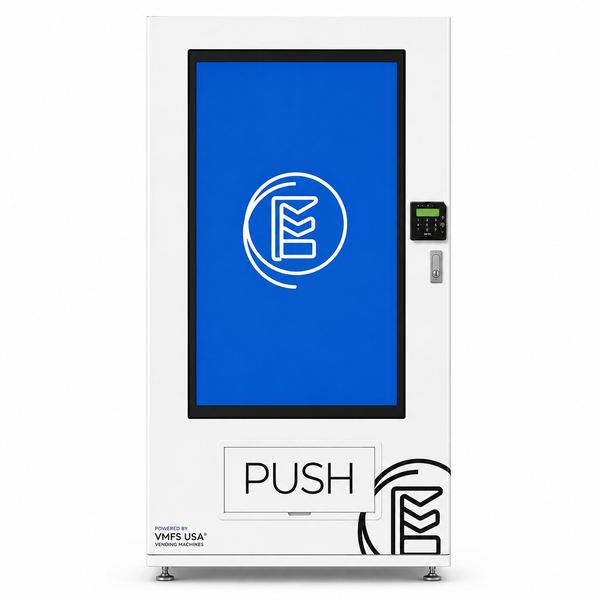
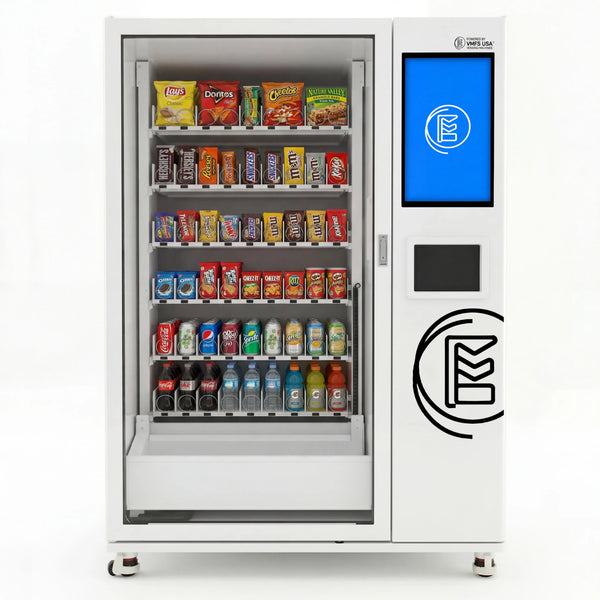
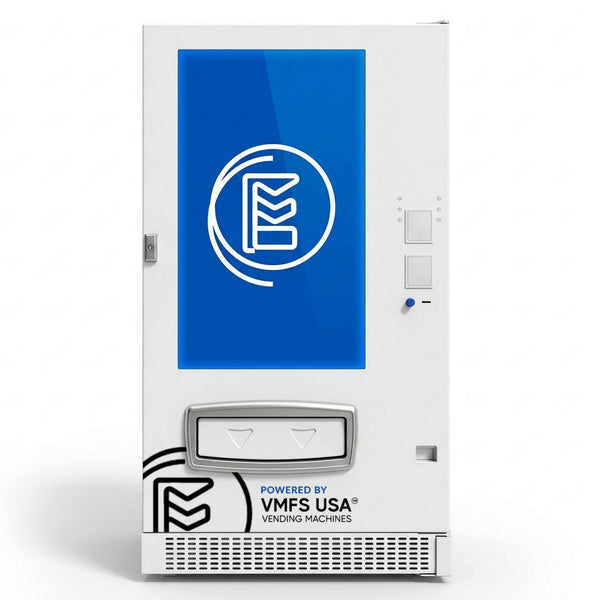
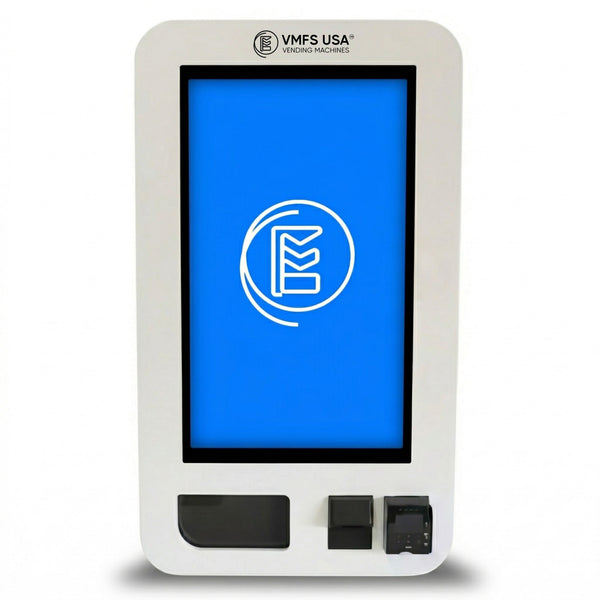
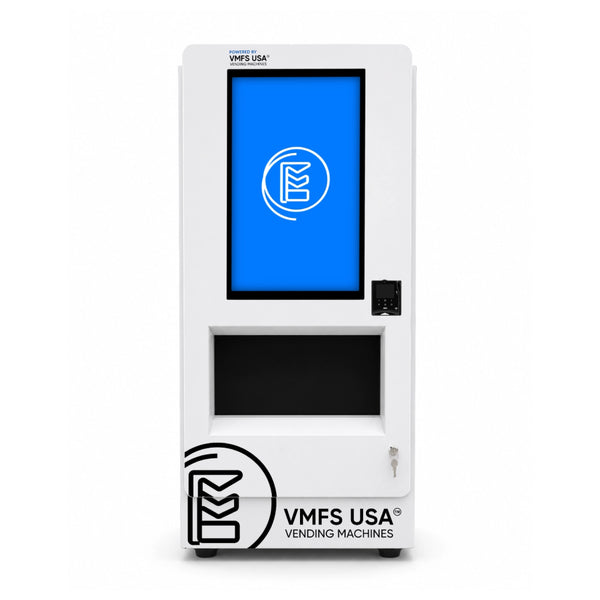
An advertising vending machine revolutionizes retail convenience and brand engagement by combining product dispensing with dynamic digital marketing in a single sophisticated cabinet. These touchscreen vending machines feature large interactive displays that serve dual purposes—streamlining the customer purchase experience while simultaneously showcasing targeted advertisements to maximize brand visibility. Our digital vending machines accommodate diverse product categories including snacks, drinks, vapes, CBD products, electronics, apparel, branded merchandise, and specialty items from a configurable platform with capacities ranging from 150 to 800 items across up to 60 adjustable slots. Premium models include advanced delivery systems with drop-down or elevator mechanisms, while multiple temperature zones accommodate both ambient and refrigerated products. Enhanced security features include double-layer toughened glass with optional defogging technology. The integrated VMFS Cloud dashboard provides real-time sales tracking and inventory management for optimized operations. Explore our complete selection of
advertising vending machines
designed for Detroit's dynamic market.
Large Interactive Touchscreen
Display sizes from 22-inch up to 50-inch HD touchscreens turn every machine into a digital billboard with high-resolution product visuals, video advertising, and remote content management
Dual Revenue Stream
Earn from product sales while also monetizing idle screen time through third-party advertising, brand promotions, and internal campaigns displayed between transactions
Versatile Product Compatibility
Configure for snacks, drinks, vapes, CBD, apparel, electronics, and specialty items with adjustable coil spacing, multiple tray depths, and elevator delivery options for fragile or high-value goods
High-Capacity Format
From 150 items in compact wall-mounted models up to 800 items in full-size cabinets, with 15 to 60 adjustable slots supporting wide product mix and reduced restocking frequency
VMFS Cloud Remote Management
Real-time sales data, inventory tracking, fault alerts, and remote ad content updates stream from any device, with U.S.-based support and software updates included
Why Advertising Machines Perform in Detroit, Michigan
Detroit's thriving automotive corporate headquarters and manufacturing sector creates ideal conditions for
advertising vending machines
in high-traffic office break rooms and industrial facilities throughout the metro area. With major employers like General Motors, Ford, and Stellantis concentrated downtown and in suburban tech corridors, these venues demand 24/7 snack and beverage access without staffing overhead—a key advantage of digital vending solutions. The integrated touchscreen advertising capability captures engaged audiences during peak commute hours and shift changes, while the machines' 300-800 product capacity handles substantial volume in dense workplace environments. Combined with real-time inventory monitoring and $200-$600 monthly net profit per unit from both product sales and digital ad revenue, advertising vending machines align perfectly with Detroit's workplace culture. Strategic
professional placement services
can identify optimal locations across corporate parks, manufacturing floors, and distribution centers to maximize visibility and foot traffic.
Best Locations in Detroit
High-value deployment sites where advertising vending delivers the strongest revenue per square foot.
Advertising Vending Machines Available for Detroit
Every unit below ships configured, compliance-ready, and backed by VMFS Cloud monitoring.


How Operators Use Advertising Vending in Detroit
Auto Manufacturing Plant Breakroom
Plants like Ford Michigan Assembly and General Motors Detroit-Hamtramck employ thousands of shift workers who need quick access to meals and beverages between production runs. The advertising vending machine stocks premium snacks, energy drinks, sodas, water, branded apparel, and electronics accessories tailored to worker preferences. Refrigerated and ambient cabinets maintain consistent temperature for drinks and perishables while the 300 to 800 product capacity handles sustained demand across multiple shifts without daily restocking. Coil delivery handles snacks reliably and elevator delivery protects fragile electronics. Net profit runs $250 to $400 per machine monthly after restocking costs of $200 to $500 per fill, making the category work because manufacturers view vending as a critical employee retention tool that reduces break room complaints and improves workplace satisfaction.
Casino Floor Amenity
Detroit's major casinos including MGM Grand, MotorCity Casino, and Greektown Casino draw daily crowds of guests and employees who purchase convenience items during gaming sessions and shift breaks. The machine stocks premium snacks, energy drinks, branded casino merchandise, electronics chargers, and specialty packaged products positioned as high-margin impulse buys. An advertising vending machine with large interactive touchscreen keeps patrons engaged during idle moments while the refrigerated cabinet maintains cold drink quality. High-capacity 400 to 800 product configurations eliminate frequent restocking in high-traffic environments. Revenue reaches $300 to $500 net profit per month because casinos understand that guest convenience drives longer dwell time and repeat visits.
Sports Arena and Event Venue
Comerica Park and Little Caesars Arena host Detroit Tigers, Detroit Red Wings, and major concerts with tens of thousands of attendees seeking concessions during events and between performances. The advertising vending machine stocks snacks, sodas, water, energy drinks, branded team apparel, and electronics accessories serving diverse crowd preferences. Refrigerated capacity preserves drink quality throughout event hours while elevator delivery protects high-value merchandise like limited edition team hats and electronics. The touchscreen displays real-time ad inventory and promotional content to captive audiences. Monthly net profit reaches $250 to $450 per machine because venues recognize that distributed vending reduces bottlenecks at traditional concession stands and increases per-patron spending.
Hospital Network Breakroom and Waiting Area
Major facilities like Henry Ford Hospital, Detroit Medical Center, and Beaumont Hospital Detroit employ thousands of medical staff and host families requiring 24/7 access to snacks, drinks, and convenience items during long shifts and overnight waits. The advertising vending machine stocks packaged snacks, sodas, water, energy drinks, branded hospital merchandise, and night shift essentials like headphone chargers and personal care items. Refrigerated and ambient configurations maintain consistent product quality while the 500 to 800 item capacity eliminates stock-outs during high-demand evening and overnight hours. Reliable coil and elevator delivery handles both durable and fragile products. Net profit reaches $200 to $380 monthly because healthcare providers recognize that staff and visitor convenience drives operational efficiency and reduces complaints about limited off-hours access.
What Ships With Every Advertising Unit
Regulations for Operating in Detroit, MI
Licensing, permits, sales tax, and health department standards for advertising vending operators in Michigan.
State License Requirements
Michigan vending machine operators are primarily regulated by the Michigan Department of Agriculture and Rural Development (MDARD). For machines stocking snacks or drinks, operators must obtain a Michigan Food Service License (also called a food establishment license) if the products are potentially time/temperature-sensitive or require refrigeration. The license applies whether machines are ambient or refrigerated. For machines stocking vape or nicotine products, operators must comply with Michigan's Tobacco Tax and Regulatory Compliance Act; age verification systems are mandatory, and retailers must register with the Michigan Marijuana Regulatory Agency if cannabis or CBD products are stocked (Michigan law distinguishes hemp-derived CBD, which has less restrictive licensing, from marijuana-derived products). For apparel and electronics with no food or age-restricted components, a general business license through the Michigan Department of Licensing and Regulatory Affairs (LARA) is typically sufficient. All operators must register for a Michigan Sales Tax License through the Michigan Department of Treasury and obtain a Federal Employer Identification Number (EIN) from the IRS; sole proprietors may use their Social Security Number if not hiring employees, but an EIN is recommended. Packaged food products stocked in vending machines must comply with Michigan Food Code labeling requirements, including ingredient disclosure, allergen warnings, manufacturer information, and net weight/volume statements visible on packaging; labels must be legible through the touchscreen interface. Third-party advertising content displayed on the integrated touchscreen is not subject to separate state vending licensing but may be subject to advertising content regulations under Michigan Consumer Protection Act guidelines if claims are made about products or services; operators should verify advertiser claims for truthfulness. Digital signage or advertising display licensing at the state level does not exist for integrated touchscreen vending machines, but operators should confirm with local jurisdictions. Food Service License renewal occurs every two years, and late renewal penalties vary; contact MDARD for current penalty amounts. Vape and tobacco registrations require annual renewal with penalties for non-compliance set by statute and the Marijuana Regulatory Agency.
City and County Permits
In Detroit, operators must obtain a City of Detroit Business License (issued by the Department of Licensing and Regulatory Affairs, Detroit city office), which serves as the foundation for legal operation. A Certificate of Occupancy or Certificate of Use may be required depending on machine placement location; contact the Detroit Building Department at 313-628-2451 for confirmation. Zoning compliance is mandatory; touching base with the Detroit City Planning Commission at 313-628-2451 is essential to confirm that vending machine operation is permitted in the specific zoning district where the machine will be placed. Fire safety permits are not typically required for standalone vending machines, but placement in buildings with fire code implications (schools, hospitals, government offices) may trigger additional requirements; contact the Detroit Fire Department at 313-628-2840 for guidance on specific venues. Wayne County does not impose additional county-level permits for vending machines beyond what Detroit requires, though operators should verify this with Wayne County offices if placing machines in unincorporated areas. Coin-operated machine declarations are not required in Detroit or Wayne County. If placing machines in surrounding municipalities (Dearborn, Highland Park, Hamtramck, etc.), each municipality has its own business license and zoning requirements; operators must contact each municipality's clerk or licensing office separately. Detroit business licenses are renewed annually, with late penalties assessed if renewal is not completed by the expiration date; renewal fees and late penalty amounts vary and should be confirmed with the Detroit LARA office at 313-628-2451.
Sales Tax Rate
The combined sales tax rate in Detroit, Michigan is 6%, consisting of the Michigan state sales tax rate of 6% with no additional city surtax (note: Wayne County does not impose a county-level sales tax, and Detroit proper does not impose a local option sales tax). Most packaged beverages sold through vending machines are subject to this 6% sales tax, with the exception of unprepared food items not requiring heating (such as certain cold beverages) which may qualify for food exemption; however, most vended drinks are taxable. Snacks are fully taxable at 6%. Vape and nicotine products are subject to the 6% sales tax plus Michigan's specific Tobacco Products Tax and Marijuana Excise Tax (if applicable). CBD and hemp-derived products typically follow standard sales tax treatment at 6% unless they are classified as medical cannabis (which has different tax treatment). Apparel and electronics are fully taxable at 6%. Digital advertising revenue generated from third-party ads displayed on the touchscreen is not subject to sales tax but is subject to Michigan income tax as business revenue; operators must report advertising income on state and federal business tax returns and remit accordingly. No specific digital out-of-home advertising tax or surtax applies in Detroit or Michigan. Operators must register for a Michigan Sales Tax License through the Michigan Department of Treasury (online at michigan.gov/treasury or by phone). Sales tax must be remitted monthly, quarterly, or annually depending on sales volume; contact the Michigan Department of Treasury at 517-335-6500 for filing requirements and remittance schedules. The economic nexus threshold for out-of-state sellers in Michigan is $100,000 in annual sales or 200 or more transactions in the preceding calendar year; operators meeting this threshold must register and remit Michigan sales tax even if they have no physical presence in the state.
Health Department Standards
The Michigan Department of Agriculture and Rural Development (MDARD) and the Detroit Health Department jointly oversee vending machine standards. Refrigerated machines must maintain product temperatures at 41 degrees Fahrenheit or below for time/temperature-sensitive foods, with automated thermostatic controls and temperature monitoring; ambient machines have no refrigeration requirement but must be maintained in clean, dry conditions. Equipment surfaces in contact with food must be food-grade stainless steel or approved non-corrosive materials and must be cleanable and non-absorbent; the touchscreen interface must be capable of sanitization without damage. All machines must meet sanitation standards including regular cleaning schedules and removal of expired or spoiled products; automatic shut-off after periods of non-use is recommended to prevent spoilage. Placement rules require machines to be positioned away from direct sunlight, heating sources, and areas prone to contamination; machines in schools, healthcare facilities, and government buildings may require additional approval from those facilities' health and safety officers. Operators must implement date-marking systems for any perishable products, with clear visibility of expiration dates on packaging; products must be removed and discarded upon expiration. Label visibility through the touchscreen interface is mandatory, meaning packaging and label information must be legible when viewed through the machine's display and physical viewing areas. Unannounced inspections by MDARD and Detroit Health Department may occur; operators must cooperate and maintain records of product inventory, temperatures, cleaning schedules, and restocking dates. Secondary health department oversight applies in schools (Detroit Public Schools and charter schools require facility-specific health compliance), hospitals and healthcare facilities (which impose additional HIPAA and infection control requirements), and government buildings (which may require facility security clearance for operators). Climate and environmental considerations specific to Detroit include seasonal temperature fluctuations and high humidity during summer months, which can affect refrigeration efficiency and product quality; machines should be positioned indoors or in climate-controlled environments where possible. VMFS soda and advertising vending machines deployed in Detroit ship with the appropriate spec standard, including configurable temperature zones for ambient or refrigerated products and a 1-year standard warranty with extended coverage options.
Disclaimer
Regulatory information is for reference only and current as of 2026. Operators should verify current requirements with the relevant agency before deployment. VMFS USA is not a legal or tax advisor. For operator-side legal guidance covering placement contracts, host venue agreements, documentation, business incorporation, tax registration, licenses, and permits, operators can consult <a href="https://vadviced.com">VAdviced</a>. For professional placement and location matching support, operators can work with <a href="https://vplaced.com">VPlaced</a>.
Detroit at a Glance
Geographic Identity
- County
- Wayne County
- Metro Area
- Detroit-Warren-Dearborn
- Time Zone
- America/Detroit (Eastern Time)
- Area Codes
- 313, 248, 586
- ZIP Codes
- 48201 to 48299
- Primary Airport
- DTW Detroit Metropolitan Airport
- Secondary Airport
- MBS MBS International Airport
- Major Port
- Port of Detroit, a major Great Lakes shipping port
- Nickname
- The Motor City
Market Stats
- City Population
- 639,111
- Metro Population
- 4.3 million
- Annual Visitors
- None
- Visitor Economy
- None
- Airport Passengers
- 36 million annual travelers through DTW
- Hospitality Jobs
- None
- Top Industries
- Automotive Manufacturing, Advanced Manufacturing, Healthcare, Logistics and Distribution, Finance and Technology, Real Estate and Development
- Demand Driver
- Detroit's economy is driven by major automotive manufacturing operations, substantial healthcare and research institutions, and growing technology and financial services sectors serving the region's industrial base.
Climate Profile
- Climate Zone
- Humid Continental
- Average Humidity
- 65 to 75 percent year round
- Summer High
- 82 degrees Fahrenheit average high with peaks to 90 degrees Fahrenheit from June through August
- Winter Low
- regularly below 20 degrees Fahrenheit, indoor placements recommended during winter months
- Seasonal Hazard
- Heavy Snow, November to March
- Environmental Exposure
- Heavy winter snow load requires reinforced structural support and enhanced drainage systems for ground level placements.
- Deployment Note
- Detroit's cold winters and moderate snow accumulation require weatherproofed units with heated cabinets and reinforced refrigeration cycles to maintain performance. VMFS ships all Detroit outdoor units with these specifications standard.
Location & Service Area
- Key Neighborhoods
- Downtown Detroit, Midtown, Corktown, Rivertown, Greektown, New Center, Rosedale Park, Sherwood Forest, West Village, East English Village, Palmer Woods, Woodbridge
- Nearby Cities
- Dearborn, Dearborn Heights, Pontiac, Troy, Warren, Livonia, Garden City, Inkster, Hamtramck
- Service Radius
- VMFS delivers, installs, and services machines throughout Wayne, Oakland, and Macomb counties, with extended coverage to Livingston and Genesee counties on request.
Your Location. Working 24/7.
Answers to common questions from Detroit operators. Didn't see yours? Send us a message — our US-based team responds within one business day.
What kind of monthly revenue can a Detroit property owner expect from hosting an advertising vending machine?
How often does a vending machine operator need to restock and service machines at Detroit locations?
What electrical and space requirements must a Detroit facility provide to install an advertising vending machine?
Does the vending machine accept cashless and mobile payments that Detroit customers prefer?
What warranty and maintenance protection exists if a machine breaks down at a Detroit venue?
How does an advertising vending machine placement contract work in Detroit, and where can operators find legal guidance?
Deploy Advertising Advertising Vending Machines in Detroit, MI Today
Request a custom quote today for
advertising vending machines
at your Detroit location, and we handle machine selection, delivery, configuration, and ongoing support from start to finish. Every deployment begins with a site assessment covering foot traffic patterns, product mix balance across snacks, drinks, branded merchandise and specialty items, screen specification and power requirements, network setup for the cloud platform, and placement strategy coordinated through our
placement experts
for operators seeking professional location matching, with high-visibility venues in corporate breakrooms, hospital lobbies, university residence halls and hotel corridors prioritized to maximize advertising exposure on your touchscreen. Whether you need a single unit in a small medical office or a rollout of 30 or more machines across a major hotel, university campus or transit terminal in Detroit, the quote includes hardware, installation, training, and 12 months of cloud monitoring at no extra cost.
Deploy Advertising Vending Across Detroit
1,200+ machines deployed. 1-year warranty standard. Free lifetime support. One team from site survey to uptime.