


Advertising Vending Machines in Chicago, IL
Transform Chicago's retail spaces into dynamic advertising platforms. Our interactive touchscreen vending machines maximize engagement while generating steady revenue streams for your business today.
Stop Guessing. Configure Your Advertising Vending Machine.
Answer a few quick questions about your location, your product mix, your temperature needs, and your budget. Our Advertising Vending System will match you with the right base model, add the right modules (refrigeration, ad screen, outdoor protection, payment suite), and show you real time pricing and lead time as you build.
Skip the back and forth. Skip the spec sheet overwhelm. See your exact configuration, your exact cost, and your exact delivery window before you commit.
- Real time pricing as you add or remove features
- Live lead time estimate based on your configuration
- Recommended product mix for your location type
- Capacity, slot count, and weight limits shown per setup
- Option presets for food, drinks, electronics, retail, and frozen
Why Advertising Vending Machines?
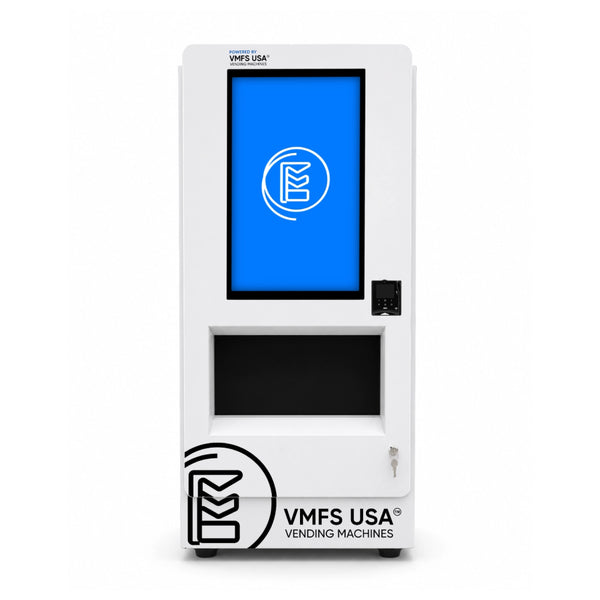
An advertising vending machine revolutionizes retail by combining product vending with dynamic digital marketing in a single sophisticated cabinet. These touchscreen vending machines feature large interactive displays that serve dual purposes: providing an intuitive customer interface while showcasing compelling advertisements for brands and promotions. Our
advertising vending machines
dispense diverse products including snacks, drinks, vapes, CBD, electronics, apparel, and branded merchandise from configurable storage with 150 to 800 item capacity across up to 60 adjustable slots. Premium digital vending machines offer advanced delivery options like drop-down or elevator mechanisms, while adjustable temperature zones accommodate both ambient and refrigerated products. Reinforced double-layer toughened glass with optional defogging ensures product visibility and durability. The VMFS Cloud dashboard provides real-time sales tracking and inventory management, empowering Chicago operators to maximize profitability and customer engagement.
Large Interactive Touchscreen
Display sizes from 22-inch up to 50-inch HD touchscreens turn every machine into a digital billboard with high-resolution product visuals, video advertising, and remote content management
Dual Revenue Stream
Earn from product sales while also monetizing idle screen time through third-party advertising, brand promotions, and internal campaigns displayed between transactions
Versatile Product Compatibility
Configure for snacks, drinks, vapes, CBD, apparel, electronics, and specialty items with adjustable coil spacing, multiple tray depths, and elevator delivery options for fragile or high-value goods
High-Capacity Format
From 150 items in compact wall-mounted models up to 800 items in full-size cabinets, with 15 to 60 adjustable slots supporting wide product mix and reduced restocking frequency
VMFS Cloud Remote Management
Real-time sales data, inventory tracking, fault alerts, and remote ad content updates stream from any device, with U.S.-based support and software updates included
Why Advertising Machines Perform in Chicago, Illinois
Chicago's massive corporate office density across the Loop, Magnificent Mile, and emerging tech hubs creates ideal conditions for
advertising vending machines
that operate 24/7 without staffing requirements. With over 2.7 million workers commuting through high-traffic downtown corridors and major transit nodes like Union Station, these digital vending machines capture constant foot traffic while generating dual revenue streams from product sales and integrated touchscreen advertising. Chicago's premium office, hospital, hotel, and airport environments demand unattended retail solutions with 300–800 product capacity for high-volume venues, real-time inventory monitoring, and brand engagement opportunities. Strategic placement through
professional placement services
maximizes location matching in corporate breakrooms, medical facilities, and hospitality settings where machines typically net $200–$600 monthly per unit, making them particularly profitable across Chicago's vertically-dense commercial landscape.
Best Locations in Chicago
High-value deployment sites where advertising vending delivers the strongest revenue per square foot.
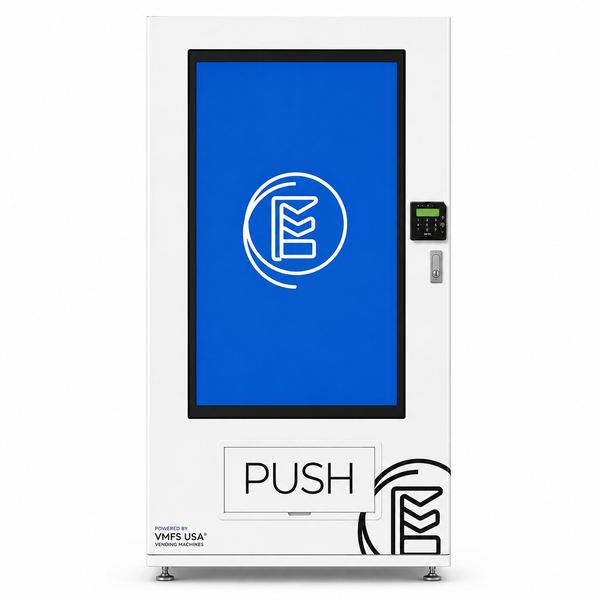
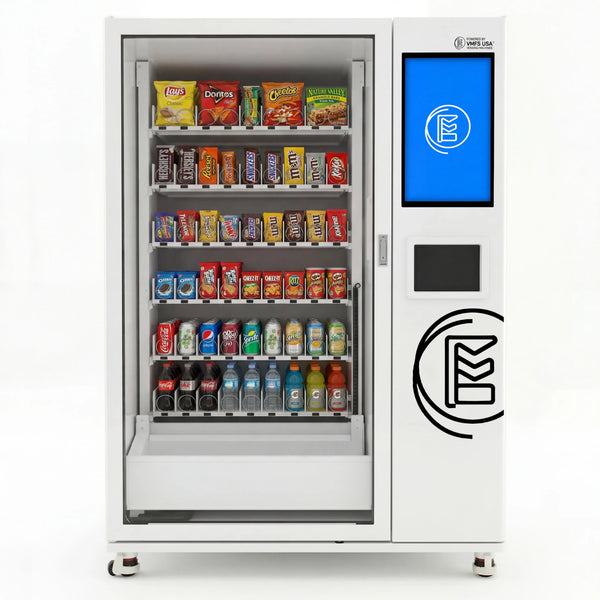
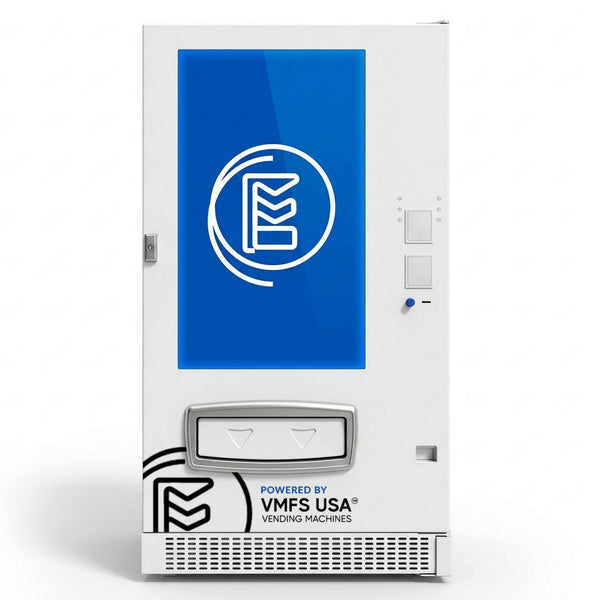
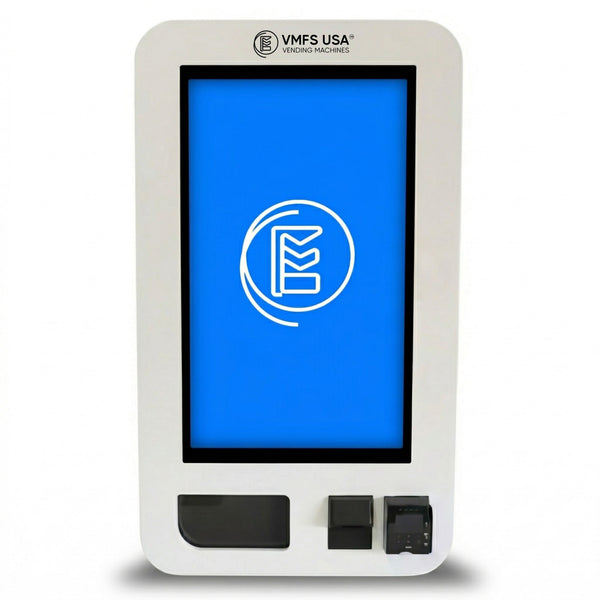
Advertising Vending Machines Available for Chicago
Every unit below ships configured, compliance-ready, and backed by VMFS Cloud monitoring.


How Operators Use Advertising Vending in Chicago
Corporate Office Breakroom
The Loop, Fulton Market, and Near North Side corporate campuses including major employers like Salesforce, Google, and Allstate stock these machines with premium snacks, energy drinks, sodas, branded apparel, and electronics accessories. An advertising vending machine in a high-traffic breakroom captures impulse purchases from employees during peak hours. The refrigerated configuration keeps all beverages at optimal temperature while the 300 to 800 product capacity handles sustained demand across multiple shifts without daily restocking, and coil or elevator delivery ensures reliable access to packaged goods and fragile items. Net profit ranges from 200 to 500 dollars monthly after restocking costs of 200 to 600 dollars depending on product mix, making breakroom placement a stable recurring revenue stream that also functions as a valued tenant or employee amenity.
Hotel Lobby and Corridor
Downtown Chicago hotels including the Chicago Hilton, Palmer House Hilton, and properties along Michigan Avenue attract guests who need immediate access to snacks, premium packaged drinks, electronics chargers, and branded merchandise at any hour. A touchscreen advertising vending machine positioned in lobbies and corridors operates 24/7 with zero staffing needs, providing guest convenience while displaying third-party ads and hotel promotions during idle time. The refrigerated ambient configuration maintains product quality across extended periods while the 400 to 800 item capacity handles multi-floor guest demand, with elevator delivery protecting fragile electronics and high-value packaged items from damage. This placement generates 250 to 450 dollars net monthly profit from guest impulse purchases combined with digital advertising revenue, making it essential infrastructure for hotel operations that expect round-the-clock service.
Transportation Hub and Terminal
Midway and O'Hare terminals, Union Station, and major transit corridors demand reliable vending access during early morning and late evening hours when traditional food service closes. An advertising vending machine stocked with snacks, drinks, electronics, and branded apparel serves transient passenger traffic without requiring staff presence. The high-capacity 500 to 800 product configuration with refrigerated and ambient sections handles surge demand during peak travel windows, while coil and elevator delivery mechanisms protect everything from chargers to apparel without damage. Transit hub placement generates 300 to 500 dollars monthly net profit from high-volume passenger transactions and premium digital advertising inventory that reaches travelers at crucial decision moments.
Fitness and Wellness Facility
Gyms, CrossFit boxes, and yoga studios across Chicago including Equinox locations, F45, and independent strength studios drive member retention through convenient post-workout purchases. The advertising vending machine stocks energy drinks, electrolyte beverages, protein snacks, branded apparel, accessories, and recovery products that members browse via high-resolution touchscreen displays during cooldown periods. Refrigerated sections maintain drink quality and temperature consistency while the 300 to 600 product configuration supports sustained member traffic without overnight restocking, with coil delivery handling snacks and apparel reliably. Fitness facility placement generates 200 to 400 dollars monthly net profit driven by impulse purchases and member habit loops, making it a straightforward revenue source for facility operators seeking to increase per-member lifetime value.
What Ships With Every Advertising Unit
Regulations for Operating in Chicago, IL
Licensing, permits, sales tax, and health department standards for advertising vending operators in Illinois.
State License Requirements
In Illinois, vending machines are regulated primarily by the Illinois Department of Public Health (IDPH) and the Illinois Secretary of State. Operators must obtain a Vending Machine License from IDPH if stocking food or beverage products. For snacks and drinks, operators must comply with the Illinois Food Service Sanitation Code and ensure all packaged products display required labeling including ingredient statements, allergen warnings, and nutrition facts where applicable. If stocking vape or CBD products, operators must verify compliance with age-verification requirements under Illinois law; vape products are restricted to age 21+ and CBD products must meet state hemp-derived compliance standards. Advertising content displayed on the touchscreen must comply with Illinois Consumer Fraud Act standards and cannot contain false or misleading claims. Operators must register for an Illinois Sales Tax Permit through the Illinois Department of Revenue and obtain a Federal Employer Identification Number (EIN) from the IRS; business entity formation (LLC, S-Corp, or sole proprietorship) is required before licensing. The Vending Machine License must be renewed annually. Digital signage displaying third-party advertising on the integrated touchscreen does not require a separate state license but must comply with advertising content standards outlined by the Illinois Attorney General's office. All operators should maintain current documentation of product sourcing, labeling compliance, and age-verification protocols if applicable to their stocked categories.
City and County Permits
Chicago requires all vending machine operators to obtain a Business License from the City of Chicago Department of Business Affairs and Consumer Protection (BACP). Operators must also secure a Certificate of Use specific to vending machines, which confirms the machine complies with zoning ordinances. Zoning approval is required; most commercial, mixed-use, and retail zones allow vending machines, but placement in residential zones or near schools may be restricted depending on product category. A Fire Safety Inspection and Certificate of Occupancy approval from the Chicago Fire Department is mandatory before deployment. Cook County does not impose a separate county-level vending permit; however, operators should verify local municipal rules if deploying machines in suburbs outside Chicago proper. No specific coin-operated machine declaration is required at the city level, though machines accepting card or digital payments must comply with the City of Chicago's payment processing ordinances. The Business License must be renewed annually; late renewal penalties vary and should be verified directly with BACP at 311 or through the City of Chicago business portal. All permits must be renewed before expiration to maintain compliance.
Sales Tax Rate
The combined sales tax rate in Chicago, Illinois is 10.25 percent, comprising the Illinois state rate of 6.25 percent plus the Cook County rate of 1.25 percent and the City of Chicago rate of 2.75 percent. Most food and beverage products stocked in vending machines are taxable at this rate; however, certain unprepared foods such as whole fruits and vegetables may be exempt depending on classification. Soft drinks, juices, water, and energy drinks are fully taxable. If the operator stocks only non-food items such as apparel or electronics, the 10.25 percent rate applies to those categories as well. Revenue from third-party digital advertising displayed on the touchscreen may be subject to separate business income tax treatment and should be discussed with a tax professional; Chicago does not currently impose a dedicated digital out-of-home advertising tax, but operators must report all advertising revenue as business income to the Illinois Department of Revenue. Operators must register for a Sales Tax Permit through the Illinois Department of Revenue online portal and remit sales taxes monthly or quarterly based on transaction volume. Economic nexus thresholds for out-of-state operators are determined by Illinois; consult the Illinois Department of Revenue for current thresholds if operating remotely.
Health Department Standards
The Illinois Department of Public Health and the Chicago Department of Public Health enforce health and sanitation standards for vending machines stocking food or beverage products. Refrigerated touchscreen vending machines must maintain internal temperatures between 32 and 41 degrees Fahrenheit and include automatic temperature monitoring and shut-off systems to prevent spoilage. All food-contact surfaces, including the touchscreen interface and product dispensing areas, must be constructed of food-grade, non-porous materials and sanitized daily according to IDPH guidelines. Machines must be placed in clean, well-ventilated locations away from direct sunlight and sources of contamination; placement within schools, hospitals, government buildings, and healthcare facilities is subject to additional secondary oversight by those institutions' health and safety departments. Any perishable products stocked must be date-marked and rotated following FIFO (first-in-first-out) protocol; expiration dates must be clearly visible through the touchscreen interface and on physical labels. Operators must maintain product labeling compliance and ensure all items display required allergen, ingredient, and nutritional information legibly. Unannounced health inspections by Chicago Department of Public Health inspectors may occur quarterly or following consumer complaints. Chicago's climate includes temperature fluctuations and seasonal humidity that may require enhanced sealing and drainage specifications for outdoor or semi-outdoor placements; operators should consult machine placement guidelines for environmental resilience. VMFS soda and advertising vending machines deployed in Chicago ship with the appropriate health and safety specification standard, including configurable temperature zones for ambient or refrigerated products, stainless steel and food-grade components, daily automated sanitation cycle options, and a 1-year standard warranty with extended coverage options available.
Disclaimer
Regulatory information is for reference only and current as of 2026. Operators should verify current requirements with the relevant agency before deployment. VMFS USA is not a legal or tax advisor. For operator-side legal guidance covering placement contracts, host venue agreements, documentation, business incorporation, tax registration, licenses, and permits, operators can consult <a href="https://vadviced.com">VAdviced</a>. For professional placement and location matching support, operators can work with <a href="https://vplaced.com">VPlaced</a>.
Chicago at a Glance
Geographic Identity
- County
- Cook County
- Metro Area
- Chicago-Naperville-Elgin, IL-IN-WI
- Time Zone
- America/Chicago (Central Time)
- Area Codes
- 312, 773, 708, 224, 331, 872
- ZIP Codes
- 60601 to 60699
- Primary Airport
- ORD O'Hare International Airport
- Secondary Airport
- MDW Chicago Midway International Airport
- Major Port
- Port of Chicago, a major Great Lakes and inland waterway port
- Nickname
- The Windy City
Market Stats
- City Population
- 2,693,976
- Metro Population
- 9.6 million
- Annual Visitors
- 66.6 million (2023)
- Visitor Economy
- $74.2 billion annual economic impact
- Airport Passengers
- 110 million annual travelers through ORD and MDW
- Hospitality Jobs
- 142,000+ tourism and hospitality jobs across Cook County
- Top Industries
- Finance and Banking, Logistics and Transportation, Healthcare, Manufacturing, Professional Services, Real Estate, Technology
- Demand Driver
- Chicago's position as a global financial center, major transportation hub, and convention destination drives consistent business travel, conventions, and leisure tourism across the year.
Climate Profile
- Climate Zone
- Humid Continental
- Average Humidity
- 55 to 75 percent year round, higher in summer months
- Summer High
- 85 to 90 degrees Fahrenheit typical, occasionally exceeding 90 degrees Fahrenheit from June through August
- Winter Low
- regularly below 20 degrees Fahrenheit, indoor placements recommended during winter months
- Seasonal Hazard
- Severe Winter Weather, November to March
- Environmental Exposure
- Heavy winter snow load and freeze thaw cycles require reinforced structural support and sealed drainage systems to prevent water infiltration and ice buildup on outdoor units.
- Deployment Note
- Chicago's humid continental climate demands weatherproofed enclosures, sealed electronics, and heated cabinets for winter operation. Summer conditions require enhanced refrigeration cycles and proper drainage for moisture management. VMFS ships all Chicago outdoor units with these specifications as standard.
Location & Service Area
- Key Neighborhoods
- Downtown, Loop, River North, West Loop, Gold Coast, Lincoln Park, Wicker Park, Pilsen, Bucktown, Logan Square, Hyde Park, Magnificent Mile
- Nearby Cities
- Evanston, Oak Park, Cicero, Des Plaines, Skokie, Arlington Heights, Naperville, Aurora
- Service Radius
- VMFS delivers, installs, and services machines throughout Cook County, with extended coverage to DuPage and Lake counties on request.
Your Location. Working 24/7.
Answers to common questions from Chicago operators. Didn't see yours? Send us a message — our US-based team responds within one business day.
What kind of net profit can a property owner expect from hosting an advertising vending machine in a Chicago venue?
How often does an advertising vending machine need restocking and maintenance in Chicago's climate?
What electrical and space requirements does an advertising vending machine need at a Chicago property?
Does an advertising vending machine accept mobile payments common among Chicago commuters and office workers?
What legal and contractual steps should a property owner take before hosting an advertising vending machine?
How should a Chicago property owner identify the right advertising vending machine placement strategy for their venue type?
Deploy Advertising Advertising Vending Machines in Chicago, IL Today
Request a custom quote today for
advertising vending machines
at your Chicago location, and we handle machine selection, delivery, configuration, and ongoing support from start to finish. Every deployment begins with a site assessment that evaluates foot traffic patterns, product mix balance across snacks, drinks, branded merchandise, and specialty items, screen specifications and power requirements, and network infrastructure for our cloud platform, with placement strategy available through our
placement experts
for operators seeking professional location matching that prioritizes high-visibility venues to maximize advertising exposure on the touchscreen. Whether you need a single unit in a Loop office breakroom or a rollout of 30 or more machines across a hospital system, university dormitory network, or downtown hotel property, the quote includes hardware, installation, staff training, and 12 months of cloud monitoring at no extra cost.
Deploy Advertising Vending Across Chicago
1,200+ machines deployed. 1-year warranty standard. Free lifetime support. One team from site survey to uptime.