


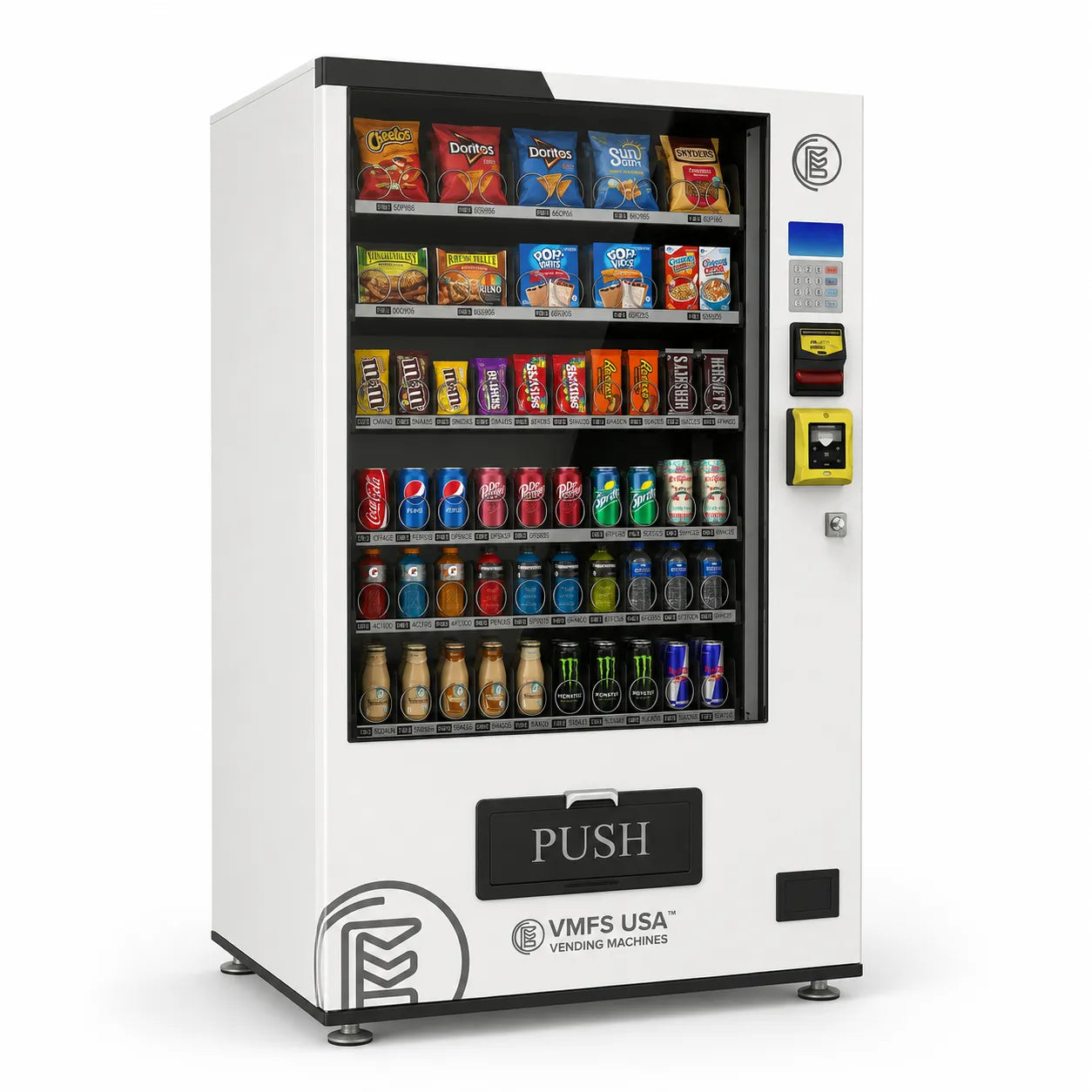
Your vending machine is not just a box of snacks.
It is a small retail store with limited shelf space.
Every slot is limited real estate.
Every product must earn its place.
Choosing the right products is one of the biggest drivers of profit.
1. Understand the 4 Product Categories
Most successful vending machines are built around these categories:

1️⃣ Core Staples (High Volume)
These are everyday items people recognize and trust.
Examples:
- Bottled water
- Coke, Pepsi
- Popular chips
- Candy bars
Why they matter:
- Sell consistently
- Have predictable margins
- Build trust in the machine
Target mix: 40%–60% of your machine
2️⃣ High-Margin Items
These raise your average sale and push profits higher.
Examples:
- Energy drinks
- Premium beverages
- Protein bars
- Specialty snacks
Why they matter:
- Sell at higher prices
- Increase average ticket size
- Create stronger dollars per slot
Target mix: 20%–30%
3️⃣ Location-Specific Products
This is where you match the machine to the audience.
Examples:
- Healthy snacks in gyms
- Larger drinks in warehouses
- Grab-and-go meals in hospitals
- Kid-friendly options in schools
This is where data matters most, because the wrong “fit” kills turnover.
4️⃣ Experimental Slots
Always leave a small section for testing.
Rule: Keep 2–4 slots for new products, rotate every 30–60 days.
Data tells you what stays, emotion does not.
2. Margin Expectations
Typical wholesale vs retail example:
| Product | Wholesale Cost | Retail Price | Gross Margin |
|---|---|---|---|
| Soda | $0.60 | $1.75 | ~65% |
| Chips | $0.50 | $1.50 | ~66% |
| Energy Drink | $1.50 | $3.00 | ~50% |
| Candy Bar | $0.55 | $1.75 | ~68% |
Typical overall gross margin target: 45% – 60%
After processing fees and occasional spoilage, net margin is often:
30% – 50%
3. Do Not Overstock Slow Products
Common beginner mistake: loading too many niche products that move slowly.
If a product does not sell within 30 days, reconsider it.
Inventory sitting still is capital frozen, and it lowers your profit per slot.
4. Match the Product Mix to the Location
Different locations demand different strategies.
Warehouse / Industrial
- High-calorie snacks
- Energy drinks
- Larger portion sizes
- Competitive pricing
Office Environment
- Balanced mix
- Health-conscious options
- Premium drinks
- Higher pricing tolerance
School
- Smaller portions
- Compliance restrictions
- Lower price ceiling
Gym
- Protein products
- Low-sugar drinks
- Premium pricing accepted
Your product mix must match the environment, not your personal taste.

5. Pricing Strategy Basics
Most beginner machines operate in the:
$1.50 – $3.00 range per item
Common ranges:
Energy drinks: $2.75 – $3.50
Water: $1.25 – $2.00 [depends on location]
Avoid underpricing to “be nice.” Convenience has value, and you are operating a business.
6. Use Data, Not Emotion
Just because you like a product does not mean it sells.
After 30–60 days:
- Review top sellers
- Remove bottom performers
- Increase capacity for fast-moving items
If using cloud monitoring, track:
- SKU velocity
- Sell-through rate
- Restock frequency
Your best-selling 10 products often generate most of the revenue.
7. Expiration and Spoilage Management
Typical shelf life ranges:
Snacks: 2–4 months
Beverages: 3–6 months
Always:
- Rotate stock
- Restock front-to-back
- Avoid overbuying slow items
Spoilage reduces profit fast, especially with premium or fresh categories.
8. How Many Products Should You Carry?
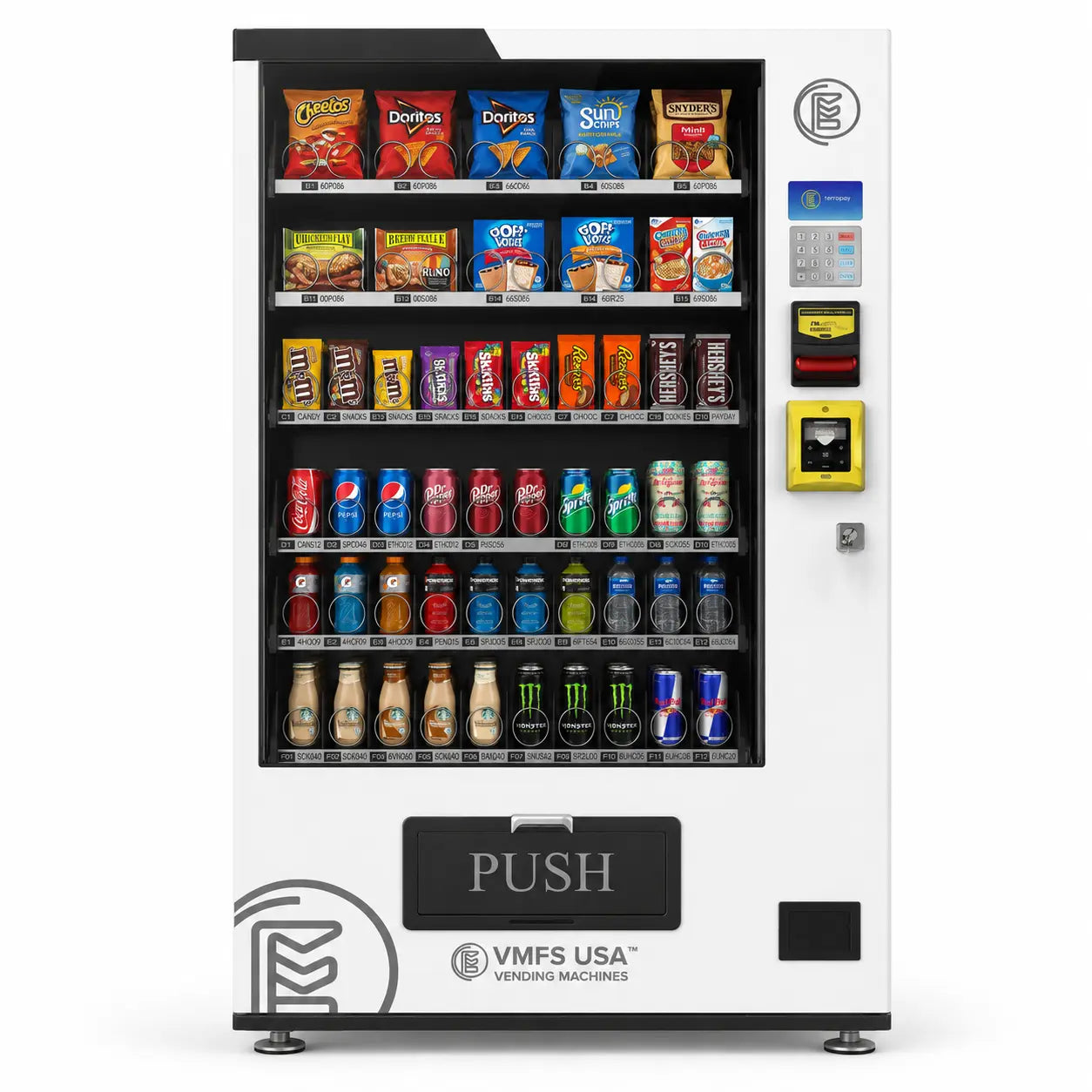
For a standard combo machine:
- 30–40 total selections
- 60%–70% beverages
- 30%–40% snacks
Beverages often outperform snacks in total revenue.
9. Beginner Product Blueprint
If you are unsure where to start, use a simple baseline mix, then adjust after 30 days:
- 2–3 sodas
- 2 waters
- 1 sports drink
- 2 energy drinks
- 4 chip varieties
- 4 candy bars
- 2 healthier options
- 2 premium snacks
10. Modern Vending and Specialty Categories
This is where automated retail evolves, and it works best when the audience is specific.
Niche and Specialty Products [best in targeted locations]
Examples by location type:
Fitness Locations
- Creatine packets
- Pre-workout drinks
- Protein shakes
- Recovery snacks
Travel Locations
- Phone chargers
- Travel-size toiletries
- Headphones
- Adapters
Schools and Universities
- School supplies
- Scantrons
- Hygiene products
Technology and Hobby Locations
- Trading cards
- Collectibles
- Small electronics
- Accessories
Niche products usually:
- Sell at higher price points
- Have stronger margins
- Require the right location to move fast
Test carefully before scaling.
11. Fresh Food Vending [Higher Ticket, Higher Risk]
Fresh food vending can be strong, but it requires operational discipline.
Examples:
- Sandwiches
- Salads
- Yogurt parfaits
- Wraps
- Meal prep containers
Requirements:
- Strong refrigeration
- Strict expiration management
- More frequent restocking
- Health department compliance
Pros: Higher price points [often $5–$12], premium positioning, strong demand in hospitals and offices
Risks: Short shelf life, spoilage, operational complexity
Fresh food works best in hospitals, large offices, universities, and airports.
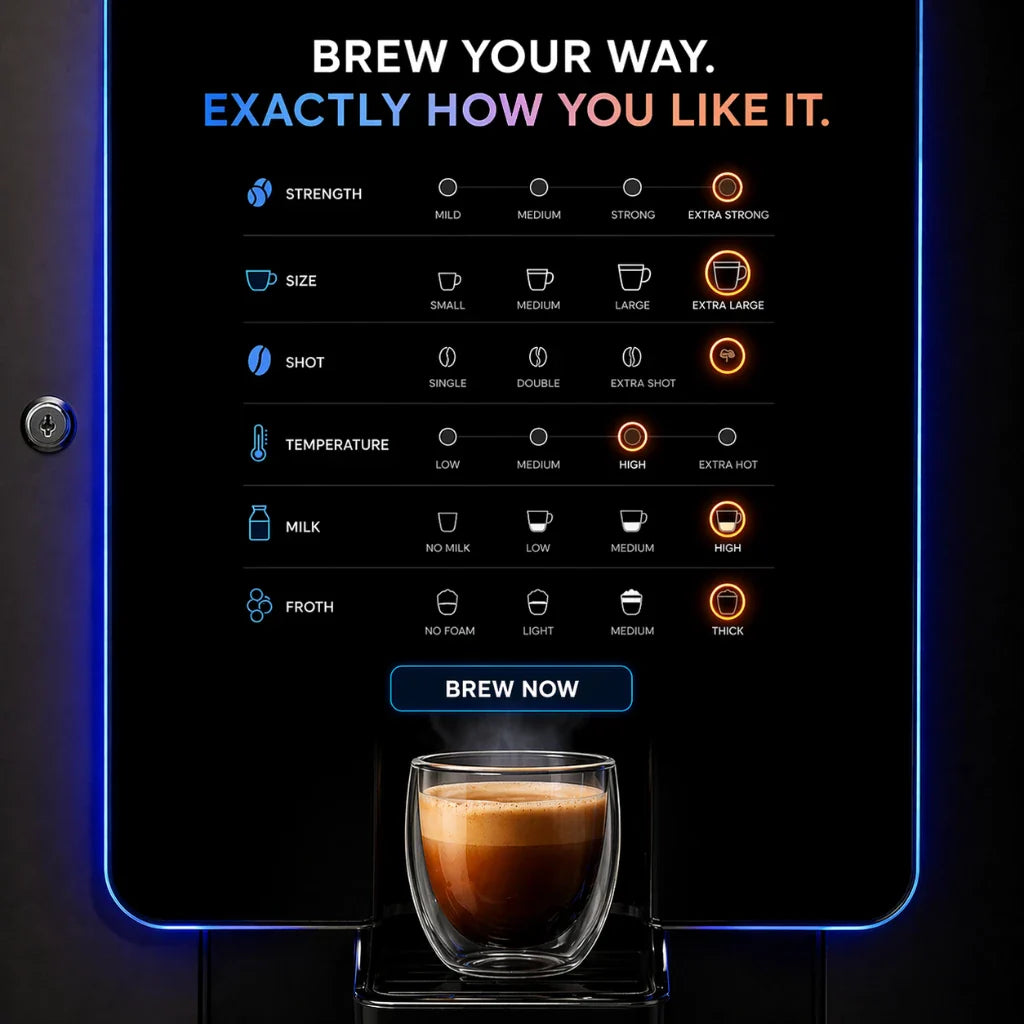
12. Coffee Vending Systems
Modern coffee systems are growing fast because coffee is a daily repeat purchase.
Modern coffee systems often include:
- Fresh bean grinding
- Multiple drink types
- Cashless payments
- Touchscreen ordering
Typical pricing: $2.00 – $4.50 per cup
Requirements: regular cleaning, water management, routine maintenance
Ideal for offices, corporate campuses, auto dealerships, and industrial facilities.
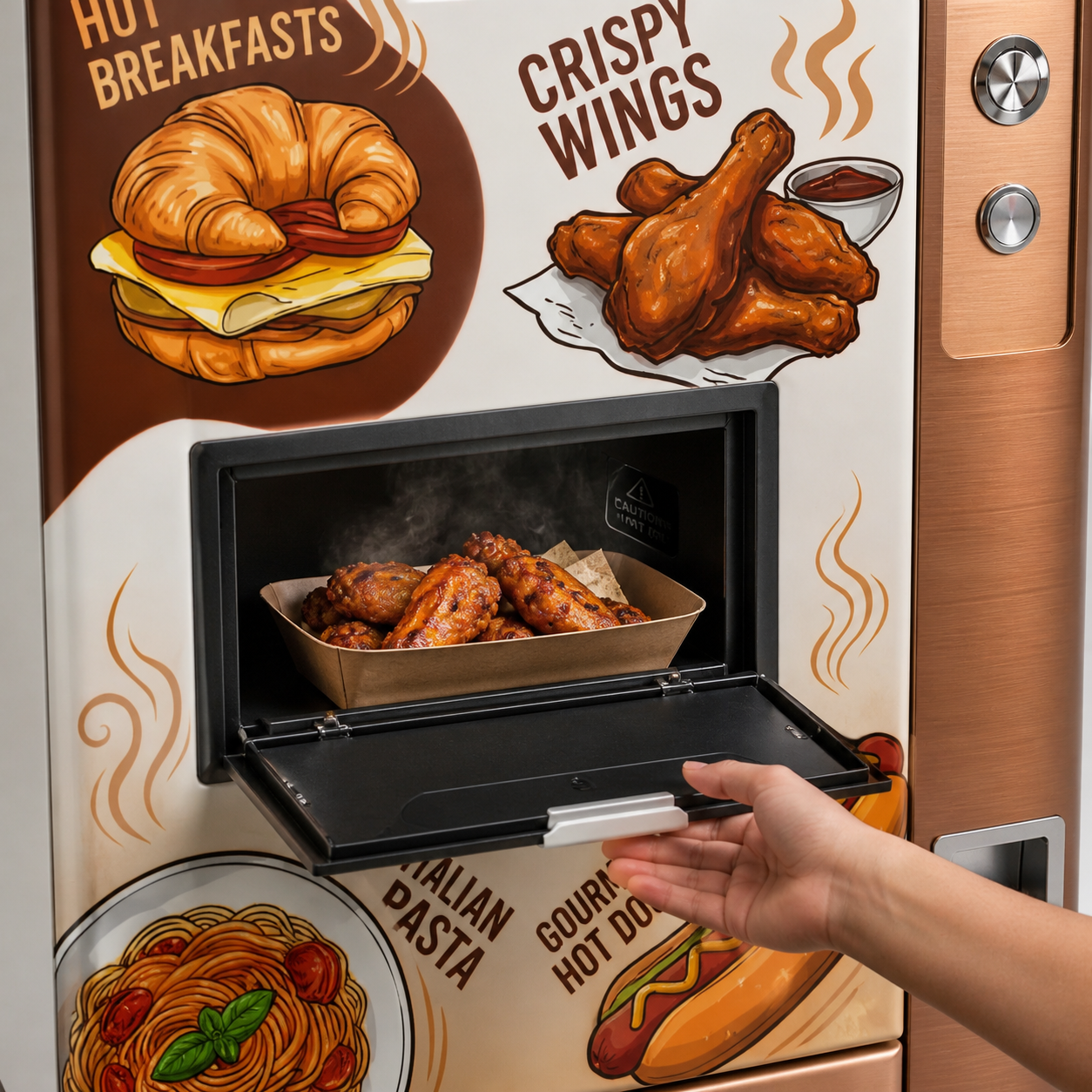
13. Hot Food Vending [Pizza and More]
Hot food automation is expanding, but it is higher investment.
Examples:
- Pizza vending machines
- Hot meal vending systems
- Microwave-assisted systems
Typical price per item: $8 – $15+
These systems require advanced cooking hardware, stronger electrical needs, and more planning.
Best in universities, nightlife districts, high-traffic public areas, and event venues.
14. High-Ticket and Innovative Products
Automated retail now includes higher-ticket categories such as:
- Electronics
- Beauty products
- Flowers
- Over-the-counter medication
- Merchandise
- Custom brand retail
- Vape products [where legal and properly age-verified]
These systems often require advanced features like age verification, smart lockers, elevator systems, and touchscreen experiences.
They can reduce volume but increase revenue per sale, best in airports, hotels, tourist zones, and event venues.
15. Choosing the Right Category for You
Before you stock anything, answer these:
- Who is my audience?
- What is their price tolerance?
- How long do they stay in the building?
- Is this impulse-based or need-based buying?
- How often can I restock?
Simple locations, start traditional.
Premium high-traffic locations, consider innovation after testing.
16. Do Not Add Complexity Without Data
New operators should usually not start with:
- Fresh food
- Hot food systems
- High-ticket electronics
Start simple, learn operations, then scale what works.

17. Hybrid Strategy [Advanced Operators]
Experienced operators often combine:
- Core staples
- One premium section
- One experimental section
- One niche segment matched to the location
This increases stability and keeps revenue strong.
18. Final Rule of Product Strategy
Your vending machine is not about variety.
It is about demand, margin, turnover, and efficiency.
Every slot must justify itself.
Data wins, emotion loses.
Share:
How to Choose a Profitable Vending Location
How Much Can a Vending Machine Really Make?