




Design the perfect vending solution for your location and customers.

Join the VMFS newsletter and step into a thriving network dedicated to collective success.
One signup. Endless possibilities.
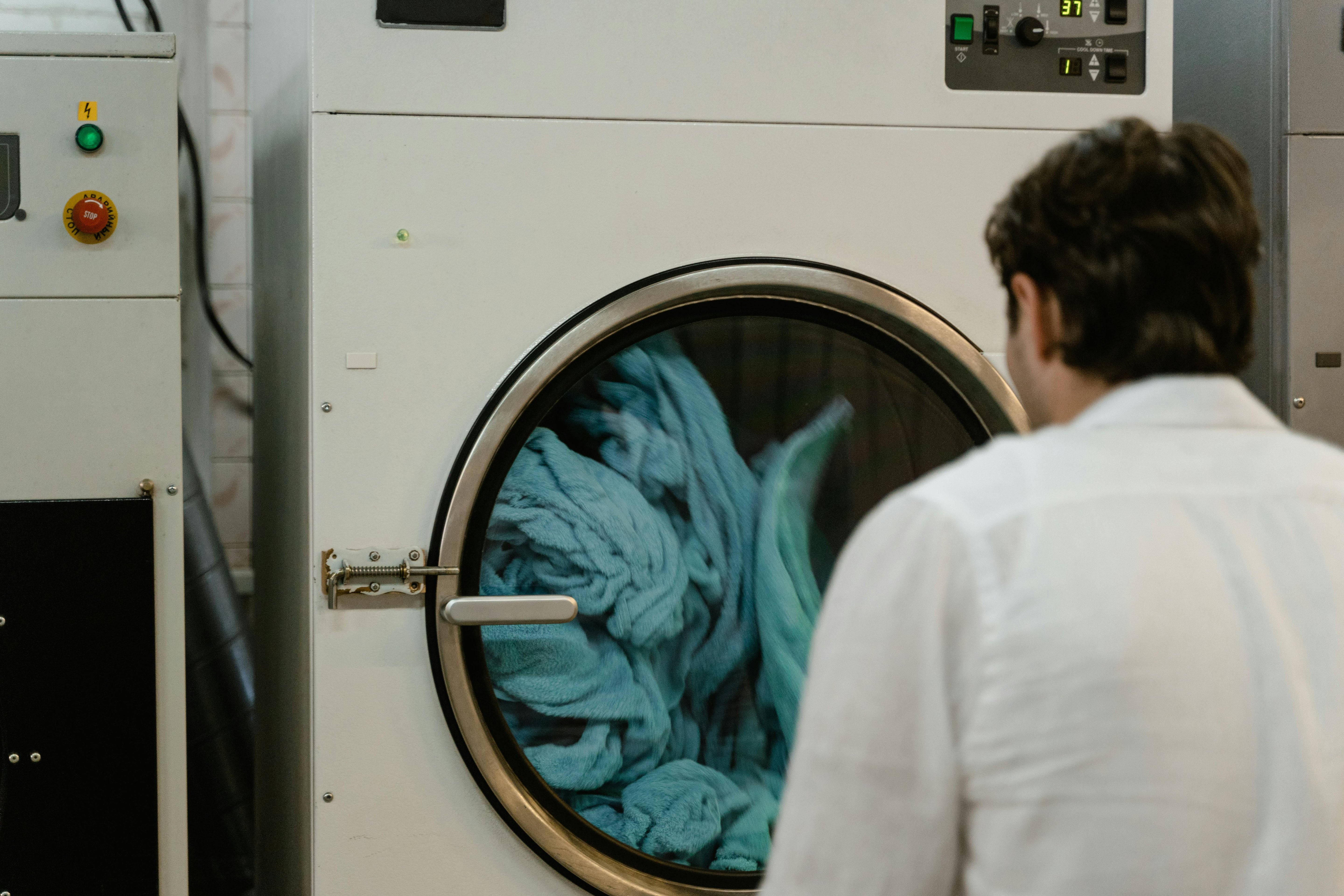
Most laundromat owners ask the wrong question when it comes to vending. They ask which machine is the most popular. The right question is which laundry vending machine fits their specific traffic volume, floor space, and product requirements , because the answer is different for a 10-washer neighborhood laundromat than it is for a 40-washer high-traffic facility.
This guide gives you the honest comparison. Machine types, specific models, selection criteria tied to real laundromat operating conditions, and a clear recommendation for every operator situation. No filler, no generic advice that applies to every machine equally.
From our analysis of vending operators across laundromat, hotel, and apartment placements, the machines that earn the most are not always the most expensive. They are the ones matched correctly to the location they sit in.
A laundromat is one of the strongest placements for a laundry vending machine because the demand is captive, the purchase is functional, and the customer is already on-site completing a task that requires the products you are selling. Customers who forget their detergent, fabric softener, or dryer sheets at a laundromat have one option without leaving: the vending machine. That dynamic produces purchase rates that most other vending placements cannot match.
What separates a machine that earns $150 per month from one that earns $900 per month at the same laundromat is not the brand of the machine. It is the combination of product visibility, selection breadth, payment flexibility, and placement position. A machine that customers cannot see clearly, cannot pay at conveniently, or that runs out of product regularly will underperform regardless of the model name on the front panel.
According to the Coin Laundry Association, 90% of laundromats in the United States operate at least one vending machine. The 10% that do not are leaving a consistent, low-maintenance revenue stream on the floor of their facility every single day.
The criteria that matter most when selecting a laundry vending machine for a laundromat are: column or selection capacity matched to your product mix, payment hardware matched to your customer demographics, machine footprint matched to available floor space, and service reliability matched to your restocking frequency. Everything else is secondary.
Before comparing specific machines, understand the four categories. Every laundry vending machine for a laundromat falls into one of these types, and the type you choose determines your product capacity, maintenance requirements, and revenue ceiling before you consider any individual model.
A mechanical coin-slide dispenser is the simplest and lowest-cost laundry vending configuration available. The customer inserts coins, pushes a slide, and a product drops. No electricity required. No bill acceptor. No digital interface. Brands like Vend-Rite produce the VendMaster series in 2, 3, and 4-column configurations with capacities ranging from 46 to 92 boxes per fill.
Mechanical dispensers cost $300 to $600 new and are nearly indestructible under normal laundromat conditions. Maintenance consists of occasional coin mechanism cleaning. There is no circuit board to fail, no power supply to replace, and no software to update.
The limitation is clear: coin-only payment means any customer without exact change does not buy. At laundromats serving younger demographics or urban populations where cashless payment dominates daily spending, this is a meaningful revenue gap. Mechanical dispensers work best at laundromats with older customer demographics or as secondary units positioned specifically for coin-paying customers.
An electronic drop-shelf machine is the workhorse of the laundromat vending machine category. It accepts coins and bills through electronic validators, dispenses products via a conveyor or shelf mechanism to a retrieval bin, and typically offers 20 to 35 product selections across 3 to 5 columns.
The Laurel Metal LaundraMax series, including the LaundraMax D three-column drop-shelf vendor, is the most widely deployed electronic laundry vending machine in U.S. laundromats. The LaundraMax accepts coin and optional card payment, supports product sensing technology to confirm each vend, and is available in front-load and rear-load configurations depending on your restocking preference.
Electronic drop-shelf machines cost $1,200 to $2,500 new. They represent the best balance of capacity, reliability, payment flexibility, and cost for the majority of laundromat operators running medium-traffic facilities.
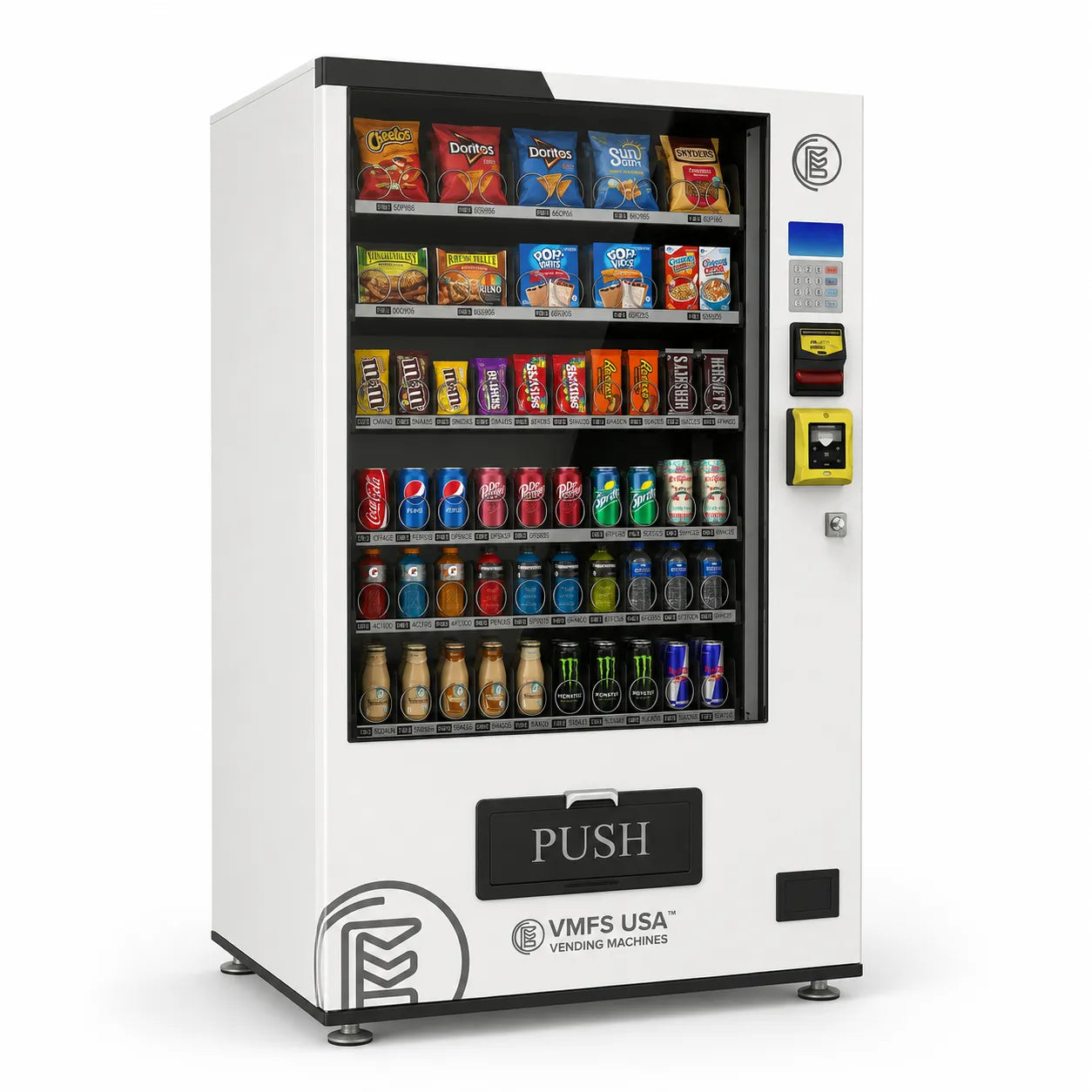
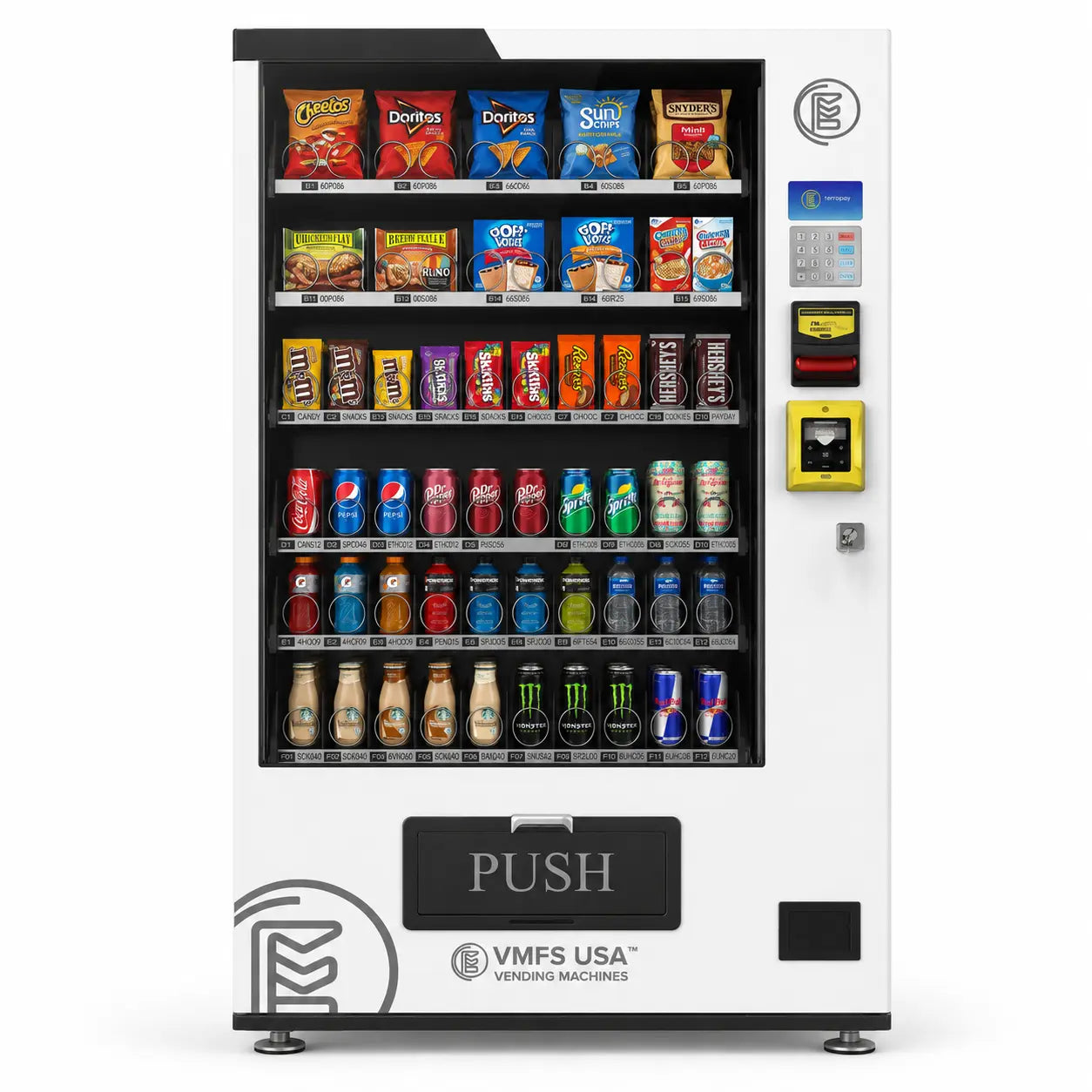
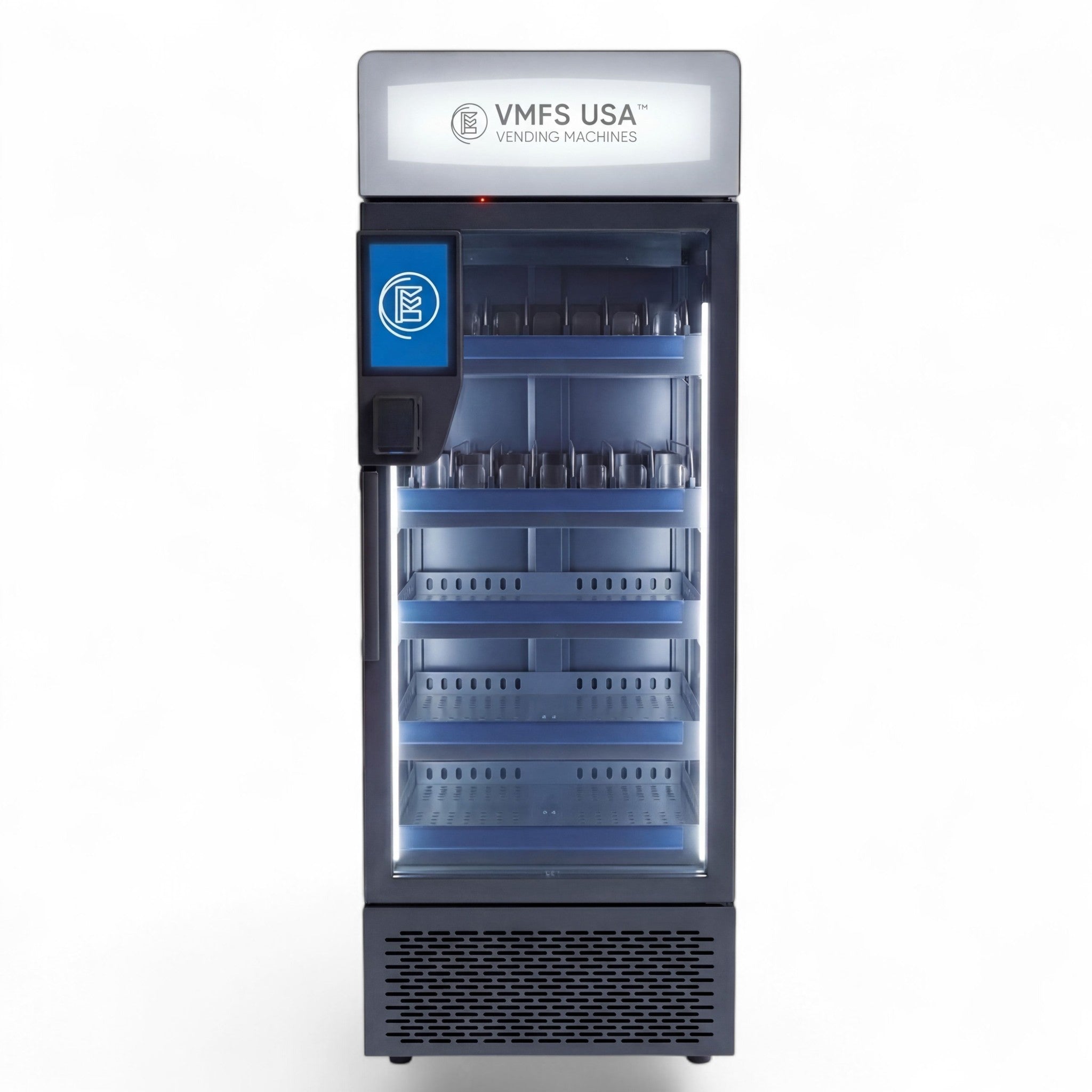
A glass-front vendor uses coil dispensers behind a transparent front panel, allowing customers to see every product before purchasing. This product visibility drives impulse purchases that drop-shelf machines simply cannot generate. A customer who sees a laundry bag, a stain remover packet, or a premium fabric softener through a glass panel makes a purchasing decision they would not have made at a machine that hides the product behind opaque doors.
Glass-front laundry supply vendors hold 20 to 50 product selections, support cashless payment hardware as standard on newer models, and typically include remote telemetry for real-time inventory monitoring. They cost $2,500 to $4,500 new and are the correct choice for high-traffic laundromats where product mix breadth and visual merchandising directly affect revenue.
eVending's Laundromat Laundry Supply Vending Machine, which offers 35 selections with pull-out tilt trays adjustable to fit different product shapes and sizes, is one of the most flexible glass-front configurations available specifically for laundry supply applications.
A true combination laundry vending machine is not a standard catalog item. It is a configuration decision. A standard glass-front vendor with flexible coil spacing can be configured to hold a mix of laundry supplies, snacks, and beverages in a single cabinet when the column and coil setup is matched to the product dimensions of each category. This is where off-the-shelf machines run into limitations, because most are factory-configured for one product type and retrofitting them for a mixed laundry and snack product range requires coil replacements and tray adjustments that reduce reliability.
The cleaner path for laundromats that want one machine to cover both laundry supplies and waiting-area snacks is a custom-configured vending machine built with the exact column and coil layout your product mix requires. A custom setup gives you the slot dimensions for Tide single-serve boxes alongside snack-size packaging in the same cabinet, without the coil jamming and misvend issues that come from adapting a machine built for one product format to handle another.
Combination configurations make sense at laundromats where floor space limits you to one vending position but your customer base has clear demand for both product categories. At any laundromat with sufficient floor space, two dedicated machines , one for laundry supplies, one for snacks , will always outperform a single combination unit in total revenue because each machine is optimized for its product type. The combination path is a space-constraint solution, not a revenue-maximization strategy.
The single most common mistake laundromat operators make when buying a laundry vending machine is choosing by price rather than by fit. A $600 mechanical dispenser at a 200-customer-per-day laundromat is leaving $600 or more per month in unrealized revenue. A $4,000 glass-front vendor at a 20-customer-per-day laundromat will not pay back its cost within any reasonable timeframe.
Match the machine to the location. This table gives you the framework.
| Laundromat Size | Daily Laundry Users | Recommended Machine Type | Est. Monthly Gross Revenue | Payback Period |
|---|---|---|---|---|
| Small (under 15 washers) | 20 to 50 | 3-column electronic drop-shelf or mechanical dispenser | $175 to $400 | 4 to 10 months |
| Mid-size (15 to 30 washers) | 50 to 120 | Electronic drop-shelf with bill acceptor and cashless | $400 to $900 | 3 to 7 months |
| Large (30 to 50 washers) | 120 to 200 | Glass-front vendor with cashless and telemetry | $800 to $1,400 | 3 to 6 months |
| High-traffic urban (50+ washers) | 200+ | Multiple machines: glass-front laundry supply plus combo unit | $1,200 to $2,500+ | 2 to 5 months |
A common mistake new operators make is treating daily user count and daily transaction count as the same number. At a typical laundromat, roughly 25% to 35% of customers purchase from the vending machine on any given visit. If your laundromat sees 100 daily users, plan for 25 to 35 vending transactions per day across all machines. Build your machine selection and column allocation around that transaction rate, not around the total customer count.
These are not ranked by brand recognition or manufacturer marketing spend. They are ranked by fit for laundromat operators based on machine performance, reliability track record, product flexibility, and revenue potential at real laundromat locations.
The Laurel Metal LaundraMax D with credit card acceptor is the most widely deployed dedicated laundry supply vending machine in U.S. laundromats for a clear reason: it balances selection capacity, reliability, and payment flexibility better than any competitor at its price point.
The LaundraMax D three-column configuration holds 69 product boxes per fill, accepts coin and card payment, includes a Slugbuster anti-fraud coin mechanism, and is available in front-load and rear-load configurations. The electronic drop-shelf mechanism is straightforward to service, and parts availability through the Laurel dealer network is strong nationally.
The LaundraMax is available with an MA-850 coin acceptor for coin-primary laundromats or with a combined coin and credit card configuration for locations where cashless payment is a priority. For most mid-size laundromats, the cashless configuration pays for the hardware upgrade within 2 to 3 months through increased transaction volume.
The Vend-Rite VendMaster is the most reliable mechanical coin-slide option for small laundromats and secondary placements where low upfront cost and zero power requirements are the priority. The 3-column VendMaster holds 69 product boxes, requires no electricity, uses a classic mechanical coin slide interface that virtually every customer recognizes, and has a decades-long reliability record in laundromat environments.
The VendMaster works as a primary machine at low-traffic locations or as a low-cost secondary unit at larger laundromats where you want coin-paying customers served without occupying a more valuable machine position. Package weights lock out the vend cycle when a column empties, which prevents customer frustration from paying without receiving product.
eVending's dedicated laundromat laundry supply vending machine with 35 selections is the strongest configuration for high-traffic laundromats where product breadth and restocking efficiency matter. Pull-out tilt trays are adjustable to fit multiple product shapes and sizes, which gives operators flexibility to stock non-standard formats alongside standard single-serve boxes without coil compatibility issues.
The iVend Guaranteed Delivery System on eVending machines virtually eliminates misvends , situations where a customer pays but no product is dispensed. In high-transaction environments, misvends create customer complaints, refund requests, and lost trust that directly affect return visit rates. Built-in guaranteed delivery is not a marketing feature at high-traffic locations. It is a functional revenue protection mechanism.
For laundromats where the customer base skews older and coin-primary payment is the operating reality, the LaundraMax D with MA-850 coin acceptor is the strongest coin-only electronic configuration available. It delivers the reliability and capacity of the LaundraMax platform without the cost of card reader hardware that will not generate additional transactions at a coin-primary location.
For laundromats serving populations under 40, urban facilities, or any location where card and mobile payment is the default spending behavior, a glass-front vendor with integrated cashless hardware is the correct investment. Nayax is a payment technology company that provides cashless payment systems for vending machines including contactless card, Apple Pay, and Google Pay acceptance. Greenlite is a similar cashless platform used by eVending machines.
Industry data from 2025 shows cashless payment availability increases vending transaction values by 18% to 30% at locations where customers do not routinely carry coins. At an urban laundromat generating $700 gross per month on coin-only hardware, adding cashless capability typically produces $826 to $910 per month , a $126 to $210 monthly revenue increase from a single hardware addition.
If you want a machine configured specifically for your laundromat's footprint, product requirements, and branding rather than a standard catalog unit, a custom vending machine built to your specifications is worth evaluating before you default to an off-the-shelf model. Custom configurations give operators control over column layout, payment hardware, exterior branding, and slot sizing , all of which directly affect revenue at specific location types.
Not every feature listed in a vending machine specification sheet moves the revenue needle. Operators who spend on the wrong features end up with expensive machines that underperform cheaper, better-configured alternatives.
Features that directly affect laundromat vending revenue:
Features that do not meaningfully affect laundromat vending revenue:
The decision between coin-only and cashless-capable hardware is not a preference decision. It is a demographics decision. The right answer depends entirely on who your customers are and how they spend money in daily life.
Laundromats in urban areas, near universities, or in neighborhoods with a median age under 40 need cashless hardware. In these environments, a coin-only machine forfeits a growing percentage of potential transactions every year as contactless payment replaces coins in daily spending habits. A 2025 study from the Federal Reserve found that cash usage in U.S. retail transactions has declined to 18% of all payments. At locations where that trend is already visible in customer behavior, coin-only vending is a structural revenue cap.
Laundromats in rural areas, suburban neighborhoods with older demographics, or locations where the existing coin laundry payment infrastructure means customers already arrive with quarters can operate coin-primary machines effectively. The hardware cost savings on a coin-only machine versus a cashless-capable model are $200 to $500 per unit , money better spent on restocking inventory at a location where cashless does not move the transaction needle.
A practical test: spend two visits at your laundromat observing how customers pay for washing machines. If the majority use a loyalty card, app, or tap-to-pay system, your vending machine needs cashless. If the majority are feeding quarters directly into washers, your current demographics support coin-primary vending.
Machine selection without product selection is half the job. The five core laundry vending machine supplies categories that drive revenue at laundromat placements are single-serve detergent, fabric softener singles, dryer sheets, stain remover packets, and laundry bags. Detergent drives volume. Dryer sheets deliver the highest margin at 80% gross. Laundry bags earn pure margin with zero brand competition.
The brands that turn fastest at laundromat vending machines are Tide Professional, Arm and Hammer, Gain, Purex, Downy, Bounce, Snuggle, and OxiClean. All are available in coin-vend single-serve formats through wholesale distributors including Kleen-Rite Corp and WebstaurantStore.
For the full column-slot economics framework , which products to allocate how many columns, margin by SKU, and how to forecast restock frequency , the complete laundry vending supplies stocking guide covers every variable with real numbers.
Placement position inside the laundromat affects revenue as much as machine selection. From operating machines across multiple laundromat placements, the positions that consistently produce the highest transaction rates share three characteristics: eye-level visibility from the washer loading area, proximity to the seating or waiting zone, and clear sight lines from the facility entrance.
The highest-converting positions in order:
Machines placed in corners, behind equipment, or in poorly lit areas of the facility earn 30% to 40% less than identically stocked machines in high-visibility positions. Positioning costs nothing. It is the highest-ROI optimization available to any laundromat vending operator.
For operators managing machines across multiple laundromat locations or looking to secure new high-traffic placements, VPlaced works with operators on placement strategy and location sourcing.
For operators evaluating how to fund the machine purchase before placement, the vending machine financing options page covers equipment loans, SBA microloans, and business credit lines with qualification criteria and rate comparisons so you can structure the investment correctly from day one.
The most common and most expensive mistake in laundromat vending is buying based on upfront price rather than on revenue fit. A $550 mechanical dispenser looks like the conservative choice. At a 150-customer-per-day laundromat, it is the most expensive decision you can make because it caps your vending revenue at a fraction of what the location can actually produce.
The correct framework is payback period, not purchase price. A $2,200 electronic drop-shelf machine generating $650 net per month pays back in under 4 months and earns $7,800 per year after that. A $550 mechanical unit generating $200 net per month at the same location pays back in 3 months but earns only $2,400 per year. The cheaper machine costs you $5,400 per year in unrealized revenue , every year it operates.
Buy to the traffic level your location supports. That is the framework. Everything else follows from it.
If you want to understand the full revenue and profit picture before committing to a specific machine, the laundry vending machine profit and ROI guide covers real monthly earnings, payback timelines, and the three decisions that determine where your result lands inside the revenue range for your location type.
For most laundromats with medium to high traffic, a glass-front electronic laundry supply vending machine with 20 to 35 selections and cashless payment capability delivers the strongest combination of revenue, product visibility, and low maintenance. For smaller or lower-traffic laundromats, a 3-column electronic drop-shelf machine like the Laurel Metal LaundraMax D is the most cost-effective starting point with the best balance of capacity and reliability at its price range.
Laundry vending machines for laundromats range from $300 for a basic mechanical coin-slide dispenser to $4,500 for a full glass-front unit with cashless payment hardware and remote telemetry. Electronic drop-shelf machines, the most common choice for mid-size laundromats, cost $1,200 to $2,500 new. For operators who want a machine configured specifically for their laundromat's footprint and product requirements, a custom vending machine setup gives full control over column layout, payment hardware, and branding from the start.
Buying gives you 100% of the margin and complete control over products and pricing. Leasing gives an operator the machine at no upfront cost but takes 20% to 40% of your revenue in perpetuity. At any laundromat generating consistent traffic above 40 daily users, buying outright or financing through an equipment loan produces a significantly stronger long-term return. The vending machine financing options page covers every available path to fund a machine purchase without paying an operator's margin share indefinitely.
The highest-converting placement for a laundry vending machine inside a laundromat is at eye level near the washer loading area, between the washers and the seating area, and visible from the facility entrance. Machines placed in corners or behind equipment earn 30% to 40% less than identically stocked machines in high-visibility positions. Positioning is the highest-ROI optimization available at no cost.
Mechanical coin-slide dispensers like the Vend-Rite VendMaster require no electricity and no power connection. Electronic drop-shelf machines and glass-front vendors require a standard 110V outlet and consume $5 to $15 in electricity per month. Machines with cashless payment hardware, LED lighting, and remote telemetry sit at the higher end of that consumption range.
A drop-shelf machine uses a conveyor or tray mechanism to deliver products to a retrieval bin , compact, reliable, and best for a focused range of 3 to 20 laundry supply items. A glass-front laundry vending machine for a laundromat uses coil dispensers behind a transparent door, allowing customers to see every product before purchase. Glass-front machines hold more selections, generate higher impulse purchase rates through product visibility, and are the correct choice for high-traffic laundromats where product mix breadth and visual presentation directly affect monthly revenue.
Share:
How AI Vending Machines Boost Sales - Data, Pricing, and Inventory
Custom Vending Machines for Merchandise & Apparel (2026 Guide)